Cavity Wall Insulation: Costs and Installation Options
By Housey · Last reviewed 5th of May 2026
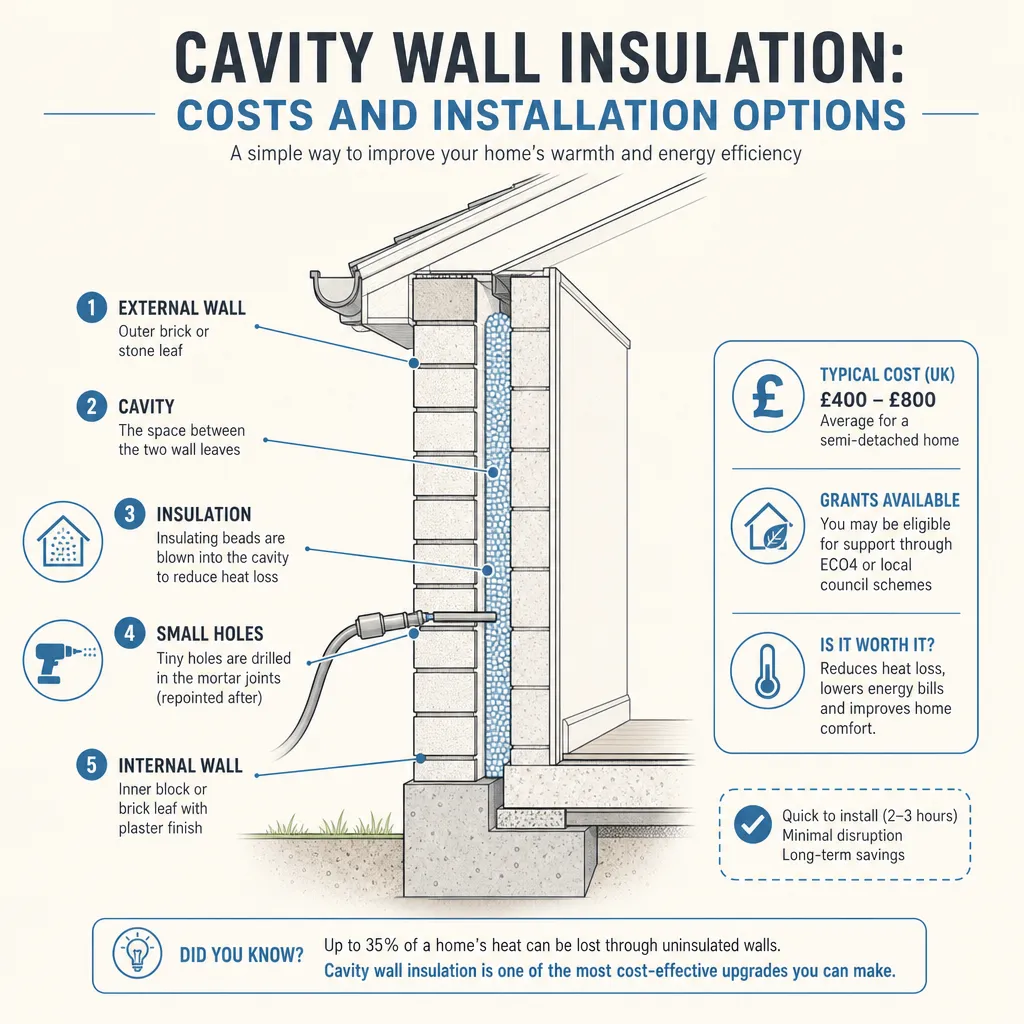
Cavity Wall Insulation: Costs and Installation Options
Cavity wall insulation is one of the most widely recommended energy-efficiency upgrades for UK homes built from around 1920 onwards, when the twin-leaf cavity wall construction method became standard. For eligible households, government-funded schemes have made installation free or heavily subsidised, and correctly specified work can meaningfully reduce heating bills and improve an EPC rating. But not every cavity wall is a suitable candidate — a poorly executed installation in the wrong property can introduce moisture problems that cost far more to fix than the original upgrade.
Key points
- Cavity wall insulation must be installed by a TrustMark-registered and PAS 2030-certified installer to qualify under government-funded schemes such as ECO4 or the Great British Insulation Scheme (GBIS).
- The Cavity Insulation Guarantee Agency (CIGA) provides 25-year guarantees on qualifying installations — confirm your installer is CIGA-registered before work begins.
- Typical self-funded costs range from approximately £400–£1,200 for a standard semi-detached home (indicative, last reviewed 2026-05-05); eligible households may pay nothing under ECO4.
- Properties in high-exposure zones (coastal, upland, or high-driving-rain areas), with cavities narrower than 50mm, or with contaminated or failed existing fill may not be suitable — a pre-installation survey is essential.
- Under PAS 2035, work funded through ECO4 or similar schemes requires a whole-house retrofit assessment before individual measures are specified, to manage interrelated moisture and ventilation risks.
What is cavity wall insulation and how does it work?
Most UK homes built between approximately 1920 and 1995 have external walls constructed from two parallel layers of brick or blockwork separated by a gap — the cavity — typically 50–100mm wide. Without insulation, this gap allows significant heat loss. Cavity wall insulation fills it with an insulating material, reducing the wall U-value and improving the building's thermal performance.
According to the Energy Saving Trust, correctly installed cavity wall insulation can reduce heat loss through external walls by up to 35%. The actual improvement depends on the material used, cavity width, and the existing wall specification.
Insulation materials compared
Material | Performance | Best suited to | Key consideration |
|---|---|---|---|
Mineral wool (rock or glass fibre) | Good | Standard cavity walls in sheltered locations | Needs dry cavity; not recommended for exposed or high-rainfall locations |
EPS beads (expanded polystyrene) | Good | Wider cavities; irregular shapes | Requires correct bead and adhesive specification; can be re-extracted if needed |
Polyurethane (PU) foam | Very good | Wide or irregular cavities | Permanent once installed; specialist removal required if problems arise |
Urea-formaldehyde (UF) foam | Moderate (legacy) | Older installations only | Known failure issues in some applications; check for existing UF foam before proceeding |
Is your cavity wall suitable?
Not all cavity walls can or should be insulated. A pre-installation survey — mandatory under PAS 2030 and PAS 2035 for grant-funded work — should assess the following:
Suitability decision guide
- Cavity under 50mm wide → may be too narrow for standard materials; seek specialist advice before proceeding.
- High-exposure zone (coastal, upland, or wind-driven rain area) → check the BS 8208 exposure assessment; cavity fill may allow moisture bridging and should only proceed with an appropriate specification.
- Existing fill already present → inspect for contamination, collapse, or legacy UF foam before adding new material; failed fill may need removal first.
- Visible damp, staining, or efflorescence on internal walls → investigate and resolve the cause before insulating; sealing a wet cavity traps moisture.
- Standard construction, dry cavity, sheltered location → likely suitable; proceed with a PAS 2030-certified installer and full pre-installation survey.
- Solid wall construction (typically pre-1920 properties) → cavity wall insulation does not apply; consider external or internal wall insulation instead.
Costs: what to expect
Indicative UK costs, last reviewed 2026-05-05. Costs vary by property size, location, access, and material. Sources: Energy Saving Trust and Ofgem ECO4 guidance. Individual quotes will differ.
Property type | Approximate self-funded cost | ECO4 / GBIS potential |
|---|---|---|
Mid-terrace house | £400–£700 | May be fully funded if eligible |
Semi-detached house | £500–£900 | May be fully funded if eligible |
Detached house | £700–£1,200 | May be fully funded if eligible |
ECO4 and Great British Insulation Scheme eligibility
The Energy Company Obligation (ECO4), administered by Ofgem, requires energy suppliers to fund retrofit measures — including cavity wall insulation — for eligible households. Eligibility is typically linked to:
- Receiving means-tested benefits such as Universal Credit, Pension Credit, or income-related ESA or JSA.
- Living in a property with an EPC rating of D, E, F, or G.
- Lower-income households in EPC band D properties may also qualify under the Great British Insulation Scheme.
Check current eligibility at GOV.UK or through the Energy Saving Trust helpline before approaching an installer.
What a properly quoted job should include
- Pre-installation survey and BS 8208 exposure assessment.
- Drilling at approximately 1m intervals into mortar joints, injection of insulation, and repointing.
- Completion certificate and CIGA guarantee registration.
- Any scaffolding or access equipment required for upper storeys.
The installation process
- Pre-installation survey: cavity width, existing fill, wall condition, and exposure zone are assessed.
- Specification: insulation material and method chosen to match property conditions and exposure rating.
- Preparation: pre-existing defects — cracked pointing, failed seals, active damp — must be rectified before installation.
- Installation: holes drilled into mortar joints, insulation injected under controlled pressure, holes repointed to match original mortar colour and profile.
- Completion certificate: issued by the installer and CIGA guarantee registered in the homeowner's name.
- Post-installation check: for grant-funded work under PAS 2030 and PAS 2035, a Retrofit Coordinator may carry out an independent quality review.
The physical installation typically takes one day for a standard semi-detached home.
Red flags: when to pause or reconsider
Stop and seek independent professional advice if:
- A contractor quotes without carrying out a pre-installation survey.
- You are told the installation is free but no mention is made of ECO4 eligibility criteria or a benefits check.
- The installer cannot provide TrustMark registration or PAS 2030 certification details.
- There is existing dampness, mould, or water ingress in the external walls.
- Your property is in a coastal or upland area and no BS 8208 exposure assessment is offered.
- The contractor cannot confirm CIGA guarantee registration on completion.
- Your property may have had previous cavity wall insulation removed due to failure or moisture problems.
Important limitations
This article provides general information only. Cavity wall insulation suitability depends on the specific construction, condition, exposure zone, and history of your individual property. Funding eligibility rules and grant availability change frequently. A qualified retrofit assessor, PAS 2030-certified installer, or RICS-accredited surveyor should assess your property before any work is commissioned.
This article is not a substitute for a pre-installation survey, a whole-house retrofit assessment under PAS 2035, or professional advice from a TrustMark-registered practitioner.
What to ask a qualified professional
Before commissioning cavity wall insulation, ask your installer or retrofit assessor:
- Are you TrustMark-registered and certified to PAS 2030? Can I see your certification number?
- Will the installation be registered with CIGA for the 25-year guarantee?
- What exposure zone does my property fall in, and how does this affect the material specification?
- Is there any existing fill in the cavity, and has it been checked for contamination or UF foam?
- What happens if active damp or a structural defect is found during the survey?
- If funded under ECO4 or GBIS, will a Retrofit Coordinator be appointed under PAS 2035?
- What repointing is included, and will it match my existing mortar in colour and profile?
- What installer warranty covers workmanship beyond the CIGA material guarantee?
When to get professional help
Cavity wall insulation is not a DIY task — it requires specialist equipment, professional certification, and a pre-installation survey. Seek additional independent professional input, such as a RICS-accredited building surveyor or an independent retrofit assessor, if:
- You have experienced damp, mould, or condensation problems and are unsure of the cause before insulating.
- The property is more than 60 years old or has a non-standard construction.
- You are in dispute with an installer following a previous installation that may have contributed to moisture problems — the CIGA dispute resolution process can assist, but an independent surveyor's report is often needed.
- You want a whole-house energy strategy rather than a single-measure installation.
How Housey can help
Housey connects you with vetted professionals for energy-efficiency work. You can request quotes from insulation installers who are TrustMark-registered and PAS 2030-certified, or arrange an insulation assessment to establish whether your property is suitable before committing to any work.
Frequently asked questions
Is cavity wall insulation worth the cost?
For most eligible properties with unfilled cavities, yes. The Energy Saving Trust estimates annual savings of around £150–£290 for a typical gas-heated semi-detached home, depending on heating system and property size. For households eligible under ECO4 or the Great British Insulation Scheme, the installation may be fully funded, removing the payback question entirely. Savings will be lower in properties with more efficient heating already in place.
How long does cavity wall insulation last?
A correctly specified and installed system, backed by a CIGA 25-year guarantee, should last the lifetime of the property. Mineral wool and EPS bead systems do not degrade under normal conditions. Issues most commonly arise from incorrect specification in exposed locations, pre-existing damp, or poor workmanship at the drill and repoint stage — not from material failure in suitable properties.
Can cavity wall insulation cause damp?
Incorrectly specified or poorly installed cavity wall insulation can contribute to damp — particularly in coastal or high-exposure locations where driving rain penetrates the outer leaf. A proper pre-installation survey and BS 8208 exposure assessment is designed to prevent this. If you experience damp after installation, contact the installer and CIGA. An independent RICS-accredited surveyor can assess whether the insulation is the cause.
What is PAS 2030 and why does it matter?
PAS 2030 is a publicly available specification setting out competence and installation standards for energy-efficiency measures in existing buildings. For grant-funded work under ECO4 or similar schemes, PAS 2030 certification for the installer is mandatory. Using a non-certified installer for grant-funded work is likely to invalidate the grant and the CIGA guarantee.
Does cavity wall insulation require planning permission?
No — cavity wall insulation is considered maintenance of existing building fabric and does not normally require planning permission. However, if your property is listed or in a conservation area, you may need listed building consent or conservation area consent before drilling into external walls. Check with your Local Planning Authority if in doubt.
Sources and further reading
- Energy Saving Trust — Cavity wall insulation — Energy Saving Trust
- Ofgem — Energy Company Obligation (ECO4) — Ofgem
- GOV.UK — Great British Insulation Scheme — GOV.UK
- PAS 2030 and PAS 2035 — Retrofit standards overview — BSI Group
- Cavity Insulation Guarantee Agency (CIGA) — CIGA
- TrustMark — Find registered firms — TrustMark
Useful next reads
 Energy & Retrofit
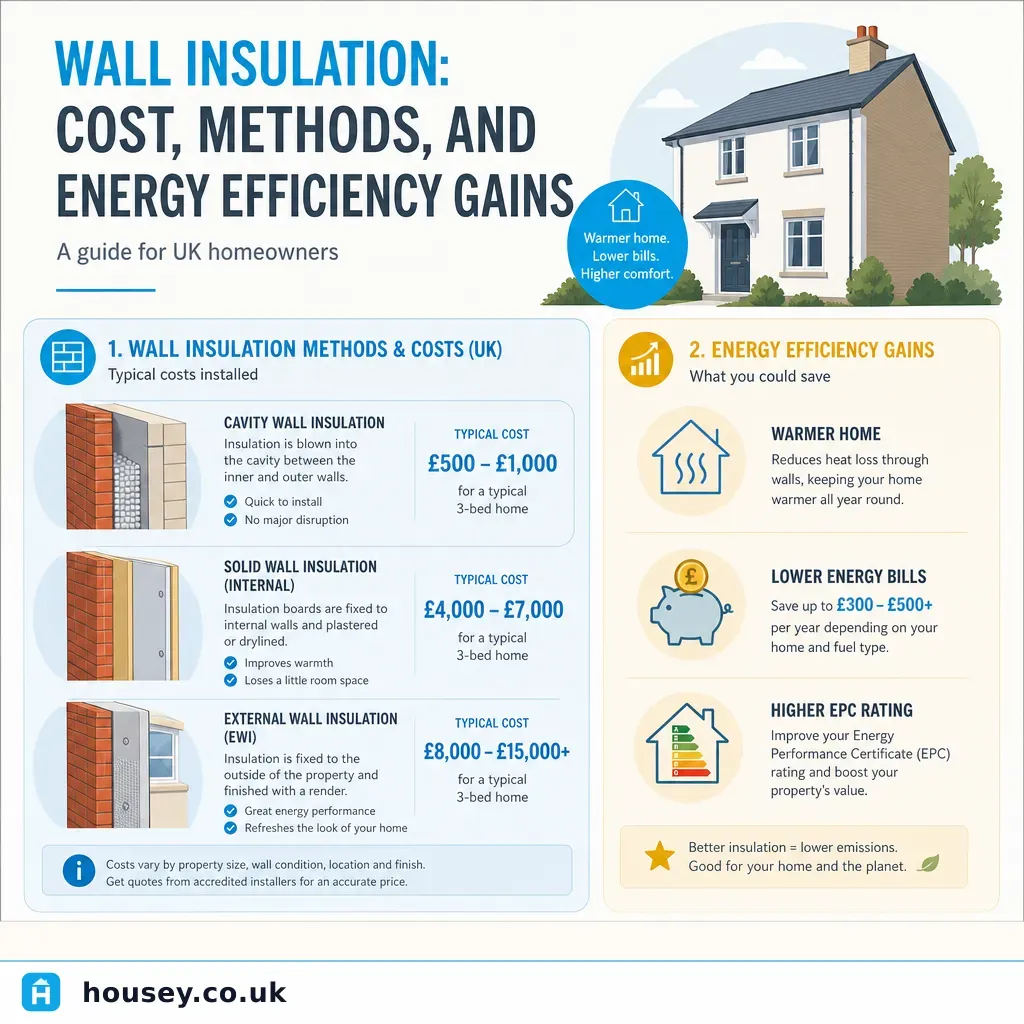
Wall Insulation: Cost, Methods, and Energy Efficiency Gains
Wall insulation in UK homes uses one of three main methods: cavity wall insulation for post-1920 homes with an unfilled cavity, external wall insulation for solid-walled properties, and internal wall insulation where external changes are not permitted.
 Energy & Retrofit
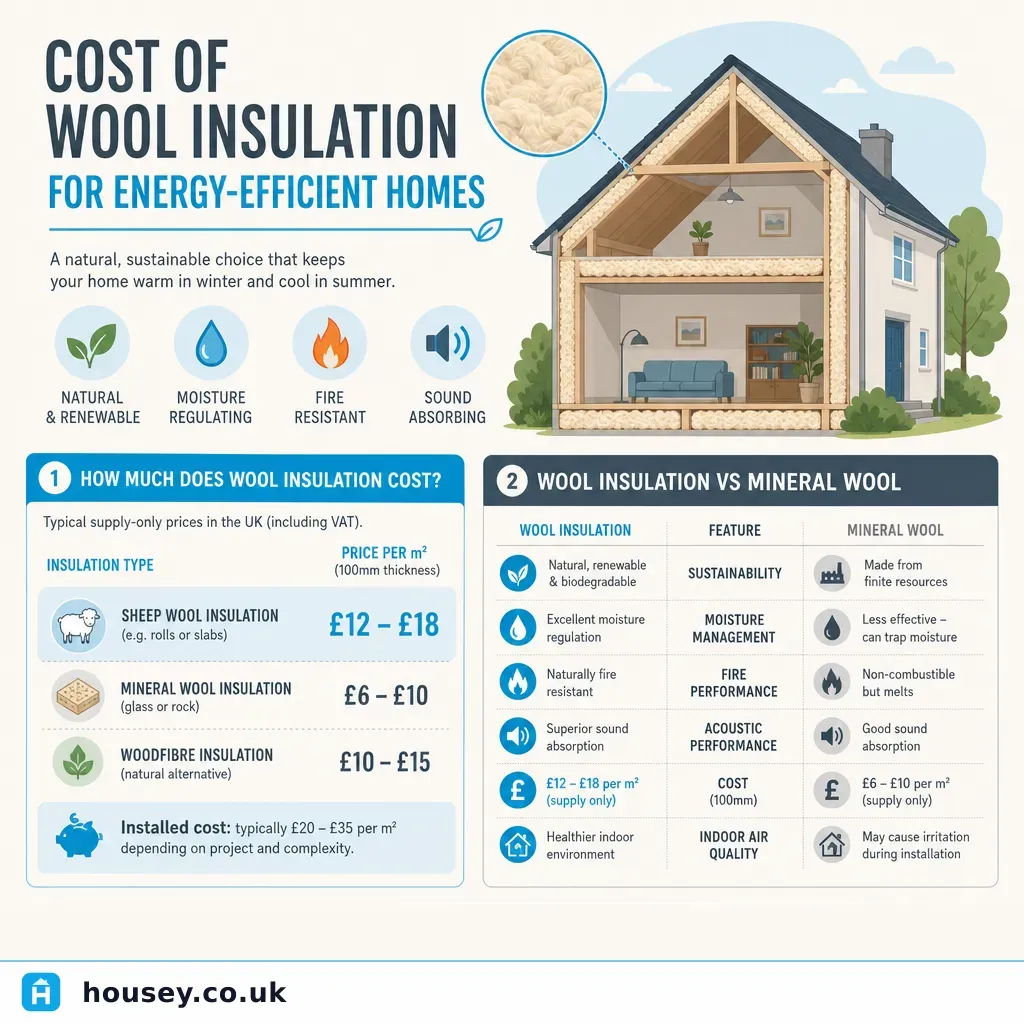
Cost of Wool Insulation for Energy-Efficient Homes
Sheep wool insulation typically costs £5–£15 per m² for materials, rising to £8–£40 per m² installed depending on application and depth.
 Energy & Retrofit
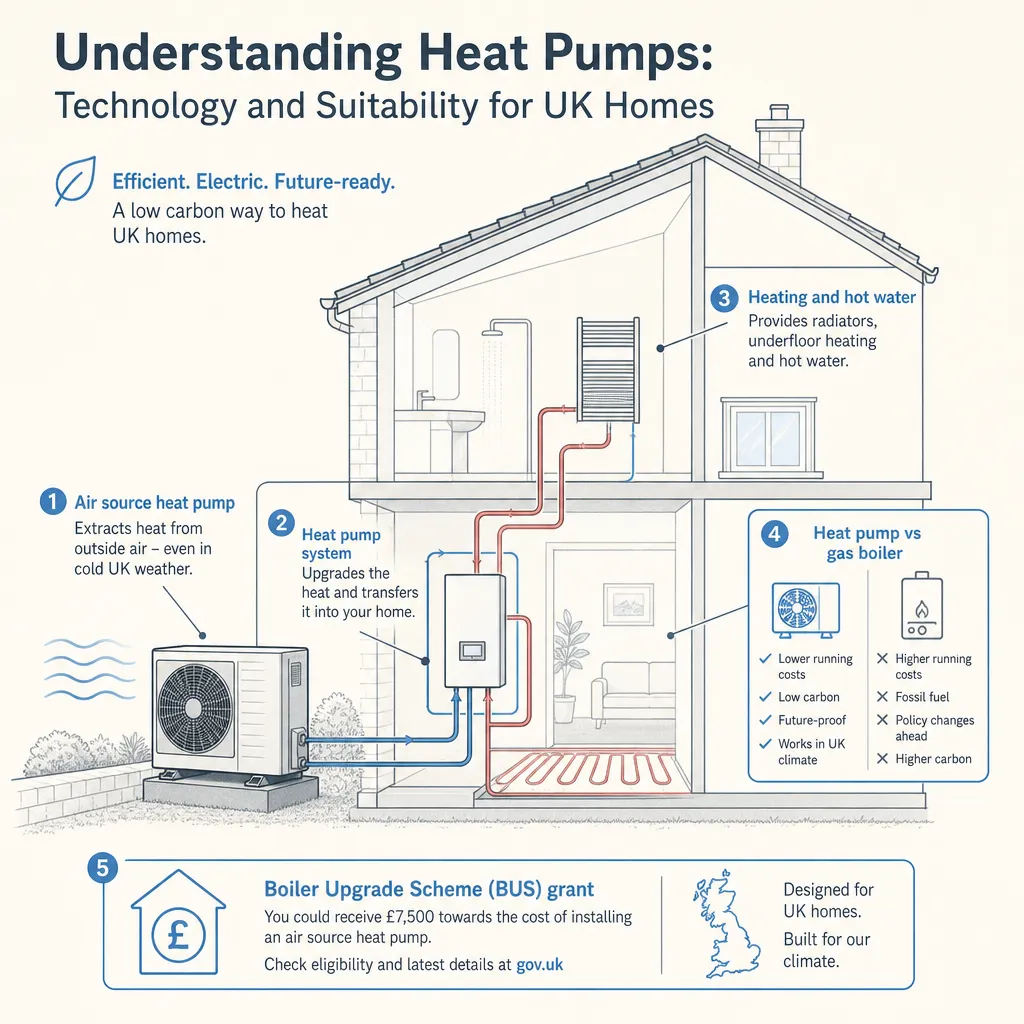
Understanding Heat Pumps: Technology and Suitability for UK Homes
Heat pumps extract heat from the air or ground and transfer it indoors, typically achieving efficiencies of 250–400% compared to a conventional boiler's near 100%.
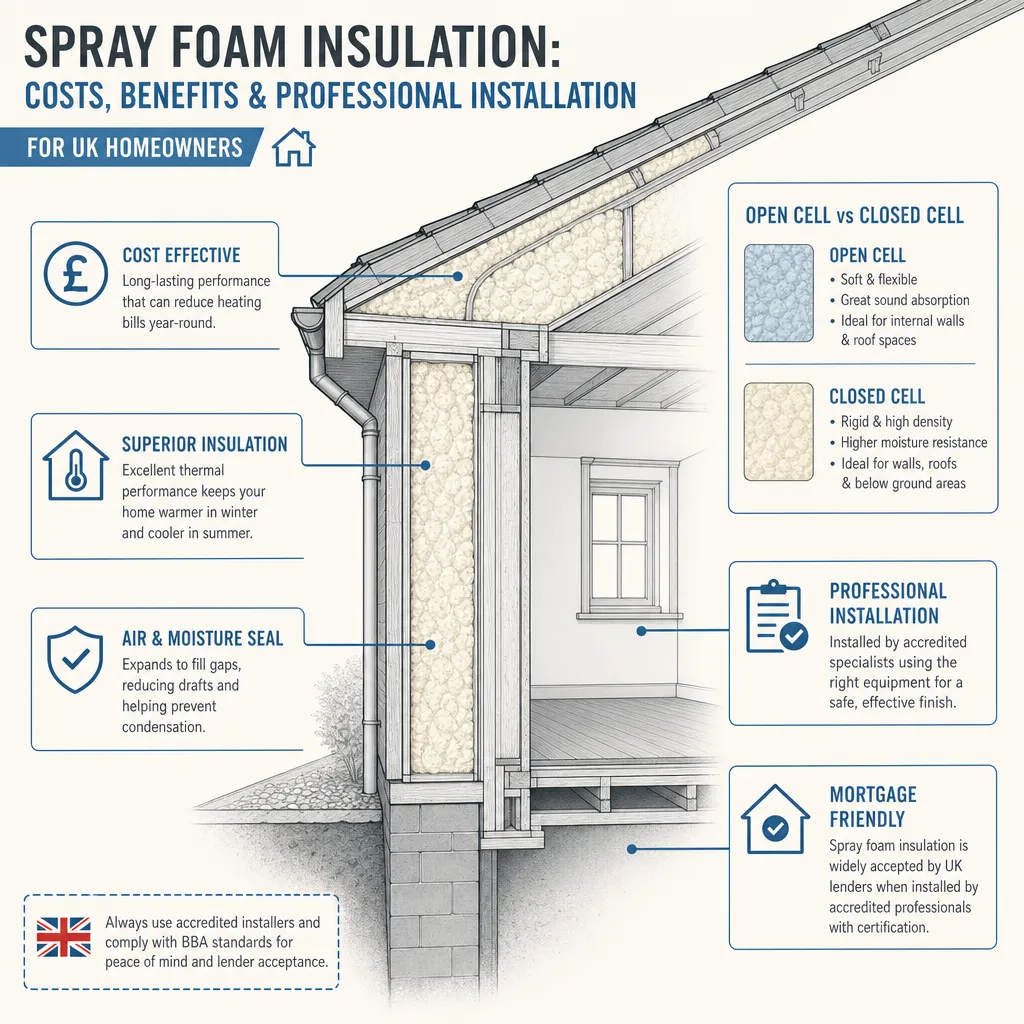 Energy & Retrofit
Spray foam insulation: costs, benefits and professional installation
Spray foam insulation costs between £15 and £60 per square metre installed in the UK, depending on whether open-cell or closed-cell foam is used.
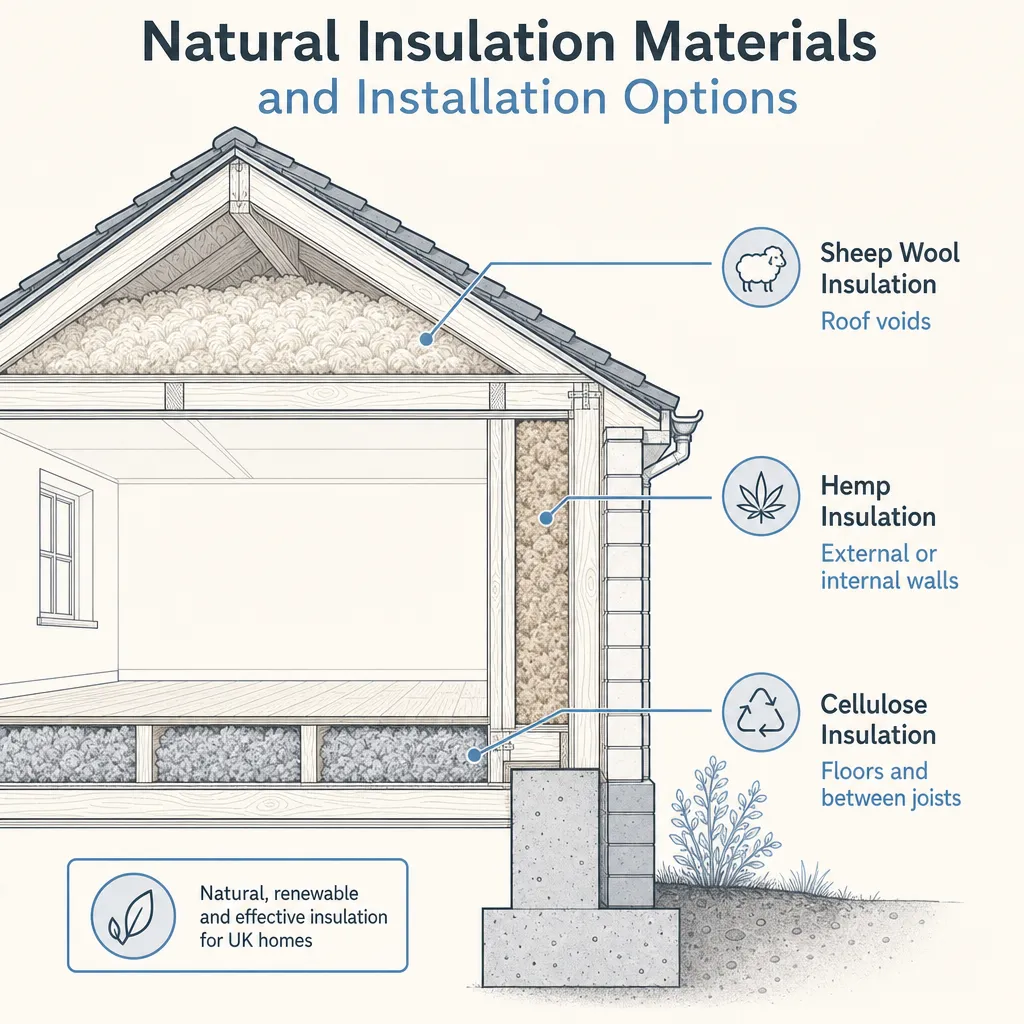 Energy & Retrofit
Natural Insulation Materials and Installation Options
Natural insulation materials such as sheep wool, hemp, cellulose, wood fibre, and cork can match mineral wool for thermal performance and offer additional benefits including moisture buffering and lower embodied carbon.