Buying guide: composite doors for homeowners
By Housey · Last reviewed 11th of May 2026
Buying guide: composite doors for homeowners
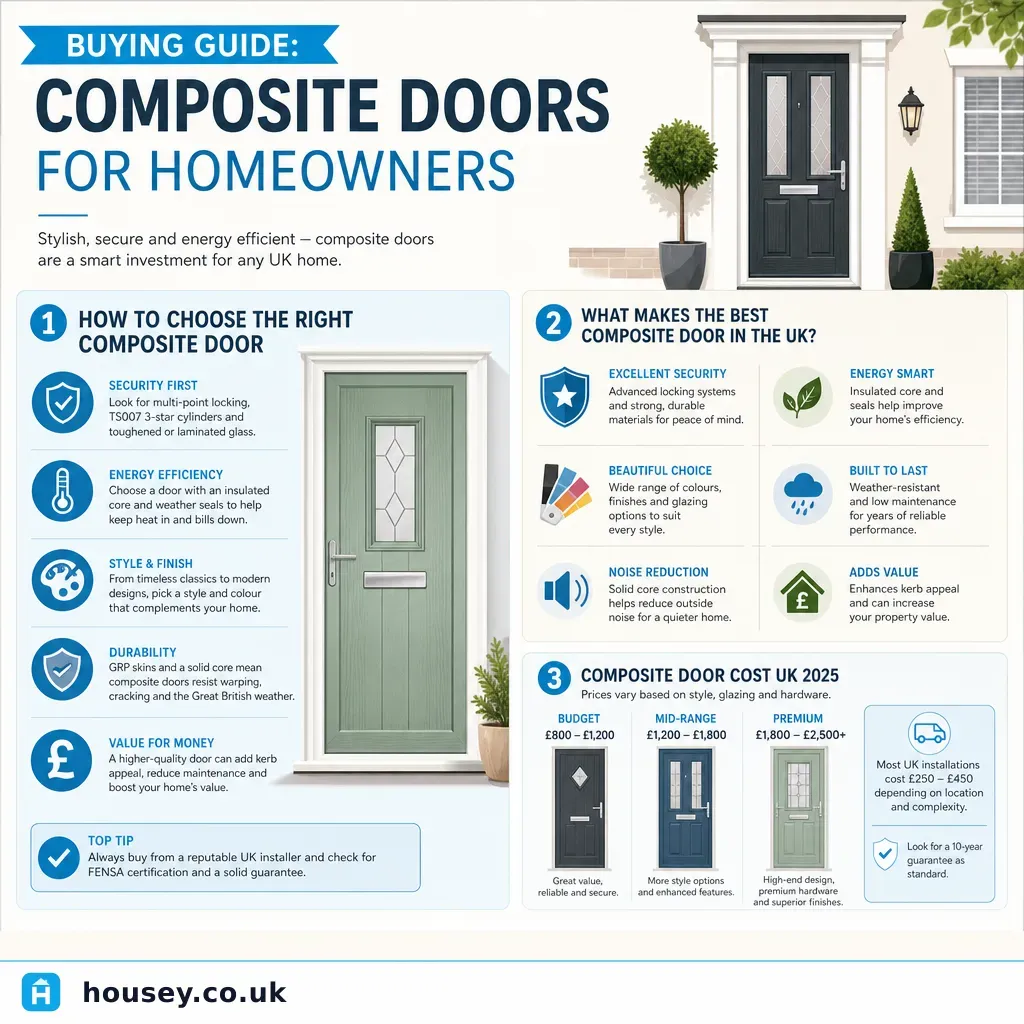
Replacing a front or back door with a composite is one of the more manageable home improvement decisions, but the UK market now offers hundreds of configurations — styles, cores, glazing units, colour finishes, security hardware, and glazing ratios — and the differences between a well-specified door and a poorly made one are not obvious from a brochure. This guide walks through what matters before you place an order, from construction and security standards to measuring, installation, and choosing a compliant installer.
Key points
- Replacement external doors in England must meet Building Regulations Part L — a U-value of no worse than 1.4 W/m²K; any reputable composite door supplier should confirm the whole-door U-value (including glazing) in writing before sale.
- Look for doors independently tested and certified to PAS 24:2022 (Enhanced Security Performance Requirements for Doorsets) — the benchmark recognised by UK police forces and most home insurers.
- Installation by a FENSA-registered or CERTASS-registered contractor allows self-certification of Building Regulations compliance, avoiding a separate local authority building control application.
- Made-to-measure composite doors typically have a lead time of four to eight weeks from order confirmation to delivery and installation.
- Indicative UK installed costs range from £800 to £2,500 depending on style, glazing, hardware, and finish, with bespoke or Secured by Design-certified products at the upper end. (Indicative UK costs, last reviewed 2026-05-11.)
What is a composite door made of?
The term "composite" describes the layered, multi-material construction that sets these doors apart from solid timber or hollow uPVC alternatives. A well-made composite door consists of:
- GRP outer skin (glass reinforced plastic): moulded to replicate timber grain textures; available in a wide range of colours; resists fading, warping, and scratching better than painted timber under normal UK conditions.
- High-density polyurethane foam core: provides rigidity and thermal insulation; bonded to the frame under pressure to create a solid, dimensionally stable panel.
- Timber or LVL subframe (on many models): adds structural integrity and supports the multipoint locking mechanism.
- uPVC or aluminium outer frame: weatherproof and low-maintenance.
- Multipoint locking system: engages at three or more points along the door edge as standard on most composite ranges.
This construction gives composite doors their characteristic weight — typically 35–45 kg for a standard entrance door — and the solid, thud-free feel when closing that many homeowners use as an informal quality indicator.
Style and glazing options
Composite doors are available across a wider range of configurations than most homeowners expect when first enquiring.
Door styles commonly available:
- Traditional panelled designs (suitable for Victorian, Edwardian, and 1930s homes)
- Contemporary flush or near-flush designs (new-build and modern extension settings)
- Stable door configurations (split horizontally; useful for households with pets or young children)
- French door pairs (rear extensions, garden access, and orangeries)
- Doors with side panels or sidelights (wider openings or where additional natural light is needed)
Glazing options: Most composite doors accept double or triple-glazed sealed units set into the door panel. Common choices include:
- Clear, frosted, or obscure decorative glass (standard for front doors where privacy is needed)
- Lead or Georgian bar effects within the sealed unit
- Stained glass-style decorative inserts for period properties
The glazed unit within the door must also comply with Part L — this forms part of the whole-door U-value calculation and should be confirmed with the supplier before ordering.
Security: what to check before buying
PAS 24:2022 certification is the primary benchmark to look for. This British Standard tests the complete door and frame assembly against physical attack methods. Ask the supplier for the actual test certificate, not just a reference to it in marketing copy. Some composite ranges carry Secured by Design approval — a police-preferred specification increasingly required by certain home insurance policies and widely used in new housing developments across the UK.
Lock cylinder quality is equally important. Many composite door failures arise not from the panel itself but from a vulnerable cylinder. Look for cylinders independently rated to:
- TS 007 3-star or SS 312 Diamond — standards covering resistance to snapping, picking, drilling, and bumping.
- Well-known cylinder brands with independent accreditation (such as Ultion or Avocet ABS) are worth researching separately from the door manufacturer's claims.
Letter plates and hardware can also be points of vulnerability. Hardware that was tested as part of the PAS 24-certified door assembly is preferable to aftermarket components mixed in from other sources.
Homeowner checklist: before you order
Use this checklist before committing to a composite door purchase:
What to ask before accepting a quote
- What is the door's independently tested U-value — and is that the whole-door figure including the glazed unit?
- Does the door carry a PAS 24:2022 certificate — can you provide a copy of the certificate, not just a brochure reference?
- Is the installer FENSA or CERTASS registered, and what is their registration number?
- What lock cylinder is specified, and what TS 007 or SS 312 rating does it carry?
- Is VAT included in the quoted price?
- What warranty does the manufacturer provide on the door panel, frame, and hardware — and what does it cover?
- Who handles Building Regulations self-certification, and will I receive a FENSA or CERTASS certificate after installation?
- What happens if access problems or frame damage are discovered during installation — how is additional work priced?
Colour, finish, and long-term maintenance
GRP composite doors can be factory-finished in a wide range of solid colours. Many manufacturers offer dual-colour options — for example, grey or anthracite on the outside with white on the interior to match painted woodwork. Unlike painted timber, GRP does not require periodic repainting under normal conditions.
Points to be aware of:
- Prolonged direct sunlight can cause marginal fading on some darker colours over many years — ask the manufacturer for UV resistance test data if this matters for your elevation.
- GRP can be professionally repainted if you want to change the colour, but this requires the correct primer and topcoat for the substrate — not a standard DIY task.
- For cleaning, warm soapy water and a soft cloth is the recommended approach. Avoid abrasive cleaners, solvents, or pressure washing at close range.
When to get professional help
- Always use a FENSA or CERTASS-registered installer for a composite door replacement — this is the most straightforward route to Part L compliance without a separate local authority application.
- If you are purchasing a door online and using a separate contractor for fitting, confirm before ordering that the contractor is registered and will issue the compliance certificate — not all general builders hold FENSA registration.
- For listed buildings or conservation area properties, consult your local planning authority before purchase; some authorities require matching the original door material and historic style precisely.
How Housey can help
Housey connects homeowners across the UK with vetted window and door installers who can advise on the right specification for your property, supply a compliant composite door, and manage Building Regulations self-certification from survey through to handover.
Frequently asked questions
How long does composite door installation take?
Most composite door installations are completed within half a day to a full day by an experienced fitter. The longer element is the manufacturing lead time — typically four to eight weeks for a made-to-measure door from order to delivery. Some suppliers offer in-stock or express ranges with shorter lead times if timing is critical, though colour and style choices may be more limited.
Can a composite door be installed by any contractor?
Technically yes, but using a non-FENSA or non-CERTASS registered contractor means you will need a separate building control application to your local authority for a replacement door — an additional cost and process. Using a registered installer is simpler and produces a compliance certificate that is useful when you come to sell the property.
Are composite doors suitable for listed buildings?
Not automatically. Listed building consent is required for works that could alter the character of a listed building, and many local planning authorities will not permit a composite door to replace original timber on listed properties. Always seek advice from your local planning authority or conservation officer before purchasing, and consider timber repair or like-for-like replacement as an alternative.
Do composite doors warp over time?
A well-manufactured composite door should not warp under typical UK weather conditions — the solid foam core and GRP skin are dimensionally stable across the temperature ranges experienced in Britain. Lower-quality products with thin GRP skins can distort over time. Buying from a manufacturer with documented performance testing and a warranty of ten or more years significantly reduces this risk.
Sources and further reading
- Building Regulations Approved Document L — conservation of fuel and power — GOV.UK
- FENSA — registered window and door installers — FENSA
- Secured by Design — doors and windows guidance — Police Crime Prevention Initiatives
- British Fenestration Rating Council — energy ratings for doors — BFRC
- PAS 24:2022 — Enhanced Security Performance Requirements for Doorsets — British Standards Institution (BSI)
Useful next reads
 Improvement & Build
Composite French Doors: A Complete Buyer's Guide
Composite French doors combine a GRP or timber-effect outer skin with a solid insulated core, offering durability and low maintenance suited to UK weather.
 Improvement & Build
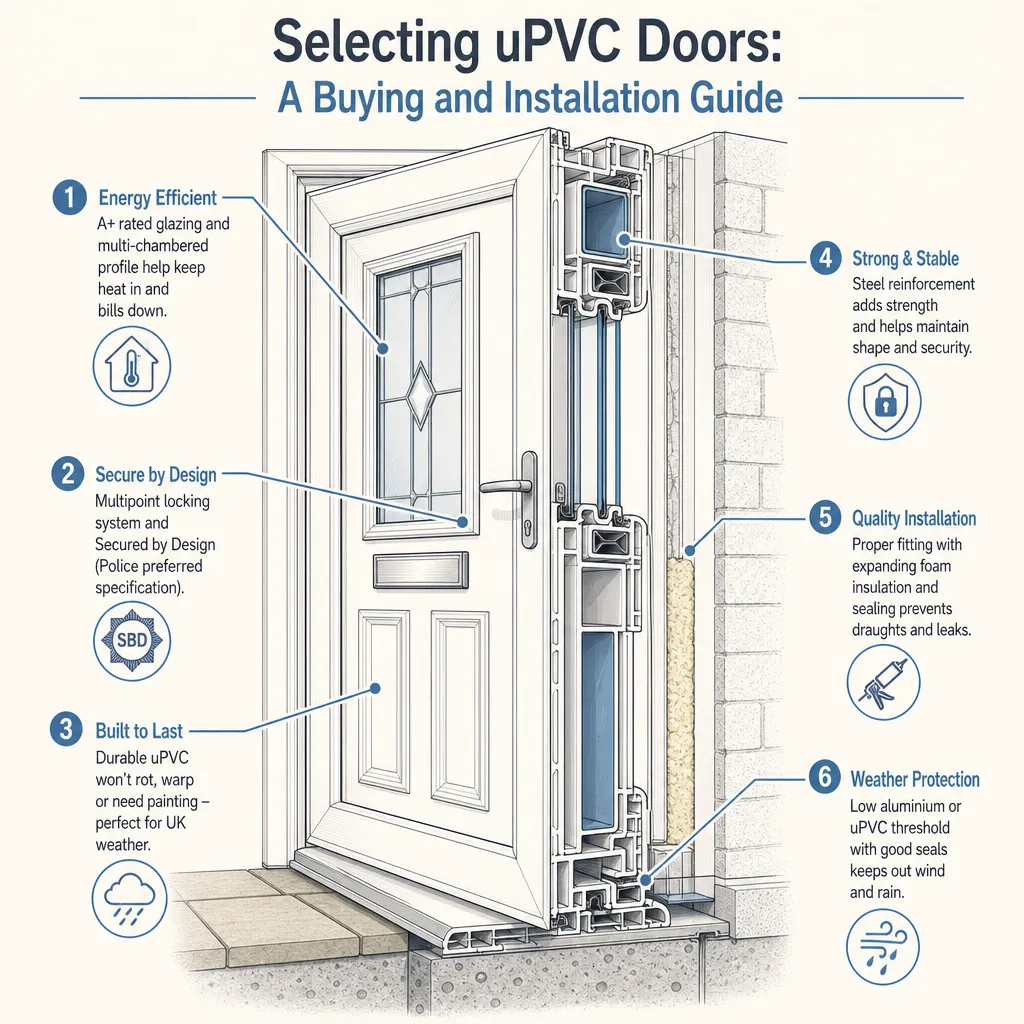
Selecting uPVC Doors: A Buying and Installation Guide
When buying a uPVC door, confirm the doorset U-value meets Part L (currently 1.
 Improvement & Build
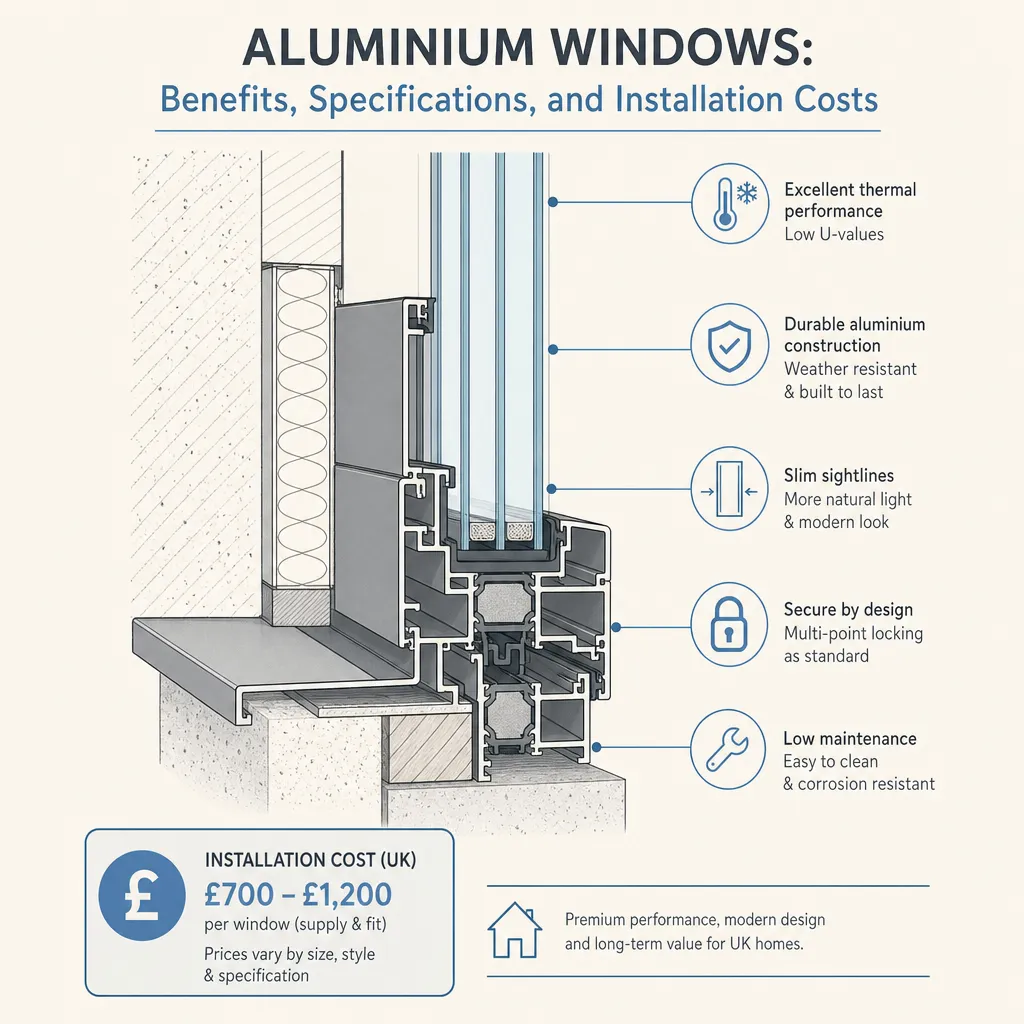
Aluminium Windows: Benefits, Specifications, and Installation Costs
Aluminium windows typically cost £600–£1,800 per window installed in the UK, depending on size and specification.
 Improvement & Build
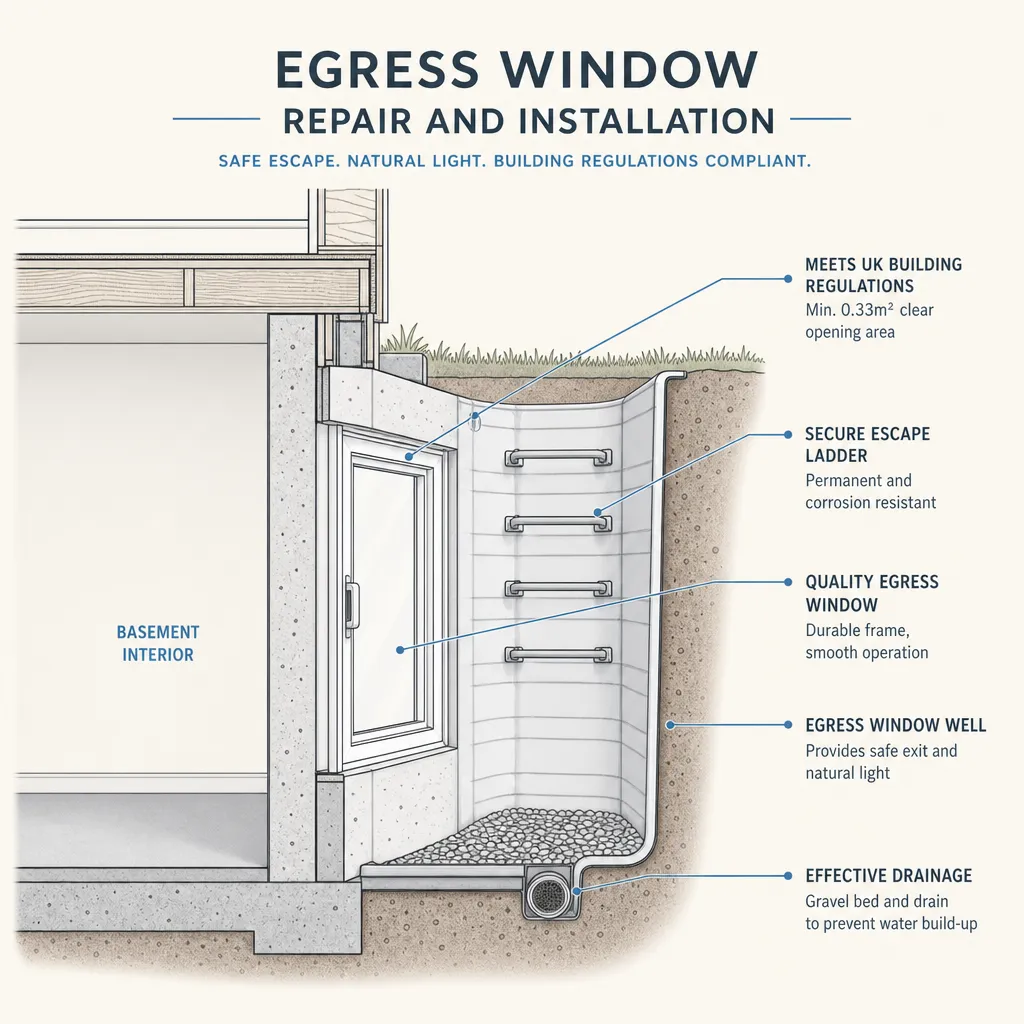
Egress Window Repair and Installation
An egress window is a window large enough to serve as an emergency escape route from a habitable room.
 Improvement & Build
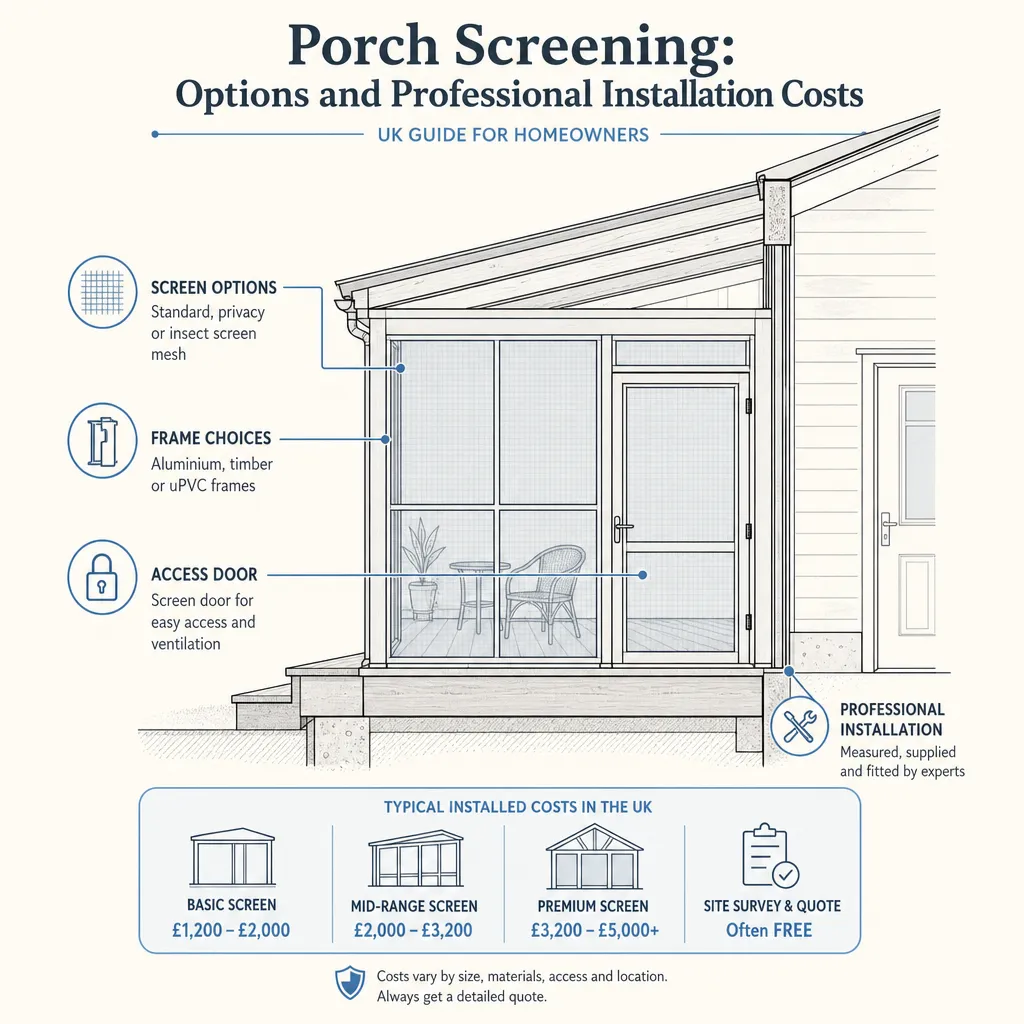
Porch Screening: Options and Professional Installation Costs
Porch screening ranges from simple insect mesh on a timber frame to bespoke aluminium-framed glazed enclosures.