Selecting uPVC Doors: A Buying and Installation Guide
By Housey · Last reviewed 12th of May 2026
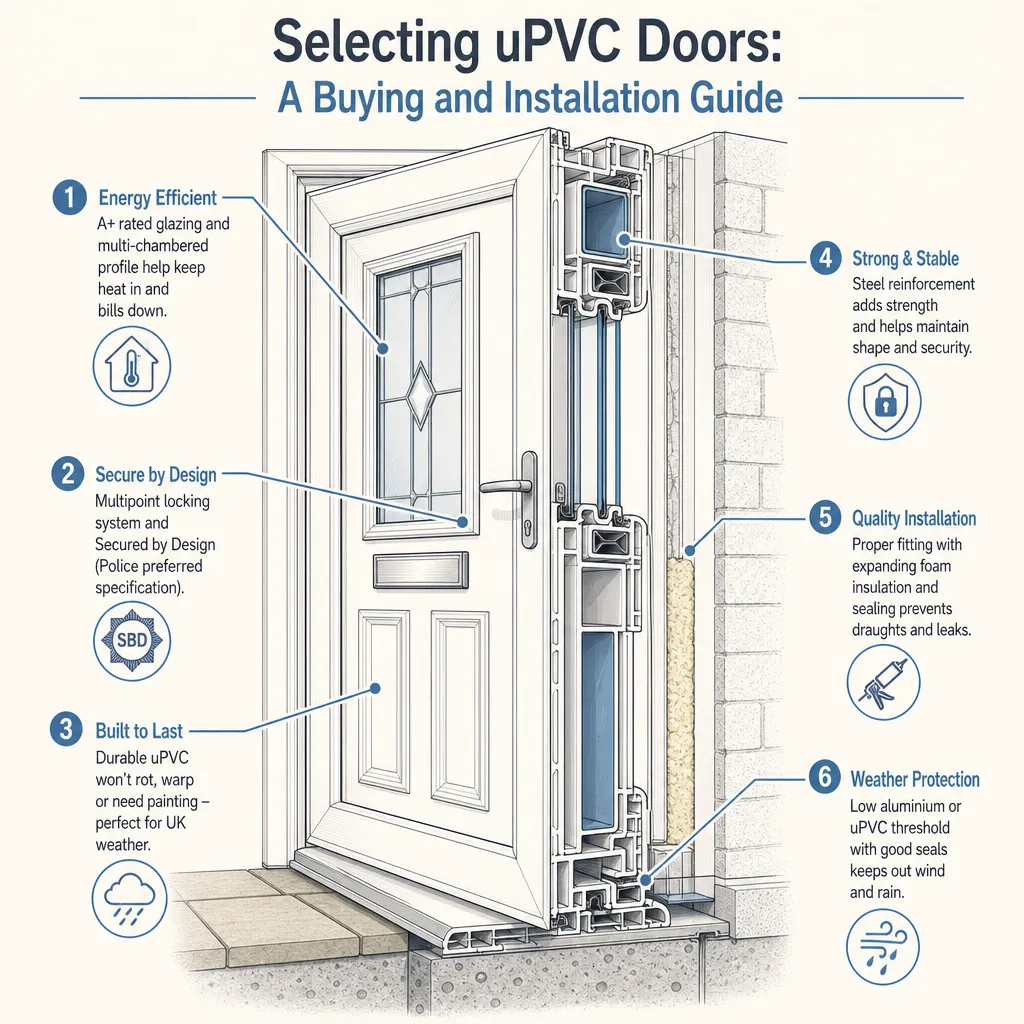
Selecting uPVC Doors: A Buying and Installation Guide
Choosing a uPVC external door involves considerably more than picking a colour from a brochure. Building regulations, security standards, glazing performance ratings, and installer accreditation all affect whether the installation is compliant, insurable, and likely to perform well over the next 20–30 years. This guide covers what to confirm before you buy and what a professional installation should include.
Key points
- Replacement external doors in England must comply with Building Regulations Part L (thermal performance) and, where applicable, Part Q (security); non-compliant installations can create problems at resale.
- Installation by a FENSA or CERTASS-registered company allows self-certification — the installer notifies the local authority on your behalf and provides a compliance certificate (building regulations requirements vary in Wales, Scotland, and Northern Ireland).
- The British Fenestration Rating Council (BFRC) Window Energy Rating (WER) scale provides a useful guide; the doorset U-value is the compliance metric — currently a maximum of 1.4 W/m²K for replacement doors in existing English dwellings under Approved Document L (2021).
- External doorsets for new dwellings must meet PAS 24:2022 under Part Q; specifying the same standard for replacement doors in existing homes aligns with insurer expectations and Secured by Design guidance.
- uPVC profile quality varies significantly: multi-chamber profiles with a 70 mm or wider system width provide better thermal bridging resistance and rigidity than basic 60 mm five-chamber profiles.
Understanding the key standards
Energy performance: Part L and doorset U-values
When you replace an external door in an existing English dwelling, Approved Document L (2021) sets a maximum doorset U-value of 1.4 W/m²K. This figure applies to the doorset as a whole — the combined performance of door leaf, frame, and any glazing — not the panel in isolation.
The BFRC energy rating label provides a simple Band A++ to G indicator, similar to white goods. Band C is broadly associated with compliance near the 1.4 W/m²K threshold, but always ask your installer to confirm the specific doorset U-value against the current requirement rather than relying on the band alone.
Solid panel doors (foam-filled or solid-core, with minimal glazing) tend to achieve lower U-values than heavily glazed doors. If thermal performance matters — particularly when upgrading from a draughty 1980s or 1990s door — specify a foam-filled panel over a thin panel with an air gap.
Security: Part Q and PAS 24:2022
Part Q of the Building Regulations applies to new dwellings and to dwellings formed by a change of use. It requires doorsets on accessible elevations to meet enhanced security performance in line with PAS 24:2022.
For existing homes replacing a door, Part Q does not automatically apply, but most insurers and mortgage lenders expect external doors to meet a recognised security standard. Most reputable uPVC door manufacturers build PAS 24:2022-certified doorsets as standard; confirm certification by requesting the test certificate reference for the specific doorset model.
Related standards to ask about:
- TS007:2014 (3-star) — for the Euro cylinder; the 3-star rating combines a 1-star cylinder with a 2-star door handle or escutcheon.
- BS 8621 — for Euro cylinders with key outside and thumb-turn inside, which matters on fire-escape routes.
- Secured by Design (SBD) — the police-preferred specification, often required on developer builds and in some planning conditions.
Comparing uPVC door specification levels
Feature | Basic specification | Mid-range specification | Higher specification |
|---|---|---|---|
Profile system | 60 mm, 5-chamber | 70 mm, 6-chamber | 70–76 mm, 7-chamber reinforced |
Doorset U-value | ~1.6 W/m²K | ~1.4 W/m²K | ~1.2 W/m²K or better |
Security certification | Typically not PAS 24 | PAS 24:2022 | PAS 24:2022 + SBD |
Locking | 3-point multipoint | 5–7-point multipoint | 7+ point multipoint with anti-lever hooks |
Glazing (where fitted) | 24 mm double-glazed unit | 28 mm double-glazed unit | 44 mm triple-glazed unit |
Colour options | White or woodgrain foil | Dual colour (inside and outside differ) | Flush casement finish, wider colour range |
Profile warranty | 5–10 years | 10 years | 10–20 years |
Indicative UK costs, last reviewed 2026-05-12. Supply-and-fit prices vary significantly by supplier, opening size, and region — obtain multiple quotes for comparison.
Choosing the right door configuration
Solid panel vs. glazed
- Solid panel doors (foam-filled GRP or steel skin over a uPVC or steel frame) offer the best thermal performance and are common for rear utility entrances and side entrances. They can closely replicate the look of painted timber.
- Glazed doors with double or triple-glazed units bring in natural light — valuable for north-facing hallways. Specify laminated inner glass (rather than toughened only) in side panels and door lights for improved break-in resistance.
- Part-glazed styles with an upper glazed panel and lower solid panel are popular for rear doors where visibility matters without fully committing to a glazed leaf.
Inswing vs. outswing
Most UK residential front doors open inward. Outswing doors shed rainwater more readily but are unusual in UK domestic practice. If an outswing door is chosen, hinge bolts must be fitted to prevent the exposed hinge being removed from outside.
Threshold choice
- Low-threshold options (25 mm or less) are important for wheelchair accessibility and align with Building Regulations Part M if you are adapting a property for a disabled occupant.
- Standard rebated thresholds are simpler to install and more common; confirm the threshold profile before ordering if step-free access is a priority.
Pre-purchase checklist
Before placing an order or accepting a quote, confirm:
What to expect during installation
A standard single-door replacement by a professional installation team typically takes 3–6 hours. During this time:
- The existing door and frame are removed. If the frame is structural (uncommon in modern construction), the installer should advise on supporting the opening temporarily.
- The new frame is offered into the opening, checked for level and plumb, and fixed — fixings should penetrate the structural reveal, not just the plaster or decorative finish.
- The door slab is hung and adjusted via the hinge system for correct fit.
- The threshold and weatherseal are fitted and checked for draught exclusion.
- The lock mechanism is tested through multiple cycles before handover.
After installation, a FENSA or CERTASS-registered installer submits notification to the local authority within 30 days. You should receive a compliance certificate within approximately 90 days; keep this with your property documents as it will be requested on conveyancing when you sell.
When to get professional help
uPVC door installation is not a straightforward DIY project. The frame must be accurately plumbed, levelled, and fixed to the structural reveal to prevent future alignment problems and to maintain the validity of any warranty. If the opening size differs from a standard door size, measurements should be taken by the installer, not self-measured.
Seek professional advice before proceeding if:
- The existing frame or surrounding masonry shows signs of movement, dampness, or previous repair.
- The door opening is non-standard or has been altered previously.
- The property is listed or in a conservation area — additional consents may be required regardless of material choice.
- The installation affects a fire door or a designated fire-escape route.
How Housey can help
Finding an accredited, competitively priced installer is much easier when you can compare like-for-like quotes from multiple companies. Housey connects homeowners with local window and door installers who hold FENSA or CERTASS registration and can provide itemised quotes covering supply, fit, and compliance certification.
Frequently asked questions
Do I need planning permission to replace my front door?
In most cases, no — replacing a door with a similar design and material is permitted development. However, if your property is listed, in a conservation area, or subject to an Article 4 direction, you may need listed building consent or prior approval. Always check with your local planning authority before ordering a bespoke door.
Can I install a uPVC door myself and self-certify?
Self-certification under building regulations requires registration with a competent person scheme such as FENSA or CERTASS. A private individual who is not scheme-registered cannot self-certify; the work must be notified to local authority building control and may attract an inspection fee. Using a registered installer is almost always simpler and faster.
What guarantee should I expect on a new uPVC door?
Reputable installers typically offer 10 years on the uPVC profile and 5–10 years on hardware and glazing units. Confirm that the guarantee is backed by an insurance-backed guarantee (IBG), which protects you if the installation company ceases trading before the guarantee period expires.
Will my home insurance be affected by the new door?
Insurers generally expect external doors to meet minimum security standards. Fitting a door certified to PAS 24:2022 with a compliant anti-snap cylinder supports an insurer's security requirements and may help avoid a claim being declined on security grounds. Check your policy schedule before installation and notify your insurer once the work is complete.
Sources and further reading
- Approved Document L: Conservation of fuel and power — GOV.UK
- Approved Document Q: Security — GOV.UK
- FENSA — registered installer search — FENSA
- CERTASS — competent person scheme — CERTASS
- BFRC energy ratings for windows and doors — British Fenestration Rating Council
- Secured by Design door guidance — Police CPI / Secured by Design
Useful next reads
 Improvement & Build
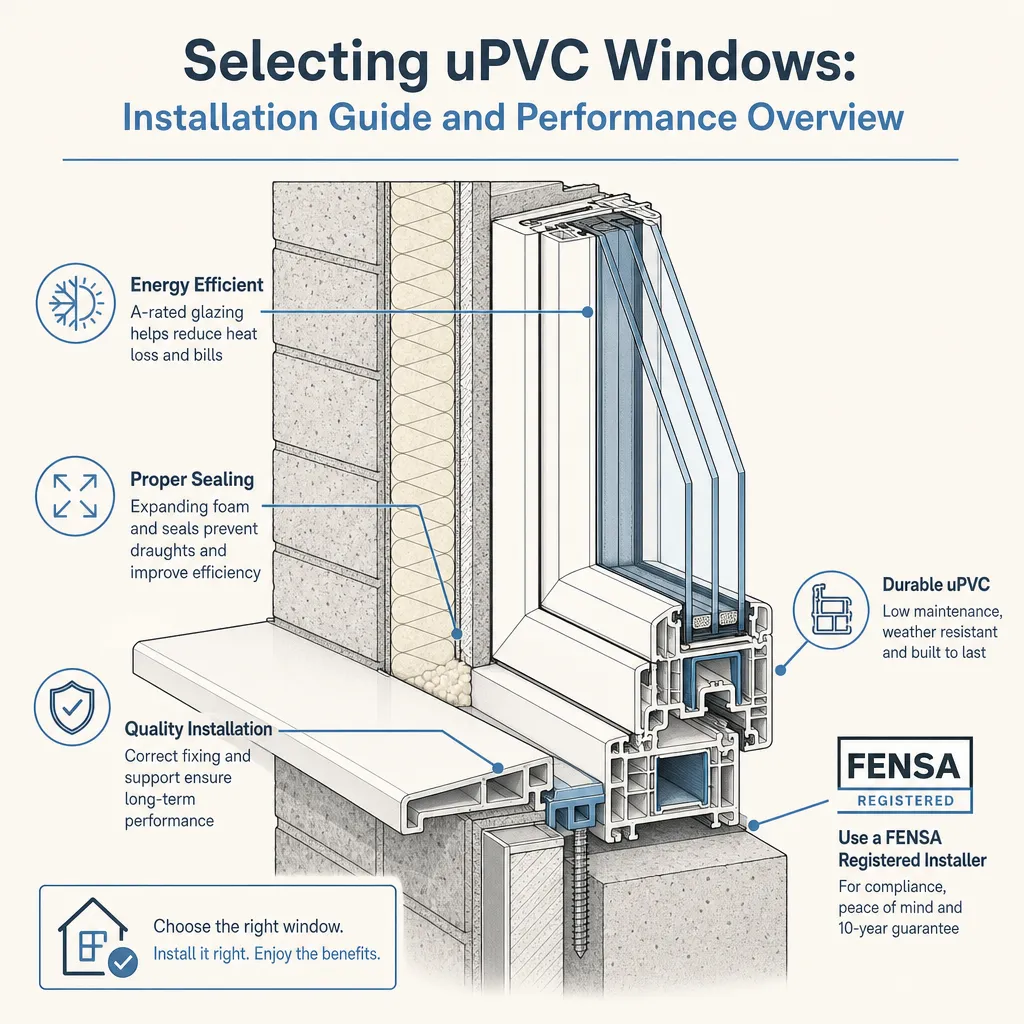
Selecting uPVC Windows: Installation Guide and Performance Overview
uPVC windows are a practical, low-maintenance choice for most UK homes.
 Improvement & Build
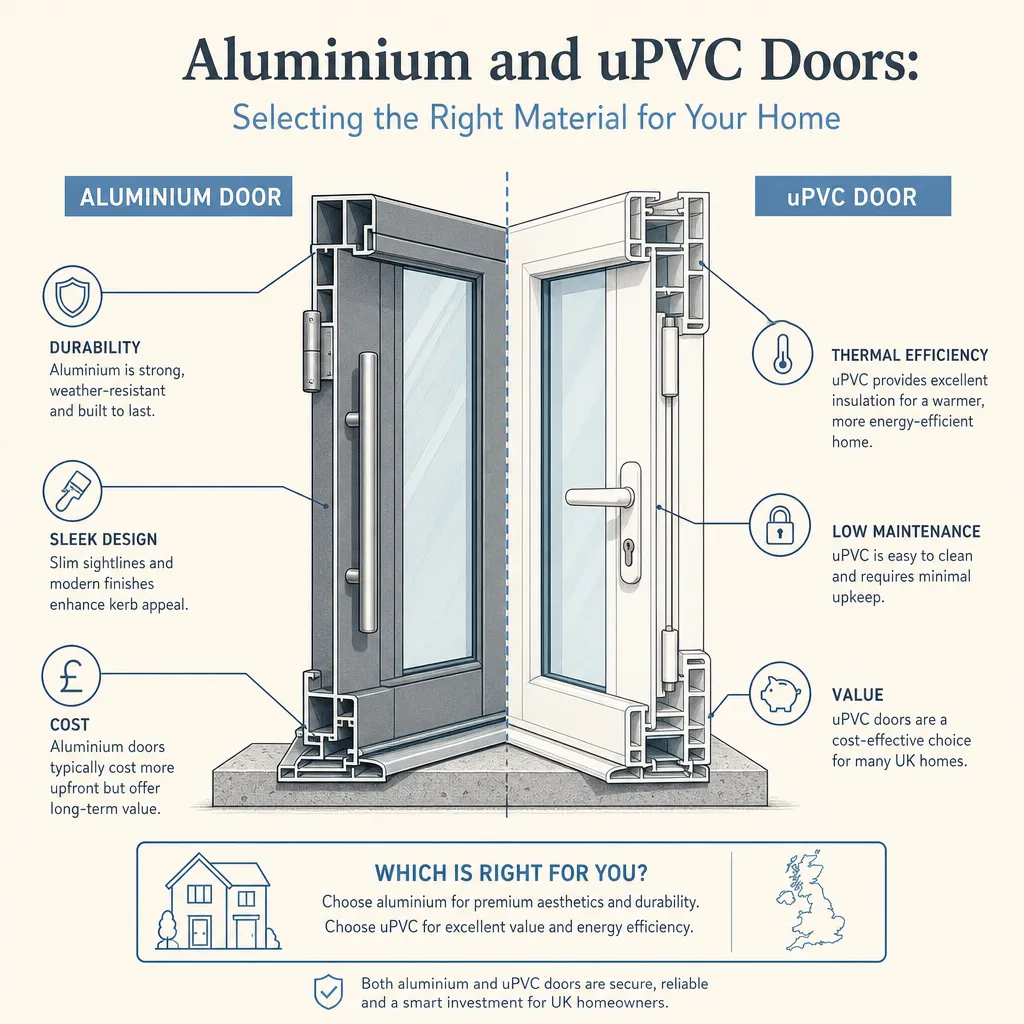
Aluminium and uPVC Doors: Selecting the Right Material for Your Home
uPVC doors are lower-cost and low-maintenance, making them a practical choice for most UK homes.
 Improvement & Build
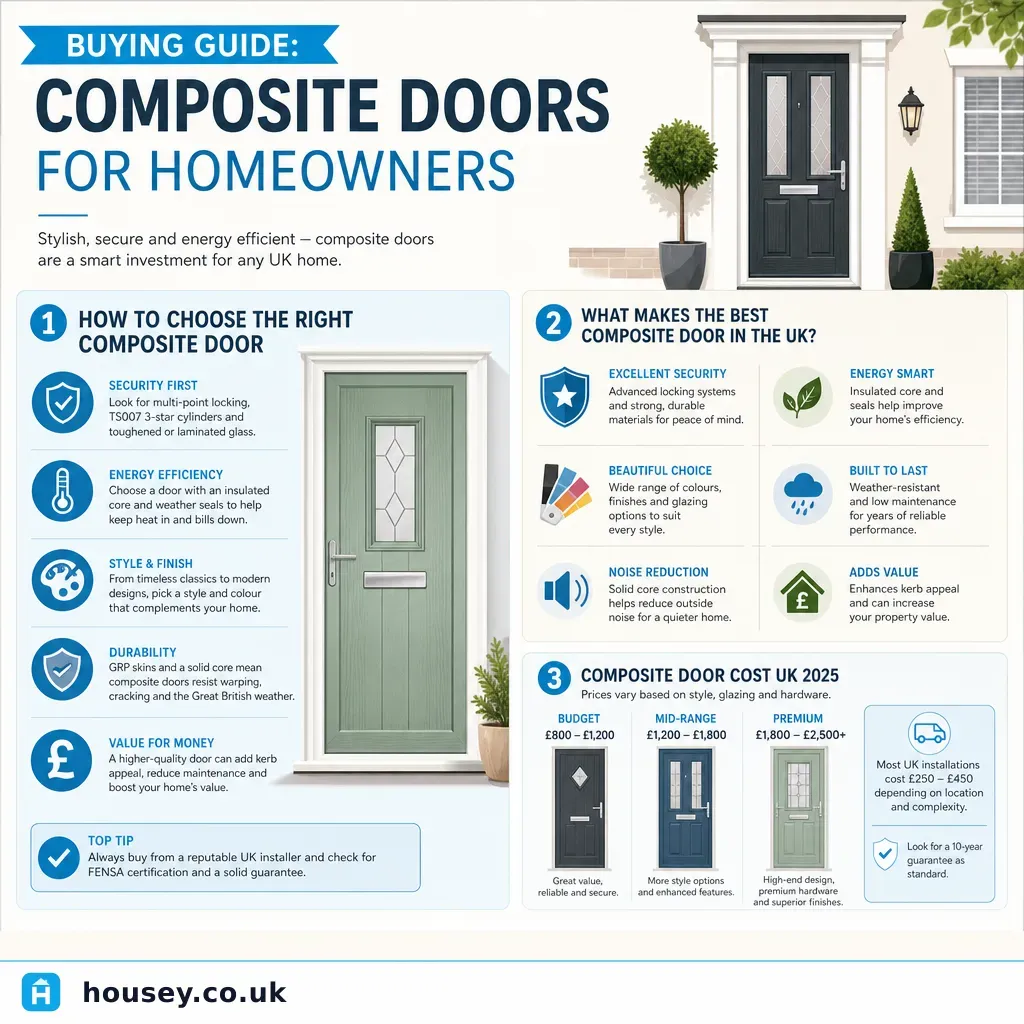
Buying guide: composite doors for homeowners
A composite door is a multi-layer product with a glass reinforced plastic outer skin, solid foam core, and multipoint locking as standard.
 Improvement & Build
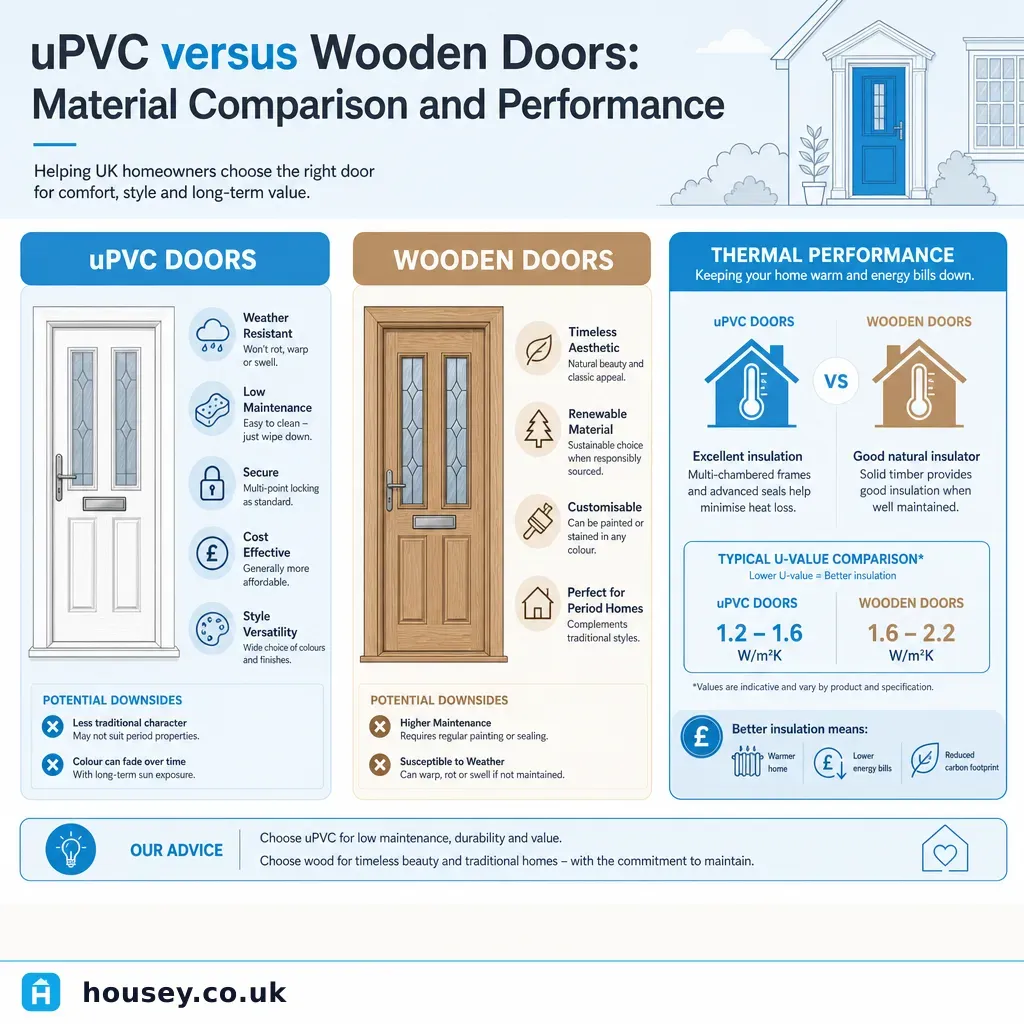
uPVC versus Wooden Doors: Material Comparison and Performance
uPVC doors are generally lower maintenance, better draught-sealed from the factory, and cheaper to install than timber doors.
 Improvement & Build
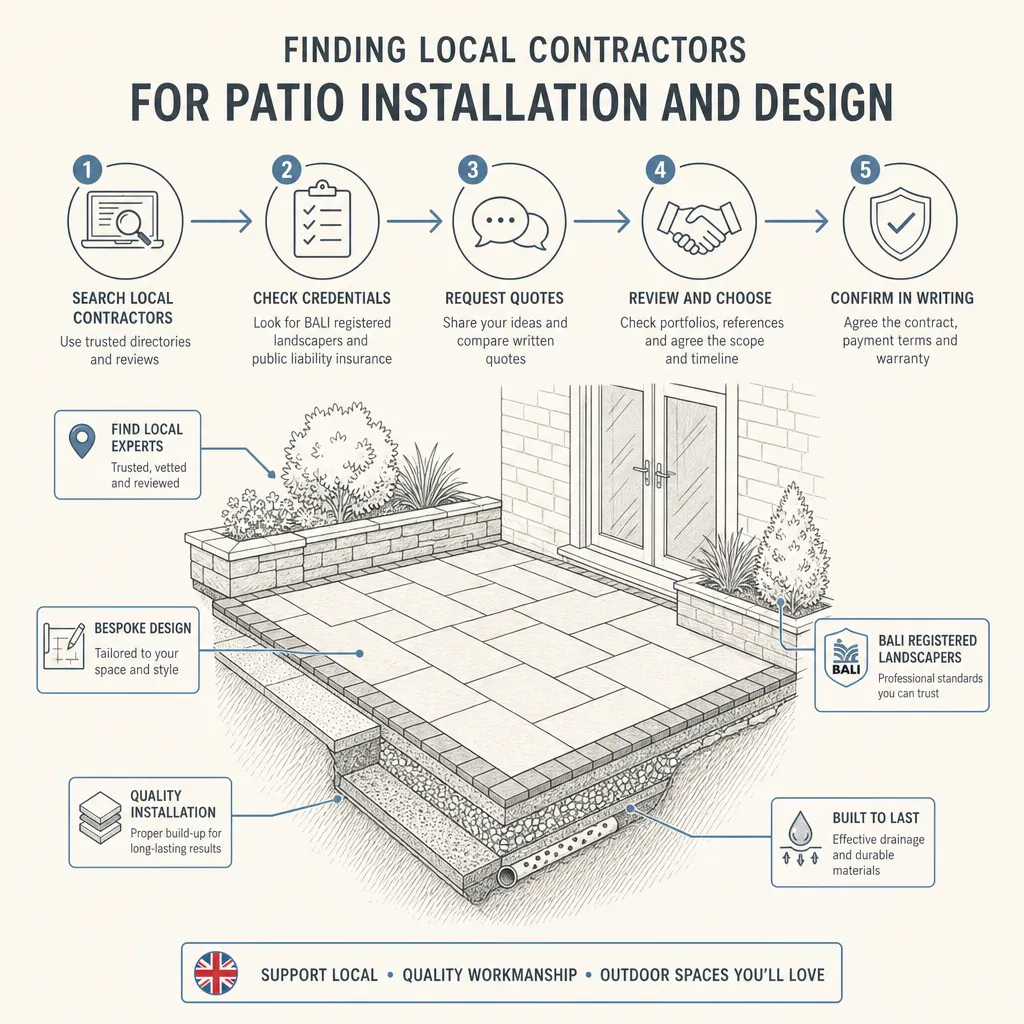
Finding Local Contractors for Patio Installation and Design
For most residential patios, a local landscaper or paving specialist manages the project from design to laying.