Buying Property Overseas: A UK Buyer's Guide to International Property Investment
By Housey · Last reviewed 8th of May 2026

Buying Property Overseas: A UK Buyer's Guide to International Property Investment
Overseas property purchases have grown steadily among UK buyers seeking holiday homes, retirement properties, or diversified investment assets — yet the legal, financial, and tax landscape differs dramatically from buying in England, Wales, or Scotland. Whether you are weighing up a Spanish apartment, a French farmhouse, or a Dubai development, the risks of proceeding without specialist advice in the target country are significant, and the cost of getting things wrong can far exceed any saving made by cutting corners on professional fees.
Key points
- UK residents buying overseas property must declare rental income and capital gains to HMRC under UK domestic tax law regardless of where the property is located, and penalties apply for late or omitted declarations.
- Most countries require a local notary or equivalent legal professional to complete property title transfers — the role of a UK conveyancer does not translate directly and cannot substitute for local legal advice.
- Mortgage products for overseas buyers are typically only available through lenders registered in the purchase country; UK high-street lenders rarely, if ever, lend on foreign real estate.
- Currency risk is a material financial exposure: exchange rate movements between offer acceptance and completion can add or reduce tens of thousands of pounds to the effective sterling cost of a purchase.
- Some countries restrict or prohibit foreign property ownership, or require government approval before a sale can proceed — confirm the rules in your target country before making any offer.
Can UK buyers purchase property abroad?
In most countries, yes — but conditions apply. EU member states generally allow non-EU nationals to purchase residential property freely, though Denmark and Switzerland apply notable restrictions. Outside the EU, frameworks vary considerably: Turkey, the UAE, and Thailand each have their own foreign ownership rules, with some markets permitting only leasehold interests or purchases within designated development zones.
The UK's departure from the EU did not remove the right to buy property in EU countries, but it changed residency entitlements. If you plan to stay in the property for more than 90 days in any 180-day period, you will typically need a visa or residency permit from the host country — this is a separate legal question from property ownership rights and should be checked with an immigration specialist.
Legal process: how it differs from a UK purchase
Buying property abroad rarely mirrors the UK system. In France, Spain, and most of southern Europe, a notaire or notario handles title transfer and acts for the state rather than the buyer. You still need your own independent lawyer — an abogado, avocat, or advogado — to review the contract, check for charges or encumbrances, and advise on your rights before you commit.
Country | Local legal professional needed | UK-style conveyancer sufficient? | Key document to check |
|---|---|---|---|
France | Notaire + your own avocat or French solicitor | No | Compromis de vente, cadastral plan |
Spain | Notario + your own abogado | No | Nota simple (title register extract) |
Portugal | Notário + your own advogado | No | Caderneta predial (land registry) |
UAE (Dubai) | Dubai Land Department process + your own solicitor | No | Title deed registered with DLD |
USA | Real estate attorney or title company | No | Title insurance, deed of trust |
This table illustrates that UK conveyancing expertise does not substitute for local legal advice. A UK-based international property solicitor can coordinate the process and advise on the UK-side implications, but they must work alongside a qualified local practitioner in the purchase country.
Tax obligations for UK residents buying overseas
HMRC treats overseas property income and gains in much the same way as UK property for UK residents. Key rules as of May 2026:
- Rental income from overseas property must be reported on a Self Assessment return and taxed at your marginal rate of Income Tax.
- Capital Gains Tax (CGT) applies when you sell an overseas residential property, at 18% (basic rate) or 24% (higher/additional rate) from April 2024, with a £3,000 annual exemption (2024/25 figure — check GOV.UK for current thresholds as these can change).
- Double taxation treaties may allow you to offset tax paid in the purchase country against your UK liability — check whether a relevant treaty exists via the HMRC double taxation agreements list on GOV.UK.
- Inheritance Tax may apply to overseas assets depending on your domicile status, which is a complex legal concept distinct from residence and should be assessed by a specialist adviser.
- Local transaction taxes: you will not pay Stamp Duty Land Tax on an overseas purchase, but local equivalents apply — such as Impuesto de Transmisiones Patrimoniales in Spain or droits de mutation in France.
Financing an overseas purchase
Most UK buyers who need a mortgage for an overseas property must use a lender based in the purchase country. Options include:
- Local bank mortgage: available in many countries but typically requires a local bank account, proof of UK income, and a deposit of 30–40% or more.
- International mortgage broker: specialists accredited by the Association of International Property Professionals (AIPP) can source products across multiple markets and translate local lending requirements.
- Release of equity from a UK property: remortgaging or taking a further advance on an existing UK home can fund an overseas purchase outright, avoiding foreign mortgage complexity — but increases the charge on your UK asset.
- Developer payment plans: some off-plan developments offer instalment arrangements, but these carry developer insolvency risk if deposits are not protected by a bank guarantee or equivalent.
Currency exchange is a significant and often underestimated risk. A purchase priced at €400,000 could cost £340,000 at one exchange rate and £370,000 six weeks later. Many international buyers use a specialist currency broker rather than a high-street bank to fix a forward exchange rate at the point of offer acceptance.
Valuing overseas property: what UK buyers need to know
Unlike in the UK, where RICS-qualified surveyors provide standardised valuations and condition reports, overseas property valuation standards vary significantly. In some markets:
- An independent buyer's valuation is not routinely commissioned; price negotiation relies on comparable sales data and agent guidance.
- Lenders commission their own valuation (tasación in Spain, expertise in France) for mortgage purposes, but this protects the lender rather than the buyer.
- Structural surveys are available but must be commissioned separately from a qualified local expert; UK-based RICS surveyors are not generally authorised to certify foreign property.
For older rural properties or any property with visible defects, commissioning an independent structural inspection before exchange is strongly advisable. Do not assume a lender's valuation gives you any assurance about the property's physical condition.
Decision tree: what type of advice do you need?
- Choose a UK-based international property solicitor if you need to understand the UK legal implications alongside the purchase country process.
- Instruct a local lawyer in the purchase country in every case — this is non-negotiable and should never be waived to save costs.
- Use a specialist currency broker if you are exchanging more than £10,000 and your completion date is more than a few weeks away.
- Seek a specialist tax adviser registered with HMRC if your purchase will generate rental income, you have complex domicile circumstances, or you plan to sell within five years.
- Contact the purchase country's land registry or notarial body if you have any doubt about title, charges, or ownership history before signing any preliminary agreement.
- Ask an immigration adviser if you plan to spend more than 90 days in any 180-day period in an EU country, as a visa or residency permit will likely be required.
Important limitations
This article provides general background information for UK buyers considering overseas property. It is not a substitute for legal, tax, or financial advice specific to your circumstances, the property, or the jurisdiction. Property law, tax treaties, ownership restrictions, and financing conditions differ by country and change frequently. Rules can also vary by region within a country — Spanish autonomous communities, for example, apply different transaction tax rates. Always instruct qualified professionals in both the UK and the purchase country before making any financial commitment.
What to ask a qualified professional
Before instructing a lawyer or financial adviser for an overseas purchase, ask:
- Are you registered and qualified to practise property law in the purchase country, or do you work with a regulated local partner?
- Can you confirm the title is free of charges, liens, or disputes using the local land registry?
- What are the total purchase costs, including local transaction taxes, notary fees, legal fees, and currency conversion?
- How does this purchase affect my UK tax position, including Income Tax, Capital Gains Tax, and Inheritance Tax?
- Are there any restrictions on renting the property short-term or long-term, and what local landlord compliance obligations apply?
- Has all construction on the property been legally registered with the relevant planning or building authority?
When to get professional help
Always instruct a qualified local lawyer before signing any preliminary agreement — not after. Do not rely on the developer's recommended lawyer, the estate agent's referred solicitor, or advice from the selling party, whose interests are not aligned with yours. If you are releasing equity from a UK property to fund the purchase, speak to an independent financial adviser (IFA) regulated by the FCA before proceeding. Seek specialist tax advice before completion, not after the transaction has closed.
How Housey can help
For the UK-side of an international purchase — whether you need to instruct a solicitor for a related UK transaction, obtain a formal property valuation, or understand your UK legal position — Housey connects you with qualified professionals. Explore conveyancing services for UK-side legal coordination, or request a property valuation survey if a formal UK valuation is required as part of your financing arrangements.
Frequently asked questions
Do I pay UK tax on overseas rental income?
Yes. HMRC requires UK residents to declare rental income from overseas property on a Self Assessment return. You may be able to offset local tax paid in the purchase country against your UK liability if a double taxation treaty exists — check the HMRC treaty list on GOV.UK. Penalties can apply for late or omitted declarations, so seek advice before completion.
Can I get a UK mortgage to buy property abroad?
Very rarely. Most UK high-street lenders will not lend on overseas property. You will usually need a local lender in the purchase country, release equity from a UK property, or use a specialist international mortgage broker accredited by the AIPP. Always confirm mortgage availability before making an offer, as it affects how quickly you can proceed.
Do I need a survey when buying overseas?
An independent structural inspection is not legally required in most countries, but it is strongly advisable — especially for older, rural, or off-plan properties. The lender's mortgage valuation protects the lender, not you as the buyer. Commission a separate buyer's condition report through a qualified local surveyor where possible before exchanging.
What happens to my overseas property when I die?
Your overseas property may be subject to both the inheritance laws of the purchase country and UK Inheritance Tax if you are UK-domiciled. Some countries apply forced heirship rules that can override your UK will. Always seek specialist legal and tax advice before purchasing, as post-death restructuring can be complex and costly to resolve.
Is it safe to buy off-plan overseas?
Off-plan purchases carry specific risks including developer insolvency, construction delays, and specification changes. Confirm that your deposit is protected by a bank guarantee or equivalent mechanism, instruct your own lawyer to review the contract, and verify the developer's track record and planning permissions independently before committing any funds.
Sources and further reading
- HMRC: Foreign income and gains — GOV.UK
- HMRC: Double taxation agreements — GOV.UK
- Capital Gains Tax rates on residential property — GOV.UK
- Association of International Property Professionals (AIPP) — AIPP
- Citizens Advice: Buying property abroad — Citizens Advice
Useful next reads
 Buying & Moving
International Properties and Overseas Property Investment Guide
UK residents buying property abroad face different legal systems, local purchase taxes, and UK income and capital gains tax obligations on any rental income or eventual sale.
 Buying & Moving
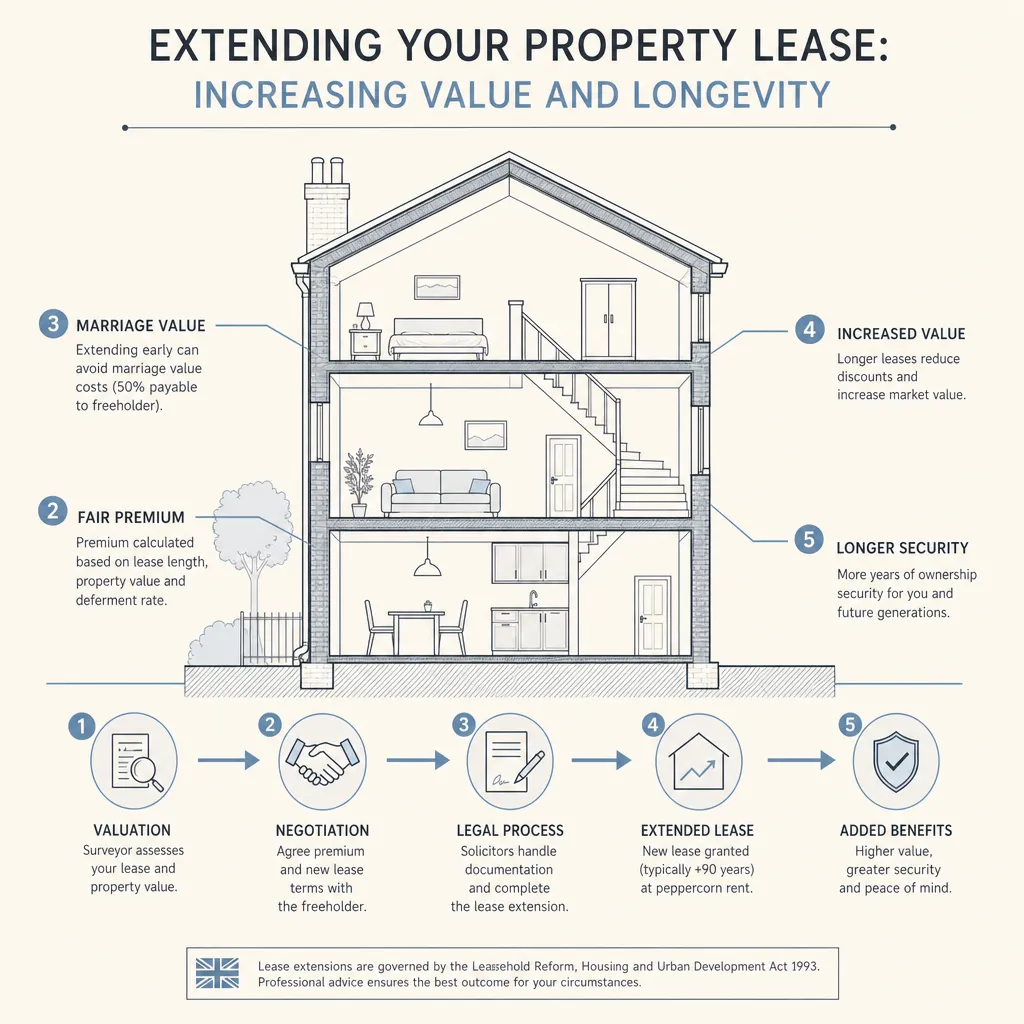
Extending Your Property Lease: Increasing Value and Longevity
Qualifying leaseholders in England and Wales can extend their lease by 90 years at a peppercorn ground rent under the Leasehold Reform, Housing and Urban Development Act 1993.
 Buying & Moving
Buy-to-Let Property Investment: Essential Guidance for Landlords
Buy-to-let investment in the UK requires careful financial planning.
 Buying & Moving
Property Investment Sentiment: Understanding Market Appetite for UK Real Estate
UK property investment sentiment is shaped by interest rates, rental yields, regional supply and demand, and policy changes such as stamp duty surcharges and landlord tax rules.
 Buying & Moving
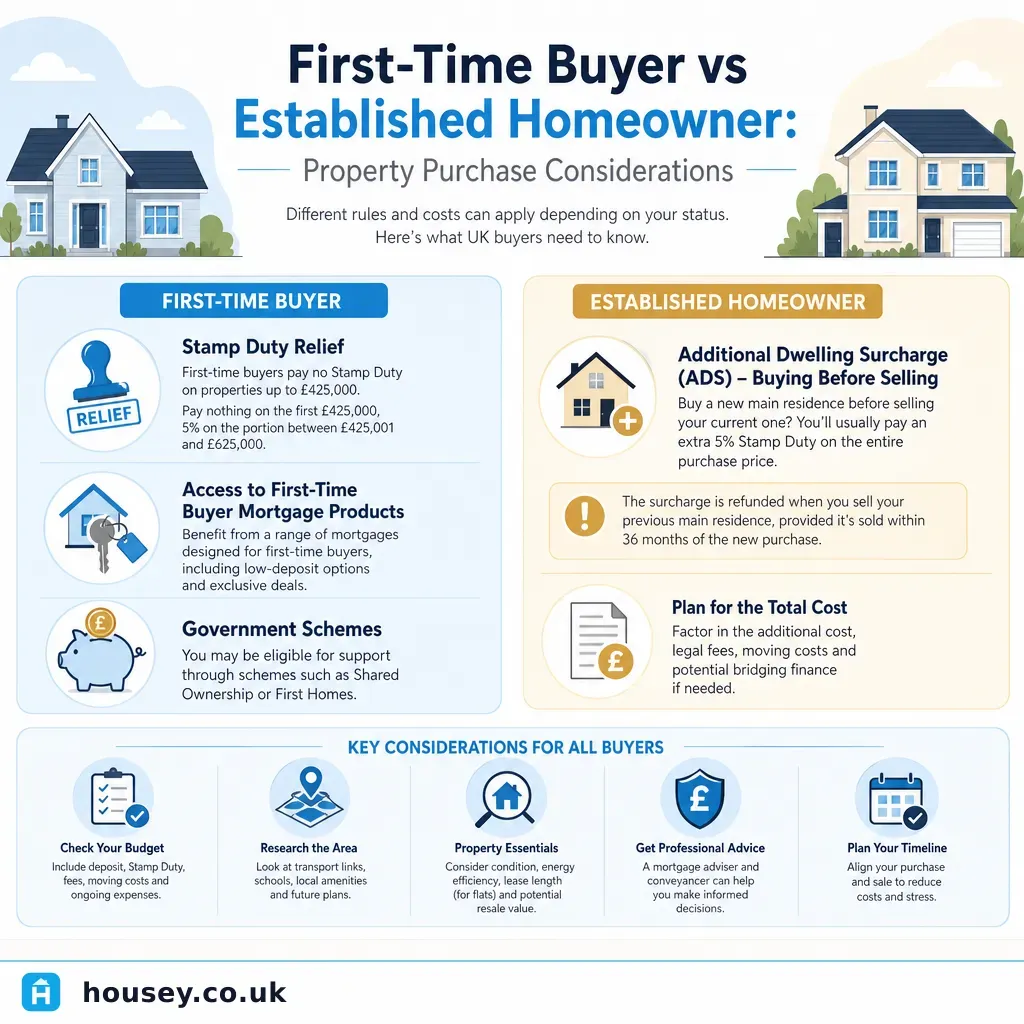
First-Time Buyer vs Established Homeowner: Property Purchase Considerations
First-time buyers in England pay no stamp duty on the first £300,000 of a property worth up to £500,000 and may access specific mortgage products.