Purchasing a Property with Existing Solar Panels: What You Need to Know
By Housey · Last reviewed 8th of May 2026
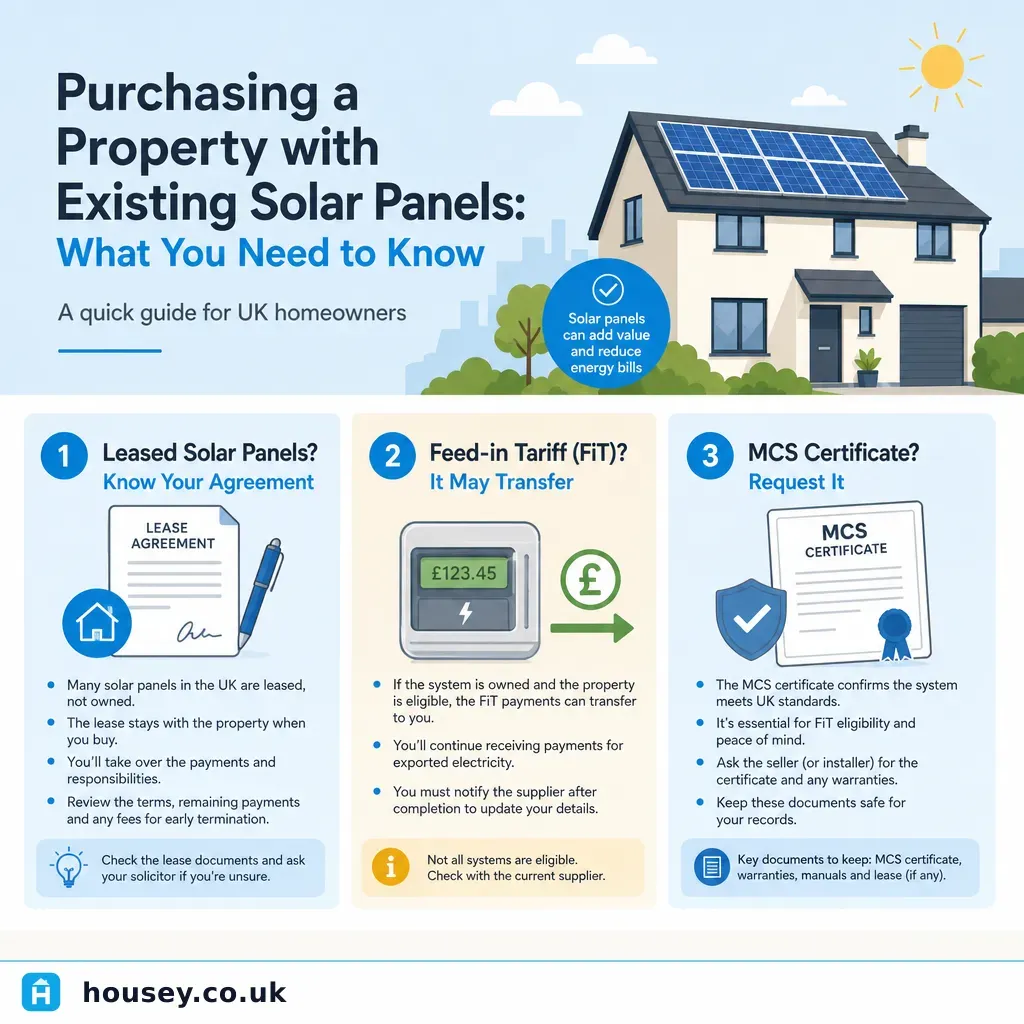
Purchasing a Property with Existing Solar Panels: What You Need to Know
Solar panels appear on a growing proportion of UK homes — the government estimates more than 1.4 million residential photovoltaic installations are in operation — and buying a property that already has them introduces a set of questions that standard conveyancing and survey processes do not automatically cover. Whether the panels add value, who legally owns them, what agreements are attached to the roof space, and whether the system is in good working order are all things a buyer needs to establish well before exchange of contracts.
Key points
- Solar PV panels may be owned outright by the seller or held under a roof-space lease with a third-party solar company — those two situations have fundamentally different legal and financial implications for a buyer.
- Feed-in Tariff (FiT) agreements, closed to new applicants in March 2019, remain active for existing installations and are transferable to a new owner; Ofgem's register must be updated after completion to avoid payments lapsing.
- The Microgeneration Certification Scheme (MCS) installation certificate is the key quality document for any solar PV system; its absence may indicate non-standard or non-compliant work and cannot be remedied retrospectively.
- Some mortgage lenders will not lend on properties where a third party holds a lease over the roof space — confirm your lender's position before proceeding.
- A standard RICS Level 2 Home Survey will typically only note the presence of solar panels; a RICS Home Survey (Level 3) or specialist solar survey is needed to assess panel condition, roof fixings, and inverter health in any detail.
Owned vs leased solar panels: the critical distinction
The single most important thing to establish at the outset is whether the seller owns the panels outright or whether a third-party company holds a lease or licence over the roof space.
Owned panels
If the seller purchased the installation — typically £5,000–£10,000 or more for a standard domestic system (Indicative UK costs, last reviewed 2026-05-08) — the panels form part of the fixtures and fittings and transfer with the property in the ordinary way. Ownership should be confirmed in the seller's property information forms (TA6).
Leased or rent-a-roof panels
Between approximately 2009 and 2016, many solar companies offered "free solar" schemes: they installed panels at no upfront cost in exchange for a long-term lease of the roof space, often 25 years, and retained the Feed-in Tariff income. The homeowner received free electricity generated on site but not the FiT payments.
These lease agreements run with the property, not the individual — meaning the buyer inherits the obligation. The key issues for buyers are set out below.
Issue | Why it matters for a buyer |
|---|---|
Long remaining term | Buyer is bound by the lease for its remaining duration — potentially 10–20 years |
Lender approval | Some mortgage lenders will not lend on properties with roof-space leases; check before proceeding |
Third-party access rights | The solar company usually retains the right to access the roof for maintenance and inspection |
Early termination | Some companies allow buyout for a fee; others do not — obtain clarity in writing before exchange |
End-of-life obligations | The lease should specify who is responsible for panel removal and roof reinstatement when the term ends |
If a lease exists, your conveyancer must obtain and review a full copy before exchange. Do not exchange contracts without seeing this document.
Feed-in Tariff and Smart Export Guarantee: what happens at sale?
The Feed-in Tariff (FiT) scheme closed to new applicants in March 2019 but continues for existing registered installations. If the seller is receiving FiT payments and the panels are owned outright, the buyer can usually have the contract transferred.
- The seller's energy supplier should be notified of the change of ownership.
- Ofgem's FiT register holds registration records and transfer information.
- Failure to register the transfer promptly may result in payments lapsing.
- Your conveyancer should request a copy of the FiT registration certificate and recent generation meter readings as part of the TA6 and TA10 property information forms.
The Smart Export Guarantee (SEG), which replaced FiT for new installations from January 2020, is also transferable — confirm the process with the relevant supplier on or shortly after completion.
What surveys should you commission?
Choosing the right survey depends on the age and condition of the property and the installation.
Survey type | What it covers | When to use it |
|---|---|---|
Full structural assessment including roof structure; will flag concerns about fixings and roof condition | Older properties, visible roof issues, large panel arrays, or where a lease is present | |
Panel output, inverter health, wiring condition, shading analysis, mounting brackets and roof penetrations | Any purchase where panels are owned and you want to confirm performance and safety | |
Whether and how the panels affect the property's mortgage valuation | If your lender raises specific concerns about the installation | |
Current energy rating including estimated solar generation output | Useful for benchmarking; a valid EPC must be in place for the sale |
A specialist solar survey typically costs £150–£350 depending on system size (Indicative UK costs, last reviewed 2026-05-08). It can identify degraded panels, inverter faults, unsafe wiring, and shading that significantly reduces actual output compared with the rated capacity.
Document preparation checklist
Before or at the point of exchange, ensure you have obtained the following from the seller via your conveyancer:
Absence of the MCS certificate is the most significant documentation gap. Retrospective MCS certification is not possible; without it, FiT or SEG payments cannot be registered and the quality of the installation cannot be verified through the scheme.
What to ask before proceeding
- Are the panels owned outright or subject to a lease or licence agreement with a third party?
- Is there an active FiT or SEG contract, and what are the current generation and export figures?
- Has the system had a professional inspection in the last five years?
- Are all warranties still in force, and are they transferable to a new owner?
- Has the roof been inspected since the panels were installed, and are there any signs of moisture ingress around the fixings?
- Does the property have a valid EPC that reflects the solar installation?
- Has the installation ever been the subject of an insurance claim or warranty repair?
- If leased, what are the exact terms for early termination and what is the remaining lease term?
Red flags to watch for
- No MCS installation certificate — the most common and most serious documentation gap
- A roof-space lease that your mortgage lender will not accept
- An inverter over 10 years old with no recent service record (inverter lifespan is typically 10–15 years)
- Visibly cracked, discoloured, or delaminated panels
- Evidence of roof leaks near panel fixings — water staining in the loft space or damaged roofing felt
- Listed building or conservation area installation without planning consent
- Seller unable to provide generation meter readings or FiT payment history
- Significant discrepancy between the system's rated capacity and reported generation figures
Important limitations
This article provides general information for UK buyers. Rules governing planning consent, lease enforceability, lender policies, and FiT or SEG transfer processes can vary by property, installation date, lender, and local planning authority. Always seek advice from a qualified conveyancer, and where structural or electrical concerns are present, from a chartered surveyor or a registered electrician. Nothing in this article constitutes legal, financial, structural, or electrical advice, and it is not a substitute for professional assessment of your specific property and circumstances.
What to ask a qualified professional
Before instructing professionals, prepare these questions:
- Conveyancer: Has the seller confirmed whether the panels are owned or leased? Can you obtain a full copy of any lease agreement and confirm our mortgage lender's position before we proceed to exchange?
- RICS surveyor (Level 3): Does the roof structure appear sound under the panel array? Are there any signs of water ingress or structural concerns around the fixings or beneath the mounting rails?
- Solar survey specialist: What is the current output relative to the original rated capacity? Is the inverter functioning correctly and within its expected service life? Is any wiring non-compliant with current regulations?
- Mortgage lender or broker: Does your lender have a specific policy on properties with roof-space solar leases, and what documentation will be required to proceed to mortgage offer?
When to get professional help
Solar panels on a property you are considering buying should always prompt careful documentary review by your conveyancer before exchange. Commission a solar survey or Level 3 Home Survey if:
- The property may have had a roof-space lease from the 2010–2016 era of "free solar" schemes
- The seller cannot produce an MCS installation certificate
- You notice visible panel damage, roof staining around fixings, or an aged inverter
- Your mortgage lender raises a query about the installation
- The property is a listed building or sits in a conservation area
How Housey can help
Housey can help you arrange the specialist checks you need before exchange. Compare quotes from professionals offering solar surveys, RICS Home Surveys, EPC assessments, and valuation surveys — all through one straightforward request.
Frequently asked questions
Do solar panels add value to a property?
Evidence is mixed. Owned systems with a valid MCS certificate and an active FiT or SEG contract may add some value, particularly as energy prices remain elevated. Leased systems can complicate a sale and deter some buyers or lenders. A qualified RICS valuer is the right professional to advise on the likely impact for a specific property.
Can I get a mortgage on a house with solar panels?
Yes, in most cases — but leased solar panels can cause complications. Some lenders decline properties where a third party holds a roof-space lease, as it affects their security over the building. Always confirm your lender's position with your mortgage broker before exchange; lender policies vary and some require specific documentation about the installation.
What happens to Feed-in Tariff payments when a property is sold?
FiT payments are tied to the installation, not the individual. A new owner can register to continue receiving payments by notifying the seller's energy supplier and updating Ofgem's FiT register. Your conveyancer should handle this as part of the transfer process. Payments may lapse if the registration is not updated promptly after completion.
What is an MCS certificate and why does it matter?
The Microgeneration Certification Scheme (MCS) is a quality assurance framework for small-scale renewable energy installations in the UK. An MCS certificate confirms the system was installed by an accredited installer to defined standards. Without it, installation quality cannot be verified through the scheme, and any FiT or SEG contract may be at risk. MCS certification cannot be obtained retrospectively.
Are solar panels covered by home insurance?
Most standard home insurance policies cover solar panels as part of the building structure, but check the policy limits and confirm coverage with your new insurer at the point of purchase. Some specialist renewable energy policies offer broader cover, including loss of generation income if the system develops a fault.
Sources and further reading
- Feed-in Tariff scheme — Ofgem
- Smart Export Guarantee — GOV.UK
- Microgeneration Certification Scheme — MCS
- Solar panels — planning guidance — GOV.UK
- Solar panels — consumer guidance — Energy Saving Trust
Useful next reads
 Buying & Moving
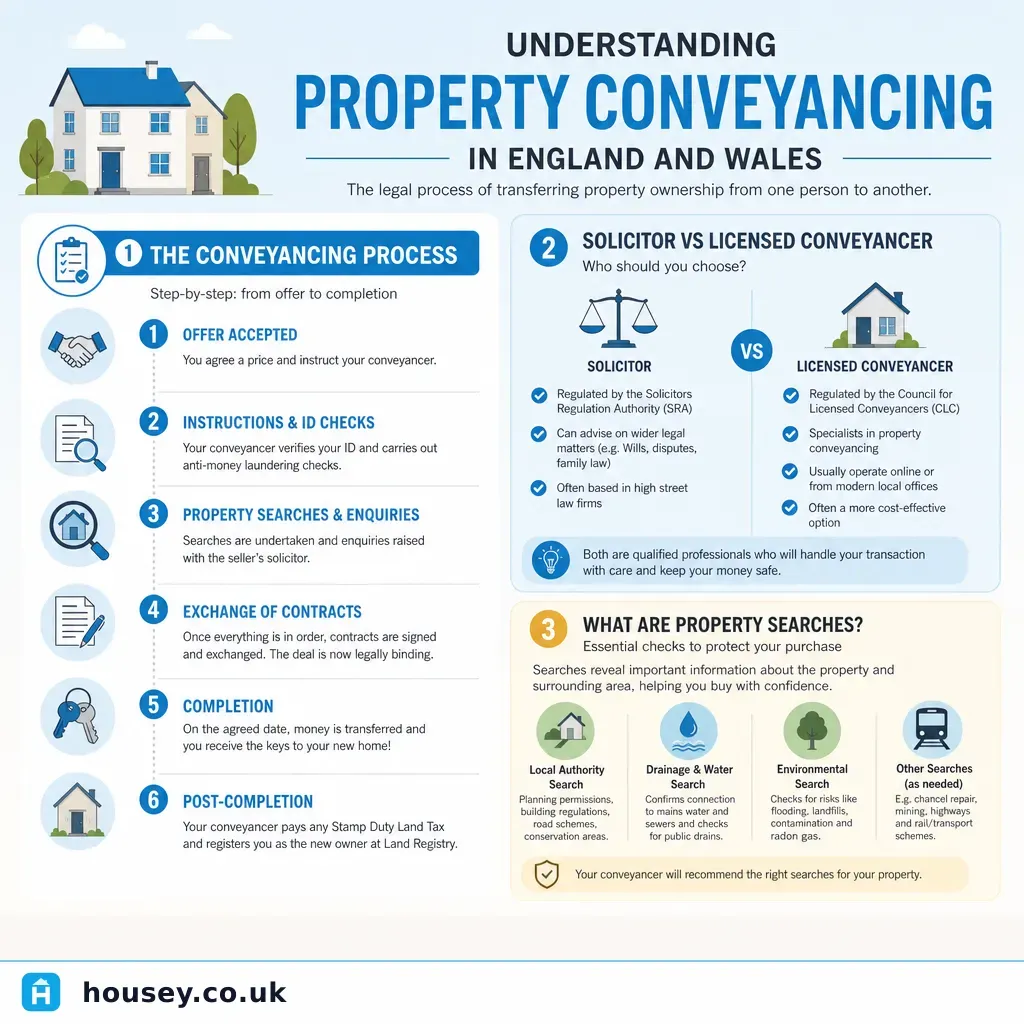
Understanding Property Conveyancing in England and Wales
Conveyancing is the legal process of transferring property ownership in England and Wales.
 Buying & Moving
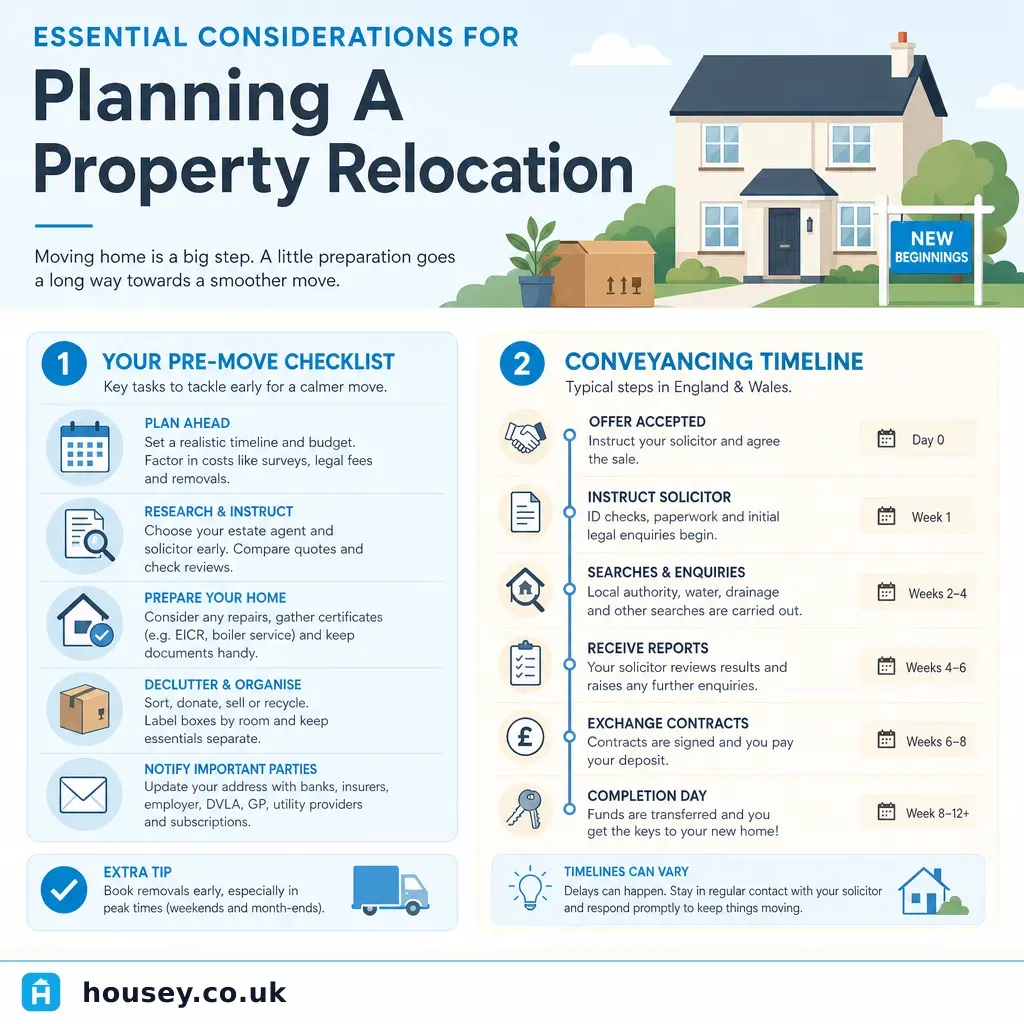
Essential Considerations For Planning A Property Relocation
Planning a UK property relocation means coordinating legal, financial, and practical steps across several months.
 Buying & Moving
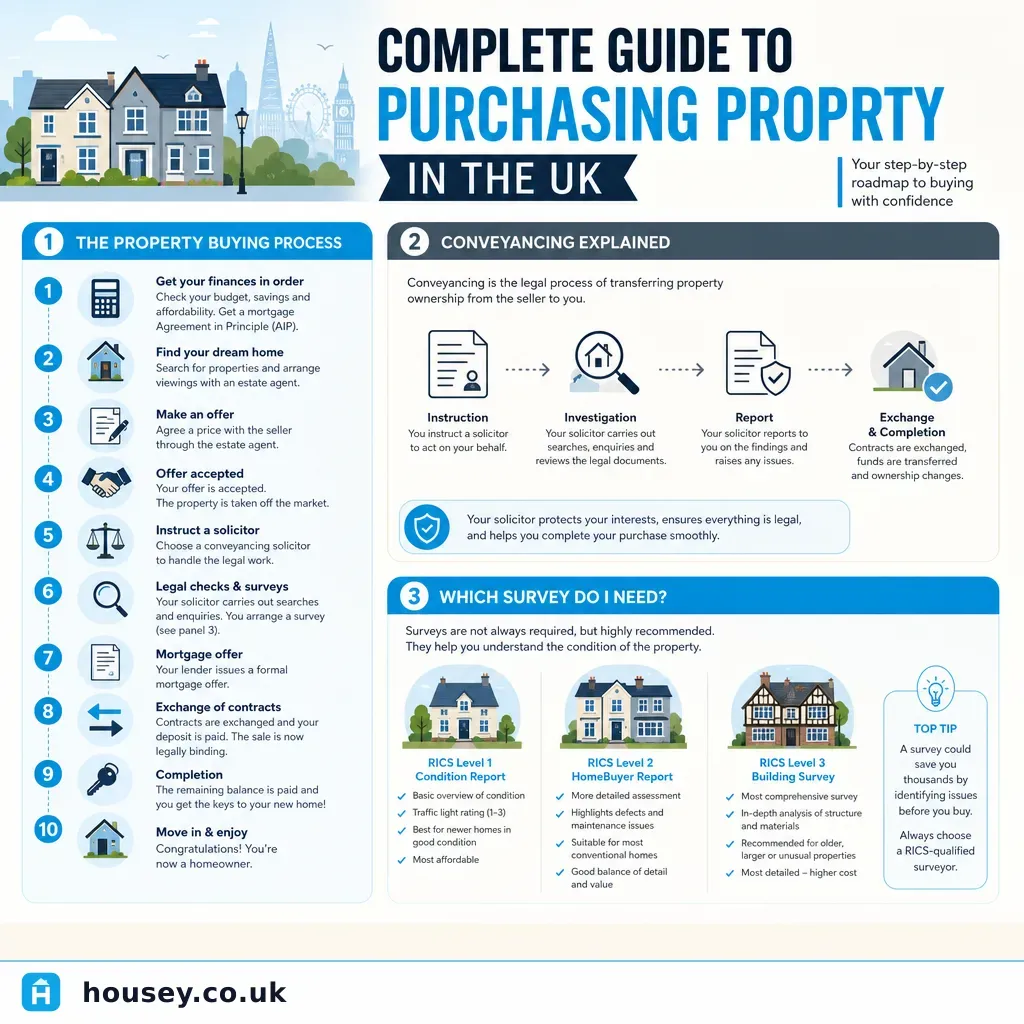
Complete Guide to Purchasing Property in the UK
Buying property in England and Wales typically takes 12 to 16 weeks from offer acceptance to completion.
 Buying & Moving
Shared Ownership: Building Your Path To Property Ownership
Shared ownership lets you buy a share of a home — typically 10% to 75% — from a housing association and pay subsidised rent on the remainder.
 Buying & Moving
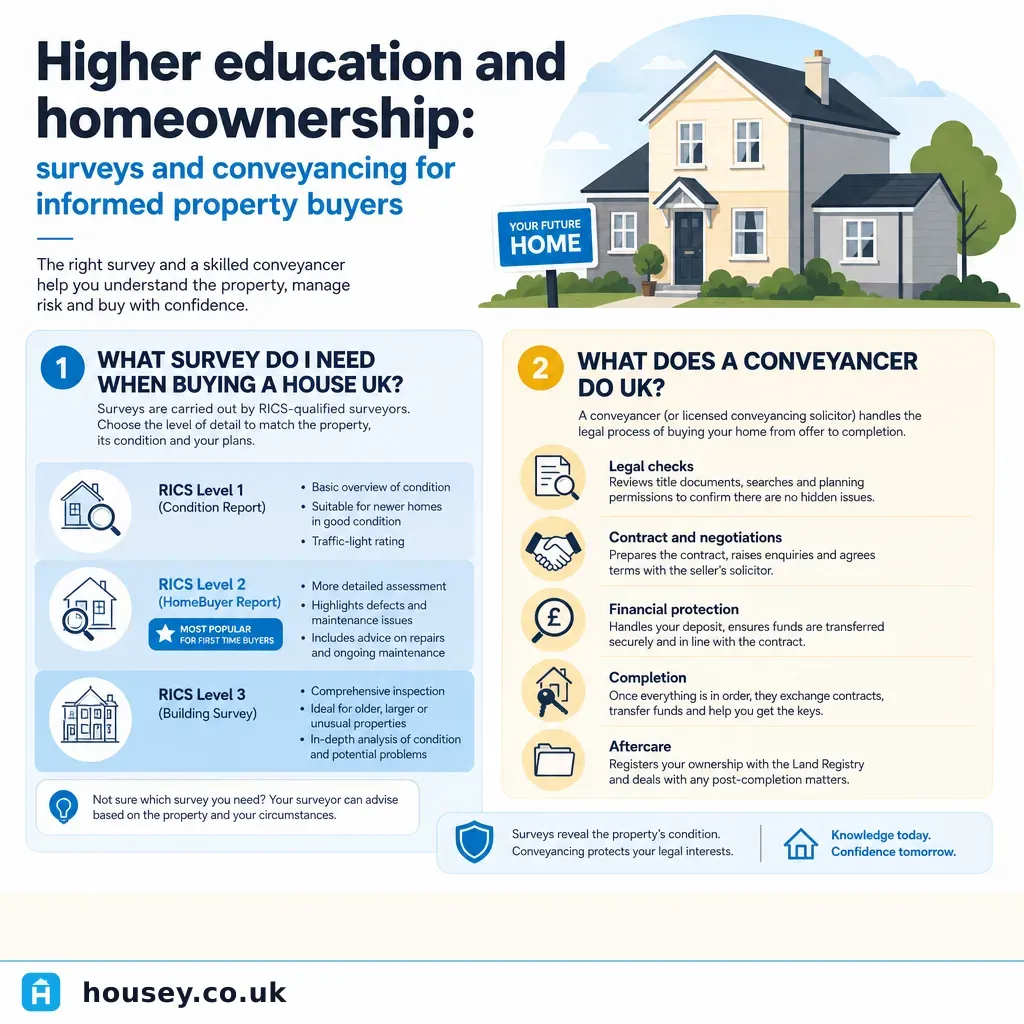
Higher education and homeownership: surveys and conveyancing for informed property buyers
Informed property buyers in the UK typically commission a RICS Level 2 or Level 3 survey before exchange, alongside instructing a conveyancer to carry out legal searches and review title.