Understanding Property Conveyancing in England and Wales
By Housey · Last reviewed 24th of May 2026
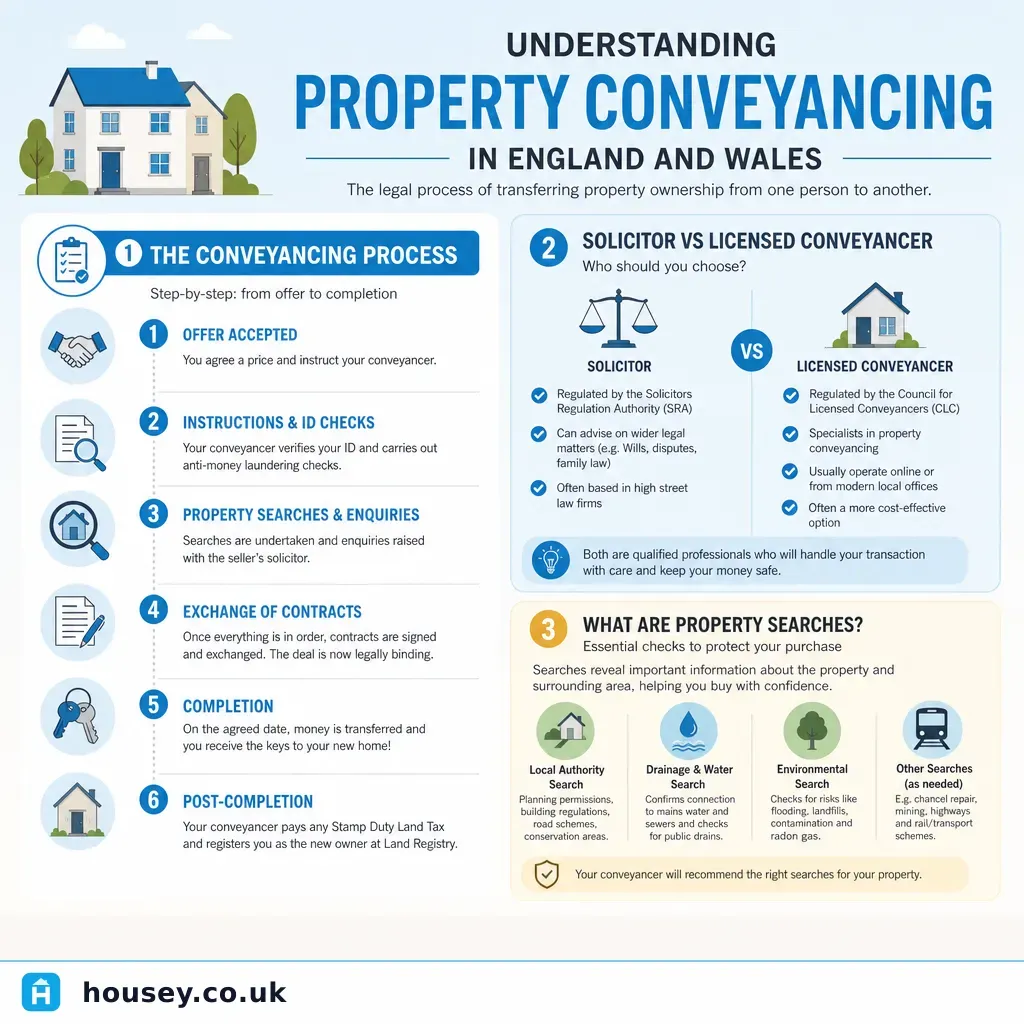
Understanding Property Conveyancing in England and Wales
Property conveyancing is most people's first encounter with property law, and the unfamiliarity of the process — combined with the financial stakes — makes it one of the most anxious stages of buying or selling a home. Questions arise at almost every step: why is it taking so long, what are searches and why are they needed, and when does the deal actually become legally binding? Understanding how conveyancing works helps you set realistic expectations, prepare the right documents, and ask the right questions of the professional handling your transaction.
Key points
- In England and Wales, property ownership transfers only at legal completion — exchange of contracts creates a binding obligation to complete, but title does not legally pass until the completion date.
- Conveyancing must be carried out by a solicitor regulated by the Solicitors Regulation Authority (SRA) or a licensed conveyancer regulated by the Council for Licensed Conveyancers (CLC).
- Local authority searches can take 4–8 weeks in some areas; this is one of the most common causes of extended transaction timelines and is largely outside the buyer's or solicitor's control.
- The Law Society's Conveyancing Quality Scheme (CQS) accreditation indicates a firm meets recognised practice standards for residential conveyancing.
- Mortgage lenders typically require the buyer's conveyancer to also act in their interests, which means satisfying lender-specific conditions alongside the buyer's own requirements.
What is conveyancing and why does it take so long?
Conveyancing is the legal and administrative process of transferring ownership of a property from one person to another. In England and Wales — Scotland and Northern Ireland operate different legal systems — the process involves four stages:
- Instruction — appointing a solicitor or licensed conveyancer
- Pre-exchange — title investigation, searches, and raising enquiries with the seller's solicitor
- Exchange of contracts — the legally binding commitment to buy or sell at the agreed price on the agreed date
- Completion — transfer of funds, legal title, and release of keys
The process takes 12–20 weeks on average, though chain-free freehold transactions can complete in 8–10 weeks and leasehold properties or complex chains often take longer. Delays most commonly arise from:
- Local authority search backlogs (some councils take 6–8 weeks)
- Incomplete or slow replies to pre-contract enquiries
- Mortgage offer conditions that must be satisfied before proceeding
- Chain dependencies — a delay anywhere in a chain affects every link
- Leasehold complications: missing service charge receipts, absent management companies, or pending major works notices
Solicitor or licensed conveyancer: which should you choose?
Both are legally qualified to handle residential conveyancing in England and Wales, and both are regulated professionals. The right choice depends on your circumstances.
Professional | Regulated by | Best for | Not ideal for |
|---|---|---|---|
Solicitor | Solicitors Regulation Authority (SRA) | Complex transactions: leasehold, shared ownership, listed buildings, transfers of equity, trusts, Help to Buy | May cost more for a straightforward freehold purchase |
Licensed conveyancer | Council for Licensed Conveyancers (CLC) | Straightforward freehold purchases and sales | Cannot advise on wider legal matters (trusts, family law) if these arise unexpectedly |
For most standard freehold transactions, either professional is suitable. For leasehold, shared ownership, right-to-buy, or any title with complications, a solicitor with residential conveyancing experience is generally more appropriate.
Which conveyancing professional is right for you?
- Choose a solicitor if your transaction involves leasehold title, shared ownership, a Help to Buy equity loan, a transfer of equity, unusual title or restrictive covenants, or any element where non-property legal issues such as trusts or family arrangements may arise.
- Choose a licensed conveyancer if you are buying or selling a straightforward freehold property and cost efficiency is important to you.
- Check for CQS accreditation — the Law Society's Conveyancing Quality Scheme signals a recognised quality standard for residential conveyancing firms.
- Avoid choosing solely on price — a firm pricing aggressively may be managing an unsustainable caseload, which is a common cause of delays and poor communication.
- Ask your mortgage broker whether your lender requires a panel firm; using an off-panel solicitor may mean paying two sets of legal fees.
What searches does a conveyancer carry out?
Searches are formal enquiries made to various bodies to reveal information about a property that would not be apparent from a physical inspection.
Search | What it reveals | Who provides it |
|---|---|---|
Local authority search | Planning history, enforcement notices, road adoption, tree preservation orders, conservation area and listed building status | Local council |
Drainage and water search | Location of public sewers, adoption status, water authority details | Water company |
Environmental search | Flood risk, ground contamination, landfill proximity, radon levels | Environmental data providers |
Land Registry search | Registered title, existing charges and mortgages, ownership history | HM Land Registry |
Chancel repair search | Historic liability to contribute to church chancel repairs | Specialist search providers |
Your conveyancer will advise which searches are appropriate; mortgage lenders typically require at minimum the first four. Personal search agents can sometimes deliver local authority results faster than the council's own turnaround, though the results format differs.
Important limitations
This article provides general information about the conveyancing process in England and Wales. Conveyancing law and practice varies depending on property type, tenure (freehold or leasehold), location, lender requirements, and individual transaction circumstances. Nothing in this article constitutes legal advice. You should instruct a qualified solicitor or licensed conveyancer for your own transaction. Scotland and Northern Ireland operate entirely different legal systems with distinct property transfer processes.
What to ask a qualified professional
Before instructing a conveyancer, ask:
- Are you regulated by the SRA or CLC, and do you hold CQS accreditation?
- Are you on my mortgage lender's approved panel?
- Who will handle my file day to day, and how do I contact them directly?
- What is your typical caseload, and what are your current local authority search turnaround times in this area?
- What is included in the quoted fee, and what disbursements should I budget for?
- How do you manage chain communication with other solicitors?
- If this transaction falls through before exchange, what fees will I owe?
When to get professional help
Conveyancing is a legal process and should always be handled by a regulated professional. Consider escalating your concern or seeking additional specialist advice if:
- Your conveyancer is unresponsive for more than two working days on an urgent matter
- You are approaching exchange and material issues — missing title documents or adverse search results — remain unresolved
- The property has had undisclosed building works, a complicated planning history, or a lease with fewer than 80 years remaining
- Bank account details for transferring completion funds arrive by email alone — always verify account details by telephone using a number sourced independently, as conveyancing fraud is a known and growing risk
- You are uncertain whether a leasehold clause, restrictive covenant, or title defect affects your plans for the property
How Housey can help
Housey can connect you with experienced conveyancing solicitors and licensed conveyancers for your property purchase or sale in England and Wales. Through our platform, you can receive and compare quotes from regulated professionals and move your transaction forward with confidence.
Frequently asked questions
When does a property sale become legally binding in England and Wales?
A property sale becomes legally binding at exchange of contracts. Before exchange, either party can withdraw without financial penalty beyond legal costs already incurred. After exchange, both parties are committed; the buyer pays a deposit — usually 10% of the purchase price — to the seller's solicitor. Completion follows on the agreed date, at which point legal ownership transfers.
What is the difference between exchange and completion?
Exchange of contracts is the point at which the sale becomes legally binding and both parties commit to the agreed completion date and purchase price. Completion is when the remaining funds transfer and legal title passes — this is when keys are released. The gap between exchange and completion is typically one to four weeks, though same-day exchange and completion does occur in some circumstances.
Can I do my own conveyancing?
Legally you can act as your own conveyancer for a cash purchase, but if you have a mortgage your lender will almost certainly require a regulated conveyancer to act on their behalf. Even for cash transactions, DIY conveyancing carries significant risk — missed searches, incorrectly drafted transfer documents, or unidentified title defects can create serious and costly problems that are difficult to remedy after completion.
How much does conveyancing cost in England and Wales?
Costs vary by property price, tenure, and firm. As a general guide, buyers might expect legal fees of £800–£2,000 plus disbursements including search fees, Land Registry registration fees, and Stamp Duty Land Tax where applicable. Sellers generally pay less. Always request a full fee and disbursement breakdown before instructing. Indicative UK costs, last reviewed 2026-05-24; quotes vary significantly between firms.
What is a title deed?
A title deed is the legal document recording ownership of a property. In England and Wales, most properties are registered with HM Land Registry, which holds digital title records. Your conveyancer searches the register to confirm ownership, identify any charges such as existing mortgages, and check for restrictions or covenants affecting what you can do with the property.
Sources and further reading
- HM Land Registry — GOV.UK
- Council for Licensed Conveyancers — CLC
- Law Society: buying and selling a home — Law Society
- Stamp Duty Land Tax — GOV.UK
- Citizens Advice: buying a home — Citizens Advice
Useful next reads
 Buying & Moving
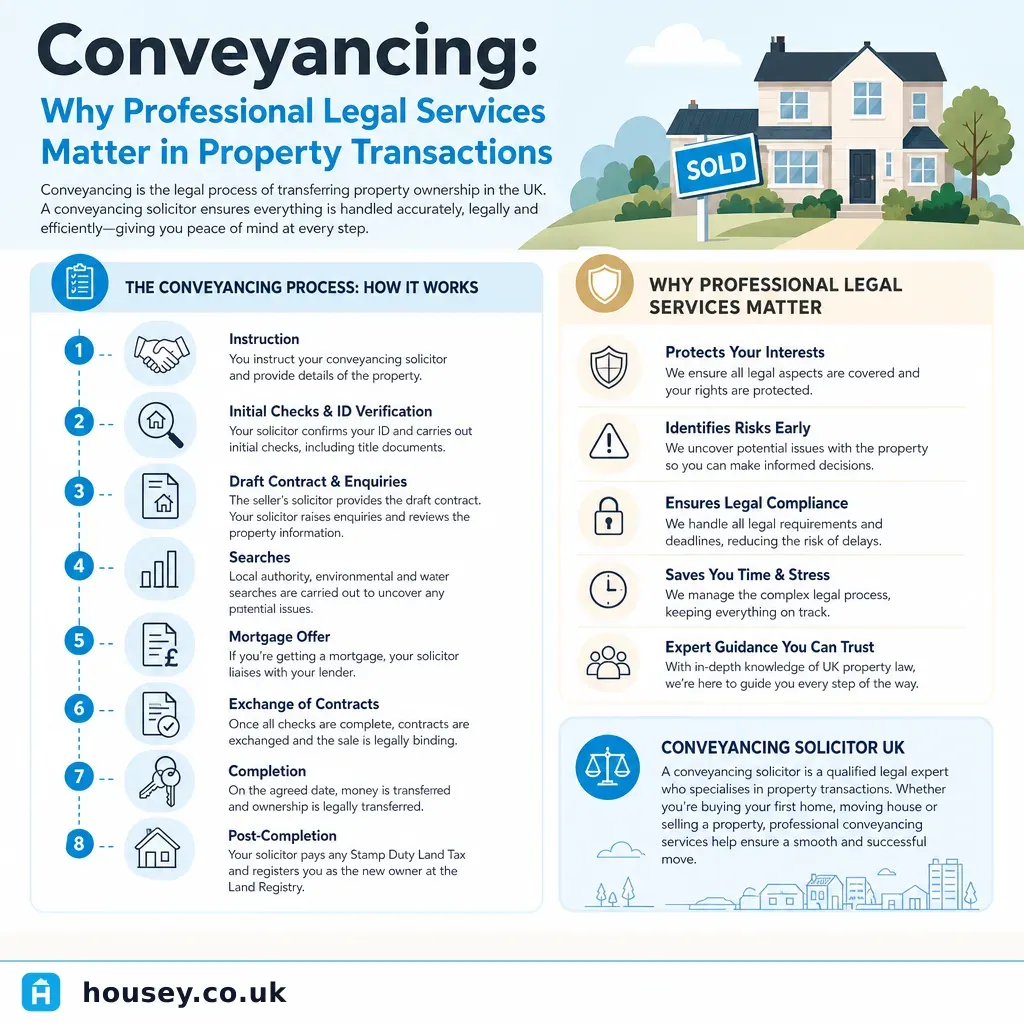
Conveyancing: Why Professional Legal Services Matter in Property Transactions
Conveyancing is the legal process of transferring property ownership in England and Wales, carried out by an SRA-regulated solicitor or CLC-regulated licensed conveyancer.
 Buying & Moving
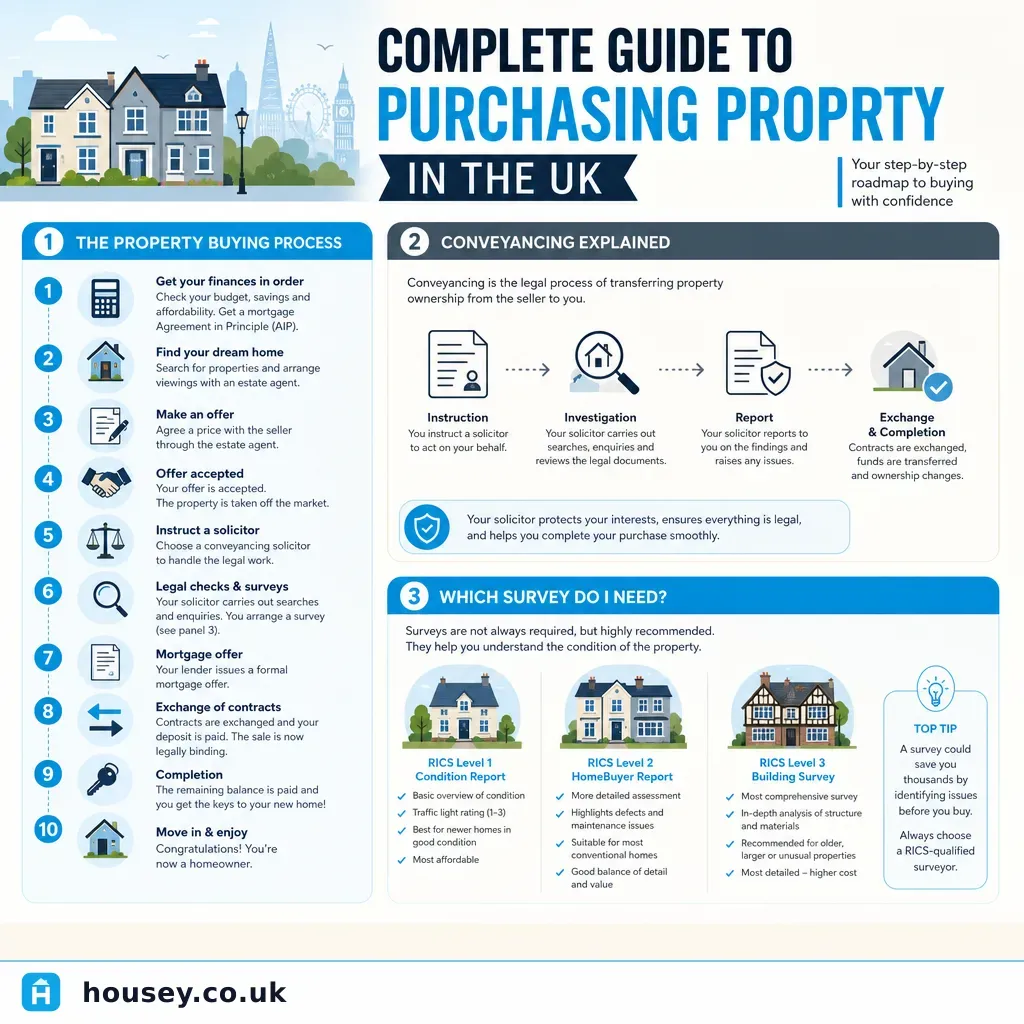
Complete Guide to Purchasing Property in the UK
Buying property in England and Wales typically takes 12 to 16 weeks from offer acceptance to completion.
 Buying & Moving
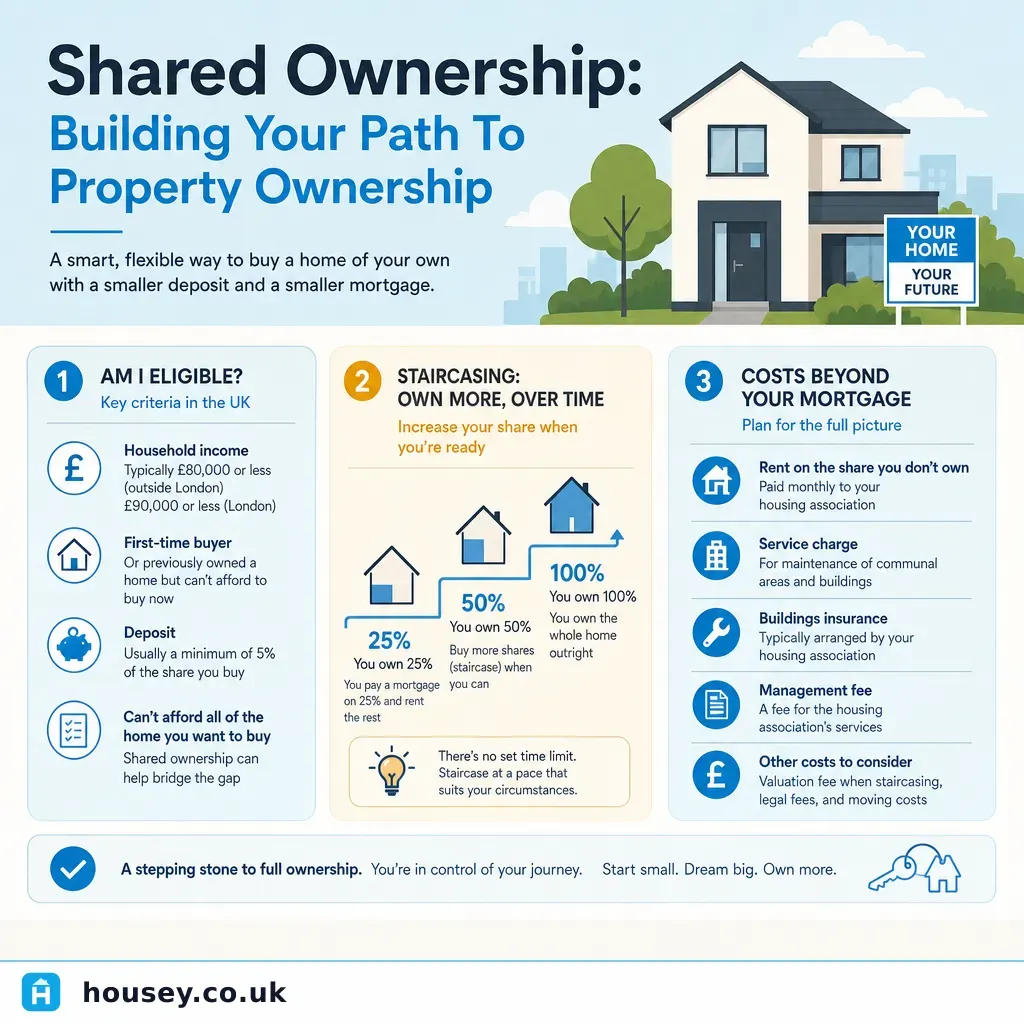
Shared Ownership: Building Your Path To Property Ownership
Shared ownership lets you buy a share of a home — typically 10% to 75% — from a housing association and pay subsidised rent on the remainder.
 Buying & Moving
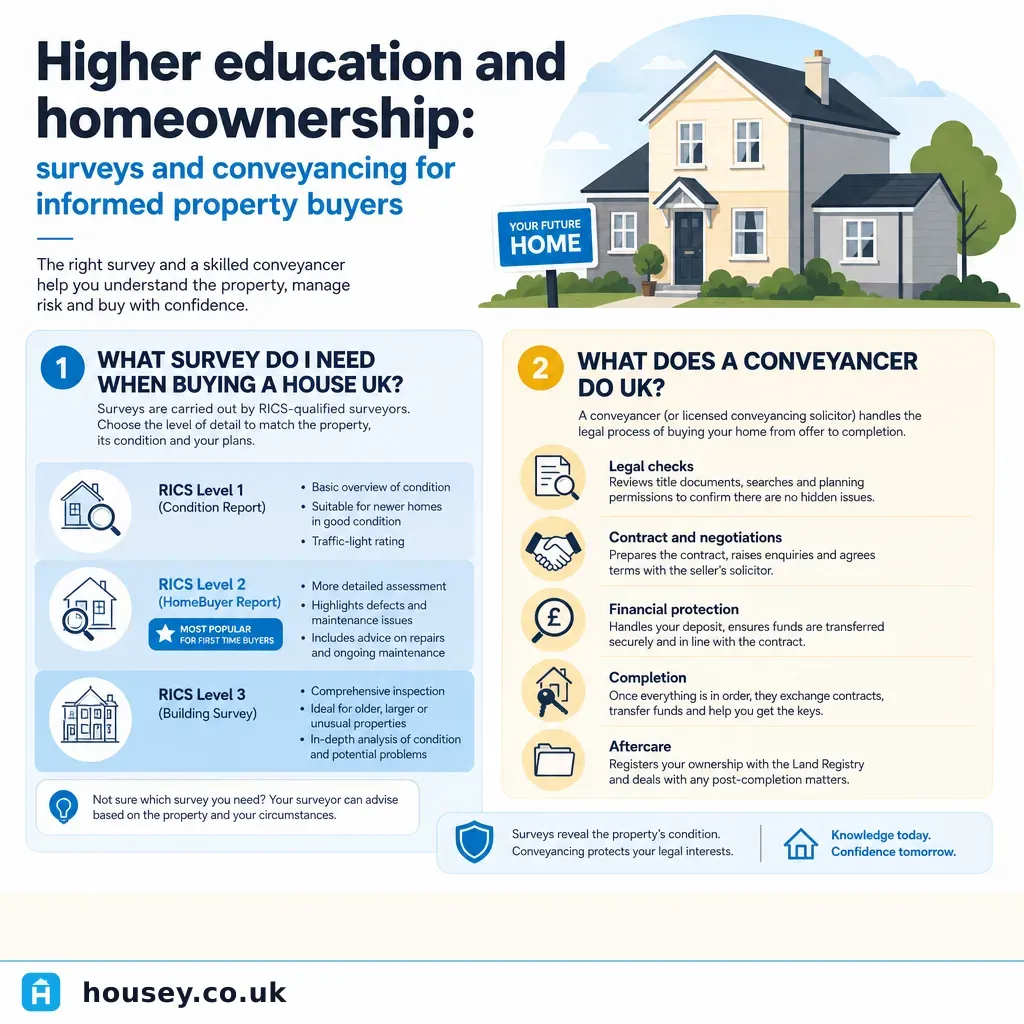
Higher education and homeownership: surveys and conveyancing for informed property buyers
Informed property buyers in the UK typically commission a RICS Level 2 or Level 3 survey before exchange, alongside instructing a conveyancer to carry out legal searches and review title.
 Buying & Moving
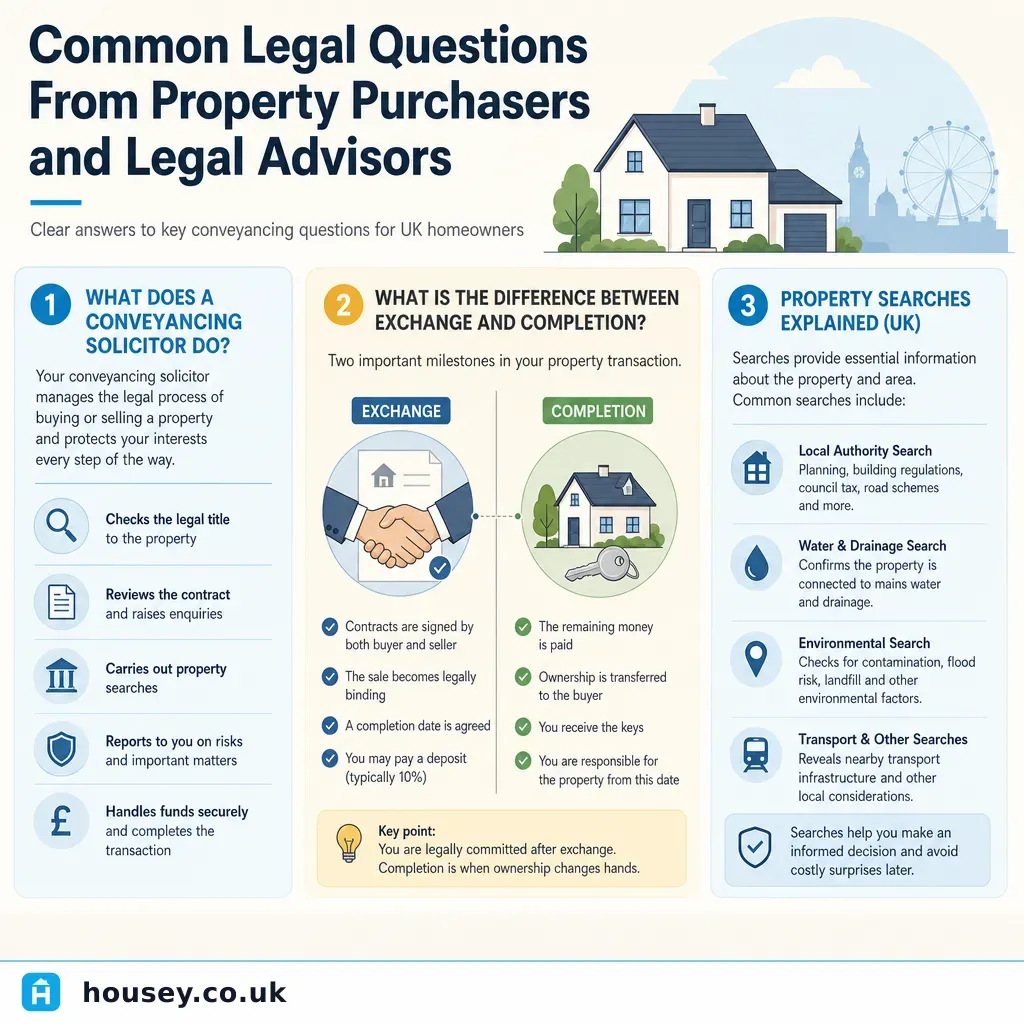
Common Legal Questions From Property Purchasers and Legal Advisors
Conveyancing in England and Wales typically takes 8–16 weeks.