Can you paint uPVC windows? What you need to know
By Housey · Last reviewed 11th of May 2026
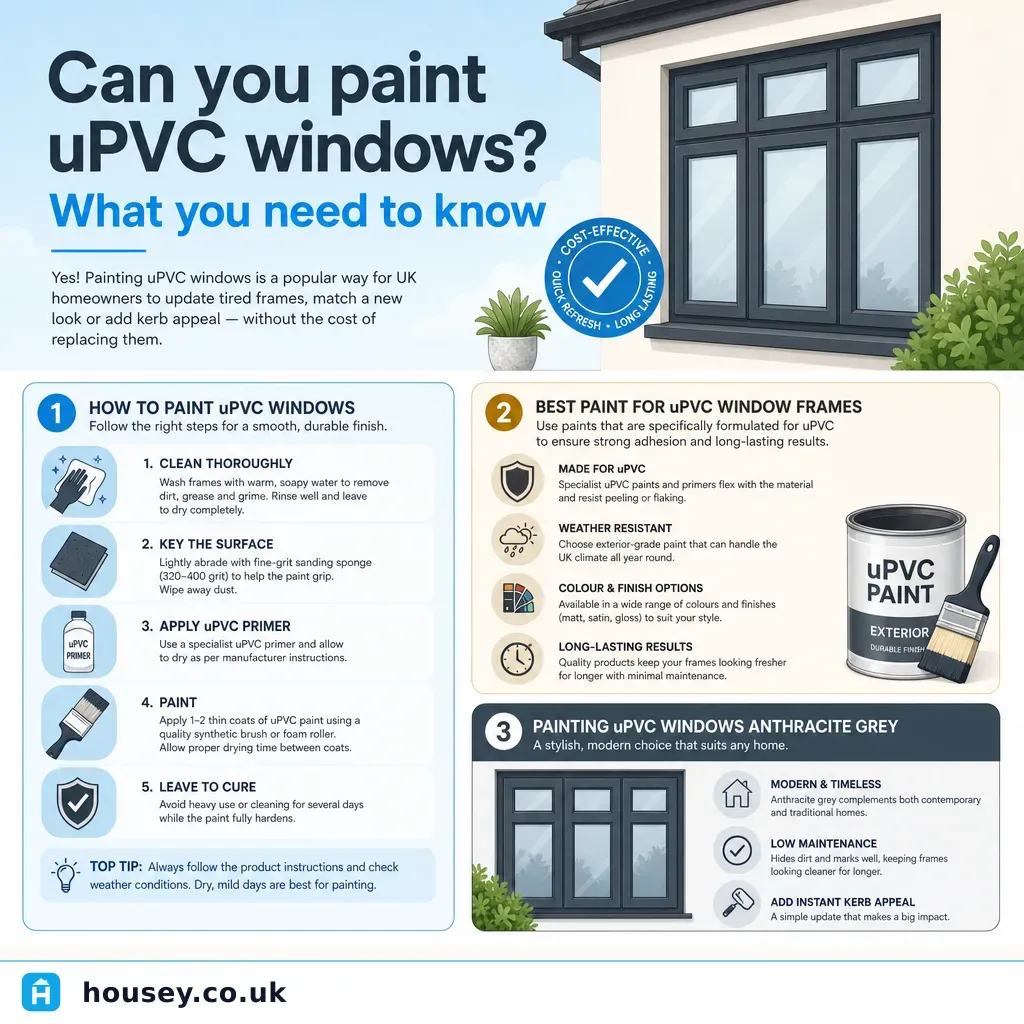
Can you paint uPVC windows? What you need to know
uPVC window frames are a fixture in millions of UK homes, installed in large numbers from the 1980s onwards. The standard white finish was practical and cost-effective at the time, but tastes have changed — and many homeowners now want darker or coloured frames without the disruption and cost of full replacement. Painting uPVC is entirely possible, but success depends on using the right products and understanding the real limitations before you start.
Key points
- Standard emulsion or oil-based gloss paint will not adhere permanently to uPVC — you must use a dedicated plastic adhesion primer or a specialist uPVC paint system.
- Professionally sprayed uPVC using the correct primer and topcoat typically lasts 10–15 years; a DIY brush-applied finish using appropriate products usually lasts 5–8 years.
- Dark colours — particularly anthracite grey and black — absorb significantly more solar heat than white uPVC, which can cause older or standard-grade frames to warp in direct summer sun.
- Painting existing windows is maintenance, not replacement — FENSA registration and building control notification are not required.
- Some window manufacturers' warranties are voided if frames are painted — check your documentation before proceeding, especially for windows less than ten years old.
Can uPVC really be painted?
Yes. uPVC responds well to paint if the surface is properly prepared and the right products are used. The challenge is that uPVC is smooth, non-porous, and has low surface energy — meaning most standard paints cannot form a reliable bond with it. Specialist adhesion primers designed for plastics solve this by chemically keying into the surface before the topcoat is applied.
Several UK manufacturers produce dedicated uPVC paint systems: a plastic adhesion primer followed by a flexible topcoat, typically available in a wide range of colours including RAL and British Standard (BS 381C) references. Flexibility in the topcoat is important because uPVC expands and contracts with temperature changes, and a rigid paint film will crack or flake over time as the frame moves.
DIY versus professional uPVC painting
Approach | Best for | Finish quality | Typical lifespan | Indicative cost (UK, 2026) |
|---|---|---|---|---|
DIY brush or roller | Small areas, tight budget | Brush marks likely visible | 3–6 years | Materials only: £50–£150 |
DIY with airless sprayer | Confident DIYer with hired equipment | Near-professional | 5–8 years | Materials plus sprayer hire |
Professional spray team | Whole property, best finish | Factory-smooth | 10–15 years | £600–£1,500+ (varies widely) |
Indicative UK costs, last reviewed 2026-05-11. Obtain at least three quotes; cost varies by number of windows, access difficulty, and location.
The dark colour risk
One of the most common reasons homeowners want to repaint uPVC is to update white frames to anthracite grey (RAL 7016) or black (RAL 9005) — currently among the most popular replacement window colours in the UK. This is achievable, but there is a genuine risk to consider.
Dark colours absorb significantly more solar radiation than white. Standard white uPVC is designed to reflect heat; darker frames in direct summer sun can reach surface temperatures of 65–80°C. Older uPVC (particularly pre-2000) or budget-grade frames may soften, bow, or warp at these temperatures. Many uPVC profiles manufactured post-2010 use a heat-stabilised compound rated for darker colours, but you cannot confirm this simply by looking at the frame.
Practical steps before specifying a dark colour:
- Contact your window manufacturer or original installer to confirm whether your frames are rated for dark or coloured finishes.
- If you cannot verify suitability, consider a mid-tone colour (light grey, sage green) rather than a very dark shade — these generate less heat than anthracite or black.
- North-facing windows receive less direct sun and carry lower risk than south- or west-facing elevations.
Does painting uPVC windows need planning permission?
In most cases, no. Repainting existing windows is maintenance and does not constitute development under the Town and Country Planning Act 1990. However, there are important exceptions:
- Listed buildings: Any alteration to the external appearance of a listed building may require Listed Building Consent. Contact your local planning authority before starting any work.
- Conservation areas: External changes are more tightly controlled in conservation areas. Contact your council's planning department to confirm what is and is not permitted.
- Leasehold flats: Leases often include covenants restricting changes to the external appearance of the building. Review your lease or check with your freeholder or managing agent before painting.
What to ask before accepting a quote
If you are hiring a professional uPVC painting or spraying company, ask:
- What primer system do you use, and is it specifically formulated for uPVC or plastics?
- Do you offer a guarantee on adhesion, and what exactly does it cover?
- How do you prepare the surface — cleaning, keying, and masking?
- What happens if the frames warp or the paint fails within the guarantee period?
- Is VAT included in the quoted price?
- Do you hold public liability insurance, and can I see a certificate?
- Have you previously worked on windows of this age and profile type?
Red flags when hiring a uPVC painter
Be cautious if a contractor:
- Does not mention a dedicated adhesion primer or cannot name the specific paint system they plan to use
- Proposes using standard exterior masonry paint or oil-based gloss
- Cannot or will not provide a written guarantee or work specification
- Asks for full payment before work begins
- Has no verifiable reviews, company registration, or portfolio of previous uPVC work
- Does not ask about the age of your frames or discuss the dark-colour risk
When to get professional help
DIY uPVC painting is feasible for a competent homeowner working on accessible ground-floor windows. Professional help is usually the wiser choice when:
- You are painting upper-floor windows — working at height above 2 m requires appropriate access equipment and safety measures that most DIYers do not have
- You want an even, spray-applied finish across an entire property
- Frames are complex profiles, multi-pane, or include decorative features
- The existing surface has significant UV yellowing, scratching, or a previous failed paint that needs stripping first
How Housey can help
If painting isn't delivering the look or performance you need — or if your frames are aged and a repaint will only address the surface rather than the underlying condition — replacement may be the more cost-effective long-term route. Housey works with vetted window and door installers across the UK who can advise on suitable replacement options and provide competitive quotes.
Frequently asked questions
How long does painted uPVC last?
A professionally sprayed uPVC finish using a dedicated adhesion primer and topcoat system typically lasts 10–15 years. A DIY brush-applied finish using appropriate uPVC products usually lasts 5–8 years before requiring touch-ups or a full repaint. Surface preparation — particularly thorough cleaning and correct priming — is the single biggest factor in how long the finish holds.
Will painting uPVC windows void my warranty?
Possibly. Some uPVC window manufacturers include warranty clauses that are invalidated by painting or surface treatments not specified by the manufacturer. Check your warranty documentation carefully before proceeding, particularly if your windows are less than ten years old. If in doubt, contact the manufacturer directly before applying any product to the frames.
Can I paint uPVC windows myself?
Yes, with the right products and careful preparation. You need a plastic adhesion primer suitable for uPVC and a flexible topcoat — standard emulsion, masonry paint, or oil-based gloss will not adhere reliably. Work in dry conditions above 10°C, allow full drying time between coats, and avoid painting in direct summer sun, which can affect both drying and long-term adhesion.
What colours can uPVC windows be painted?
Most specialist uPVC paint systems can be tinted to any RAL or British Standard (BS 381C) colour reference. However, very dark shades — such as RAL 7016 anthracite grey or RAL 9005 jet black — carry a higher risk of heat-related warping on older or standard-grade uPVC frames. Always check frame suitability with the manufacturer before specifying a very dark colour.
Sources and further reading
- Planning Portal — listed buildings and conservation areas — Planning Portal
- Town and Country Planning Act 1990 — legislation.gov.uk
- FENSA — what work needs to be registered — FENSA
Useful next reads
 Improvement & Build
Replacing uPVC Window Seals: Restoring Energy Efficiency Without Full Replacement
Failed uPVC window seals typically cause draughts and can be replaced without full window replacement.
 Improvement & Build
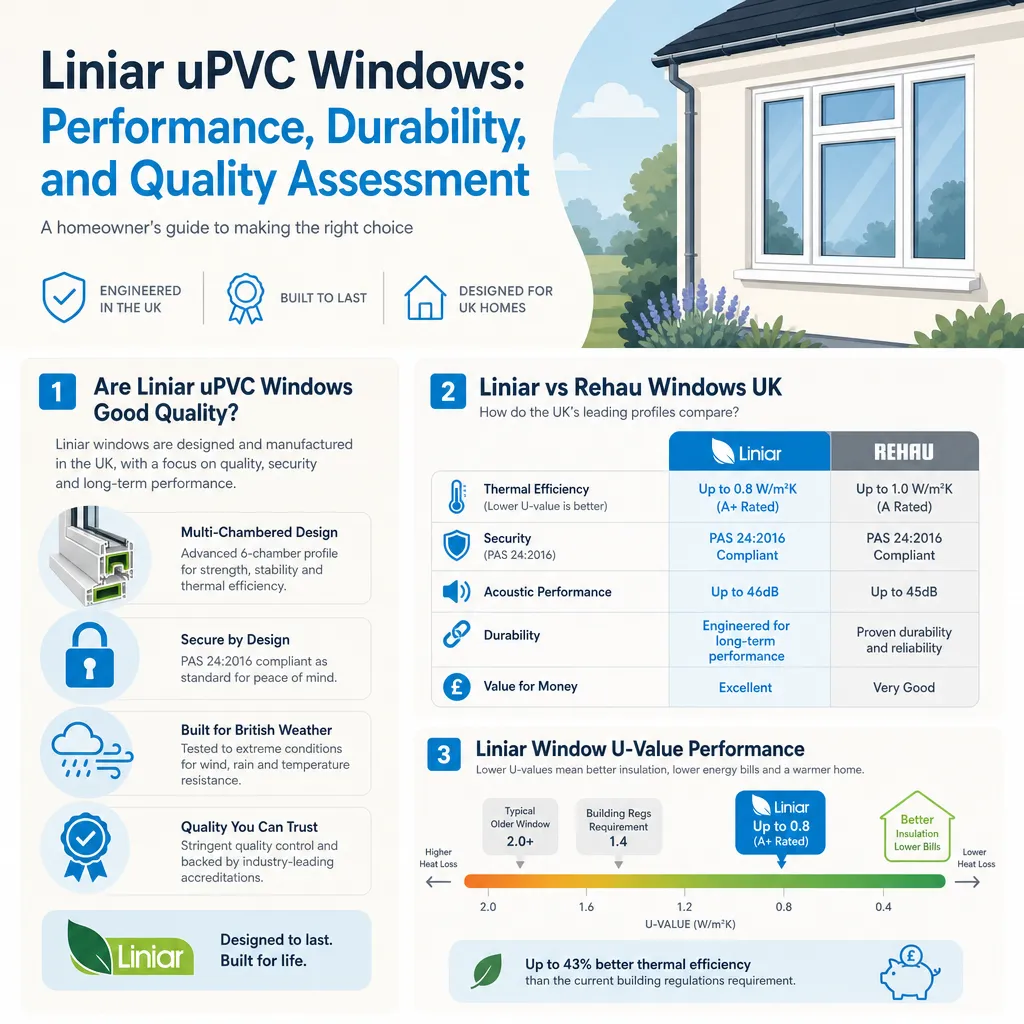
Liniar uPVC Windows: Performance, Durability, and Quality Assessment
Liniar uPVC window profiles are manufactured in the UK using multi-chambered, foamed frames.
 Improvement & Build
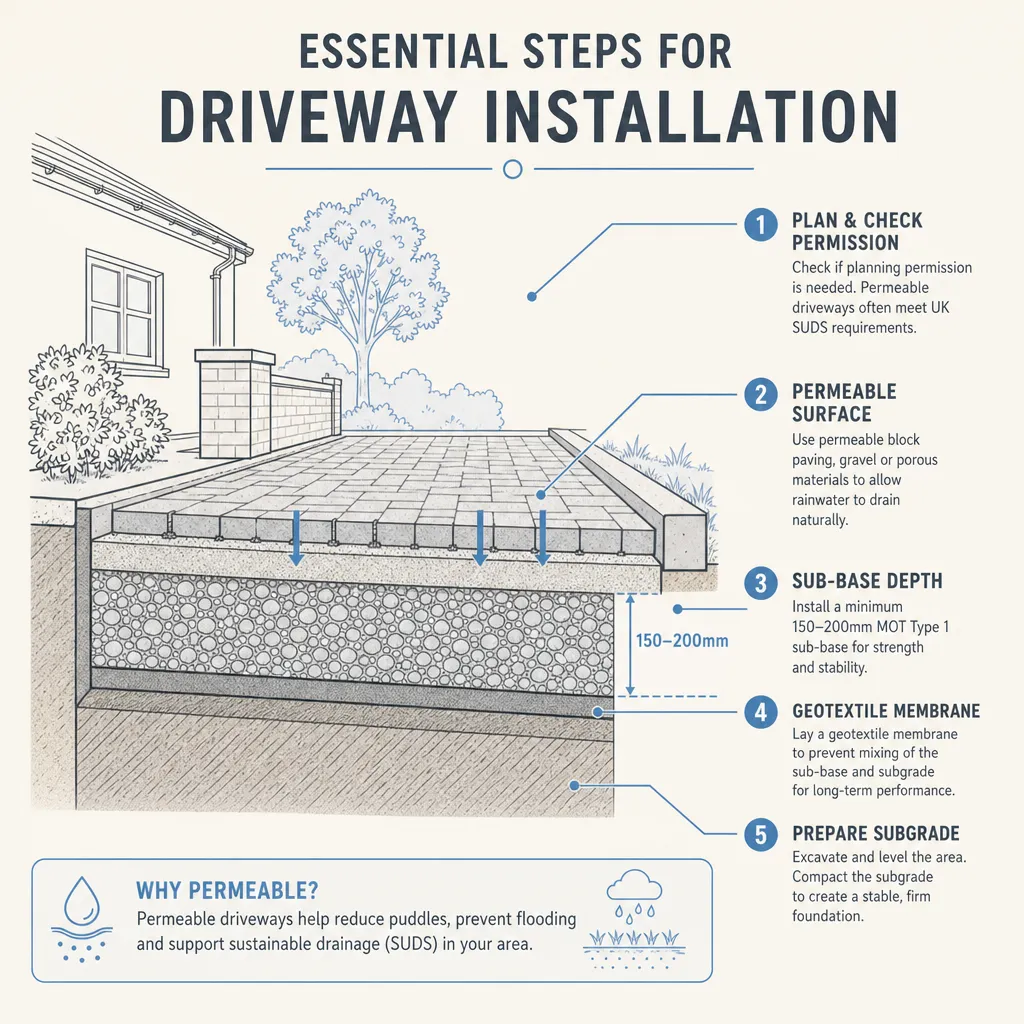
Essential Steps for Driveway Installation
Installing a driveway in England requires planning permission only when using an impermeable surface (standard tarmac, concrete, or block paving) on a front garden area over 5 m².
 Improvement & Build
Preparing Walls for Patching: Surface Preparation Best Practice
Durable wall patching starts with removing all loose material, cutting back to a clean and stable edge, cleaning the substrate, and priming with a construction-grade PVA bonding agent before applying any filler or plaster.
 Improvement & Build
Window Screens and Insect Mesh: Options and Installation
UK window screens fall into four main types: fixed frame, roller retractable, pleated folding, and magnetic snap-fit.