Replacing uPVC Window Seals: Restoring Energy Efficiency Without Full Replacement
By Housey · Last reviewed 18th of May 2026
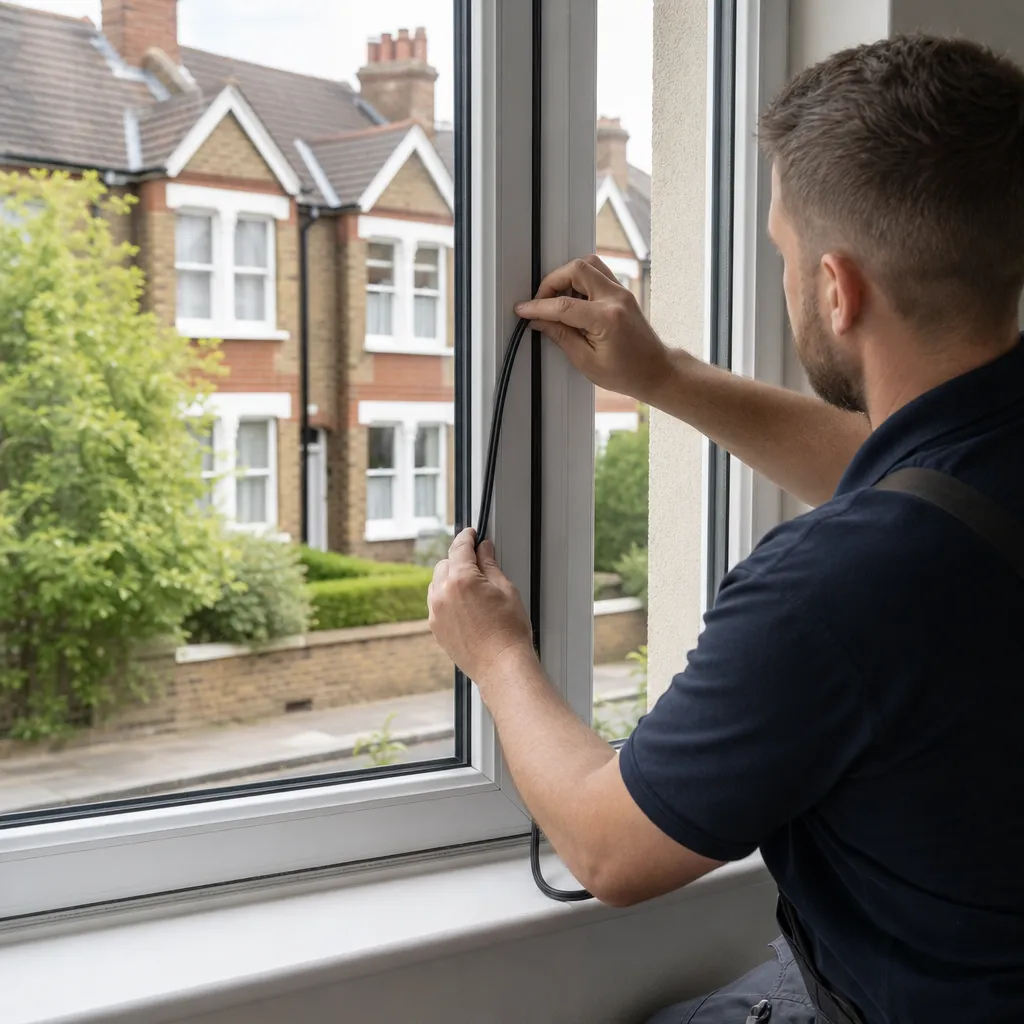
Replacing uPVC Window Seals: Restoring Energy Efficiency Without Full Replacement
uPVC windows became widespread in UK homes from the 1980s onwards, and many units installed during the great replacement period of the 1990s are still in service today. While uPVC frames are durable, the rubber seals and gaskets that keep windows draught-proof and weathertight are wearing components with a shorter service life. Identifying which seal type has failed — and whether the problem is a seal or the glass unit itself — can save the cost of full window replacement when the frames remain structurally sound.
Key points
- uPVC frames typically last 20–35 years, but rubber compression seals and glazing gaskets can begin failing within 10–15 years depending on UV exposure and installation quality.
- Condensation between the panes of a double- or triple-glazed unit indicates a failed insulated glazing unit (IGU) — seal replacement alone will not fix this; the glass unit must be replaced.
- Approved Document L (2022 edition, England) requires any replacement glazing to achieve a centre-pane U-value of at least 1.4 W/m²K for windows.
- FENSA registration covers installation of replacement sealed units (IGUs) but not routine maintenance seal replacement, which is not a notifiable building work.
- There are two distinct seal types: compression seals (bubble or flipper seals) around the frame and sash that prevent draughts, and glazing gaskets that hold the glass within the sash — each fails differently and requires a different repair approach.
Understanding the different types of window seal
Before deciding on a repair approach, identify which component is actually failing.
Seal type | Location | Function | Common failure symptom |
|---|---|---|---|
Compression seal (bubble or flipper seal) | Between frame and opening sash | Prevents air infiltration and wind-driven rain entering the sash gap | Draught felt around a closed window; whistling in wind; cold air at the sash edge |
Glazing gasket (wedge or retained bead gasket) | Between glass pane and sash frame | Holds the glass securely within the sash | Glass rattle; minor water ingress at the glass edge; gasket visibly hardened or cracked |
Frame-to-wall mastic (external sealant) | Between uPVC frame and masonry surround | Prevents water ingress at the wall junction | Water ingress at the window cill or reveals; damp patches internally beside or below the window |
Diagnosing the problem: seal replacement or something else?
This is the key decision. Getting it wrong means either spending on a repair that will not solve the problem, or paying for full replacement when a low-cost seal repair would have sufficed.
- Choose compression seal replacement if you can feel a draught around a closed sash, the rubber seal is visibly cracked, flattened, or missing sections, and there is no condensation between the glass panes.
- Choose IGU (glass unit) replacement if there is condensation or a fogged appearance between the panes. The hermetic seal of the double- or triple-glazed unit has failed; the inert gas fill has been replaced by humid air. Frame seal replacement will not resolve this.
- Choose full window replacement if the uPVC frame is warped, discoloured, or structurally compromised; the window no longer closes or locks securely; or the unit is more than 25–30 years old and multiple components are failing simultaneously.
- Ask a window specialist if you are unsure which component is failing — particularly for bay windows, roof windows, or curved-frame units where standard seal profiles may not be readily available.
How compression seal replacement works
Compression seals are usually available from uPVC window hardware suppliers and some builders' merchants. They come in various profiles — bubble seal, P-seal, E-seal, D-seal — and matching the correct profile to the existing frame groove is essential. An incorrect profile will not compress properly and the draught will persist.
The process for replacing a compression seal:
- Pull or prise the old seal from its groove, working around the perimeter of the sash.
- Clean the groove thoroughly to remove debris, old adhesive residue, or hardened rubber fragments.
- Measure the groove width and depth, and take a sample section to match the correct replacement profile.
- Press or clip the new seal into the groove from a corner, working continuously around to avoid joins mid-run.
- Test closure — the sash should meet the new seal with firm, even resistance when latched.
This is within DIY capability for accessible ground-floor windows where no working at height is involved. For windows above ground floor, engage a professional installer — HSE guidance makes clear that work on ladders above 2 m requires proper precautions.
Frame-to-wall mastic can also be replaced on ground-floor windows using a low-modulus silicone or polyurethane sealant appropriate for masonry-to-uPVC junctions. The existing sealant must be fully removed before application — overcoating traps moisture and accelerates failure.
Energy efficiency implications
Window seal integrity contributes to overall air tightness, which directly affects space heating demand. The UK Standard Assessment Procedure (SAP) uses an air permeability figure that accounts for infiltration through gaps around windows and doors.
A draught from a failed seal represents heat loss above and beyond the rated U-value of the glazing unit itself. Replacing failed seals on otherwise sound uPVC windows is therefore a cost-effective measure to restore thermal performance without the embodied carbon and disruption of full window replacement.
If you are also replacing the IGU, current Part L requirements mean any replacement unit must achieve at least 1.4 W/m²K. Many modern double-glazed units achieve 1.0–1.2 W/m²K with low-emissivity coatings and warm-edge spacer bars — a meaningful improvement over older units that is worth taking when the glass unit is already being changed.
Red flags: when to stop DIY and call a professional
- The frame is bowing, cracked, or no longer sitting square in the masonry opening.
- The window will not close fully or the locking mechanism is misaligned — this suggests frame movement or distortion beyond a seal issue.
- Water ingress is severe or accompanied by damp in the surrounding wall, which may indicate a lintel, flashing, or structural problem rather than a seal failure.
- The window is above first-floor level — working at height on a ladder above 2 m carries significant risk.
- The property is listed or in a conservation area — any replacement components should be confirmed as acceptable with the local planning authority before work begins.
- The existing glazing is safety glass (toughened or laminated) and the IGU requires replacement — professional installation is strongly advisable.
When to get professional help
For most ground-floor windows with standard seal profiles, seal replacement is a manageable maintenance task. Call a professional installer if the diagnosis is unclear, the window is above ground level, or the problem turns out to be a failed IGU or compromised frame rather than a simple seal. An experienced installer can usually assess the situation quickly and advise whether repair or replacement gives better long-term value.
How Housey can help
If you are unsure whether your windows need seal replacement, IGU replacement, or full window replacement, Housey can connect you with experienced window and door installers who can assess your windows, recommend the appropriate repair, and carry out FENSA-compliant work where replacement glazing units are required.
Frequently asked questions
Can I replace uPVC window seals myself?
Compression seals and gaskets on accessible ground-floor windows can often be replaced by a competent homeowner. The main challenge is sourcing the correct seal profile to match the existing frame. If you are working above ground level or if the diagnosis is uncertain — for instance, if you cannot tell whether the seal or the glass unit has failed — a professional installer is a safer and more reliable choice.
Why is there condensation between my window panes?
Condensation between the panes of a double- or triple-glazed unit means the sealed unit's hermetic seal has failed, allowing humid air into the cavity between the panes. Replacing the rubber seals around the frame will not resolve this — the insulated glazing unit (IGU) itself needs to be replaced. An installer can often replace just the IGU without replacing the entire frame and sash.
How long do replacement uPVC window seals last?
Good-quality EPDM rubber compression seals fitted correctly typically last 10–20 years, depending on UV exposure, temperature cycling, and cleaning regime. Cheaper PVC seals tend to harden and crack sooner. Occasional cleaning with soapy water and application of a rubber conditioner or silicone spray can help extend service life noticeably.
Does replacing window seals require building control notification?
No — replacing rubber seals around an existing uPVC frame is routine maintenance and is not notifiable building work. However, replacing the insulated glazing unit within an existing frame may trigger FENSA notification requirements, and any full window replacement must meet the U-value requirements of Approved Document L (1.4 W/m²K for windows in England under the 2022 edition).
Sources and further reading
- Approved Document L: Conservation of fuel and power (2022) — GOV.UK
- FENSA homeowner guidance — FENSA
- Windows and doors — Energy Saving Trust
- Working at height: a brief guide — Health and Safety Executive
Useful next reads
 Improvement & Build
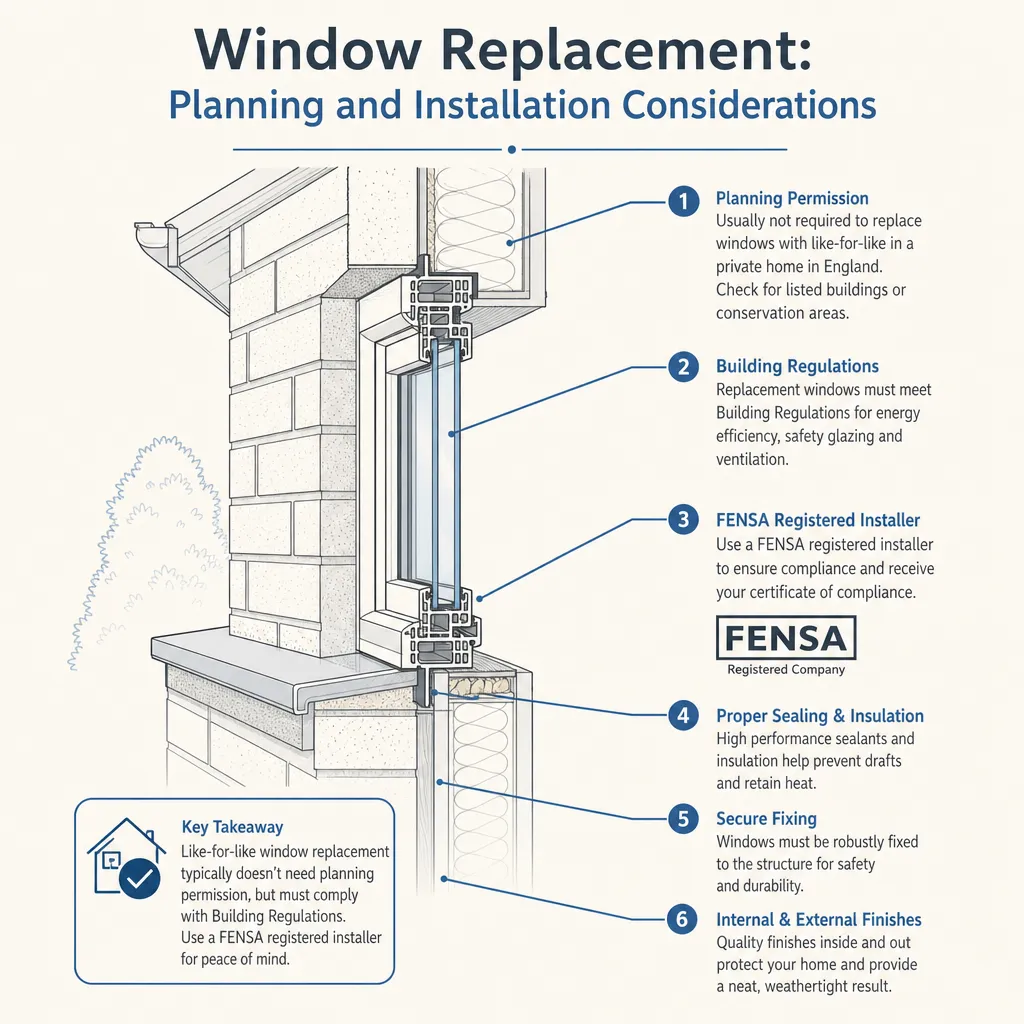
Window Replacement: Planning and Installation Considerations
Most window replacements in England fall under permitted development and do not need planning permission, though listed buildings, flats, and conservation areas are exceptions.
 Improvement & Build
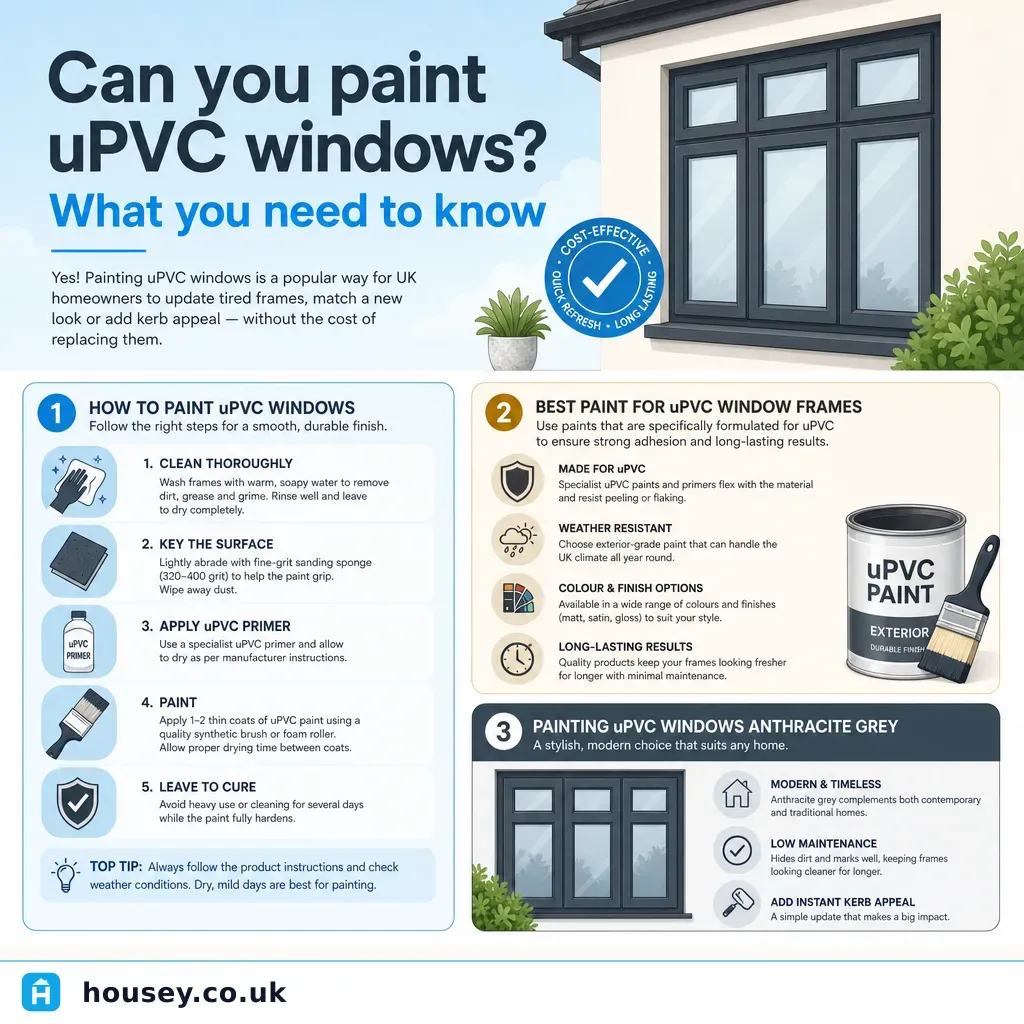
Can you paint uPVC windows? What you need to know
Yes, uPVC windows can be painted using a specialist adhesion primer and flexible topcoat — standard emulsion or gloss will not bond reliably to uPVC.
 Improvement & Build
Window Tinting and Solar Control Films for Residential Properties
Solar control window films reject 40–80% of total solar energy and block 99% of UV radiation, reducing overheating and fading without replacing glazing.
 Improvement & Build
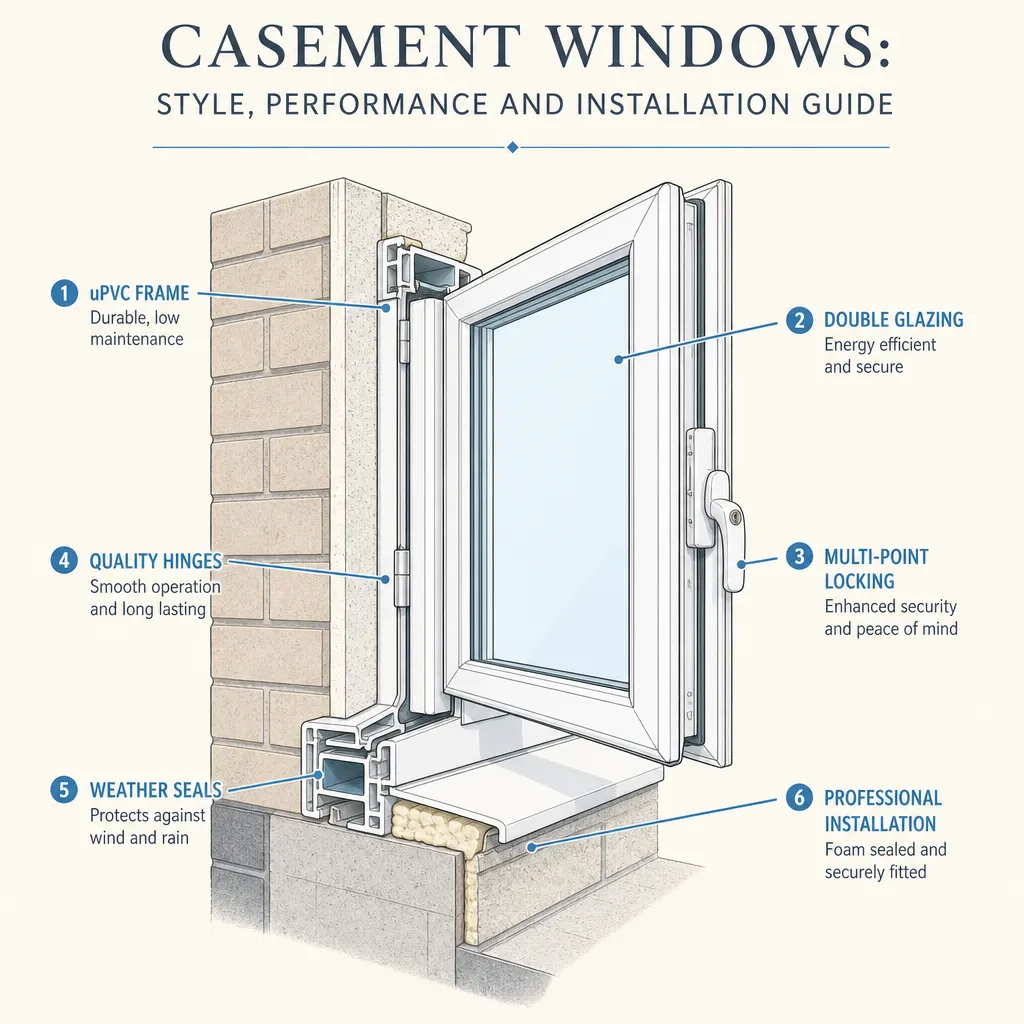
Casement Windows: Style, Performance and Installation Guide
Casement windows are hinged on one side and open outward, making them the most widely fitted window type in UK homes.
 Improvement & Build
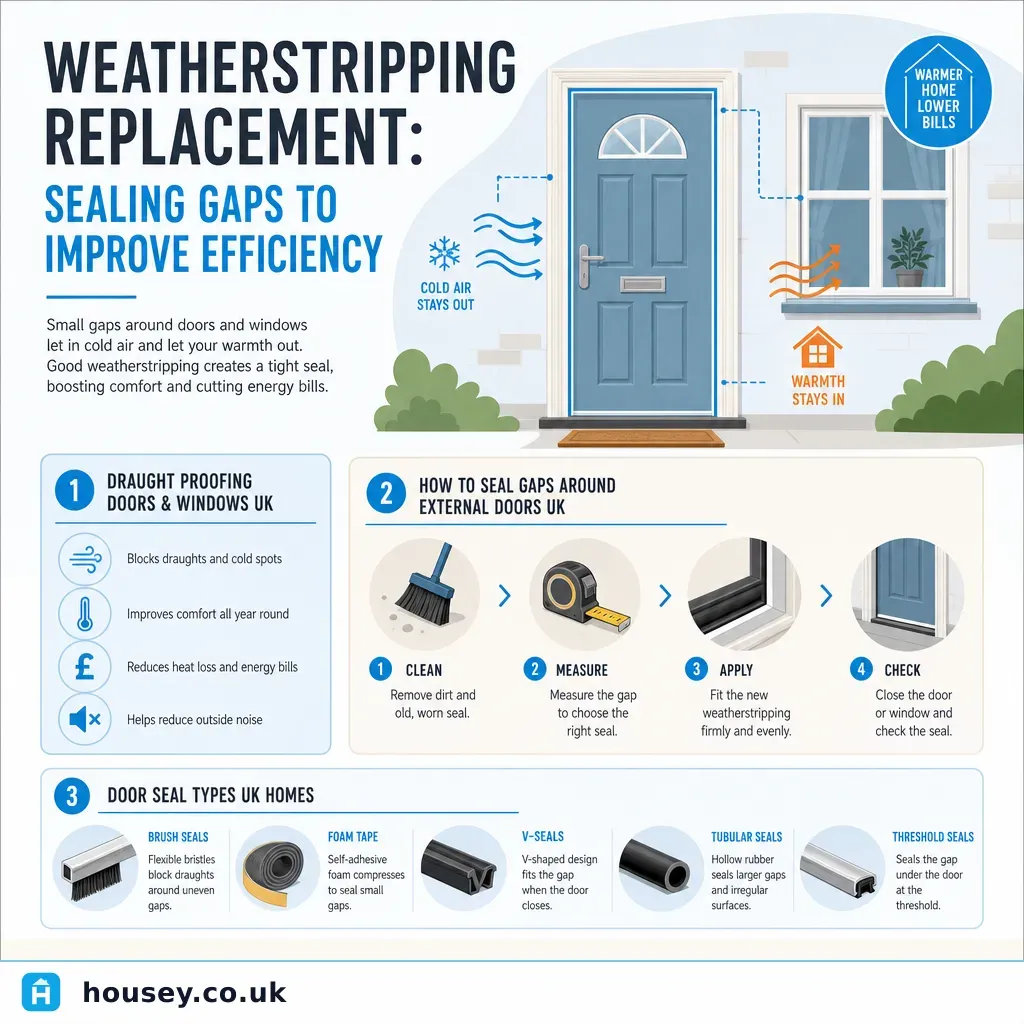
Weatherstripping Replacement: Sealing Gaps to Improve Efficiency
Replacing worn weatherstripping around doors and windows is one of the most cost-effective ways to reduce draughts and lower heating bills.