Can You Purchase Your Neighbour's Garden? Legal Considerations
By Housey · Last reviewed 25th of May 2026
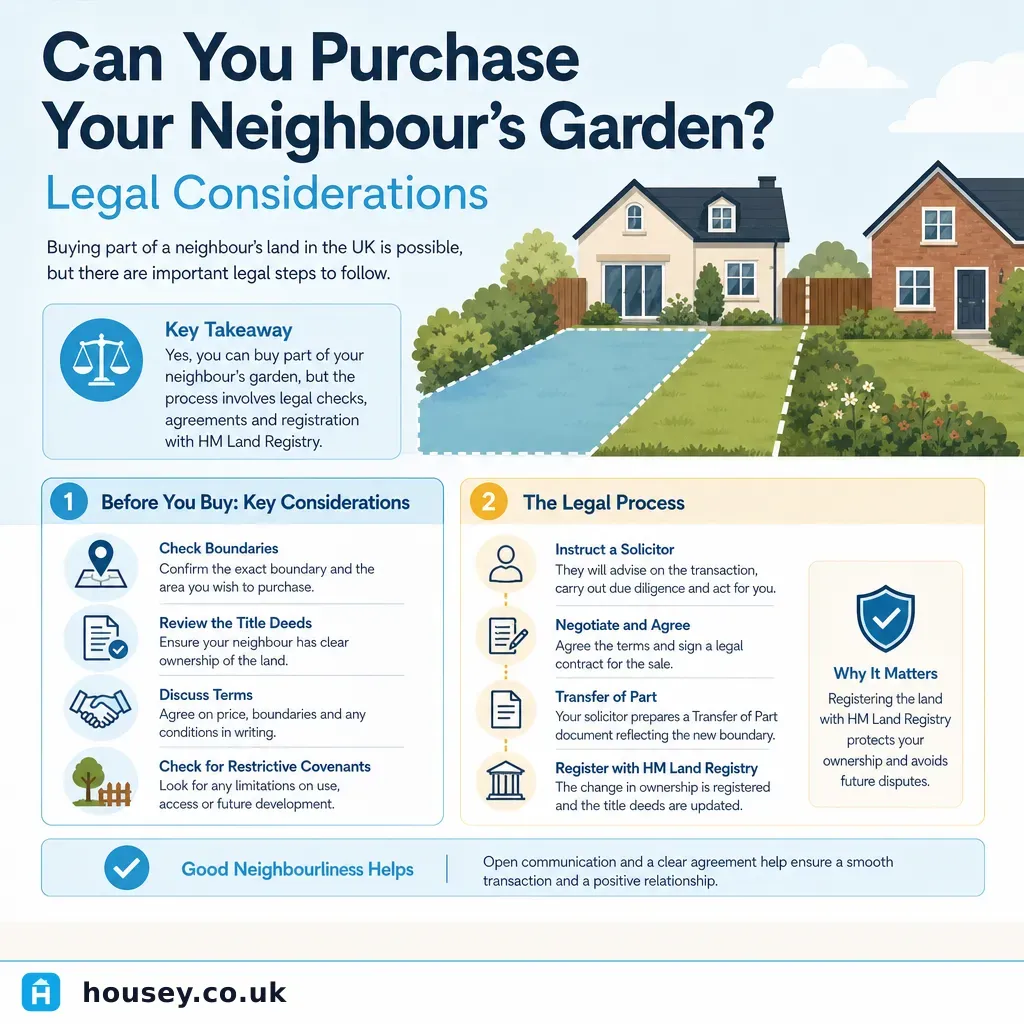
Can You Purchase Your Neighbour's Garden? Legal Considerations
The idea of buying a strip of a neighbour's garden is more common than many homeowners suppose. It typically arises when you want additional outdoor space, need a larger footprint for a planned extension, or when a neighbour is willing to sell land they rarely use. The process is legally achievable in principle but practically more involved than a standard house purchase — it requires a specific legal mechanism, two separate sets of solicitors, accurate boundary plans, and in most cases the consent of your mortgage lender.
Key points
- Purchasing part of a neighbour's garden requires a transfer of part — a formal legal process registered at HM Land Registry. A verbal agreement or informal payment has no legal force under the Law of Property Act 1925.
- Both the buyer and seller should instruct separate solicitors; a single solicitor acting for both parties is generally inadvisable in an arm's-length land transaction.
- A boundary plan accurate enough for Land Registry registration is essential — errors in the TP1 transfer deed plan are costly to correct through Land Registry rectification proceedings.
- If your property is mortgaged, your lender must give formal written consent to the addition of land to the title and may require a revaluation before granting it.
- Purchasing the land does not in itself require planning permission, but any construction on it — extensions, outbuildings, or new vehicular access — may require planning permission or building regulations approval.
Important limitations
This article provides general information about purchasing adjacent land in England and Wales. It is not legal or planning advice. Rules on boundary law, Land Registry practice, SDLT, and planning permissions vary by property type and local authority. Always instruct a qualified solicitor or licensed conveyancer, and where boundaries are uncertain, a RICS-accredited boundary surveyor. The information reflects rules as at 2026-05-25.
How a transfer of part works
When you buy part of a neighbour's garden rather than their whole property, the legal mechanism is a transfer of part — not a full conveyance of title. The key stages are:
- Agree heads of terms. Both parties agree the price, the exact area of land, any rights being granted (such as a drainage easement or right of way), and any covenants the buyer will take on (for example, a restriction on building above a certain height).
- Instruct separate solicitors. Each party needs their own solicitor. The seller's solicitor prepares the transfer deed; your solicitor raises enquiries, reviews the title, and reports to your mortgage lender.
- Commission a boundary plan. The precise parcel of land must be defined by reference to the existing title plan, using Ordnance Survey data at the standard required by HM Land Registry. A surveyor-produced measured plan avoids ambiguity in the TP1 form and reduces the risk of a requisition from the registry.
- Draft the TP1 transfer deed. The Land Registry TP1 form is the standard document for transferring part of a registered title. It records the agreed plan, any rights granted or reserved, and the covenants both parties agree to.
- Notify and obtain consent from your mortgage lender. If your property is mortgaged, your lender holds a charge over the title. Adding land requires their formal written consent. Some lenders also require a revaluation before approving the addition to the charged title.
- Pay Stamp Duty Land Tax if applicable. SDLT is charged on the consideration paid. If the price is below the nil-rate threshold (£250,000 for most buyers as at 2026), no SDLT may be due — but confirm the position with your solicitor, particularly if you already own additional properties and the surcharge may apply.
- Register at HM Land Registry. Both titles are updated: the seller's title is amended to remove the transferred land, and your title is amended to include it. Legal ownership passes on registration, not on the date money changes hands.
Indicative process, last reviewed 2026-05-25. Land Registry fees, legal fees, and survey costs vary. Always obtain written quotes before instructing professionals.
Do you need a boundary survey?
Situation | Survey recommended? | Reason |
|---|---|---|
Clear physical boundary (wall or fence) that matches the title plan | Optional but useful | Confirms what is being transferred; reduces future dispute risk |
Informal or unclear boundary with no physical feature | Yes — strongly advisable | Defines the parcel precisely for the TP1; avoids disputes after registration |
No existing boundary feature | Yes — essential | Land must be accurately measured and shown on the plan submitted to Land Registry |
Adjacent neighbours may object to the revised boundary | Yes | A professionally surveyed plan is harder to challenge |
Any element of longstanding informal use or potential adverse possession | Yes — consult a boundary specialist | Legal complications need professional assessment before any agreement is signed |
A RICS-accredited boundary surveyor or appropriately qualified measured-survey specialist can produce a plan in the format required by HM Land Registry and advise on whether any prescriptive easements or rights of way affect the land being transferred.
Planning and development considerations
The land purchase itself does not require planning permission. However, what you intend to do with the land may:
- Extensions using the acquired land: Permitted development rights allow certain extensions without a planning application, but allowances are calculated against the original dwelling footprint — not the enlarged plot — and any prior extensions already count towards the limits. Your local planning authority can confirm the current position for your specific property.
- New outbuildings or garden structures: Subject to permitted development limits on size, height, and proximity to the main dwelling. In a conservation area, National Park, or for a listed building, stricter rules apply and permitted development rights may be removed entirely.
- New or altered vehicular access: Dropped kerbs and new access onto a public highway typically require consent from the local highway authority and, in some cases, a separate planning application.
- Building a separate dwelling: A new home on the acquired land requires full planning permission and is a materially different — and more involved — process from a straightforward garden purchase.
If your primary reason for purchasing the land is a specific development, consider obtaining a pre-application planning opinion from the local planning authority before signing heads of terms. This can confirm whether the proposal is likely to be supported and may avoid significant wasted costs.
When this becomes urgent
Seek immediate professional advice if:
- Your neighbour has begun fencing, building on, or selling land that you believe is — or should be — yours; the longer a boundary dispute continues without legal action, the more complex resolution becomes.
- You have made an informal payment or reached a verbal agreement without a signed written contract — this does not transfer ownership and creates significant legal risk for both parties.
- There is an entry on the Land Register indicating an active boundary dispute or a pending application affecting the land in question.
- You are under time pressure due to planning permission expiry or a linked development programme where the land purchase is on the critical path.
What to ask a qualified professional
Before instructing a solicitor for a transfer of part, ask:
- Is the neighbour's title registered at HM Land Registry, and are there any restrictions or charges that could complicate or delay the transfer?
- Are there any rights or easements (drainage, access, rights of light) currently running over or benefiting the land that will need to be retained or varied in the TP1?
- Are there any covenants on the seller's current title that restrict what can be done with this parcel of land after it is transferred?
- Will you need to obtain formal written consent from the neighbour's mortgage lender as well as your own?
- Are there any adverse possession claims or pending boundary disputes noted on either title at Land Registry?
- What are your estimated total fees for handling this as a transfer of part, including Land Registry registration?
If instructing a boundary surveyor, also ask:
- Is your measured survey plan produced to the standard required for HM Land Registry registration?
- Can you identify any discrepancy between the current physical boundary and the position shown on the registered title plan?
When to get professional help
This type of transaction always requires a qualified solicitor or licensed conveyancer. Take specialist advice before proceeding if:
- There is any uncertainty about the exact legal boundary — a boundary surveyor should be instructed before any agreement is signed or any money changes hands.
- Either party has a mortgage and lender consent has not yet been confirmed in writing.
- The land is in a conservation area, National Park, Area of Outstanding Natural Beauty, or forms part of the curtilage of a listed building — additional planning restrictions will apply and permitted development rights may be removed.
- Third parties have a registered interest in the land — for example, a neighbouring freeholder, a management company, or a person holding a registered right of way over the parcel.
How Housey can help
Housey can connect you with experienced solicitors through our conveyancing service who handle transfers of part regularly, and with specialist boundary surveyors who can produce accurate Land Registry-compliant plans and advise on boundary law before you commit to any purchase.
Frequently asked questions
Is a verbal agreement to buy a neighbour's garden legally binding?
No. Under the Law of Property Act 1925, a contract for the sale or disposition of land must be in writing, signed by both parties, and contain all agreed terms to be legally enforceable. A verbal agreement — however clearly both parties understand it — cannot be enforced in court and does not transfer any ownership interest in the land.
Can a neighbour refuse to sell part of their garden?
Yes. There is no legal right to compel a private landowner to sell their property. Compulsory purchase powers exist only for certain public authorities and do not apply between neighbouring homeowners. If your neighbour is willing in principle but progress stalls, your solicitor can help formalise the agreement through a signed contract to prevent either party withdrawing.
How long does a transfer of part take in the UK?
Typically 8–16 weeks, depending on the complexity of the boundary plan, how quickly both sets of solicitors progress the documentation, and whether mortgage lender consent is straightforward. HM Land Registry processing times can add further weeks, particularly for transfers involving plan corrections or title amendments requiring additional requisitions from the registry.
Do I pay Stamp Duty Land Tax when buying a neighbour's garden?
SDLT is charged on the consideration paid. If the agreed price is below £250,000 (the nil-rate threshold for most buyers as at 2026), no SDLT may be due. However, if you already own additional properties, the 5% additional dwelling surcharge in England (effective 31 October 2024) may apply. Always confirm the precise SDLT position with your solicitor based on your personal circumstances.
Sources and further reading
- HM Land Registry practice guides — HM Land Registry / GOV.UK
- Stamp Duty Land Tax: residential property rates — HM Revenue & Customs / GOV.UK
- Planning permission: when you need it — GOV.UK
- RICS boundaries guidance — RICS
- Law of Property Act 1925 — legislation.gov.uk
Useful next reads
 Planning & Pre-Build
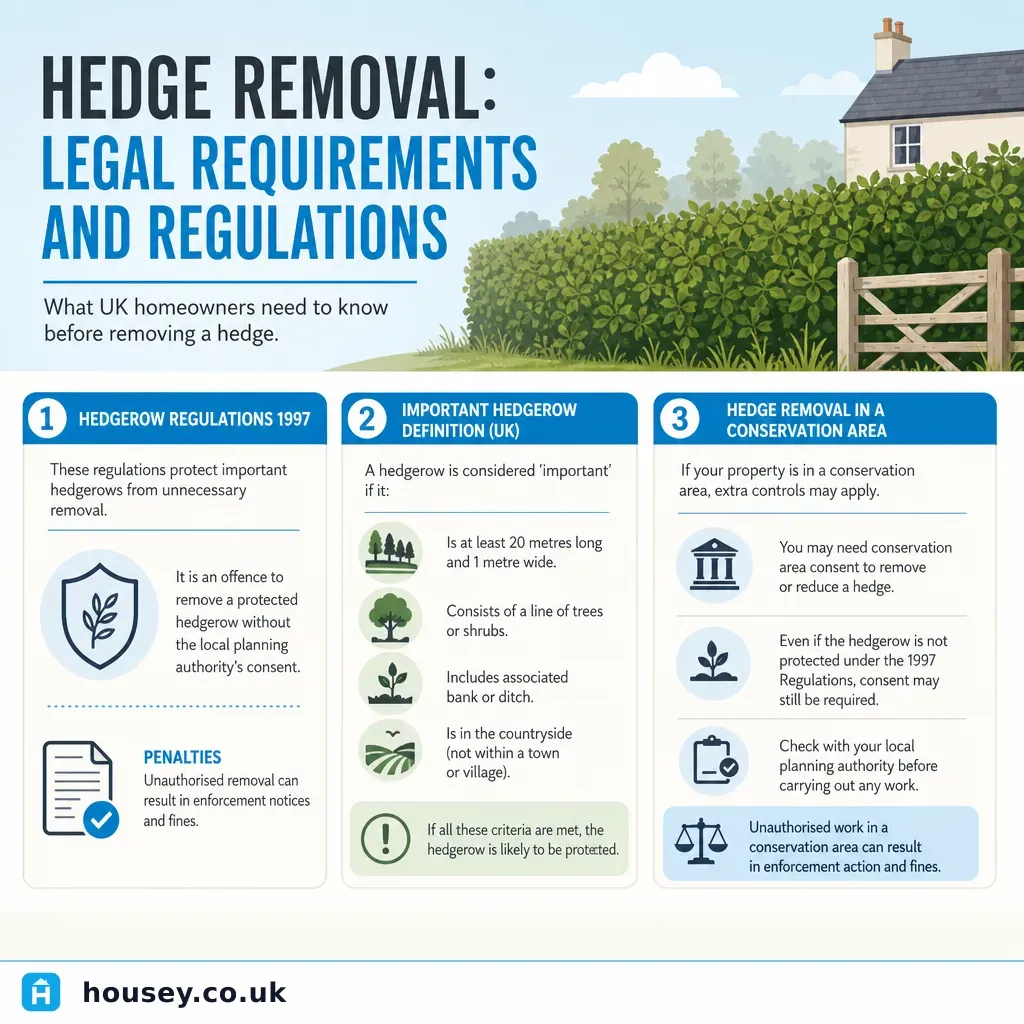
Hedge Removal: Legal Requirements and Regulations
Whether you need permission to remove a hedge in the UK depends on its location, age, and what it contains.
 Planning & Pre-Build
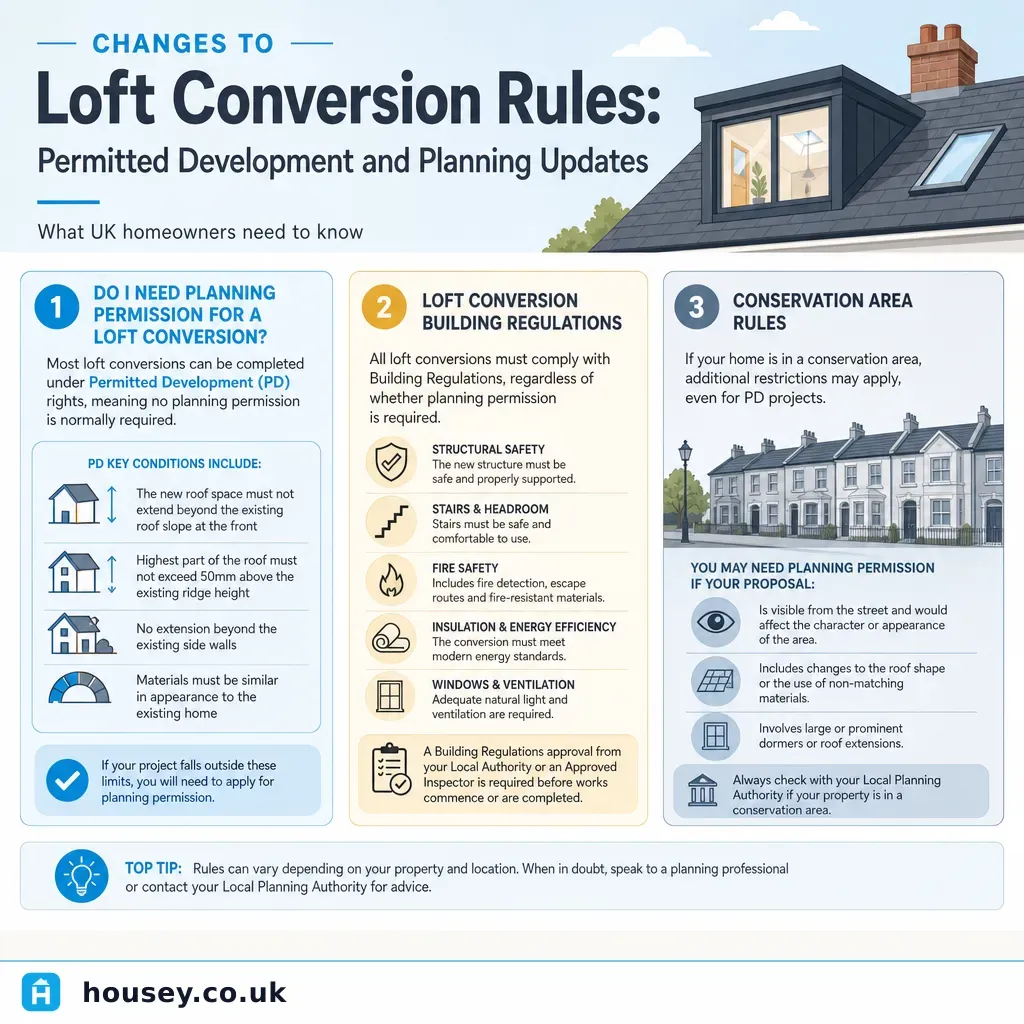
Changes to Loft Conversion Rules: Permitted Development and Planning Updates
In England, most loft conversions on standard houses qualify as Permitted Development under Class B of the GPDO 2015, allowing up to 40 cubic metres (terraced) or 50 cubic metres (detached or semi-detached) without a planning application — if conditions are met.
 Planning & Pre-Build
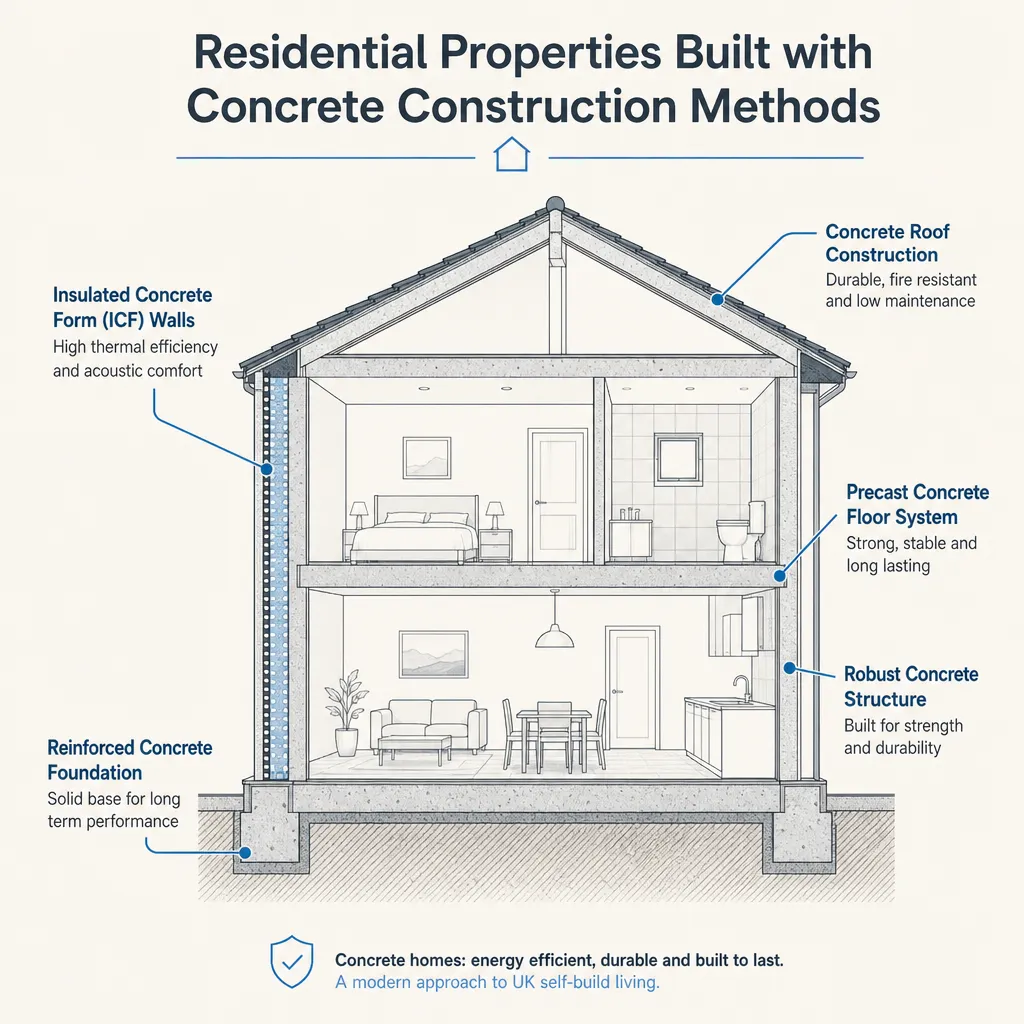
Residential Properties Built with Concrete Construction Methods
UK homes are built using several concrete methods: in-situ cast concrete, precast panel systems, insulating concrete formwork (ICF), and older non-traditional types such as Wimpey No-Fines and Laing Easiform.
 Planning & Pre-Build
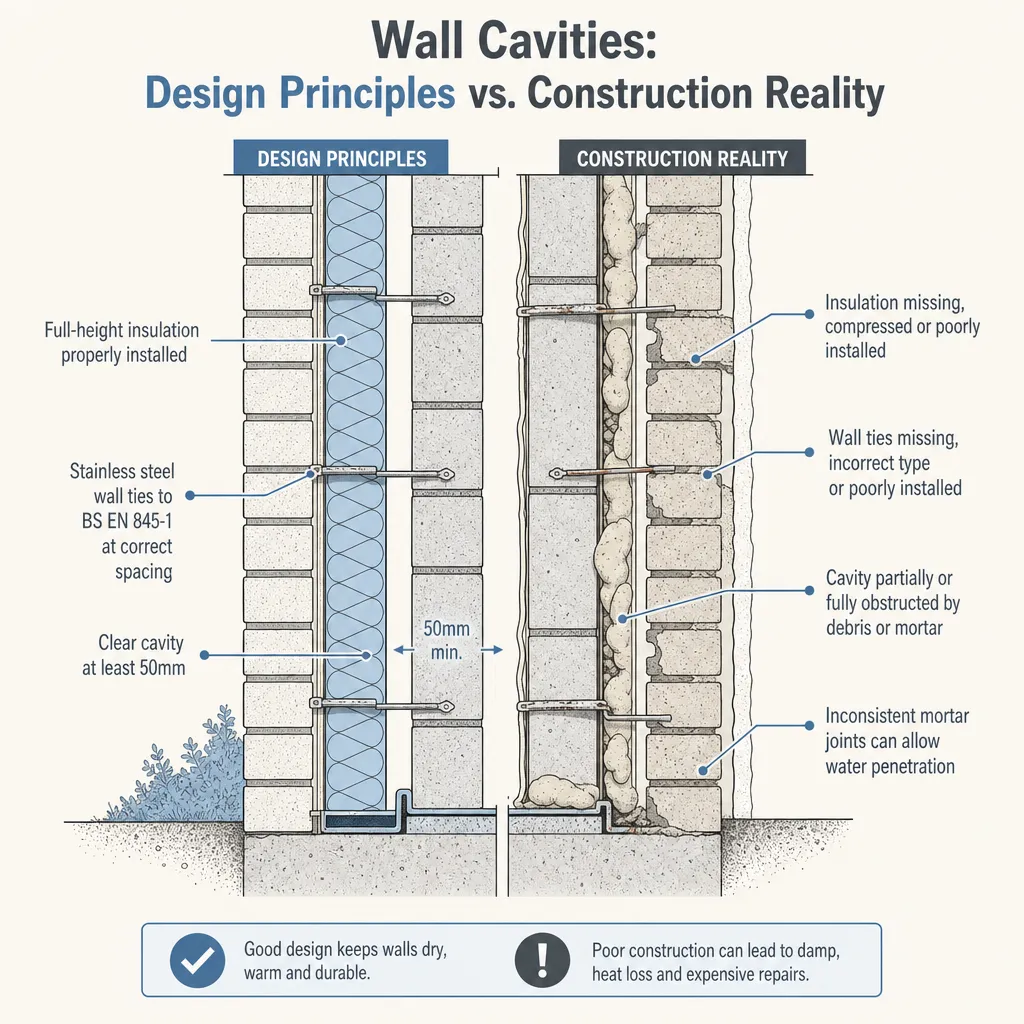
Wall Cavities: Design Principles vs. Construction Reality
A UK cavity wall is designed to resist weather, control heat loss, and structurally link two masonry leaves.
 Planning & Pre-Build
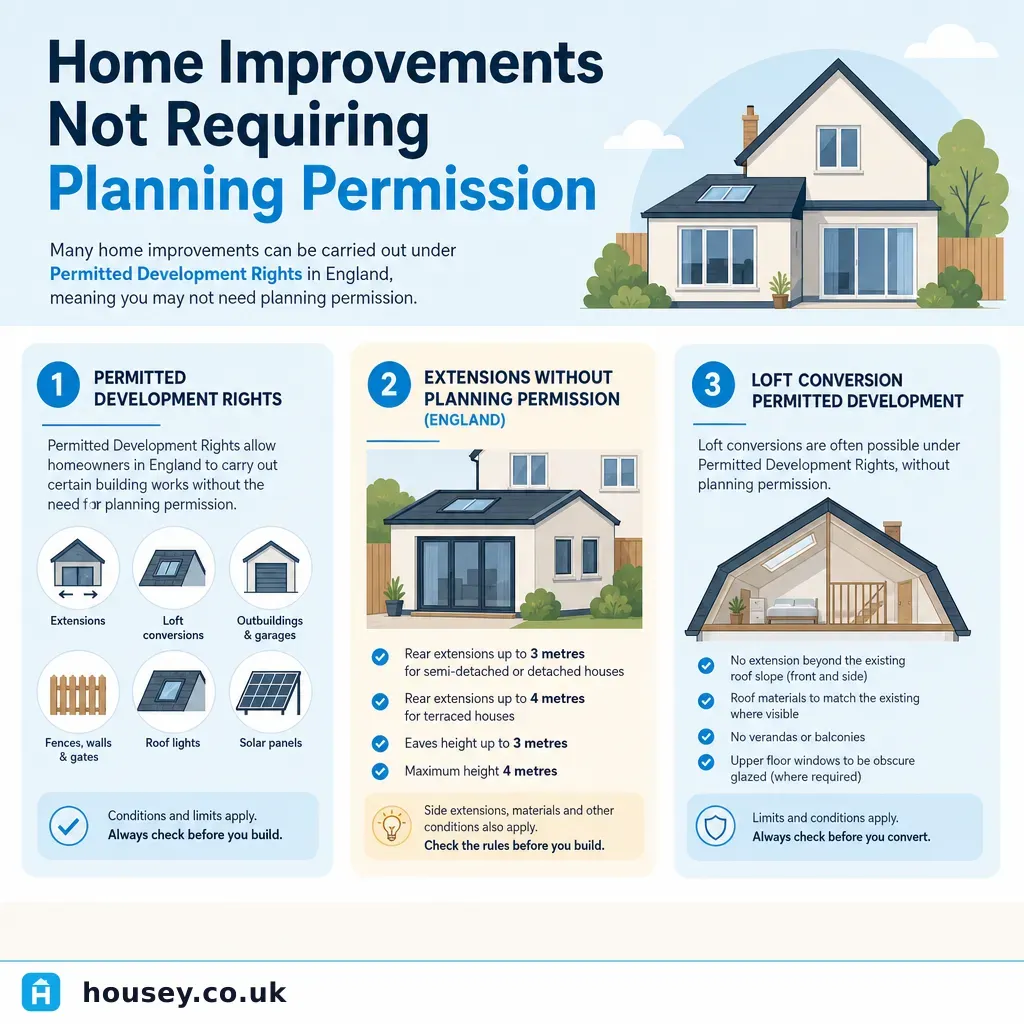
Home Improvements Not Requiring Planning Permission
Many common home improvements in England fall under Permitted Development Rights and do not require a planning application.