Hedge Removal: Legal Requirements and Regulations
By Housey · Last reviewed 11th of May 2026
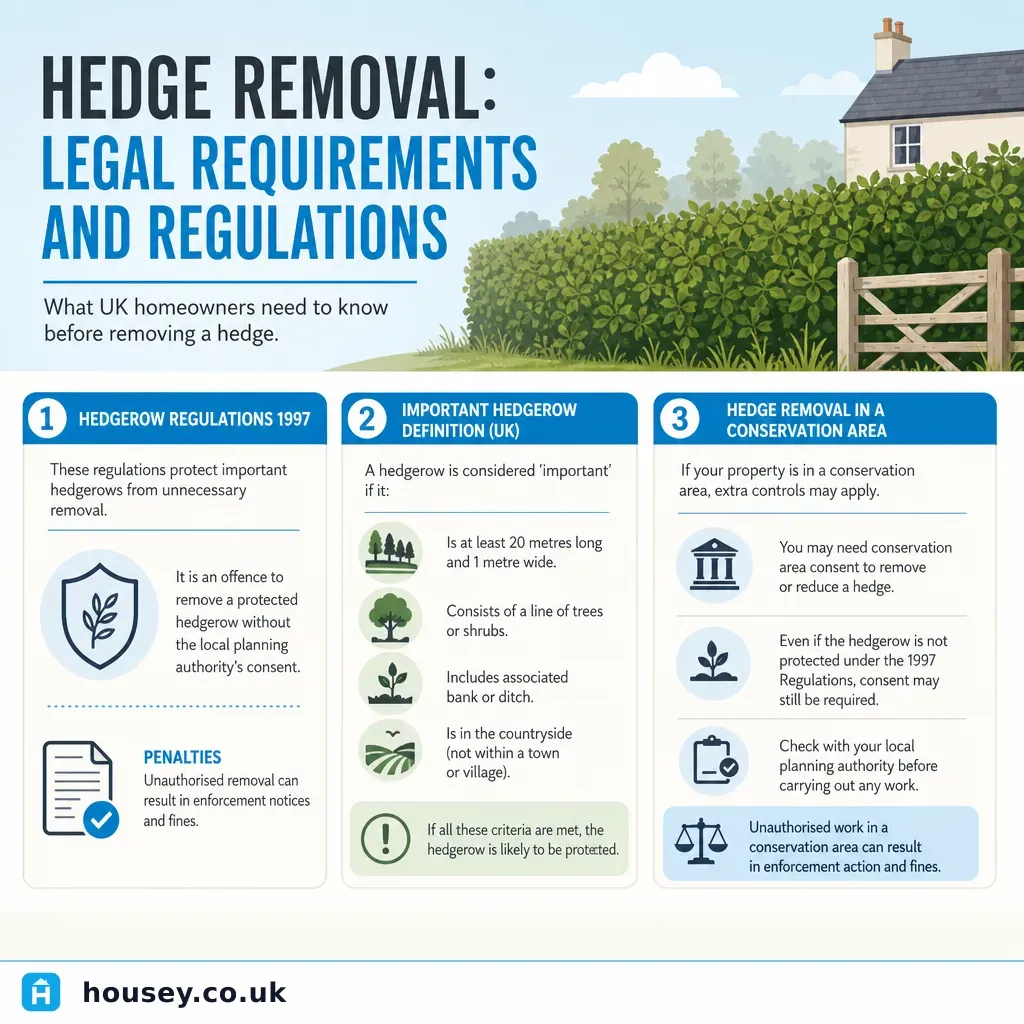
Hedge Removal: Legal Requirements and Regulations
Removing a hedge might seem like a routine gardening task, but in the UK the legal picture is more nuanced than many homeowners expect. Depending on the hedge's size, age, and location — and whether it contains protected trees, supports wildlife, or sits within a conservation area — you may need to notify your local planning authority (LPA) or obtain consent before any work begins. Getting this wrong can result in enforcement action, a requirement to replant, and in some cases an unlimited fine.
Key points
- The Hedgerow Regulations 1997 apply in England and Wales to hedgerows on agricultural, forestry, or horse-grazing land that have existed for at least 30 years; a Hedgerow Removal Notice must be submitted to the LPA at least 42 days before removal.
- A hedgerow is defined under the Regulations as a continuous line of shrubs or trees forming a boundary of at least 20 metres, or any length if it connects to another hedgerow.
- "Important" hedgerows meeting ecological, historical, or archaeological criteria in Schedule 1 of the Regulations cannot be removed without LPA consent; removal after a Hedgerow Retention Notice is a criminal offence.
- Tree Preservation Orders (TPOs) can apply to individual trees growing within or forming part of a hedge; removing a TPO tree without consent carries an unlimited fine under Section 206 of the Town and Country Planning Act 1990.
- Disturbing or destroying an active bird's nest is an offence under the Wildlife and Countryside Act 1981 regardless of whether planning consent is required; the main nesting season is broadly 1 March to 31 August.
When do the Hedgerow Regulations 1997 apply?
The Hedgerow Regulations 1997 apply to hedgerows that:
- Are on or form the boundary of land used for agriculture, forestry, or the keeping of horses.
- Have existed for at least 30 years.
- Are not within the curtilage of a dwelling house — meaning they are not part of a domestic garden.
The critical point for most homeowners is that hedges entirely within a private garden are not covered by the Hedgerow Regulations. You do not need to submit a Hedgerow Removal Notice before removing a garden hedge. However, front garden hedges that form a boundary with a field, public right of way, or highway may fall into a grey area, and the position should be checked before work begins.
For hedgerows that do fall within scope, the process is:
- Submit a Hedgerow Removal Notice to the LPA.
- Wait 42 days. If the LPA issues a Hedgerow Retention Notice, you must not remove the hedgerow.
- If no response is received within 42 days, removal may proceed.
What makes a hedgerow "important" under the Regulations?
Schedule 1 of the Hedgerow Regulations 1997 sets out the criteria by which an LPA determines whether a hedgerow is important and therefore protected from removal. An assessment considers:
Category | Example criteria |
|---|---|
Archaeological | Marks the boundary of an archaeological site or is associated with a scheduled monument |
Historical | Marks the boundary of a pre-1850 parish, township, or manor |
Ecological | Contains at least 7 native woody species in any 30 m section, or supports a listed protected species |
Ornithological | Regularly used by a Schedule 1 bird species such as barn owl or red kite |
A hedgerow meeting any one of these criteria is classed as important and cannot be removed without consent. If in doubt, consult a qualified ecologist or contact your LPA planning department before submitting a notice.
Conservation areas and listed buildings
In a conservation area, additional restrictions apply under the Town and Country Planning Act 1990. You must give the LPA six weeks' written notice before felling, topping, or removing any tree — including trees forming part of a hedge — with a trunk diameter of 75 mm or more measured at 1.5 m from the ground. The LPA may use this period to impose a TPO, preventing removal.
For listed buildings and their curtilage, works affecting the character of the listed structure — including the removal of significant boundary hedges — may require listed building consent under the Planning (Listed Buildings and Conservation Areas) Act 1990. Always check with your local conservation officer before proceeding in either context.
Tree Preservation Orders and hedges
A TPO can be placed on an individual tree growing within or alongside a hedge. If a TPO has been served, removing or significantly damaging that tree without LPA consent is a criminal offence carrying an unlimited fine under the Town and Country Planning Act 1990. You can check whether a TPO exists by:
- Searching your LPA's online planning map (most councils publish these publicly).
- Contacting the planning department directly with the property address and a description of the tree.
- Requesting a local land charges search, which will reveal registered TPOs.
If a TPO exists on any tree within the hedge you intend to remove, you must apply to the LPA for consent before any work begins.
Wildlife law: nesting birds and protected species
Regardless of whether planning consent is required, the Wildlife and Countryside Act 1981 makes it a criminal offence to intentionally damage or destroy an active bird's nest or any eggs or chicks within it. The main UK nesting season runs broadly from 1 March to 31 August, though some species nest outside this window.
Before removing any hedge:
- Carry out a visual check for active nests. If eggs or chicks are present, delay work until the nest is vacant and the young have fledged.
- If bats are likely to be roosting in the hedge or in adjacent structures, consult a licensed bat ecologist; bats and their roosts are protected under the Conservation of Habitats and Species Regulations 2017.
- If great crested newts, dormice, or other European Protected Species use the hedge or adjacent habitat, a licensed ecological survey and potentially a mitigation licence from Natural England may be required before works proceed.
Do I need planning permission to remove a front garden hedge?
Removing a front garden hedge is not in itself a planning permission matter in most cases. However, related activities often do carry requirements:
- Creating a new vehicle access across a pavement or verge usually requires consent from the local highway authority, not the LPA.
- Replacing a front garden with hard standing over 5 m² may require planning permission unless the surface is permeable — see GOV.UK guidance on front gardens and planning permission.
- In a conservation area, the six-week written notice rule applies to any trees within or forming the hedge that meet the diameter threshold.
Which rules apply to your hedge?
- Private garden hedge, no TPO, outside conservation area → No LPA notification required; check for active nesting birds before work begins.
- Hedge on agricultural or forestry land, over 30 years old → Hedgerow Regulations 1997 apply; submit a Hedgerow Removal Notice to the LPA and wait 42 days.
- Any hedge in a conservation area containing trees over 75 mm trunk diameter → Give the LPA six weeks' written notice before any removal or significant cutting.
- Hedge containing a TPO tree → Apply to the LPA for TPO consent before any removal; criminal penalty if the tree is damaged without consent.
- Hedge where protected species may be present → Commission an ecological survey before proceeding; do not disturb active nests.
- Hedge adjacent to or within the curtilage of a listed building → Consult your local conservation officer; listed building consent may be required.
- Situation is unclear → Contact your LPA planning department or consult a planning professional before starting any work.
When to get professional help
Many straightforward garden hedge removals need no professional involvement. However, expert advice is sensible when:
- The hedge is on or adjoins agricultural, forestry, or highway land.
- The hedge is within or forms the boundary of a conservation area.
- There is any possibility that protected species are present.
- A TPO may have been served on trees within or adjacent to the hedge.
- The hedge is near a listed building, scheduled monument, or other designated heritage asset.
- You have received a Hedgerow Retention Notice or enforcement correspondence from the LPA.
Red flags that require an immediate pause:
- You discover an active bird's nest during removal — stop work at once and do not disturb the nest until it is vacant.
- The LPA issues a Hedgerow Retention Notice — removal at this point is unlawful and may be prosecuted.
- A neighbour disputes ownership of the hedge or claims it is a shared boundary feature — boundary disputes are a civil matter requiring legal advice before any physical works proceed.
- You find unusual wildlife signs (bat droppings, dormouse nests, great crested newt habitat) — consult a licensed ecologist before continuing.
How Housey can help
If you are unsure whether your proposed hedge removal requires a notification, consent, or an ecological assessment, a planning professional can review your specific situation and guide you through the correct process. Housey connects homeowners with experienced planning consultancy professionals and qualified tree surgeons who can carry out hedge removal work in a legally compliant way, including preparing any notices or documentation required by the LPA.
Frequently asked questions
Do I need permission to remove a front garden hedge?
If the hedge is entirely within your private garden, outside a conservation area, and contains no trees with a Tree Preservation Order, you generally do not need LPA permission. However, if you are removing the hedge to create a new vehicle access or drop a kerb, separate consent from the highway authority is usually required, and permeable surfacing rules may apply to any hard standing over 5 m².
What makes a hedgerow "important" under the Hedgerow Regulations 1997?
A hedgerow is classified as important if it meets one or more criteria in Schedule 1 of the Regulations. Examples include marking a pre-1850 parish or township boundary, containing seven or more native woody species in any 30 m section, or being regularly used by a Schedule 1 bird species. An LPA officer or qualified ecologist can advise whether your specific hedgerow qualifies before you submit a removal notice.
What happens if I remove a protected hedgerow without permission?
Removing an important hedgerow without submitting a Hedgerow Removal Notice, or after receiving a Hedgerow Retention Notice from the LPA, is an offence under the Hedgerow Regulations 1997. The LPA can require replanting and may prosecute. If a Tree Preservation Order tree was removed without consent, an unlimited fine can be imposed under Section 206 of the Town and Country Planning Act 1990.
Can my neighbour remove a hedge on their own land?
Yes, unless the hedge is subject to the Hedgerow Regulations, a Tree Preservation Order, or conservation area notice rules. If you believe the hedge sits on shared or disputed land, seek legal advice before any work begins. Removing a boundary hedge during an active boundary dispute can significantly complicate any subsequent legal proceedings and may amount to a civil wrong.
Sources and further reading
- Hedgerow Regulations 1997 — legislation.gov.uk
- GOV.UK: Hedgerow Regulations Guidance — GOV.UK
- Wildlife and Countryside Act 1981 — legislation.gov.uk
- Tree Preservation Orders and Trees in Conservation Areas — GOV.UK
- Front Gardens: Planning Permission for Hard Standings — Planning Portal
Useful next reads
 Planning & Pre-Build
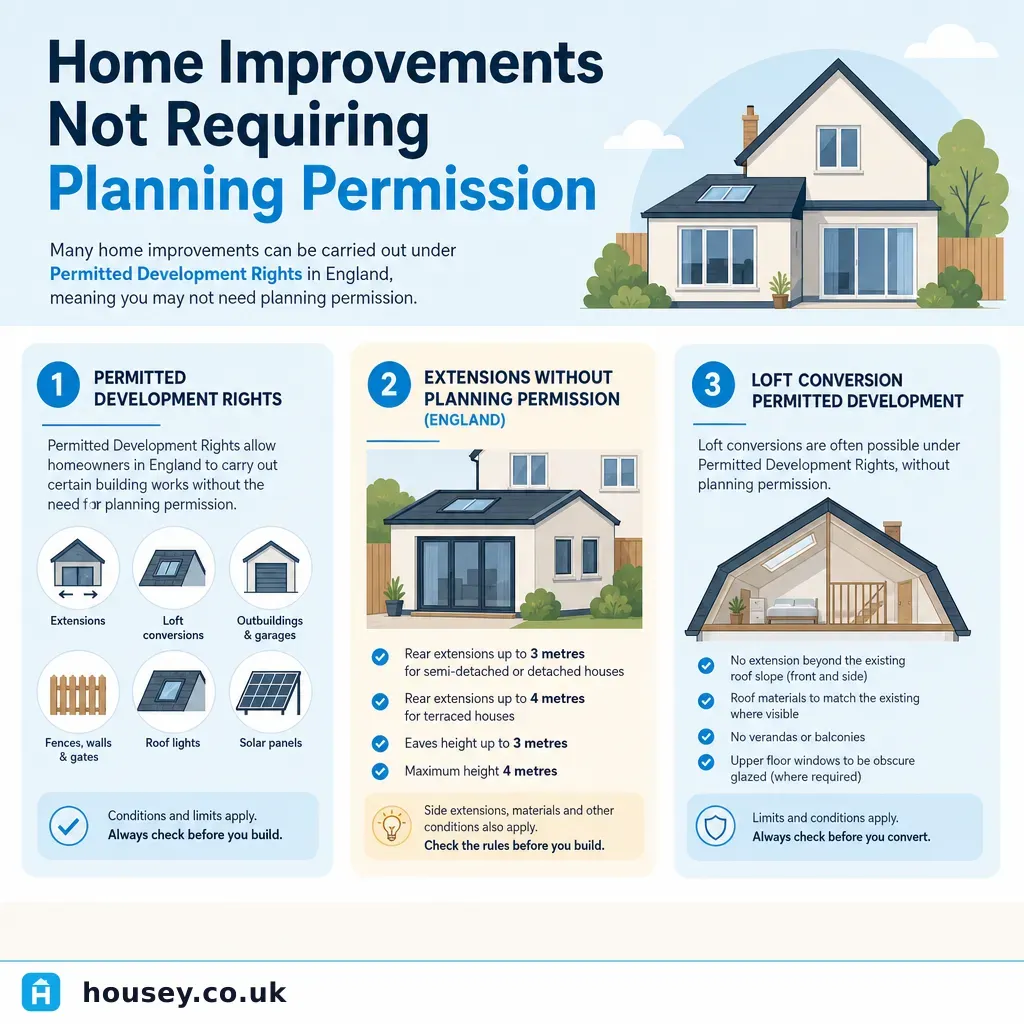
Home Improvements Not Requiring Planning Permission
Many common home improvements in England fall under Permitted Development Rights and do not require a planning application.
 Planning & Pre-Build
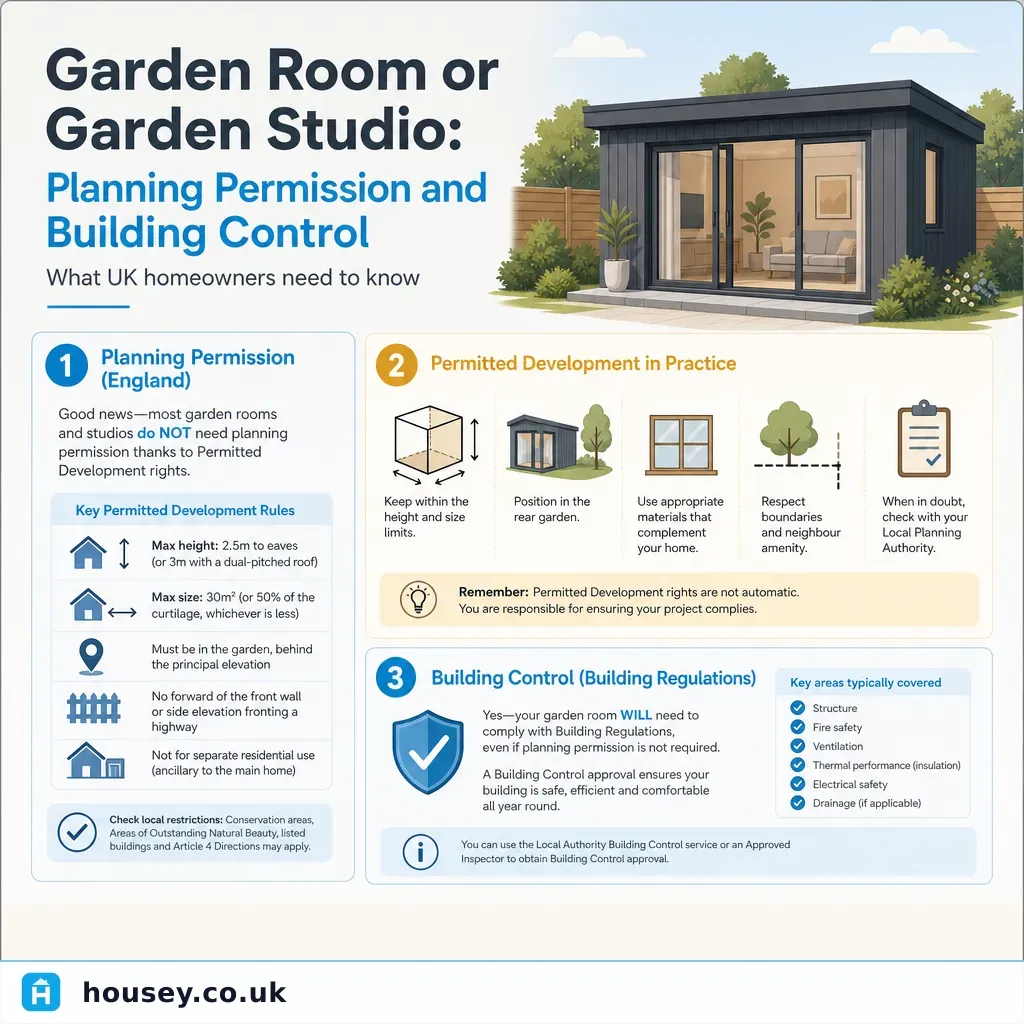
Garden Room or Garden Studio: Planning Permission and Building Control
A garden room or studio often qualifies as permitted development in England, meaning no planning application is needed — provided it occupies no more than 50% of the total curtilage, sits within height limits, and is not used as a separate dwelling.
 Planning & Pre-Build
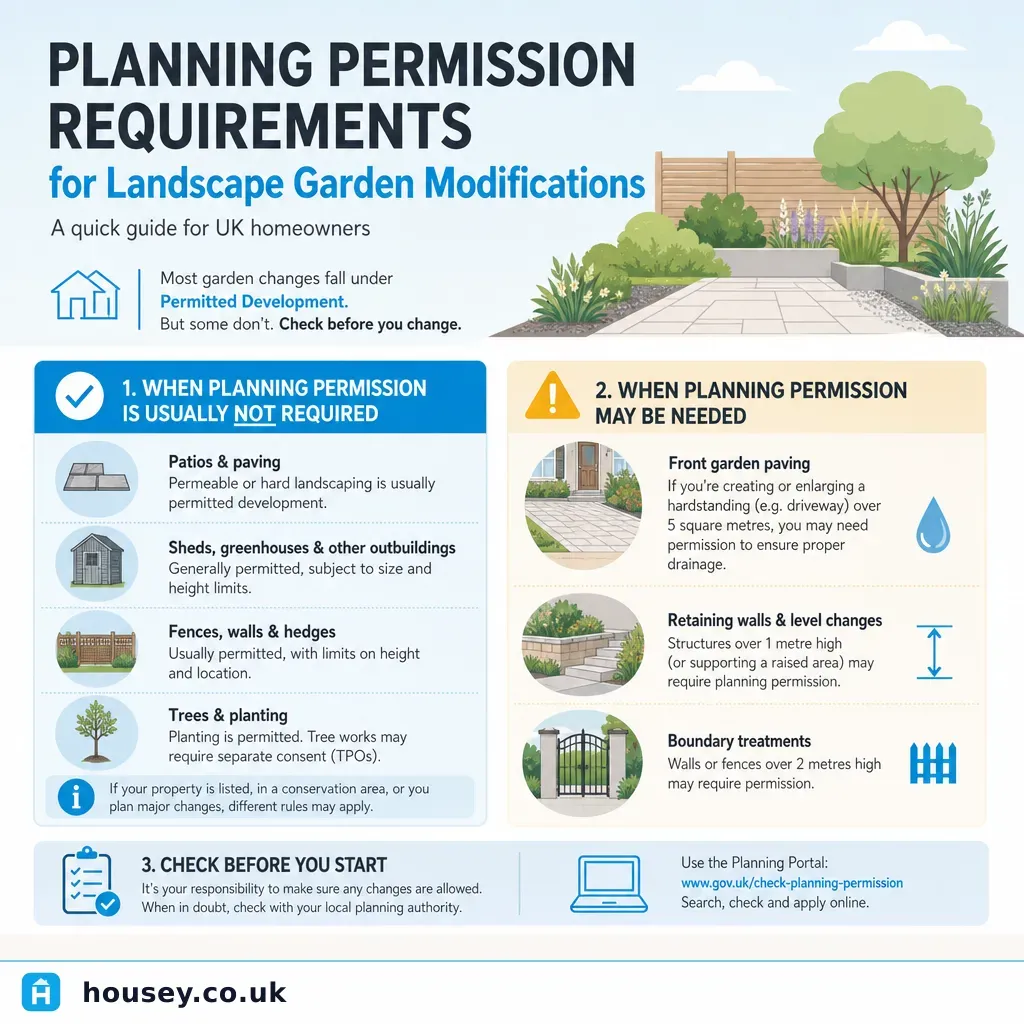
Planning Permission Requirements for Landscape Garden Modifications
Most garden landscaping in England does not require planning permission.
 Planning & Pre-Build
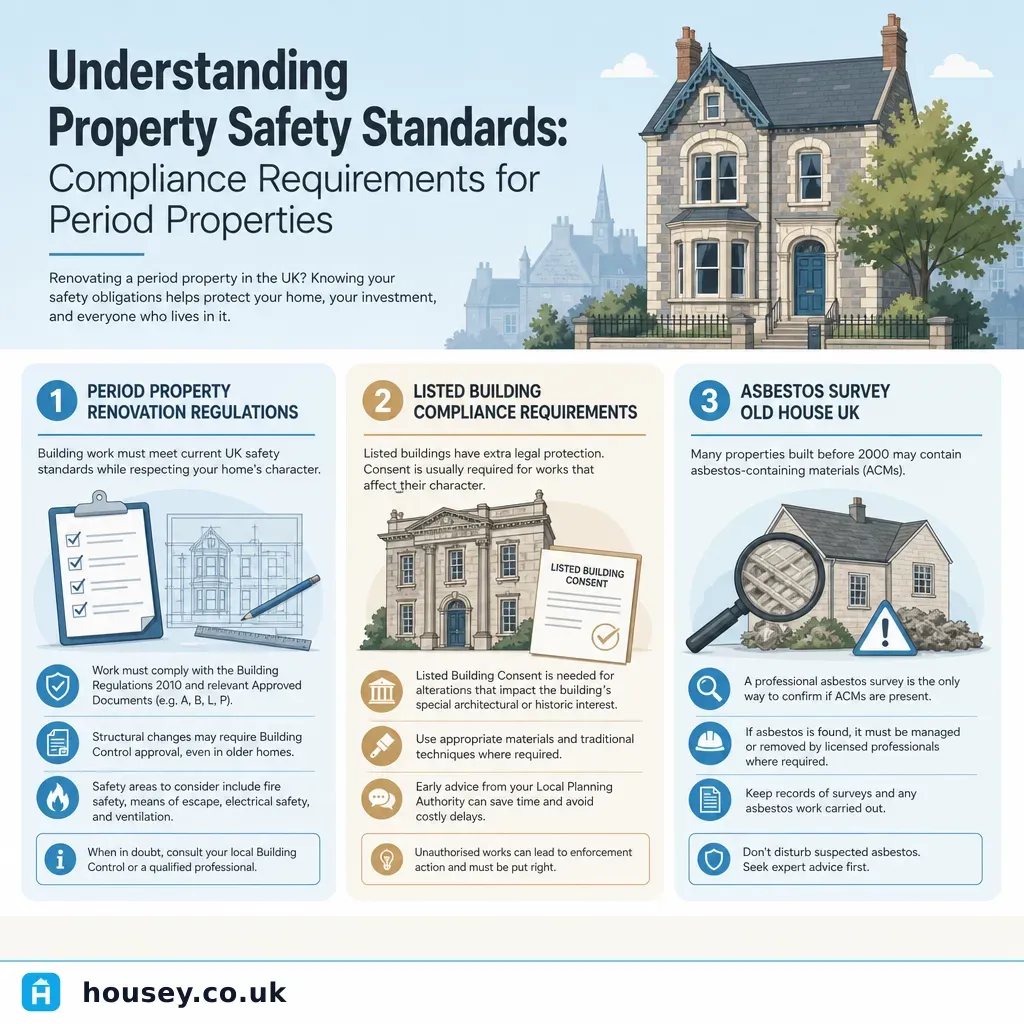
Understanding Property Safety Standards: Compliance Requirements for Period Properties
Period properties in England are not automatically exempt from current Building Regulations — any notifiable work must comply with today's Approved Documents.
 Planning & Pre-Build
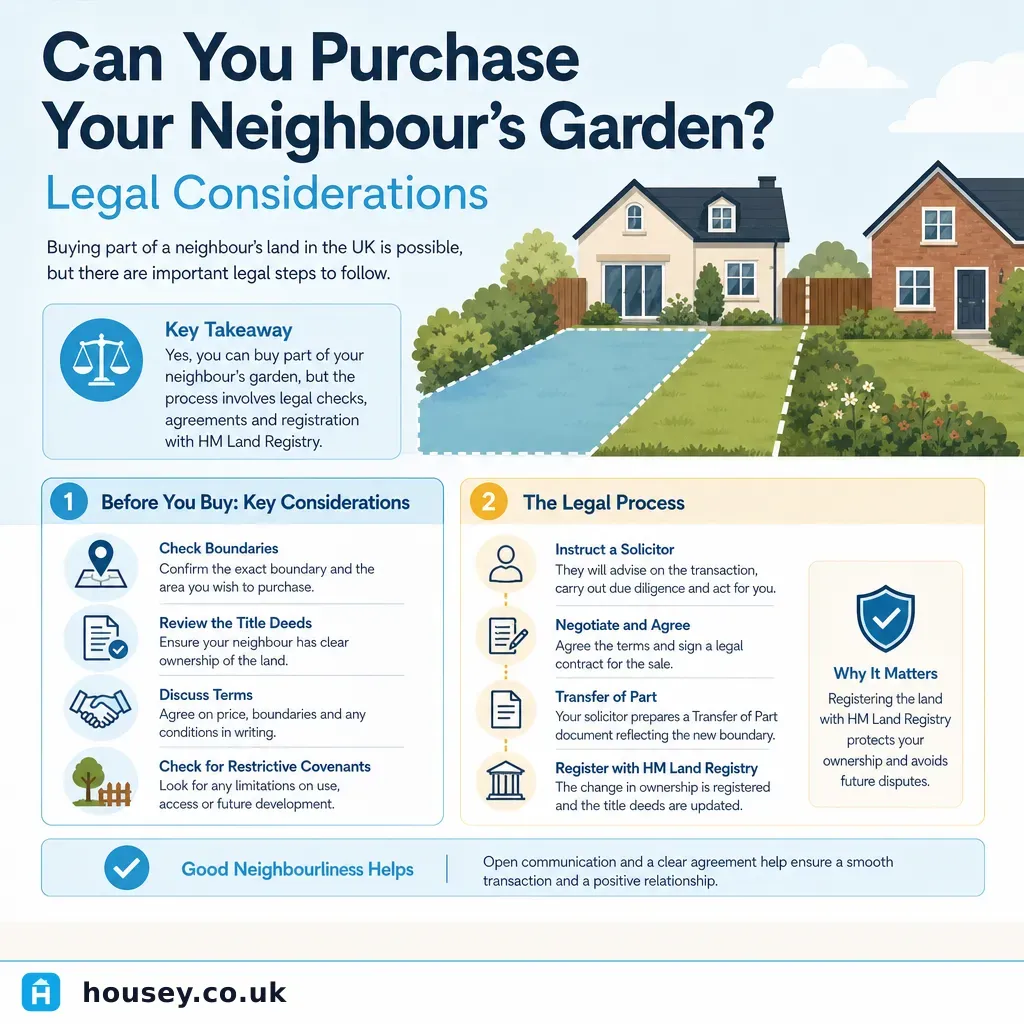
Can You Purchase Your Neighbour's Garden? Legal Considerations
Buying part of a neighbour's garden is legally possible but requires a formal process called a transfer of part, handled by a solicitor and registered at HM Land Registry.