Can you replace your boiler with a heat pump system?
By Housey · Last reviewed 11th of May 2026

Can you replace your boiler with a heat pump system?
The question of whether to replace a gas boiler with a heat pump typically arises when a boiler nears the end of its life, during a planned renovation, or following an energy assessment. For many UK households, the switch is technically feasible — but whether it is the right decision depends on the property's construction, insulation standard, existing heating distribution, and budget. A poorly specified system will underperform and cost more to run than expected, which is why the assessment stage matters as much as the installation itself.
Key points
- The Boiler Upgrade Scheme (BUS) provides a £7,500 grant toward an air source heat pump (ASHP) in England and Wales — but requires an MCS-certified installer and a valid EPC with no outstanding loft or cavity wall insulation recommendations.
- Heat pumps typically deliver water at 35–55°C; gas boilers operate at 60–80°C — meaning many existing radiators will need to be assessed and potentially upsized before the system will perform correctly.
- PAS 2035 is the UK standard for domestic retrofit; where a heat pump is installed as part of a wider retrofit programme, a TrustMark-registered Retrofit Coordinator must be appointed.
- Air source heat pumps became permitted development in England from April 2022 (subject to conditions), but listed buildings and many conservation areas are excluded.
- MCS-certified installers are required to carry out a room-by-room heat loss calculation to BS EN 12831 — sizing based on floor area or bedroom count alone is not acceptable.
How a heat pump differs from a gas boiler
A gas boiler burns fuel to produce high-temperature water rapidly. A heat pump moves heat from outdoor air (air source) or the ground (ground source) into the home using a refrigerant cycle — the same principle as a refrigerator in reverse. Heat pumps are most efficient when running at lower flow temperatures over longer periods, rather than the short, high-temperature bursts typical of a gas boiler.
This difference has two important practical implications for UK homes:
- Radiators sized for high-temperature systems may be undersized. If your current radiators were designed for 70–80°C flow temperatures, they may not deliver sufficient heat output at 45–50°C. A room-by-room heat loss calculation determines which, if any, radiators need replacing or supplementing.
- Building fabric matters more than with a gas boiler. Heat pumps run more efficiently in well-insulated homes. A fabric-first approach — addressing loft insulation, draught-proofing, and potentially wall insulation before or alongside a heat pump — generally produces better running costs and comfort.
Is your home suitable? A decision guide
- Choose an air source heat pump if your home has: an EPC rating of C or above, double glazing throughout, at least 270mm of loft insulation, and radiators that can be assessed or are already appropriately sized.
- Consider a heat pump with fabric improvements first if your home has: an EPC rating of D with outstanding recommendations for loft or cavity wall insulation — completing these may be required for BUS grant eligibility.
- Explore a hybrid heat pump system if your home has: solid walls without existing insulation, high heat loss, listed building constraints that limit insulation options, or if a full radiator replacement is not currently feasible.
- Ask a qualified retrofit assessor before deciding if: you are unsure of your property's construction, have experienced damp or condensation problems, or your home was built before 1919.
Air source heat pump versus gas boiler: a comparison
Factor | Gas boiler | Air source heat pump |
|---|---|---|
Fuel | Natural gas or LPG | Electricity |
Typical flow temperature | 60–80°C | 35–55°C |
Efficiency | ~90% (condensing) | 250–350% (CoP 2.5–3.5) |
Grant available (2026) | None | £7,500 via Boiler Upgrade Scheme (England and Wales) |
Planning permission | Not usually required | Permitted development with conditions; exceptions apply |
Radiator compatibility | Usually compatible | Often requires assessment; some replacement may be needed |
Required installer accreditation | Gas Safe registered | MCS certified |
Annual servicing | Required | Recommended |
Indicative information, last reviewed 2026-05-11. Running costs depend on individual energy tariffs, property characteristics, and usage patterns.
The Boiler Upgrade Scheme: key facts
The BUS (administered by Ofgem) provides £7,500 toward the installed cost of an air source or ground source heat pump in England and Wales. Scotland has separate funding through Home Energy Scotland.
Key eligibility conditions:
- The property must have a valid EPC issued within the last ten years.
- The EPC must not carry outstanding recommendations for loft insulation or cavity wall insulation — these must be completed first, unless the property construction makes them unsuitable.
- The installer must hold current MCS certification for the technology being installed.
- The grant is claimed and applied directly by the installer — you pay the net cost after the grant has been deducted.
Check GOV.UK's Boiler Upgrade Scheme guidance for current eligibility terms before instructing any installer, as funding conditions can change.
MCS, PAS 2035, and TrustMark explained
- MCS (Microgeneration Certification Scheme): The quality and competency standard for heat pump installation in the UK. BUS grant eligibility requires an MCS-certified installer, and the completed installation receives an MCS certificate. Work carried out by a non-MCS installer does not qualify for the grant.
- PAS 2035: The BSI standard governing domestic retrofit. Where a heat pump is installed alongside other measures — such as insulation funded through ECO4 or the Great British Insulation Scheme — PAS 2035 compliance is mandatory and requires oversight by a TrustMark-registered Retrofit Coordinator.
- TrustMark: The government-endorsed quality mark for retrofit and home improvement work. Look for TrustMark-registered installers and assessors when seeking quotes and comparing proposals.
Important limitations
This article provides general guidance only. Heat pump sizing, system design, and retrofit suitability are complex technical assessments that depend on your specific property, its construction, existing heating system, and local conditions. Rules vary by property type, tenure, and local authority. Getting the specification wrong can result in an underperforming system, higher-than-expected running costs, or moisture and ventilation problems within the fabric of the building.
Grant schemes, permitted development rules, and planning conditions can change. Always verify current eligibility criteria and planning requirements with the relevant authority or a qualified professional before committing to any installation.
When this becomes urgent
Seek professional assessment without delay if:
- Your boiler has failed and you are considering a heat pump as an emergency like-for-like substitution — proceeding without a proper assessment is unlikely to produce a correctly performing system.
- You have experienced damp, condensation, or mould in your home — these conditions can worsen if ventilation is inadequate following significant insulation improvements, and must be assessed before any retrofit proceeds.
- Your home is listed or in a conservation area — planning constraints must be confirmed before ordering any equipment or starting any works.
What to ask a qualified professional
Before instructing an MCS-certified heat pump installer or retrofit assessor, ask:
- Will you carry out a full room-by-room heat loss calculation in accordance with BS EN 12831?
- Is the proposed system sized to cover 100% of my home's heat demand, or is it a hybrid design?
- Which radiators will need to be replaced or upgraded, and is this work included in your quote?
- Does my current EPC carry any outstanding recommendations that would affect my BUS grant eligibility?
- Are you registered with MCS and TrustMark?
- Will the installation comply with PAS 2035 if I am also receiving other retrofit measures at the same time?
- What Coefficient of Performance (CoP) should I expect for my property, and what annual running costs should I budget for?
- What planning conditions apply to my specific property?
When to get professional help
A heat pump installation is not a DIY project. Only an MCS-certified installer can carry out the work for BUS grant purposes, and the design process requires professional heat loss assessment. Always use a qualified professional for:
- The initial heat loss survey and system design
- Radiator sizing assessment and any necessary replacement
- Physical installation of the heat pump unit, refrigerant pipework, and controls
- Commissioning and MCS certification
- Any building fabric improvements — insulation or ventilation — carried out alongside the installation
Red flags when evaluating an installer:
- Cannot provide current MCS certification details on request
- Sizes the system from floor area or number of bedrooms alone, without a room-by-room heat loss calculation
- Does not discuss or assess your existing radiators before quoting
- Does not ask about your EPC rating or current insulation levels
- Discourages you from seeking a second opinion or an independent heat loss survey
How Housey can help
Getting an accurate assessment of your home's heat pump suitability is the essential first step before committing to any installation. Housey connects homeowners with qualified professionals offering heat pump surveys across the UK — so you can understand exactly what your property needs before spending anything on equipment or installation.
Frequently asked questions
Does a heat pump need planning permission in the UK?
Air source heat pumps have been permitted development in England since April 2022, subject to conditions: the unit must be at least 1 metre from the property boundary, only one unit is permitted per property, and it must not be installed on a flat roof. Listed buildings are excluded and require full planning permission. Conservation area rules vary — check with your local planning authority before proceeding.
How much does it cost to replace a boiler with a heat pump in the UK?
An air source heat pump system including installation typically costs £8,000–£20,000 before the Boiler Upgrade Scheme grant of £7,500. After the grant, net costs commonly fall between £500 and £12,500, depending on system size, radiator upgrades required, and property complexity. These are indicative UK costs, last reviewed 2026-05-11 — always obtain at least three quotes from MCS-certified installers, as prices vary considerably.
Can a heat pump work effectively in a cold UK winter?
Yes. Modern air source heat pumps are designed to operate at outdoor temperatures as low as -20°C, though efficiency (CoP) falls as the temperature drops. UK winters are generally mild enough that a correctly specified heat pump performs reliably. Sizing the system to meet peak demand on the coldest design day — not just average conditions — is essential, which is why a formal heat loss calculation is required.
Is a hybrid heat pump system an option?
Yes. A hybrid system combines a heat pump with an existing or new gas boiler: the heat pump handles most of the heating load, with the boiler stepping in during very cold periods or for rapid hot water recovery. This can suit homes not yet optimal for a heat pump alone, often requires less radiator upgrading, and can significantly reduce gas consumption while providing a practical transition pathway.
Sources and further reading
- Boiler Upgrade Scheme — GOV.UK — GOV.UK
- MCS — Microgeneration Certification Scheme — MCS
- PAS 2035:2023 retrofit standard — BSI Group
- TrustMark — government-endorsed quality scheme — TrustMark
- Home Energy Scotland — heat pump grants — Home Energy Scotland
- Planning Portal — air source heat pumps — Planning Portal
Useful next reads
 Energy & Retrofit
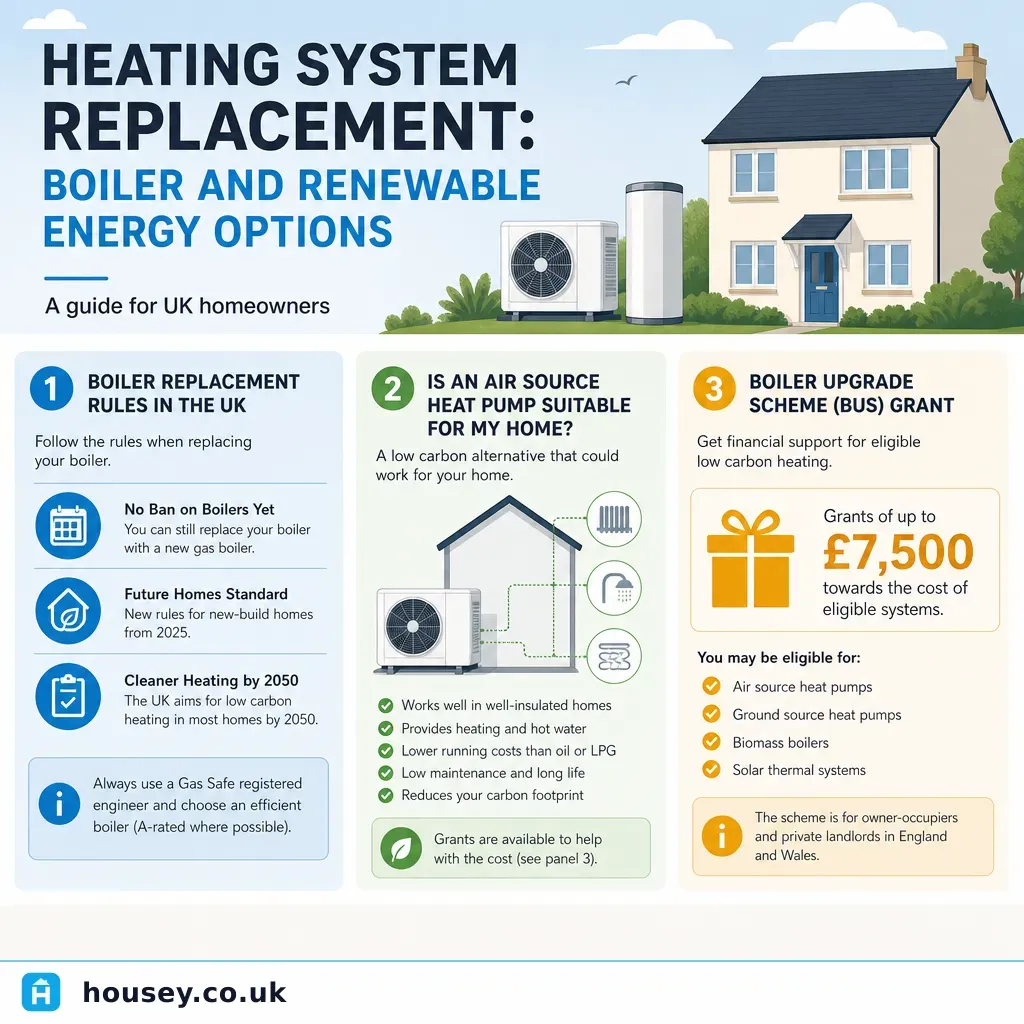
Heating System Replacement: Boiler and Renewable Energy Options
When replacing a heating system in the UK, a new gas boiler must comply with Boiler Plus (Part L) and be fitted by a Gas Safe registered engineer.
 Energy & Retrofit
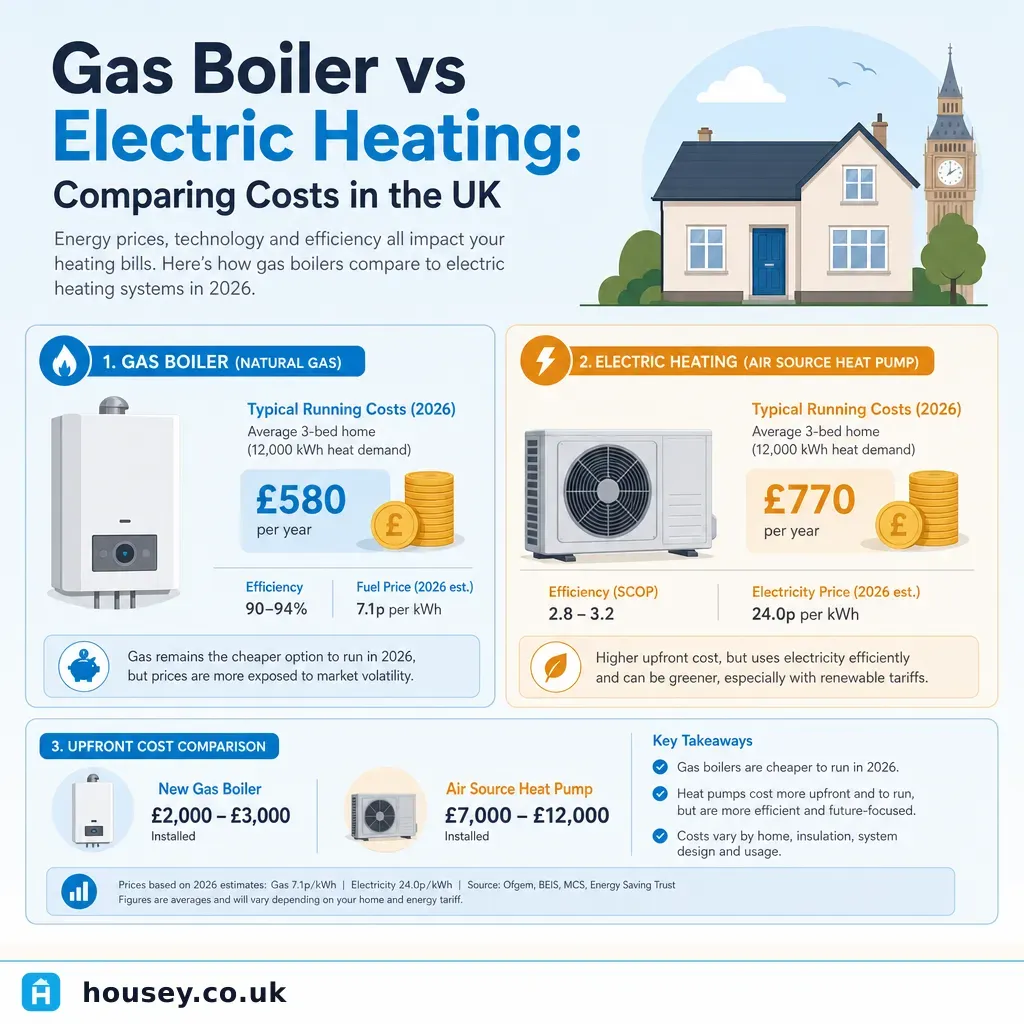
Gas Boiler vs Electric Heating: Comparing Costs in the UK
Gas boilers currently cost around 6.
 Energy & Retrofit
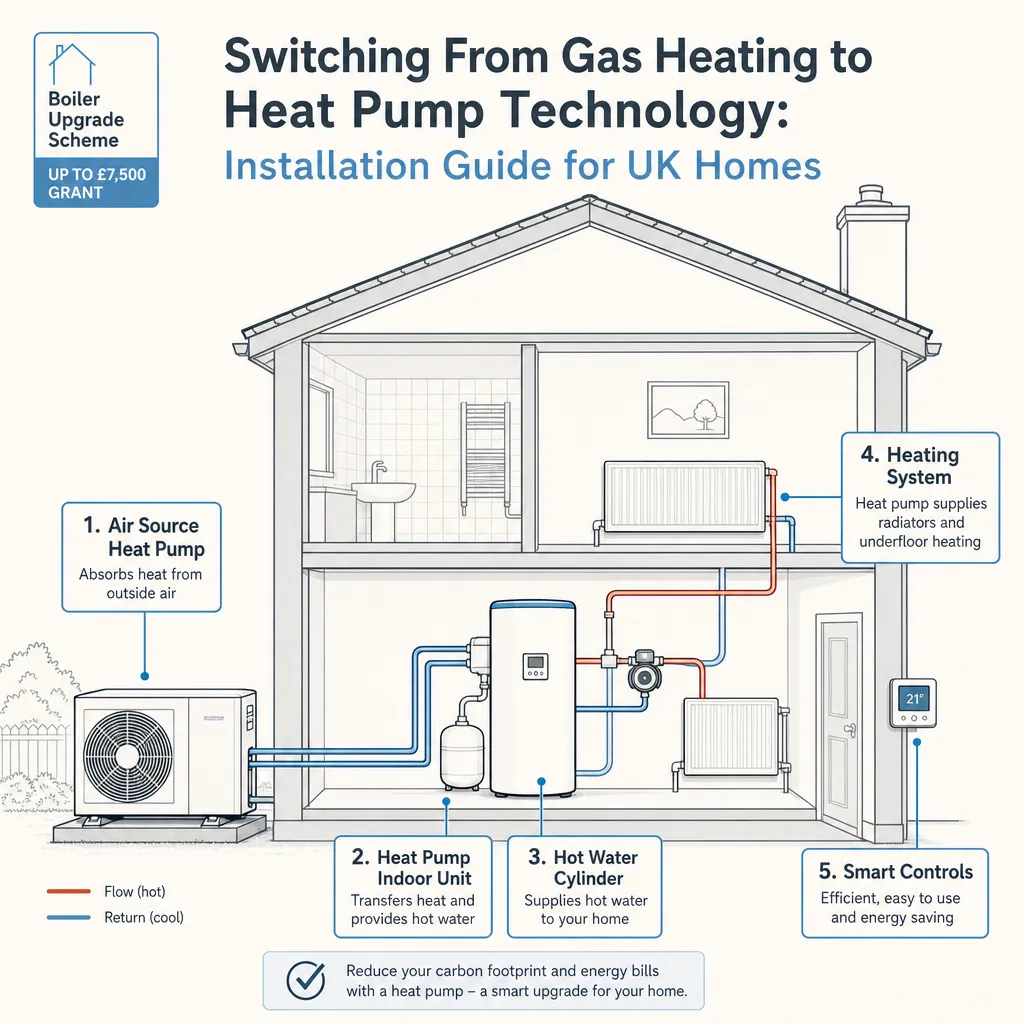
Switching From Gas Heating to Heat Pump Technology: Installation Guide
Switching from gas to a heat pump requires a heat loss calculation, correctly sized equipment, and often radiator upgrades before installation.
 Energy & Retrofit
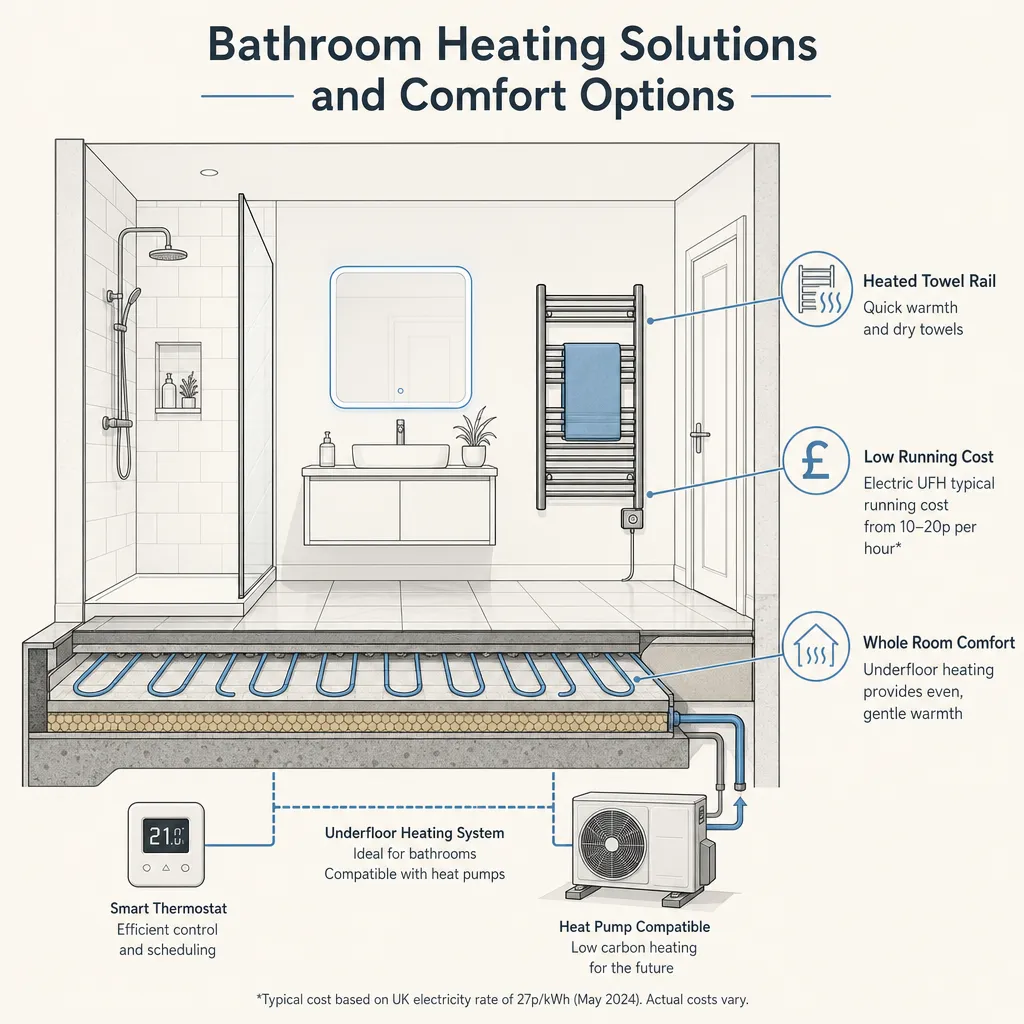
Bathroom Heating Solutions and Comfort Options
UK bathrooms can be heated using electric towel rails, wet radiators on the central heating circuit, electric or wet underfloor heating, or infrared panels.
 Energy & Retrofit
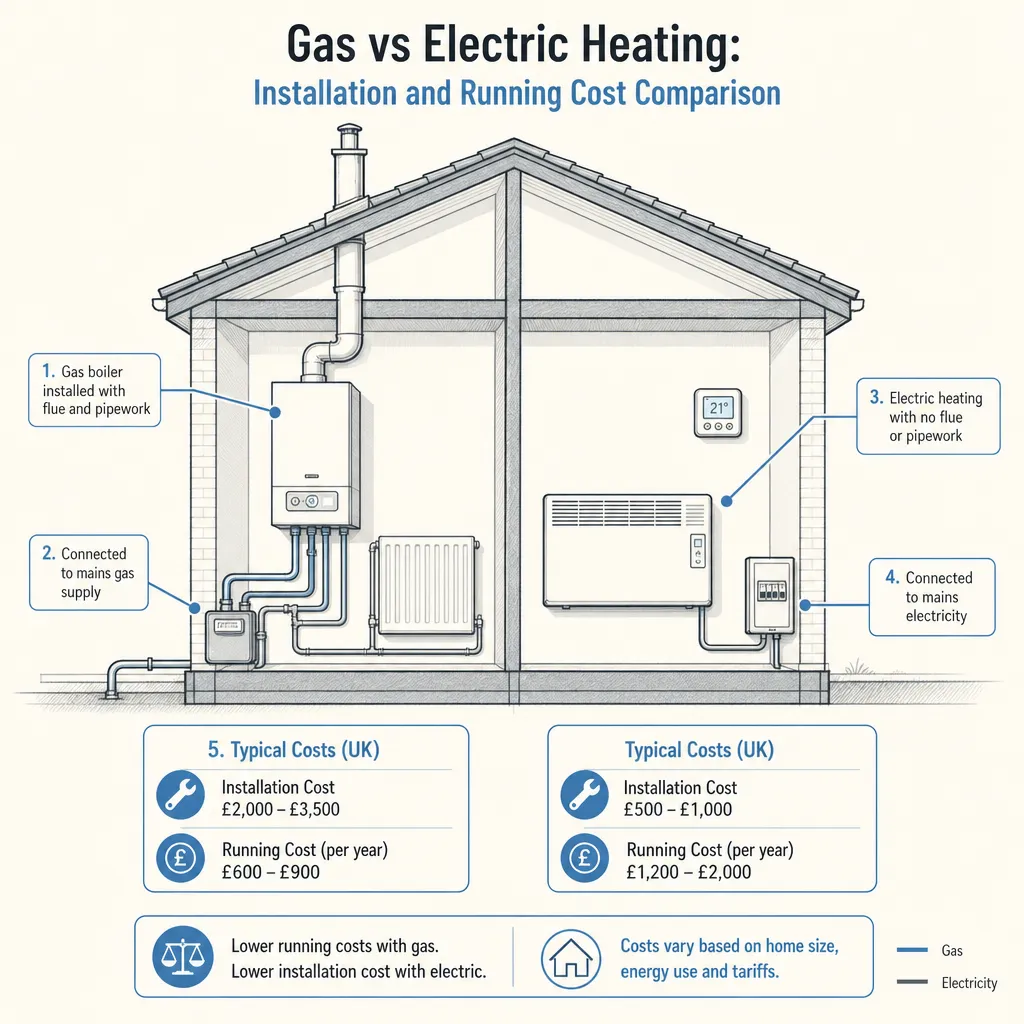
Gas vs Electric Heating: Installation and Running Cost Comparison
Gas central heating usually has lower running costs per kWh than direct electric heating in the UK, though heat pumps can change that equation.