Cape Cod Style Homes: Design Elements and Characteristics
By Housey · Last reviewed 11th of May 2026
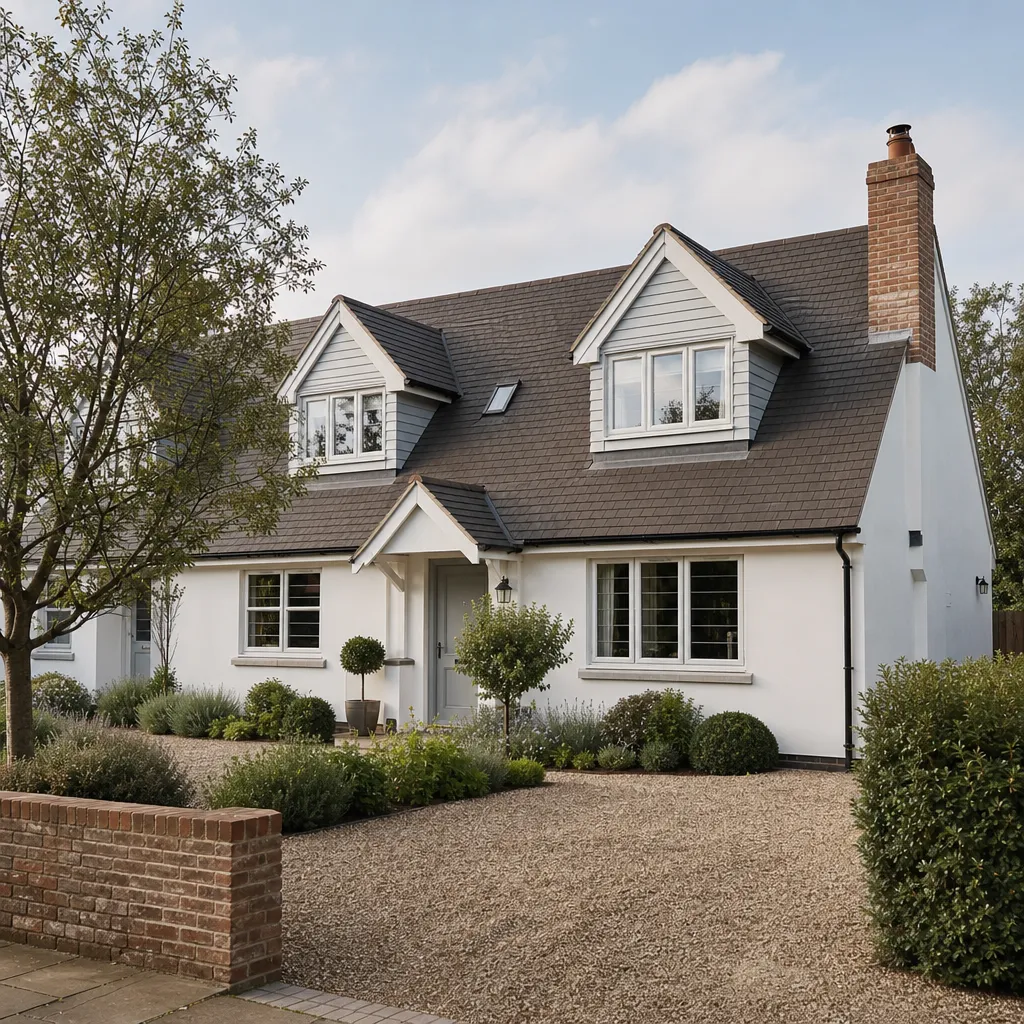
Cape Cod Style Homes: Design Elements and Characteristics
Cape Cod architecture is one of North America's oldest surviving residential styles, but its influence has reached well beyond New England — and UK homeowners and developers occasionally commission or encounter buildings that draw directly from its vocabulary. Whether you are developing a self-build brief, evaluating a developer's house type range, or trying to understand a property's design lineage, knowing Cape Cod's defining characteristics helps you communicate clearly with architects and make better-informed decisions about form, materials, and planning.
Key points
- A Cape Cod home is defined by a steep symmetrical gabled roof, typically pitched at 8:12 (approximately 33°) or steeper — the angle that historically shed heavy snow and Atlantic rain along the New England coast.
- The traditional form is a 1.5-storey structure: full living accommodation on the ground floor and habitable but lower-height rooms in the roof space, usually lit by dormer windows.
- A central chimney stack — historically serving multiple back-to-back fireplaces — is a hallmark of the traditional form, though contemporary interpretations often relocate or omit it.
- UK self-build or new-build projects referencing Cape Cod style require full planning permission; the architectural preference does not alter the permitted development framework.
- UK builds typically substitute fibre cement board, timber weatherboarding, or render for traditional cedar shingle or clapboard cladding to meet Building Regulations and local planning authority material preferences.
What defines a Cape Cod style home?
The Cape Cod house style emerged in 17th-century colonial New England as a practical response to harsh winters and Atlantic gales. Its features were structural before they were aesthetic: low mass, steep roof, minimal ornamentation, and a compact plan that was easy to heat with limited fuel.
The key architectural elements are:
- Steep gabled roof — the dominant visual feature, with a pitch typically between 30° and 45°, designed to shed snow and rain efficiently.
- Symmetrical facade — a central front door flanked by an equal number of windows on each side, giving the building a balanced, orderly appearance.
- Dormer windows — set into the roofline to bring light and headroom to the upper half-storey. Shed dormers (wide, flat-roofed) and eyebrow dormers (curved) appear across different sub-types.
- Low eaves — the roofline drops close to the first-floor window heads, giving the building a close-to-the-ground, anchored quality.
- Minimal ornamentation — unlike Victorian or Edwardian styles, Cape Cod avoids decorative detailing; lines are clean and functional.
- Central chimney — in the historic form, a single large stack serves back-to-back fireplaces on the ground floor and upper rooms.
- Small shuttered windows — traditionally double-hung sash windows with operable shutters designed to manage extreme weather.
Cape Cod sub-types
Cape Cod houses are typically classified into three sub-types based on the number of bays on the facade:
Sub-type | Facade arrangement | Notes |
|---|---|---|
Half Cape | Door plus two windows on one side only | Asymmetric; designed for future lateral expansion |
Three-quarter Cape | Door plus three windows, sides unequal | Transitional form; one side already extended |
Full Cape | Door plus four windows, two each side | Fully symmetric; the classic recognised form |
Cape Cod in the UK context
Authentic historic Cape Cod homes are almost exclusively found in the northeastern United States. In the UK, the style appears primarily in:
- Self-build and bespoke new-build projects where clients brief architects to reference New England vernacular architecture.
- Certain residential developments — some UK housebuilders market house types with Cape Cod-influenced rooflines, cladding, and dormer treatments.
- Holiday park and waterside developments — coastal or lakeside sites where the aesthetic suits the setting and local character.
- Renovation and extension projects on existing buildings aiming for a clapboard or shingle character.
UK planning authorities do not recognise Cape Cod as a formal planning category. A new build or extension referencing this style is assessed on standard planning criteria: design quality, scale, materials, impact on the streetscape, and compliance with local design guides. Conservation areas and listed building settings impose additional constraints on materials and massing.
How does Cape Cod compare to similar styles?
Style | Era and origin | Roof form | Storeys | Typical UK cladding | UK prevalence |
|---|---|---|---|---|---|
Cape Cod | 17th-century New England | Steep symmetric gable | 1.5 | Fibre cement, weatherboarding | Rare — primarily self-build |
Arts and Crafts | Late 19th-century UK | Steep hip or gable, varied | 2 | Brick, tile hanging, roughcast | Moderate — period stock |
Georgian | 18th-century UK | Low hipped | 2–4 | Brick, stucco | Common — urban period stock |
Scandinavian or Nordic | Contemporary | Steep gable | 1–2 | Dark timber cladding, render | Growing — self-build sector |
Coastal vernacular UK | Varied | Steep gable | 1–2 | Flint, brick, weatherboarding | Regional — SE and East Anglia |
Cape Cod and Scandinavian styles share a steep gabled roofline and a preference for cladded elevations, which is why they are sometimes conflated in self-build briefs. UK planning officers are generally more familiar with Scandinavian or Nordic vernacular as a design reference than Cape Cod.
Planning and design considerations for a UK Cape Cod-influenced new build
If you want to commission a house referencing Cape Cod design elements, your architect will need to address several UK-specific issues.
Materials: Cedar shingles are available in the UK but may face resistance from planning authorities in areas with a strong local brick or stone vernacular. Fibre cement shingles and timber weatherboarding are lower-maintenance alternatives that planners in many areas accept more readily.
Roof pitch: A 40–45° pitch is structurally straightforward in UK construction. It will affect Building Regulations calculations for structural loading and thermal performance under Approved Document L.
Dormers: Planning permission is typically required for dormers visible from the highway, even as part of a new build's approved design. Size, proportion, and roofing material are often subject to planning condition.
Permitted development: Once built, a Cape Cod-style house qualifies for the same permitted development rights as any other dwellinghouse, unless specific conditions remove those rights. Further extensions, dormers, or outbuildings are assessed on the standard permitted development criteria.
Which professional do you need?
Stage | Professional | What they provide |
|---|---|---|
Concept and feasibility | Architect (ARB/RIBA-registered) | Brief development, massing studies, pre-application planning advice |
Planning application | Architect or planning consultant | Drawings, design and access statement, Local Planning Authority liaison |
Building Regulations | Architect and structural engineer | Technical drawings, Part L compliance, construction specifications |
Materials specification | Architect or specialist supplier | Cladding, roofing, and fenestration selection and sourcing |
Site management | Architect (contract administration) or project manager | On-site quality assurance and contractor coordination |
When to get professional help
If you are commissioning a new build or significant renovation referencing Cape Cod design, involve an ARB-registered architect from the earliest stage. Planning pre-application advice from your Local Planning Authority (LPA) is strongly recommended before finalising the design — particularly if the site is in a conservation area, an Area of Outstanding Natural Beauty, or within the setting of a listed building.
Seek professional input early if:
- The site is in a conservation area or subject to an Article 4 direction removing permitted development rights.
- Any neighbouring or nearby buildings are listed.
- Proposed materials such as cedar shingles may conflict with local design guides.
- The plot carries restrictive covenants relating to design or materials.
How Housey can help
If you are planning a new build or extension with Cape Cod influences, Housey can connect you with RIBA-registered architects experienced in bespoke residential design who can take your brief from concept through planning approval and on site.
Frequently asked questions
Are Cape Cod houses found in the UK?
Authentic historic Cape Cod homes are native to the northeastern United States and are not a traditional UK building type. However, some UK self-build projects and residential developments draw on Cape Cod design elements — particularly steep gabled roofs, clapboard or shingle cladding, and dormer windows. These are assessed as standard new builds under UK planning policy.
Does a Cape Cod-inspired design need planning permission?
Yes. All new dwellings require full planning permission regardless of architectural style. Permitted development rights do not apply to new dwellinghouses. Extensions or alterations to an existing Cape Cod-influenced home are assessed under the same permitted development rules as any other dwellinghouse, with standard conditions on size, height, and materials.
What cladding works for a UK Cape Cod-style build?
Cedar shingles or clapboard are traditional but may need justification in areas with a strong local vernacular. Fibre cement board or shingles and timber weatherboarding can achieve a similar appearance with lower maintenance and are often better accepted in planning applications. Always check with your Local Planning Authority before finalising materials.
How does Cape Cod style differ from Scandinavian architecture?
Both use steep gabled roofs and cladded elevations, but Cape Cod is more compact and symmetrical with smaller windows and a lighter palette. Scandinavian or Nordic vernacular designs tend to be taller, darker, and more austere. UK planners are generally more familiar with Scandinavian vernacular as a design reference than Cape Cod.
Sources and further reading
- Planning Practice Guidance — Design — GOV.UK
- ARB Public Register of Architects — Architects Registration Board
- RIBA Find an Architect — Royal Institute of British Architects
- Approved Document L — Conservation of Fuel and Power — GOV.UK
Useful next reads
 Planning & Pre-Build
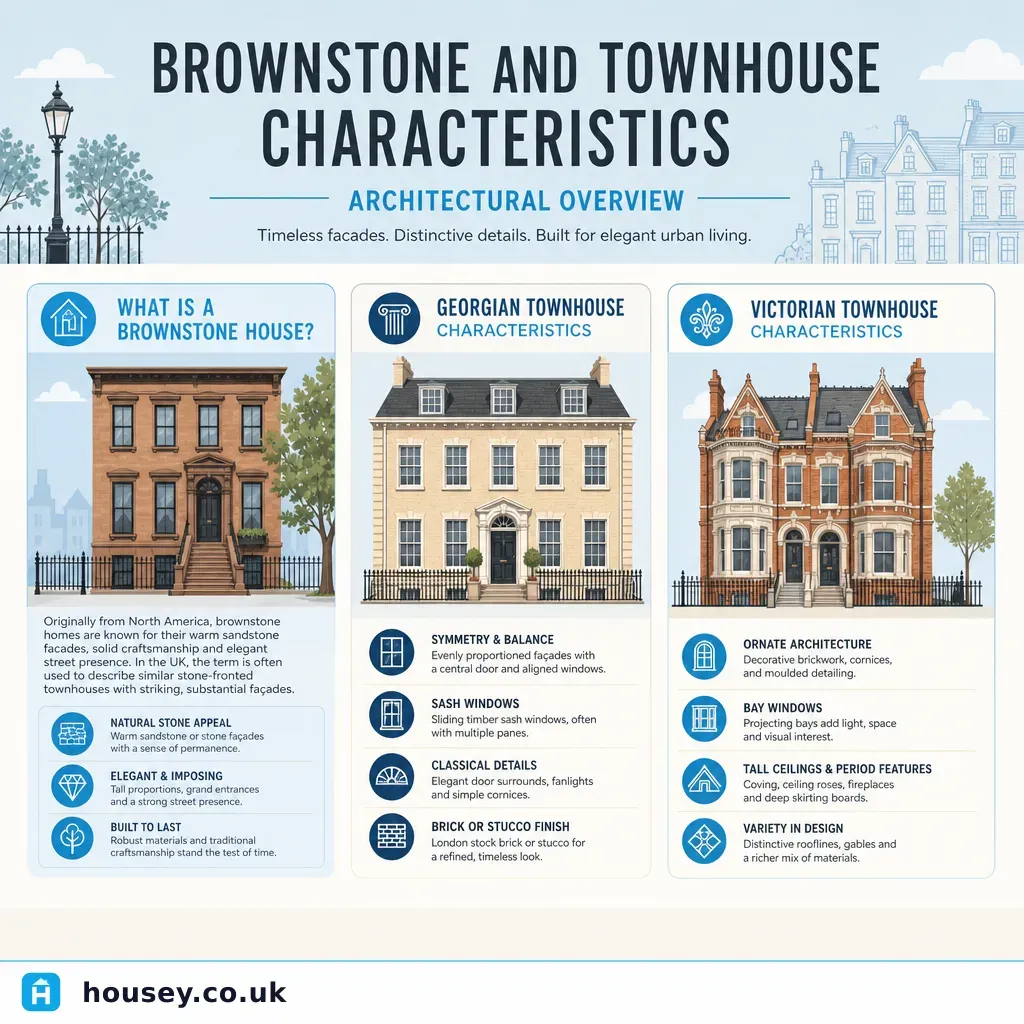
Brownstone and Townhouse Characteristics: Architectural Overview
Brownstones are a North American building type — sandstone-fronted urban terraced houses associated with 19th-century US cities.
 Planning & Pre-Build
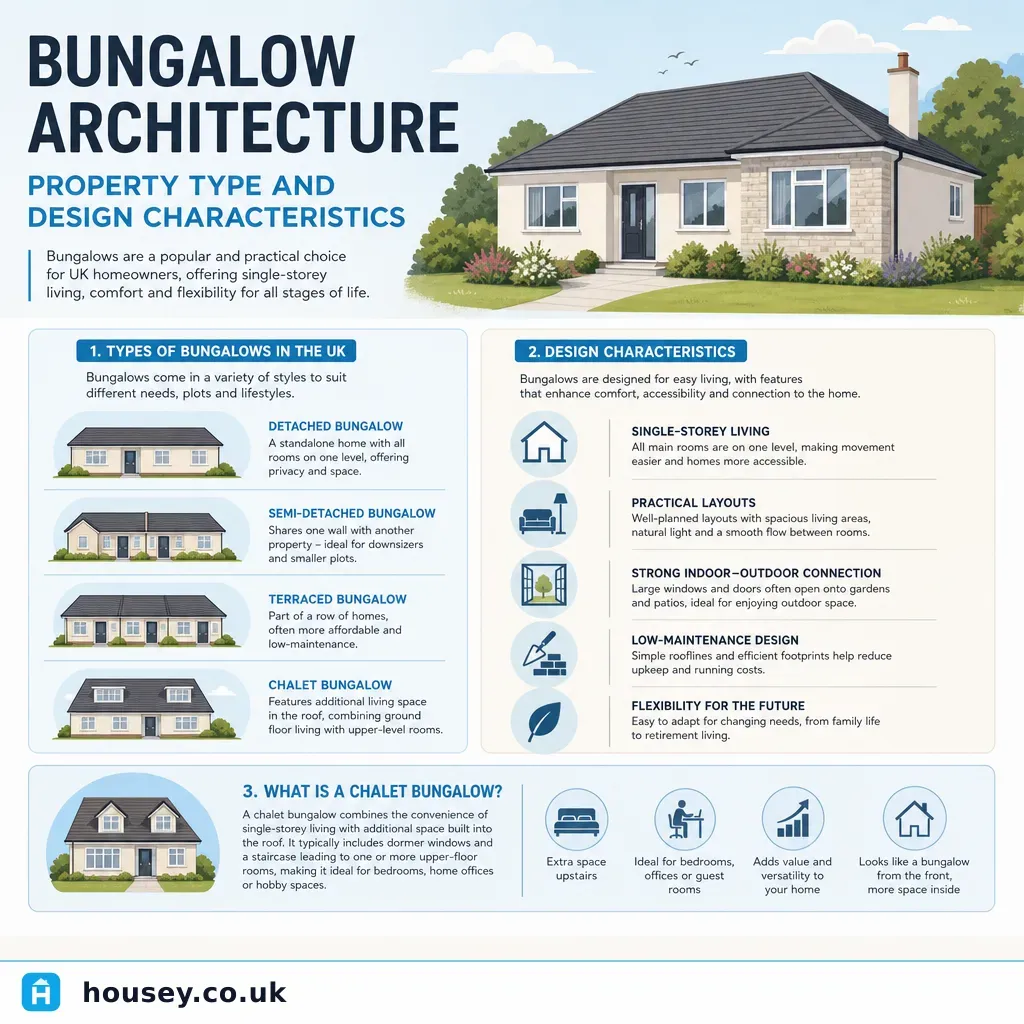
Bungalow Architecture: Property Type and Design Characteristics
A bungalow is a single-storey residential property, though some variants incorporate usable roof space.
 Planning & Pre-Build
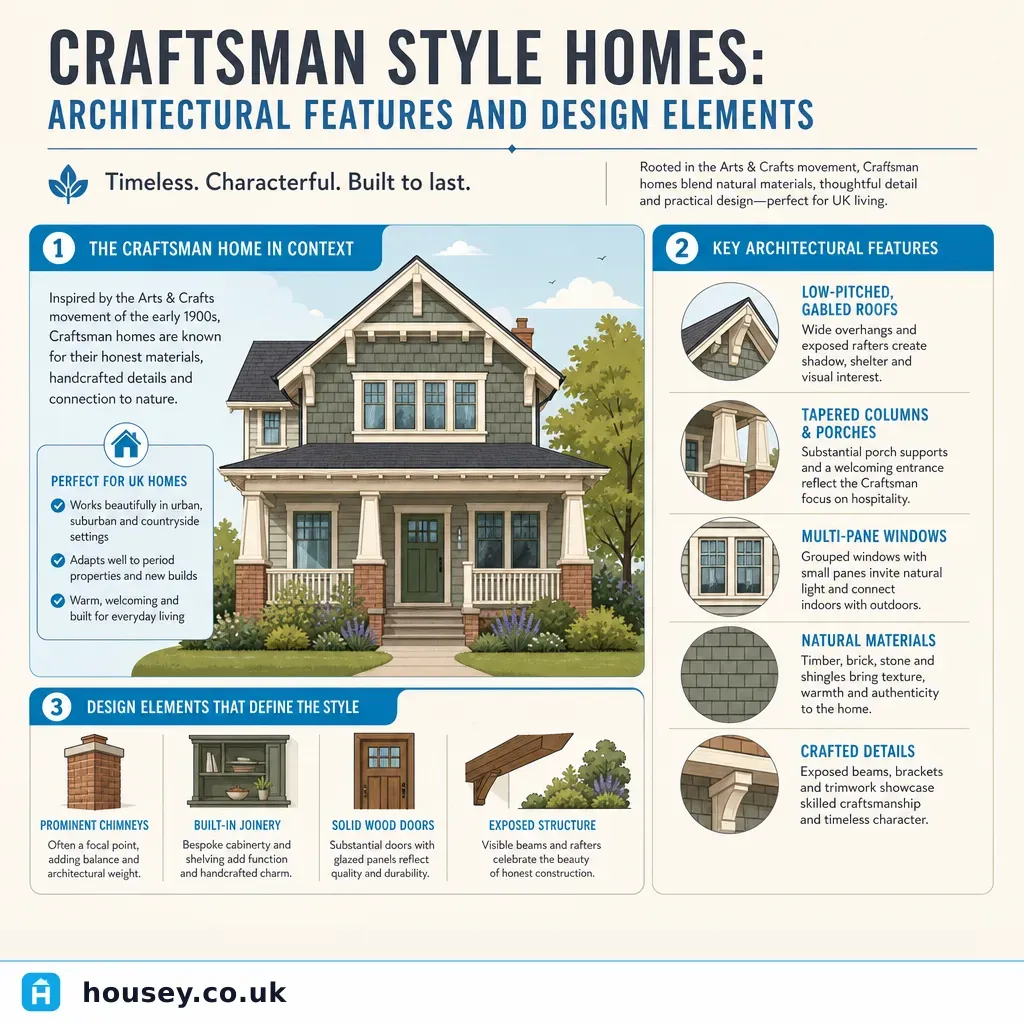
Craftsman Style Homes: Architectural Features and Design Elements
Craftsman style homes are defined by natural materials, low-pitched gabled roofs with wide eaves, covered porches, exposed timber details, and grouped casement windows.
 Planning & Pre-Build
What Is a Patio Home? Understanding This Property Type in the UK
A patio home is a compact, low-maintenance property designed around a private patio or courtyard rather than a traditional lawn garden.
 Planning & Pre-Build
Carriage House Definition: History and Modern Conversions
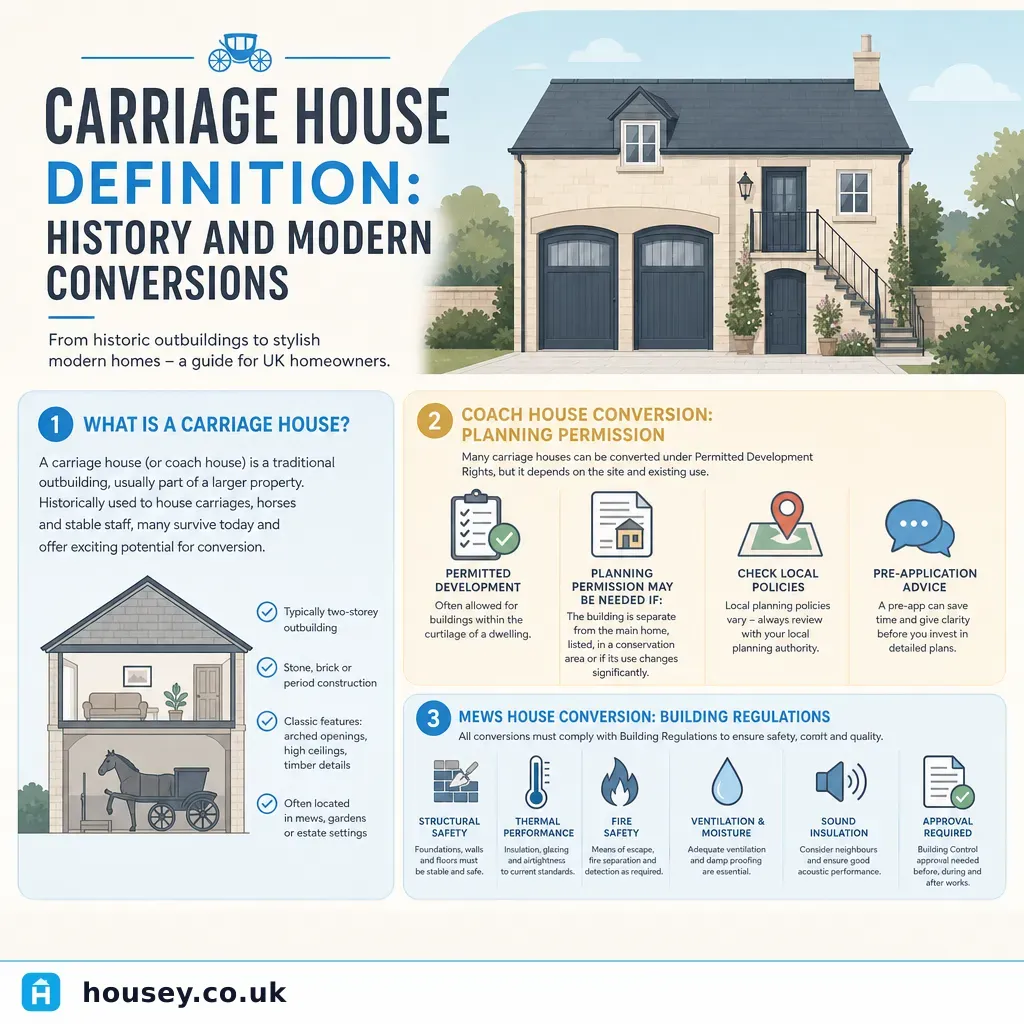
A carriage house is a Victorian or Edwardian outbuilding originally used to shelter horse-drawn vehicles, often with groom's accommodation above.