What Is a Patio Home? Understanding This Property Type in the UK
By Housey · Last reviewed 31st of May 2026
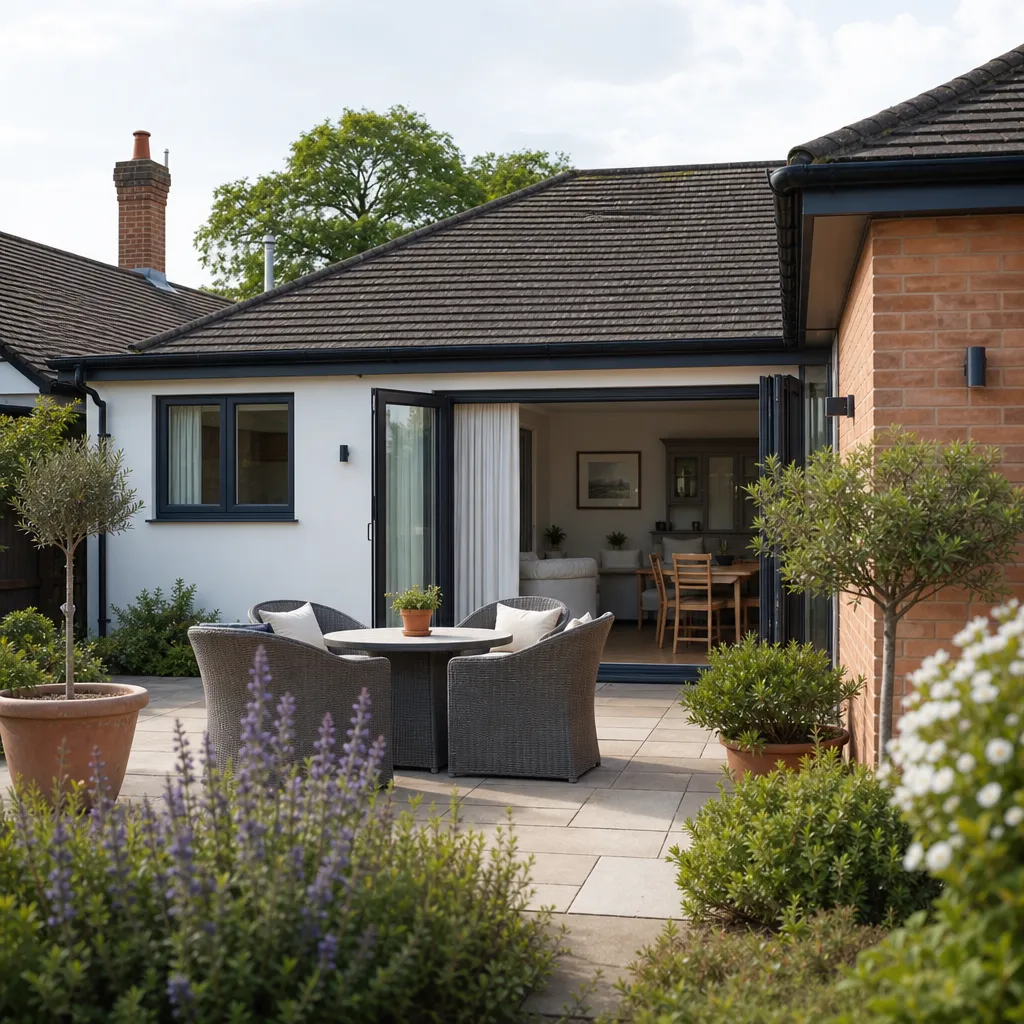
What Is a Patio Home? Understanding This Property Type in the UK
The term "patio home" appears increasingly in UK property listings and new-build marketing brochures, yet it carries no precise legal or planning definition in British property law. Whether you are browsing new developments, comparing housing options later in life, or considering a self-build with a courtyard design, understanding what developers actually mean by a patio home — and how it differs legally and practically from a bungalow or ground-floor flat — matters before you make a financial commitment.
Key points
- "Patio home" has no defined meaning in UK planning law or the RICS property classification taxonomy; the term originates in North American real estate marketing.
- In UK new-build marketing, the phrase typically describes a single-storey or low-rise home on a compact plot where a private paved outdoor area replaces a traditional rear lawn.
- Planning classification — house, flat, or bungalow — determines your permitted development rights under the Town and Country Planning (General Permitted Development) (England) Order 2015, not the developer's marketing label.
- Properties marketed as patio homes can be freehold or long-leasehold; tenure must be verified through the HM Land Registry title register before exchange of contracts.
- Leasehold patio homes classified as flats have significantly restricted permitted development rights compared with freehold houses of similar layout.
What does "patio home" mean in a UK property context?
In the United States, a patio home refers to a detached or semi-detached single-family property on a small lot, where the private outdoor space is a paved patio rather than a lawn. The term implies low maintenance and compact, accessible living.
UK developers adopted the label from the mid-2000s onwards to describe similar properties on new-build estates. You may encounter it applied to:
- Single-storey detached or semi-detached homes on compact plots featuring a private paved patio or courtyard in place of a conventional garden.
- Ground-floor flats with a private terrace or patio, sometimes also marketed as "garden flats" or "patio apartments".
- Courtyard houses — properties arranged around an enclosed private outdoor space, sometimes called a courtyard home.
- Retirement and later-living developments, where single-storey layouts, level outdoor access, and minimal garden maintenance are central selling points.
The practical consequence is that "patio home" is a marketing description, not a legal classification. Its permitted development rights, building regulations requirements, and council tax band all depend on how the property is legally registered — as a house, a flat, a bungalow, or a maisonette.
Patio homes versus bungalows: what is the difference?
The patio home most closely resembles a bungalow in layout — typically single-storey, compact, and level throughout. But there are meaningful differences that affect your legal rights as an owner:
Feature | Patio home (UK usage) | Bungalow |
|---|---|---|
Planning classification | House, flat, or bungalow depending on legal title | House (single-storey) |
Outdoor space | Paved patio or courtyard; minimal or no lawn | Usually a lawn garden, often on a larger plot |
Plot size | Typically compact | Variable; often larger |
Common tenure | Freehold or long-leasehold | Almost always freehold |
Estate type | Often new-build or managed development | Mix of new-build and period stock |
Age of stock | Mainly post-2000 | Wide range, 1930s to present |
Maintenance level | Low — paved outdoor space is the core selling point | Higher if a large garden is involved |
A bungalow always refers to a single-storey house and is almost always freehold. A property marketed as a patio home may have a second storey in some developer interpretations and may be leasehold if it is legally a ground-floor flat.
Which property type should you choose?
Choose a patio home layout if:
- You want low-maintenance outdoor space without a large lawn to manage.
- You are commissioning a single-storey self-build for accessibility or later-life living.
- You prefer a compact, community-style development where estate management covers shared areas.
- A courtyard or patio-focused architectural design suits your brief.
Consider a conventional bungalow or detached house if:
- You want a larger private garden with planting or growing space.
- You require freehold certainty — some properties marketed as patio homes are long-leasehold flats.
- You need full permitted development rights — leasehold flats typically have none without freeholder consent and planning permission.
- You prefer period property stock, as patio homes are almost exclusively new-build or post-2000.
Seek professional advice if:
- You are planning a courtyard self-build in a conservation area or on a restricted site — consult your local planning authority and an architect before committing to a design.
- The listing describes a property as a patio home but you cannot identify whether it is freehold or leasehold — instruct a conveyancer to check the HM Land Registry title register before exchange.
Planning and building regulations considerations
Because "patio home" is a marketing term rather than a planning category, the rules that apply depend entirely on how the property is legally classified.
Freehold patio home classified as a house: Standard householder permitted development rights apply, subject to any Article 4 directions, conservation area restrictions, and planning conditions attached to the original development consent. Extensions and outbuildings follow the rules set out in the Town and Country Planning (General Permitted Development) (England) Order 2015.
Leasehold patio home classified as a ground-floor flat: Permitted development rights are severely restricted — most external alterations require a planning application. The lease will typically impose further restrictions, and the freeholder's written consent is usually required before any structural alteration or extension.
Self-build courtyard or patio house: The design must comply with Building Regulations, including Part M (access and use), Part L (energy efficiency), Part B (fire safety), and the structural Approved Documents. A courtyard layout raises specific ventilation and daylight considerations — engage an architect experienced in enclosed-courtyard designs at an early stage.
What not to assume about patio homes
- Do not assume "patio home" means freehold. Always verify tenure through the HM Land Registry title register before making an offer. Some patio properties are long-leasehold flats presented with house-style marketing.
- Do not assume low service charges. New-build managed estates carry estate management fees that are not always fully covered by existing leasehold law protections. Check the predicted service charge and any estate charge before committing.
- Do not assume full planning freedom. Some new-build developments carry restrictive covenants or Article 4 directions that limit alterations even where the property is freehold.
- Do not assume straightforward resale. "Patio home" is not a recognised property classification; estate agents and mortgage lenders will assess the property by its legal type, which can affect valuation and buyer appetite.
- Do not assume the same permitted development rights as a standard bungalow — check the title register at HM Land Registry and any planning conditions on the original development consent.
When to get professional help
Seek professional advice when:
- You are purchasing a patio home and are uncertain whether it is freehold or leasehold — instruct a conveyancing solicitor before exchange.
- You are planning a self-build or custom-build courtyard property — consult an architect and your local planning authority at the earliest possible stage.
- You are a later-life buyer and accessibility matters — ask whether the property was built to Part M of the Building Regulations and whether it meets lifetime homes principles.
- You believe the marketing description does not match the legal classification — a RICS-qualified surveyor or conveyancing solicitor can clarify the position.
How Housey can help
Housey connects UK homeowners and self-builders with trusted planning, design, and property professionals. If you are researching property types for a new build or exploring a patio-style courtyard home, our guided service discovery tool can help you identify the right professionals for your project and location.
Frequently asked questions
Are patio homes common in the UK?
Patio homes are not as widespread in the UK as in North America. The term appears mainly in new-build marketing, particularly on retirement and later-living developments and some executive new-build estates built from the early 2000s onwards. Most UK solicitors and mortgage lenders will assess the property by its legal classification — bungalow, ground-floor flat, or detached house — rather than any marketing label.
Do patio homes hold their value well?
Resale performance depends on location, tenure, and construction quality — the same factors that affect any property type. Leasehold patio homes carry standard leasehold risks, including service charges, lease length, and mortgage lender appetite. Freehold single-storey patio homes in well-connected areas generally attract demand from downsizers and later-life buyers seeking low-maintenance living, which can support values over time.
Can I extend a patio home?
That depends on how the property is legally classified. A freehold patio home classed as a house may benefit from permitted development rights for extensions, subject to size limits and local restrictions. A leasehold patio home classed as a flat will usually require both freeholder consent and a planning application for any external extension. Always check the title register and any planning conditions attached to the original development before starting works.
Is a patio home the same as a retirement property?
Not necessarily. While many retirement developments use patio home layouts — because level access and low-maintenance outdoor space are key priorities — not all patio homes are age-restricted. Some mainstream new-build estates apply the term to compact single-storey homes available to buyers of any age. Always check whether an age restriction applies in the title deeds or planning conditions before purchasing.
Sources and further reading
- HM Land Registry: Search the register — HM Land Registry
- GOV.UK: Permitted development rights for householders — GOV.UK
- Planning Portal: Common projects — extensions — Planning Portal
- RICS: Home surveys guidance — RICS
Useful next reads
 Planning & Pre-Build
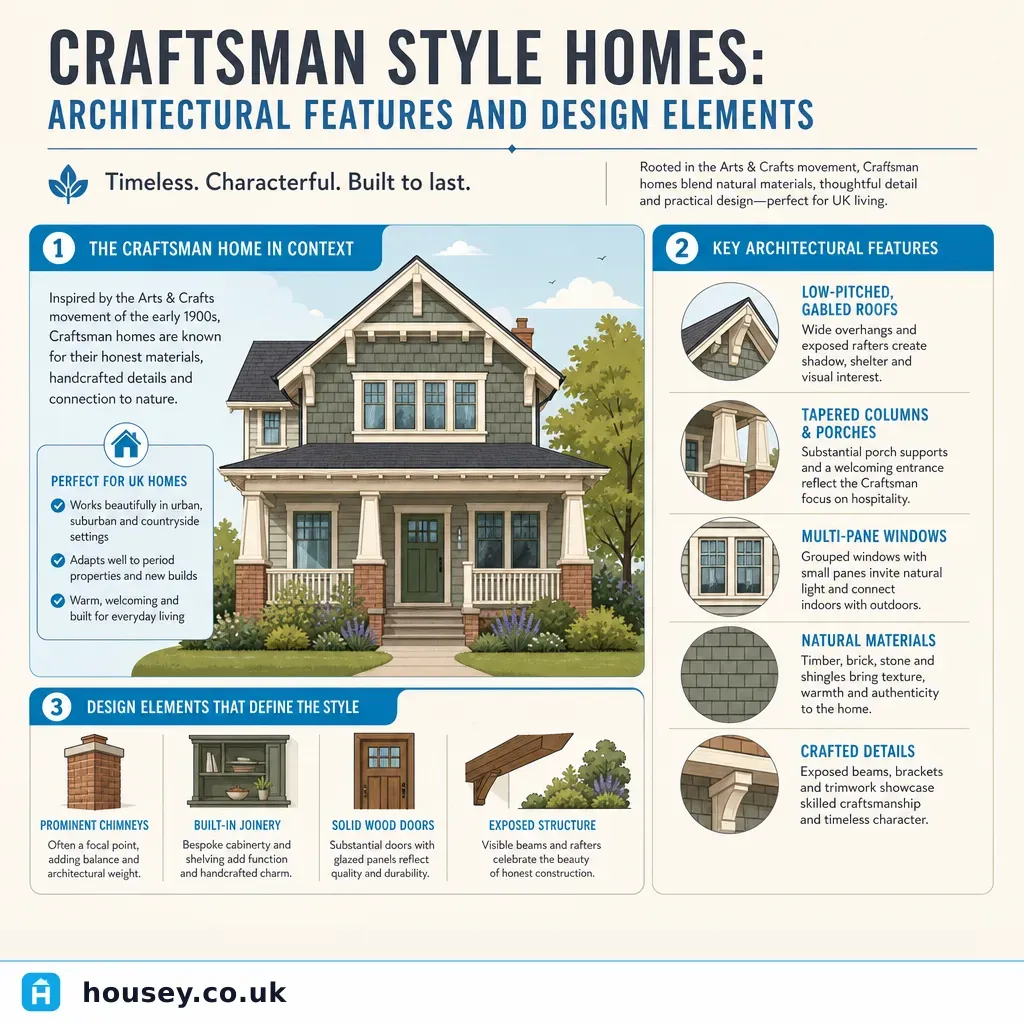
Craftsman Style Homes: Architectural Features and Design Elements
Craftsman style homes are defined by natural materials, low-pitched gabled roofs with wide eaves, covered porches, exposed timber details, and grouped casement windows.
 Planning & Pre-Build
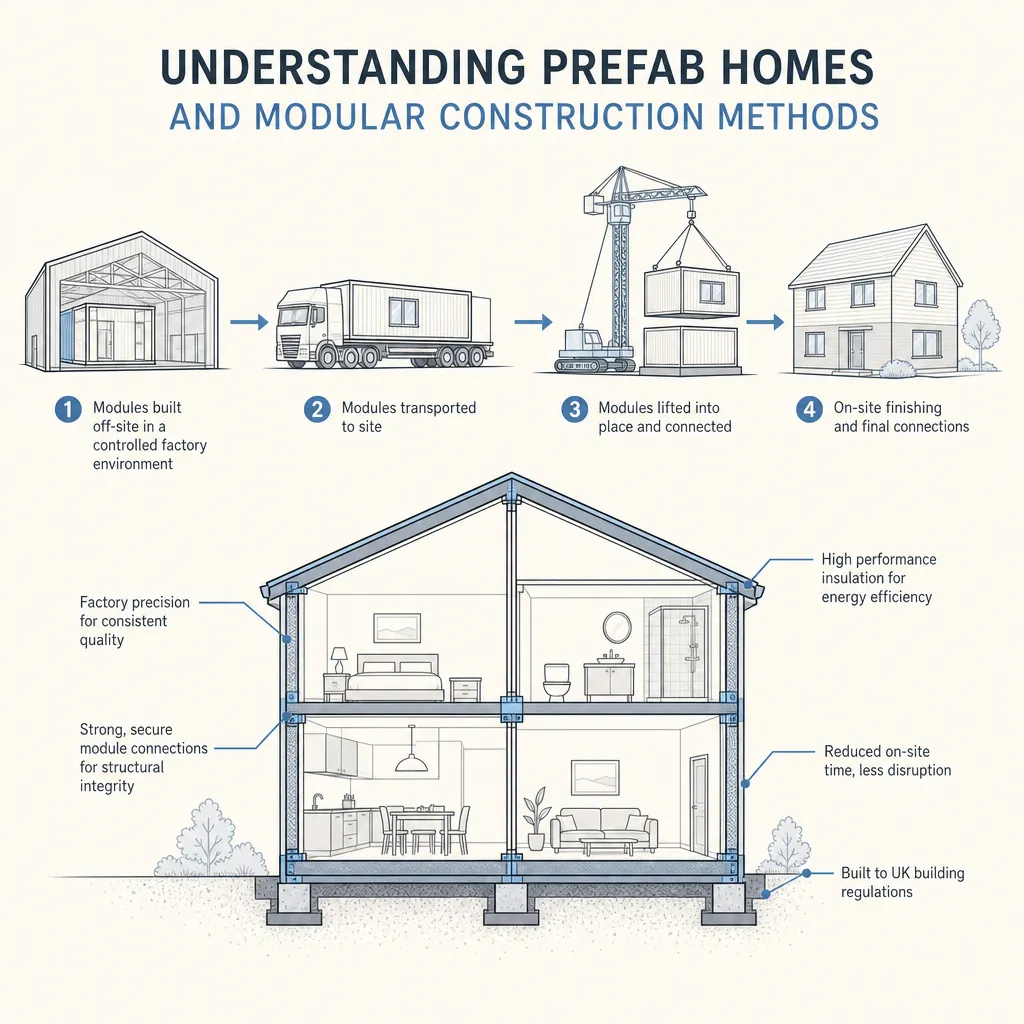
Understanding prefab homes and modular construction methods
Prefab and modular construction covers a range of off-site manufacturing methods, from timber frame panels to fully volumetric room modules craned into position.
 Planning & Pre-Build
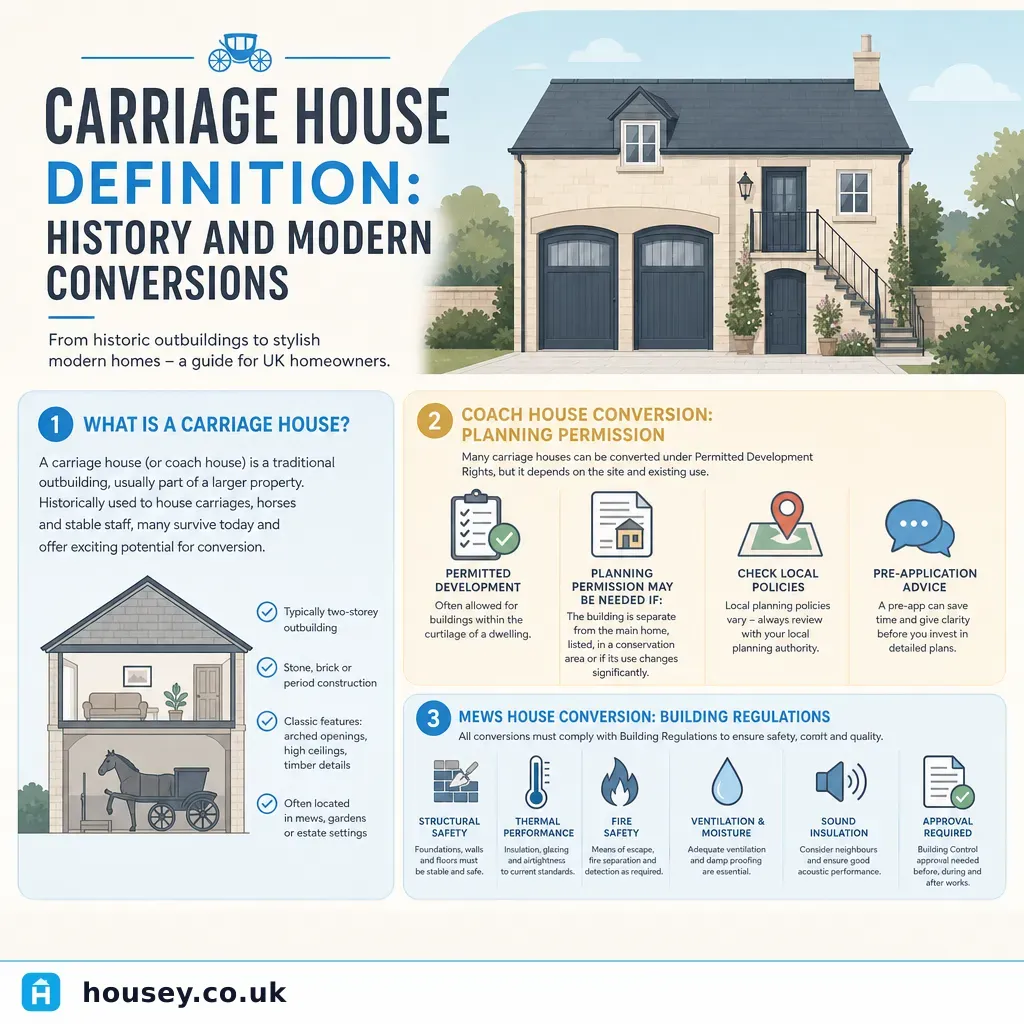
Carriage House Definition: History and Modern Conversions
A carriage house is a Victorian or Edwardian outbuilding originally used to shelter horse-drawn vehicles, often with groom's accommodation above.
 Planning & Pre-Build
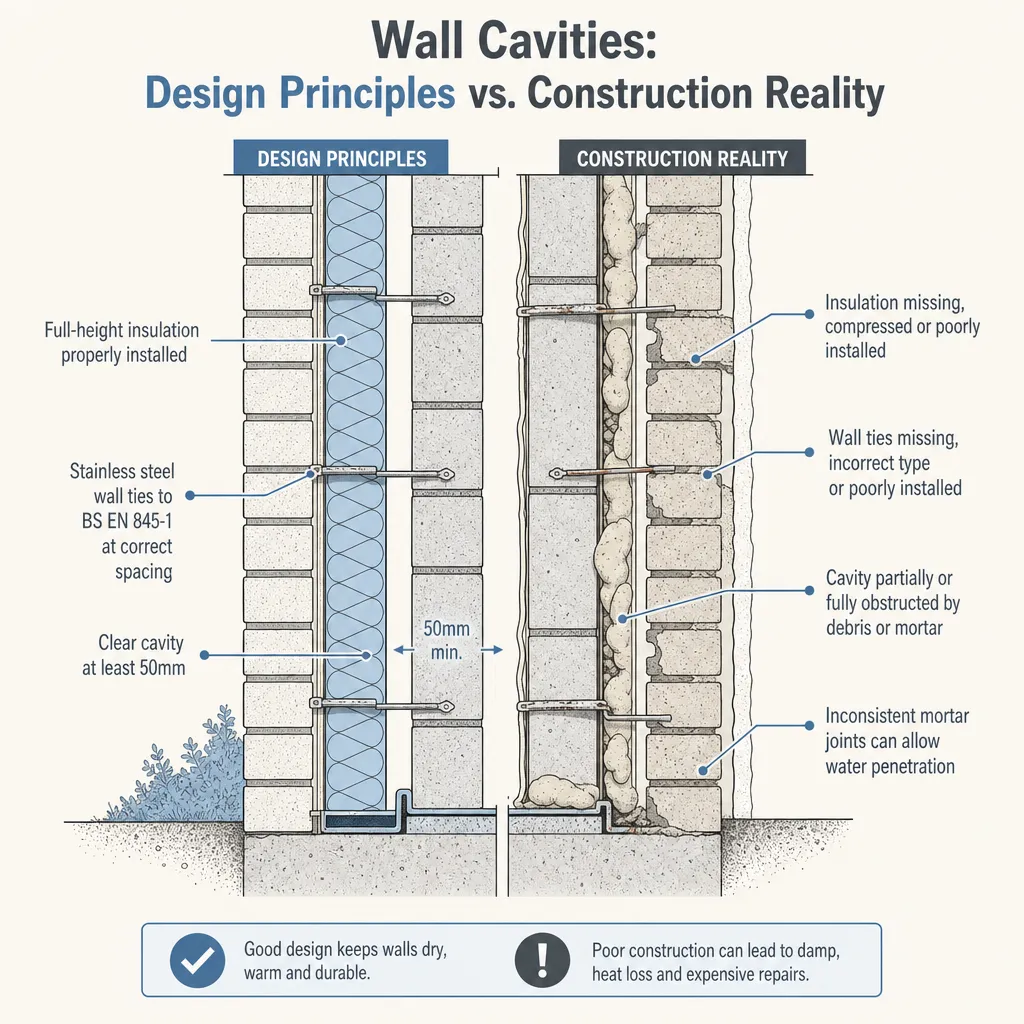
Wall Cavities: Design Principles vs. Construction Reality
A UK cavity wall is designed to resist weather, control heat loss, and structurally link two masonry leaves.
 Planning & Pre-Build
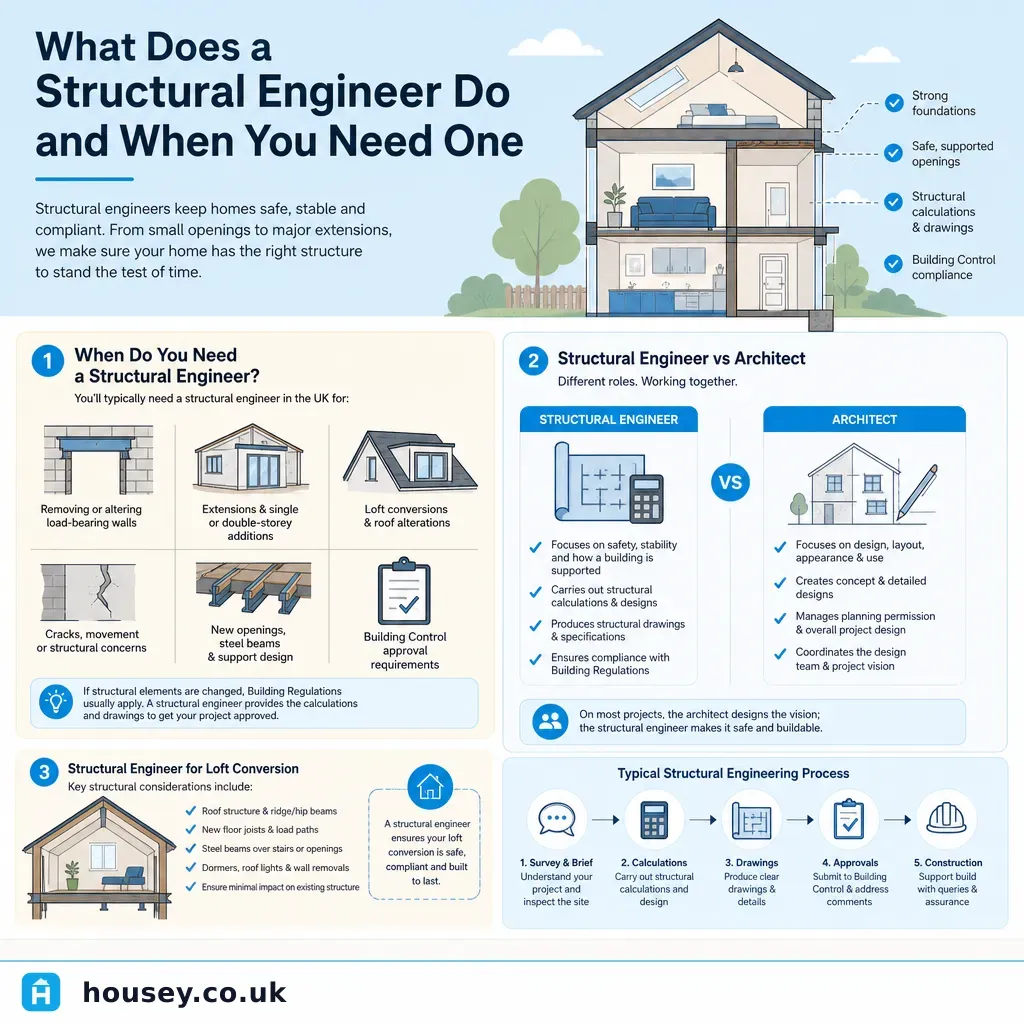
What Does a Structural Engineer Do and When You Need One
A structural engineer analyses and designs the load-bearing elements of a building — foundations, beams, columns, walls, and floors.