Craftsman Style Homes: Architectural Features and Design Elements
By Housey · Last reviewed 1st of June 2026
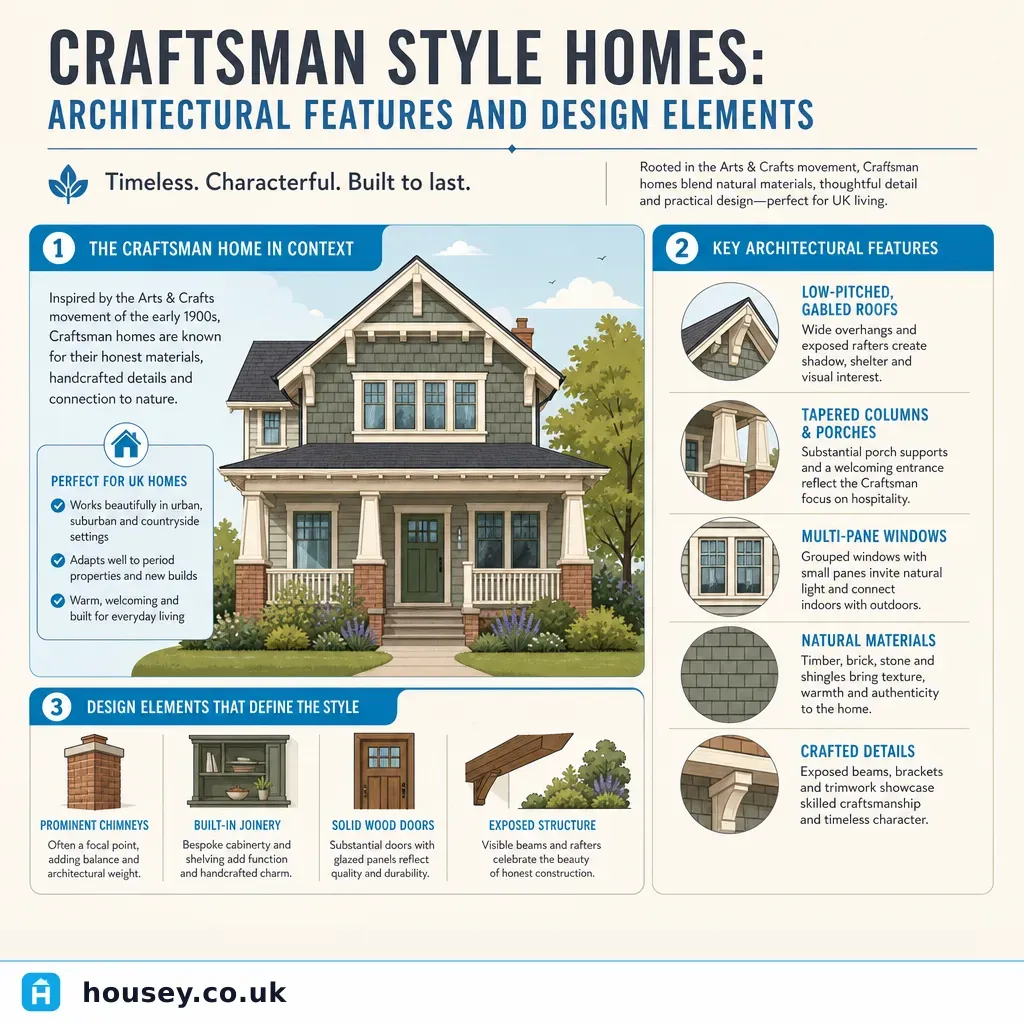
Craftsman Style Homes: Architectural Features and Design Elements
Few architectural movements have had as enduring an influence on British domestic design as the Arts and Crafts tradition — the direct forerunner of the American Craftsman style. From Surrey stockbroker-belt houses to Cotswold village cottages, properties built between roughly 1880 and 1939 frequently carry its hallmarks: natural materials, honest construction, and human-scaled proportions that have never fully gone out of fashion. Whether you are assessing a period property, planning a new build, or briefing an architect for a sympathetic extension, understanding the style's defining features helps you make more informed decisions about design, planning consent, and heritage protection.
Key points
- The Arts and Crafts movement originated in Britain in the 1880s, shaped by designers including William Morris, C.F.A. Voysey, M.H. Baillie Scott, and Edwin Lutyens; the American Craftsman style — popularised in the early 1900s by architects Greene & Greene — is its direct descendant.
- Defining architectural features include low-pitched gabled roofs (typically 35–45°) with wide overhanging eaves of 300–600 mm, tapered porch columns on stone or brick piers, grouped casement windows with small-paned upper lights, exposed structural timberwork, and natural materials throughout.
- Planning permission is required for any new dwelling regardless of architectural style; the National Planning Policy Framework (NPPF 2024) supports well-designed, locally distinctive architecture that respects the character of its setting.
- Extensions to existing houses may qualify as permitted development under the Town and Country Planning (General Permitted Development) (England) Order 2015, but conservation area designations and Article 4 Directions can remove these rights.
- Properties of special architectural or historic interest — including many fine Arts and Crafts houses — may be listed by Historic England (England), Cadw (Wales), Historic Environment Scotland, or the Historic Environment Division (Northern Ireland); listed building consent is required for alterations that affect their character.
What defines Craftsman and Arts and Crafts architecture
The Craftsman style is rooted in a principled rejection of industrial mass production. Its defining idea — that buildings should be made with care, from honest materials, by skilled hands — produced a visual language that has proved remarkably durable across both sides of the Atlantic.
The core visual principles:
- Low-pitched gabled roofs (typically 35–45°) with deep, wide eaves — often 300–600 mm overhang — and exposed rafter tails or decorative barge boards
- Covered entrance porch or loggia, supported by tapered square columns sitting on stone, brick, or rendered piers
- Natural materials: handmade or textured clay brick, local stone (limestone, sandstone, Kentish ragstone), roughcast or pebbledash render, natural slate or clay plain-tile roofing
- Exposed structural timberwork: decorative knee braces under eaves, carved corbels, projecting purlins, and visible roof structure in porches
- Grouped casement windows, arranged in pairs or threes with leaded or small-paned upper lights; no large undivided glazing panels
- Inglenook fireplace as a focal interior feature, typically with integral seating recesses and a deep-set, often tiled fireback
- Earthy, restrained colour palette: ochre, sage green, terracotta, undyed or lightly oiled timber, slate grey
In the American tradition, these elements were adapted into the Craftsman bungalow — single- or one-and-a-half-storey, with a broad front porch, low-slung profile, and generous interior woodwork. Both traditions share the same underlying design values and are frequently referenced together by UK architects and developers today.
UK property types with Craftsman and Arts and Crafts features
The Arts and Crafts influence spread across a wide range of UK house types, from country villas to interwar semis.
Property type | Typical date range | Key Craftsman/Arts and Crafts features | Common UK regions |
|---|---|---|---|
Arts and Crafts villa or country house | 1880–1910 | Full canon: inglenook, handmade brick, local stone, casements, wide eaves, tile-hung upper floor | Surrey, Sussex, Cotswolds, Lake District, Cheshire |
Edwardian semi-detached suburban house | 1900–1914 | Pebbledash render, bay windows, decorative gable timberwork, tiled porch floors | UK-wide: London suburbs, Birmingham, Leeds, Bristol |
Interwar cottage-style house | 1919–1939 | Mock timber framing, casement windows, low eaves, cottage garden character | UK-wide suburbs and garden cities (Letchworth, Welwyn) |
Arts and Crafts inspired bungalow | 1920–1950 | Low profile, wide overhanging eaves, verandah or covered porch, generous plot | South coast, seaside towns, East Anglia |
Contemporary Craftsman-style new build | 2000–present | Reinterpreted canon: natural materials, gabled form, casements, covered porch | Rural and semi-rural planning contexts, UK-wide |
Planning a new build or extension in Craftsman style
New builds
Planning permission is required for any new dwelling. Architectural style is not in itself a planning criterion — what matters is how the proposed building relates to its site and surroundings. The NPPF 2024 supports well-designed, locally distinctive architecture and the use of high-quality materials that respect the character of the setting.
A Craftsman or Arts and Crafts inspired design often performs well against design criteria in rural or semi-rural settings, where local planning authorities (LPAs) may explicitly encourage natural materials and traditional forms. In suburban settings, the key test is whether the proposed design is compatible with the existing street character.
However, several designations can add complexity:
- Conservation areas: stricter controls apply. The external appearance of a dwelling may require planning permission even for minor alterations. Consult the LPA's conservation officer at pre-application stage.
- Listed buildings: if the property is listed or adjacent to one, Listed Building Consent may be required for works affecting its character. Historic England and the LPA's conservation team should be engaged early.
- AONB, National Park, or similar designations: additional design sensitivity is expected; pre-application advice from the LPA is strongly recommended before preparing drawings.
Extensions to existing houses
Extensions may qualify as permitted development (PD) under the GPDO 2015. Principal limits for householder extensions include:
- Single-storey rear extensions: up to 3 m beyond the original rear wall for attached houses, or 4 m for detached houses, before the Neighbour Consultation Scheme applies
- Side extensions: not permitted as PD in conservation areas
- Materials must be similar in appearance to the existing house — particularly important for Arts and Crafts properties where material harmony is central to character
An Article 4 Direction can remove PD rights in specific areas. Always check with your LPA before assuming permitted development applies to your property.
Design brief checklist for a Craftsman-style project
A clear brief helps your architect develop a design that is both authentic and deliverable through the planning process.
What to ask your architect before commissioning a Craftsman-style design
Before appointing an architect, these questions help you assess their experience and approach:
- Can you share examples of previous projects in traditional, vernacular, or Arts and Crafts style?
- How do you approach pre-application discussions with the local planning authority, and what is your track record in this location?
- What materials do you typically specify for Craftsman or Arts and Crafts-style exteriors, and do you have established suppliers or preferred reclamation sources?
- How do you balance traditional aesthetics with current Building Regulations requirements, particularly Part L energy efficiency?
- Have you worked on projects in conservation areas or involving listed buildings?
- What do you charge for planning-stage drawings, and what is included up to RIBA Stage 3?
- What are your assumptions about planning timescales for this type of project in this location, and what are the main risks to programme?
When to get professional help
Craftsman and Arts and Crafts design sits at the intersection of architectural aspiration and planning reality. Always involve a qualified architect with demonstrable experience in traditional or vernacular design before submitting a planning application.
Seek specialist professional advice if:
- The site is in a conservation area, an Area of Outstanding Natural Beauty (AONB), a National Park, or close to a listed building
- You need to confirm whether an existing property is on the Historic England National Heritage List or a local heritage register
- The proposed works exceed permitted development limits or the property is subject to an Article 4 Direction
- You wish to source reclaimed or traditional materials (lime mortar, handmade brick, natural slate) and need specification guidance
- You are uncertain whether Listed Building Consent is required alongside, or instead of, planning permission
How Housey can help
Whether you are planning a new Craftsman-style home, extending an existing Arts and Crafts property, or navigating a listed building or conservation area scheme, Housey connects you with the right professionals. Browse our architecture services to find architects experienced in traditional and vernacular design, or speak to our heritage and conservation consultants for specialist advice on listed buildings, conservation area applications, and heritage impact assessments.
Frequently asked questions
Is Craftsman style the same as Arts and Crafts in the UK?
The terms are closely related but not identical. The British Arts and Crafts movement of the 1880s is the direct historical origin; the American Craftsman style adapted its principles in the early 1900s, particularly in California and the Pacific Northwest. In UK property and planning contexts, Arts and Crafts is the historically correct term. Craftsman style is increasingly used, especially by architects and developers familiar with American design traditions.
Can I build a Craftsman-style house anywhere in the UK?
You can propose a Craftsman-style design for any site, but planning consent depends on your local planning authority's policies, the site's designation (Green Belt, conservation area, AONB), and how the design relates to its context. Pre-application advice from the LPA is strongly recommended before investing in a full planning application. In rural and semi-rural areas, a well-considered design using natural materials often aligns well with local character policies.
Are Arts and Crafts houses protected as listed buildings?
Many significant examples are listed, particularly those designed by notable architects such as Voysey, Lutyens, or Baillie Scott. However, any building of special architectural or historic interest may be listed regardless of who designed it. Check the Historic England National Heritage List for England — or equivalent registers for Wales, Scotland, and Northern Ireland — as well as your LPA's local heritage register.
What materials best characterise a Craftsman-style exterior?
The most important materials are handmade or textured clay brick, natural stone (limestone, sandstone, or regional equivalents), lime render rather than modern sand-and-cement, natural slate or clay plain tiles for roofing, and hardwood or steel casement windows. Timber detailing — barge boards, knee braces, exposed rafter tails — is also characteristic. In planning-sensitive locations, sourcing through specialist suppliers can improve both authenticity and consent prospects.
Sources and further reading
- National Planning Policy Framework 2024 — GOV.UK
- National Heritage List for England — Historic England
- Town and Country Planning (General Permitted Development) (England) Order 2015 — legislation.gov.uk
- Householder permitted development guidance — Planning Portal
- Arts and Crafts Movement — Victoria and Albert Museum
Useful next reads
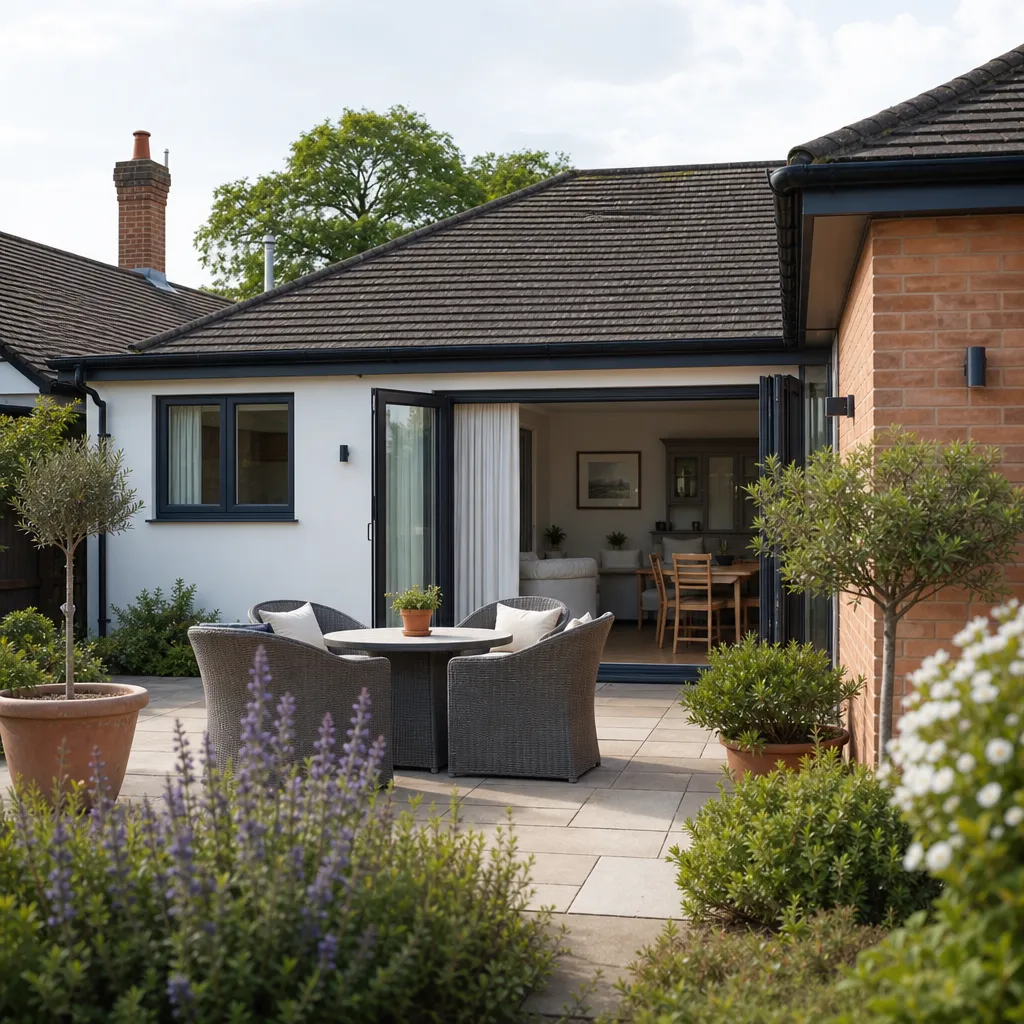 Planning & Pre-Build
What Is a Patio Home? Understanding This Property Type in the UK
A patio home is a compact, low-maintenance property designed around a private patio or courtyard rather than a traditional lawn garden.
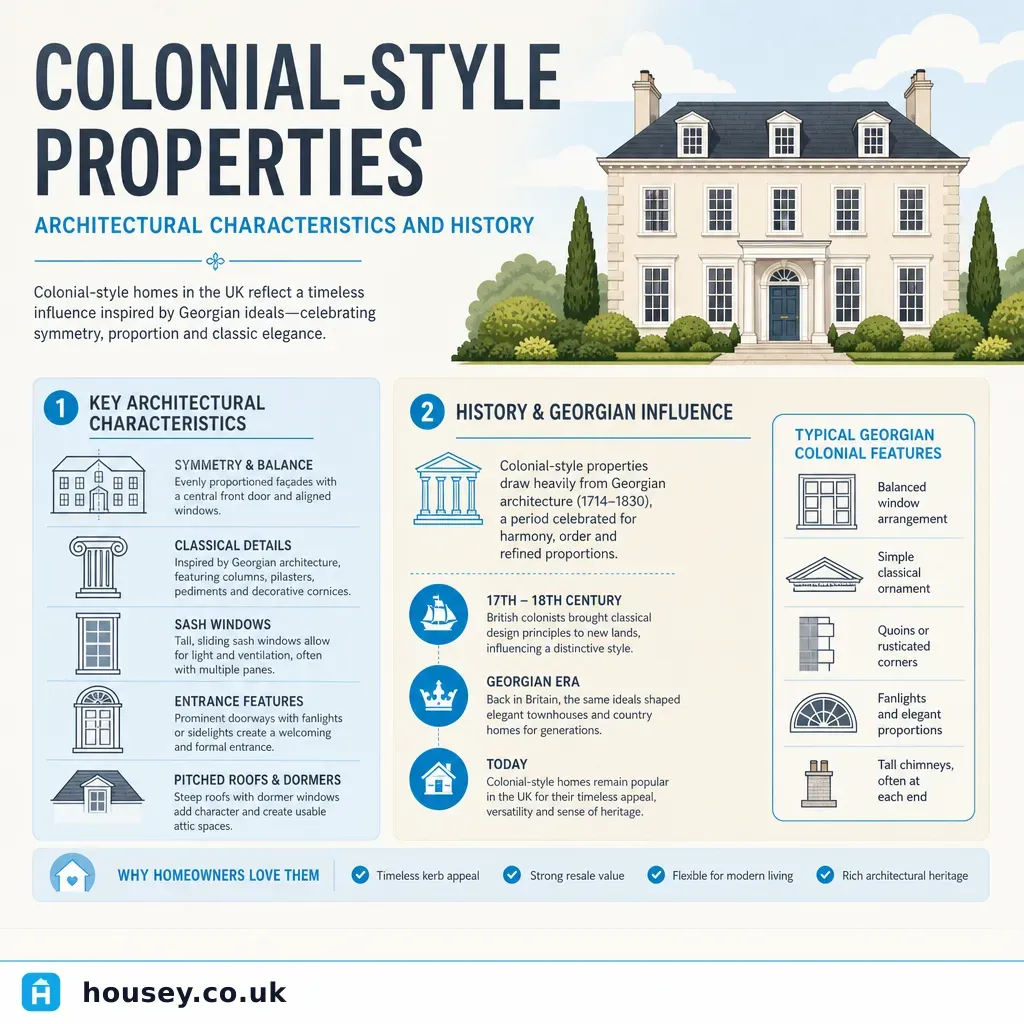 Planning & Pre-Build
Colonial-Style Properties: Architectural Characteristics and History
Colonial-style properties in the UK typically refer to buildings reflecting Georgian symmetry and classical proportions, or twentieth-century Colonial Revival homes.
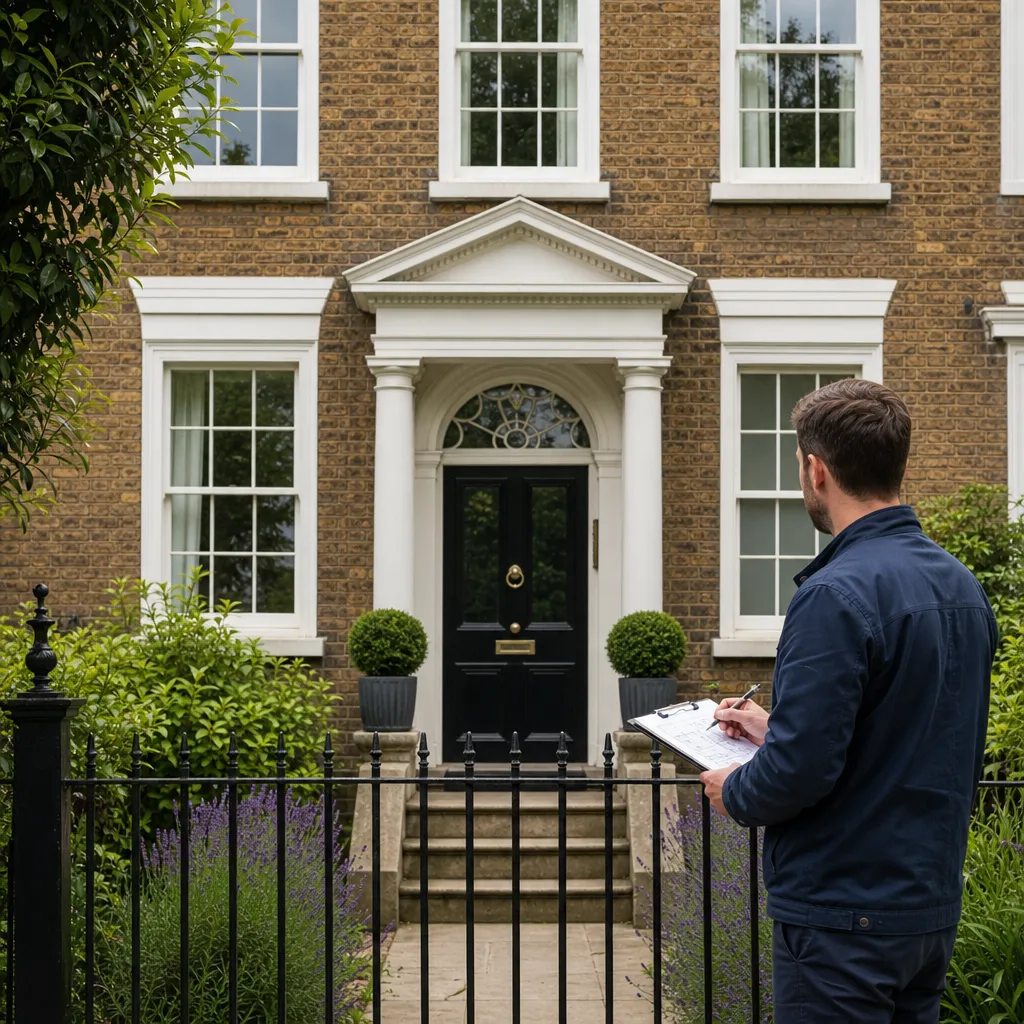 Planning & Pre-Build
Federal-Style Architecture: Characteristics and Period Features
Federal-style architecture emerged in the USA between roughly 1780 and 1820, drawing directly on the British Adam style and Georgian neoclassical tradition.
 Planning & Pre-Build
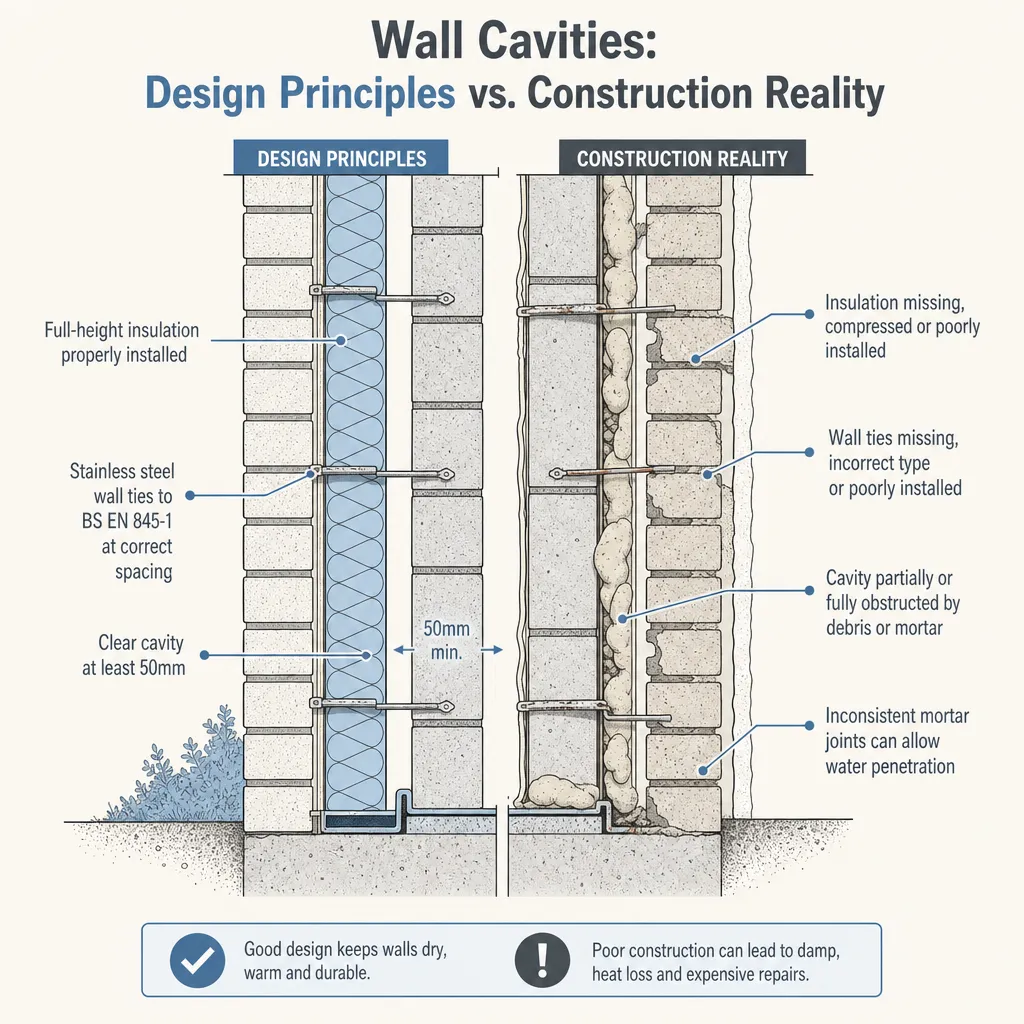
Wall Cavities: Design Principles vs. Construction Reality
A UK cavity wall is designed to resist weather, control heat loss, and structurally link two masonry leaves.
 Planning & Pre-Build
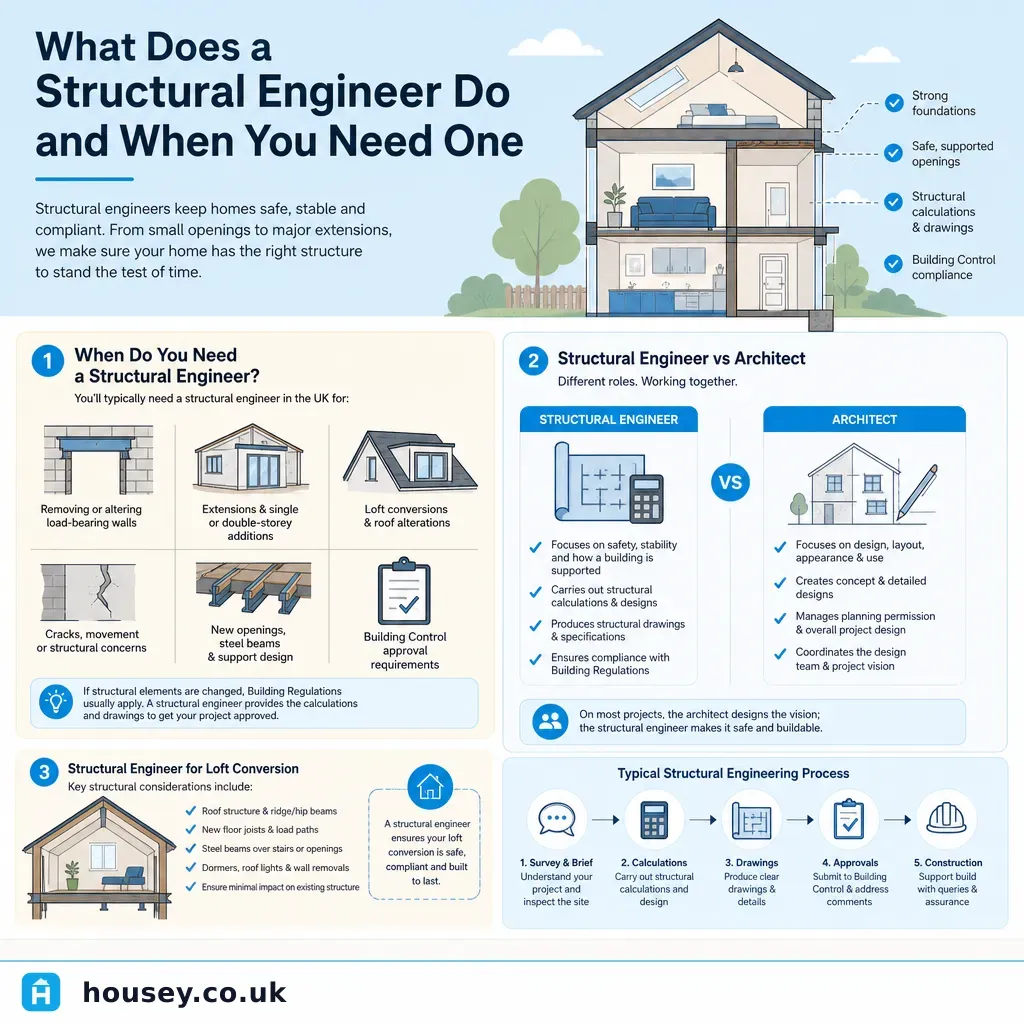
What Does a Structural Engineer Do and When You Need One
A structural engineer analyses and designs the load-bearing elements of a building — foundations, beams, columns, walls, and floors.