Carpet Removal and Flooring Replacement: Options and Costs
By Housey · Last reviewed 30th of May 2026
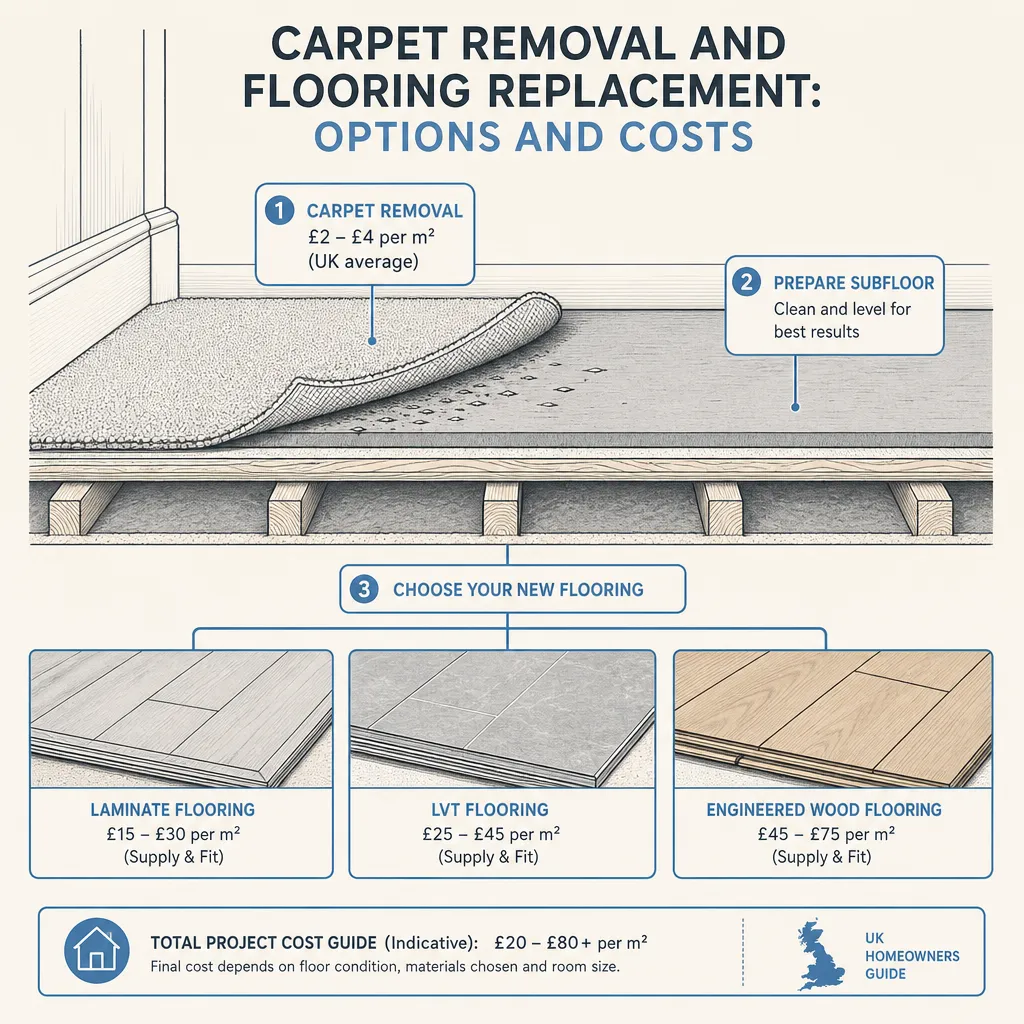
Carpet Removal and Flooring Replacement: Options and Costs
Ripping up old carpet is one of the first tasks many homeowners undertake when renovating — whether moving into a newly purchased home, refreshing a tired interior, or dealing with damaged or stained flooring. The replacement material affects acoustics, warmth, maintenance, and long-term resale appeal, while the condition of the subfloor beneath the carpet largely determines how straightforward — and costly — the transition will be. Getting a clear picture of options and likely costs before lifting the first gripper rod helps avoid mid-project surprises.
Key points
- Professional carpet removal and disposal costs approximately £1–£3 per m² in the UK; DIY removal is feasible, but disposal at household waste recycling centres may incur a charge depending on your council (Indicative UK costs, last reviewed 2026-05-30).
- Properties built before 1985 may have asbestos-containing vinyl tiles or adhesive beneath the carpet; do not disturb the substrate without professional testing if in doubt.
- Laminate flooring is generally not suitable for bathrooms or moisture-prone rooms; Luxury Vinyl Tile (LVT) is the appropriate waterproof alternative for wet or humid areas.
- Supplied-and-fitted costs typically range from £10–£30 per m² for laminate, £20–£50 per m² for LVT, and £30–£80 per m² for engineered hardwood (Indicative UK costs, last reviewed 2026-05-30).
- Suspended timber subfloors — common in Victorian and Edwardian homes — often require a plywood overlay before rigid flooring is installed to create a stable, level surface.
What lies beneath: assessing your subfloor
Before choosing a replacement floor, identify what is under the carpet. This step shapes both the budget and the choice of material.
Concrete screed (common in post-1960s homes): Usually the most straightforward base for LVT, laminate, or tiles. Check for rising damp by taping a sheet of polythene to the floor for 48 hours — condensation on the underside indicates moisture. If damp is present, a damp-proof membrane or specialist screed may be needed before any new flooring is laid.
Suspended timber floorboards (common in Victorian and Edwardian homes): These flex slightly underfoot. Rigid flooring such as laminate or porcelain tile may creak, crack, or lift if laid directly on springy boards. Laying 6–9mm plywood across the boards first creates a stable surface and adds roughly £5–£8 per m² to the project (Indicative UK costs, last reviewed 2026-05-30).
Old vinyl or floor tiles: If existing vinyl or tiles are bonded to the concrete, check their age. Vinyl floor tiles and adhesive used in the UK before 1985 may contain chrysotile (white) asbestos. Do not sand, scrape, or break these materials. Arrange a survey from a UKAS-accredited asbestos surveyor before proceeding.
Flooring options compared
Flooring type | Best for | Not ideal for | Typical supplied-and-fitted cost | Lifespan |
|---|---|---|---|---|
Laminate | Living rooms, bedrooms, hallways | Bathrooms, kitchens with high moisture | £10–£30 per m² | 10–25 years |
Luxury Vinyl Tile (LVT) | Kitchens, bathrooms, high-traffic areas | Where authenticity of natural materials matters most | £20–£50 per m² | 15–25 years |
Engineered hardwood | Living rooms, bedrooms, period properties | Bathrooms; very uneven subfloors | £30–£80 per m² | 20–40 years (can be re-sanded) |
Solid hardwood | Period reception rooms, formal spaces | Underfloor heating systems; direct concrete subfloors | £50–£100+ per m² | 50+ years (multiple sands) |
Porcelain or ceramic tile | Kitchens, bathrooms, garden rooms | Unmodified suspended timber floors | £25–£60 per m² | 30–50+ years |
New carpet | Bedrooms, living rooms requiring warmth | Wet areas or high-heat underfloor heating | £10–£30 per m² | 8–15 years |
Indicative UK costs, last reviewed 2026-05-30. Costs vary by region, material grade, and subfloor preparation required.
Can you remove carpet yourself?
Carpet removal is one of the few renovation tasks most homeowners can carry out safely:
- Clear the room of furniture.
- Remove gripper rods carefully — the tacks are sharp and may be rusty on older installations; wear gloves.
- Cut the carpet into manageable strips using a Stanley knife, starting from a corner.
- Roll and bag strips for disposal — most local authority household waste recycling centres accept carpet, though some councils charge. Check your council's website before loading the vehicle.
- Remove the underlay, which is usually stapled or glued to the boards or screed.
- Inspect the subfloor thoroughly before ordering replacement material.
Carpet from homes with pets may contain allergens. Work in a well-ventilated space and wear a dust mask rated at least FFP2. If the property was built before 1985 and you can see vinyl tiles or adhesive at the carpet edges, stop and arrange an asbestos test before proceeding.
Hiring a professional to remove and dispose of carpet is worth considering for large areas, older properties with suspected asbestos, or where access is difficult. Many flooring fitters include removal in their quote — always ask whether disposal is included in the price.
Worked UK scenario: a 15 m² living room
A homeowner in a 1960s semi-detached with a concrete screed subfloor removing old carpet and fitting LVT throughout a 15 m² living room:
Item | Estimated cost |
|---|---|
Carpet removal and disposal (professional) | £15–£45 |
Subfloor check and minor levelling compound | £30–£60 |
LVT flooring, supplied and fitted (mid-range) | £300–£750 |
New skirting board quad bead | £40–£80 |
Total (approximate) | £385–£935 |
Indicative UK costs, last reviewed 2026-05-30. This scenario is illustrative — always obtain at least two quotes from local flooring specialists, as subfloor condition and material grade significantly affect the final price.
What to ask before accepting a flooring quote
- What is included in the price — materials, underlay, removal of the old carpet, and disposal?
- Who will carry out the work, and are they a member of a recognised trade body such as FITA (Flooring Industry Training Association)?
- What subfloor preparation is included, and what could add to the cost once the carpet is lifted?
- What warranty applies to the flooring itself and to the fitting workmanship?
- Is VAT included in the quoted price?
- How long will the room be out of use, and can furniture be moved in stages?
When to get professional help
Most carpet removal is low-risk, but seek professional guidance if:
- You suspect asbestos-containing tiles or adhesive beneath the carpet (pre-1985 property with old vinyl visible at the edges).
- The subfloor reveals significant damp, rot, or structural damage to joists — a builder or surveyor should assess this before any new floor goes down.
- The property is listed and original floorboards may have heritage value that warrants careful assessment before they are overlaid.
- Flooring is part of a larger renovation sequence — coordinating with other trades avoids the new floor being damaged by subsequent work.
For wider renovation projects where flooring replacement is part of a broader scope of works, Housey's extension builders can help sequence trades correctly so your new floor is not installed before other potentially damaging work is completed.
How Housey can help
Housey can connect you with vetted local flooring specialists and, where flooring work is one element of a broader renovation, with extension builders who coordinate multiple trades efficiently. Obtaining two or three comparable quotes gives you confidence that you are paying a fair rate for your specific subfloor condition and chosen material.
Frequently asked questions
How long does carpet removal and floor fitting take for a typical room?
For a room of around 15–20 m², carpet removal usually takes one to two hours and flooring fitting a further three to six hours depending on the material and subfloor condition. Budget a full working day per room if subfloor preparation — such as plywood overlay or levelling compound — is also required.
Can I lay LVT or laminate over existing floor tiles?
In many cases yes — provided the existing tiles are fully bonded, level, and in good condition, and the increased floor height does not cause issues with door clearance or transition strips at doorways. Always check the flooring manufacturer's installation guide for the specific product you are using.
Do I need underlay for LVT?
Many LVT products include a pre-attached foam underlay. Additional underlay may help on concrete subfloors for comfort and thermal performance, or to smooth minor surface irregularities. Using the wrong underlay, or one not recommended by the manufacturer, can invalidate the product warranty — always check the specification sheet.
Will new flooring add value to my home?
Buyers and tenants generally respond positively to fresh, clean flooring, particularly where worn or stained carpet is replaced with a neutral hard floor. The return varies by property type — quality LVT or engineered hardwood tends to be viewed more positively in period homes than cheap laminate, which can look incongruous in an older terrace.
Sources and further reading
- Asbestos in flooring and floor tiles — Health and Safety Executive
- Find your local council — GOV.UK (for household waste recycling centre information)
- Flooring Industry Training Association (FITA) — FITA
Useful next reads
 Improvement & Build
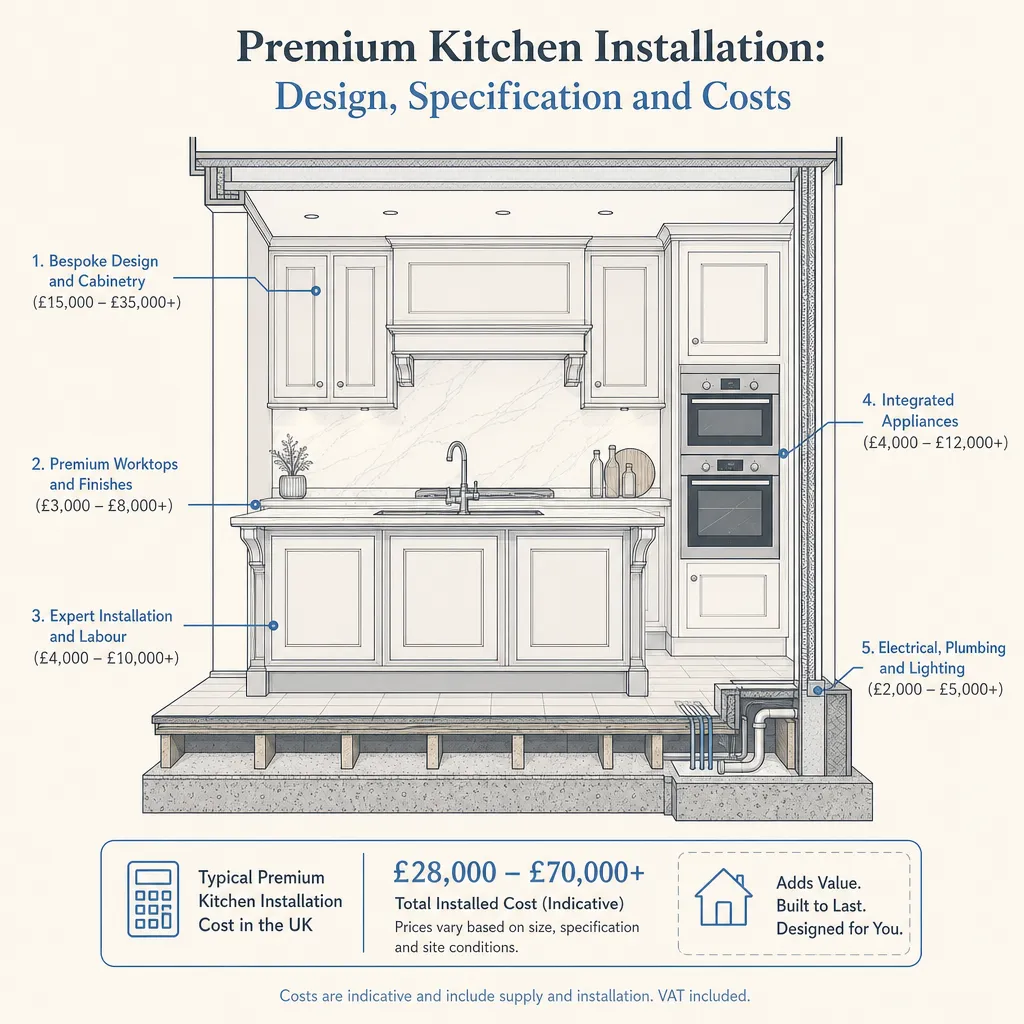
Premium Kitchen Installation: Design, Specification and Costs
A premium kitchen in the UK typically costs £20,000–£80,000 or more installed, depending on cabinetry specification, worktop material, appliance brands, and whether structural changes are needed.
 Improvement & Build
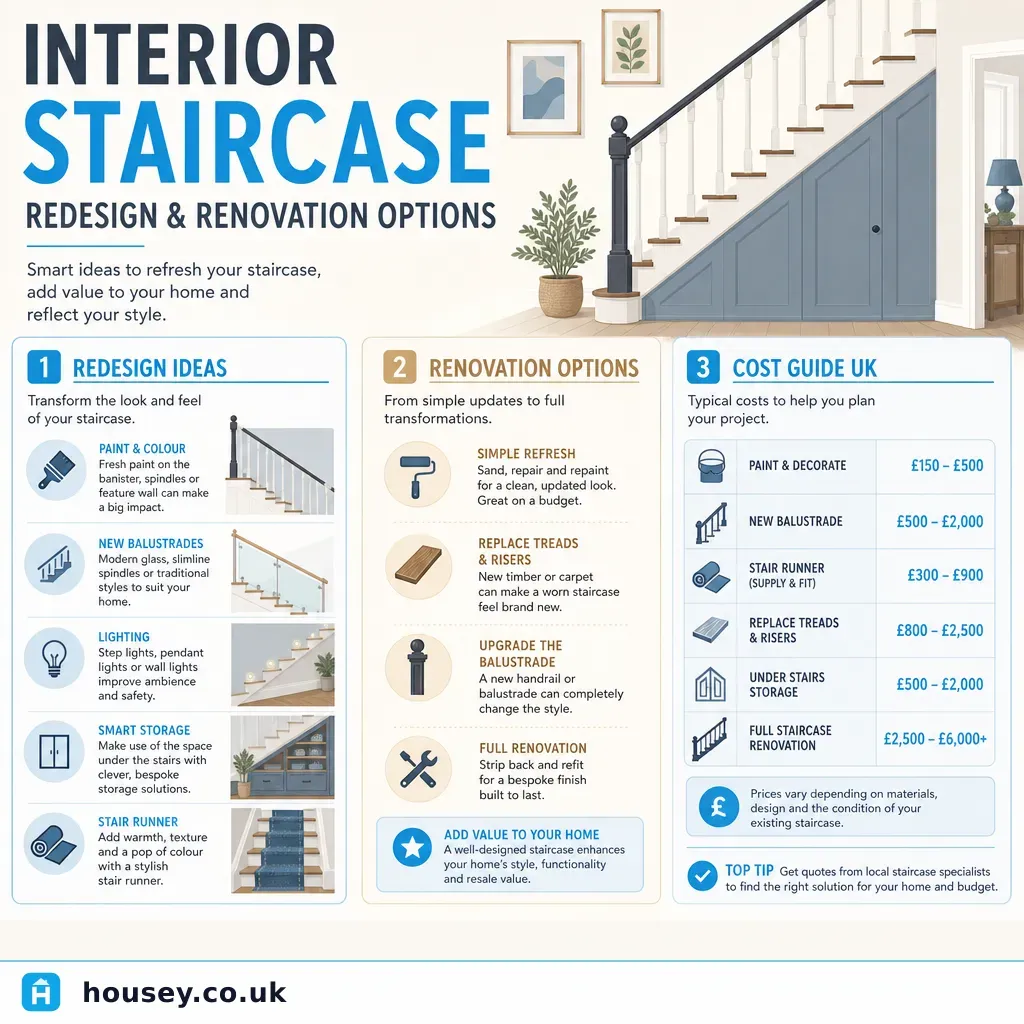
Interior staircase redesign and renovation options
Staircase renovation ranges from cosmetic updates — repainting treads, replacing balusters, or fitting a stair runner — to full structural redesigns with new flights and open-plan layouts.
 Improvement & Build
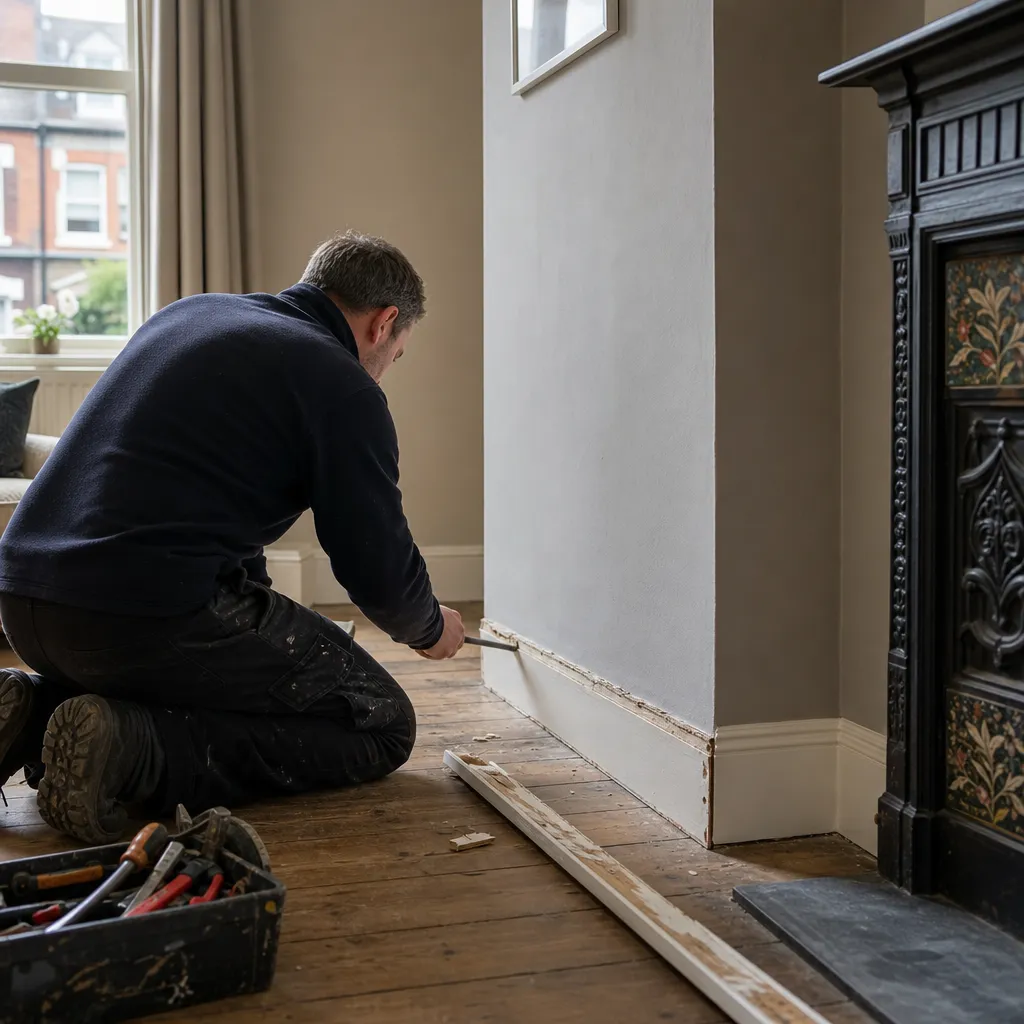
Removing Skirting Boards: Methods and When to Call a Professional
Remove skirting boards by scoring along the top edge with a Stanley knife to break the paint seal, then easing a wide bolster chisel behind the board and levering it away gradually in small increments.
 Improvement & Build
Stripping Wallpaper: Techniques for Interior Wall Preparation
Strip wallpaper by scoring the surface, soaking with warm water or a chemical stripper solution, then lifting with a broad scraper.
 Improvement & Build
How Much Does Wooden Flooring Installation Cost?
Wooden flooring installation in the UK typically costs £15–£35 per m² for labour, with materials adding £15–£80 or more per m² depending on whether you choose engineered hardwood, solid hardwood, or bamboo.