How Much Does Wooden Flooring Installation Cost?
By Housey · Last reviewed 11th of May 2026
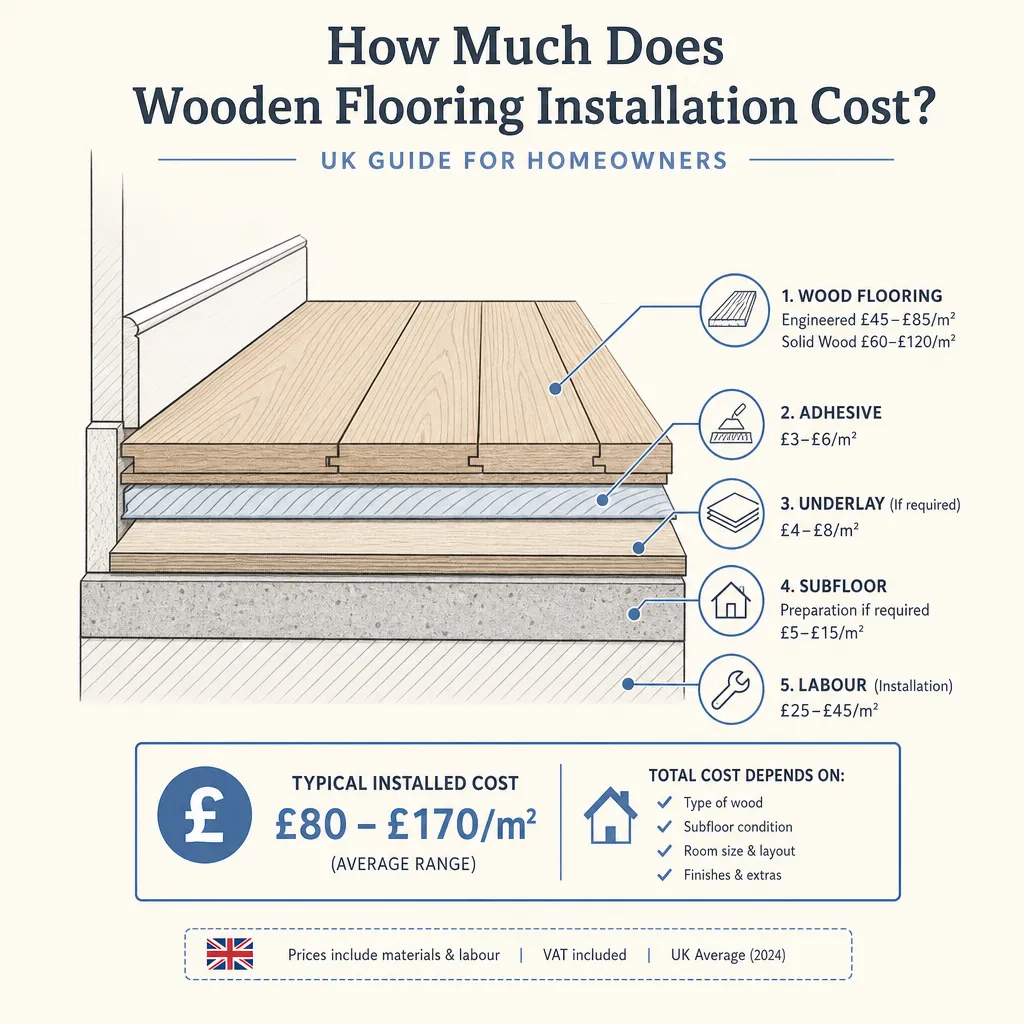
How Much Does Wooden Flooring Installation Cost?
Wooden flooring is one of the most popular home improvement choices in the UK — durable, easy to maintain, and well-suited to everything from Victorian terraces to new-build flats. The range of products and installation methods means costs vary considerably, however, and selecting the wrong material or fixing method for your subfloor can be expensive to correct. Whether you are fitting engineered oak throughout a ground-floor extension or solid hardwood in a period semi, understanding the full cost picture before you buy will help you avoid surprises.
Key points
- Labour costs for wooden flooring installation typically range from £15–£35 per m² in the UK, depending on floor type, laying pattern, and subfloor condition (Indicative UK costs, last reviewed 2026-05-11).
- Material costs vary from approximately £15 per m² for budget engineered boards to £80+ per m² for premium solid hardwood.
- Herringbone and chevron laying patterns add £5–£15 per m² to labour costs compared with straight plank installation, and require 10–15% extra material to allow for cutting waste.
- In leasehold flats, the lease will often require freeholder or managing agent consent before hard flooring is installed — check before ordering materials.
- Building Regulations Part E sets minimum sound insulation standards where flooring is installed above another dwelling, such as in a converted maisonette or purpose-built flat.
Types of wooden flooring and their costs
Solid hardwood consists of a single species of timber throughout its full thickness. It is extremely durable, can be sanded and refinished many times, and is most suitable for upper floors and rooms without underfloor heating unless specifically rated for it.
Engineered hardwood comprises a real timber wear layer (typically 3–6 mm) bonded to a plywood or HDF core. It is dimensionally stable, compatible with underfloor heating in most cases, and the most widely fitted type in UK domestic properties.
Bamboo is technically a grass but performs comparably to hardwood and can be harder than many timber species. It is generally lower cost and more sustainable, though product quality varies considerably between ranges.
The table below shows indicative supply costs and key characteristics for each type (Indicative UK costs, last reviewed 2026-05-11):
Floor type | Indicative supply cost per m² | Suitable for UFH? | Sandable? | Best for |
|---|---|---|---|---|
Budget engineered hardwood | £15–£30 | Usually yes | Limited (thin wear layer) | Rental properties, lower-traffic rooms |
Mid-range engineered hardwood | £30–£55 | Usually yes | Yes (3–4 mm+ wear layer) | Most UK domestic projects |
Premium solid hardwood | £50–£80+ | Check manufacturer spec | Yes, many times | Period homes, long-term investment |
Bamboo | £15–£35 | Check specification | Limited | Eco-conscious buyers, budget projects |
Labour costs for wooden flooring installation
Labour rates depend on floor type, laying pattern, and subfloor condition:
Installation scope | Indicative labour cost per m² |
|---|---|
Engineered board — floating installation | £15–£25 |
Engineered board — glued down | £18–£30 |
Solid hardwood — secret nailed | £20–£35 |
Herringbone or chevron pattern | Add £5–£15 per m² |
Parquet block laying | £25–£40 |
Subfloor preparation (if required) | £5–£15 additional per m² |
Indicative UK costs, last reviewed 2026-05-11. Rates vary by region and contractor. London and the South East typically attract rates 15–25% above the national average.
What drives installation costs?
Subfloor condition
The most common source of hidden cost. Existing floorboards may need screwing down, a self-levelling compound applied over a concrete slab, or old adhesive removed before installation can begin. A reputable installer should inspect the subfloor before providing a final quote.
Laying pattern
Straight plank laying is the quickest and most economical method. Herringbone and chevron patterns require precise angled cutting, additional material waste, and considerably more installation time — all of which increase the total cost.
Room complexity
Rooms with multiple doorways, alcoves, bay windows, or irregular wall lines require more cuts and take longer to complete. Stair nosings, thresholds, and risers are usually quoted as separate line items.
Underfloor heating compatibility
If you have underfloor heating, the flooring product must be confirmed as compatible — check the manufacturer's maximum surface temperature rating (typically 27°C). The installer should follow a controlled warm-up protocol after fitting to prevent gapping or cupping.
Removing existing flooring
Lifting existing carpet, tiles, or old hardwood and disposing of it is typically quoted separately. Allow approximately £3–£8 per m² for strip-out and disposal (Indicative UK costs, last reviewed 2026-05-11).
Which type of wooden floor should you choose?
- Choose engineered hardwood if you have underfloor heating, a ground-floor room, or rooms with variable moisture levels. Wider planks often suit period properties particularly well.
- Choose solid hardwood if you want a floor that can be sanded and refinished repeatedly over decades, and your subfloor is solid and stable — typically upper storeys in period homes.
- Choose bamboo if sustainability and upfront cost are priorities and heavy future sanding is not a requirement.
- Ask your installer to carry out a subfloor assessment and confirm the correct fixing or adhesive method before materials are ordered.
- Check your lease if your property is a leasehold flat — most leases require freeholder or managing agent consent before hard flooring is installed.
- Check Building Regulations Part E if the floor sits above another dwelling — minimum sound insulation requirements apply in converted flats and purpose-built apartment buildings.
What to ask before accepting a quote
- Is subfloor preparation included or will it be quoted separately if problems are found on the day?
- What installation method is recommended for my floor type and why?
- Is the acclimatisation period factored into the project schedule?
- How will expansion gaps be concealed — by replacing skirting boards or by using beading?
- What waste allowance is included, and should I order additional material?
- What happens if subfloor problems are discovered during installation?
- Is VAT included?
When to get professional help
Wooden flooring installation is not ordinarily a high-risk activity, but additional professional advice is needed in the following situations:
- If the subfloor has suspected moisture problems — a damp-proof membrane may be needed, and the moisture source should be investigated before installing any timber product.
- If the building is a leasehold flat or maisonette — confirm whether the lease requires freeholder consent before proceeding, and check whether Part E compliance is required.
- If the property is listed — consult your local planning authority or conservation officer before removing any original flooring.
- If existing floor tiles might contain asbestos, common in homes built or refurbished before 1985 — do not disturb, drill through, or lift them without specialist advice. Refer to HSE guidance on asbestos.
How Housey can help
Housey connects homeowners across the UK with vetted local flooring contractors and tradespeople. Whether you need supply and fit, or professional installation of materials you have already sourced, describe your project to receive quotes from suitable professionals in your area.
Frequently asked questions
How long does wooden flooring installation take?
A typical 20–25 m² room takes one to two days, including subfloor preparation and installation. Allow additional time for material acclimatisation (24–72 hours beforehand) and any drying time if adhesive is used. Open-plan areas or complex patterns such as herringbone may take two to three days or more.
Can wooden flooring be installed over underfloor heating?
Most engineered hardwood and some solid hardwood products can be installed over underfloor heating, but compatibility depends on the manufacturer's specification — check the maximum surface temperature rating, typically 27°C. The installer should follow a controlled warm-up protocol. Not all products and UFH systems are compatible; confirm before ordering.
Does wooden flooring add value to a home?
Wooden flooring is widely considered a desirable feature in the UK property market, particularly in period homes and open-plan living areas. Actual value uplift varies by property type, location, and market conditions — no specific increase can be guaranteed.
Do I need planning permission to install wooden flooring?
Generally, no. Installing wooden flooring is an internal alteration and does not require planning permission in most cases. However, leasehold flats often require written consent from the freeholder or managing agent before hard flooring is installed. In listed buildings, any work affecting original fabric may require listed building consent from the local planning authority.
Sources and further reading
- Building Regulations Approved Document E — sound insulation — GOV.UK
- Asbestos in the home — Health and Safety Executive
- Getting work done on your home — Citizens Advice
- Floor insulation advice — Energy Saving Trust
Useful next reads
 Improvement & Build
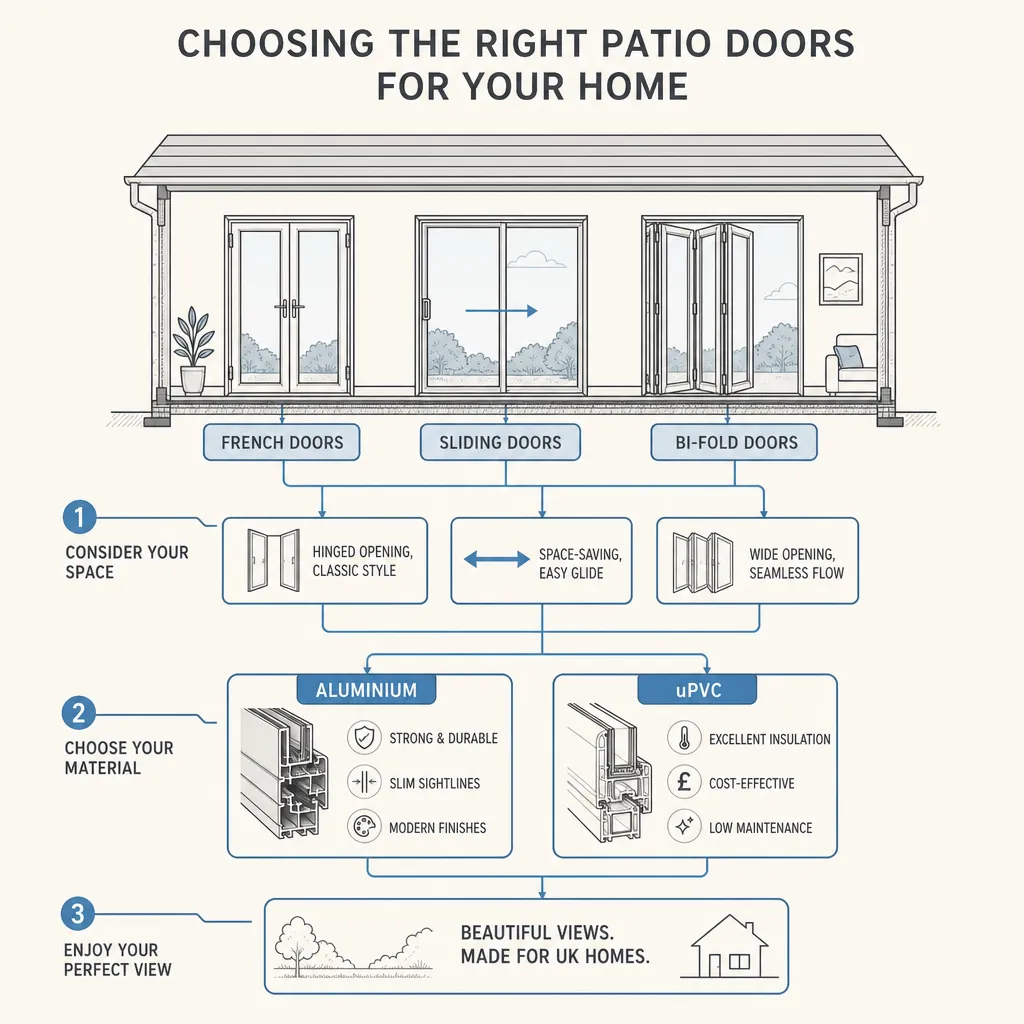
Choosing the Right Patio Doors for Your Home
The right patio doors depend on your opening width, available swing space, home style, and budget.
 Improvement & Build
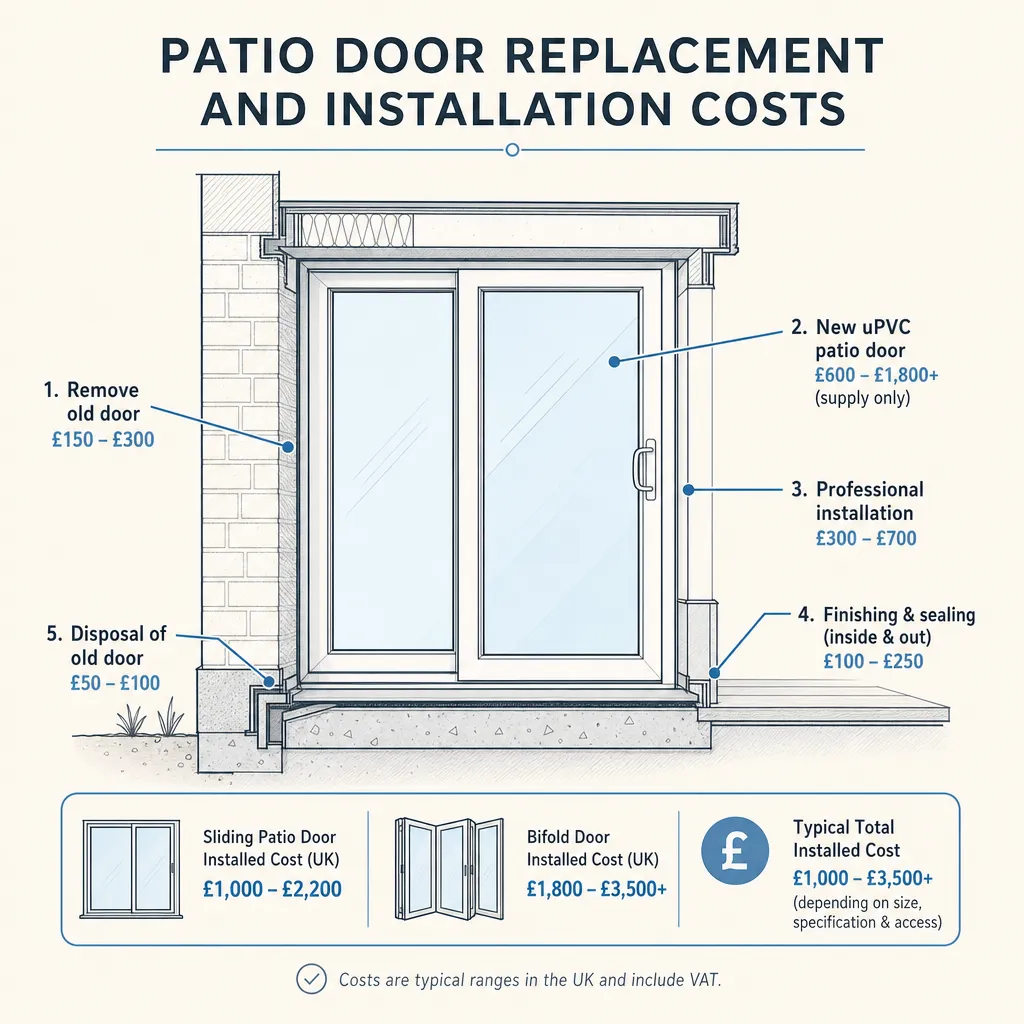
Patio Door Replacement and Installation Costs
Replacing patio doors in the UK typically costs £800–£2,000 installed for a standard uPVC sliding unit, rising to £3,000–£8,000 or more for aluminium bifold doors.
 Improvement & Build
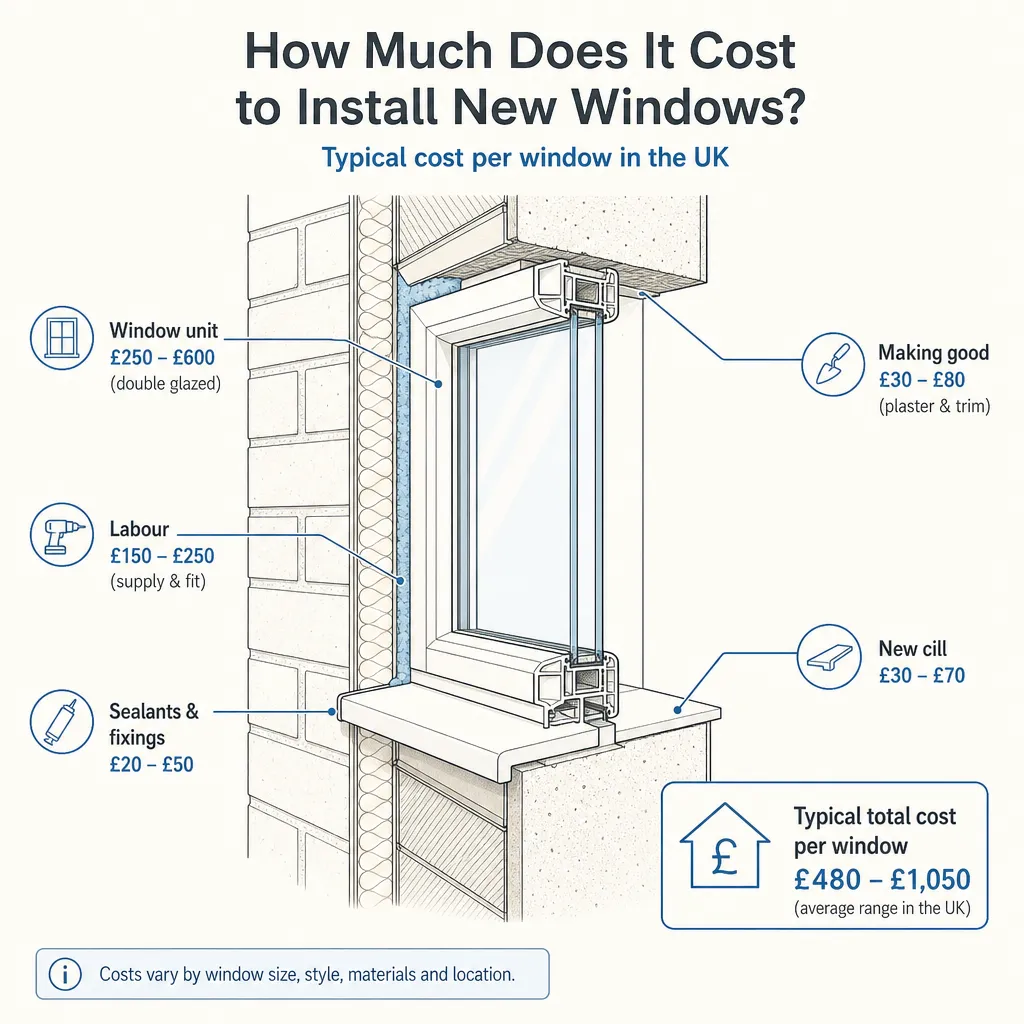
How Much Does It Cost to Install New Windows?
New window installation in the UK typically costs £300–£700 per uPVC double-glazed window (supply and fit), rising to £800–£2,500 for timber or sash windows.
 Improvement & Build
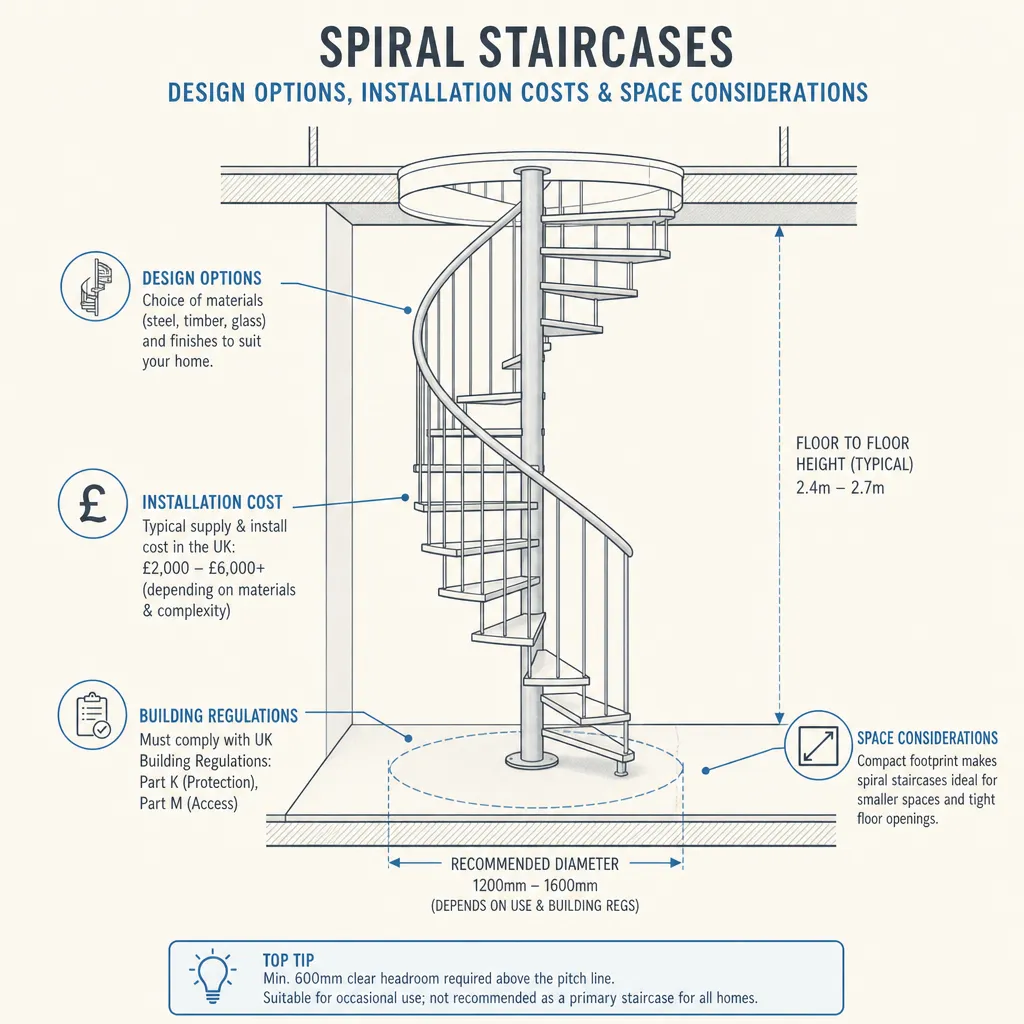
Spiral staircases: design options, installation costs and space considerations
A spiral staircase typically costs between £800 for a basic mild steel kit and £15,000 or more for a bespoke timber or glass design, fully installed.
 Improvement & Build
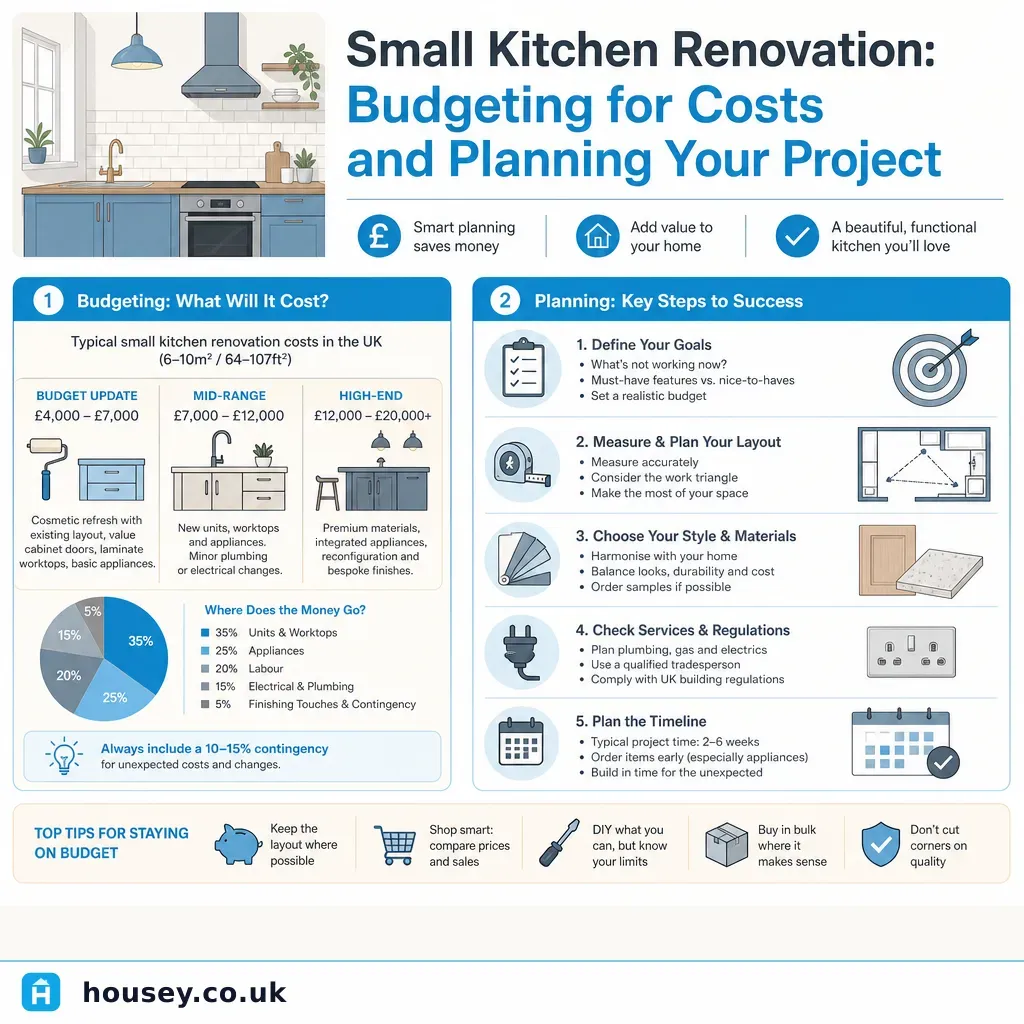
Small kitchen renovation: budgeting for costs and planning your project
A small kitchen renovation in the UK typically costs £5,000–£15,000 for a full refresh including new units, worktops, tiling, and appliances, though costs vary widely by specification, region, and whether structural changes or rewiring are involved.