Casement Windows: Design, Operation, and Installation Considerations
By Housey · Last reviewed 1st of June 2026
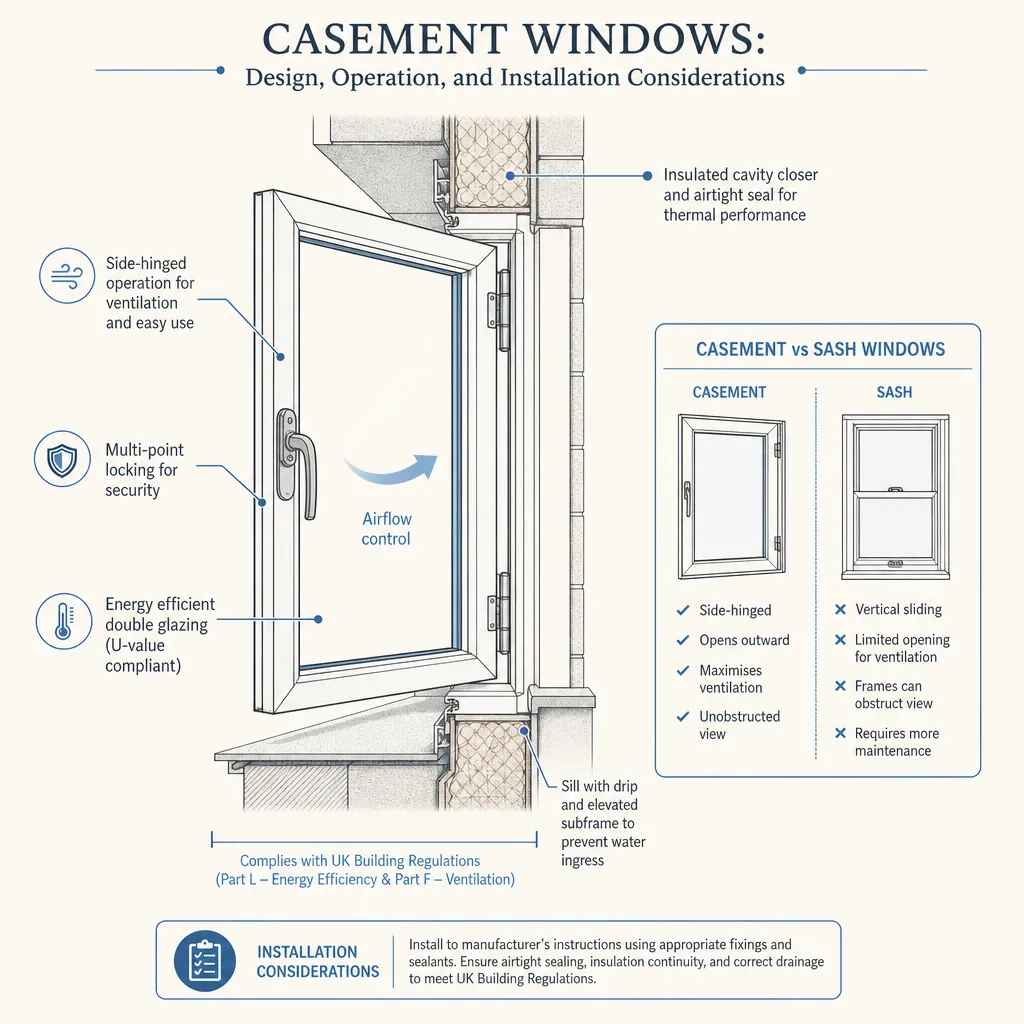
Casement Windows: Design, Operation, and Installation Considerations
Replacing windows is one of the most common improvement projects UK homeowners carry out, and casement windows account for a large proportion of those replacements. The choice of window type affects ventilation, thermal performance, security, maintenance requirements, and — in listed buildings, conservation areas, and some leasehold properties — regulatory compliance. Getting the specification right before ordering matters: windows are a significant investment and errors are costly to correct once installed.
Key points
- Casement windows are hinged on a vertical axis and open outward; top-hung and bottom-hung variants also exist and are sometimes grouped under the casement category in trade usage.
- Replacement windows in England must meet the thermal performance standards in Building Regulations Approved Document L (2021 edition): a whole-window U-value of ≤1.4 W/m²K, or a centre-pane U-value of ≤1.2 W/m²K for replacement glazing units.
- Replacement casement windows must also comply with Approved Document Q (security): windows within 2 metres of ground level or an accessible roof must meet PAS 24:2022 or an equivalent standard.
- Installation by a FENSA- or CERTASS-registered installer allows self-certification of compliance and notifies the local authority automatically; non-registered contractors require a separate local authority building control application.
- In conservation areas and listed buildings, replacing windows — even like-for-like — may require planning permission or listed building consent; check with your local planning authority before ordering.
How casement windows work
A casement window consists of a fixed outer frame (the casing) and one or more opening sashes hinged to the frame. The operating mechanism typically includes a stay bar to hold the sash at a chosen opening angle and an espagnolette or multi-point locking handle to secure the sash when closed.
The main operating types are:
- Side-hung casements: Hinged on one vertical side, swinging outward. The most common type in UK domestic use. Provides full ventilation across the sash area and is straightforward to clean from inside on narrower widths.
- Top-hung casements (awning windows): Hinged at the top, opening outward from the bottom. The sash acts as a canopy in rain, making them well suited to kitchens, bathrooms, and areas where ventilation in wet weather is needed.
- Bottom-hung casements (hopper windows): Hinged at the bottom, tilting inward at the top. Less common in domestic use; sometimes used in basements or as trickle ventilation panels.
- French casements: A pair of side-hung sashes meeting in the centre with no fixed central mullion. Provide a wide, unobstructed opening; popular for direct access to gardens or terraces.
Modern casement frames are manufactured in UPVC, timber, aluminium, or composite (aluminium-clad timber). Each material has different maintenance requirements, thermal bridging characteristics, and longevity profiles.
Casement windows compared to other common UK window types
Window type | Opening mechanism | Ventilation area | Key advantages | Limitations |
|---|---|---|---|---|
Side-hung casement | Hinged, opens outward | Up to 100% of sash area | Good airflow; wide size range; secure when multi-point locked | Requires clear space outside to open; can catch in strong wind |
Top-hung casement | Hinged at top, opens outward | Partial (lower portion only) | Rain-resistant ventilation; useful at height | Limited opening angle; not suitable for emergency egress in most configurations |
Tilt-and-turn | Dual-action: tilts inward or turns fully inward | Full sash area when turned | Easy internal cleaning; good egress; suited to high floors | More complex hardware; higher unit cost |
Vertical sliding sash | Slides vertically, counterweighted or spring-balanced | Up to 50% of window area | Traditional appearance; suited to listed and conservation contexts | Lower airflow than fully open casement; more complex to draught-proof |
Fixed light | Does not open | None | Maximum glazed area; no mechanism maintenance | No ventilation; must be paired with operable vents |
Energy efficiency and glazing options
The thermal performance of a casement window depends on the glazing unit, the frame material, and installation quality — eliminating draughts at the frame-to-wall junction has a significant effect on real-world performance.
Common glazing options:
- Double glazing (e.g. 4/16/4 or 6/16/6): Standard for UK new installations. A 16 mm argon-filled cavity with a low-emissivity (low-e) coating achieves a centre-pane U-value of approximately 1.0–1.1 W/m²K. Meets Approved Document L requirements and earns a BFRC Window Energy Rating (WER) of A or A+.
- Triple glazing: Three panes with two argon-filled cavities. Centre-pane U-value of approximately 0.5–0.7 W/m²K. Higher cost and increased sash weight — relevant to frame sizing and hardware specification. Particularly worthwhile in exposed or northerly locations.
- Secondary glazing: A separate inner frame fitted inside an existing window — does not alter the external appearance. Useful where primary window replacement is restricted by planning or listed building consent.
Frame materials:
- UPVC: Good thermal insulator; minimal maintenance; most widely used in UK domestic replacement windows. Quality varies — check wall thickness and internal steel reinforcement.
- Timber: Natural insulator; requires periodic repainting or staining. Suitable for conservation areas; engineered timber reduces movement and improves durability.
- Aluminium: Strong and slim profile; requires a thermally broken frame section to meet U-value requirements.
- Composite (aluminium-clad timber): Combines slim exterior profile with good thermal performance; higher purchase cost.
The British Fenestration Rating Council (BFRC) Window Energy Rating scale runs from A++ to G. For most replacement projects, aim for at least an A rating; A+ or better is achievable with argon-filled double or triple glazing and thermally broken or UPVC frames.
Building Regulations and planning: what applies
Building Regulations:
Replacement windows in England are controlled works under Schedule 3 of the Building Regulations 2010. Compliance with Approved Document L (thermal performance) and Approved Document Q (security) is required. Two routes to compliance exist:
- FENSA or CERTASS registered installer: Self-certifies compliance, notifies the local authority automatically, and issues you a certificate. Keep this with the property documents — solicitors routinely request it during conveyancing.
- Local authority building control (LABC) or Approved Inspector: Required if you use a non-registered contractor. Apply before works commence.
Planning permission:
Replacing windows with the same style and materials is usually permitted development for houses. Restrictions apply:
- Listed buildings: Listed building consent is required for any alteration to windows, including like-for-like replacement.
- Conservation areas: If replacement windows face a public highway and change the style, material, or glazing bar arrangement materially, planning permission may be required.
- Article 4 Directions: Some LPAs have removed permitted development rights for windows in specific areas — check your LPA's website before ordering.
Leasehold flat owners should also check the lease and seek landlord consent before replacing windows, as they are often a landlord responsibility or subject to lease covenants.
What to ask a window installer before accepting a quote
- Is your company registered with FENSA or CERTASS? If not, how will Building Regulations compliance be certified?
- What whole-window U-value will the installed unit achieve (not just the centre-pane figure)?
- What is the BFRC Window Energy Rating for the product you are quoting?
- What security standard does the window meet — PAS 24:2022 or equivalent?
- What frame material and wall thickness are you quoting, and what is the manufacturer's warranted lifespan?
- Is VAT included in the quoted price?
- What does installation include — sill work, rendering, plastering, making good internally and externally?
- How will draughtproofing and reveals be finished?
- What warranty covers the sealed glazing unit against misting or failure, and the frame against defects?
- What happens if access issues or unexpected structural findings (such as a failing lintel) arise during installation?
Red flags when choosing a window installer
Watch out for these warning signs before signing a contract:
- No FENSA or CERTASS registration with no alternative compliance route explained — you may receive uncertified work that causes problems at resale.
- No written specification of glazing unit U-value, frame material, or security standard before you sign.
- A significantly lower quote than comparable tenders without a clear explanation — may indicate thinner frames, cheaper sealed units, or less rigorous installation.
- Pressure to sign on the day — reputable installers provide a written quote valid for a reasonable period.
- No mention of planning or heritage restrictions if you live in a conservation area or listed building.
- No evidence of a sealed-unit warranty — the industry standard is 10 years against misting or seal failure.
When to get professional help
Most casement window replacements in standard houses are straightforward, but seek specialist advice if:
- The property is listed or in a conservation area — a conservation officer at your LPA, or a conservation architect, can advise on acceptable materials and styles before you order.
- Windows are in unusually large or wide openings, or lintel condition is uncertain — a structural engineer should assess load-bearing capacity, particularly for wide French casements.
- You are considering secondary glazing in a listed building — some secondary glazing solutions are accepted as reversible; others require listed building consent.
- Window replacement forms part of a wider retrofit — coordinating new windows with wall insulation and ventilation improvements avoids interstitial condensation risk and maximises the energy saving.
How Housey can help
Housey connects homeowners with vetted window and door installation services across the UK — from straightforward like-for-like casement replacements to heritage and conservation-area projects. Compare quotes, verify FENSA or CERTASS registration, and find an installer suited to your property through the Housey platform.
Frequently asked questions
Do I need planning permission to replace windows with casement windows?
For most houses, replacing windows is permitted development — no planning application required — provided the replacement closely matches the existing appearance in material and style. Exceptions apply for listed buildings (listed building consent always required), properties in conservation areas where windows face a highway, and where an Article 4 Direction has removed permitted development rights. Check with your LPA before ordering if you have any doubt.
What is the difference between casement and sash windows?
Casement windows are hinged and open by swinging outward. Sash windows operate by sliding — typically vertically, with two sashes counterbalanced by weights or springs. Sash windows are associated with Georgian, Victorian, and Edwardian properties, and are often required or preferred in conservation areas. Casements generally provide better ventilation per unit of opening area and are simpler to seal and draught-proof.
Do replacement casement windows need Building Regulations approval?
Yes — replacement windows in England are controlled works under the Building Regulations 2010. They must meet the thermal performance standards in Approved Document L and the security standards in Approved Document Q. A FENSA- or CERTASS-registered installer self-certifies compliance and notifies building control automatically. If your installer is not registered, you must apply to local authority building control before work begins.
What glazing options are available for casement windows?
The most common option is argon-filled double glazing with a low-emissivity coating, achieving a centre-pane U-value of around 1.0–1.1 W/m²K and a BFRC A or A+ Window Energy Rating. Triple glazing achieves lower U-values (0.5–0.7 W/m²K centre-pane) at higher cost and weight. Secondary glazing — a separate inner frame fitted inside existing windows — is useful in conservation areas or listed buildings where external appearance must be preserved.
Sources and further reading
- Approved Document L: conservation of fuel and power (2021 edition) — GOV.UK
- Approved Document Q: security (2015 edition) — GOV.UK
- FENSA: competent person scheme for windows and doors — FENSA
- Windows, doors and conservatories: energy efficiency — Energy Saving Trust
- Windows and planning permission — Planning Portal
Useful next reads
 Improvement & Build
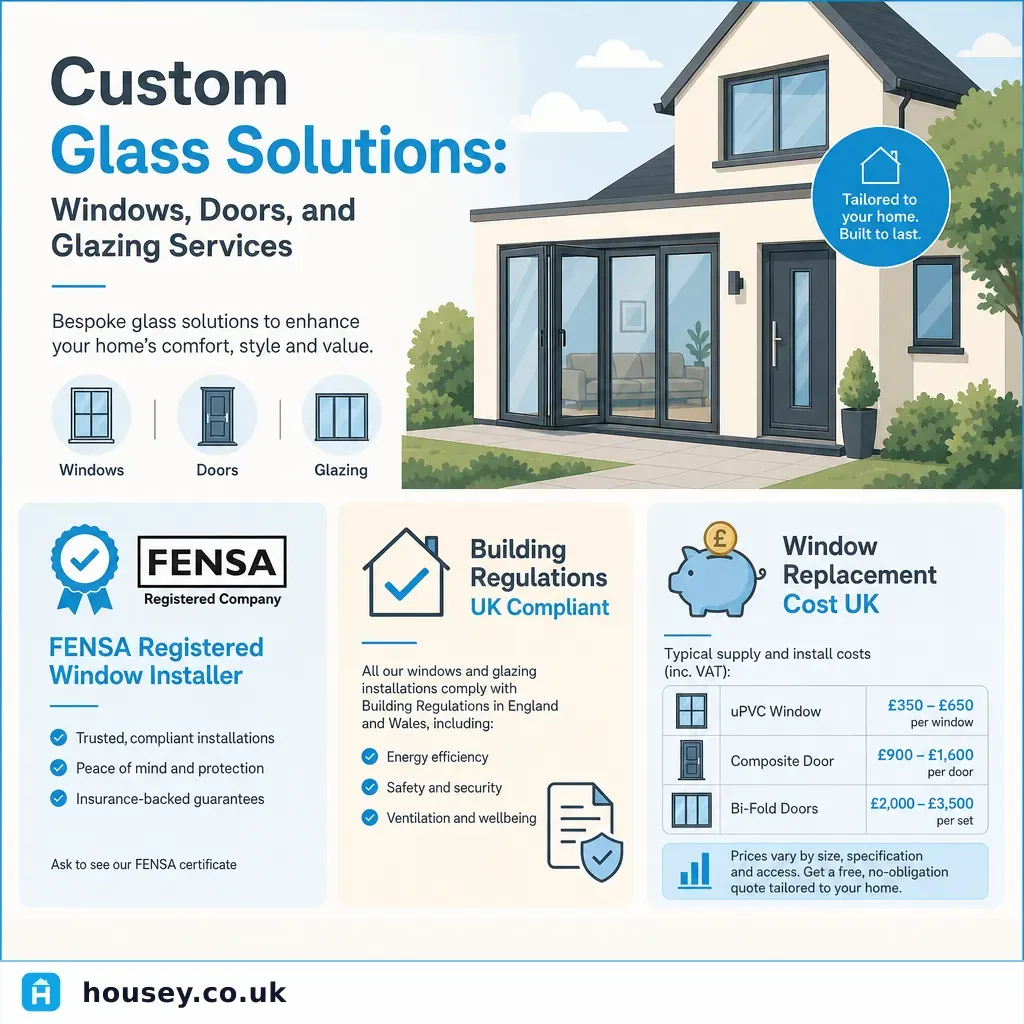
Custom Glass Solutions: Windows, Doors, and Glazing Services
Replacement windows and doors in England and Wales must comply with Building Regulations Approved Document L (2022), requiring a whole-window U-value of 1.
 Improvement & Build
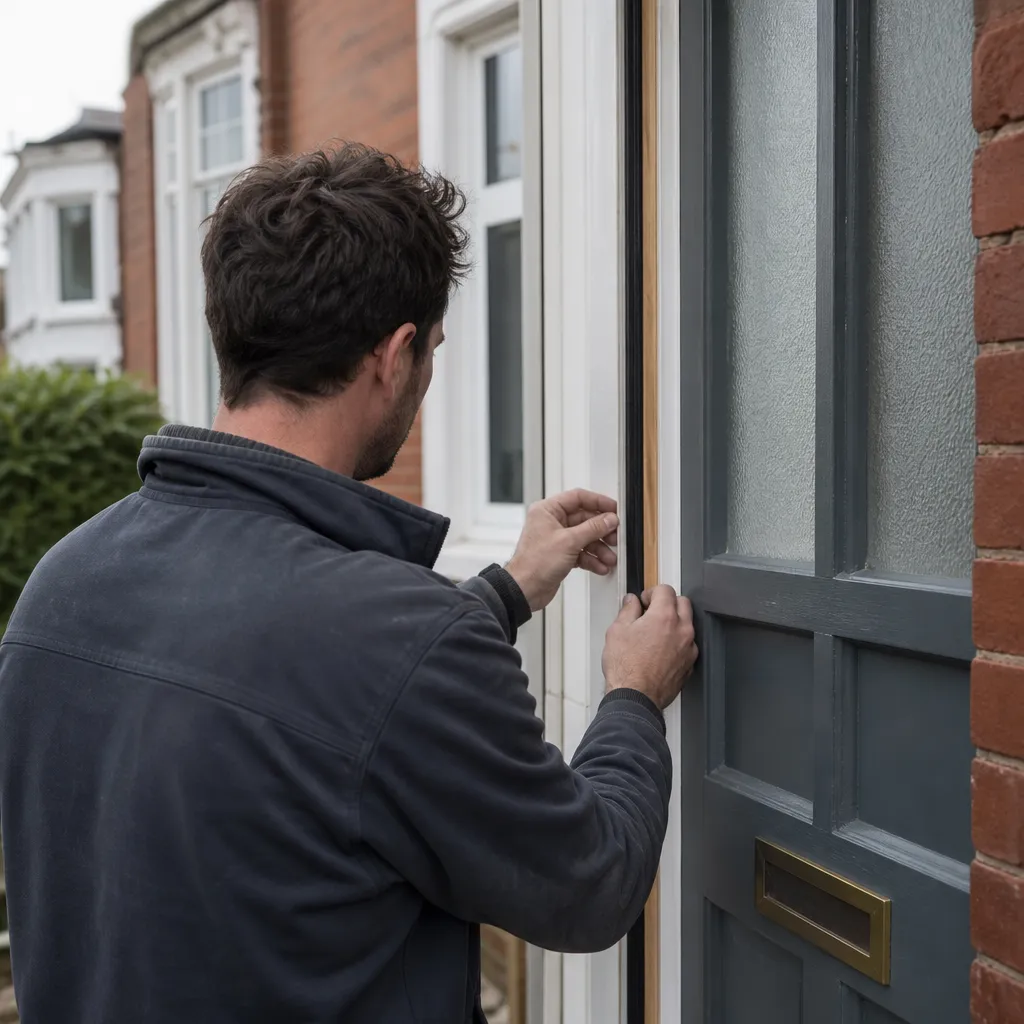
Door Weatherproofing And Sealing: Window And Door Contractors
Door weatherproofing involves fitting draught seals, threshold strips, letterbox brushes, and door sweeps to stop cold air and rain entering around the frame and threshold.
 Improvement & Build
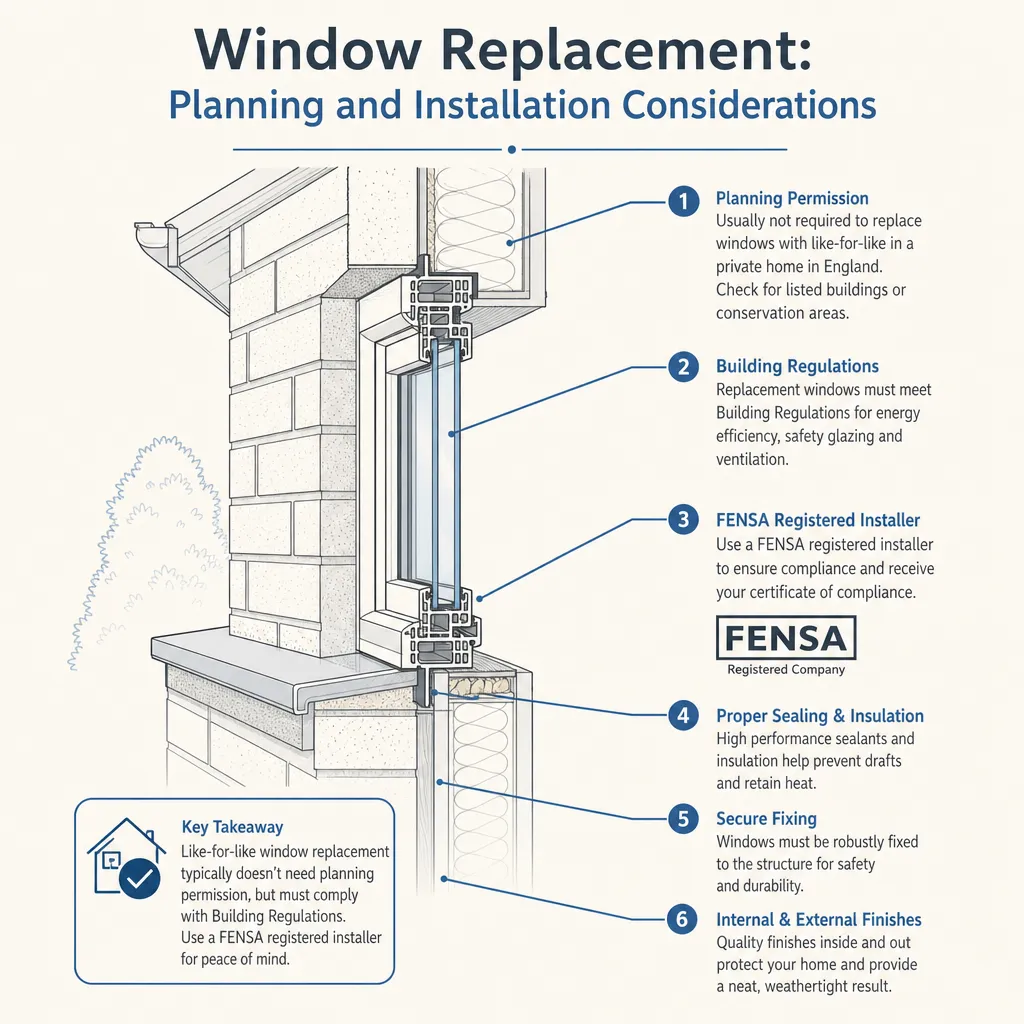
Window Replacement: Planning and Installation Considerations
Most window replacements in England fall under permitted development and do not need planning permission, though listed buildings, flats, and conservation areas are exceptions.
 Improvement & Build
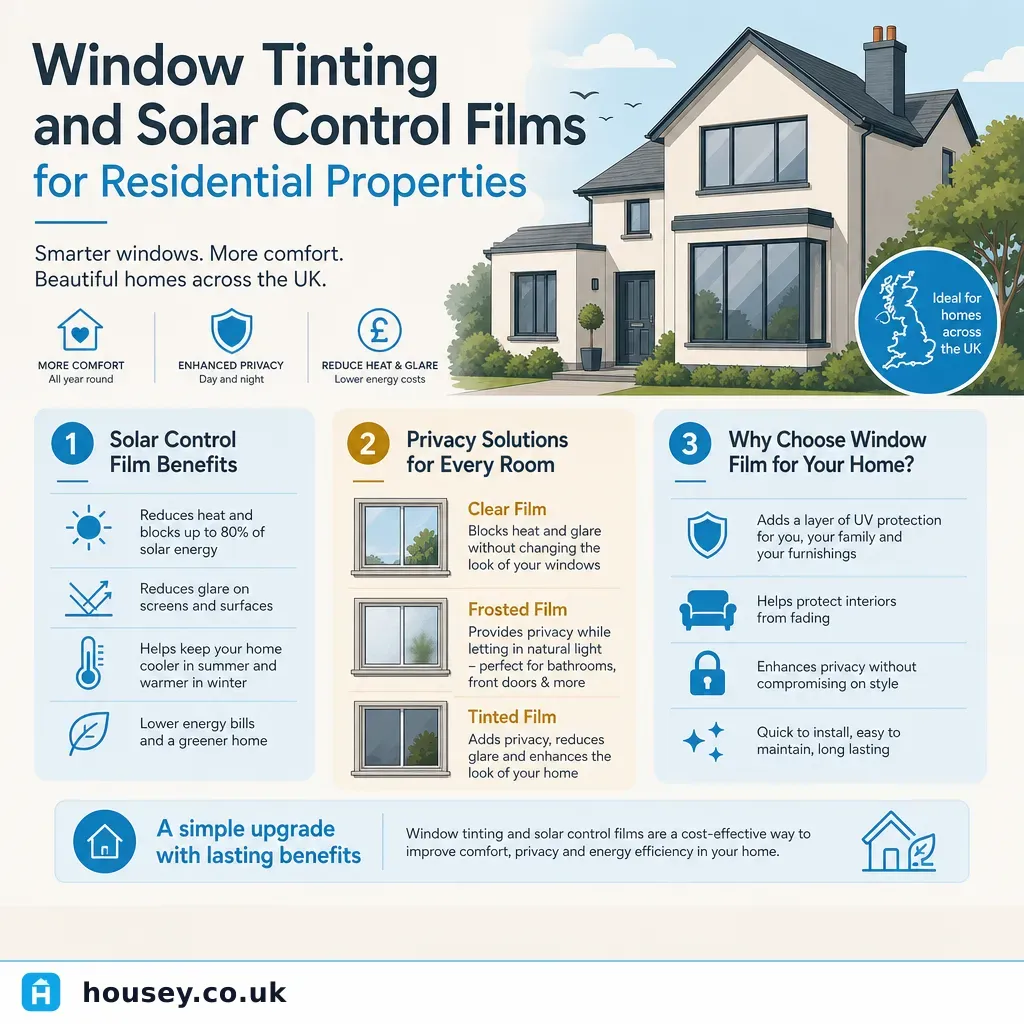
Window Tinting and Solar Control Films for Residential Properties
Solar control window films reject 40–80% of total solar energy and block 99% of UV radiation, reducing overheating and fading without replacing glazing.
 Improvement & Build
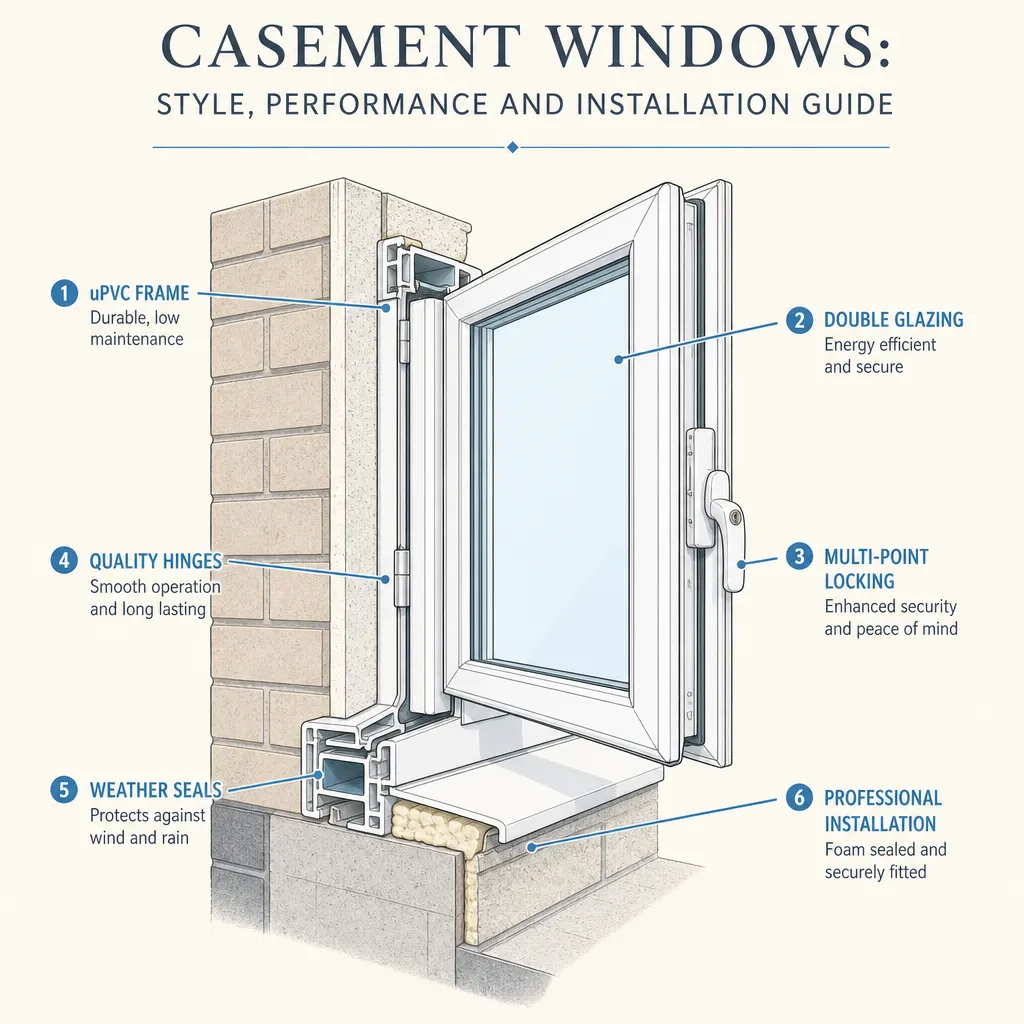
Casement Windows: Style, Performance and Installation Guide
Casement windows are hinged on one side and open outward, making them the most widely fitted window type in UK homes.