Window Tinting and Solar Control Films for Residential Properties
By Housey · Last reviewed 26th of May 2026

Window Tinting and Solar Control Films for Residential Properties
South-facing rooms, conservatories, and glazed extensions can become uncomfortably hot in summer, fade soft furnishings, and raise cooling costs. Solar control window films offer a retrofit solution at a fraction of the cost of replacing glazing — and the technology has improved substantially as UK homeowners with large-format windows, glass extensions, and orangeries look for ways to manage solar gain without compromising natural light. Understanding the key specifications and compatibility requirements helps you choose a product that performs as expected without risking your glazing warranty.
Key points
- High-performance solar control films can reject 40–80% of total solar energy (TSER) depending on film type and the glass specification they are applied to.
- Most quality solar films block 99% of UV-A and UV-B radiation, measurably slowing fading of furniture, flooring, and artwork.
- Visible light transmission (VLT) ranges from around 5% (near-opaque, strong mirror effect) to over 70% (nearly invisible) — lower VLT means more heat rejection but noticeably less natural light.
- Some metallic or dark absorptive films can cause thermal stress in sealed double-glazed units, potentially voiding the window manufacturer's warranty — always confirm compatibility in writing before specifying.
- Listed buildings and properties in conservation areas may require listed building consent before applying reflective or visibly tinted external-face films; check with your local planning authority.
How do solar control window films work?
Window film is a polyester or multi-layer laminate bonded to the internal or external face of glass using a pressure-sensitive adhesive. Solar control films work through three main mechanisms:
- Reflection: metallic or nano-ceramic layers reflect a portion of incoming solar radiation before it reaches the room.
- Absorption: dyed or metallic layers absorb solar energy within the film itself, dissipating it as heat at the glass surface.
- Transmission: the remaining proportion of light and energy that passes through into the room.
The key performance specifications to look for are:
- Total Solar Energy Rejected (TSER): the percentage of total solar energy prevented from entering the room. A TSER of 60% means 40% of solar energy still passes through.
- Visible Light Transmission (VLT): the percentage of visible light that passes through the film. A 35% VLT film will noticeably darken a room.
- UV rejection: almost all solar films claim 99% UV-A and UV-B rejection, which is effective at slowing fading of soft furnishings and floor coverings.
- G-value (Solar Heat Gain Coefficient): the lower the G-value, the less solar heat enters the room. A quality film applied to existing double glazing may achieve a combined system G-value of 0.3–0.4.
Types of window film for UK homes
Film type | Primary purpose | Typical VLT | Best for | Key limitation |
|---|---|---|---|---|
Reflective solar control | Reduce solar heat gain and glare | 10–40% | South/west-facing rooms, conservatories | Mirror effect from outside during daylight; may need LPA approval on heritage properties |
Neutral/ceramic solar control | Heat reduction with minimal colour change | 40–70% | Rooms needing good light with some heat control | Lower TSER than reflective films; typically costs more |
Frosted privacy | Obscure visibility | 0–30% | Bathrooms, ground-floor glazing facing a street | Blocks significant light; provides no heat control |
Safety/security | Hold glass together on impact | 70–90% (usually clear) | Glazed doors, side panels, low-level glass | Minimal solar benefit; chosen for impact resistance only |
UV-only | Block UV with minimal light change | 70–90% | Protecting furniture and artwork without darkening | Does not significantly reduce heat or glare |
Decorative | Aesthetics and privacy patterns | Varies | Feature windows, internal partitions | Usually no thermal performance data |
Which film should you choose?
- Choose reflective solar control film if summer overheating is the main problem in a south or west-facing room and the property is not listed or in a conservation area.
- Choose neutral or ceramic solar control film if you want heat rejection without a mirrored external appearance — ceramic films tend to have a more subtle, neutral look that is less likely to affect neighbours or street appearance.
- Choose UV-only film if your priority is protecting soft furnishings and artwork from fading without noticeably darkening the room.
- Choose frosted privacy film if ground-floor windows face the street or adjacent properties and you want to obscure views without fitting a blind or curtain.
- Choose safety film if you have older non-safety glass in a door, side panel, or low-level window and want to improve its impact resistance.
- Check with your local planning authority before fitting any reflective or visibly tinted film if the property is listed or in a conservation area — Historic England advises caution with any alteration affecting the external appearance of historic windows.
- Consult the glazing unit manufacturer before applying film to sealed double-glazed or triple-glazed units — some absorptive films can cause thermal stress cracking, particularly on low-E or toughened glass panes.
Planning and Building Regulations considerations
Window films do not themselves trigger a Building Regulations application for an existing dwelling, but two issues warrant careful attention before specifying.
Thermal stress in sealed glazed units: certain absorptive films generate heat within the glass, causing differential thermal expansion across the pane. This can lead to cracking or hermetic seal failure in double-glazed units, and is likely to void the window manufacturer's warranty. Nano-ceramic films carry significantly lower thermal stress risk than dark metallic films. Obtain written compatibility confirmation from the film supplier before proceeding, particularly on south-facing sealed units.
Listed buildings and conservation areas: visibly reflective or tinted external-face films may constitute a material alteration to the character of a listed building and could require listed building consent under the Planning (Listed Buildings and Conservation Areas) Act 1990. Internal films are less likely to require consent, but always check with your local planning authority before applying any film to windows in a heritage building. Conservation area Article 4 directions may restrict external alterations in some localities.
What to ask before accepting a quote
Before commissioning window film installation, ask the supplier or installer:
- What are the film's VLT, TSER, and UV rejection ratings, and can they provide a manufacturer's data sheet?
- Is this film compatible with my sealed double-glazed or triple-glazed units, and is there a thermal stress risk?
- Is the film designed for internal or external application?
- What guarantee does the film carry and what exactly does it cover — delamination, colour shift, adhesive failure?
- Does the film carry any independent certification or third-party testing marks?
- Will the film affect the existing window manufacturer's warranty?
- Is VAT included in the quoted price, and does the quote cover removal of any failed film in future if needed?
When to get professional help
Applying window film is technically feasible as a DIY task for small single panes, but larger glazed panels are unforgiving — bubbles, dust inclusions, and misaligned edges are common DIY problems that are difficult to correct once the adhesive bonds. Professional installation is recommended when:
- Glazed panels are larger than approximately 0.5 m².
- The film is being applied to sealed double-glazed units where thermal stress compatibility needs confirming.
- The property is listed or in a conservation area and appropriate consent must be obtained first.
- Safety or security film is specified, where installation quality directly affects impact-resistance performance.
How Housey can help
For window film as part of a broader glazing or solar control project, Housey can connect you with experienced window and door installers who can advise on film specification, glazing compatibility, and professional application to a range of residential window types across the UK.
Frequently asked questions
Will solar control window film make my rooms darker?
It depends on the film's visible light transmission (VLT). A 70% VLT film is barely noticeable; a 20% VLT film will reduce natural light substantially. Most homeowners aiming to reduce glare and heat without significantly darkening rooms choose films with a VLT of 40–60%, which offers a practical balance between solar control and daylight levels throughout the day.
Can window film damage my double-glazed units?
Some dark or metallic absorptive films can cause thermal stress in sealed double-glazed units, potentially leading to cracking or seal failure. This risk is higher with low-E or toughened glass panes. Always check compatibility with both the film supplier and the window manufacturer before application, particularly for south-facing or high-solar-gain glazing where heat build-up is greatest.
Does window film require planning permission?
In most standard residential properties, no. However, visibly reflective or tinted external-face films on listed buildings may constitute a material alteration and require listed building consent. Some conservation area properties may also need local planning authority approval. Always check before applying reflective films to any heritage property, as retrospective enforcement can require removal at the owner's cost.
How long does window film last?
Quality professionally applied solar control films typically carry a manufacturer's guarantee of 10–15 years against delamination, fading, and discolouration. Budget DIY films may last only three to five years before peeling or yellowing. Longevity depends on film quality, solar exposure, and adhesive specification — films on south-facing glazing work harder and may show earlier signs of wear.
Can I remove window film myself?
Yes. Apply gentle heat from a hairdryer to soften the adhesive, then peel carefully from one corner. Adhesive residue can typically be removed with a specialist film adhesive remover. Take care with older or heat-sensitive glass. For large glazed areas, professional removal reduces the risk of scratching the glass surface during the peeling process.
Sources and further reading
- Approved Document L: Conservation of fuel and power — HM Government
- Managing windows in historic buildings — Historic England
- Glazing and energy efficiency — Energy Saving Trust
- Glass and Glazing Federation technical guidance — Glass and Glazing Federation
Useful next reads
 Improvement & Build
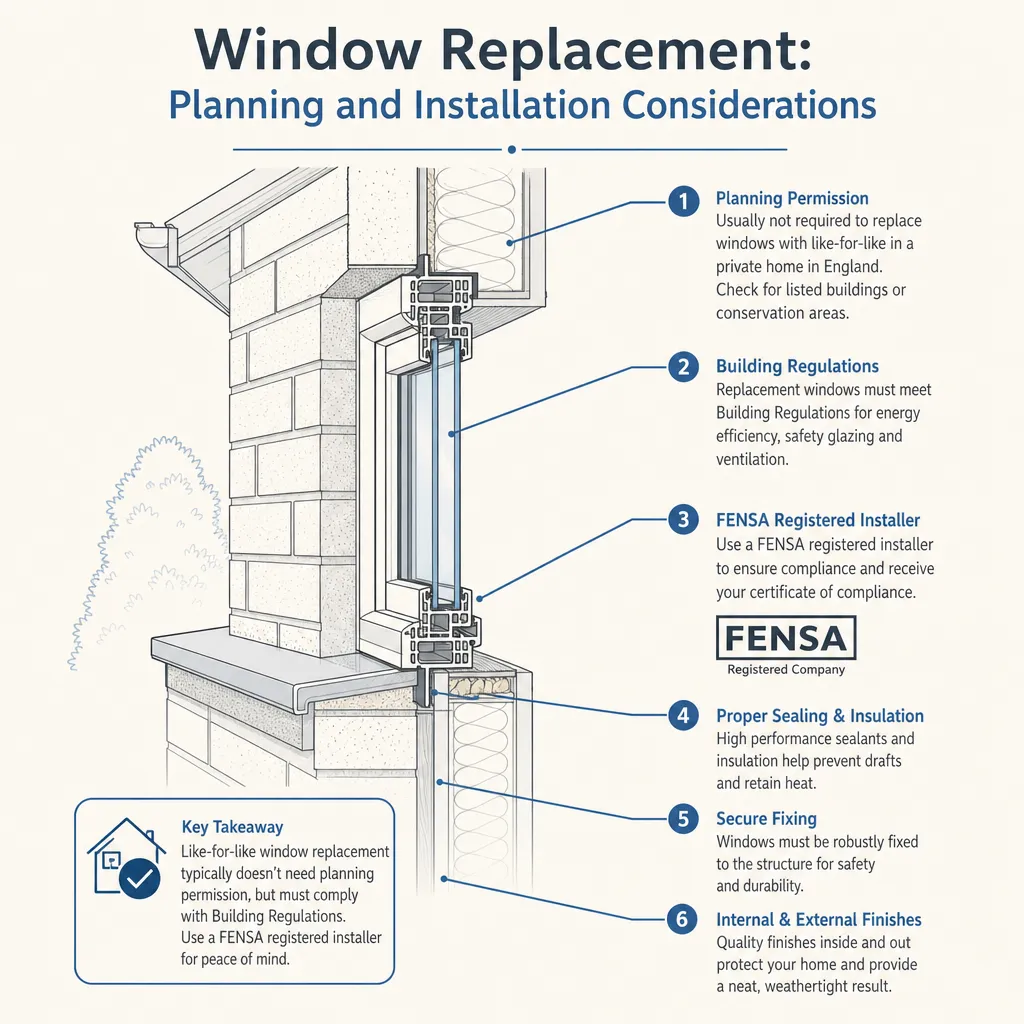
Window Replacement: Planning and Installation Considerations
Most window replacements in England fall under permitted development and do not need planning permission, though listed buildings, flats, and conservation areas are exceptions.
 Improvement & Build
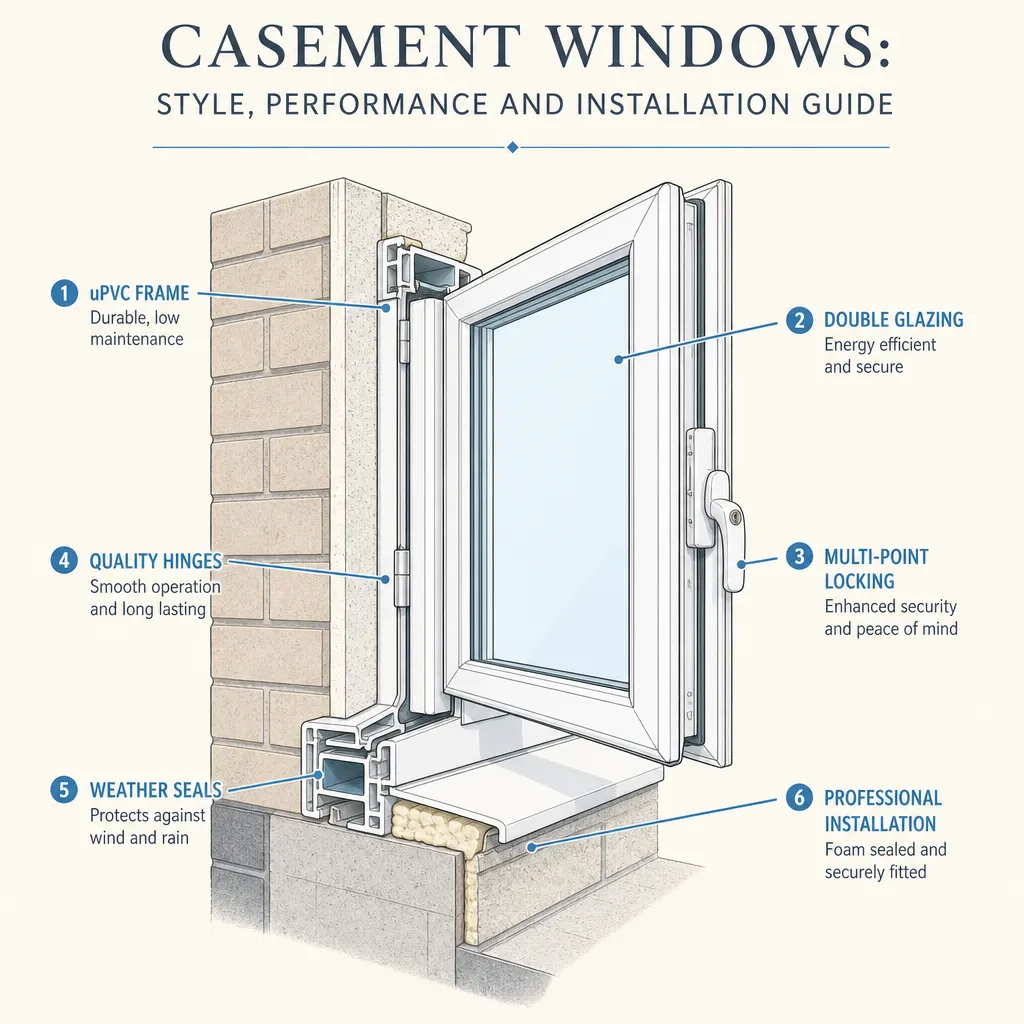
Casement Windows: Style, Performance and Installation Guide
Casement windows are hinged on one side and open outward, making them the most widely fitted window type in UK homes.
 Improvement & Build
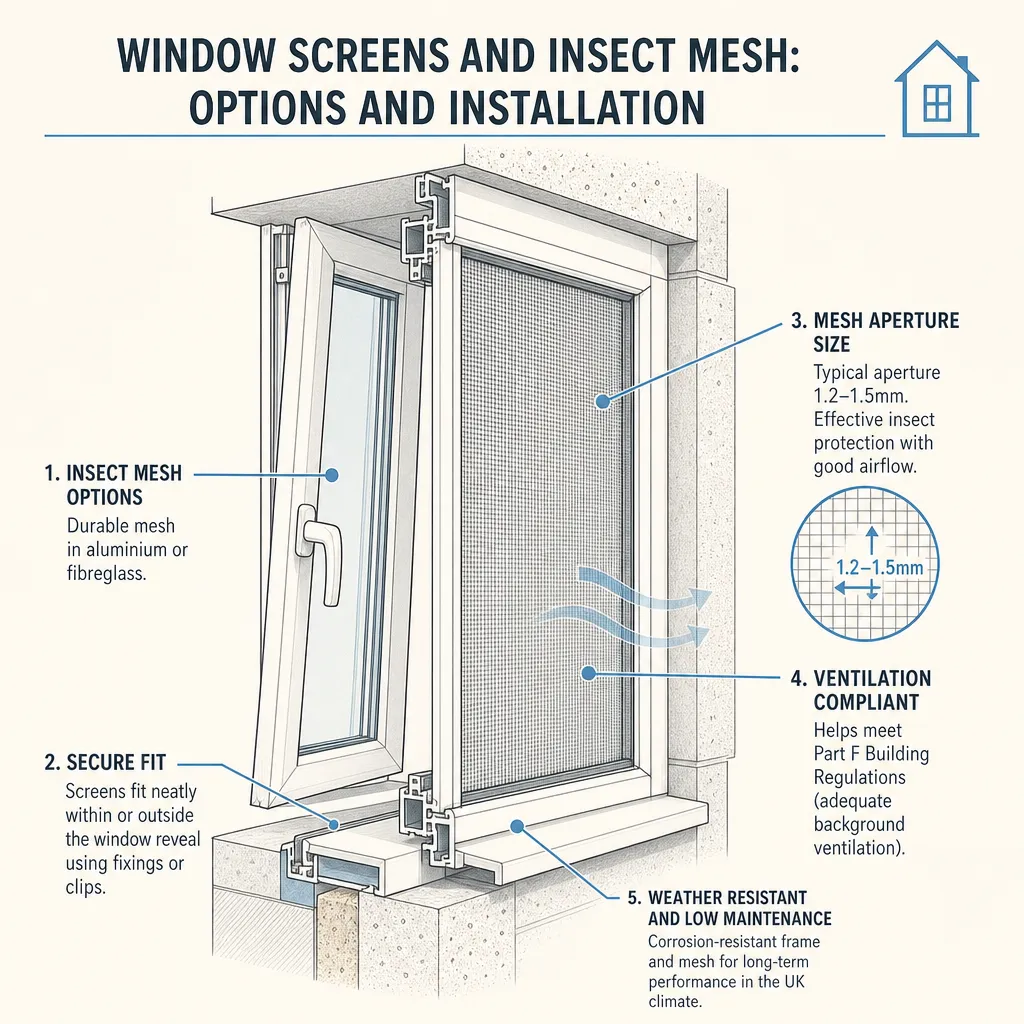
Window Screens and Insect Mesh: Options and Installation
UK window screens fall into four main types: fixed frame, roller retractable, pleated folding, and magnetic snap-fit.
 Improvement & Build
Custom Glass Solutions: Windows, Doors, and Glazing Services
Replacement windows and doors in England and Wales must comply with Building Regulations Approved Document L (2022), requiring a whole-window U-value of 1.
 Improvement & Build
Door Weatherproofing And Sealing: Window And Door Contractors
Door weatherproofing involves fitting draught seals, threshold strips, letterbox brushes, and door sweeps to stop cold air and rain entering around the frame and threshold.