Cavity Wall Damp Proofing: Protecting the Inner Wall Face
By Housey · Last reviewed 11th of May 2026
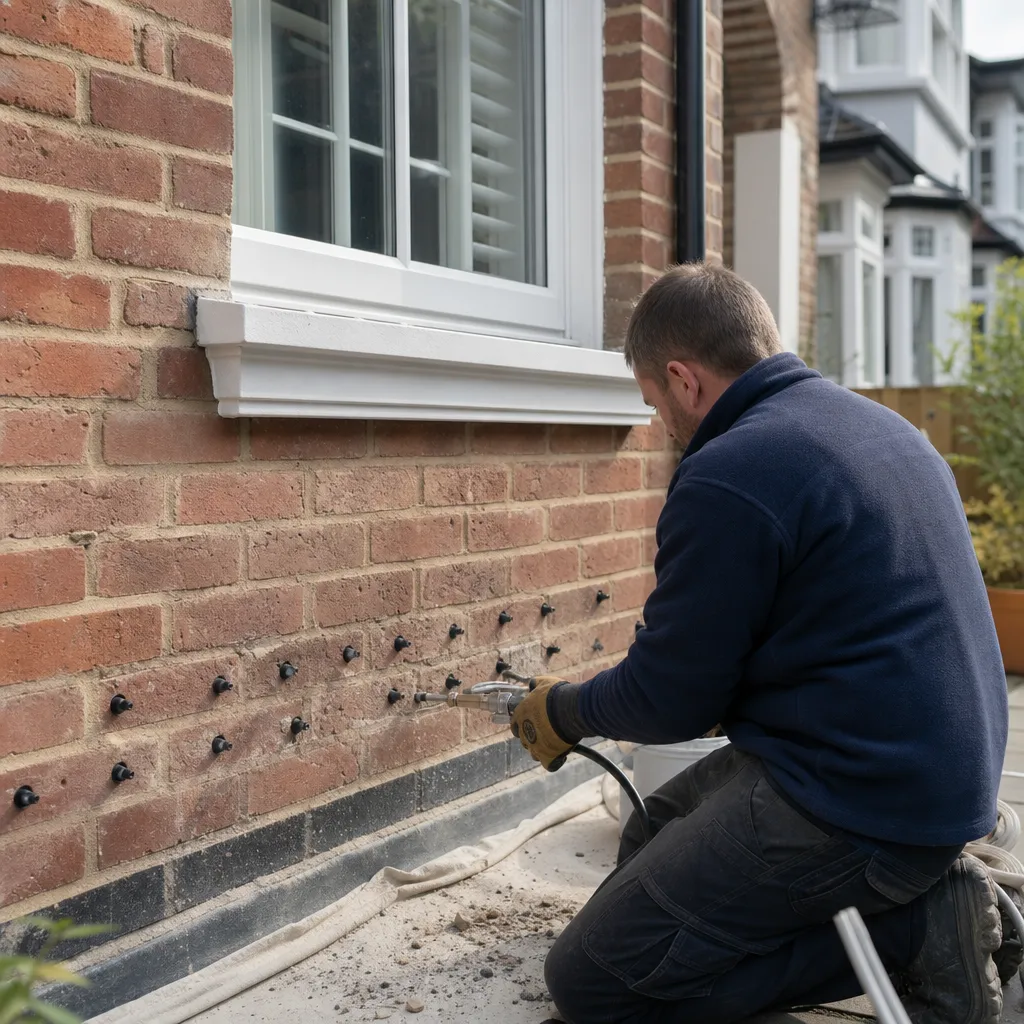
Cavity Wall Damp Proofing: Protecting the Inner Wall Face
Cavity walls became the standard construction method for UK homes from the 1920s onwards, replacing solid-brick and solid-stone construction because the air gap was thought to prevent moisture crossing from the outer to the inner leaf. For millions of properties built between the 1920s and the 1990s, that gap is now filled with cavity wall insulation — and in many cases the insulation itself has become the moisture pathway it was meant to prevent. Understanding how cavity wall damp proofing works, and what can go wrong, is essential before authorising any remedial treatment.
Key points
- Cavity wall insulation (CWI) installed without adequate pre-survey checks is a known cause of penetrating damp in UK homes; the Cavity Insulation Guarantee Agency (CIGA) manages disputes where registered installations fail.
- Physical damp-proof courses (DPCs) run through the masonry at or near ground level and must align across both leaves of a cavity wall; a gap or bridge between them allows moisture to transfer to the inner face.
- Cavity trays — angled DPC layers built above lintels, window heads, and roof abutments — are designed to collect water infiltrating the outer leaf and discharge it through weep holes; blocked or missing trays are a common cause of localised damp patches.
- PAS 2035:2019 governs energy retrofit installations including CWI and requires a Retrofit Assessor to evaluate exposure, wall construction, and moisture risk before insulation is specified.
- RICS Level 3 building surveys routinely assess cavity walls for evidence of damp bridging, defective trays, and failed DPCs; a standalone damp and timber report can also be commissioned independently.
How cavity wall damp proofing works
A cavity wall relies on three main moisture-management elements working together: the outer leaf deflects most driving rain; the cavity itself breaks the capillary path; and horizontal DPCs at ground level, window cills, and roof level prevent water rising or tracking inward.
When all three elements function correctly, the inner wall face stays dry. Problems arise when any element fails — often silently over years — and by the time damp patches appear on internal plasterwork, moisture has usually been present for some time.
The principal components are:
- Ground-level DPC: typically a horizontal course of engineering brick, bitumen felt, or polymer sheet built into both leaves 150 mm above external ground level, per Building Regulations Approved Document C.
- Cavity trays: angled membranes above penetrations (lintels, window heads, meter boxes, soil pipes) that collect water tracking down the outer leaf and channel it out through weep holes in the perpend joints below.
- Cavity wall ties: steel ties connecting the two leaves; corroded ties can stain the inner face and their deterioration compromises structural integrity as well as moisture management.
Why cavity wall insulation changes the risk profile
An empty cavity provides a drainage path: water that crosses the outer leaf trickles down the cavity face and exits at the base. Once the cavity is filled with mineral wool, polystyrene bead, or urea-formaldehyde foam, any water entering the outer leaf can wick through the insulation to the inner leaf — a process called moisture bridging.
The risk is higher where:
- The property is in a high-exposure zone (BRE rain exposure maps classify most of Scotland, Wales, and western England as 'severe' or 'very severe').
- The mortar or outer-leaf masonry is permeable or damaged.
- Cavity trays were not installed, or were blocked, before the CWI was injected.
- The insulation has settled, degraded, or become saturated over time.
CIGA manages guarantee complaints arising from failed CWI installations. Where installation was undertaken under a CIGA guarantee, homeowners can raise a formal dispute if damp problems emerge. Where no guarantee exists — common with older or unlicensed installations — remediation costs fall entirely to the homeowner.
Comparison: approaches to cavity wall moisture remediation
Approach | Best suited to | Typical limitations | Typical professional |
|---|---|---|---|
Cavity tray repair or installation | Localised damp above windows or lintels; intact outer leaf | Invasive; requires removing outer brick courses above affected area | Damp proofing specialist or masonry contractor |
CWI partial or full extraction | Saturated, degraded, or incorrectly specified fill; high-exposure properties | Extraction may leave voids; cavity needs re-inspection before re-fill | CIGA-registered contractor or specialist extractor |
External wall coating or cladding | Highly permeable or damaged outer leaf requiring re-rendering | Does not resolve internal DPC failures; changes building appearance | Specialist render or cladding contractor |
DPC injection or reinstatement | Ground-level rising damp where original DPC has failed or is absent | Injection DPCs treat rising damp, not penetrating damp — misdiagnosis is common | PCA-registered damp proofing specialist |
Monitor and manage | Mild or borderline readings with no active damage to finishes | Requires repeat surveys; does not address a failing element | RICS-qualified surveyor or damp specialist |
Costs vary significantly by property size, access, and extent of works — always obtain itemised quotes. Indicative UK costs, last reviewed 2026-05-11.
Red flags: signs your cavity wall moisture management may be failing
Instruct a specialist if you observe any of the following:
- Damp patches appearing on inner walls directly above windows or door heads, often in a horizontal band.
- Internal plasterwork that feels cold or soft, or has fine crystalline salts (efflorescence) forming on the surface.
- Dark tide marks at or just above skirting-board level, especially on external-facing walls only.
- Internal mould growth confined to external walls rather than thermal-bridge corners at ceiling level.
- Rust stains appearing through the outer leaf in a regular diagonal pattern (indicative of corroding wall ties).
- A history of cavity wall insulation installation but no record of a pre-installation survey.
- Missing or blocked weep holes above lintels where open perpend joints should be visible.
Red flags requiring urgent professional assessment:
- Rapid spread of damp or mould following heavy rainfall.
- Structural cracking in the outer leaf coinciding with damp patches on the inner face.
- Bulging or stepped cracking in the outer leaf, suggesting wall tie failure.
Important limitations
This article provides general information only. Cavity wall construction, insulation history, exposure classification, and the condition of DPCs and cavity trays vary considerably between properties and regions. Damp symptoms can have multiple causes — including condensation, plumbing leaks, and rising damp — and misdiagnosis leads to costly, ineffective treatment. A qualified professional must inspect your property before any remediation is specified or carried out.
When this becomes urgent
Seek professional help without delay if:
- Damp is spreading rapidly or covering large areas of internal walls.
- You notice structural movement — cracking or bulging — in the outer leaf.
- Mould is causing health concerns, particularly in homes with young children, elderly occupants, or people with respiratory conditions.
- Cavity wall insulation was installed in a high-exposure property without a documented pre-installation survey.
What to ask a qualified professional
Before commissioning any damp investigation or remediation, ask:
- Are you registered with the Property Care Association (PCA) or a CIGA-registered contractor?
- What survey method will you use — visual inspection only, calibrated moisture meter readings, borescope inspection of the cavity, or thermal imaging?
- Will your diagnosis clearly distinguish between penetrating damp, rising damp, and condensation?
- If CWI extraction is recommended, what accreditation or guarantee covers the extraction works?
- What is the specification of any replacement DPC or cavity tray, and does it meet current Building Regulations Approved Document C?
- Will I receive a written report with photographic evidence before any remedial work begins?
When to get professional help
Cavity wall damp is rarely straightforward to diagnose without specialist equipment. A RICS-qualified surveyor or a PCA-registered damp specialist can carry out a detailed investigation — using borescopes, moisture mapping, and thermal imaging where appropriate — to identify whether the source is a cavity tray failure, insulation bridging, DPC failure, or a combination of causes.
Do not proceed with treatment based on a visual inspection alone. Misdiagnosis of damp type is common and can result in ineffective remediation, recurring problems, and unnecessary expenditure.
How Housey can help
If you suspect cavity wall damp or want a professional assessment before instructing remedial works, Housey can connect you with accredited damp and timber survey specialists in your area, as well as vetted damp proofing specialists who can carry out diagnosis and, where appropriate, treatment.
Frequently asked questions
Can cavity wall insulation cause damp?
Yes. Where cavity wall insulation bridges the cavity — particularly in high-rainfall exposure zones or where cavity trays are absent or blocked — moisture can transfer from the outer leaf to the inner leaf. CIGA, the Cavity Insulation Guarantee Agency, manages disputes and claims for registered installations that have failed. Properties in BRE severe or very severe rain exposure zones carry the highest risk.
What is a cavity tray and why does it matter?
A cavity tray is an angled damp-proof membrane built horizontally across a cavity wall above any opening or penetration — window heads, lintels, soil pipes, meter boxes. It collects water tracking down the outer leaf and directs it out through weep holes in the outer-leaf mortar joints below. Missing or blocked trays are one of the most common causes of localised penetrating damp above windows and doors.
How do I know if my cavity wall DPC has failed?
A rising tide mark of damp at or just above skirting-board level on external-facing walls — particularly where it does not appear on internal partition walls — may indicate a DPC problem. Efflorescence (white crystalline salts) on plasterwork and soft, powdery plaster are also common signs. A damp specialist with a calibrated moisture meter can confirm whether the pattern is consistent with rising damp or a different cause.
Who should I contact about cavity wall damp?
Start with a RICS-qualified surveyor or a Property Care Association (PCA) registered damp specialist — both professional bodies require adherence to recognised standards for survey and diagnosis. Avoid contractors who diagnose and quote for remediation in the same visit without a written survey report; independent diagnosis is advisable before any treatment is specified.
Sources and further reading
- Building Regulations Approved Document C: Site preparation and resistance to contaminants and moisture — GOV.UK
- Cavity Insulation Guarantee Agency (CIGA) — CIGA
- PAS 2035:2019 Retrofitting dwellings for improved energy efficiency — BSI
- Property Care Association: damp-proofing standards and contractor register — Property Care Association
- BRE: moisture in buildings and rain exposure guidance — BRE Group
Useful next reads
 Surveys & Inspections
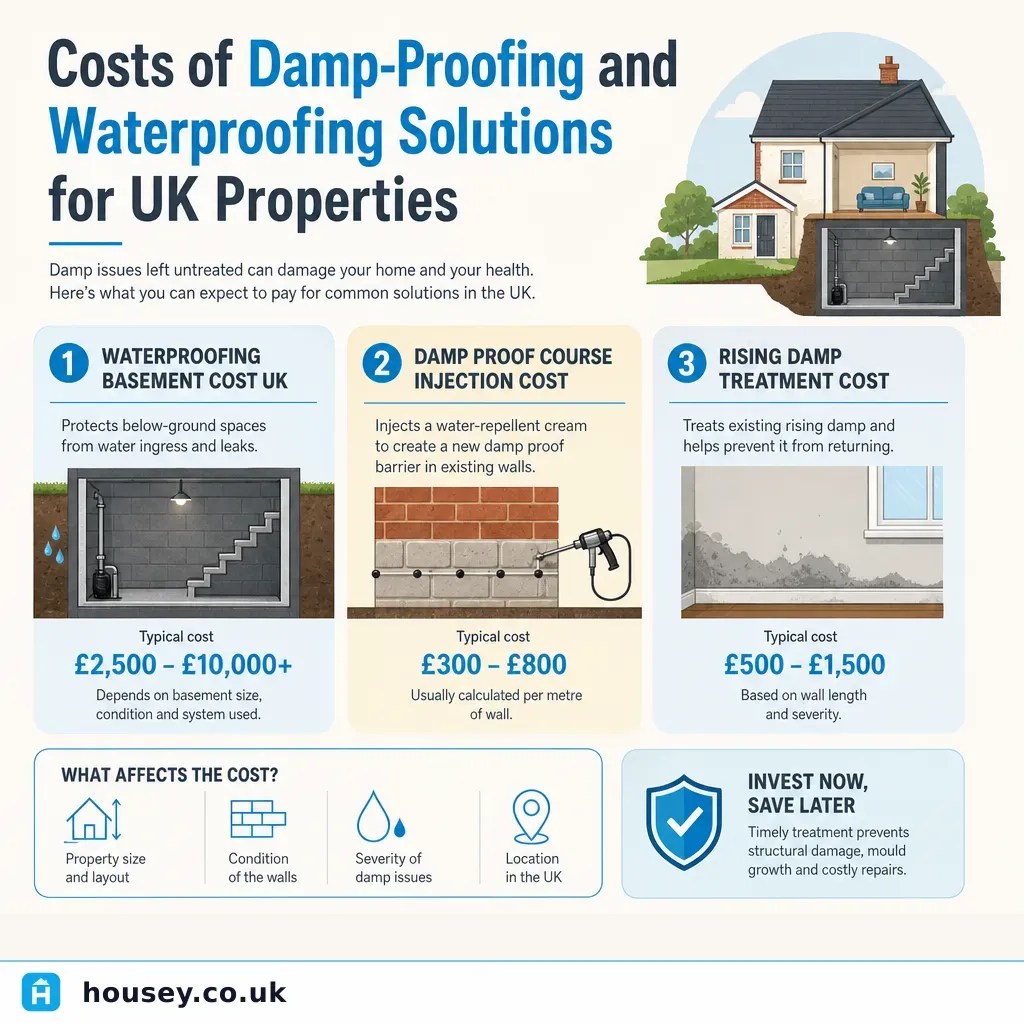
Costs of Damp-Proofing and Waterproofing Solutions for UK Properties
Damp-proofing costs vary by treatment: chemical DPC injection typically costs £300–£800 for a standard terraced house, while internal basement tanking runs £50–£150 per m² and cavity drain membrane systems £30–£80 per m².
 Surveys & Inspections
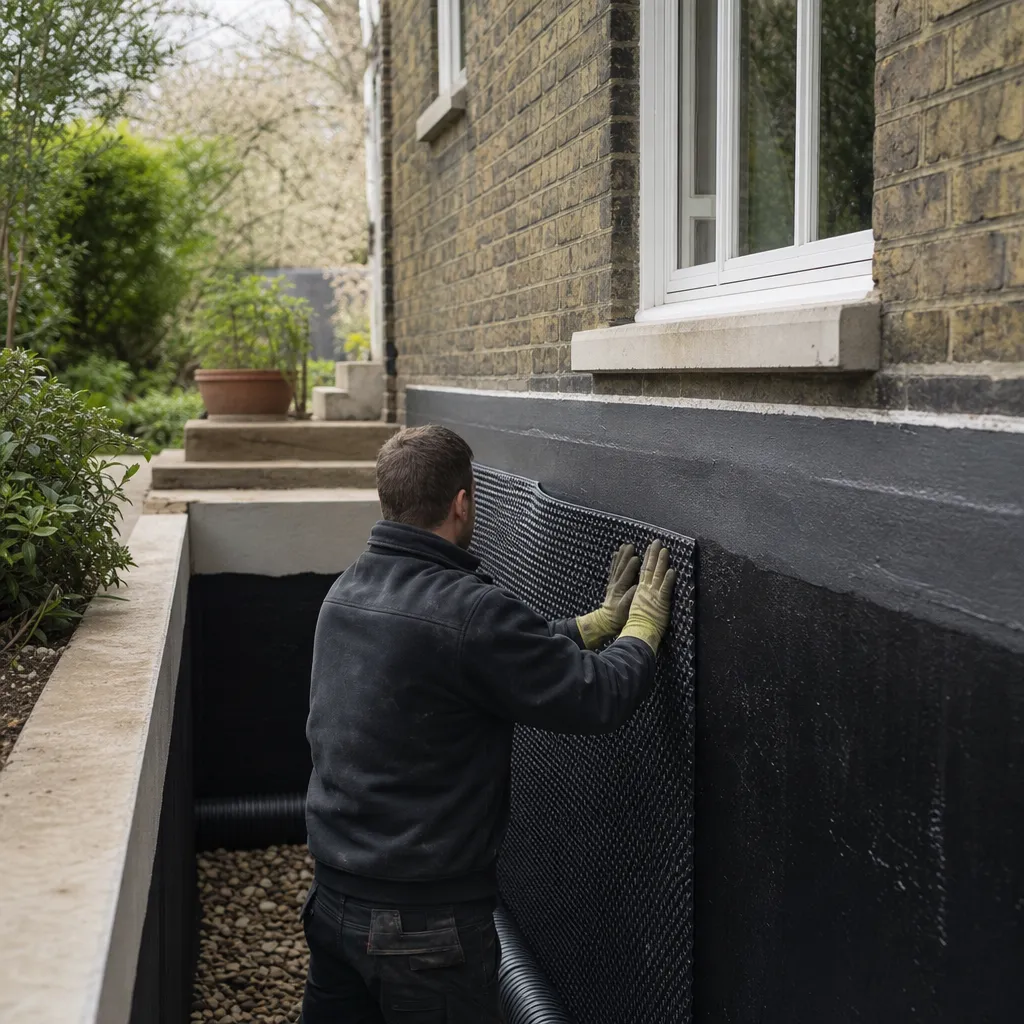
Basement Waterproofing Solutions for Damp Prevention
Basement waterproofing in the UK is governed by BS 8102:2022, which defines three system types: Type A (barrier coatings), Type B (structurally integral concrete), and Type C (cavity drain membrane with sump pump).
 Surveys & Inspections
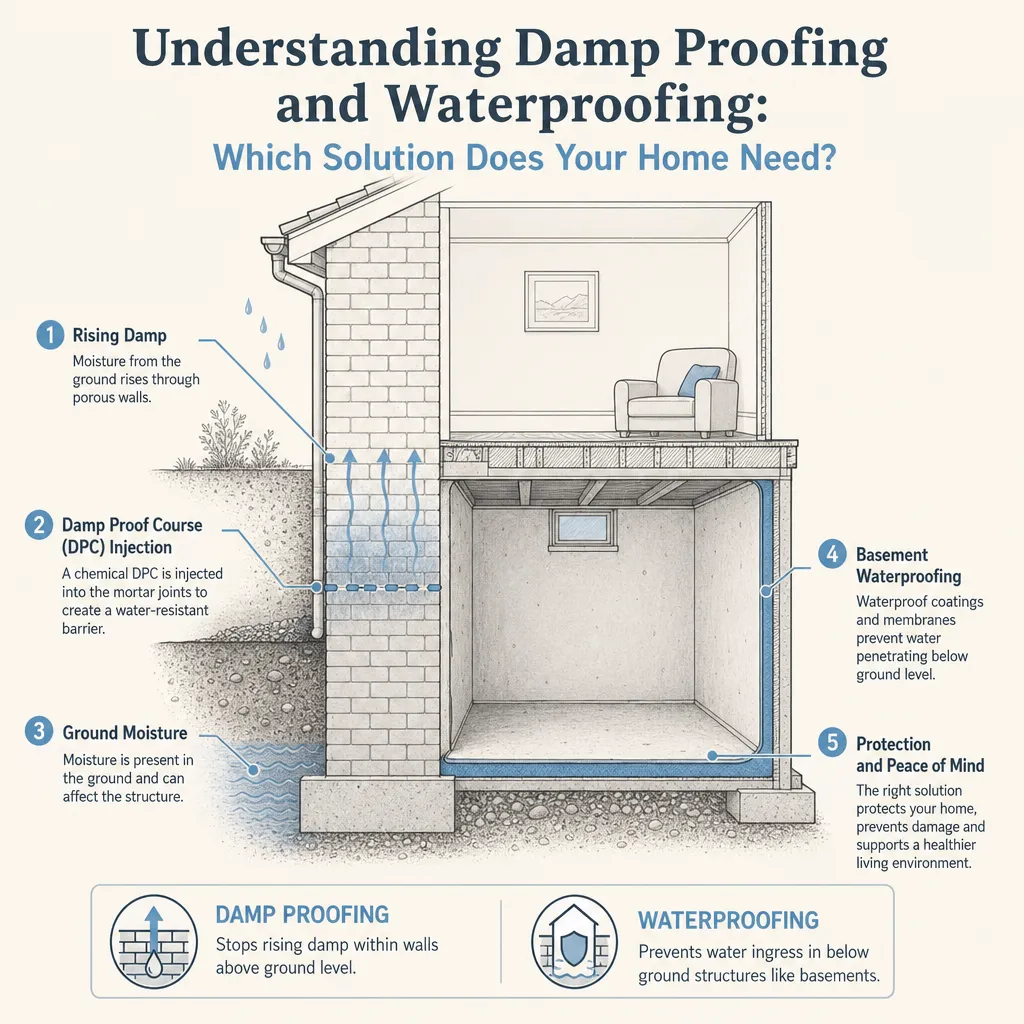
Understanding Damp Proofing and Waterproofing: Which Solution Does Your Home Need?
Damp proofing controls moisture movement through above-ground walls, while waterproofing excludes groundwater from below-ground structures.
 Surveys & Inspections
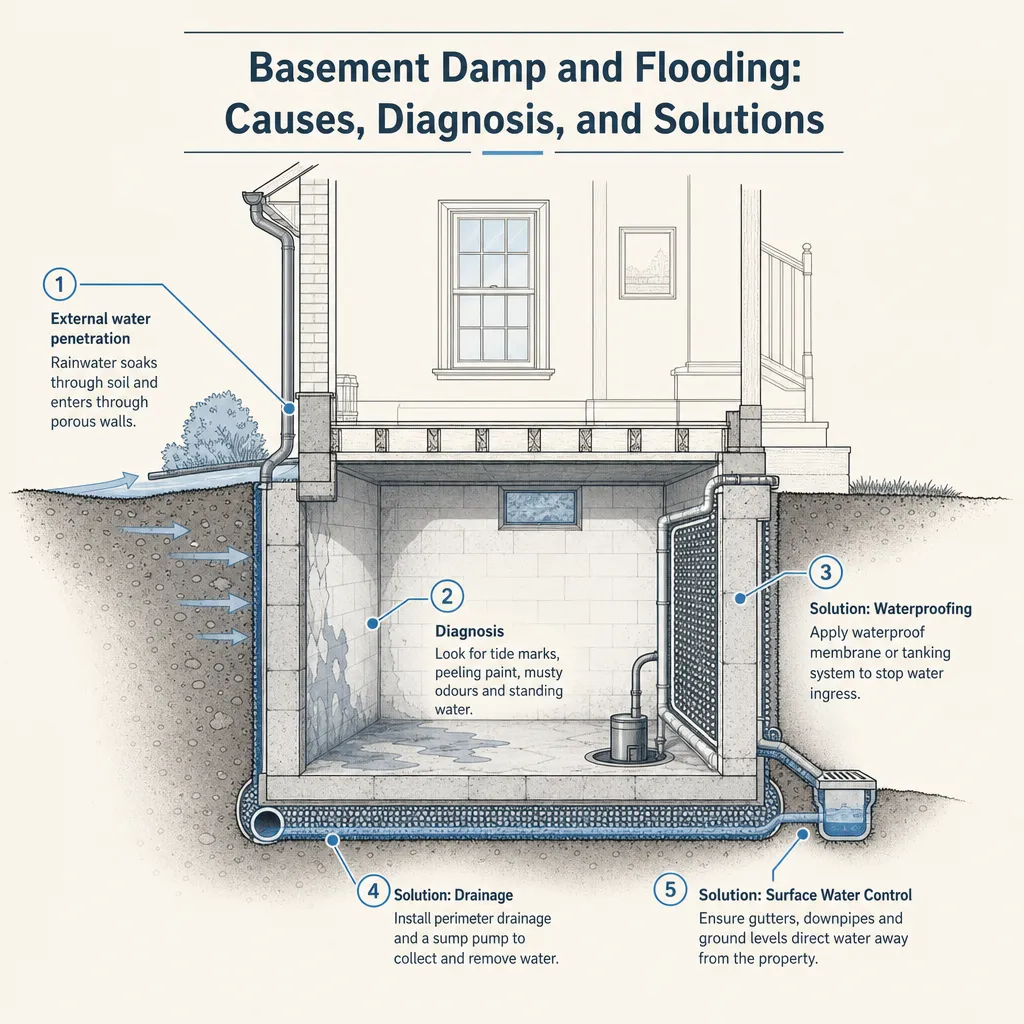
Basement Damp and Flooding: Causes, Diagnosis, and Solutions
Basement dampness and flooding in UK homes typically stems from one of three sources: groundwater under hydrostatic pressure, surface water from drainage failure, and condensation on cold masonry surfaces.
 Surveys & Inspections
Foundation Waterproofing Fundamentals: Protecting Your Property
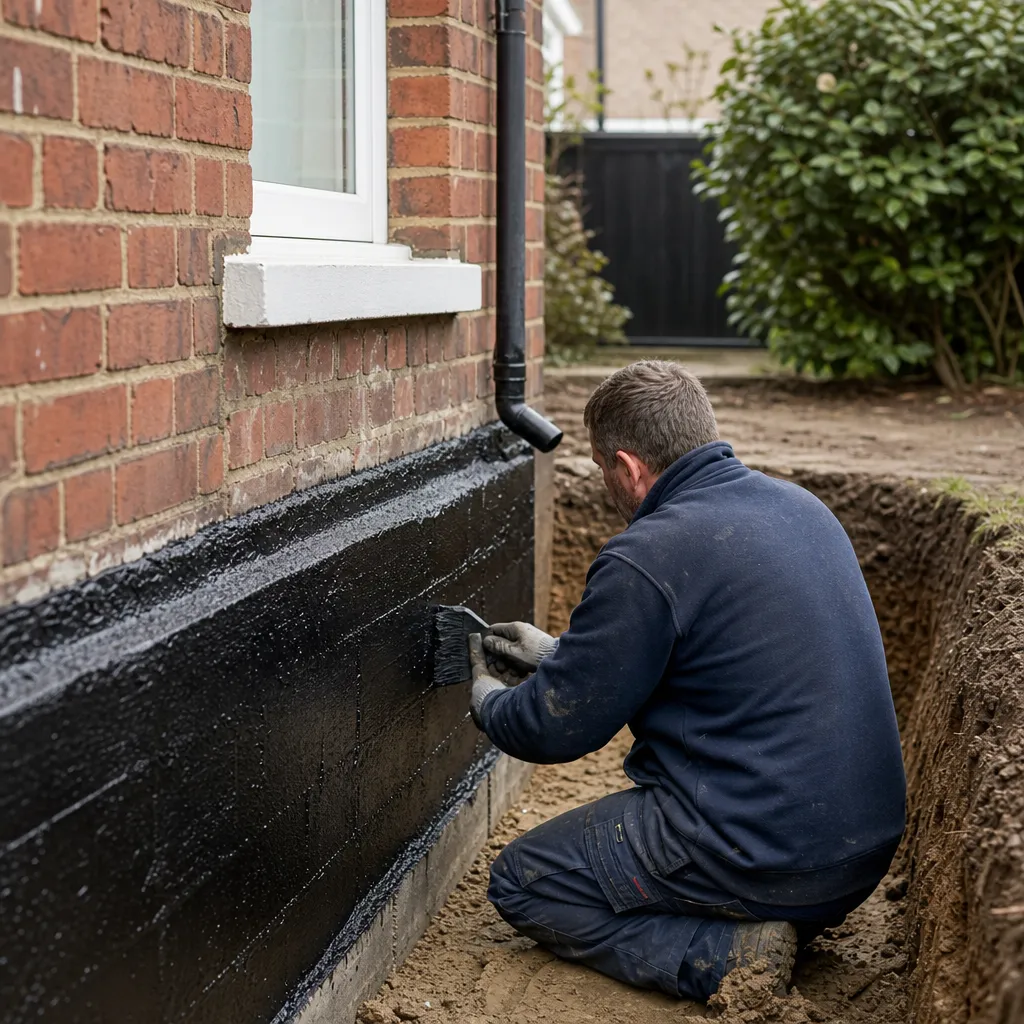
Foundation waterproofing prevents groundwater and soil moisture from penetrating below-ground structures.