Foundation Waterproofing Fundamentals: Protecting Your Property
By Housey · Last reviewed 11th of May 2026
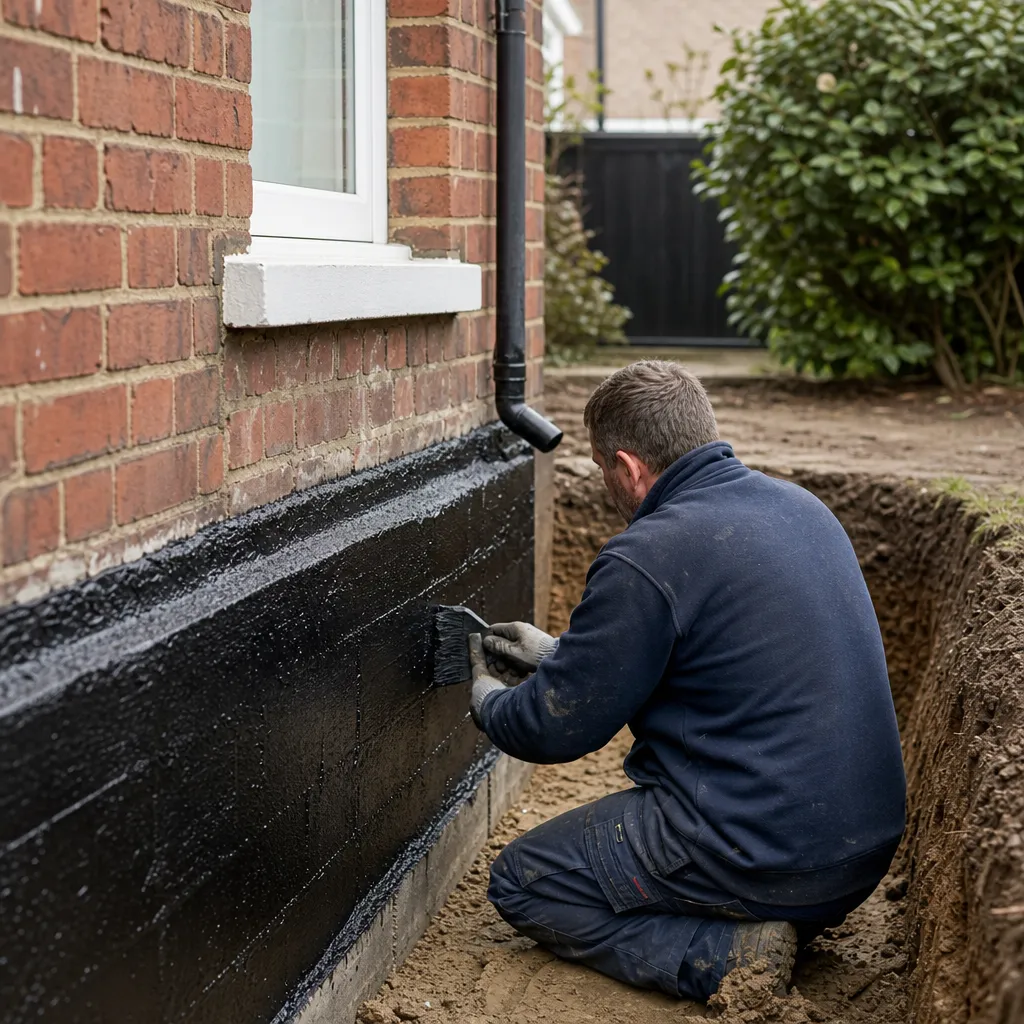
Foundation Waterproofing Fundamentals: Protecting Your Property
Below-ground moisture is one of the most persistent problems in UK residential property, affecting Victorian terraces with stone rubble foundations, inter-war semi-detacheds with solid brick substructures, and 1990s new-builds with poured concrete basements. Foundation waterproofing becomes relevant when converting a cellar, responding to a surveyor's flag at the point of purchase, or planning an extension that goes below existing ground level. Getting the system specification wrong can result in ongoing water ingress, structural deterioration, and expensive remediation — making professional assessment essential before any treatment is chosen.
Key points
- BS 8102 (Code of Practice for protection of below ground structures against water from the ground, published by BSI) is the primary UK standard governing foundation and basement waterproofing design and specification.
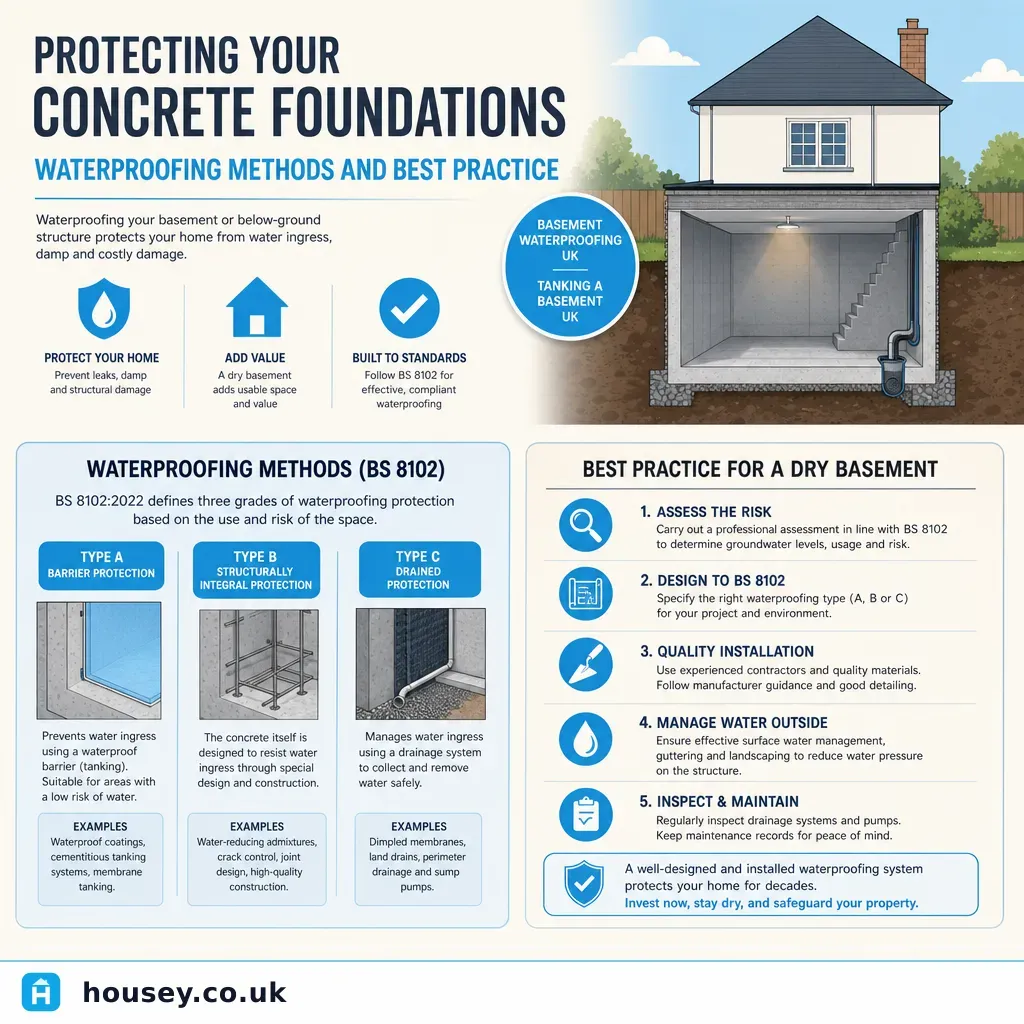
- BS 8102 defines three protection types: Type A (barrier — membranes and renders applied to the structure), Type B (structurally integral — waterproof concrete), and Type C (drained — cavity drain membrane with sump and pump).
- The standard defines usage grades (Grade 1 to Grade 4) based on how the below-ground space is used; Grade 3, requiring a dry environment with controlled humidity, is typically the minimum for a habitable cellar conversion such as a home office or bedroom.
- Building Regulations Approved Document C (Site preparation and resistance to contaminants and moisture) requires that walls and floors resist the passage of moisture from the ground.
- Specialist waterproofing contractors should hold the Certificated Surveyor in Structural Waterproofing (CSSW) qualification and be members of the Property Care Association (PCA), whose code of practice governs survey standards and guarantees.
Understanding the BS 8102 protection types
The choice of waterproofing system depends on the property's construction, ground conditions, groundwater level, and intended use of the space. BS 8102 provides the framework, but a competent specialist must assess the specific situation before any system is selected.
Type | Description | Best for | Main risk if wrong |
|---|---|---|---|
Type A – Barrier | External or internal membranes, cementitious tanking renders, crystalline coatings applied directly to the structure | Dry ground conditions, lower water table, solid masonry or concrete | Membrane failure under hydrostatic pressure; difficult to access for repair after finishing works |
Type B – Structurally integral | Waterproof concrete with no joints or penetrations; waterstops at all construction joints | New-build basements and below-ground extensions designed from the outset | Construction tolerances are critical; any defect in the concrete or joint detail is costly to remediate |
Type C – Drained | Cavity drain membrane fixed to walls and floor; water directed harmlessly to a sump and pump system | Higher water tables, older masonry, conversion of existing cellars | Sump pump failure must be anticipated — the system depends on reliable electricity supply, annual servicing, and battery backup |
Note: A combined system — for example Type A and Type C together, or Type B and Type C — may be specified for complex ground conditions or higher usage grades. This is a professional design decision, not a homeowner selection.
BS 8102 usage grades explained
The required level of dryness determines which grade applies, which in turn drives the specification:
- Grade 1 — Tolerable seepage with no moisture-sensitive finishes: car parks, plant rooms.
- Grade 2 — No seepage but some moisture vapour tolerable: workshops, utility rooms without sensitive equipment.
- Grade 3 — Dry environment with controlled relative humidity: offices, leisure rooms, most habitable residential uses.
- Grade 4 — Strict humidity control: archives, swimming pools, specialist storage.
For most UK homeowners converting a cellar to a living room, bedroom, or home office, Grade 3 is the target — a reliably dry space with no seepage and managed humidity throughout the year.
When do you need foundation waterproofing?
Waterproofing is not reserved only for new builds or dramatic basement floods. Common trigger points in UK residential property include:
- A RICS Level 2 HomeBuyer Report or Level 3 Building Survey has flagged moisture penetration, failed tanking, or damp ingress in a cellar or lower ground floor.
- You are converting an existing cellar or basement to habitable use, which requires Building Regulations approval under Part C.
- You are planning a basement extension or underpinning project that introduces new below-ground surfaces.
- You have visible signs of ingress — tide marks on masonry, efflorescence (white mineral salt deposits on brickwork or render), flaking finishes, or a persistent damp or musty smell.
- A mortgage lender or property survey has flagged deteriorated tanking or historic moisture damage as a condition of approval or exchange.
Which system should you choose?
- Choose Type B if designing a new basement extension from scratch alongside a structural engineer — waterproof concrete can be specified and poured at the design stage.
- Choose Type A if the water table is reliably low, ground conditions are stable, and the structure is solid enough to accept a bonded membrane or tanking render.
- Choose Type C if the water table is variable or seasonally high, the existing structure is older masonry that cannot easily be tanked externally, or dependable habitable-grade dryness is the priority.
- Ask a PCA-qualified specialist to design a combined system if the groundwater table is high, the area has a history of flooding, the ground is soft or variable, or the space is intended for sleeping or working (Grade 3 or above).
- Check with your local planning authority if you are creating a new basement, changing the use of a below-ground space, or if your property is in a conservation area or is listed.
Important limitations
This article provides general information about foundation waterproofing principles as applied in the UK. The correct system for your property depends on site-specific ground conditions, groundwater levels, structural construction type, and intended use — all of which must be assessed by a competent professional.
Nothing in this article constitutes structural, legal, or technical advice. Rules and requirements can vary by property type, location, and local authority. Do not specify or install a waterproofing system without a professional survey and written design that references BS 8102 and Building Regulations Approved Document C.
When this becomes urgent
Seek professional assessment without delay if:
- Water is actively entering a basement or cellar, particularly after periods of rainfall or in winter months.
- You can see cracks in below-ground masonry accompanied by moisture penetration or staining.
- An existing sump pump has failed, is running continuously, or has no battery backup provision.
- A surveyor or lender has flagged moisture ingress as a condition of mortgage approval or exchange.
- An existing cavity drain membrane shows signs of detachment, debris blockage, or standing water behind it.
What to ask a qualified professional
Before appointing a waterproofing specialist or commissioning a damp survey, ask:
- Are you a member of the Property Care Association (PCA), and do you hold the Certificated Surveyor in Structural Waterproofing (CSSW) qualification?
- Will your survey produce a written report and a waterproofing system design that references BS 8102?
- Which protection type — or combination of types — are you proposing, and why is it appropriate for my ground conditions and property construction?
- Which usage grade will the specification achieve, and is that grade suitable for how I intend to use the space?
- What structural warranty or guarantee is provided, and who backs it — the manufacturer, an insurer, or both?
- Does the proposed scope require Building Regulations approval under Part C, and will you manage the submission?
- How should the system be maintained long-term, and what contingency exists if the sump pump fails?
- Are there any existing conditions — drain runs, tree roots, structural cracks, or previous failed treatments — that must be resolved before waterproofing is installed?
How Housey can help
If you suspect moisture problems in a foundation, cellar, or basement, an accurate professional diagnosis should come before any treatment is specified. Housey connects UK homeowners with specialists who can provide a damp and timber survey to identify the moisture source and extent, and with damp proofing specialists who can design and install a system referenced to BS 8102 and Building Regulations Approved Document C.
Frequently asked questions
What is the difference between tanking and a cavity drain membrane?
Tanking (Type A) applies a waterproof layer — a cementitious render, membrane, or crystalline coating — directly to the structure to resist water under hydrostatic pressure. A cavity drain membrane (Type C) does not resist pressure; instead, it channels water harmlessly to a sump and pump. Tanking is vulnerable if the water table rises beyond design assumptions; cavity drain systems handle water actively but depend on a reliable sump pump.
Do I need planning permission for foundation waterproofing?
Waterproofing an existing below-ground structure generally does not require planning permission. However, converting an existing cellar to habitable use, or creating a new basement, may require planning permission and will almost always require Building Regulations approval under Part C. Check with your local planning authority before committing to a scope of work.
How long does foundation waterproofing last?
Type C cavity drain systems with good-quality membranes can last 25–30 years if undamaged and the sump pump is serviced annually with battery backup in place. Type A tanking systems vary in longevity depending on product, application quality, and hydrostatic conditions. All systems should carry a manufacturer-backed guarantee of at least 10 years from a reputable PCA-member installer.
Can foundation waterproofing be done from the inside only?
Internal systems — Type A tanking renders or Type C cavity drain membranes — are usually the only practical option where external excavation is impractical. They can work well when properly specified, but must be designed by a qualified professional. For older masonry properties in variable ground conditions, a Type C cavity drain system managed by a maintained sump is generally more resilient than internal tanking under sustained hydrostatic pressure.
Sources and further reading
- Approved Document C: Site preparation and resistance to contaminants and moisture — GOV.UK / DLUHC
- Property Care Association: waterproofing guidance and member search — Property Care Association
- RICS guidance: damp and moisture in buildings — RICS
- BS 8102: Code of Practice for protection of below ground structures against water from the ground — BSI Group
Useful next reads
 Surveys & Inspections
Protecting Your Concrete Foundations: Waterproofing Methods and Best Practice
Foundation waterproofing protects below-ground concrete structures from hydrostatic pressure and soil moisture.
 Surveys & Inspections
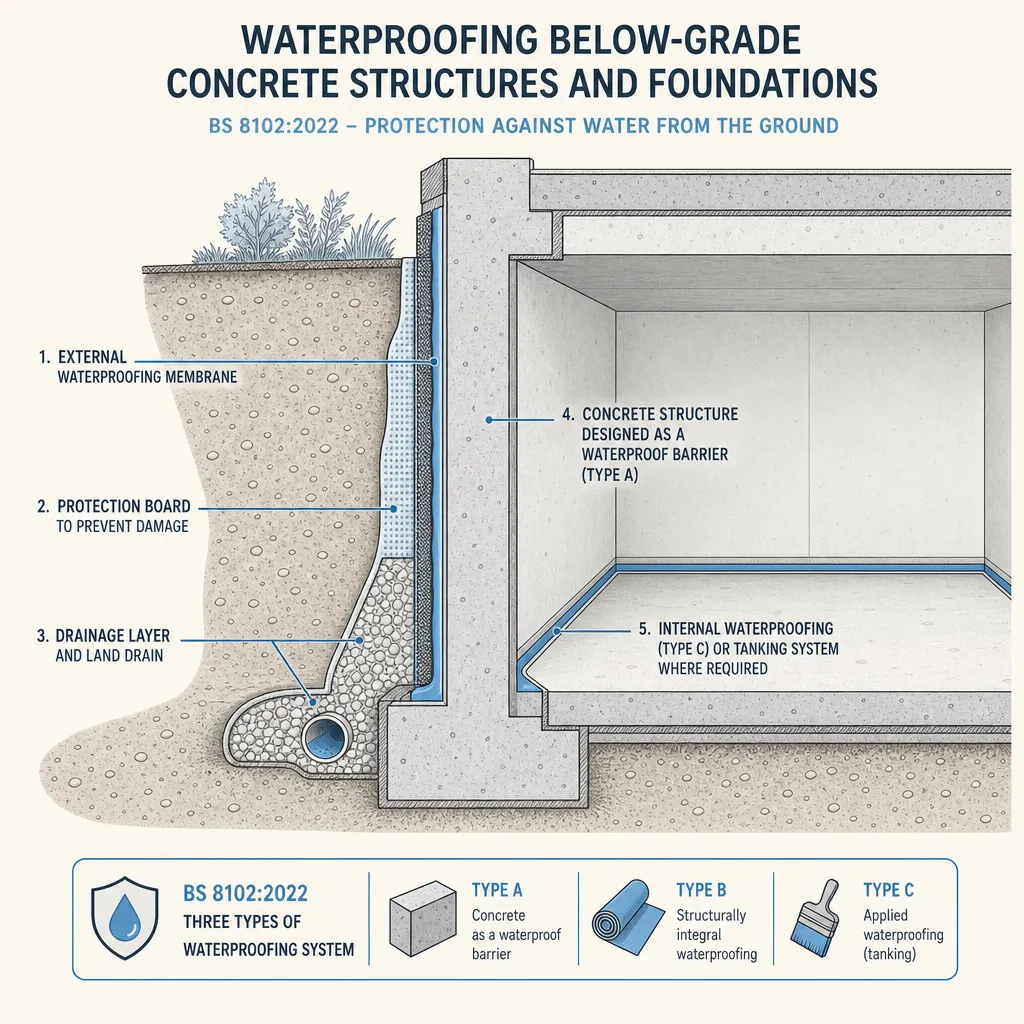
Waterproofing Below-Grade Concrete Structures and Foundations
Below-grade waterproofing in the UK should be designed to the grade of protection required under BS 8102:2022.
 Surveys & Inspections
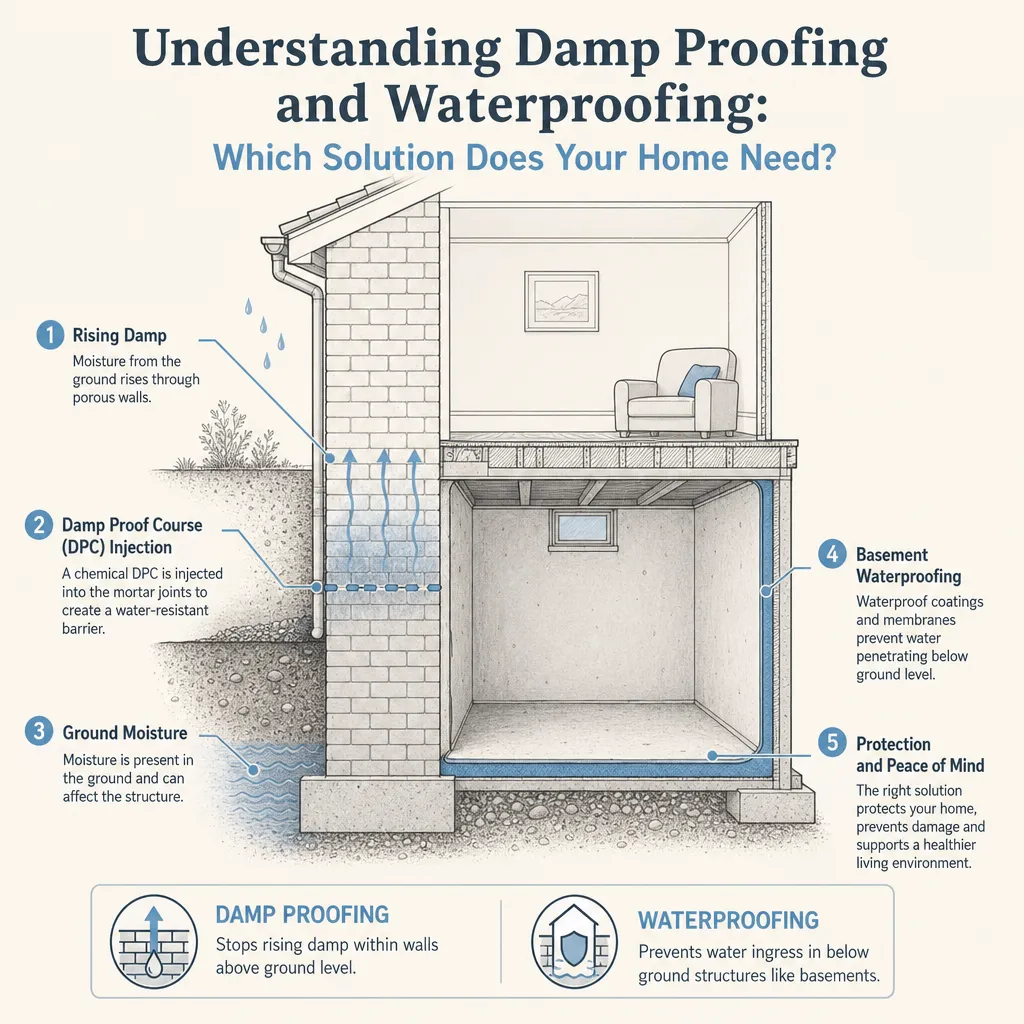
Understanding Damp Proofing and Waterproofing: Which Solution Does Your Home Need?
Damp proofing controls moisture movement through above-ground walls, while waterproofing excludes groundwater from below-ground structures.
 Surveys & Inspections
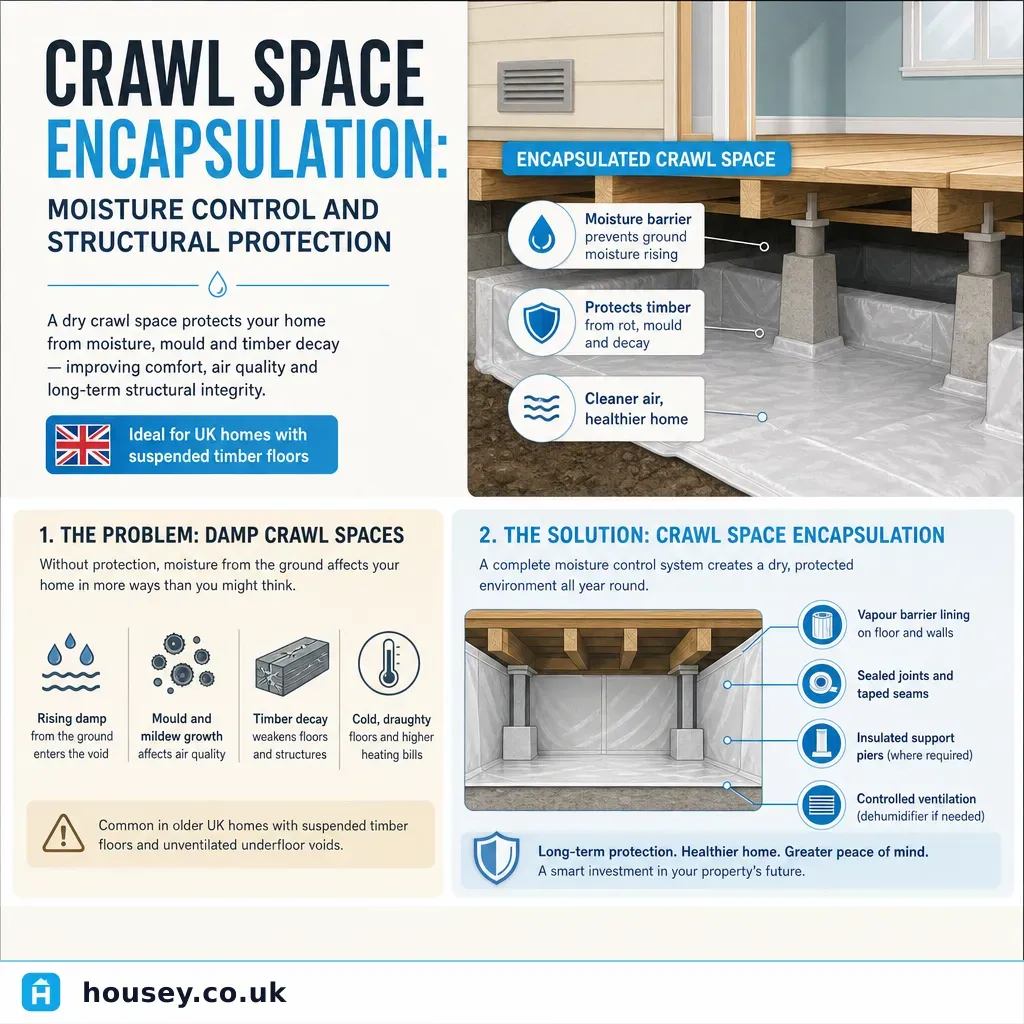
Crawl Space Encapsulation: Moisture Control and Structural Protection
Crawl space encapsulation seals the subfloor void beneath suspended timber floors with a vapour control layer and improved ventilation to prevent rising damp, condensation, timber rot and structural damage.
 Surveys & Inspections
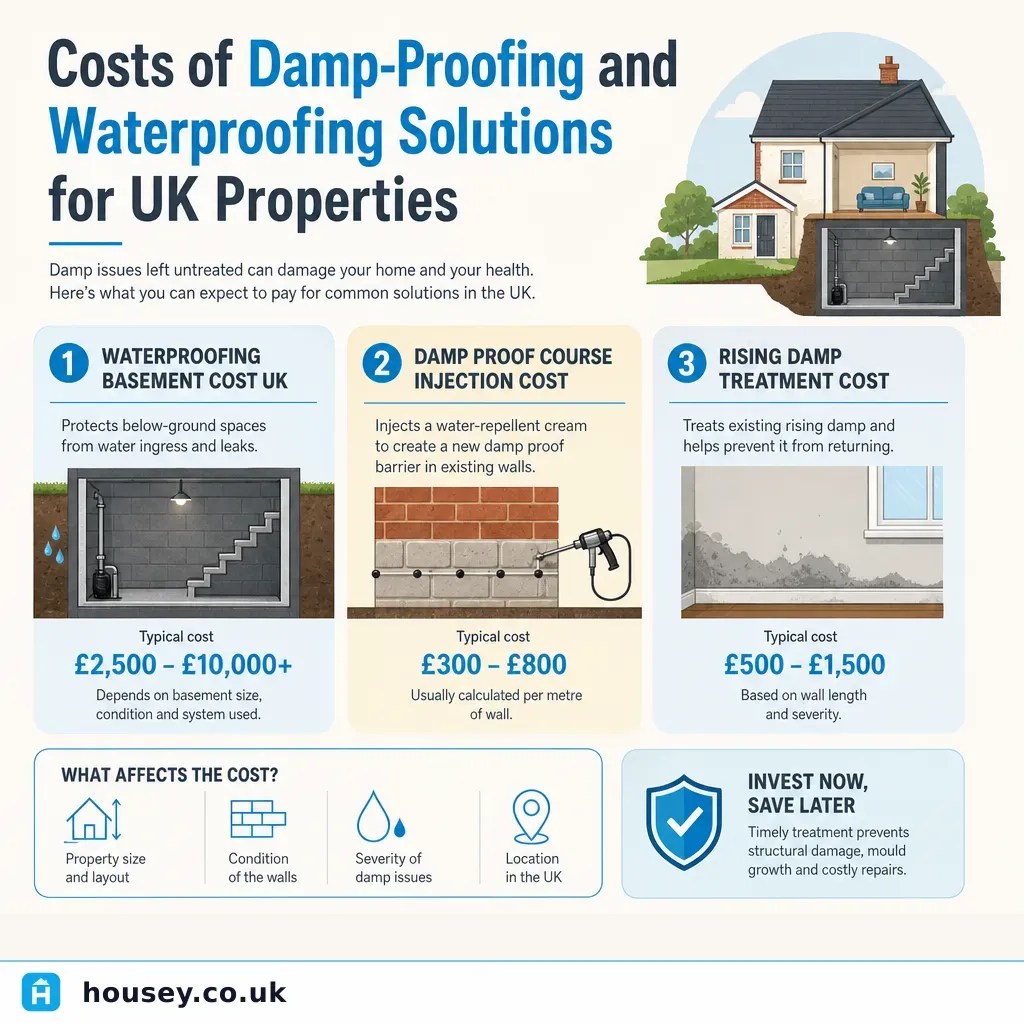
Costs of Damp-Proofing and Waterproofing Solutions for UK Properties
Damp-proofing costs vary by treatment: chemical DPC injection typically costs £300–£800 for a standard terraced house, while internal basement tanking runs £50–£150 per m² and cavity drain membrane systems £30–£80 per m².