Cavity Wall Drainage: Understanding Materials and Moisture Control
By Housey · Last reviewed 11th of May 2026
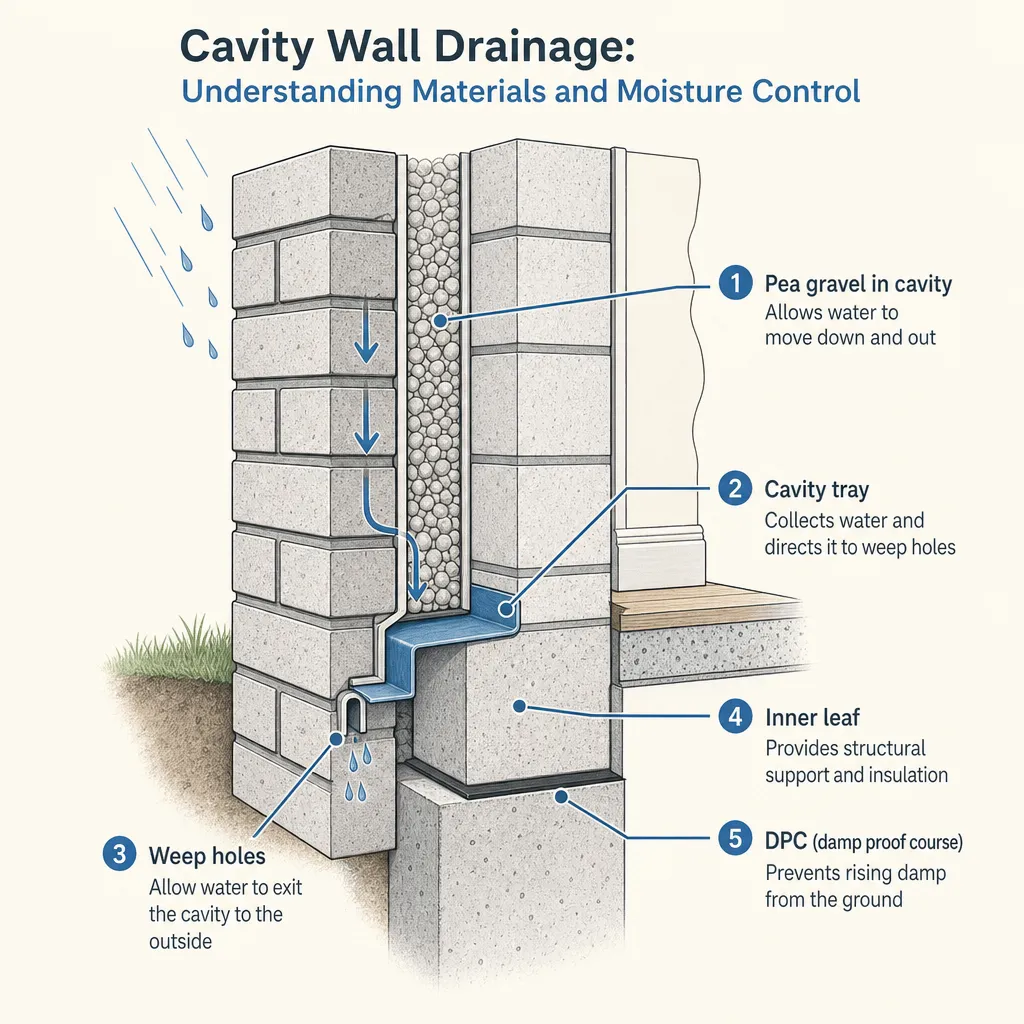
Cavity Wall Drainage: Understanding Materials and Moisture Control
The cavity wall became the dominant form of external wall construction in UK housing from around the 1920s onwards and remains standard practice in new builds today. Its central purpose is moisture management: the gap between the outer leaf and inner leaf intercepts rainwater before it can bridge to the interior. Understanding how drainage works within a cavity — and what materials control moisture — is useful when diagnosing damp, planning cavity wall insulation, or assessing the condition of an older property.
Key points
- Weep holes (open perpend joints) at DPC level allow water that has entered the cavity to drain to the outside; Building Regulations Approved Document C requires them at approximately 450 mm spacing above DPC and above every cavity tray.
- Cavity trays — sloping impermeable membranes above lintels, roof abutments, and step changes in wall level — are among the most frequently missing or incorrectly installed elements identified in UK building surveys.
- Pea gravel (clean washed gravel, approximately 10 mm diameter) is used at the cavity base and around lintel bearings in older construction to provide free-draining support to cavity trays without blocking water flow.
- Cavity wall insulation must not be installed below DPC level and requires a pre-installation survey to BS 8208 to confirm the suitability of the outer leaf; the Cavity Insulation Guarantee Agency (CIGA) issues 25-year transferable guarantees.
- Historic cavity walls built before 1945 often have narrower cavities (50 mm or less) and may lack the drainage provisions expected in post-war construction.
How cavity wall drainage works
The principle is straightforward: rainwater driven against the external leaf by wind penetrates through minor cracks, open mortar joints, or porous brick. Once inside the cavity, it should run vertically down the cavity faces to DPC level, where it is directed outward through weep holes in the external leaf.
Key components of the drainage system:
The cavity itself provides a capillary break — water cannot readily bridge an unobstructed gap of 50 mm or more. The cavity also provides a pressure equalisation zone that reduces the driving force of wind-blown rain against the inner leaf.
Cavity trays are sloping impermeable membranes — typically pre-formed polypropylene, lead, or flexible bituminous material — installed above window and door lintels, at roof and balcony abutments, and wherever the cavity is interrupted. Their purpose is to catch water running down the outer leaf face and direct it outward through weep holes. Missing or incorrectly installed cavity trays are a common cause of localised damp patches above window openings in UK homes.
Weep holes are open perpend joints (mortar omitted) in the external leaf that allow water to exit the cavity. They should be at 450 mm centres at DPC level and above every cavity tray. Homeowners sometimes have weep holes filled or painted over in error, believing them to be a defect — this removes the drainage function and can cause water to back up behind the outer leaf.
Pea gravel — clean, washed gravel approximately 10 mm in diameter — is used at the base of the cavity (particularly in older construction) and around lintel bearings to provide a free-draining fill that supports cavity trays without impeding water flow. Modern construction more commonly uses purpose-made perforated plastic cavity closers at reveals, which combine thermal insulation, weather sealing, and drainage function.
The DPC (damp-proof course) is a continuous impermeable barrier in the wall at ground level, typically positioned 150 mm above finished external ground level. Its purpose is to prevent ground moisture rising through the masonry by capillary action. Common materials in existing UK housing include slate (Victorian and Edwardian properties), bitumen felt, engineering brick, and polypropylene membrane.
What materials are used in cavity wall drainage?
Material | Location in wall | Function | Common issues |
|---|---|---|---|
Pea gravel | Cavity base; lintel bearings | Free-draining fill; supports cavity trays | Can trap mortar droppings; may retain moisture if debris accumulates |
Polypropylene cavity tray | Above openings; roof abutments | Directs water to weep holes | Often omitted or incorrectly lapped, allowing water to by-pass the tray |
Pre-formed lead tray | Chimney abutments; complex details | Durable directional drainage | Requires skilled installation; some susceptibility to corrosion |
Bituminous or polypropylene DPC strip | Ground level; at wall openings | Capillary break | Can be bridged by raised ground levels, render, or mortar droppings |
Stainless steel wall ties | Across cavity at regular intervals | Structural tie with drip feature | Older galvanised ties corrode; rust staining and horizontal cracking indicate failure |
Perforated cavity closer | Reveals at window and door openings | Closes cavity; allows drainage; provides insulation | Incorrect sizing can create cold bridges |
How does cavity wall insulation affect drainage?
Blown cavity wall insulation — mineral wool fibre or expanded polystyrene (EPS) beads — fills the cavity, which changes the drainage dynamics significantly.
- Water absorption: EPS beads have very low water absorption; mineral wool fibre retains some moisture but should drain if correctly installed. Neither should act as a conduit for moisture transfer if the outer leaf is sound and the installation meets CIGA standards.
- DPC bridging risk: insulation must not be blown below DPC level, which could create a capillary path to the inner leaf. CIGA-registered installers should manage this as part of the installation process.
- Outer leaf condition: if pointing is failing or the outer leaf is cracked, blown insulation can provide a path for water to reach the inner leaf. A pre-installation survey to BS 8208 Part 1 must assess the condition of the outer wall before any filling takes place.
- Cavity tray function: with insulation present, cavity trays must still be correctly positioned and unobstructed. A poorly positioned tray above a lintel can allow water to saturate the insulation and migrate to the inner leaf.
What not to assume about cavity wall drainage
- Do not assume weep holes are a building defect. Open perpend joints above lintels and at DPC level are intentional and functional. Blocking them — with filler, paint, or mortar — removes the drainage function and can directly cause damp problems.
- Do not assume a damp patch above a window is rain penetrating through the glazing. The most common cause is a missing or incorrectly installed cavity tray above the lintel, allowing water to travel across to the inner leaf.
- Do not assume cavity wall insulation is appropriate for every property. Exposed sites, properties in high driving-rain exposure zones (assessed using the BRE Driving Rain Index), those with cavities below 75 mm, or properties with outer leaf defects may not be suitable candidates for blown insulation.
- Do not assume pea gravel is an outdated or unnecessary material. In older properties and around lintel bearings, it remains a functional drainage aid. Removing it during works without providing a suitable replacement can impair cavity drainage.
Homeowner checklist: maintaining cavity wall drainage
When to get professional help
Instruct a qualified building surveyor or damp specialist when:
- Damp patches appear above window or door openings — a strong indicator of cavity tray failure rather than general rain penetration.
- Rust staining appears on the external brickwork face at regular vertical intervals — this may indicate corroding cavity wall ties, which is a structural issue requiring specialist investigation.
- Cavity wall insulation has been installed but damp has subsequently appeared indoors — the insulation may be bridging a defective section of outer leaf.
- You are purchasing a property with cavity wall insulation but no CIGA guarantee documentation — a pre-exchange inspection is advisable before committing to purchase.
How Housey can help
If you are concerned about moisture in a cavity wall property — whether from a suspected drainage failure, missing cavity trays, or issues following insulation installation — Housey can connect you with qualified specialists. Compare quotes for a damp and timber survey to identify the source of moisture, or speak to damp proofing specialists who can advise on appropriate remedial options.
Frequently asked questions
What are weep holes in cavity walls and why are they important?
Weep holes are open mortar joints in the outer leaf of a cavity wall, positioned at DPC level and above cavity trays over lintels. They allow water that has entered the cavity to drain outward rather than accumulate. Building Regulations Approved Document C requires them at approximately 450 mm spacing. Blocked weep holes are a common cause of damp above window openings and should never be filled or painted over.
Can cavity wall insulation cause damp problems?
It can, if the outer leaf is in poor condition, the installation is incorrectly carried out, or cavity trays are poorly positioned. Blown insulation itself does not cause damp — water entering through defective pointing or cracked render can saturate insulation and find a route to the inner leaf. A BS 8208 survey of the outer wall should be completed before installation. If damp appears afterwards, a specialist investigation is needed to identify the cause.
What is a cavity tray and where should one be installed?
A cavity tray is an impermeable, sloping membrane within the cavity that intercepts water running down the outer leaf and directs it outward through weep holes. Approved Document C requires cavity trays above all lintels, at roof abutments, at changes in wall level, and above any other interruption to the cavity. Missing cavity trays above door and window lintels are among the most frequently identified defects in UK building surveys.
How do I know if my cavity wall ties have corroded?
Corroded wall ties typically produce horizontal cracking in mortar beds at regular intervals — roughly every six courses, corresponding to tie spacing — plus rust staining visible on the external brickwork face. In advanced cases, bulging or displacement of the outer leaf may occur. Galvanised steel ties installed before around 1981 carry the highest risk. Diagnosis requires specialist investigation using borescope cameras and metal detection by a qualified building surveyor.
Sources and further reading
- Building Regulations Approved Document C: Site preparation and resistance to contaminants and moisture — GOV.UK
- Cavity Insulation Guarantee Agency (CIGA): homeowner guidance — CIGA
- NHBC Standards Chapter 6.1: External masonry walls — NHBC
- BRE: Cavity walls and moisture — BRE (Building Research Establishment)
- BSI BS 8208: Guide to assessment of suitability of external cavity walls for filling with thermal insulants — BSI
Useful next reads
 Surveys & Inspections
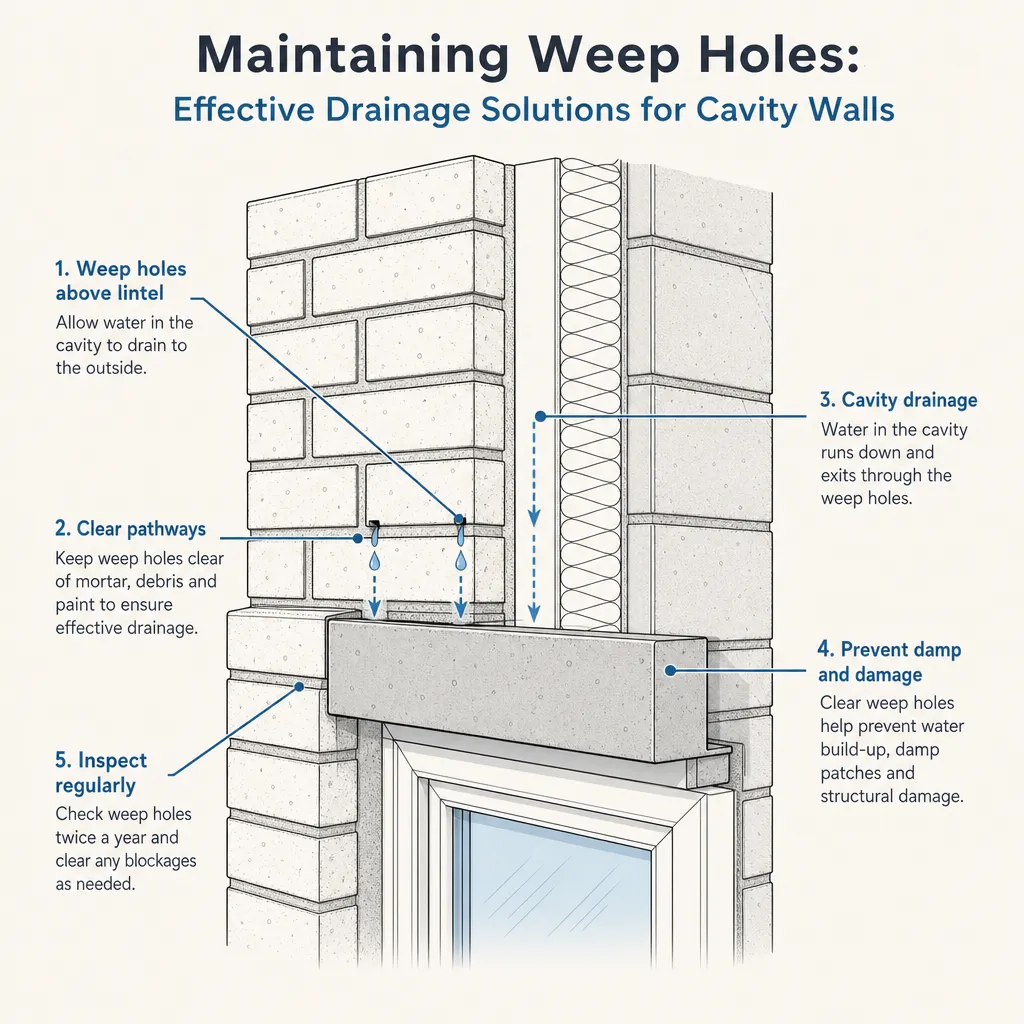
Maintaining Weep Holes: Effective Drainage Solutions for Cavity Walls
Weep holes are unmortered perpend joints in the outer leaf of a cavity wall, positioned at DPC level and above lintels, allowing moisture that enters the cavity to drain outward.
 Surveys & Inspections
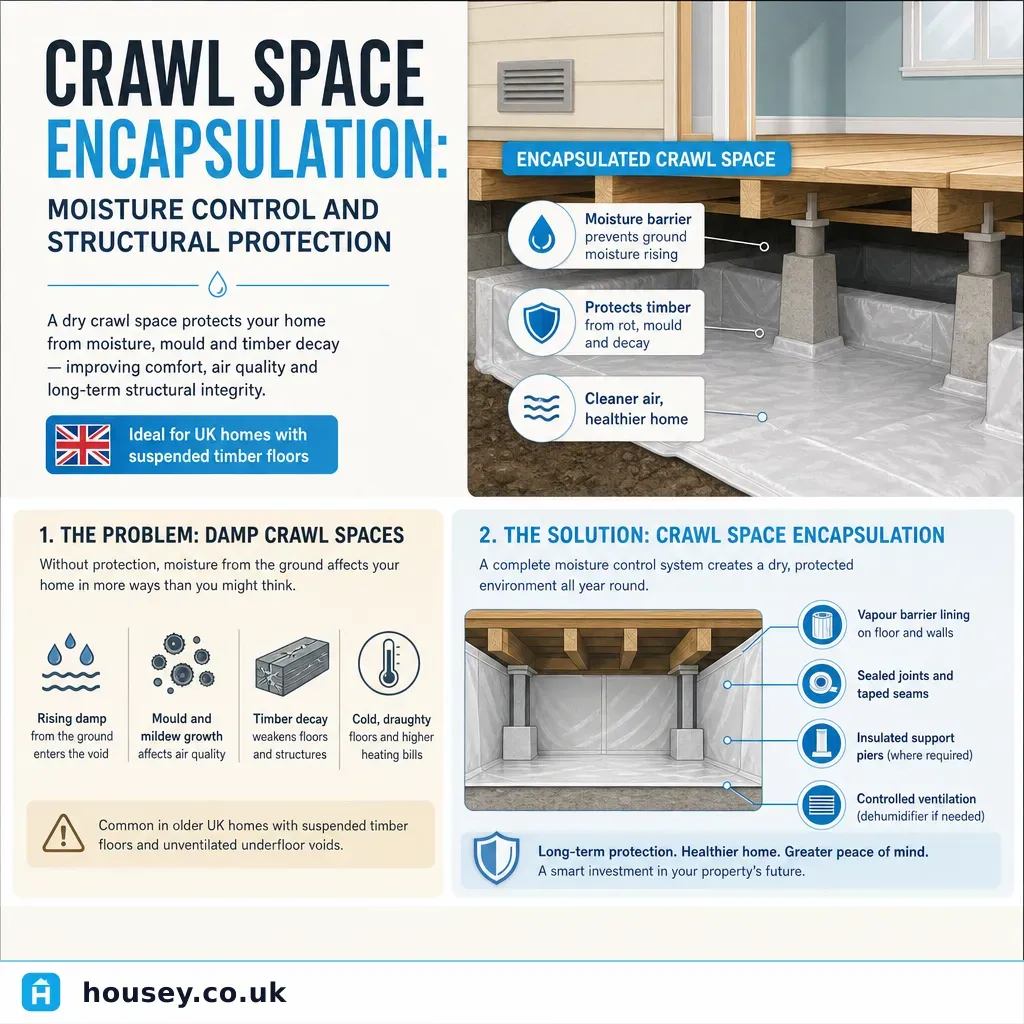
Crawl Space Encapsulation: Moisture Control and Structural Protection
Crawl space encapsulation seals the subfloor void beneath suspended timber floors with a vapour control layer and improved ventilation to prevent rising damp, condensation, timber rot and structural damage.
 Surveys & Inspections
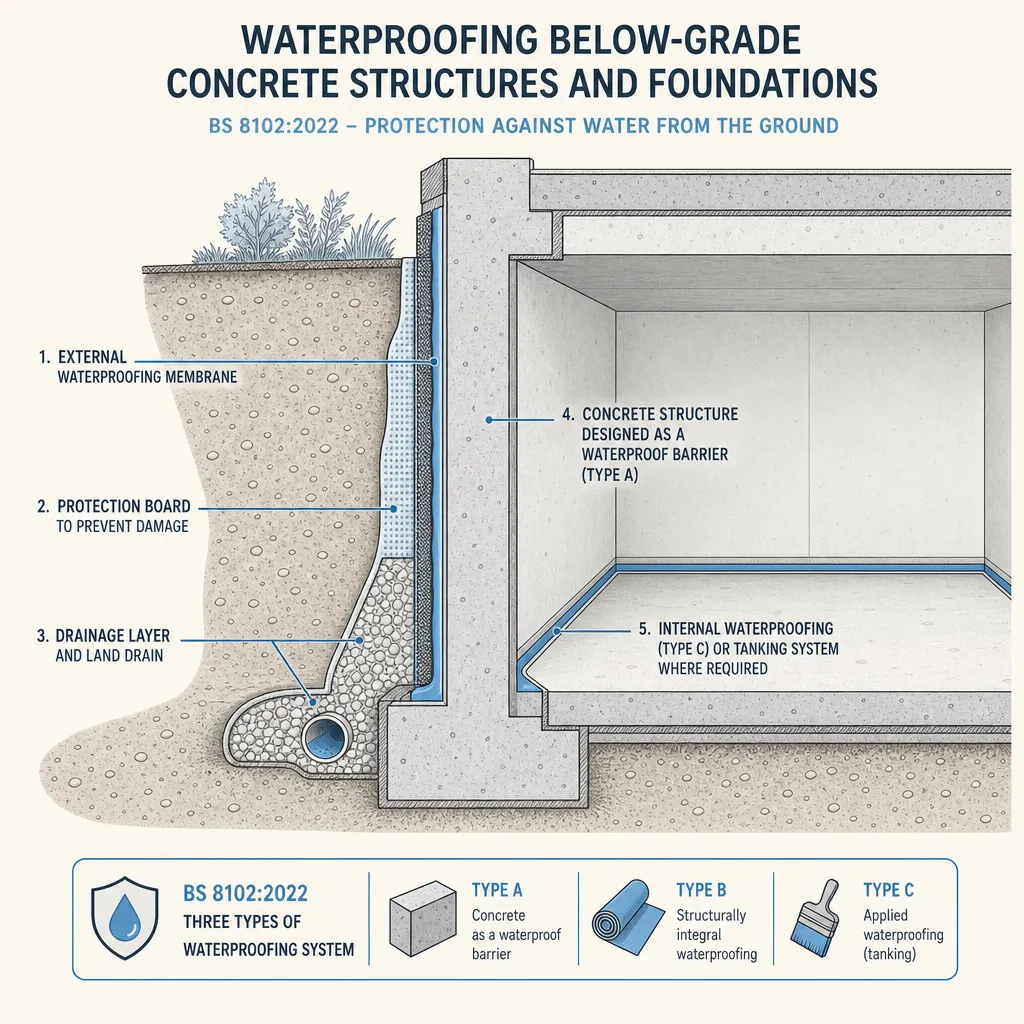
Waterproofing Below-Grade Concrete Structures and Foundations
Below-grade waterproofing in the UK should be designed to the grade of protection required under BS 8102:2022.
 Surveys & Inspections
CCTV Drain Survey Pricing and What to Expect
A CCTV drain survey typically costs £150–£400 for a standard residential property in the UK, depending on drain length and property size.
 Surveys & Inspections
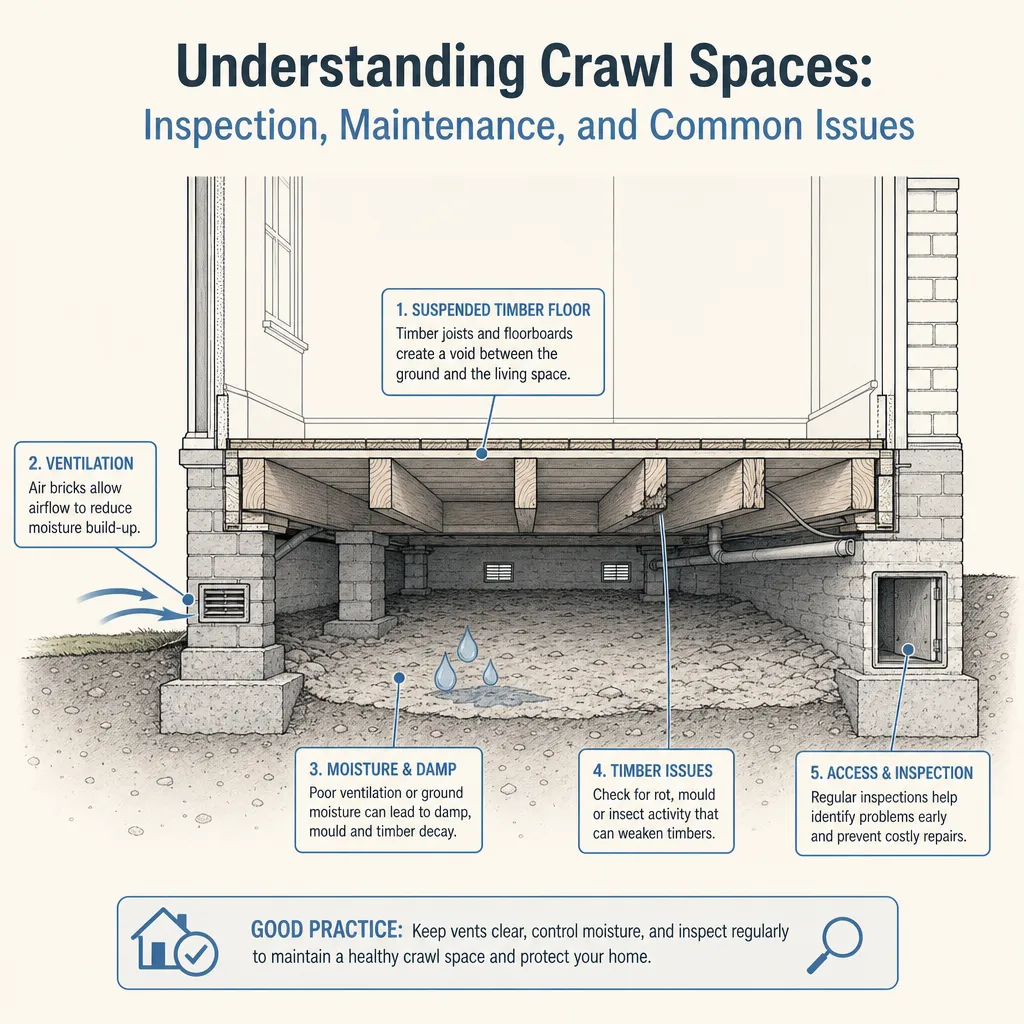
Understanding Crawl Spaces: Inspection, Maintenance, and Common Issues
Sub-floor voids beneath suspended timber ground floors in pre-1960 UK homes need cross-ventilation through airbricks to prevent dry rot and wet rot in floor timbers.