Cavity Wall Insulation Eligibility Assessment: Is Your Property Suitable?
By Housey · Last reviewed 3rd of May 2026
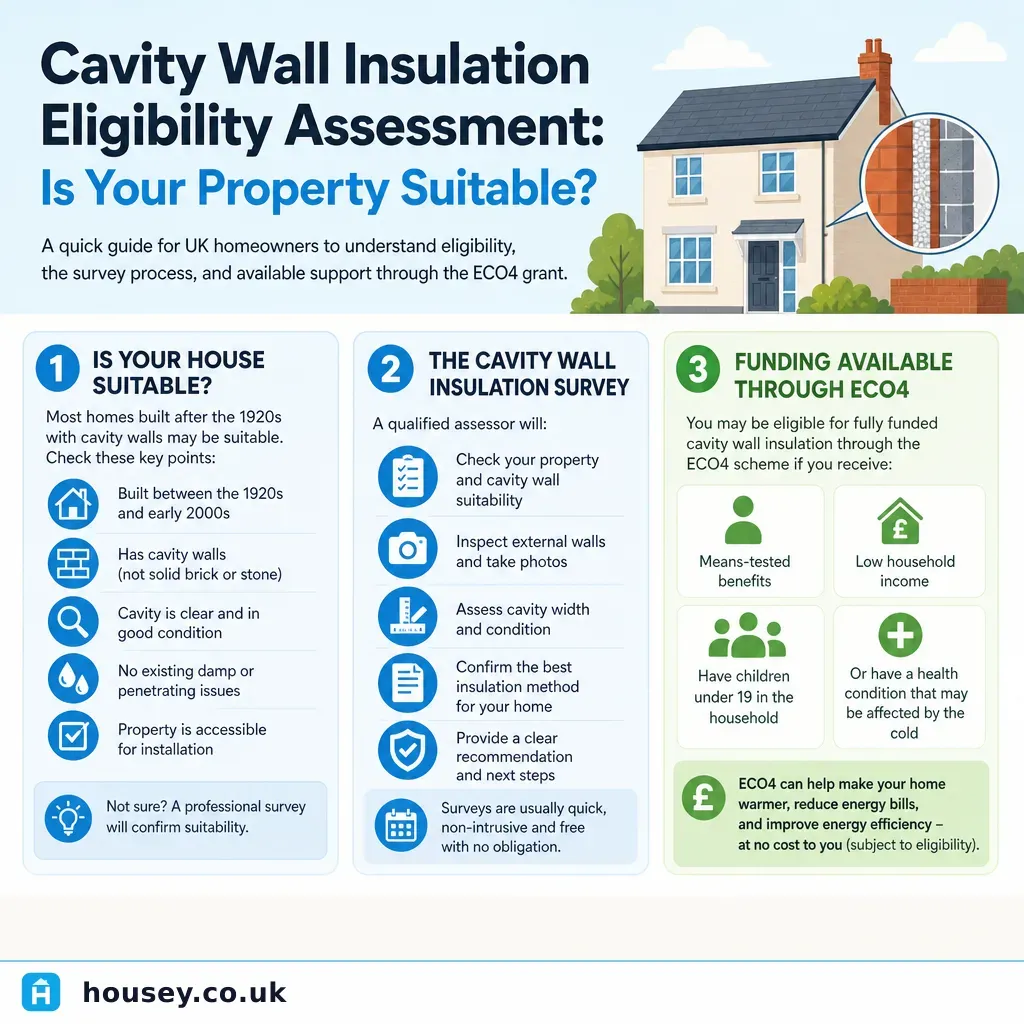
Cavity Wall Insulation Eligibility Assessment: Is Your Property Suitable?
Cavity wall insulation is among the most cost-effective thermal upgrades available to UK homeowners — but installing it in the wrong property can allow moisture to bridge the wall cavity and cause persistent internal damp. An eligibility assessment is not an optional preliminary; it is the step that separates a high-performing, guaranteed installation from an expensive remediation problem years down the line.
Key points
- UK homes built from around 1920 onwards are most likely to have cavity walls; pre-1920 brick, stone, or flint construction is typically solid-wall and requires a different insulation approach.
- A cavity must be at least 50mm wide for most blown insulation products (EPS beads, mineral fibre, or polyurethane foam) to be installed effectively.
- Properties in CIBSE/BRE wind-driven rain exposure zones 3 or 4 (severe or very severe) may be ineligible because moisture penetration risk is too high.
- Installers must hold PAS 2030:2019 certification; under ECO4 and the Great British Insulation Scheme the full PAS 2035 whole-house retrofit framework applies.
- Cavity Insulation Guarantee Agency (CIGA) member contractors provide a 25-year guarantee against product and installation failure — confirm membership before work begins.
How to tell if your home has cavity walls
Four checks can indicate whether cavity construction is likely before you book a survey:
- Brick bond: Cavity walls usually show stretcher bond (all bricks laid lengthways). Solid walls often show header bricks laid end-on in English or Flemish bond.
- Wall thickness: Measure at a window or door reveal. Cavity walls are typically 260–280mm thick; solid walls are usually 220mm or less.
- Property age: Homes built between roughly 1920 and 1990 are the most likely candidates for unfilled cavities; post-1990 homes often already have partial or full insulation.
- EPC: Your Energy Performance Certificate records wall construction type and whether insulation is present.
What an eligibility survey checks
Factor | Suitable | Potentially unsuitable |
|---|---|---|
Cavity width | 50mm or more | Less than 50mm |
Exposure zone | Zone 1–2 (sheltered to moderate) | Zone 3–4 (severe to very severe) |
Masonry condition | Sound brickwork and mortar | Cracked, spalled, or friable mortar |
Existing damp | No active damp | Active penetrating damp or past problems |
Previous fill | Unfilled cavity confirmed by borescope | Previously filled — voids or failure suspected |
Wall tie condition | Sound, non-corroded ties | Corroded or failed wall ties |
Properties that are usually not suitable
- Solid-wall construction (pre-1920 brick, stone, flint): needs external or internal wall insulation, not cavity fill.
- Timber-frame construction: the structural void in a timber-frame wall must not be filled with blown insulation.
- High-exposure coastal or hillside locations: wind-driven rain increases the risk of moisture bridging to the inner leaf significantly.
- Narrow or obstructed cavities: cavities below 50mm or with significant debris or mortar snots may not accommodate standard products; some specialist systems can address this, but require additional assessment.
- Properties with wall tie failure: corroded wall ties require remediation before insulation is installed.
Grant eligibility and indicative costs
ECO4 (Energy Company Obligation 4) and the Great British Insulation Scheme (GBIS) can fund cavity wall insulation for eligible households. ECO4 targets low-income and fuel-poor households; GBIS also covers a general group for properties rated EPC D or below.
Property type | Indicative private-pay cost range |
|---|---|
Mid-terrace (2–3 bed) | £700–£1,200 |
Semi-detached (3 bed) | £1,000–£1,600 |
Detached (4 bed) | £1,500–£2,500 |
Indicative UK costs, last reviewed 2026-05-03. Quotes vary by region, cavity type, and installer.
Homeowner self-assessment checklist
Before booking an installer, work through these checks:
If you answer no to the first two items, or yes to the damp question, seek professional advice before proceeding with any installation booking.
Important limitations
This article provides general information only. Cavity wall insulation suitability depends on individual property characteristics, construction history, local exposure, and material condition. Government scheme eligibility criteria change as funding rounds open and close — always verify current terms directly. A qualified PAS 2030-certified assessor must inspect your property before installation is commissioned. Poorly installed insulation in an unsuitable property can cause significant and expensive moisture damage.
What to ask a qualified professional
- What exposure zone does this property fall into, and does that affect eligibility for any product type?
- Will you inspect the cavity with a borescope before drilling?
- What insulation product do you propose, and is it BBA or KIWA certified?
- Are you PAS 2030 certified and TrustMark registered?
- Is this installation backed by a CIGA 25-year guarantee, and are you a current CIGA member?
- What happens if damp, narrow sections, or void-fill problems are discovered during installation?
- Will the completed installation be lodged with the relevant scheme and reflected on the EPC?
When to get professional help
Do not proceed with cavity wall insulation without specialist input if any of these red flags apply:
- Persistent damp patches on internal walls, particularly below windows or at corners.
- Efflorescence (white salt deposits) appearing on external brickwork.
- Stepped or diagonal cracks running through external masonry.
- Evidence of a previous cavity fill — drill holes filled with mortar, EPC notation, or paperwork from a prior scheme.
- Any uncertainty about whether the construction is masonry cavity or timber frame.
How Housey can help
An independent insulation assessment will confirm whether cavity wall insulation is technically suitable and identify the right product for your property. If you want a whole-house view covering loft insulation, glazing, and heating alongside walls, a retrofit assessment delivers a PAS 2035-compliant plan for the full property.
Frequently asked questions
How do I know if my cavity is already filled?
Look for small mortar-filled drill holes on the external brickwork — a common sign of previous installation. Your EPC may also record this. The most reliable confirmation is a borescope inspection, inserting a small camera through a drill hole to view the cavity directly. Your energy supplier may also hold historic ECO scheme records.
Can cavity wall insulation cause damp?
In unsuitable properties — high-exposure locations, cracked masonry, or cavities narrower than 50mm — insulation can bridge moisture from the outer to the inner leaf of brickwork. This is why a pre-installation survey is essential. The CIGA 25-year guarantee provides recourse for approved installations, but prevention is far preferable to remediation.
What is the difference between PAS 2030 and PAS 2035?
PAS 2030 is the installation standard for energy efficiency measures. PAS 2035 is the broader whole-house retrofit framework, requiring a Retrofit Coordinator and Assessor for ECO4-funded projects. For privately funded single-measure installations, PAS 2030 certification of the installer still applies.
What guarantee should I receive after installation?
CIGA-member contractors provide a 25-year guarantee against product and installation failure. Request this document before work begins and verify that the contractor holds current CIGA membership on the CIGA website before signing any contract.
Is cavity wall insulation always worth doing?
In a suitable property in a sheltered location, cavity wall insulation typically reduces heat loss through walls by around 35%. The Energy Saving Trust estimates annual savings of £130–£360 depending on property type and heating system. In a property with existing issues, risks can outweigh savings — get an independent assessment first.
Sources and further reading
- ECO4: Energy Company Obligation — GOV.UK
- Great British Insulation Scheme — GOV.UK
- Cavity wall insulation — Energy Saving Trust
- Cavity Insulation Guarantee Agency — CIGA
- PAS 2035:2019 Retrofitting dwellings for improved energy efficiency — BSI
Useful next reads
 Energy & Retrofit
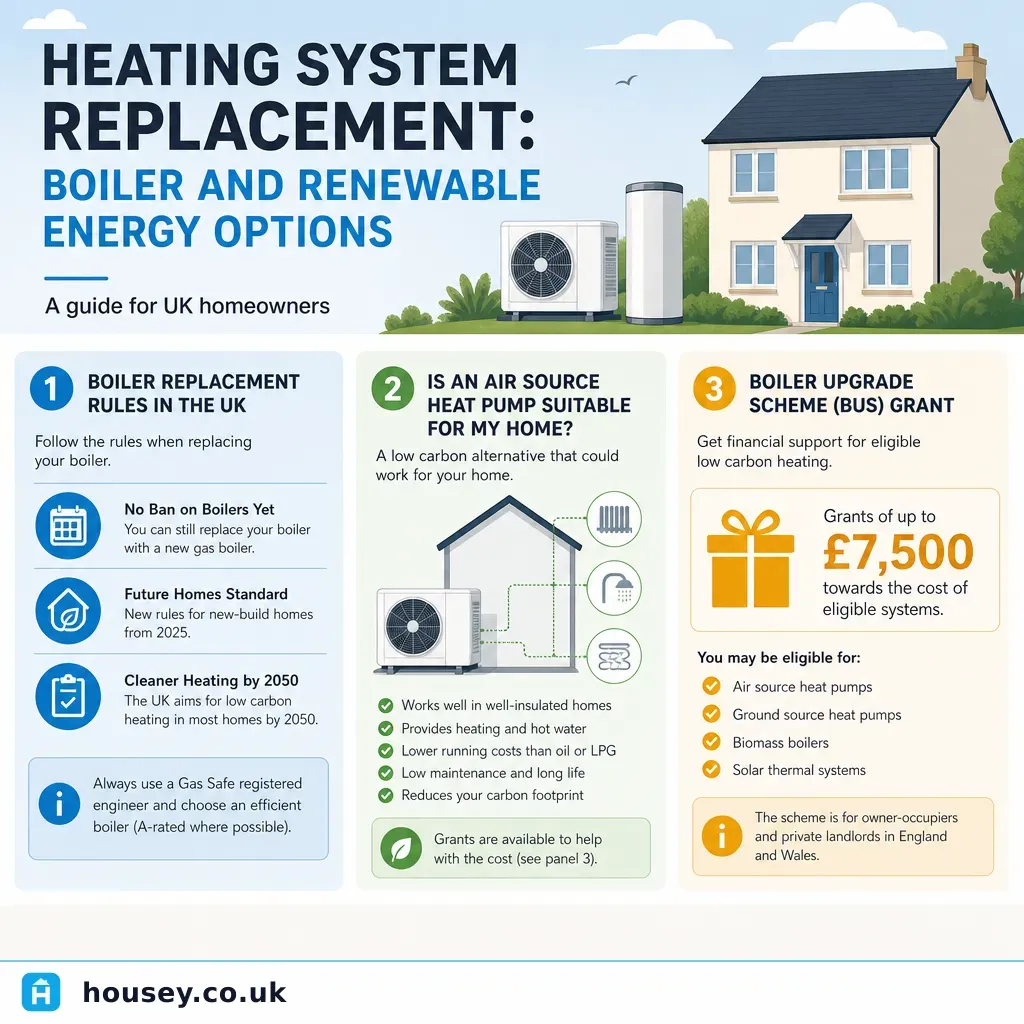
Heating System Replacement: Boiler and Renewable Energy Options
When replacing a heating system in the UK, a new gas boiler must comply with Boiler Plus (Part L) and be fitted by a Gas Safe registered engineer.
 Energy & Retrofit
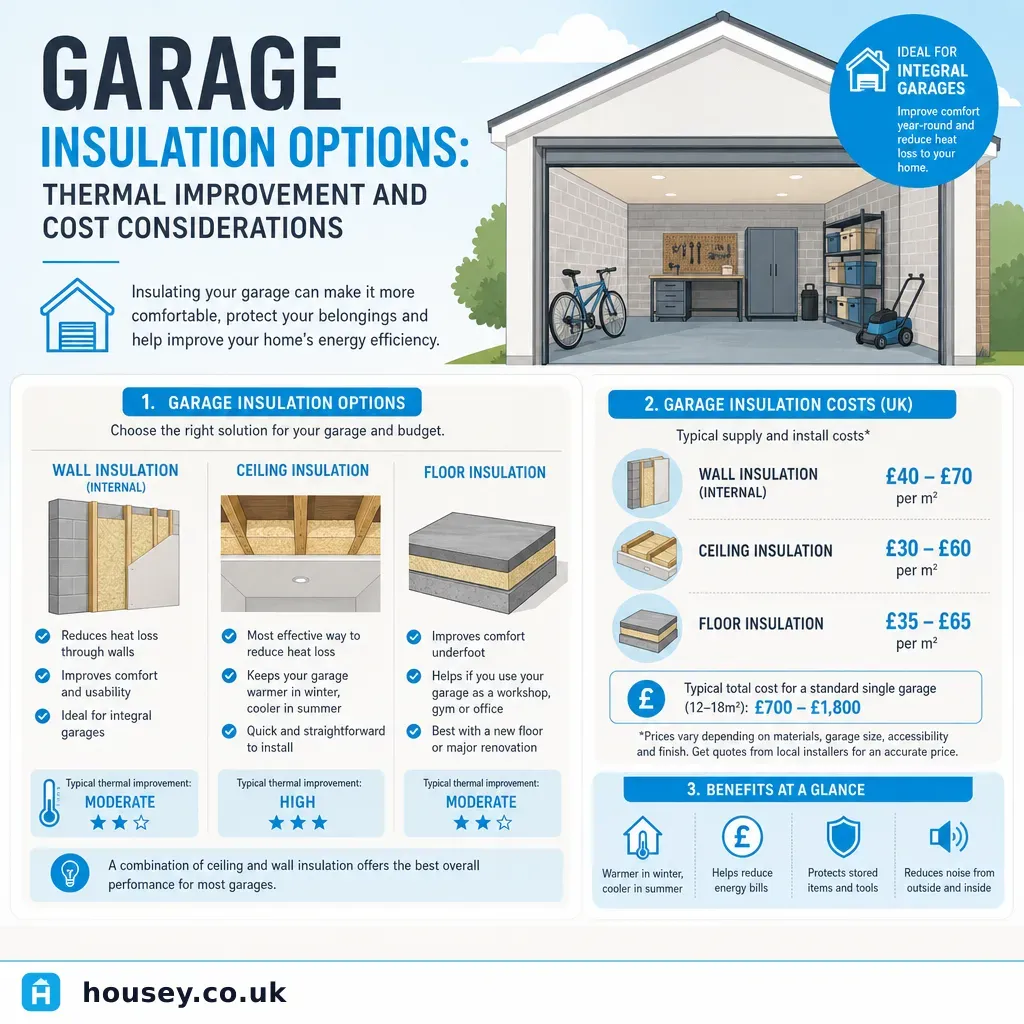
Garage Insulation Options: Thermal Improvement and Cost Considerations
Garage insulation options in the UK include mineral wool batts, rigid foam boards (PIR or EPS), and insulated garage doors.
 Energy & Retrofit
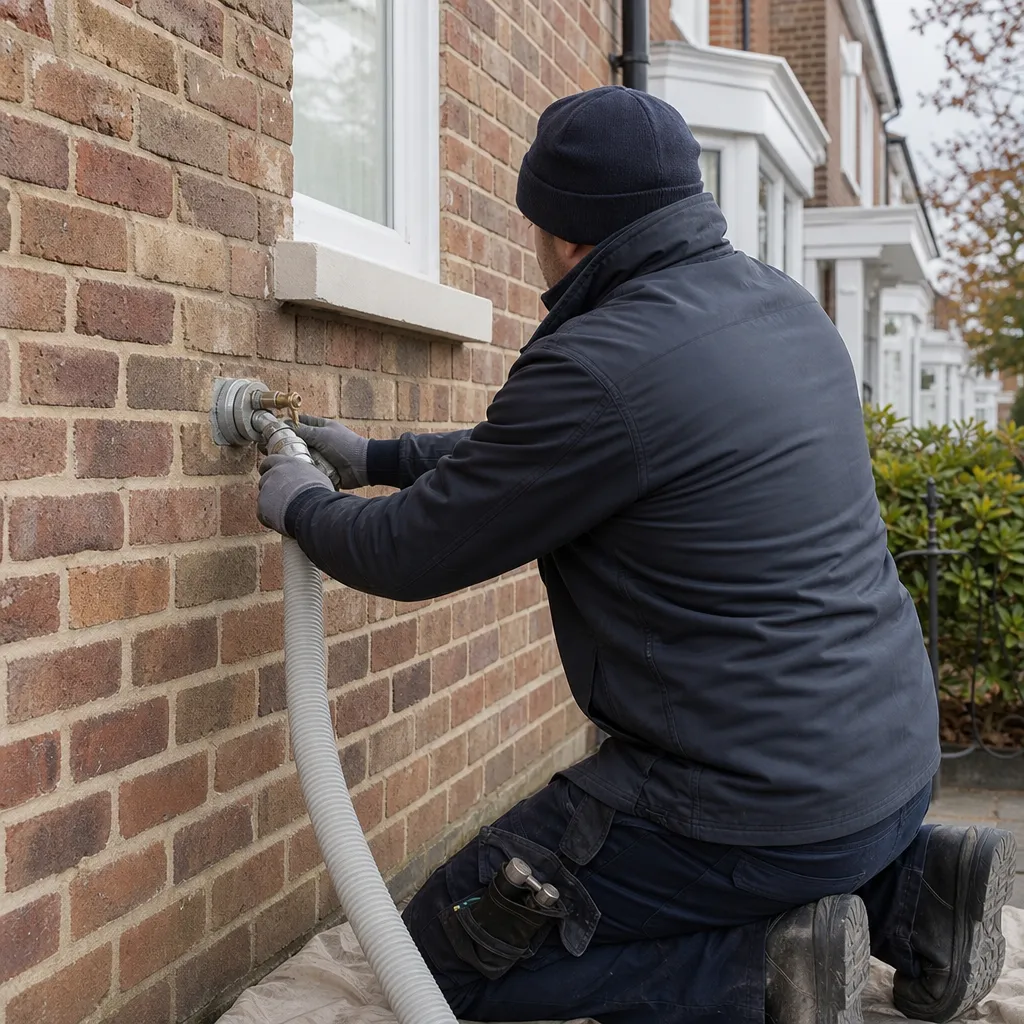
Cavity Wall Insulation: Benefits, Types and Considerations
Cavity wall insulation fills the gap between a property's inner and outer masonry leaves with material such as mineral wool, EPS beads, or injected foam, reducing heat loss through walls by up to 35% and improving EPC ratings.
 Energy & Retrofit
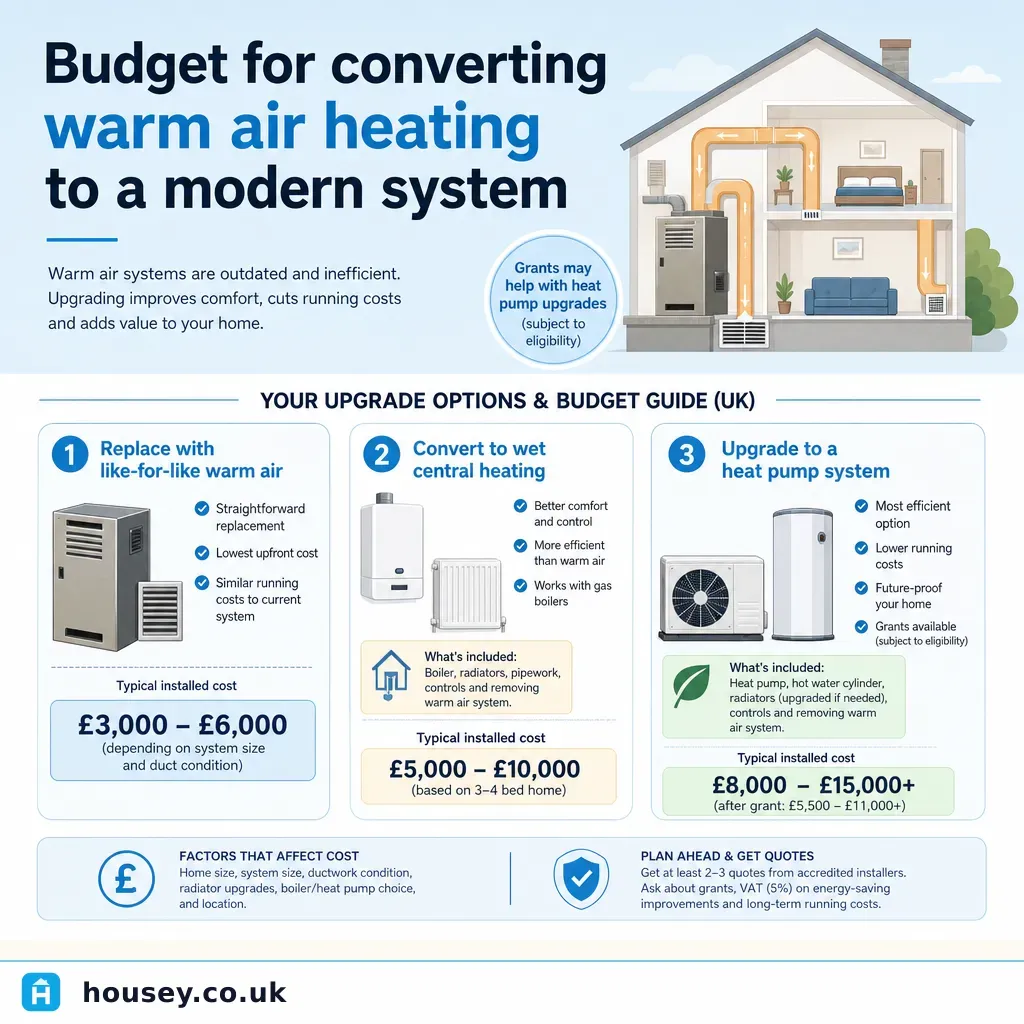
Budget for converting warm air heating to a modern system
Converting a warm air heating system to wet central heating typically costs £5,000–£15,000 in the UK, depending on property size, system choice, and pipework complexity.
 Energy & Retrofit
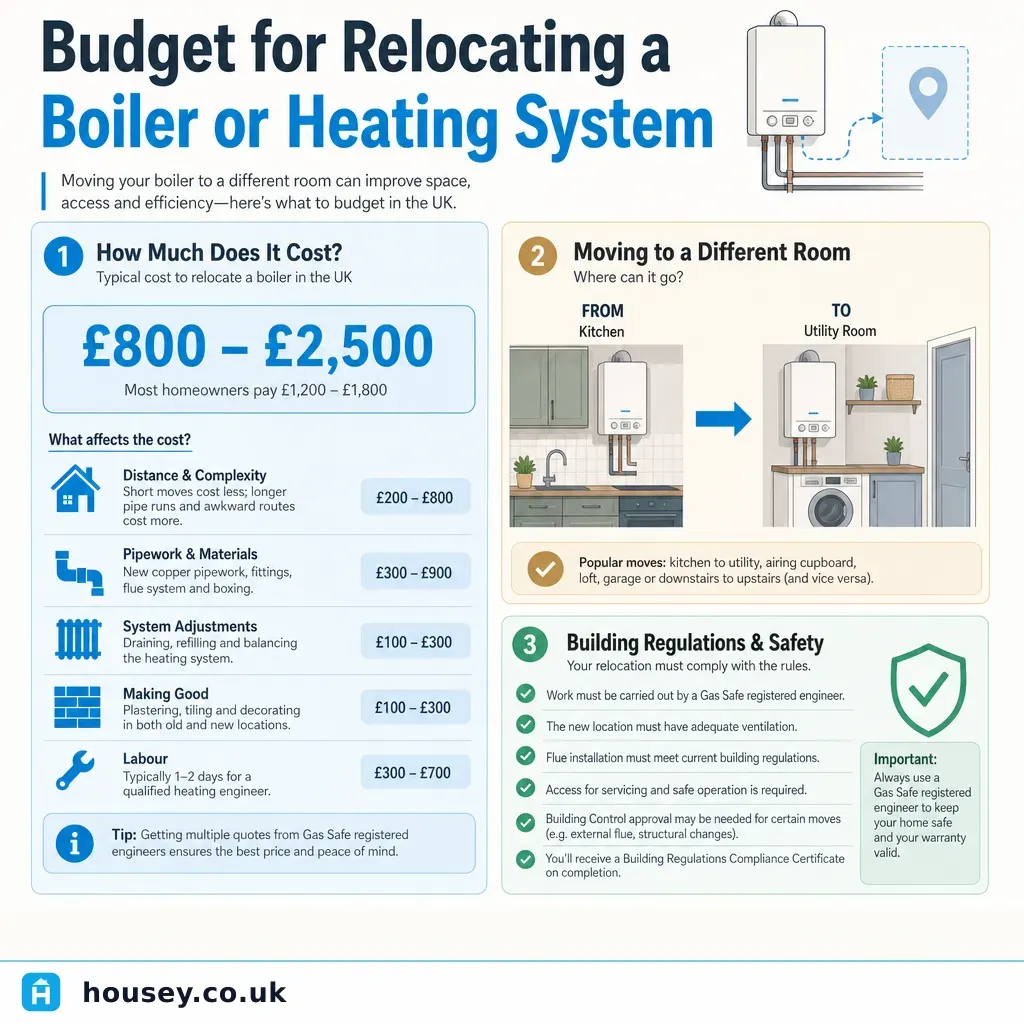
Budget for Relocating a Boiler or Heating System
Moving a boiler in the UK typically costs £500–£2,000, though complex relocations cost more.