Cost of Wool Insulation for Energy-Efficient Homes
By Housey · Last reviewed 19th of May 2026
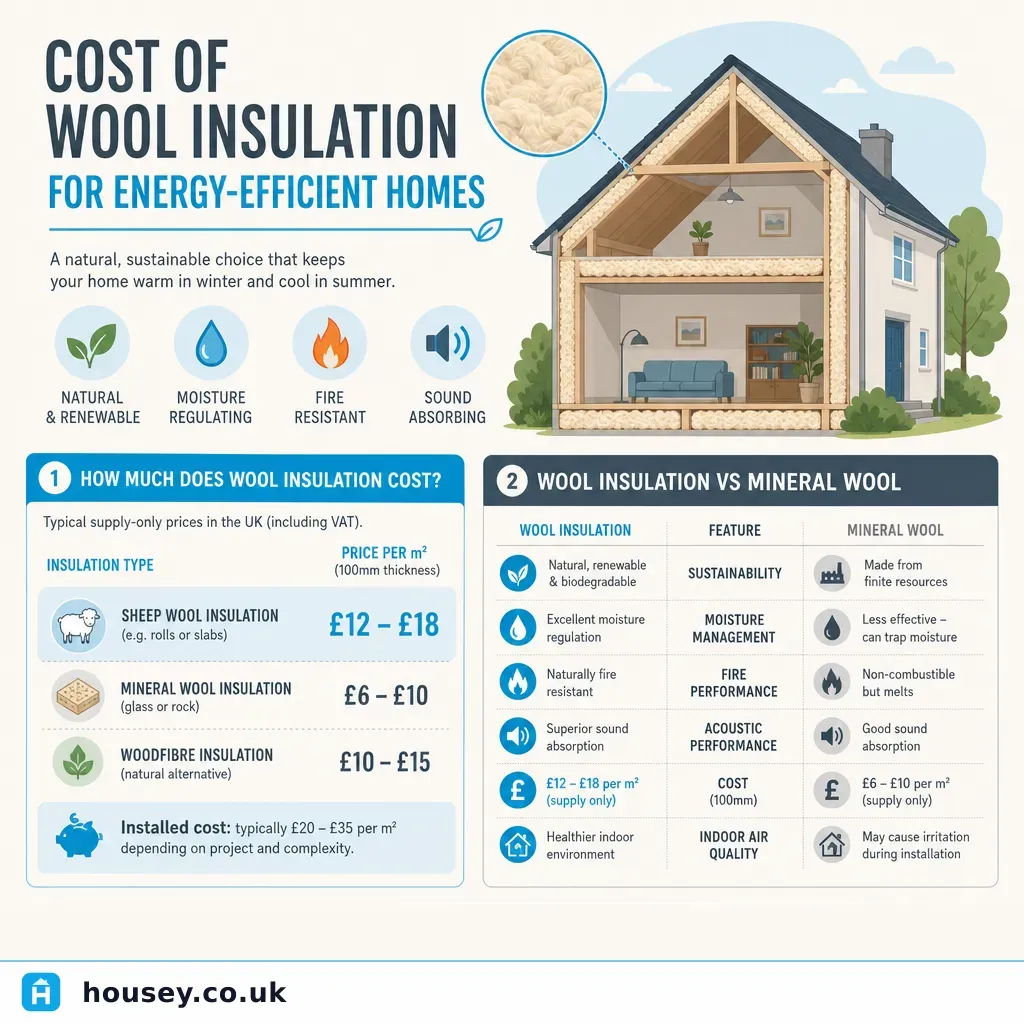
Cost of Wool Insulation for Energy-Efficient Homes
Sheep wool insulation has moved from a niche eco-builder choice to a widely available option stocked by UK builders' merchants and specialist online suppliers. Homeowners retrofitting a loft, insulating between floor joists, or fitting out a timber-frame extension increasingly ask whether wool's higher material cost is justified by its performance, longevity, and environmental credentials. The right answer depends on where it is installed, the thickness required, and whether you plan to fit it yourself or hire a contractor.
Key points
- Sheep wool insulation batts and rolls typically cost £5–£15 per m² for materials alone, depending on thickness (50–200 mm) and product grade; installed costs are higher and vary by application.
- No VAT is charged on the installation of qualifying residential insulation materials under HMRC's zero-rating rules (Group 2, Schedule 8, VAT Act 1994).
- Sheep wool has a thermal conductivity (lambda value) of approximately 0.035–0.040 W/mK — broadly comparable to mineral wool but achievable without synthetic binders or glass fibres.
- PAS 2035:2023 governs fabric-first retrofit assessments; government-funded projects under ECO4 or the Great British Insulation Scheme require a TrustMark-registered Retrofit Coordinator to oversee specification and installation.
- Sheep wool can absorb up to 35% of its own weight in moisture vapour and release it without significant loss of thermal performance — a practical advantage in older solid-wall or timber-frame homes prone to moisture fluctuation.
What does wool insulation cost in the UK?
Costs vary by application, thickness, and installation method. The table below gives indicative material and installed ranges for common domestic uses.
Application | Typical thickness | Material cost per m² | Installed cost per m² |
|---|---|---|---|
Loft floor (between joists) | 100–200 mm | £5–£12 | £8–£20 |
Loft top-up (above existing layer) | 100–150 mm | £4–£10 | £7–£16 |
Timber-frame wall (between studs) | 90–140 mm | £7–£15 | £15–£35 |
Suspended floor (between joists) | 100–150 mm | £6–£13 | £18–£40 |
Acoustic partition (between studs) | 60–100 mm | £6–£14 | £15–£30 |
Indicative UK costs, last reviewed 2026-05-19. Costs vary by region, access difficulty, product specification, and contractor. Obtain at least three quotes before committing.
Cavity wall injection using wool is not widely available commercially in the UK; mineral wool fibre or EPS bead remain the standard products for filled cavities. Sheep wool's main domestic applications are open cavities — loft floors, suspended floors, and between structural timbers.
How does wool insulation compare to alternatives?
Material | Lambda value (W/mK) | Approx. material cost per m² (100 mm) | Moisture performance | Embodied carbon | Recyclable? |
|---|---|---|---|---|---|
Sheep wool | 0.035–0.040 | £6–£12 | Excellent | Low | Yes |
Mineral wool (glass or rock) | 0.033–0.044 | £3–£7 | Moderate | Medium | Partially |
EPS (expanded polystyrene) | 0.031–0.038 | £4–£8 | Poor | High | Partially |
PIR rigid foam | 0.022–0.028 | £8–£18 | Poor | High | No |
Cellulose (recycled newspaper) | 0.038–0.042 | £5–£10 | Good | Low | Yes |
Indicative UK costs, last reviewed 2026-05-19.
Sheep wool typically costs 60–80% more per m² in materials than mineral wool for equivalent thermal performance. The premium buys superior moisture buffering, the absence of synthetic binders, and lower embodied carbon — factors that carry more weight in older solid-wall or timber-frame buildings and in projects targeting low-energy or Passivhaus standards.
What drives the cost of wool insulation?
- Thickness: Performance is governed by total insulation depth. A loft achieving a 0.16 W/m²K U-value with 270 mm of wool costs considerably more than a 100 mm top-up.
- Accessibility: Restricted loft or floor voids, low rafters, and non-standard joist spacings all increase labour time and cost.
- Product specification: Pre-needled or pest-treated wool products cost more than basic batts; products carrying a BBA certificate or LABC approval may carry a small premium.
- DIY versus contractor: Sheep wool batts are among the most DIY-friendly insulation types available in the UK. No respiratory PPE is required, there are no carcinogenic fibres, and cutting is straightforward with a knife or scissors. DIY fitting removes the labour element but requires careful attention to avoiding gaps and compression.
- Region: Labour rates in London and the South East are typically higher than the rest of England, Scotland, and Wales.
Is wool insulation eligible for government grants?
ECO4 (Energy Company Obligation 4) and the Great British Insulation Scheme fund insulation upgrades for eligible households across England, Scotland, and Wales. These schemes are broadly technology-neutral, but in practice contractors install whichever product meets the specification at the most competitive cost — usually mineral wool or EPS. You are unlikely to receive sheep wool specifically under a grant scheme unless you agree this with the installer beforehand.
If you are self-funding, there is no restriction on material choice. For retrofits governed by PAS 2035, the Retrofit Coordinator will specify the product based on the building's assessed needs, so discuss your preference for natural materials at the assessment stage.
Homeowner checklist: before buying or installing wool insulation
When to get professional help
A loft floor top-up with wool batts is a low-risk task for most homeowners. Professional input is advisable when:
- You are insulating a solid wall (internal or external wall insulation) — interstitial condensation risk requires a professional assessment of wall construction and vapour management before specifying any product.
- The project forms part of an ECO4 or PAS 2035-governed retrofit — a TrustMark-registered Retrofit Coordinator must oversee specification and installation.
- The space is poorly ventilated, restricted in height, or difficult to access safely.
- You are unsure what existing insulation or services run through the void.
How Housey can help
Housey connects you with accredited insulation installers who can specify and fit sheep wool and other natural insulation products, and with independent insulation assessments to determine the right specification and depth for your property before any work begins.
Frequently asked questions
Is sheep wool insulation worth the extra cost over mineral wool?
For standard loft top-ups, mineral wool is cost-effective and performs well. Sheep wool justifies the premium in older solid-wall buildings where moisture buffering matters, in projects with low-embodied-carbon targets, or where occupants prefer working with a natural, binder-free product. The thermal performance difference between the two is small in most domestic applications.
Can I install sheep wool insulation myself?
Yes, for open applications such as loft floors and suspended timber floors. Wool batts require minimal PPE, are safe to handle without respiratory protection, and cut easily with a knife. For wall insulation — especially solid walls or stud partitions with a vapour control strategy — professional installation is advisable to avoid interstitial condensation risk.
Does wool insulation attract pests?
Most commercial sheep wool insulation products sold in the UK are treated with a moth and pest deterrent, typically borax or a proprietary equivalent. Always check the product specification and safety data sheet before purchasing to confirm treatment has been applied.
How long does wool insulation last?
Well-installed sheep wool insulation can remain effective for 50 years or more. The main risk is sustained moisture ingress from a roof leak or unresolved condensation problem, which can compress and degrade any insulation product over time — wool included. Fixing the moisture source before installing is essential.
Sources and further reading
Useful next reads
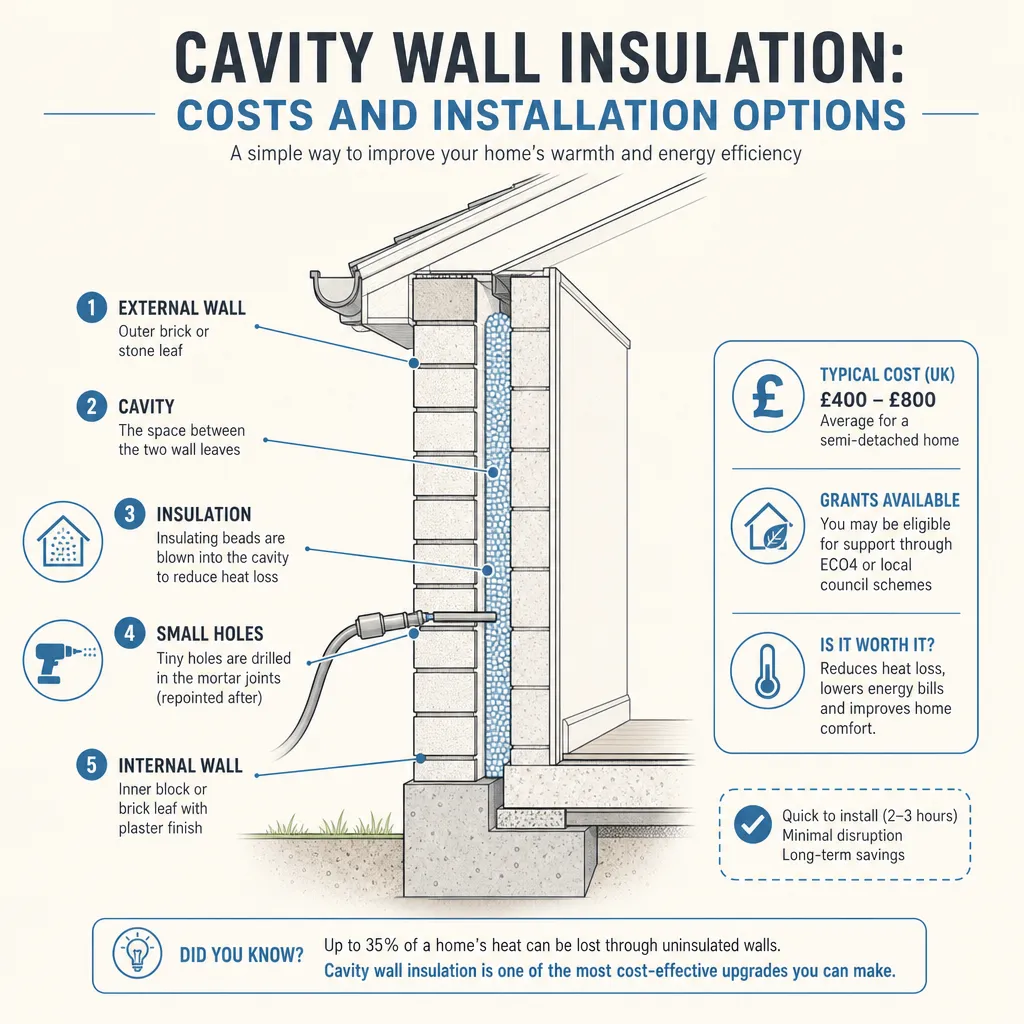 Energy & Retrofit
Cavity Wall Insulation: Costs and Installation Options
Cavity wall insulation typically costs £400–£1,200 for a standard UK semi-detached home, though eligible households may pay nothing under ECO4.
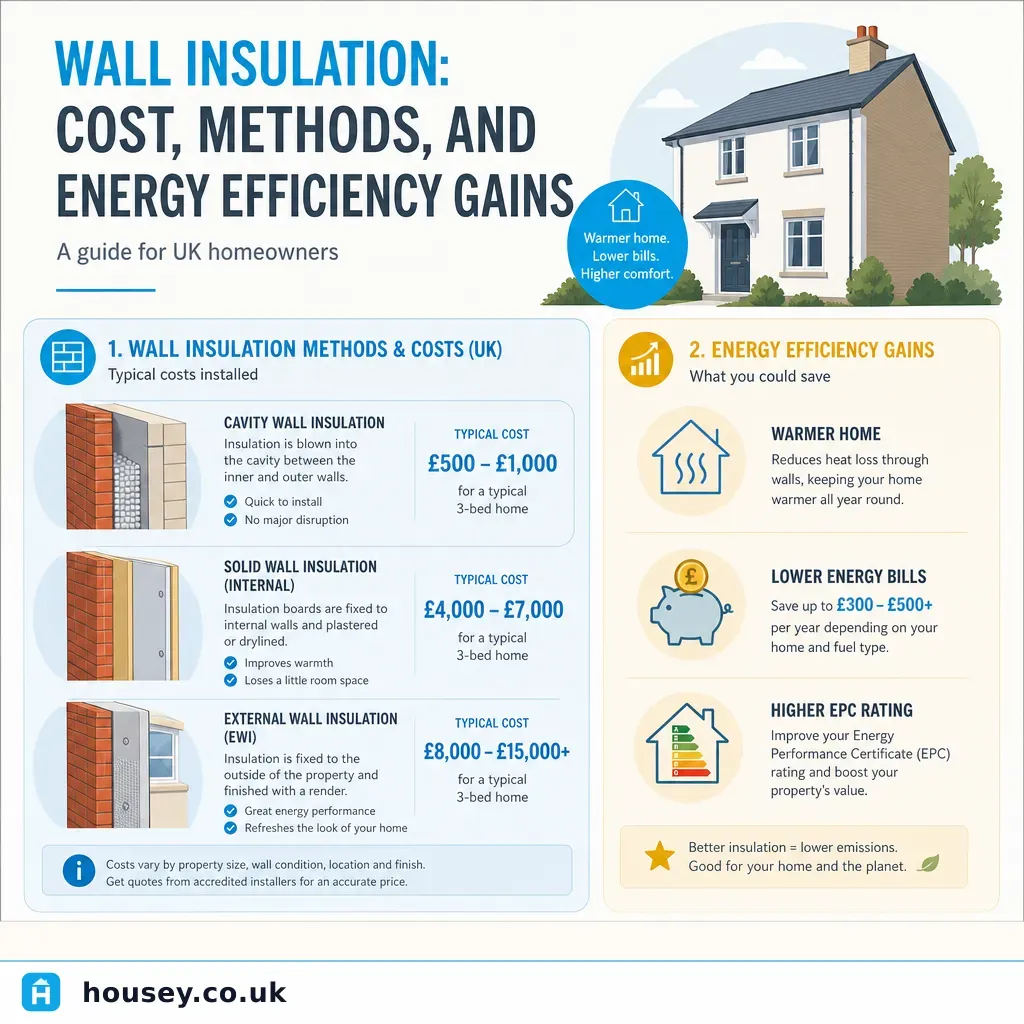 Energy & Retrofit
Wall Insulation: Cost, Methods, and Energy Efficiency Gains
Wall insulation in UK homes uses one of three main methods: cavity wall insulation for post-1920 homes with an unfilled cavity, external wall insulation for solid-walled properties, and internal wall insulation where external changes are not permitted.
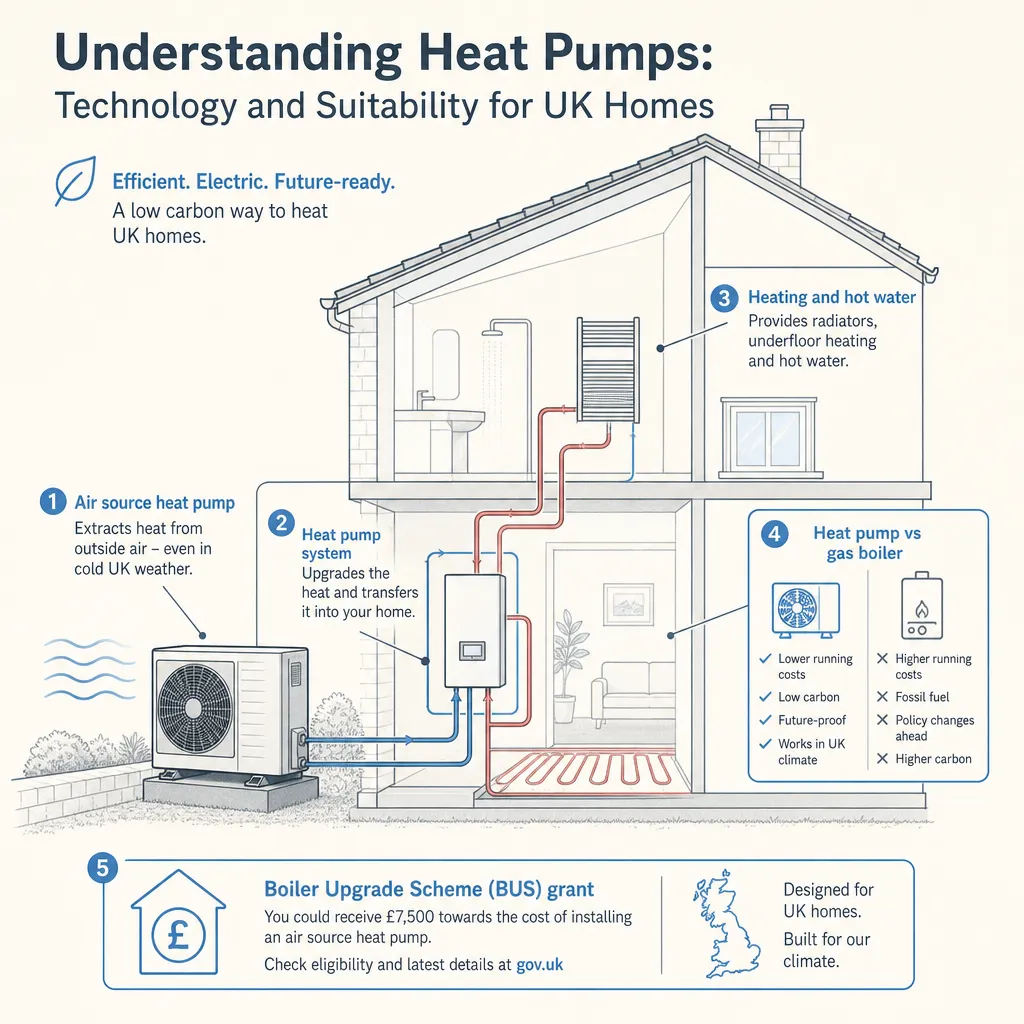 Energy & Retrofit
Understanding Heat Pumps: Technology and Suitability for UK Homes
Heat pumps extract heat from the air or ground and transfer it indoors, typically achieving efficiencies of 250–400% compared to a conventional boiler's near 100%.
 Energy & Retrofit
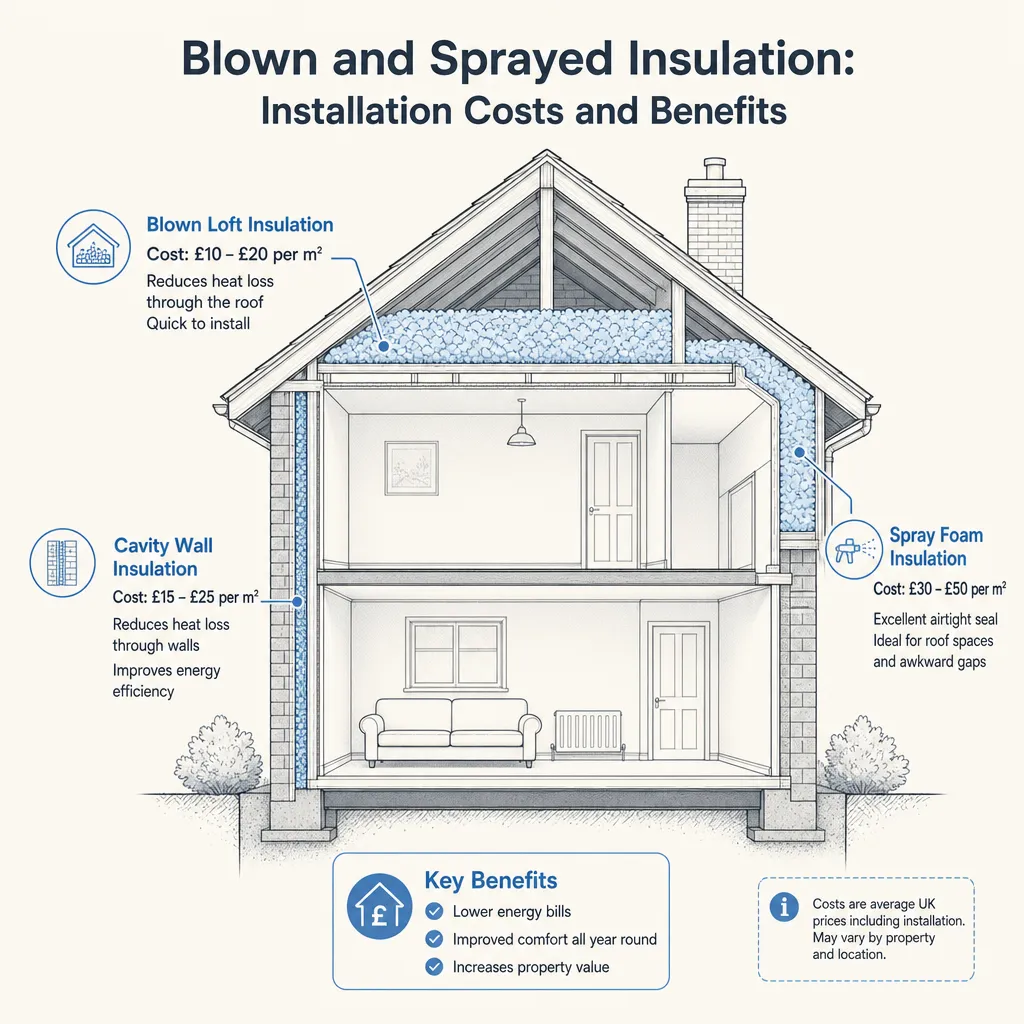
Blown and Sprayed Insulation: Installation Costs and Benefits
Blown cavity wall insulation for a typical semi-detached house costs £400–£1,200; blown loft insulation costs £300–£600.
 Energy & Retrofit
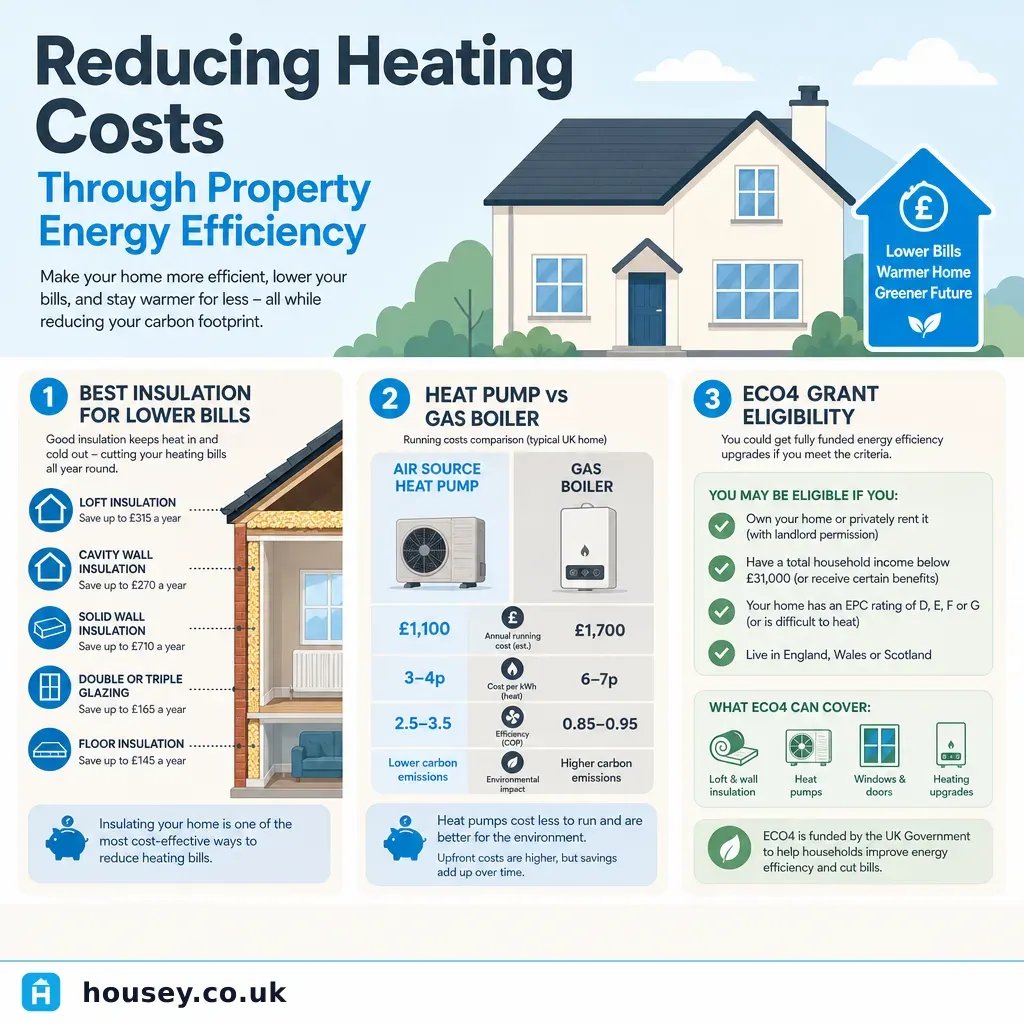
Reducing Heating Costs Through Property Energy Efficiency
Reducing heating costs starts with identifying where heat is lost — typically walls (30–35%), roof (20–25%), and windows.