Natural Insulation Materials and Installation Options
By Housey · Last reviewed 11th of May 2026
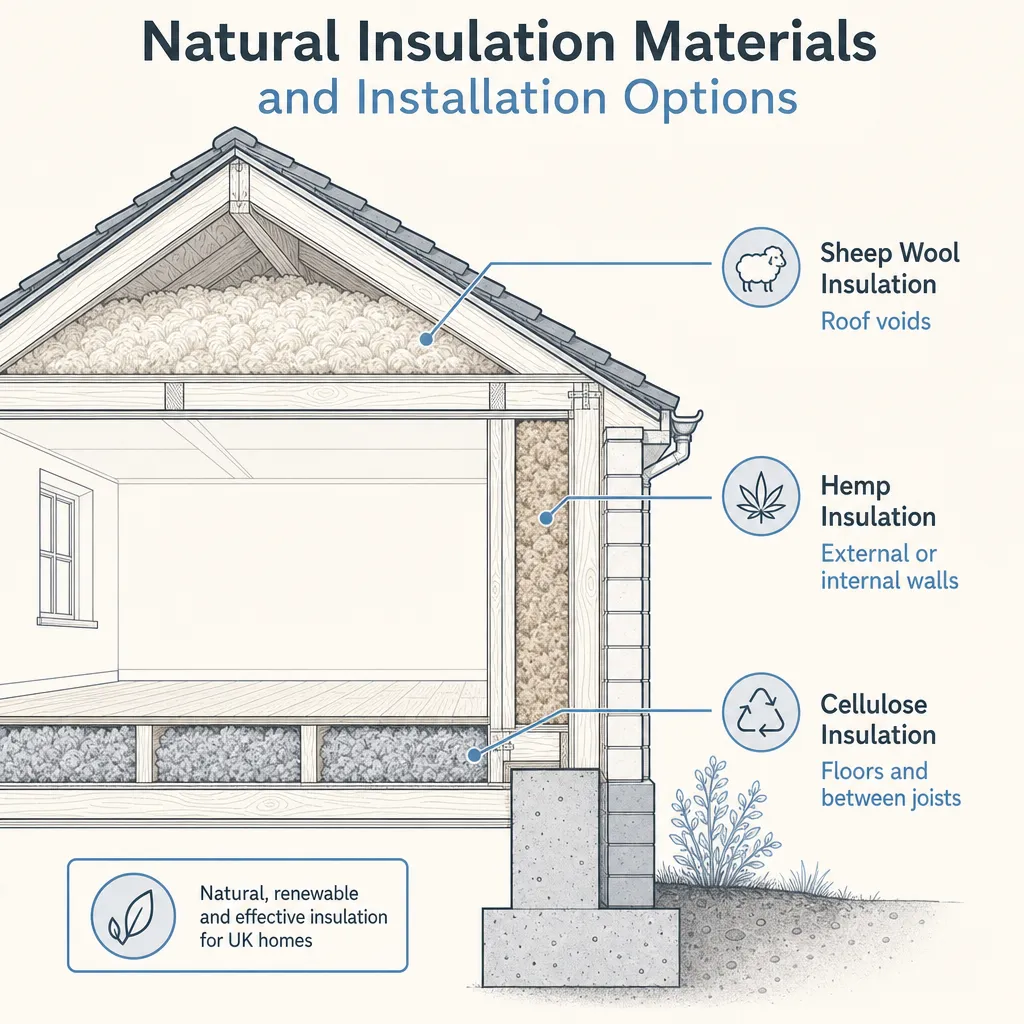
Natural Insulation Materials and Installation Options
Natural insulation has moved well beyond niche appeal: rising energy costs, strengthened Building Regulations Part L requirements, and growing awareness of embodied carbon have made sheep wool, hemp, cellulose, and cork credible choices for UK homeowners and self-builders. Whether you are upgrading a Victorian terrace, fitting out a loft, or specifying a new build, understanding how natural materials perform — and where they are most practical — helps you match the right product to your property.
Key points
- Sheep wool insulation typically achieves a thermal conductivity (lambda value) of around 0.035–0.038 W/mK, comparable to mineral wool but with natural moisture-buffering properties.
- PAS 2030/PAS 2035 standards govern installer competence for publicly funded retrofit; for private works, check that installers hold relevant trade body membership such as NAPIT, TrustMark, or an equivalent accreditation.
- Cellulose insulation (recycled paper fibre) has significantly lower embodied carbon than EPS or glass wool and may qualify for ECO4 funding in some circumstances when installed by an eligible installer.
- Building Regulations Approved Document L (Conservation of Fuel and Power) sets minimum U-value targets; most natural materials can meet these when installed at appropriate depths.
- Some natural insulation products require British Board of Agrément (BBA) or UKCA certification — always check the product datasheet before specifying.
What makes a natural insulation material?
Natural insulation is broadly defined as materials derived from plant or animal sources with low processing energy, as opposed to glass wool, rockwool, or petroleum-based rigid foam boards. Common UK-available options include sheep wool, hemp (batts and loose-fill), cellulose (loose-fill blown-in), cork (boards and granules), wood fibre (rigid and flexible boards), and flax (batts). Each has distinct thermal, moisture, and acoustic properties.
Material | Typical lambda (W/mK) | Best application | Not ideal for | Key accreditation |
|---|---|---|---|---|
Sheep wool | 0.035–0.038 | Stud walls, lofts, between rafters | Below-DPC situations | BBA certificate or UKCA |
Hemp batt | 0.038–0.040 | Stud walls, floor voids | Very high-humidity zones without VCL | BBA or manufacturer datasheet |
Cellulose (loose-fill) | 0.035–0.040 | Loft floors, blown-in walls | Sloped roofs without specialist netting | BBA or ETA |
Cork board | 0.037–0.045 | Solid wall internal lining, underfloor | High compressive loads unless load-bearing grade | CE/UKCA marking |
Wood fibre board | 0.038–0.050 | External wall insulation, under slates or tiles | Very wet climates without appropriate detailing | BBA or ETA |
Flax batt | 0.038–0.040 | Stud walls, between rafters | Limited UK supply chain — check lead times | BBA or manufacturer spec |
Lambda values are indicative; always use the declared value from the product datasheet for U-value calculations.
How natural materials handle moisture
One significant advantage of many natural insulations is hygroscopicity — the ability to absorb and release moisture without losing structural integrity or significant thermal performance. Sheep wool and hemp can buffer humidity fluctuations in older properties where vapour control is imperfect, making them attractive in solid-wall Victorian or Edwardian houses where rigid foam boards may trap moisture behind the insulation layer.
However, natural materials are not a substitute for good detailing. A qualified retrofit coordinator or energy assessor should check ventilation, vapour control layer (VCL) placement, and dew-point calculations — particularly in solid-wall or cold-roof situations — before specifying any insulation product, natural or synthetic.
Which natural insulation suits your project?
- Choose sheep wool batts if you are insulating a stud partition, loft floor, or rafter space in a dry environment and want a product with a long UK track record and good acoustic performance.
- Choose hemp batts or loose-fill if you are working on a pre-1919 solid-wall property and want breathability matched with a plant-based, low-embodied-carbon option.
- Choose cellulose blown-in if you are retrofitting a closed loft floor or existing stud wall without opening up the structure — it can be installed through small drilled holes.
- Choose cork or wood fibre boards if you are externally insulating a solid wall and want a vapour-open, render-ready system compatible with traditional lime finishes.
- Ask an energy-efficiency consultant if you are unsure about moisture risk, ventilation adequacy, or which U-value target applies to your property.
- Check GOV.UK's ECO4 guidance if you are a low-income household — some natural insulation options may qualify when installed by eligible contractors.
Installation methods and what to expect
Natural insulation is installed using broadly the same methods as synthetic alternatives: friction-fit batts between studs or joists, loose-fill blown or poured into cavities and loft voids, and rigid boards bonded or mechanically fixed to wall faces. The main practical differences are:
- Cutting and handling — wool and hemp batts are cut with a sharp knife and produce no irritating fibres, unlike glass wool. Standard PPE (gloves, dust mask) is still advisable.
- Blowing equipment — cellulose and loose hemp require specialist blowing machinery and must be carried out by a trained installer.
- Board-fixed systems — cork and wood fibre external insulation systems require a trained applicator to apply the basecoat, mesh, and render finish correctly; incorrect detailing risks water ingress.
- Installer competence — for any work carried out under ECO4 or the Great British Insulation Scheme (GBIS), the installer must hold PAS 2030:2019 certification, and the project must comply with PAS 2035 where a whole-house approach is required.
Cost guidance
Indicative UK costs, last reviewed 2026-05-11. Costs vary by property size, access, and region; always obtain at least three quotes.
- Sheep wool loft batts (DIY supply, 100mm): approximately £3–£8/m² for materials alone; professional loft installation typically £300–£800 for a standard terraced house, subject to loft area and access.
- Cellulose blown-in loft: professional installation typically £400–£1,000 for a mid-terrace, depending on loft area and depth required.
- Wood fibre external wall insulation: professional external wall insulation systems typically cost £8,000–£20,000+ for a semi-detached house; natural board systems sit at the higher end. Some homes qualify for grant support — check the Energy Saving Trust's grants finder.
Domestic insulation installations are often zero-rated for VAT — confirm with your installer and check GOV.UK for current rules.
What to ask before accepting a quote
- What is the declared lambda value of the product being specified?
- Does the product hold BBA, UKCA, or ETA certification?
- Is the installer TrustMark-registered and PAS 2030-certified?
- What vapour control layer or breather membrane is included?
- How will airtightness be maintained around services penetrations?
- Is VAT included?
- What post-installation checks and documentation will I receive?
When to get professional help
Natural insulation is relatively low-risk, but installation in solid-wall or cold-roof situations can create moisture problems if detailed incorrectly. Seek a professional assessment before specifying:
- Insulating a solid-wall (pre-1920) property from the inside or outside
- Adding insulation to a cold roof or converting a roof space
- Properties with existing damp, mould, or poor ventilation
- Any work you intend to fund through ECO4 or GBIS — a qualifying assessment is required
How Housey can help
Housey connects you with vetted insulation installers and specialists offering insulation assessments across the UK. If you are unsure which natural insulation material suits your property, our energy-efficiency consultants can help you weigh up options before you commit to a specification.
Frequently asked questions
Is natural insulation as effective as glass wool or rockwool?
Most natural insulation materials achieve lambda values broadly comparable to mineral wool — typically 0.035–0.042 W/mK. Performance depends on installed depth, density, and detailing quality. At the correct installed thickness, natural products can meet the same U-value targets as synthetic alternatives. Wood fibre also offers useful decrement delay, slowing summer heat gain in a way that mineral wool does not.
Can I install natural insulation myself?
Friction-fit batts such as sheep wool, hemp, or flax between loft joists or accessible stud walls are suitable for confident DIYers. Blown-in cellulose, external wall insulation systems, and any work funded through government grants require a trained, certified installer. Always confirm that a DIY installation does not affect any Building Regulations compliance requirement for your project.
Does natural insulation qualify for government grants?
Eligibility depends on the grant scheme, the property, household circumstances, and installer certification. Under ECO4 and GBIS, the installer must hold PAS 2030 certification and the product must meet the scheme's technical requirements. Check current eligibility via the Energy Saving Trust or GOV.UK's Great British Insulation Scheme guidance, as criteria can change.
Will natural insulation cause damp problems?
When correctly specified and installed, natural hygroscopic materials such as sheep wool and hemp can reduce the risk of interstitial condensation in some situations. However, poor detailing in solid-wall or cold-roof situations can cause moisture problems regardless of material type. A damp and ventilation assessment before installation is advisable for pre-1920 properties.
Sources and further reading
- Building Regulations Approved Document L (2021) — GOV.UK
- Great British Insulation Scheme — GOV.UK
- Home insulation advice — Energy Saving Trust
- PAS 2035:2023 Retrofitting dwellings for improved energy efficiency — BSI
- Product certification search — British Board of Agrément
Useful next reads
 Energy & Retrofit
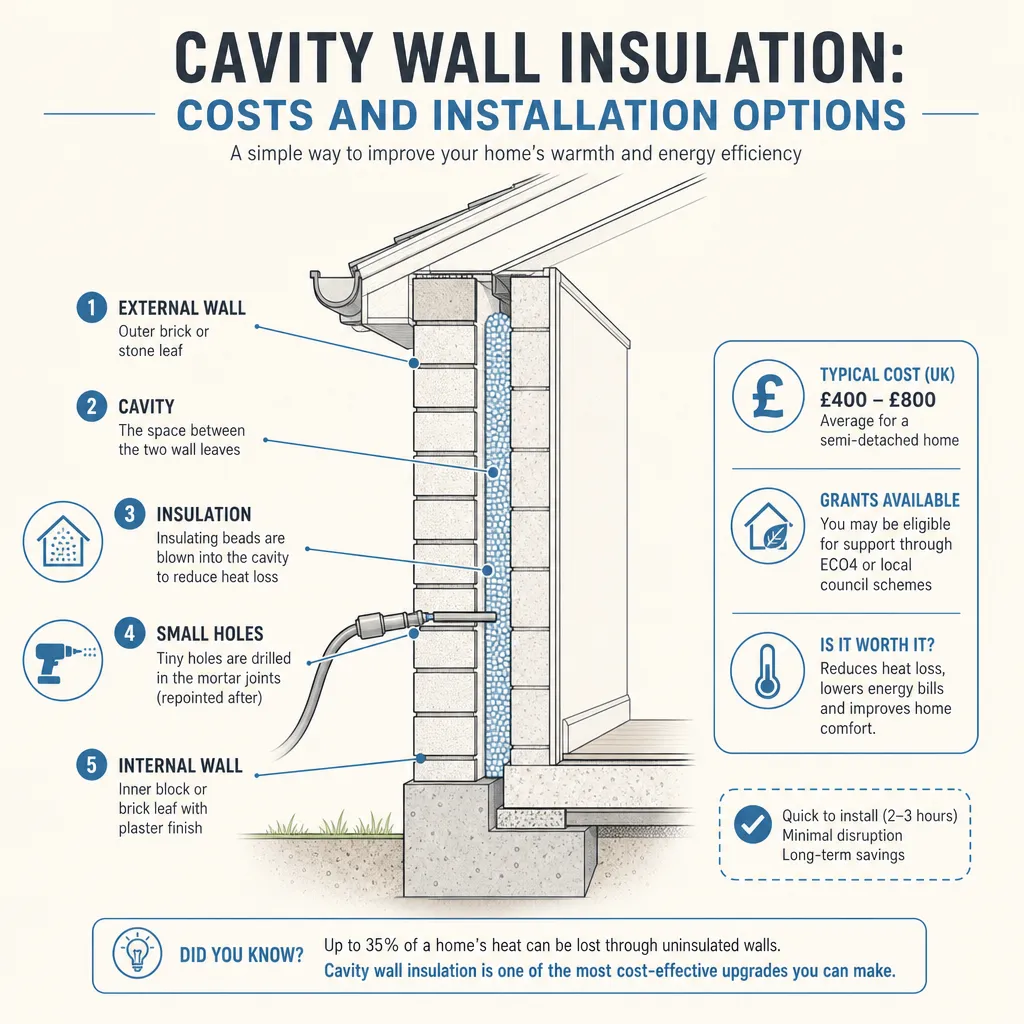
Cavity Wall Insulation: Costs and Installation Options
Cavity wall insulation typically costs £400–£1,200 for a standard UK semi-detached home, though eligible households may pay nothing under ECO4.
 Energy & Retrofit
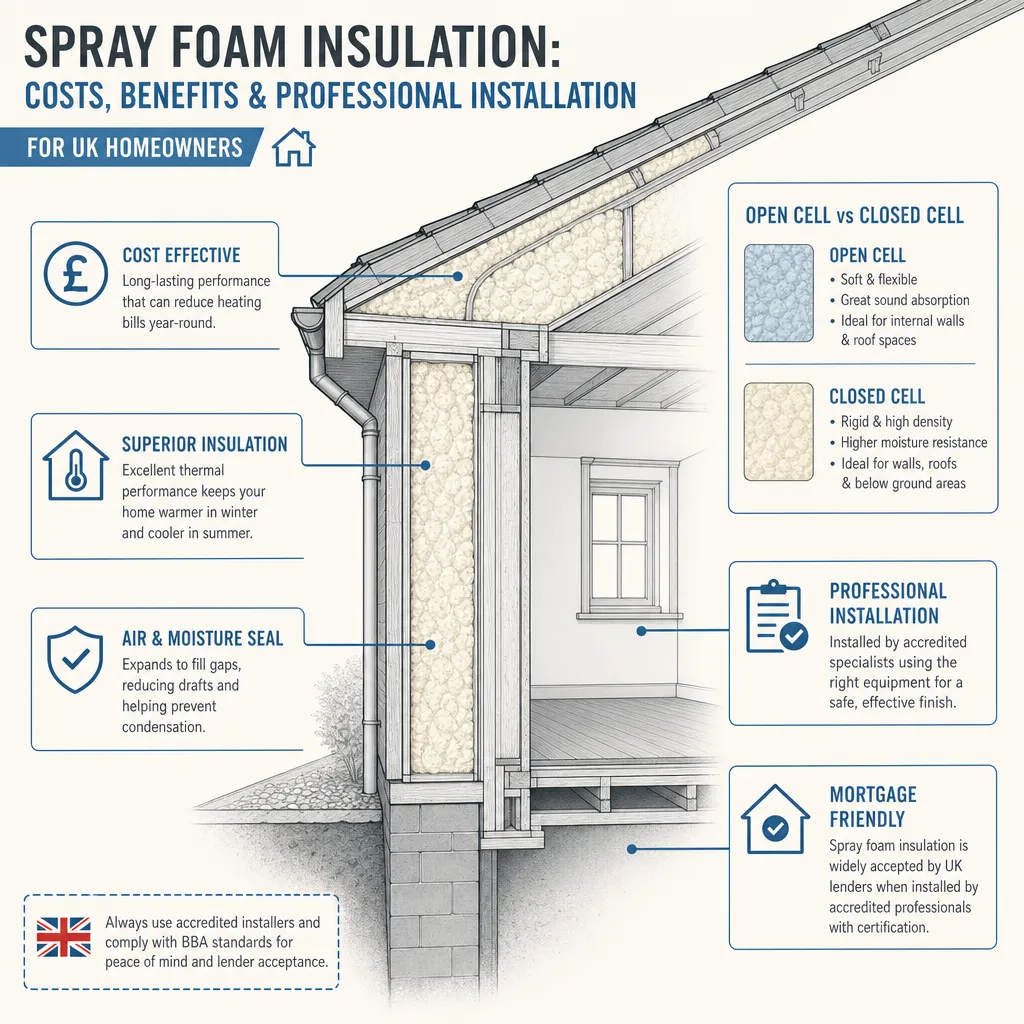
Spray foam insulation: costs, benefits and professional installation
Spray foam insulation costs between £15 and £60 per square metre installed in the UK, depending on whether open-cell or closed-cell foam is used.
 Energy & Retrofit
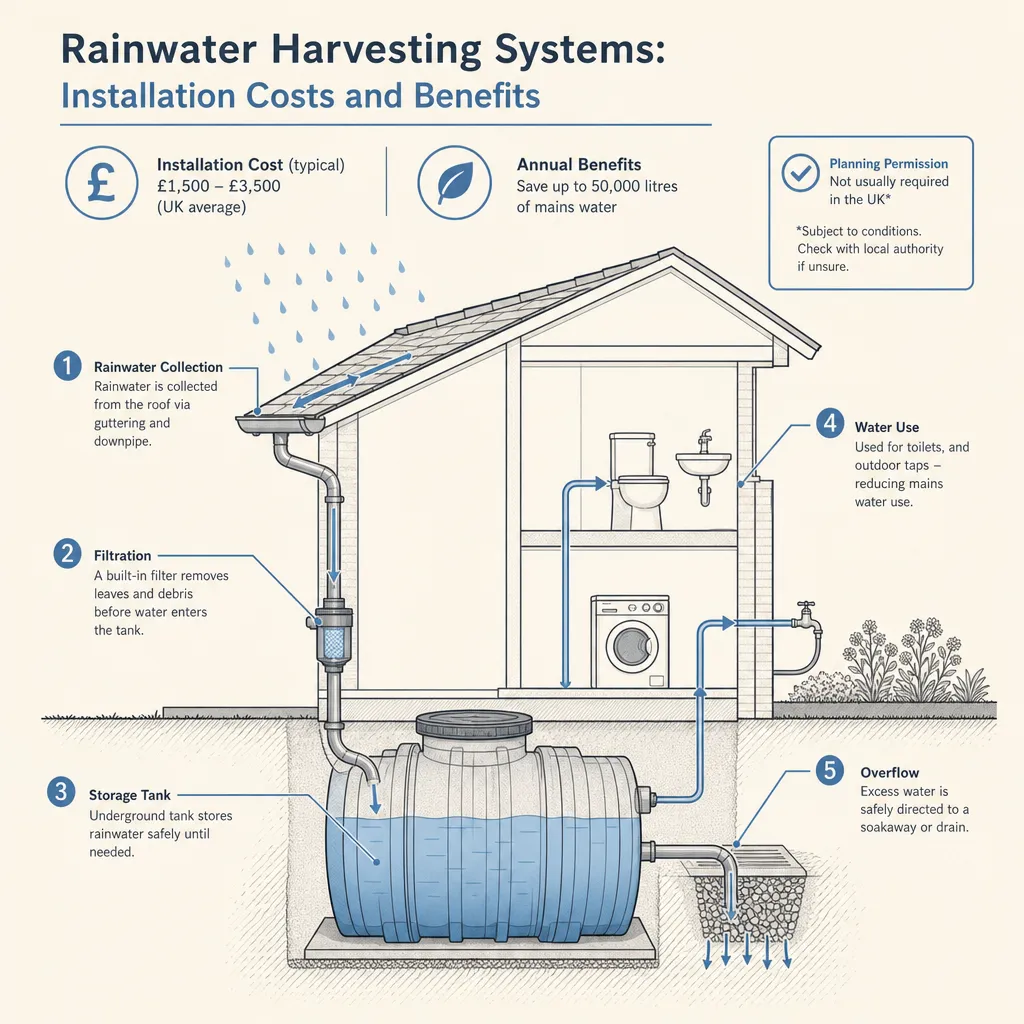
Rainwater Harvesting Systems: Installation Costs and Benefits
A domestic rainwater harvesting system costs £200–£600 for a simple above-ground butt or £2,500–£7,000 fully installed for an underground tank.
 Energy & Retrofit
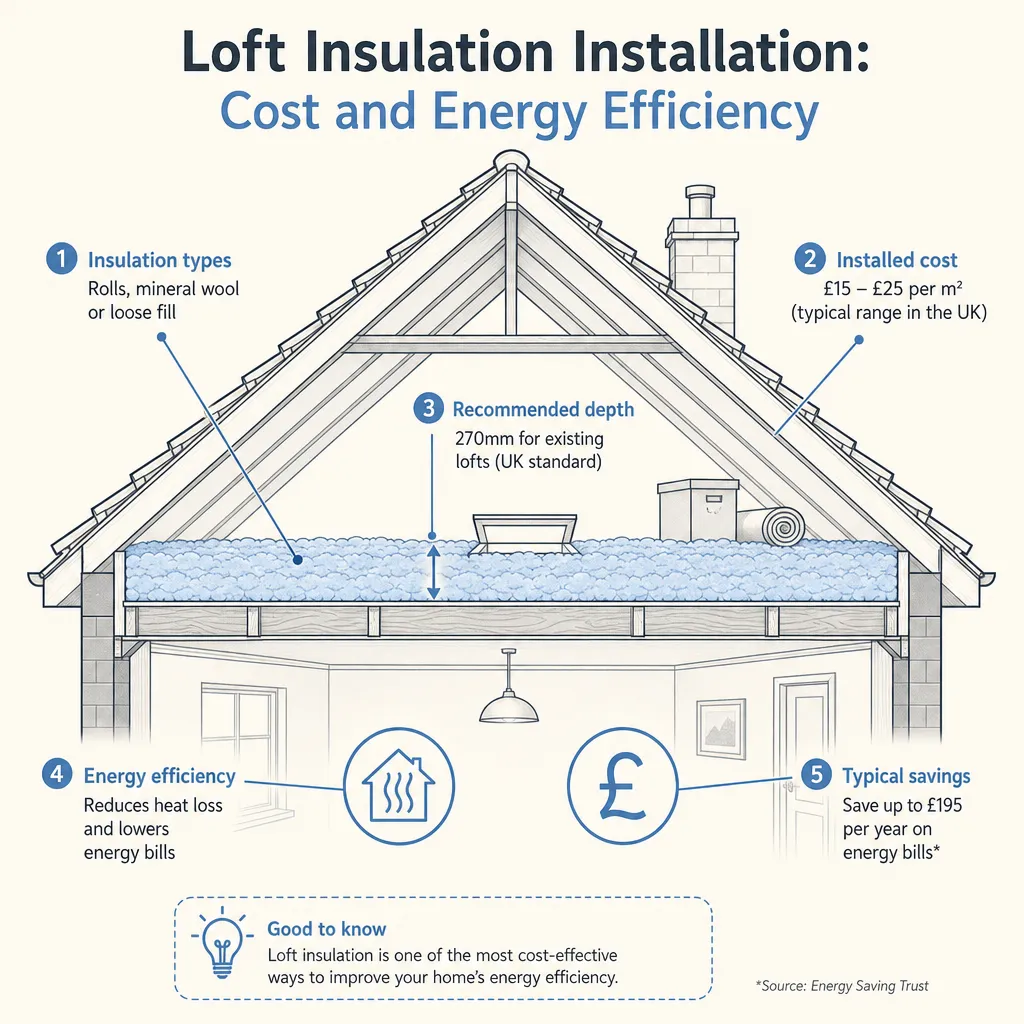
Loft Insulation Installation: Cost and Energy Efficiency
Loft insulation typically costs £300–£700 installed for a standard three-bedroom semi-detached using mineral wool.
 Energy & Retrofit
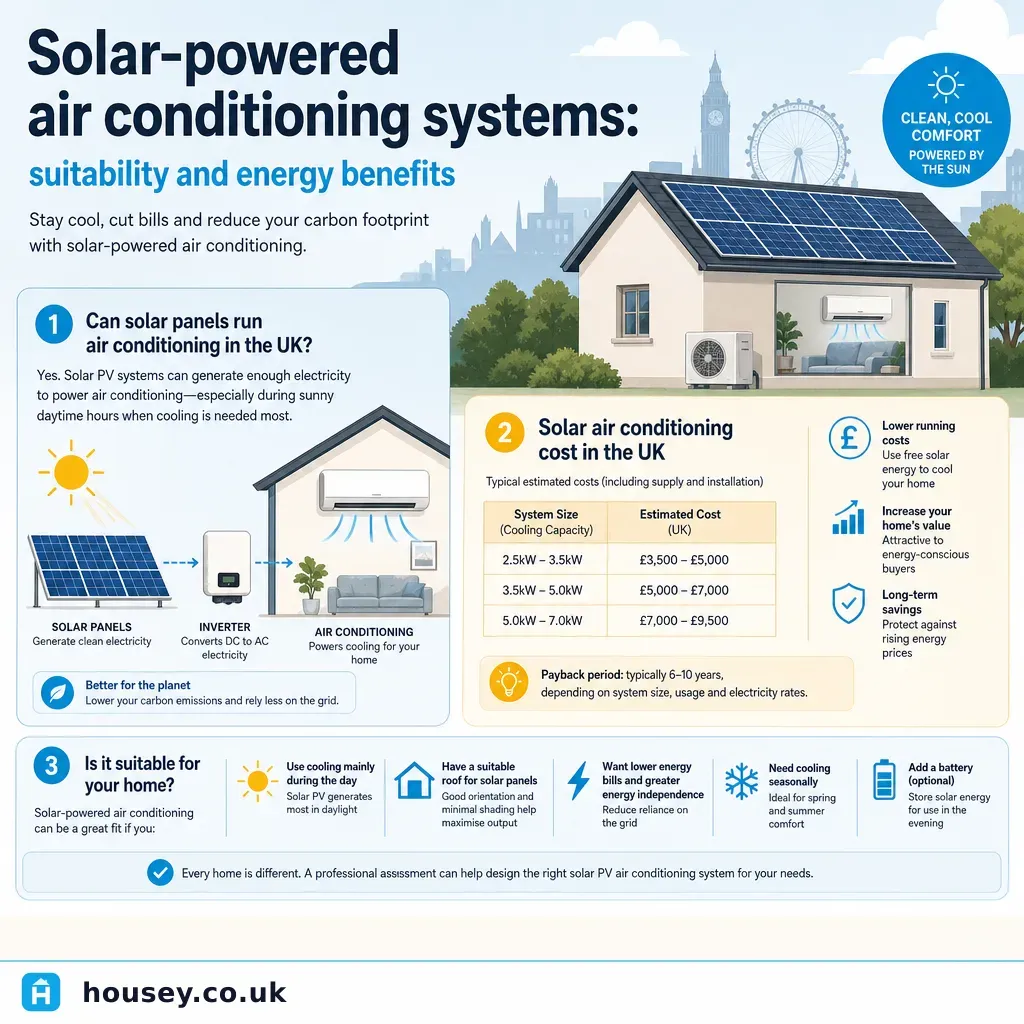
Solar-powered air conditioning systems: suitability and energy benefits
Solar-powered air conditioning pairs photovoltaic panels with an inverter-driven air conditioning unit to cool a home using renewable electricity.