Budget for converting warm air heating to a modern system
By Housey · Last reviewed 8th of May 2026
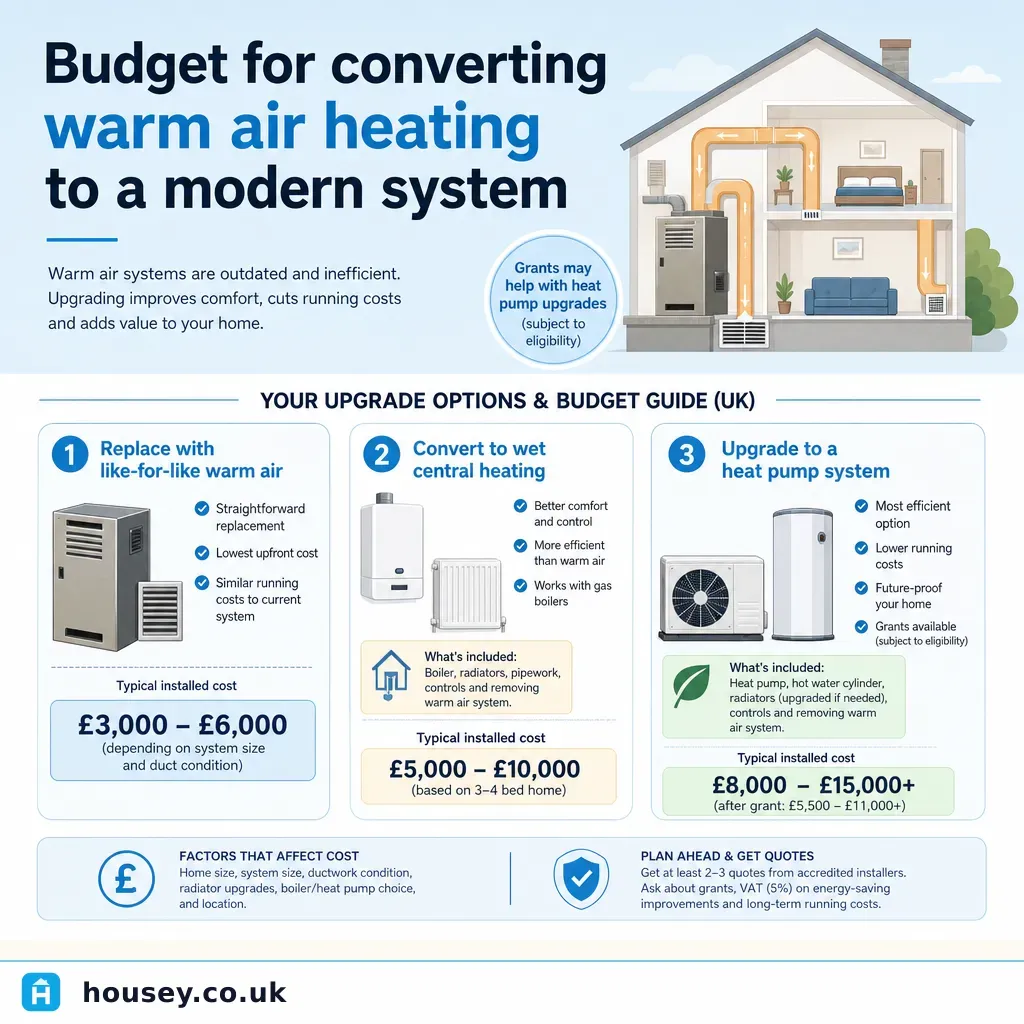
Budget for converting warm air heating to a modern system
Warm air heating systems, installed widely in UK homes built between the 1960s and 1980s, are nearing the end of their serviceable lives — and replacement parts are increasingly difficult to source. If your home still runs on one, you are likely weighing a forced replacement against the opportunity to upgrade to a more efficient modern system. The choice between a gas boiler with wet radiators or an air source heat pump has real implications for installation cost, running costs, and eligibility for government grant support.
Key points
- Converting a warm air system to wet central heating typically costs £5,000–£15,000, depending on property size, pipework complexity, and system choice (Indicative UK costs, last reviewed 2026-05-08; quotes vary significantly by region and property).
- The Boiler Upgrade Scheme (BUS) currently offers a £7,500 grant towards an air source heat pump, materially reducing the upfront cost for eligible properties.
- All gas boiler installations must be carried out by a Gas Safe registered engineer and notified to building control under Building Regulations Approved Document J.
- Heat pump installations claiming BUS funding must be designed and installed by a Microgeneration Certification Scheme (MCS) accredited installer.
- Warm air to wet system conversions are more disruptive than standard boiler swaps because new pipework, radiators, and often a hot water cylinder must all be installed from scratch.
What is warm air heating and why is it being replaced?
Warm air systems heat air in a central gas-fired unit — typically floor-standing — and distribute it through floor or ceiling ducts. They were popular in the 1960s–80s because they were cheap to install and heated rooms quickly. Common UK brands include Potterton, Johnson & Starley, and Powrmatic.
These systems are now largely obsolete. Spare parts are scarce, efficiency ratings are well below those of modern condensing boilers, and most units provide no domestic hot water without a separate cylinder. Most homeowners reach this decision when a repair becomes uneconomical or the unit fails entirely.
Which modern system should you choose?
The two most common conversion routes are:
- Gas combi or system boiler with wet radiators — the conventional upgrade; familiar to most heating engineers and generally lower in disruption.
- Air source heat pump (ASHP) with wet radiators or underfloor heating — lower running costs over time when correctly sized, and currently eligible for the £7,500 BUS grant.
A like-for-like electric warm air replacement unit is a third option, but it is rarely cost-effective at current electricity tariff rates.
Comparison: gas boiler conversion vs air source heat pump
Factor | Gas boiler + radiators | Air source heat pump |
|---|---|---|
Typical installed cost (3-bed semi) | £5,000–£9,000 | £10,000–£17,000 before grant |
BUS grant available | No | £7,500 (as of 2026) |
Net cost after grant (approx.) | £5,000–£9,000 | £2,500–£9,500 |
Required installer qualification | Gas Safe registered | MCS accredited |
Building Regulations notification | Approved Document J | Approved Document J + Part L |
Best suited to | Homes without adequate insulation for a heat pump; urgent replacements | EPC C-rated homes or where insulation is being upgraded simultaneously |
Typical running cost direction | Dependent on gas tariff | Lower if correctly sized; CoP typically 2.5–3.5 |
Disruption level | Moderate (new pipework and radiators) | Higher (possible larger radiators, hot water cylinder, electrical upgrade) |
Hot water provision | Combi: instant; system boiler: cylinder needed | Cylinder always required |
Indicative UK costs, last reviewed 2026-05-08. Quotes vary by region, property size, and installer.
What drives the cost of conversion?
Several factors push the final bill up or down:
- Number of rooms and radiators — a larger property needs more radiators and longer pipe runs.
- Property construction — solid walls, concrete floors, or a compact layout make routing pipework harder and more expensive.
- Hot water provision — if the existing warm air system served domestic hot water via an internal coil, a new cylinder will be needed.
- Electrical capacity — heat pumps require an adequate electrical supply; older consumer units may need upgrading, adding cost.
- Insulation level — for heat pumps, poor insulation leads to oversizing risk and higher running costs; fabric improvements alongside installation are strongly recommended.
- Asbestos — some 1960s–70s ductwork, lagging, or floor tiles may contain asbestos. Do not disturb suspected material; arrange a survey before any removal work begins.
Worked UK property scenario
Property: 1970s semi-detached, three bedrooms, solid-floor ground level, gas supply present, EPC rating D. >The existing warm air unit failed in winter. The owners obtained three quotes: >- Gas combi boiler with 8 radiators and thermostatic radiator valves: £7,200 installed (Part J notification included)- Air source heat pump with 8 upgraded radiators, hot water cylinder, and electrical work: £14,500 installed — approximately £7,000 net after the BUS grant >The owners chose the heat pump route. The net cost was comparable to the gas boiler option, and their energy assessor indicated the EPC rating was likely to improve from D to B, which could benefit their remortgage terms. >This is an illustrative scenario only, not a Housey quote or guarantee of costs.
Checklist: preparing for conversion quotes
Use this before inviting heating engineers or heat pump installers to quote:
Important limitations
This article provides general guidance only. Heating system design — especially heat pump sizing — depends on your property's specific heat loss calculation (to BS EN 12831), insulation levels, hot water demand, and electrical infrastructure. An incorrectly sized heat pump will underperform and may increase running costs. Building Regulations compliance is a legal requirement, not optional. BUS eligibility criteria and grant amounts can change; always verify the current position on GOV.UK before committing to a system.
What to ask a qualified professional
Before accepting any quote for a warm air heating conversion, ask:
- Are you Gas Safe registered (for gas work) or MCS accredited (for heat pump installations)?
- Will you carry out a full heat loss calculation to BS EN 12831 before sizing the system?
- Is Building Regulations notification (Approved Document J) included in your quote, and who will act as the competent person?
- Does the quote cover all pipework, radiators, the hot water cylinder, electrical connections, and commissioning?
- What warranty do you offer on parts and labour?
- If applying for BUS, will you manage the grant application on my behalf?
- Are there any property-specific risks — solid walls, concrete floors, older wiring — that could affect the price or programme?
When to get professional help
You should involve a qualified heating professional rather than relying on general guidance if any of the following apply:
- Your warm air unit has failed and you have no heating — treat as an emergency
- You suspect ducting, lagging, or floor tiles may contain asbestos — do not disturb; arrange an asbestos survey before any removal work
- Your property is a flat, maisonette, or leasehold and changes to communal infrastructure may be involved
- You are considering a heat pump and are unsure whether your insulation levels are adequate
- The property is listed or in a conservation area, where permitted development rights for heat pumps may not apply
How Housey can help
If you are ready to explore your options, Housey can connect you with qualified professionals. An energy-efficiency consultant can assess your home's heat loss, insulation levels, and system suitability before you commit to a route. If you are leaning towards a heat pump, a heat pump survey will give you a proper technical assessment and sizing calculation rather than a sales-led visit.
Frequently asked questions
Can I keep my existing warm air ducts when converting to a heat pump?
Rarely. Most warm air ductwork is incompatible with the lower-temperature flow a heat pump system requires and is often in poor condition after 40–50 years. Heat pump conversions in former warm air homes almost always use wet radiators or underfloor heating rather than repurposing the existing ducts.
Do I need planning permission to install an air source heat pump?
In most cases in England, air source heat pumps benefit from permitted development rights under Schedule 2, Part 14 of the Town and Country Planning (General Permitted Development) (England) Order 2015, subject to conditions on size, position, and noise output. Listed buildings and some conservation areas are excluded. Check with your local planning authority and the GOV.UK permitted development guidance before proceeding.
How long does a warm air to wet system conversion take?
Most conversions take 3–7 days, depending on property size and the complexity of routing new pipework. Heat pump installations involving a hot water cylinder and electrical upgrade can take longer. Your installer should provide a written programme and timeline before starting work.
Will my energy bills go down after converting?
This depends on the system chosen, your insulation levels, and current tariffs. A well-sized heat pump typically achieves a coefficient of performance (CoP) of 2.5–3.5, meaning it delivers 2.5–3.5 units of heat per unit of electricity consumed. Modern condensing gas boilers run at around 90–94% efficiency. Running-cost comparisons require current gas and electricity tariff data, which varies by supplier and region.
Is the Boiler Upgrade Scheme still open in 2026?
As of May 2026, the Boiler Upgrade Scheme remains open in England and Wales, offering £7,500 towards an air source heat pump. Grant amounts and eligibility criteria can change; check the current GOV.UK BUS guidance or ask an MCS-accredited installer to confirm eligibility for your specific property and system choice.
Sources and further reading
- Boiler Upgrade Scheme — GOV.UK
- Gas Safe Register — find a registered engineer — Gas Safe Register
- Microgeneration Certification Scheme (MCS) — MCS
- Approved Document J — combustion appliances and fuel storage systems — GOV.UK
- Air source heat pumps — Energy Saving Trust
- Find an energy performance certificate — GOV.UK
Useful next reads
 Energy & Retrofit
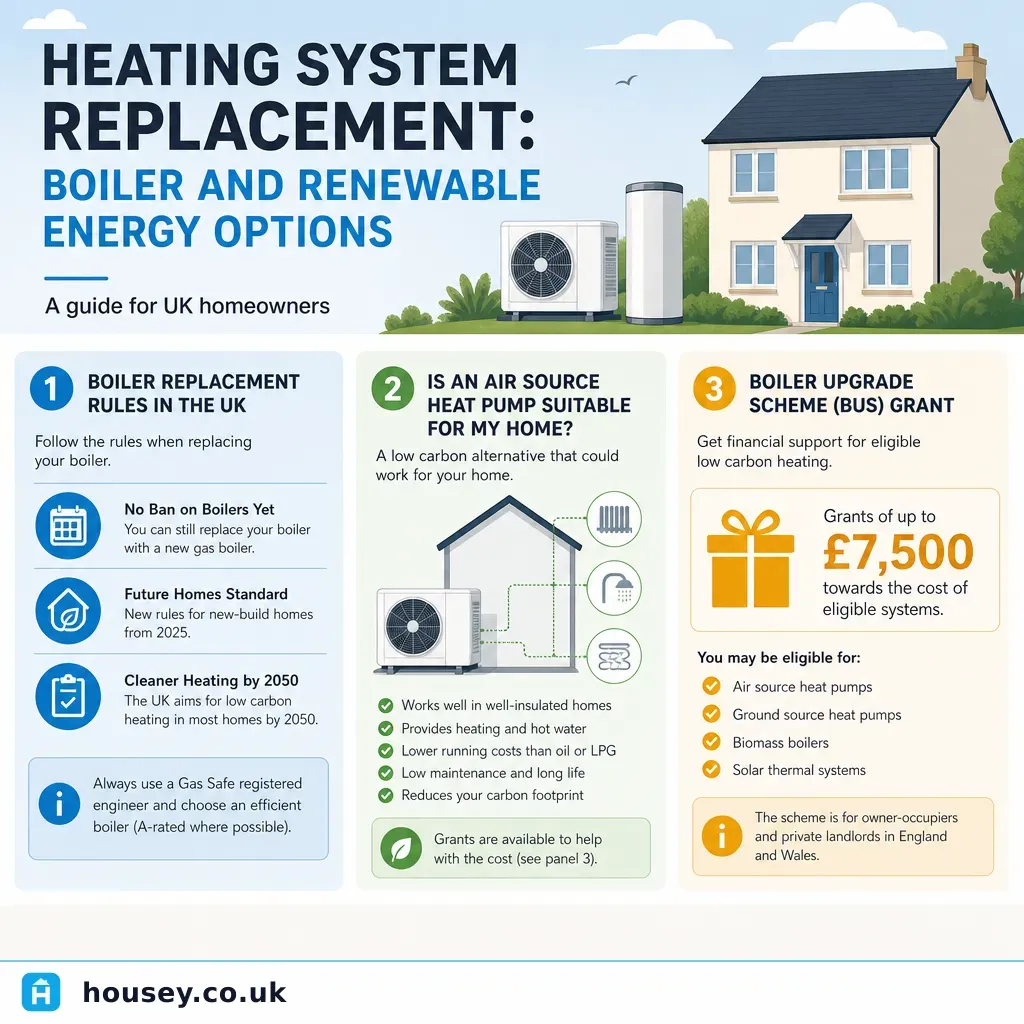
Heating System Replacement: Boiler and Renewable Energy Options
When replacing a heating system in the UK, a new gas boiler must comply with Boiler Plus (Part L) and be fitted by a Gas Safe registered engineer.
 Energy & Retrofit
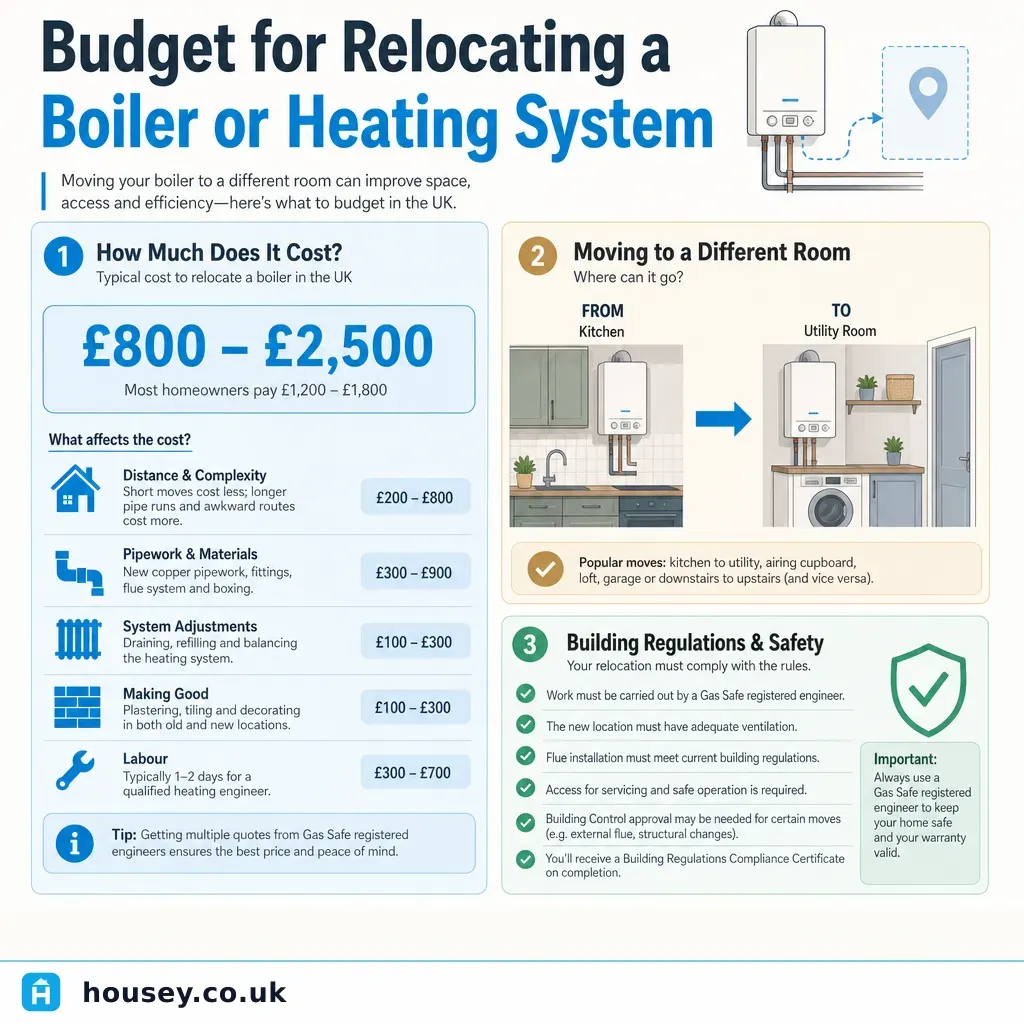
Budget for Relocating a Boiler or Heating System
Moving a boiler in the UK typically costs £500–£2,000, though complex relocations cost more.
 Energy & Retrofit
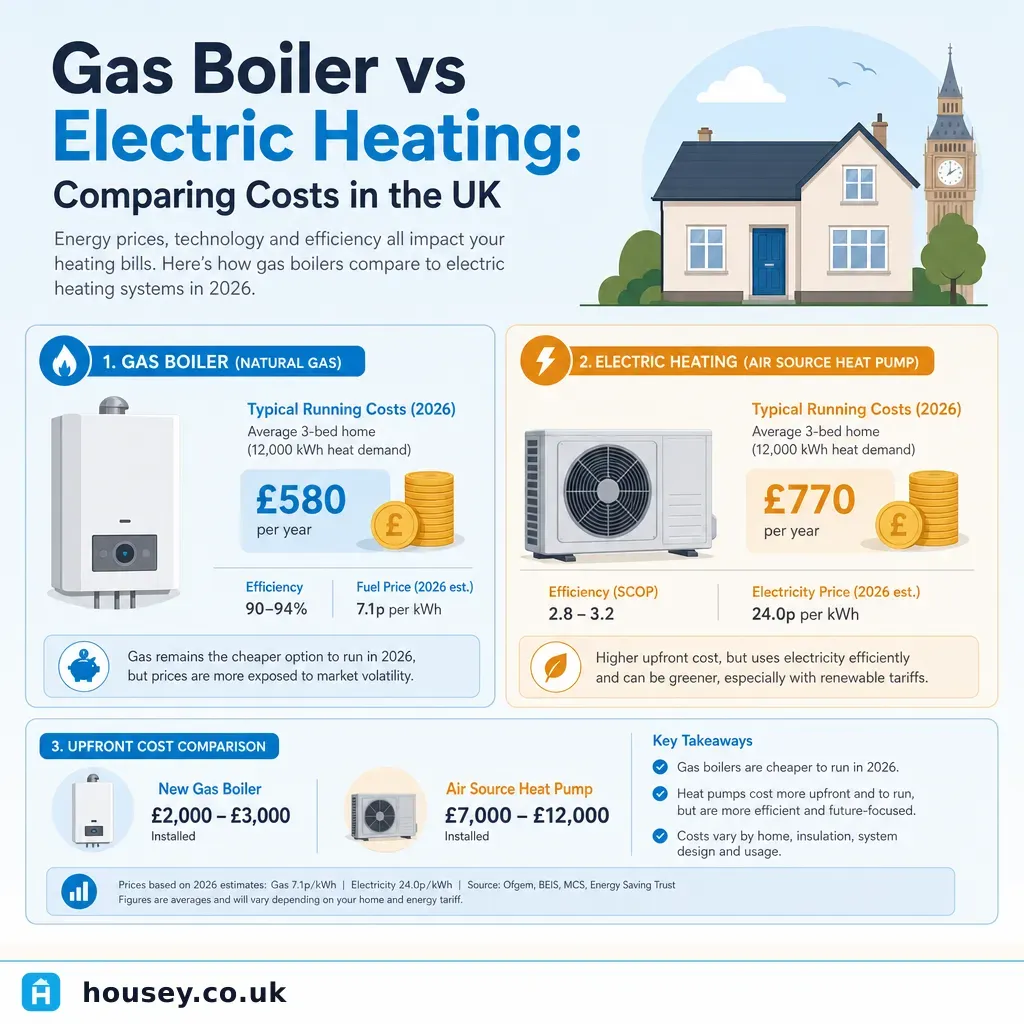
Gas Boiler vs Electric Heating: Comparing Costs in the UK
Gas boilers currently cost around 6.
 Energy & Retrofit
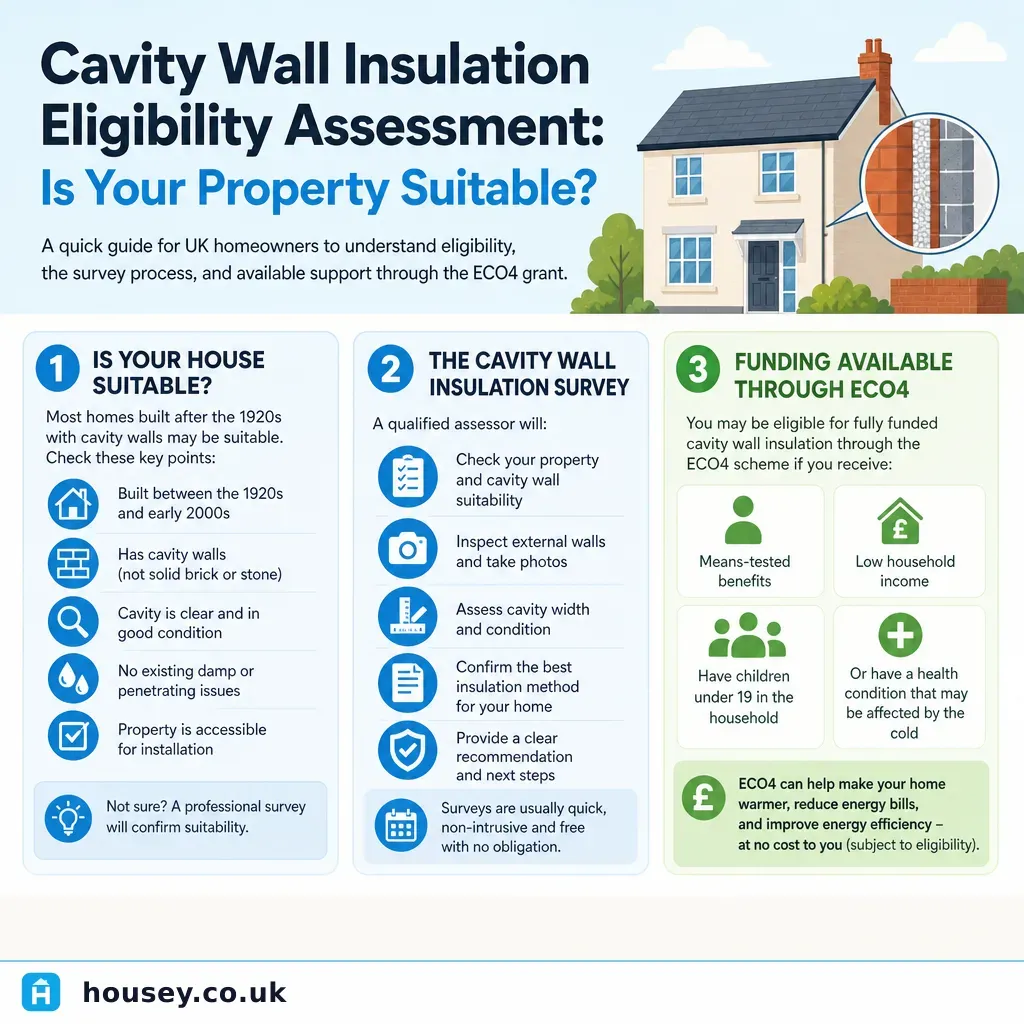
Cavity Wall Insulation Eligibility Assessment: Is Your Property Suitable?
Cavity wall insulation suits most UK homes built from around 1920 onwards with unfilled cavities at least 50mm wide in sheltered or moderately exposed locations.
 Energy & Retrofit
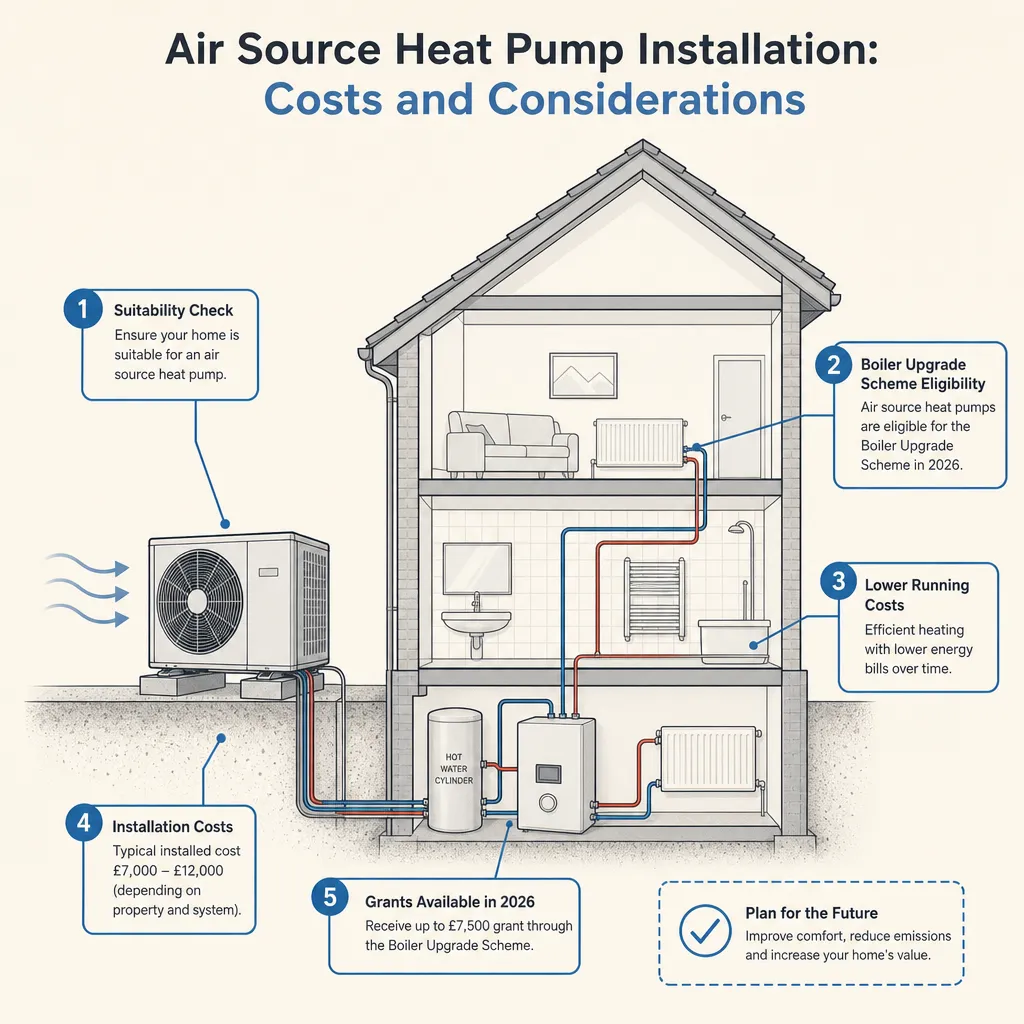
Air Source Heat Pump Installation: Costs and Considerations
Air source heat pump installation in the UK typically costs £8,000–£15,000 before the £7,500 Boiler Upgrade Scheme grant, available through MCS-certified installers in England and Wales.