Cavity Wall Insulation: Installation, Benefits, and Energy-Efficiency Improvements
By Housey · Last reviewed 19th of May 2026
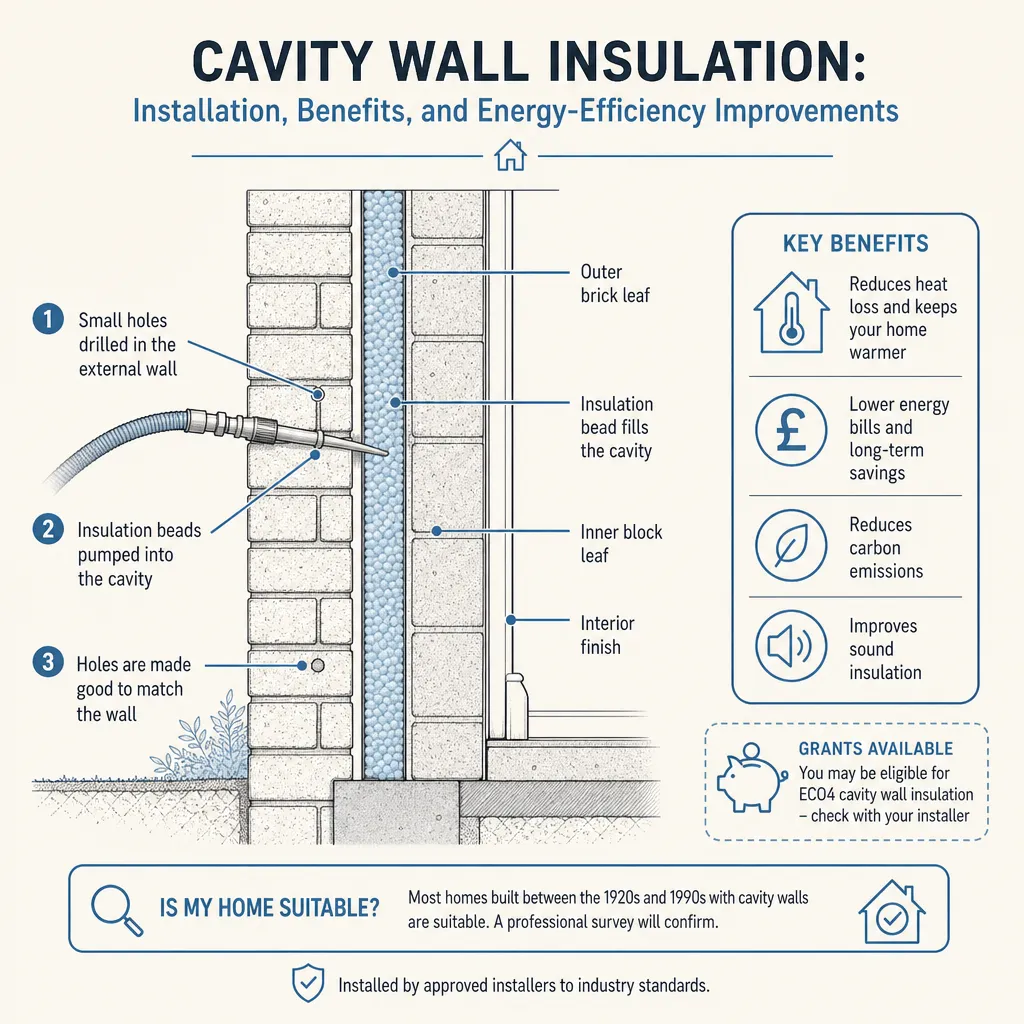
Cavity Wall Insulation: Installation, Benefits, and Energy-Efficiency Improvements
Cavity wall insulation is one of the most cost-effective fabric upgrades available to UK homeowners, yet it is also one where an unsuitable installation can cause lasting damp and structural damage. The decision to insulate typically arises during an Energy Performance Certificate (EPC) review, a retrofit assessment, or when exploring grant funding through ECO4 or the Great British Insulation Scheme (GBIS). Getting the property assessment right before a single bag of mineral wool is ordered is the step that determines whether the investment pays off.
Key points
- Cavity walls became standard in UK housing construction from around the 1920s; properties built before 1920 typically have solid walls and are not suitable for cavity fill insulation.
- Installers carrying out ECO4 or GBIS-funded work must be certified to PAS 2030; projects requiring a coordinated energy improvement plan must also comply with PAS 2035.
- Properties in high-rainfall or exposed locations (Wind-Driven Rain Exposure Zones 3 and 4 per BS 8104) may be unsuitable for standard blown mineral wool or EPS bead systems without specialist assessment.
- The ECO4 and Great British Insulation Scheme (GBIS) can fund all or part of the cost for eligible low-income households — check current eligibility criteria on GOV.UK.
- Typical annual savings for a semi-detached property are £150–£310 on heating bills, based on Energy Saving Trust guidance (last reviewed 2026-05-19).
Is your home suitable for cavity wall insulation?
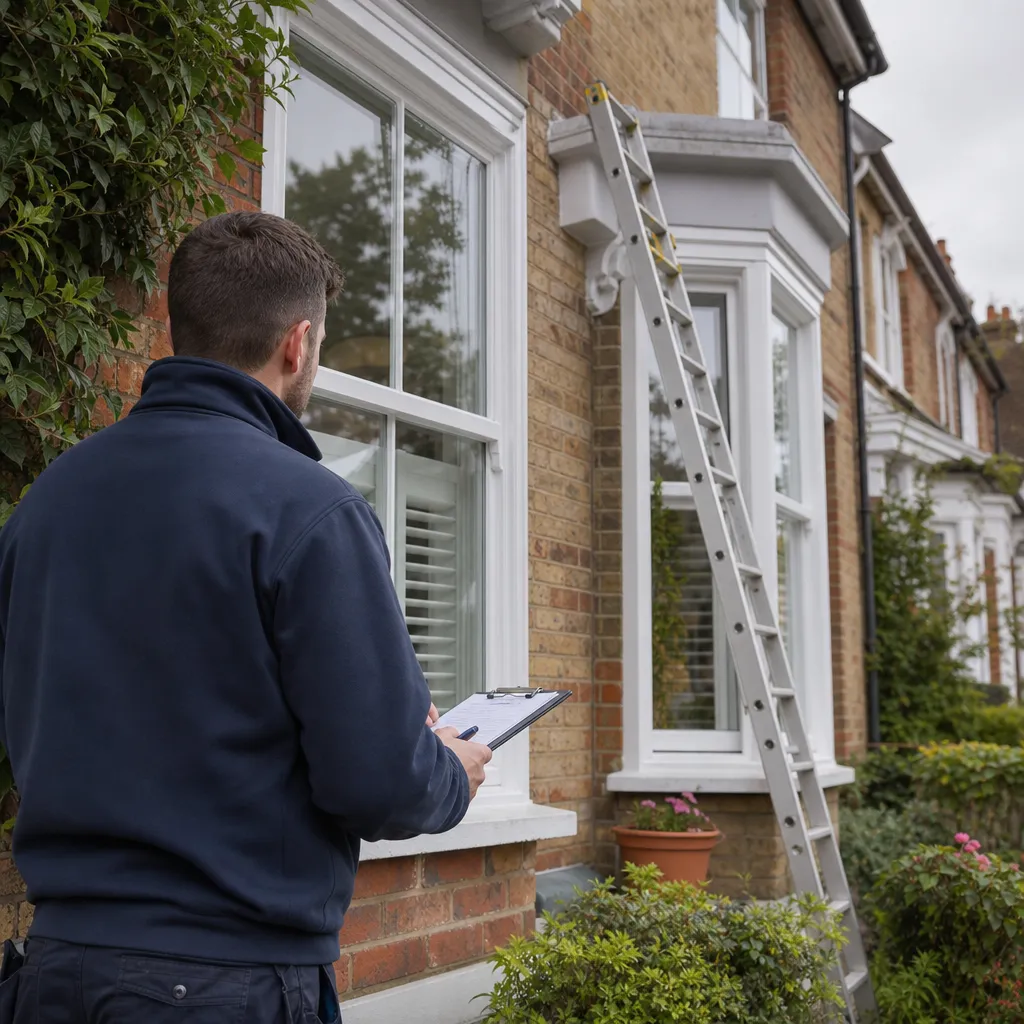
Not every cavity-walled home is safe to insulate. A pre-installation survey — usually carried out using a borescope inserted through a small hole drilled in the mortar — checks the cavity width, wall tie condition, presence of existing fill, and signs of moisture or debris.
Key suitability factors:
- Cavity width: a minimum of 50mm is generally required; narrower cavities may not be accessible for blown systems.
- Wall tie condition: corroded or failing ties must be repaired before any insulation is fitted.
- Exposure rating: walls facing prevailing weather in exposed coastal or upland areas carry a higher risk of water penetrating through the insulation.
- Masonry condition: defective mortar joints or cracked brickwork can allow water to bridge the cavity, causing internal damp.
Decision tree: should you proceed?
- Proceed with a standard installation if the property was built after approximately 1920, has an uninsulated cavity of ≥50mm, wall ties are sound, and the property is in a sheltered or moderate exposure zone (WDR Zones 1–2).
- Commission a specialist assessment first if the property is in a high-exposure location, has existing damp, has had previous cavity wall insulation problems, or was built between 1920 and 1940 when cavity widths were inconsistent.
- Do not proceed without structural checks if the walls show cracks, bowing, or signs of wall tie failure.
- Consider external or internal wall insulation instead if the property has solid walls, a rubble-filled cavity, or is a listed building or in a conservation area.
Which insulation system is right for your property?
Three main systems are used in UK cavity wall insulation:
System | Best for | Not ideal for | Certification required | Moisture risk if cavity is sound |
|---|---|---|---|---|
Blown mineral wool | Standard brick-cavity homes in sheltered locations | High-exposure facades; narrow cavities | PAS 2030; BBA certificate | Low |
Injected EPS beads | Moderate-exposure locations; irregular cavities | Severely exposed elevations | PAS 2030; KIWA or BBA approval | Low–moderate |
Injected polyurethane foam (PUR/PIR) | Narrow cavities; partial fill already present | Properties with wall tie issues | BBA certificate; specialist installer | Moderate; difficult to remove later |
Always confirm the proposed system carries a current British Board of Agrément (BBA) certificate or equivalent European Technical Assessment valid for your property's exposure class.
Grants and funding in 2026
ECO4 (Energy Company Obligation, Phase 4) funds insulation improvements for low-income households with an EPC rating of D or below. Eligible properties may receive free installation through energy suppliers' obligations to Ofgem.
Great British Insulation Scheme (GBIS) targets homes rated D (income-based track) or E, F, and G (general track). Apply through GOV.UK or a TrustMark-registered installer.
For owner-occupiers and landlords not eligible for grant funding, cavity wall insulation typically costs £400–£1,000 for a standard semi-detached house, depending on property size and system used. (Indicative UK costs, last reviewed 2026-05-19; obtain at least three written quotes.)
Important limitations
This article provides general information about cavity wall insulation in the UK. Suitability, risk, and grant eligibility vary significantly between individual properties. Nothing here replaces a professional assessment of your specific home.
- Grant scheme eligibility and funding caps change frequently — always verify current criteria on GOV.UK.
- Retrofit moisture risk depends on property-specific factors that can only be assessed on site.
- If your property has previously had problematic cavity wall insulation removed, or if damp appeared after an installation, seek specialist advice before reinstating any system.
When this becomes urgent
Contact a professional promptly if:
- You notice new or worsening damp patches on internal walls following cavity wall insulation.
- Condensation is appearing on walls that were not previously affected.
- A mortgage lender or RICS surveyor has raised concerns about cavity fill affecting the property's condition or saleability.
- A borescope survey has identified corroded wall ties, loose debris, or water pooling in the cavity.
What to ask a qualified professional
Before instructing an installer or assessor, ask:
- Is the installer certified to PAS 2030, and does the installation come with a CIGA 25-year guarantee?
- What wind-driven rain exposure classification applies to my property, and which system do you recommend for that zone?
- Will you carry out a borescope pre-installation inspection, and can I receive a written report?
- What happens if moisture or debris is found mid-installation — will work pause and remediation be carried out?
- Is this work being funded under ECO4 or GBIS? If so, will a PAS 2035 Retrofit Coordinator be involved in coordinating measures?
- What BBA or KIWA certificate does the proposed product hold, and is it valid for this exposure zone?
When to get professional help
Cavity wall insulation must always be installed by a PAS 2030-certified contractor following a pre-installation survey. Seek professional advice immediately if:
- Internal damp or staining appears on walls after insulation has been fitted.
- A RICS surveyor or mortgage lender flags cavity fill as a condition concern.
- You suspect wall tie failure — symptoms include stepped diagonal cracks in brickwork or visible bowing of the outer leaf.
How Housey can help
Housey connects you with vetted insulation installers who hold PAS 2030 certification and can carry out a borescope pre-installation survey. If you are unsure whether your home is a good candidate before committing to any system, our insulation assessments service can provide an independent view of suitability.
Frequently asked questions
How do I know whether my home has a cavity wall?
Look at the external brickwork. A cavity wall usually shows a stretcher-bond pattern — bricks laid lengthways in every course. A solid wall often shows occasional headers (short-end bricks visible in the face of the wall). Homes built before approximately 1920 are more likely to have solid walls. A borescope survey will confirm whether a usable cavity exists and what condition it is in.
Can I get a grant for cavity wall insulation in 2026?
Potentially. ECO4 is available for eligible low-income households with an EPC rating of D or below. The Great British Insulation Scheme targets D-rated homes (income-based track) and E, F, and G-rated homes (general track). Eligibility depends on income, benefit status, and current EPC rating. Check the most up-to-date criteria at GOV.UK and confirm with a TrustMark-registered installer.
What guarantee should I receive after installation?
A reputable installer should provide a CIGA 25-year guarantee covering the insulation material and installation workmanship. Keep this document safely — it is transferable to future owners and may be requested by mortgage lenders or conveyancing solicitors. If the installer cannot offer CIGA cover, ask why and confirm what alternative protection applies.
What are the main risks if cavity wall insulation is done poorly?
The principal risk is water bridging: if the cavity is damp, mortar joints are defective, or the property is in a high-exposure zone, insulation can carry moisture from the outer to the inner leaf, causing internal damp and mould growth. Poorly installed PUR foam systems are particularly difficult and costly to remove. A thorough pre-installation survey and PAS 2030-certified installer are the main safeguards.
Sources and further reading
- Cavity wall insulation — Energy Saving Trust — Energy Saving Trust
- ECO4: Energy Company Obligation — GOV.UK — GOV.UK
- Great British Insulation Scheme — GOV.UK — GOV.UK
- CIGA 25-year guarantee scheme — Cavity Insulation Guarantee Agency
- PAS 2030 and PAS 2035 retrofit standards — BSI Group — BSI Group
- British Board of Agrément certificate search — British Board of Agrément
Useful next reads
 Energy & Retrofit
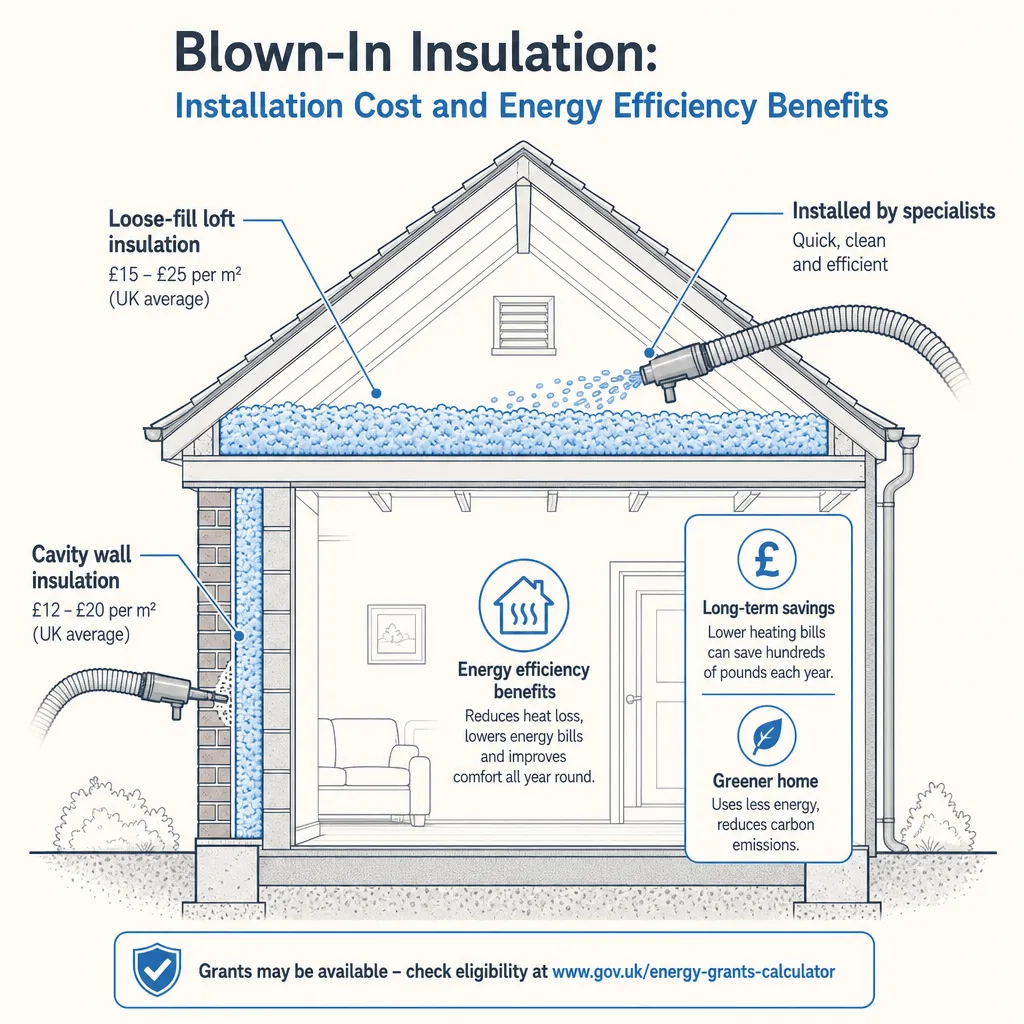
Blown-In Insulation: Installation Cost and Energy Efficiency Benefits
Blown-in insulation uses a machine to pump loose mineral wool, cellulose, or EPS beads into lofts or cavity walls — effective in irregular spaces where roll insulation is impractical.
 Energy & Retrofit
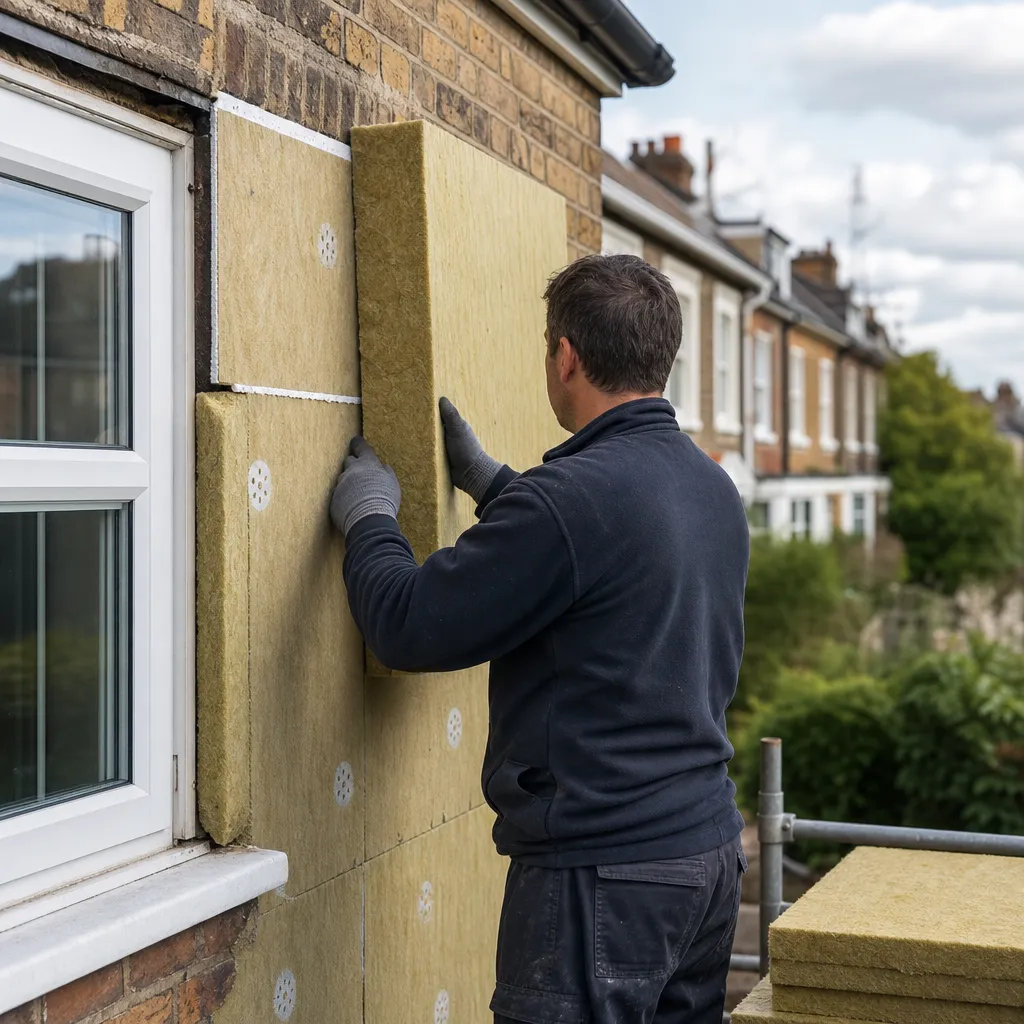
Insulation Types: Understanding Your Options for Home Energy Efficiency
The main insulation types used in UK homes are mineral wool, rigid foam boards, blown loose fill, spray foam, and natural materials such as wood fibre or sheep's wool.
 Energy & Retrofit
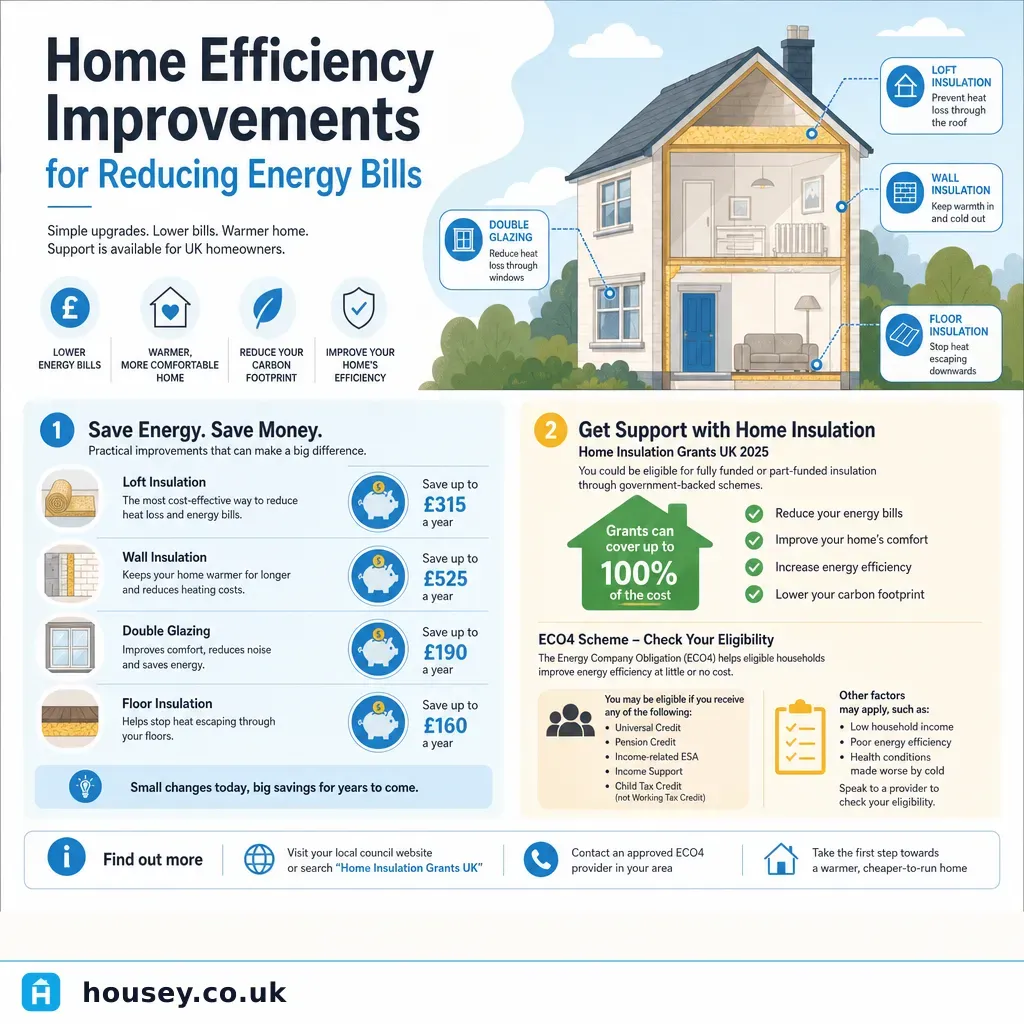
Home Efficiency Improvements for Reducing Energy Bills
The most cost-effective UK home efficiency improvements are usually loft insulation, cavity wall insulation, draught-proofing, and upgrading heating controls.
 Energy & Retrofit
Practical Energy Saving Tips for Homeowners
Most UK households can meaningfully reduce their energy bills by making targeted changes: lowering the thermostat by 1°C, switching to LED lighting, and draught-proofing doors and windows.
 Energy & Retrofit
High-Performance Wall Insulation Systems for UK Homes
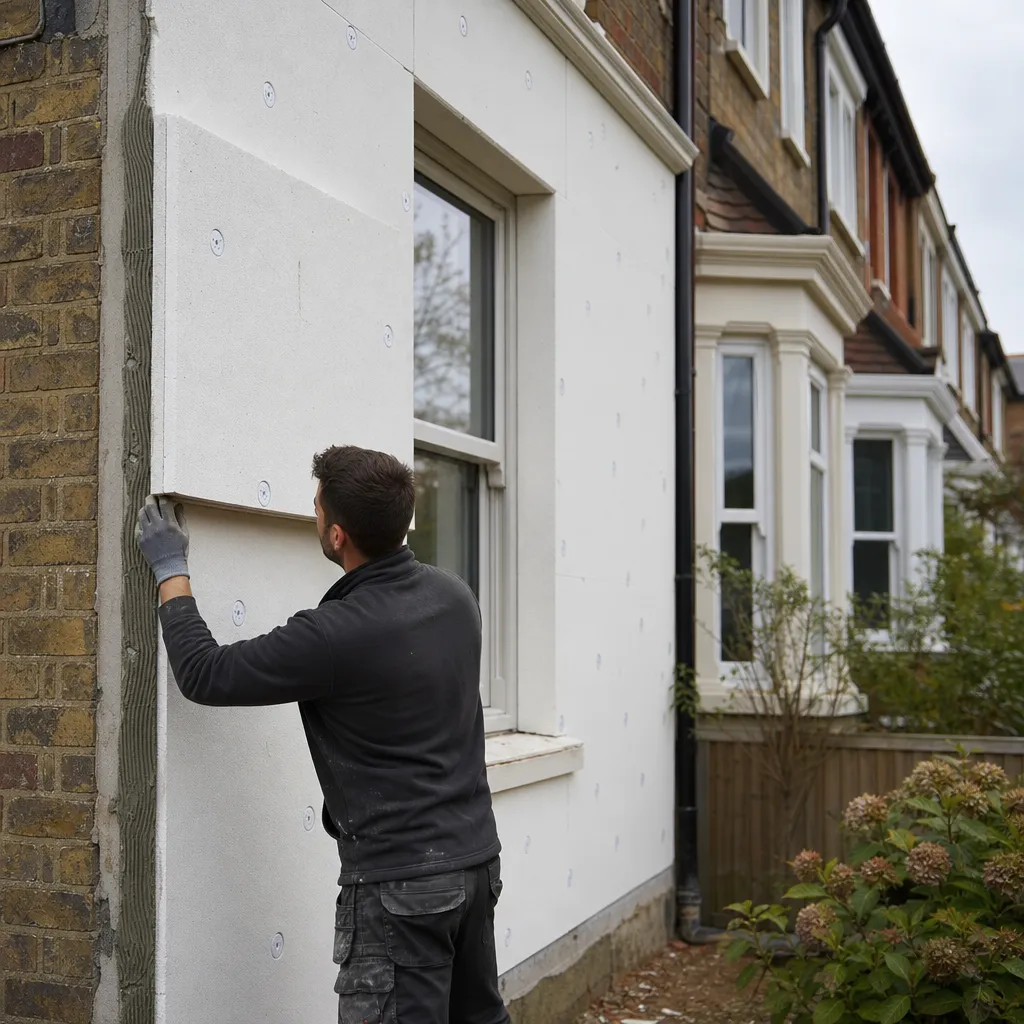
UK homes use three main wall insulation systems: external wall insulation (EWI), internal wall insulation (IWI), and cavity wall insulation (CWI).