Insulation Types: Understanding Your Options for Home Energy Efficiency
By Housey · Last reviewed 8th of May 2026
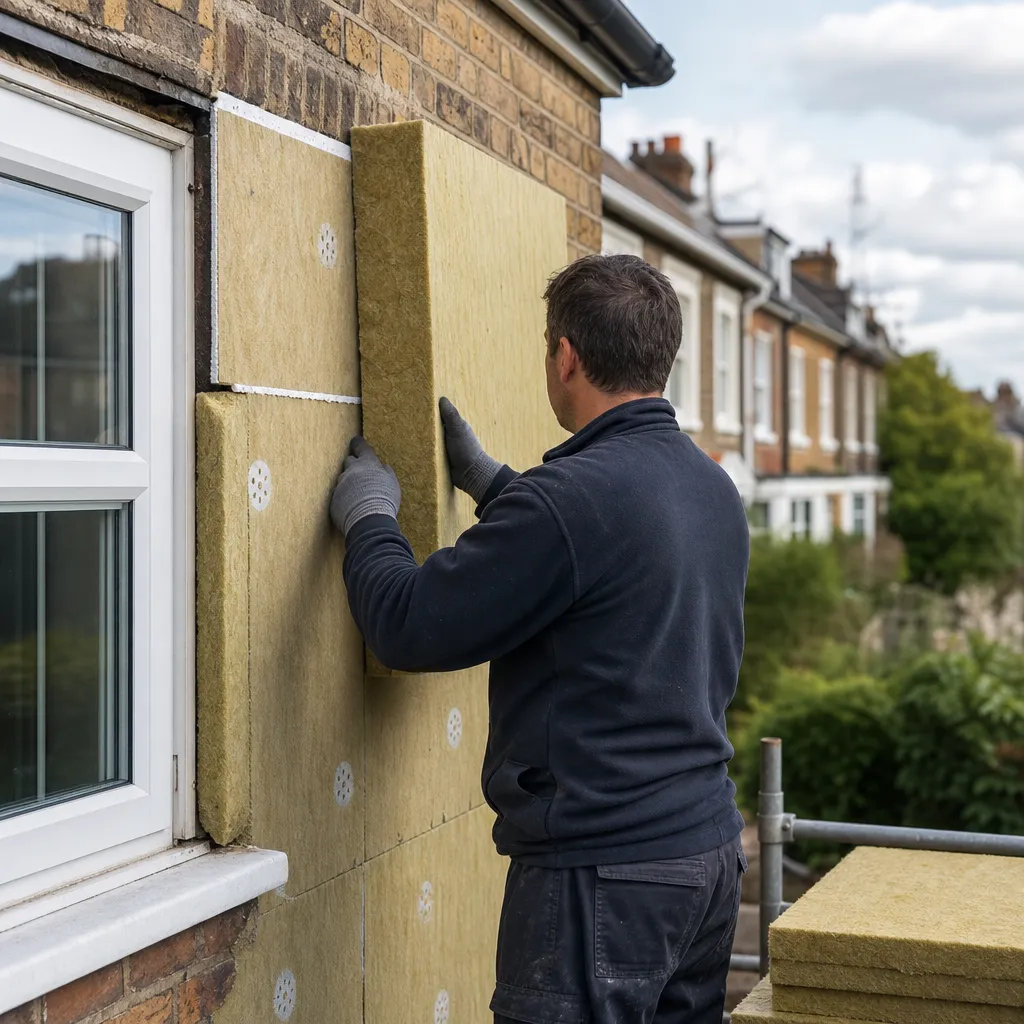
Insulation Types: Understanding Your Options for Home Energy Efficiency
Choosing the right insulation is one of the most impactful energy improvements a UK homeowner can make, yet the range of materials and methods can feel confusing. Questions typically arise when tackling a loft conversion, failing an EPC assessment for a rental property, or exploring grants under schemes such as ECO4. Getting the specification wrong — particularly in older or solid-wall homes — can trap moisture and cause considerably more damage than it prevents.
Key points
- Loft insulation should be at least 270mm deep to meet the guidance in Building Regulations Approved Document L; many existing UK homes fall well short of this benchmark.
- Cavity wall insulation is suitable only where the cavity is at least 50mm wide, uncontaminated by rubble, and not subject to wind-driven rain — a pre-installation survey is required before any work begins.
- PAS 2035:2023 is the British Standard governing retrofit installation; work funded through ECO4 or the Great British Insulation Scheme must comply and typically requires a qualified Retrofit Coordinator.
- Spray foam insulation applied directly to roof rafters can lead a mortgage lender to refuse to lend; RICS has published guidance classifying this as a valuation risk in residential property.
- Each insulation type is characterised by its thermal conductivity (lambda, W/mK) and installed thickness; the resulting R-value determines how well it performs in a specific wall, floor, or roof assembly.
What are the main insulation types?
UK homes typically use one of five insulation families, each suited to different locations and construction types.
Mineral wool (glass wool and rock wool)
Mineral wool — sold under brands including Knauf, Isover, and Rockwool — is the most widely used loft and floor insulation material in the UK. It is non-combustible (Class A1 or A2 fire rating), vapour-permeable, relatively affordable, and easy to install between joists or rafters.
- Typical lambda: 0.032–0.044 W/mK
- Common uses: Cold loft (between and over joists), internal wall lining between studs, floor between joists
- Not ideal for: External wall insulation, below-ground applications, or areas with persistent moisture
Rigid foam boards
Rigid insulation boards — including expanded polystyrene (EPS), extruded polystyrene (XPS), polyisocyanurate (PIR), and phenolic foam — offer higher thermal performance per millimetre than mineral wool, making them useful where space is limited.
- Typical lambda: 0.018–0.038 W/mK (PIR and phenolic boards are at the higher-performing end)
- Common uses: Warm roof insulation, external wall insulation (EWI), floor insulation above or below screed, internal wall insulation (IWI) on solid walls
- Not ideal for: Open-vented cold lofts where breathability is preferred
Loose fill (blown insulation)
Loose-fill materials including cellulose fibre, mineral wool granules, and expanded perlite are blown or poured into cavities and loft spaces. Blown cavity wall insulation uses similar materials injected through drilled holes in the outer leaf.
- Typical lambda: 0.035–0.045 W/mK
- Common uses: Cavity wall insulation, topping up existing loft insulation, awkward loft shapes with obstructions
- Not ideal for: Properties with wall-tie problems, narrow or contaminated cavities, or high wind-driven rain exposure zones (refer to BRE 262 guidance)
Spray foam
Spray polyurethane foam (SPF) is applied as a liquid and expands on contact. Open-cell foam is vapour-permeable and softer; closed-cell foam is rigid and moisture-resistant. Spray foam can achieve low U-values but raises specific concerns in UK residential property.
- Typical lambda: 0.022–0.040 W/mK
- Common uses: Irregular roof spaces, pipe and void filling, commercial applications
- Cautions: RICS and many mortgage lenders treat spray foam applied to roof timbers as a valuation risk. Removal can be costly and may damage timbers. Seek independent professional advice before proceeding — an insulation assessment can help clarify the options for your property.
Natural and recycled materials
Hemp, sheep's wool, wood fibre, and recycled newspaper (cellulose) insulation are growing in availability across the UK. They are generally vapour-permeable, well-suited to older buildings that rely on breathability, and carry lower embodied carbon than most foam products.
- Typical lambda: 0.035–0.055 W/mK
- Common uses: Internal wall insulation in period properties, loft insulation between joists, acoustic insulation
- Not ideal for: Applications requiring very thin profiles or below-ground use
Comparison: insulation types at a glance
Type | Best for | Not ideal for | Approx. lambda (W/mK) | Typical fire class |
|---|---|---|---|---|
Mineral wool | Lofts, floors, stud walls | External exposure, persistently damp areas | 0.032–0.044 | A1/A2 |
Rigid PIR / phenolic | Solid walls (IWI/EWI), warm roofs, floors | Open lofts needing breathability | 0.018–0.025 | B–C |
Blown loose fill | Cavity walls, loft top-up | Narrow or contaminated cavities | 0.035–0.045 | A1 (mineral) |
Spray foam | Irregular voids, pipe lagging | Rafter insulation in mortgaged homes | 0.022–0.040 | Varies |
Natural / recycled | Period properties, breathable walls | Thin-profile or below-ground use | 0.035–0.055 | B–E |
Indicative UK values; performance depends on product, installed thickness, and installation quality.
Which type is right for your property?
The correct choice depends heavily on your property's construction era and wall type.
Decision guide
- Choose mineral wool if you have a cold loft with clear joist access and standard rafter spacing, and cost is a priority.
- Choose rigid foam board if you have a flat or warm roof, are adding external wall insulation, or are laying a new floor screed over a solid base.
- Choose blown cavity fill if your property has an unfilled cavity wall (typically post-1920s brick construction) and a pre-installation survey confirms the cavity is suitable.
- Choose natural or wood fibre board if your property is pre-1919 solid-wall construction where vapour permeability matters and you are undertaking internal wall insulation.
- Ask a qualified retrofit assessor if your property has existing damp, has had previous insulation work, is listed, or is in a conservation area — a retrofit assessment should precede any specification decision.
- Avoid spray foam on roof timbers unless you have independent professional advice and your lender's position confirmed in writing.
Moisture risk in solid-wall properties
Solid brick or stone walls — typical of pre-1919 construction — breathe differently from cavity walls. Applying impermeable insulation internally or externally without a proper moisture risk assessment can cause interstitial condensation, mould growth, and timber decay. PAS 2035:2023 explicitly requires a moisture risk assessment for all external and internal wall insulation in existing dwellings.
Understanding U-values and what they mean
A U-value (W/m²K) measures how quickly heat flows through a building element — the lower the number, the better the performance. The table below gives approximate benchmarks for UK homes.
Building element | Existing typical (W/m²K) | Part L target (new-build) | Good retrofit target |
|---|---|---|---|
Cold loft | 0.40–1.20+ | 0.16 | 0.16 |
Cavity wall | 1.0–1.6 | 0.18 | 0.30–0.45 |
Solid wall | 1.5–2.1 | 0.18 | 0.30 |
Ground floor | 0.45–0.80 | 0.18 | 0.25 |
Source: MHCLG Approved Document L (2021 edition) and Energy Saving Trust guidance.
Grants and funding available in 2026
Several government-backed funding routes may reduce the upfront cost of insulation work:
- ECO4 (Energy Company Obligation, Phase 4): Government-funded insulation for low-income and fuel-poor households. Work must comply with PAS 2035 and be installed by TrustMark-registered contractors.
- Great British Insulation Scheme (GBIS): Targets homes with EPC ratings D–G; provides loft and cavity wall insulation. Check eligibility via GOV.UK.
- Local authority schemes: Some councils administer additional grant funding — check your local authority's website directly.
- VAT: Insulation installation currently attracts 0% VAT for qualifying residential properties. Check HMRC guidance as rates can change.
For any grant-funded work, only instruct TrustMark-registered insulation installers.
When to get professional help
Professional assessment is advisable before committing to an insulation type, particularly where:
- Your home was built before 1919 (solid walls, likely lime mortar — breathability is critical)
- You have had previous damp, condensation, or mould problems in the property
- You are considering internal or external wall insulation, which alter the thermal envelope significantly
- You want to access grant funding (PAS 2035 requires a Retrofit Assessor and, for whole-house improvement plans, a Retrofit Coordinator)
- Your property is listed or in a conservation area (planning consent may be required for external wall insulation)
- You are unsure whether your cavity is clean, wide enough, or structurally sound enough for fill
Red flags that warrant professional input before proceeding:
- Visible damp patches on internal walls or ceilings, particularly on external walls
- White salt deposits (efflorescence) on external masonry, which may indicate moisture movement
- Evidence of previous insulation work that may have been poorly specified or installed
- Spray foam already present in the roof space
- Persistent condensation running on windows or walls during winter months
How Housey can help
If you are ready to explore insulation improvements, Housey connects you with qualified professionals who can assess your home and specify the right solution. Start with an insulation assessment to identify the most cost-effective measures for your property type, or request quotes directly from insulation installers if you already have a specification. For whole-house retrofit plans governed by PAS 2035, a retrofit assessment is the appropriate starting point.
Frequently asked questions
What is the best insulation for a Victorian terraced house?
Victorian terraces typically have solid brick walls with no cavity, so conventional cavity fill is not an option. Internal wall insulation using wood fibre or mineral wool board is often preferred as it maintains the wall's breathability. Loft insulation with mineral wool between joists is usually straightforward. A moisture risk assessment is strongly advisable before installing any wall insulation — PAS 2035:2023 requires one.
Does cavity wall insulation always need a survey first?
Yes. A pre-installation inspection should check cavity width (minimum 50mm), wall tie condition, whether the cavity is clear of rubble, and whether the property is in a high-exposure rainfall zone. Installing in an unsuitable cavity can cause water penetration and internal damp. BBA certificates for insulation products set out the required pre-installation checks.
Will loft insulation affect my roof ventilation?
Cold loft insulation laid at joist level should not block eaves ventilation — this is critical to prevent condensation in the roof void. Building Regulations Approved Document C and guidance from the Insulation Manufacturers' Association specify minimum ventilation gaps. Warm roof insulation at rafter level follows different rules and requires different products.
How do I know if spray foam has been applied in my roof space?
A visual inspection of the roof space will reveal spray foam — it typically appears as a cream, yellow, or grey coating on the underside of roof tiles and rafters. RICS guidance notes that spray foam can make properties difficult to mortgage or remortgage and may mask structural defects. If buying a property, your surveyor or conveyancer should flag this.
Can I insulate a listed building?
Permitted development rights for external wall insulation do not apply to listed buildings; listed building consent is required. Internal insulation may also require consent if it affects historic fabric. Historic England's Energy Efficiency and Historic Buildings guidance covers acceptable approaches for different heritage contexts.
Sources and further reading
- Approved Document L: Conservation of fuel and power — MHCLG / GOV.UK
- PAS 2035:2023 Retrofitting dwellings for improved energy efficiency — BSI Group
- Types of insulation — Energy Saving Trust
- Great British Insulation Scheme — GOV.UK
- ECO4 scheme guidance — GOV.UK
- Spray polyurethane foam (SPF) in residential property — RICS
Useful next reads
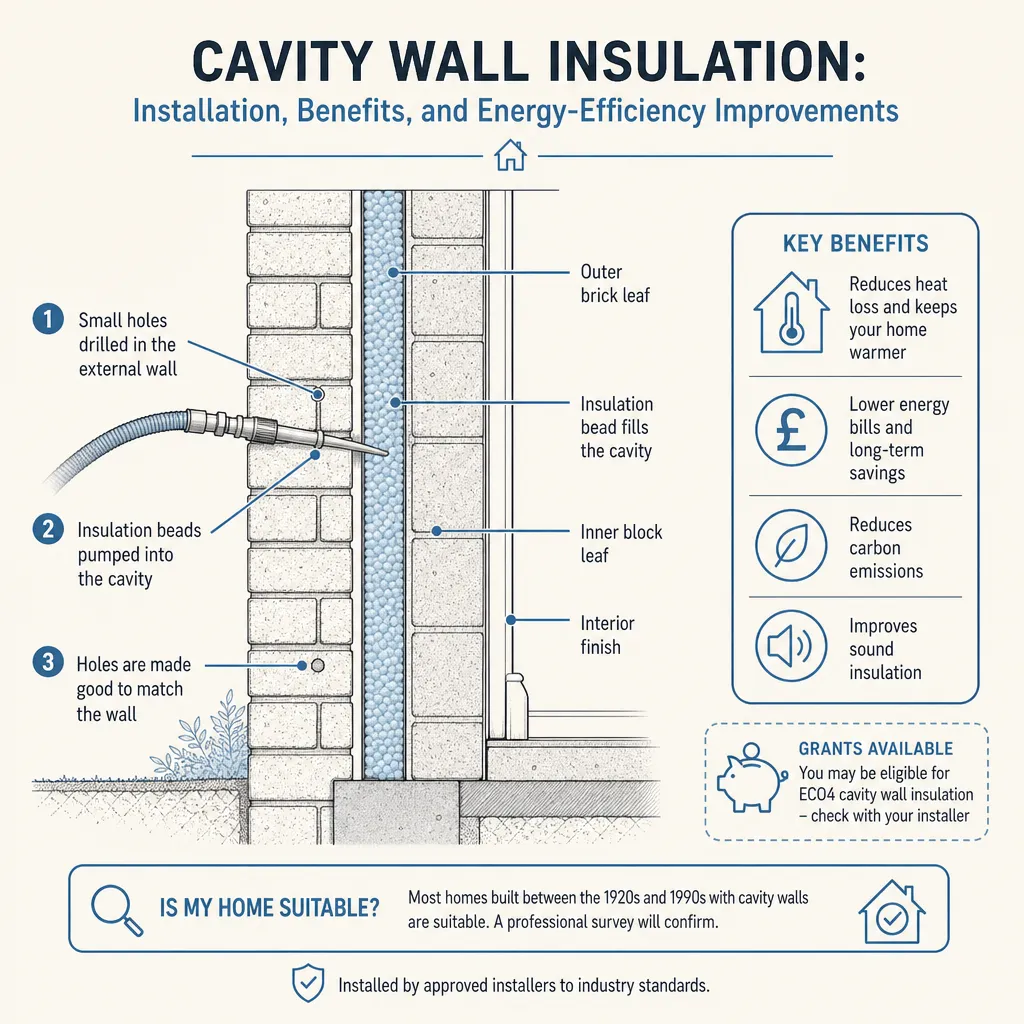 Energy & Retrofit
Cavity Wall Insulation: Installation, Benefits, and Energy-Efficiency Improvements
Cavity wall insulation fills the gap between the inner and outer leaves of a cavity wall with mineral wool, EPS beads, or injected foam.
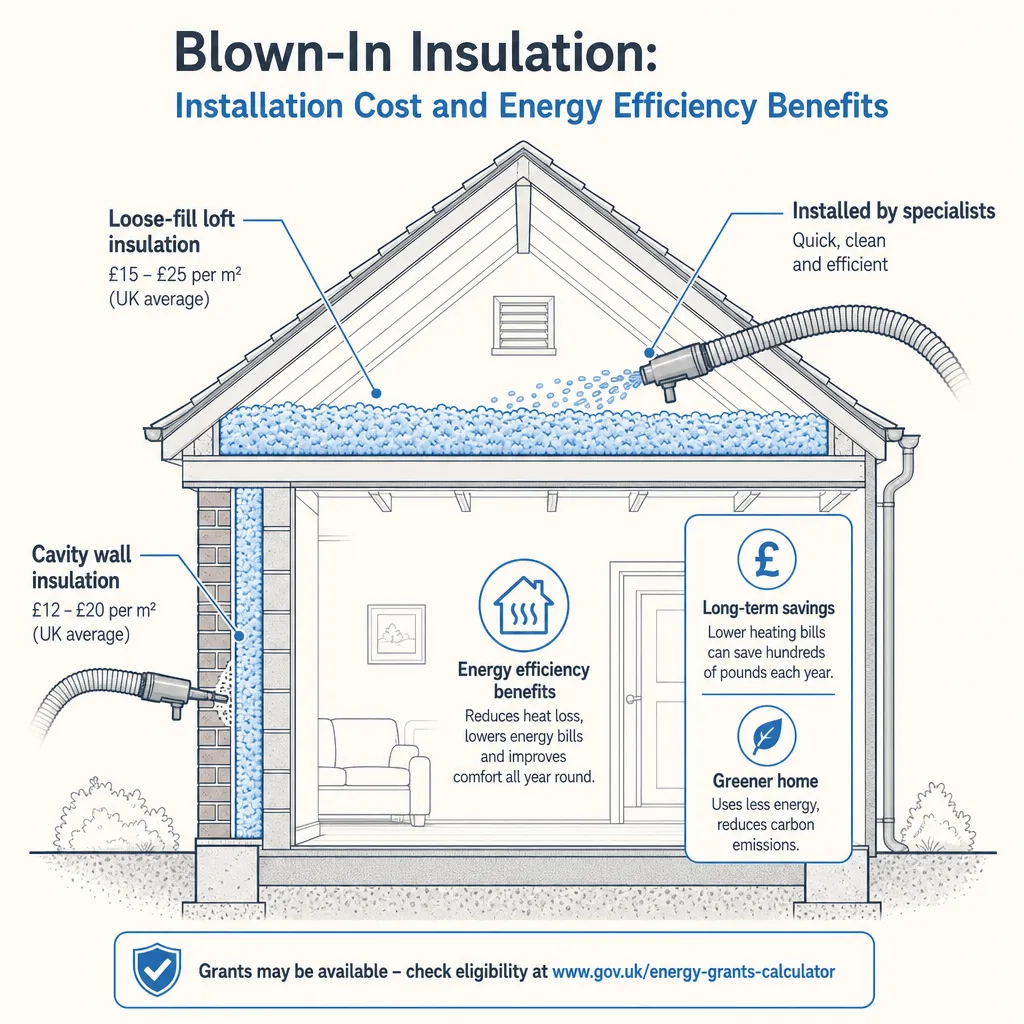 Energy & Retrofit
Blown-In Insulation: Installation Cost and Energy Efficiency Benefits
Blown-in insulation uses a machine to pump loose mineral wool, cellulose, or EPS beads into lofts or cavity walls — effective in irregular spaces where roll insulation is impractical.
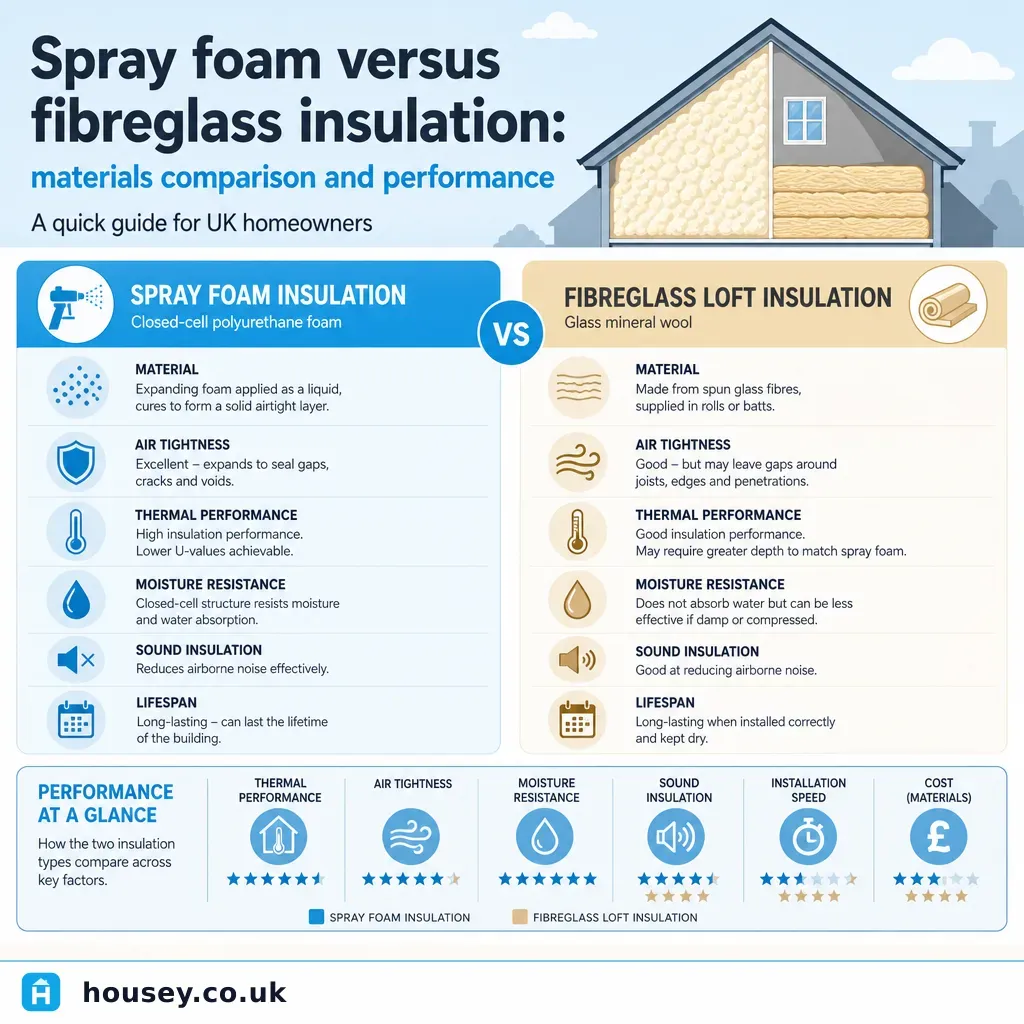 Energy & Retrofit
Spray foam versus fibreglass insulation: materials comparison and performance
Spray foam insulation offers higher thermal performance per centimetre than fibreglass, but in UK homes it carries significant mortgage and resale risks when applied to roof timbers.
 Energy & Retrofit
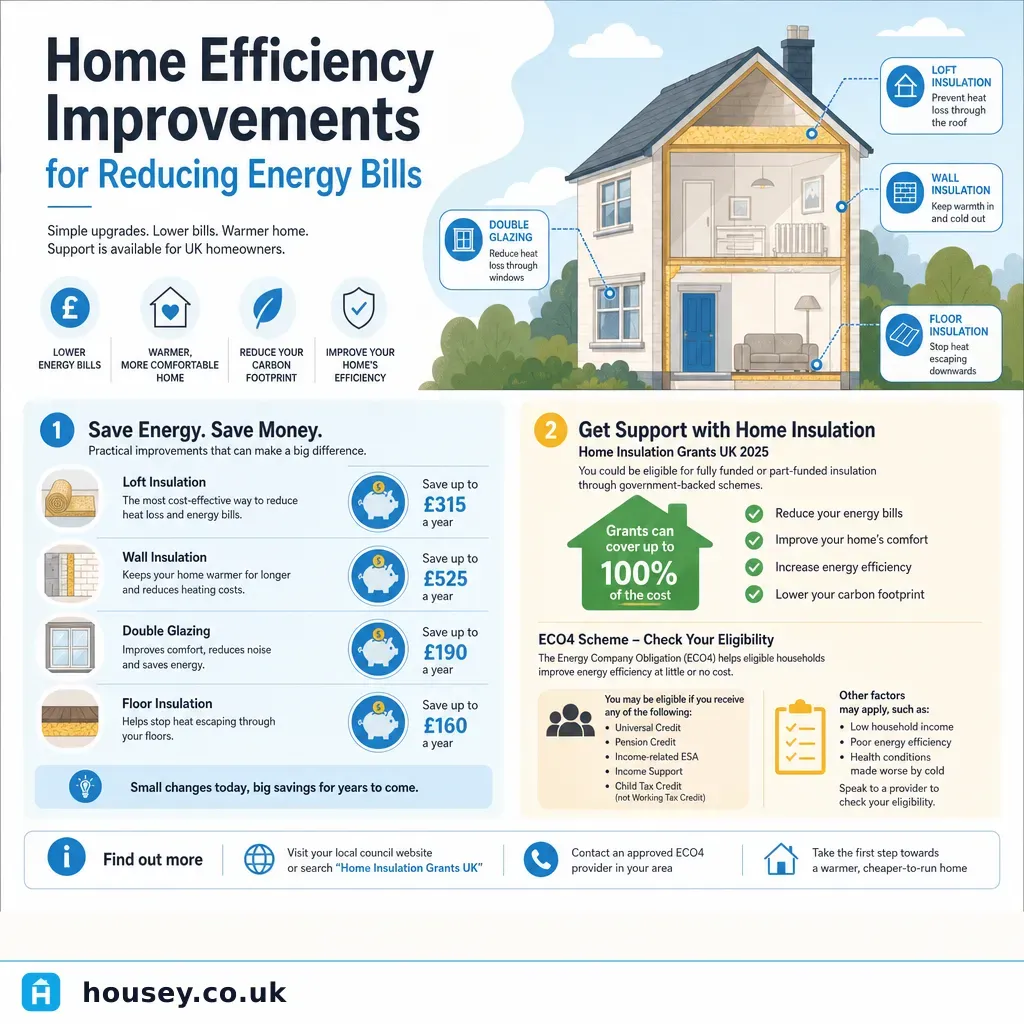
Home Efficiency Improvements for Reducing Energy Bills
The most cost-effective UK home efficiency improvements are usually loft insulation, cavity wall insulation, draught-proofing, and upgrading heating controls.
 Energy & Retrofit
Practical Energy Saving Tips for Homeowners
Most UK households can meaningfully reduce their energy bills by making targeted changes: lowering the thermostat by 1°C, switching to LED lighting, and draught-proofing doors and windows.