Common Cavity Wall Insulation Issues and How to Resolve Them
By Housey · Last reviewed 11th of May 2026
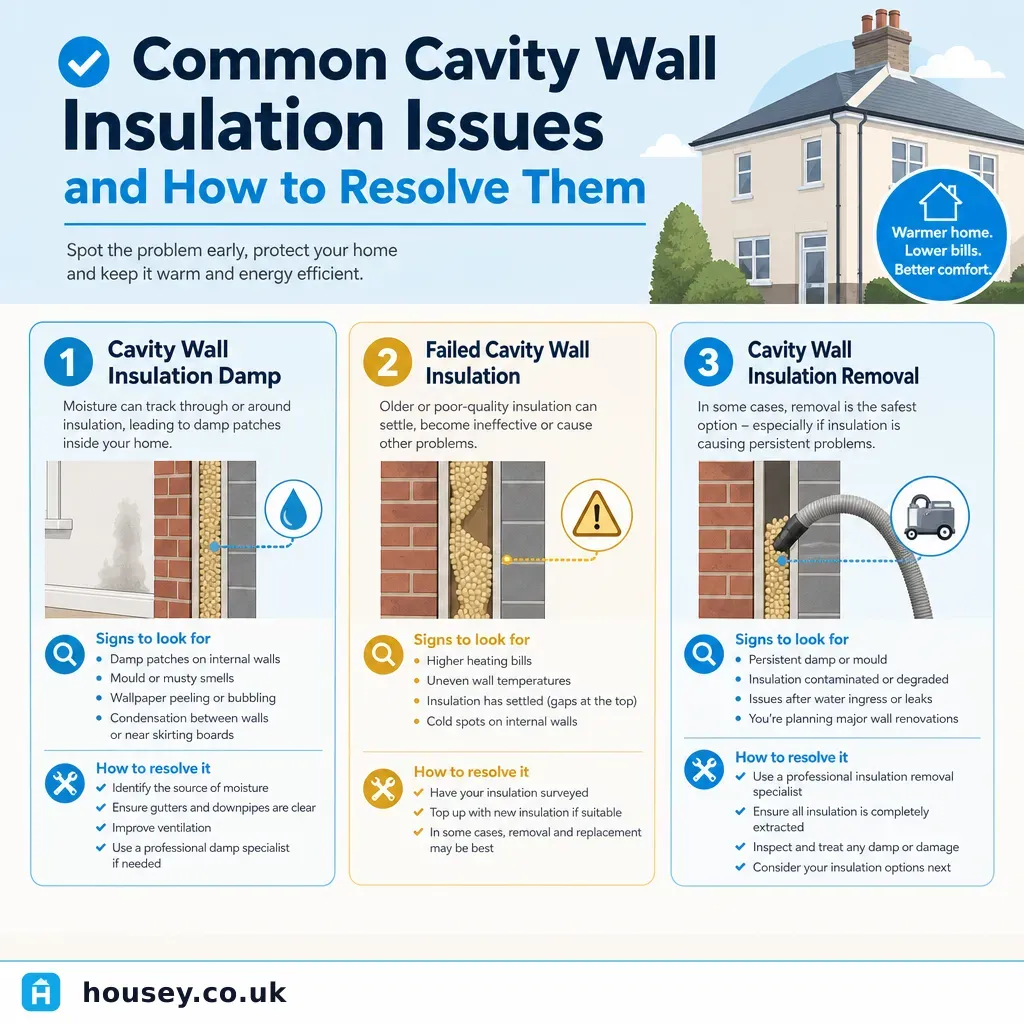
Common Cavity Wall Insulation Issues and How to Resolve Them
Cavity wall insulation (CWI) was installed in millions of UK homes — particularly between the 1980s and early 2010s — as a cost-effective means of reducing heat loss through external walls. For many properties it continues to perform well, but a significant number of installations have developed problems including damp penetration, settlement, and cold bridging. The challenge for homeowners is that damage can be invisible from inside until it is well established, and choosing the right remedy depends on understanding what type of insulation was installed, why it has failed, and whether the property was ever suitable for CWI in the first place.
Key points
- Government-backed schemes including ECO4 and the Great British Insulation Scheme have funded millions of CWI installations; poorly specified or installed CWI is the subject of ongoing industry and government concern.
- PAS 2030 and PAS 2035 set current quality standards for energy retrofit work in England; assessments and installations should be carried out by TrustMark-registered, PAS 2035-compliant contractors.
- Cavity wall insulation is unsuitable for properties in severe or very severe exposure zones, where wind-driven rain can penetrate the outer leaf — CIGA guidelines and BS 8208 both address exposure zone assessment.
- The Cavity Insulation Guarantee Agency (CIGA) provides 25-year guarantees on CWI installations; if the original installer is no longer trading, CIGA may still honour the guarantee directly.
- Extraction of failed CWI for a typical semi-detached house typically costs £2,000–£5,000 (indicative UK costs, last reviewed 2026-05-11), depending on property size, access, and the material type installed.
How cavity wall insulation fails
CWI can fail in several distinct ways, and the root cause determines the most appropriate remedy.
Water penetration and damp
In properties exposed to driving rain, water can travel through the outer leaf of brickwork and be absorbed by the insulation material. Mineral wool — the most widely used CWI material — retains moisture, which can then transfer to the inner leaf and cause damp patches on internal walls. Expanded polystyrene beads can shift over time, creating voids and gaps. Urea formaldehyde (UF) foam — widely installed in the 1970s and 1980s and now considered problematic — can shrink and crack, allowing water ingress through the outer leaf.
Settlement and void formation
In some older installations using blown mineral fibre or polystyrene beads, the material can settle, leaving voids at the top of the wall cavity. These voids act as significant cold bridges, reducing thermal performance and contributing to surface condensation on internal walls even where the lower portions of insulation remain intact.
Poorly specified or inappropriate installation
If a property was assessed as unsuitable for CWI — due to exposure zone, narrow cavity, or deteriorating wall condition — but insulation was installed regardless, problems are considerably more likely. Current standards require a pre-installation survey covering the property's location, construction type, and the condition of the external wall.
Common symptoms of failed cavity wall insulation
Symptom | Possible cause | Priority |
|---|---|---|
Damp patches on internal walls after rain | Water penetration via outer leaf into insulation | High |
Increased heating costs since installation | Voids, settlement, or cold bridging | Medium |
Mould growth on external-facing walls or corners | Cold bridging and surface condensation | Medium |
Efflorescence (white salt staining) on brickwork | Water movement through the wall structure | Medium |
Spalling or blown brickwork on the outer leaf | Freeze-thaw damage from retained moisture | High |
How to confirm whether your CWI has failed
Visual checks provide useful clues, but confirmation requires a specialist assessment. Methods include:
- Borescope (endoscope) survey: A small camera is inserted through a drilled hole into the wall cavity to inspect insulation coverage, voids, and moisture conditions. This is the standard diagnostic method.
- Infrared thermography: Thermal imaging identifies cold spots and areas of poor coverage, and is most effective in winter when the inside-to-outside temperature differential is greatest.
- Moisture content testing: Moisture meters can measure wall moisture levels to confirm whether the inner leaf is being affected by damp transfer from the cavity.
A qualified retrofit assessor or specialist insulation surveyor should interpret all findings before any remediation is recommended.
Homeowner checklist: what to do if you suspect CWI failure
Remediation options
Full extraction and reinstatement
If the CWI has caused significant damp or is seriously compromised, full extraction followed by reinstatement — or a change to a more suitable insulation strategy — is typically the most effective remedy. Extraction involves drilling a pattern of holes in the outer leaf, vacuuming out the material, and re-pointing the drilled holes. The pattern and spacing depends on the original material type.
Partial remediation
Where only specific sections of the installation have failed, targeted extraction and local reinstatement may be sufficient, but this requires thorough diagnostic work to establish the true extent of the problem before work begins.
Change of insulation strategy
For properties in high-exposure locations where CWI is unlikely to perform reliably, internal wall insulation (IWI) or external wall insulation (EWI) may be a more appropriate long-term solution. Both options are more disruptive and expensive than CWI but avoid the exposure-related risks associated with filling the cavity in a vulnerable location.
Important limitations
This article provides general information about common CWI failure modes. The cause, extent, and appropriate remedy vary significantly depending on property construction, location, exposure rating, and the type of material originally installed. A qualified insulation surveyor or PAS 2035-compliant retrofit assessor should inspect the property before any remediation work is commissioned. Rules around guarantee claims, grant eligibility, and building regulations compliance may also vary by circumstance.
What to ask a qualified professional
Before instructing an assessor or remediation contractor:
- Are you TrustMark-registered and PAS 2030-certified for this scope of work?
- What diagnostic method will you use — borescope, thermography, or both?
- Will you provide a written survey report with findings before recommending extraction?
- What material was used in the original installation, and how does that affect the extraction method?
- Is my property potentially eligible for a CIGA guarantee claim, and will you assist with that process?
- What warranties will you provide on re-pointing and any new installation?
When to get professional help
Seek specialist advice promptly if:
- You notice damp patches on internal walls that appear or worsen following periods of rain.
- Mould is growing on external-facing walls or in room corners.
- Your property is in a coastal or upland area and has existing CWI.
- Energy bills have increased noticeably since the insulation was installed without another obvious explanation.
- The original installer has ceased trading and you have a CIGA guarantee that may need to be invoked.
How Housey can help
Housey connects homeowners with qualified specialists for insulation assessments to diagnose CWI problems and assess whether extraction is necessary. You can also compare accredited insulation installers for extraction, reinstatement, and alternative wall insulation strategies. Request quotes and compare local professionals before committing to any remediation work.
Frequently asked questions
How do I know whether my cavity wall insulation is causing damp?
The most reliable sign is damp patches appearing on internal walls — particularly on external-facing surfaces — that worsen after periods of heavy or wind-driven rain. A borescope survey by a specialist can confirm whether the insulation is wet, displaced, or voided, and moisture content tests can measure how much water has transferred to the inner leaf.
Can I claim on my CIGA guarantee if the original installer has gone out of business?
Yes. The Cavity Insulation Guarantee Agency operates guarantees that are independent of the installing company. If your property has a CIGA guarantee and the installation has failed, contact CIGA directly with your address and any paperwork from the original installation. The guarantee covers 25 years from the installation date.
Is cavity wall insulation extraction covered by any government grants?
As of May 2026, there is no dedicated grant specifically for CWI extraction. However, if extraction is a necessary precondition for a compliant new installation, some funding routes — such as ECO4 for eligible households — may potentially cover the reinstatement element. A local energy advice service or qualified retrofit assessor can clarify current eligibility.
How long does cavity wall insulation extraction take?
For a typical semi-detached house, extraction usually takes one to two working days. The process involves drilling a pattern of holes in the outer brickwork, vacuuming out the insulation material, and re-pointing the drilled holes. The property remains habitable throughout, though some dust and noise disruption is to be expected.
Sources and further reading
- Cavity insulation guarantee information — Cavity Insulation Guarantee Agency
- Cavity wall insulation advice — Energy Saving Trust
- PAS 2035: specification for whole-house retrofit — BSI / Retrofit Academy
- Find a registered retrofit contractor — TrustMark
- Great British Insulation Scheme — GOV.UK
Useful next reads
 Energy & Retrofit
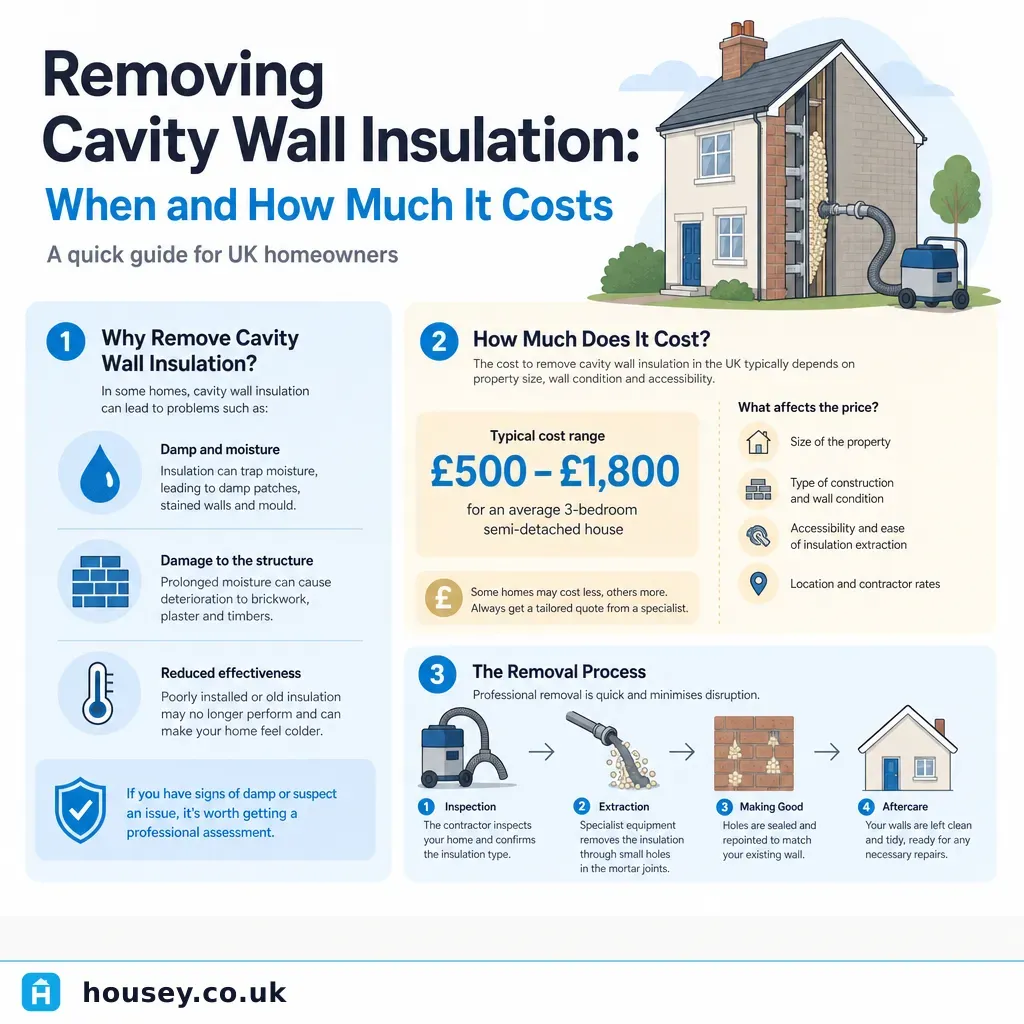
Removing Cavity Wall Insulation: When and How Much It Costs
Cavity wall insulation is usually removed when it is causing penetrating damp, has degraded, or was poorly installed.
 Energy & Retrofit
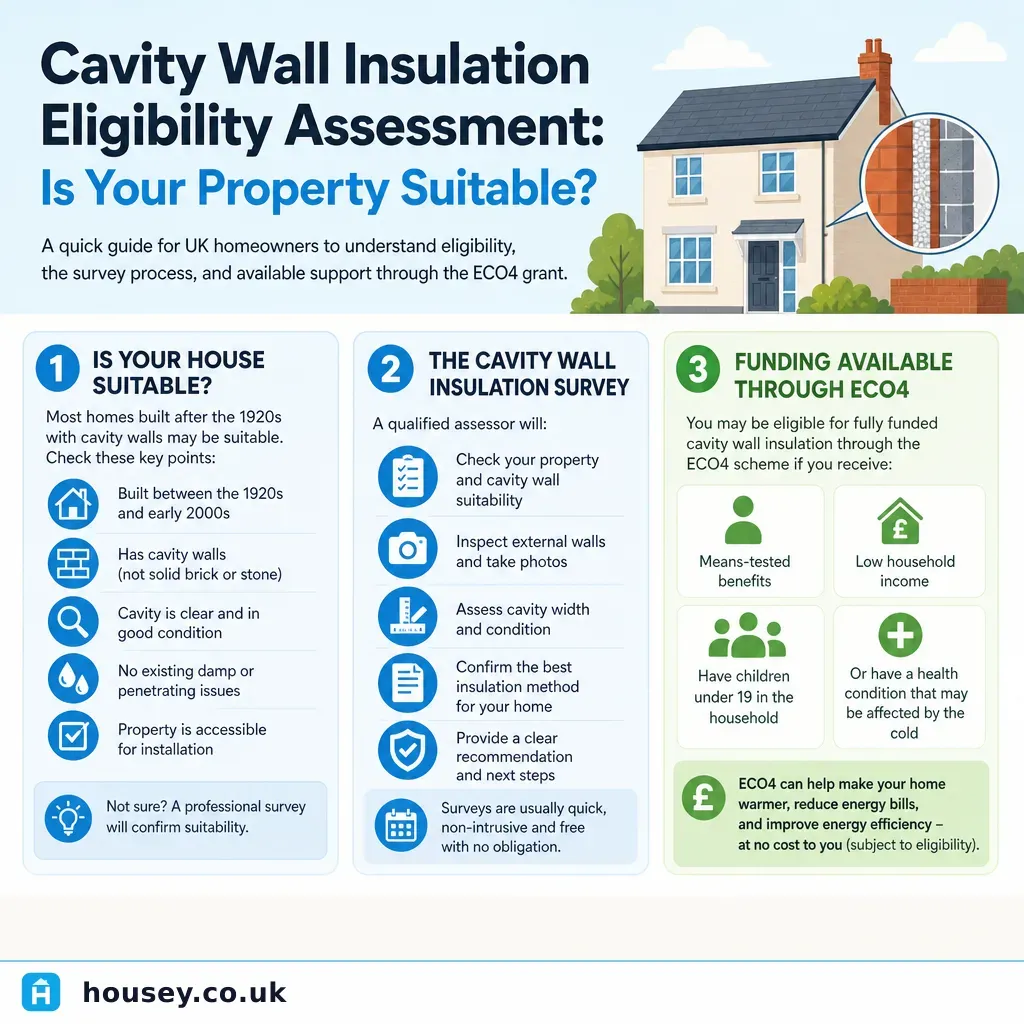
Cavity Wall Insulation Eligibility Assessment: Is Your Property Suitable?
Cavity wall insulation suits most UK homes built from around 1920 onwards with unfilled cavities at least 50mm wide in sheltered or moderately exposed locations.
 Energy & Retrofit
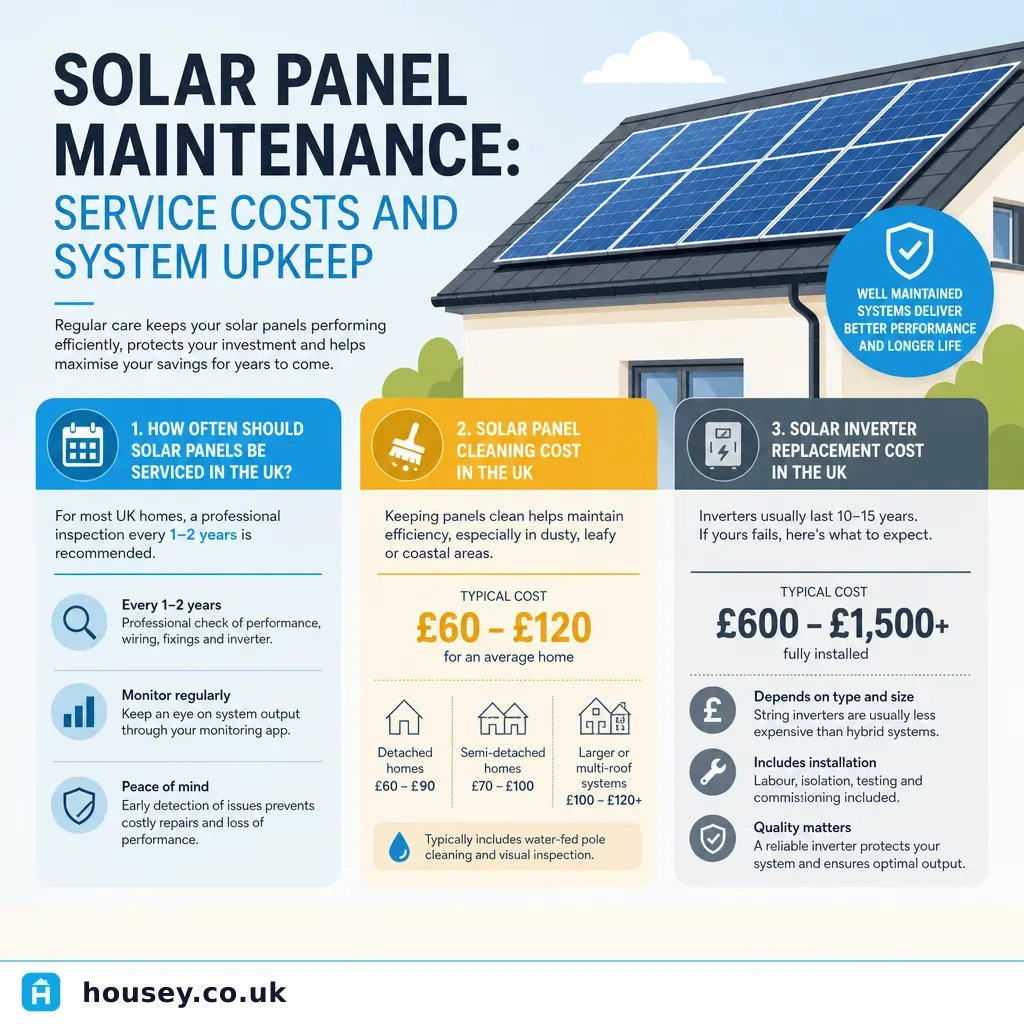
Solar panel maintenance: service costs and system upkeep
Solar panels need a professional inspection every one to three years and cleaning every one to two years, costing roughly £100–£200 for a service visit and £60–£150 to clean a standard 3–4 kWp system.
 Energy & Retrofit
High-Performance Doors and Windows for Energy Saving
High-performance windows and doors reduce heat loss through the building envelope, cutting heating bills and improving comfort.
 Energy & Retrofit
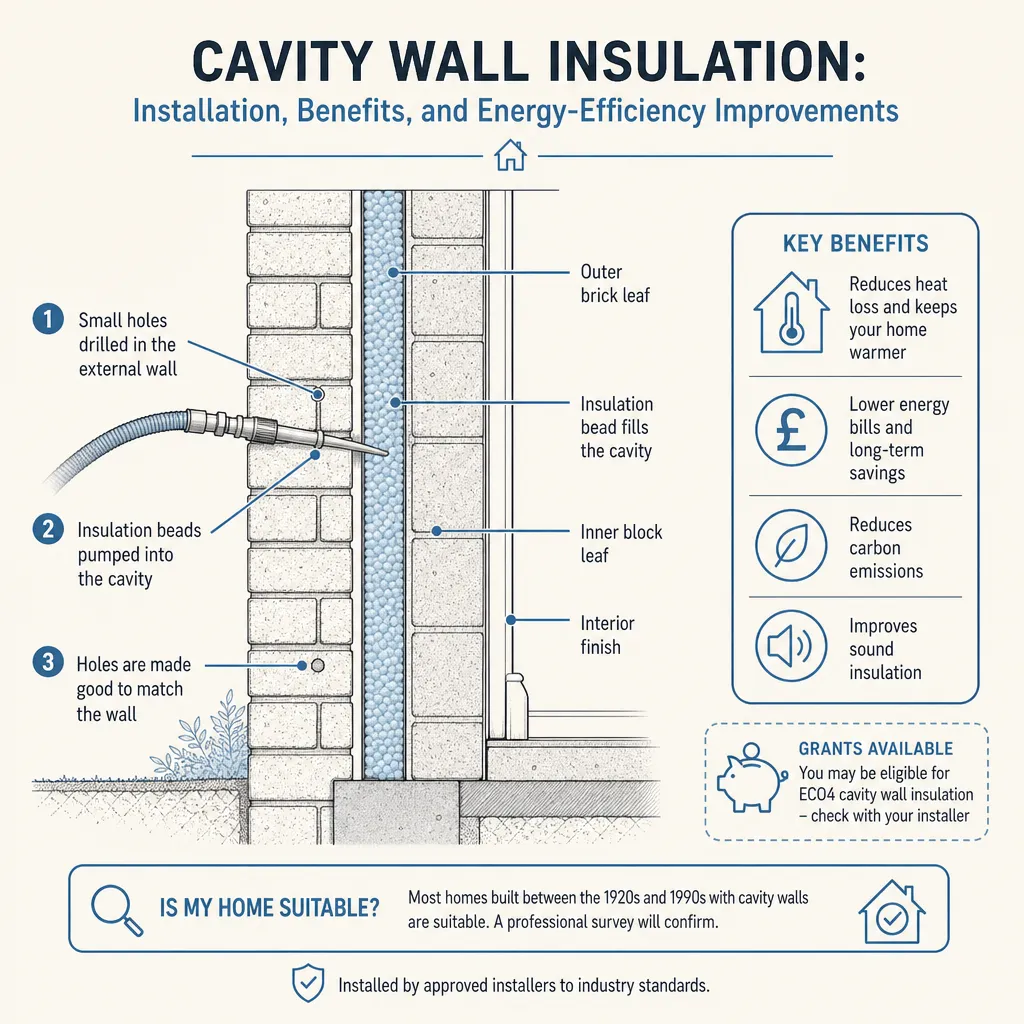
Cavity Wall Insulation: Installation, Benefits, and Energy-Efficiency Improvements
Cavity wall insulation fills the gap between the inner and outer leaves of a cavity wall with mineral wool, EPS beads, or injected foam.