Solar panel maintenance: service costs and system upkeep
By Housey · Last reviewed 31st of May 2026
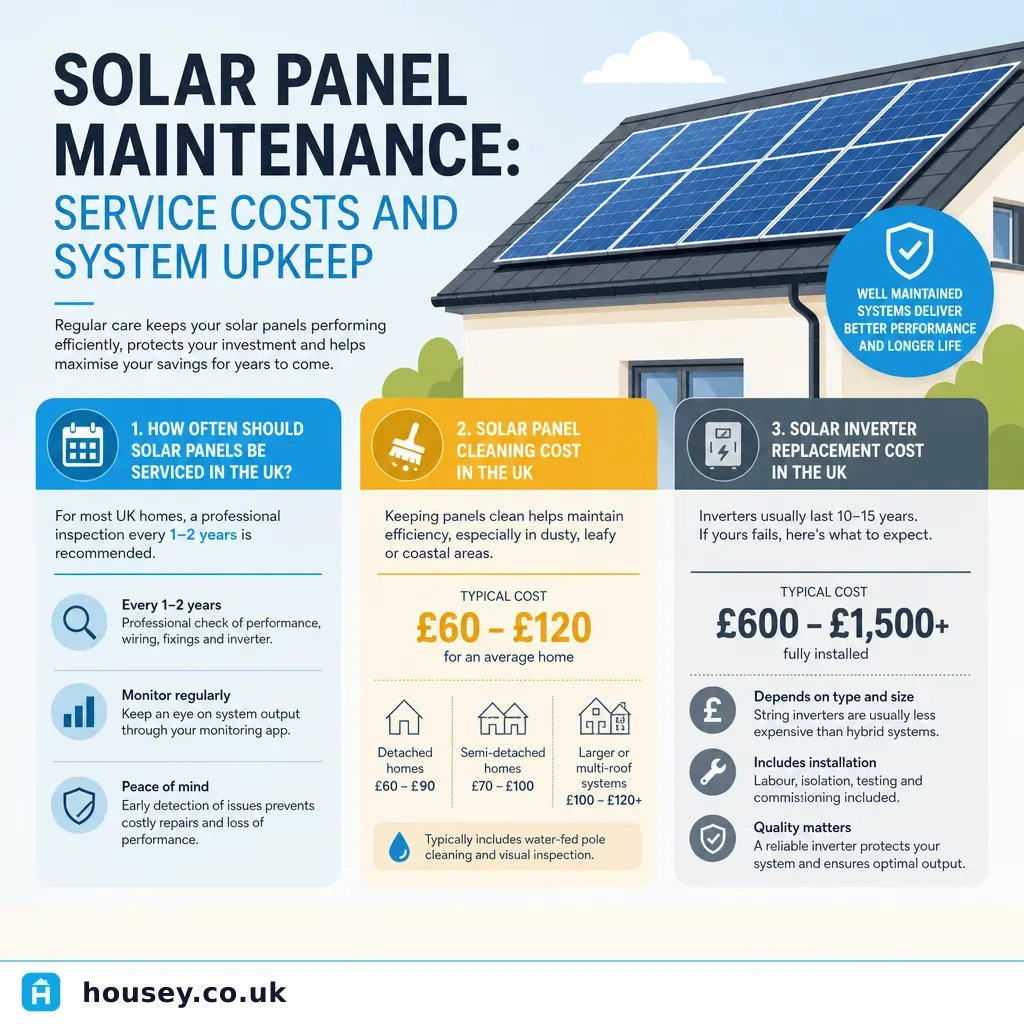
Solar panel maintenance: service costs and system upkeep
Solar PV systems are often described as low-maintenance, but "low" is not the same as "zero" — and knowing what upkeep genuinely costs over a system's 25-year lifespan helps homeowners budget accurately and protect their investment. The question typically arises a year or two after installation, when the warranty period feels distant and the first signs of reduced output prompt concern. At stake are system performance, MCS warranty compliance, and the financial return from schemes such as the Smart Export Guarantee (SEG).
Key points
- MCS-accredited installers recommend a full system inspection every one to three years, depending on roof type, environment, and manufacturer guidance.
- Panel cleaning typically costs £3–£6 per panel (indicative UK costs, last reviewed 2026-05-31), with most residential systems benefiting from cleaning every one to two years.
- String inverters — the most common type in UK domestic installations — have an average operational lifespan of 10–15 years, meaning most homeowners will face at least one inverter replacement during a 25-year system life.
- A professional system check by a registered electrician or MCS-accredited installer typically costs £100–£200 (indicative UK costs, last reviewed 2026-05-31).
- Monitoring via a generation meter or manufacturer app is the most cost-effective early-warning tool: a sustained output drop of more than 20% below expected warrants professional investigation.
What does solar panel maintenance involve?
Solar panel maintenance falls into two broad categories: routine upkeep that a careful homeowner can handle, and technical servicing that should be carried out by a qualified, ideally MCS-accredited, installer or registered electrician.
Routine upkeep includes:
- Visual checks of panels for bird droppings, lichen, moss, or debris accumulation.
- Confirming the inverter display shows a normal operating status.
- Checking that the area around any ground-mounted panels is clear of growing vegetation.
- Monitoring your generation meter or app reading against seasonal expectations.
Technical servicing includes:
- Inspection of the inverter, isolator switches, DC cabling, and MC4 connectors.
- Checking cable insulation for signs of deterioration or rodent damage.
- Reviewing performance data against the system's original design output (found on your MCS installation certificate).
- Verifying that SEG or legacy Feed-in Tariff (FiT) meter readings are logging correctly.
- Testing earth continuity and inspecting the AC connection to the consumer unit.
The Microgeneration Certification Scheme (MCS) provides guidance on maintenance requirements for certified domestic solar PV systems. Homeowners with systems installed under the Feed-in Tariff should also check their original contract for any maintenance obligations that affect tariff eligibility.
Solar panel maintenance costs: a breakdown
The table below summarises the main ongoing costs for a typical 3–4 kWp domestic system (approximately 10–14 panels). All figures are indicative UK costs, last reviewed 2026-05-31; quotes will vary by region, roof height, system size, and installer.
Maintenance task | Typical frequency | Indicative cost |
|---|---|---|
Panel cleaning (professional, water-fed pole) | Every 1–2 years | £60–£150 per visit |
Full system inspection (MCS installer or NICEIC electrician) | Every 1–3 years | £100–£200 per visit |
String inverter replacement (supply and labour) | Once circa year 10–15 | £800–£1,500 |
Microinverter or power optimiser replacement (per unit) | As needed | £150–£300 |
Battery storage health check (if applicable) | Annual | £50–£100 |
Generation meter recalibration or replacement | As required by energy supplier | £50–£150 |
Indicative UK costs, last reviewed 2026-05-31. Always obtain at least two written quotes.
Do solar panels need cleaning, and is it worth it?
In many parts of the UK, rainfall is sufficient to keep panels at a standard pitch (30–40°) reasonably clean. Panels installed at a shallow pitch (under 15°), or in areas near agricultural land, busy roads, or woodland, tend to accumulate soiling faster than rain can clear it.
Heavy soiling can reduce output by 5–15%, according to research referenced by Solar Energy UK. On a 4 kWp system generating around 3,400 kWh per year, a 10% reduction represents meaningful lost generation and reduced SEG export income.
A note on DIY cleaning: Accessing a pitched roof to clean panels carries a serious fall-hazard risk. Working at height above 2 m requires appropriate equipment and training under the Work at Height Regulations 2005. For most homeowners, using a professional contractor with a water-fed pole system — deionised water only, as detergents can damage panel surfaces and may void warranties — is the safer and more practical approach.
Decision guide: what maintenance does your system need?
- System under 2 years old and under warranty: Contact your MCS installer for a warranty inspection. Check your installation certificate and any maintenance clauses before paying for a separate service visit.
- System 2–5 years old, performing as expected: Schedule professional cleaning every 1–2 years and a full technical inspection every 2–3 years.
- System 5–10 years old, output slightly below expected: Book a technical inspection. Have the inverter and DC connections checked, and verify your monitoring baseline against the original design estimate on your MCS certificate.
- System 10+ years old: Plan for inverter replacement within this period. Get a condition report from a qualified installer before adding battery storage or making other upgrades.
- Any age, sudden output drop: Arrange an inspection promptly — do not wait for the next scheduled service.
Red flags: when to act quickly
The following signs suggest your system needs professional attention sooner rather than later:
- A sudden, sustained drop in generation output not explained by seasonal variation or obvious new shading.
- The inverter is displaying a fault code, has shut down, or its display is blank during daylight hours.
- Burning smells near the inverter, junction box, or consumer unit — switch off at the AC isolator immediately and contact a qualified electrician.
- Visible physical damage to panels: cracking, delamination, discolouration, or burn marks ("hot spots").
- Visible corrosion or movement on roof mounting rails or fixings.
- The inverter fan running continuously or making unusual noise.
- SEG or FiT export meter reading appearing static over a prolonged sunny period.
Solar panel maintenance checklist
Review this checklist twice a year — spring and autumn are practical prompts:
When to get professional help
Solar PV systems combine DC electrical circuits — which can operate at lethal voltages — with roof-mounted structural fixings. Any work beyond visual inspection or ground-level cleaning should be handled by a competent person:
- Fault-finding or repair to the inverter, wiring, or isolators requires an MCS-accredited installer or an NICEIC or NAPIT-registered electrician.
- If you suspect a roof fixings issue, a roofing contractor should inspect before any installer accesses the roof.
- If a panel has visible physical damage, do not touch it — contact your installer.
- If you are unsure whether your system meets current electrical safety standards (particularly important for systems over eight years old), an Electrical Installation Condition Report (EICR) from a registered electrician is advisable.
How Housey can help
If you are unsure about the condition of your solar installation or want a professional to assess performance before an inverter replacement or battery upgrade, Housey connects you with qualified, vetted specialists. A solar survey can identify faults, assess output against design expectations, and give you a clear picture of what maintenance or upgrades your system needs.
Frequently asked questions
How often should solar panels be serviced in the UK?
Most MCS-accredited installers recommend a full technical inspection every one to three years, depending on system age and local environment. Annual monitoring via a generation meter or app is good practice between service visits. If your system is still under its installation warranty, check whether the warranty specifies a required maintenance schedule.
Will not servicing my solar panels void the warranty?
It can. Many panel and inverter warranties include maintenance conditions requiring work to be carried out by a qualified installer. Check your original installation documentation. Failing to maintain the system may also affect claims under a manufacturer's performance warranty if output degrades beyond the guaranteed threshold.
Can I clean solar panels myself?
Ground-level cleaning of accessible panels — on a garage or low-pitch extension — using a soft brush or water-fed pole with deionised water is generally feasible. Never use abrasive materials, high-pressure washers, or detergents. For panels on a main pitched roof, the fall risk means professional cleaning is strongly recommended.
How long does a solar inverter last?
String inverters typically last 10–15 years. Microinverters and DC optimisers often have a longer operational life, sometimes matching the 25-year panel lifespan, though individual units can fail earlier. Budget for at least one string inverter replacement over a typical 25-year system life.
Does solar panel maintenance affect my Smart Export Guarantee payments?
SEG payments depend on your meter accurately recording export. A poorly performing or faulty system will reduce the energy you export and therefore your SEG income. Regular maintenance helps ensure your system generates and exports at its designed capacity, protecting your financial return from the scheme.
Sources and further reading
- Microgeneration Certification Scheme (MCS) — standards for domestic solar PV installation and maintenance
- Solar panels: running costs and performance — Energy Saving Trust
- Smart Export Guarantee (SEG) — Ofgem
- Work at Height Regulations 2005 — Health and Safety Executive
Useful next reads
 Energy & Retrofit
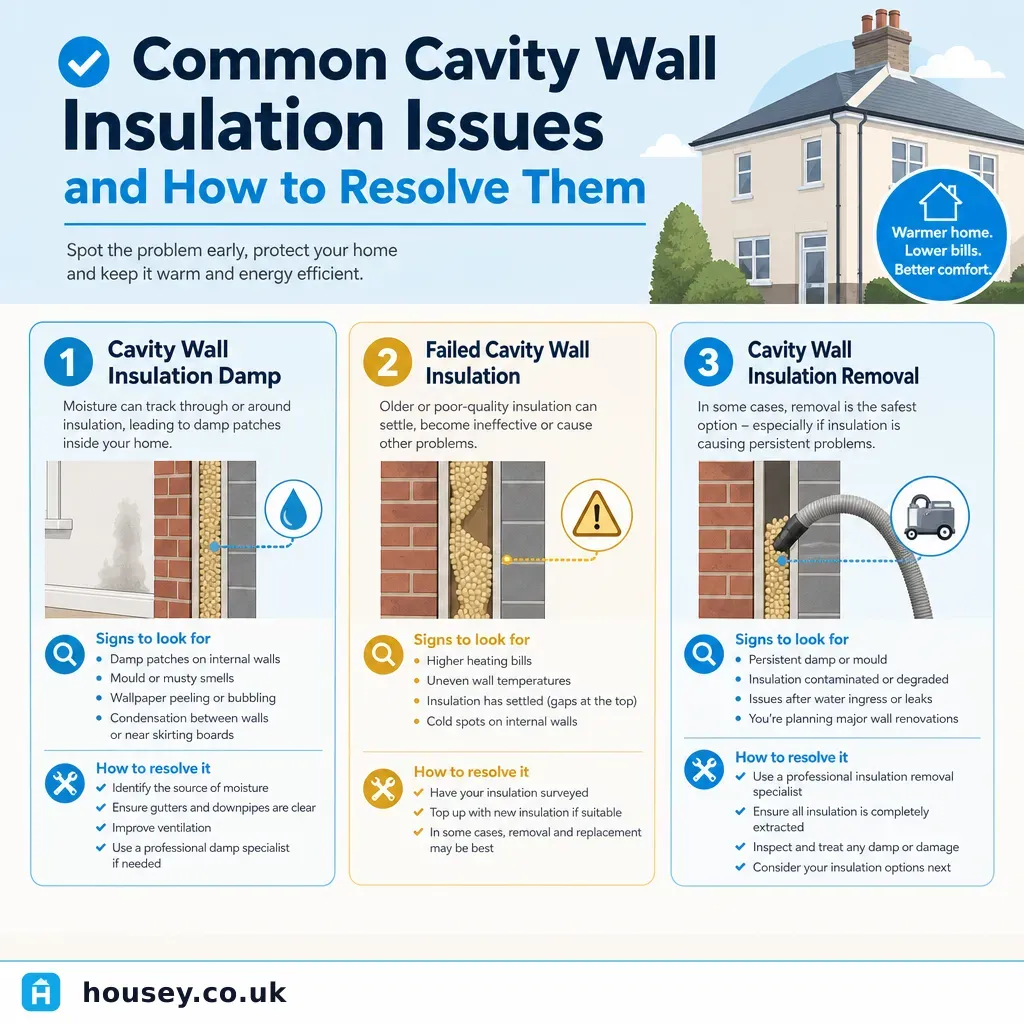
Common Cavity Wall Insulation Issues and How to Resolve Them
Cavity wall insulation problems typically include damp penetration through the outer leaf, settlement leaving voids in the cavity, and cold bridging causing condensation on internal walls.
 Energy & Retrofit
High-Performance Doors and Windows for Energy Saving
High-performance windows and doors reduce heat loss through the building envelope, cutting heating bills and improving comfort.
 Energy & Retrofit
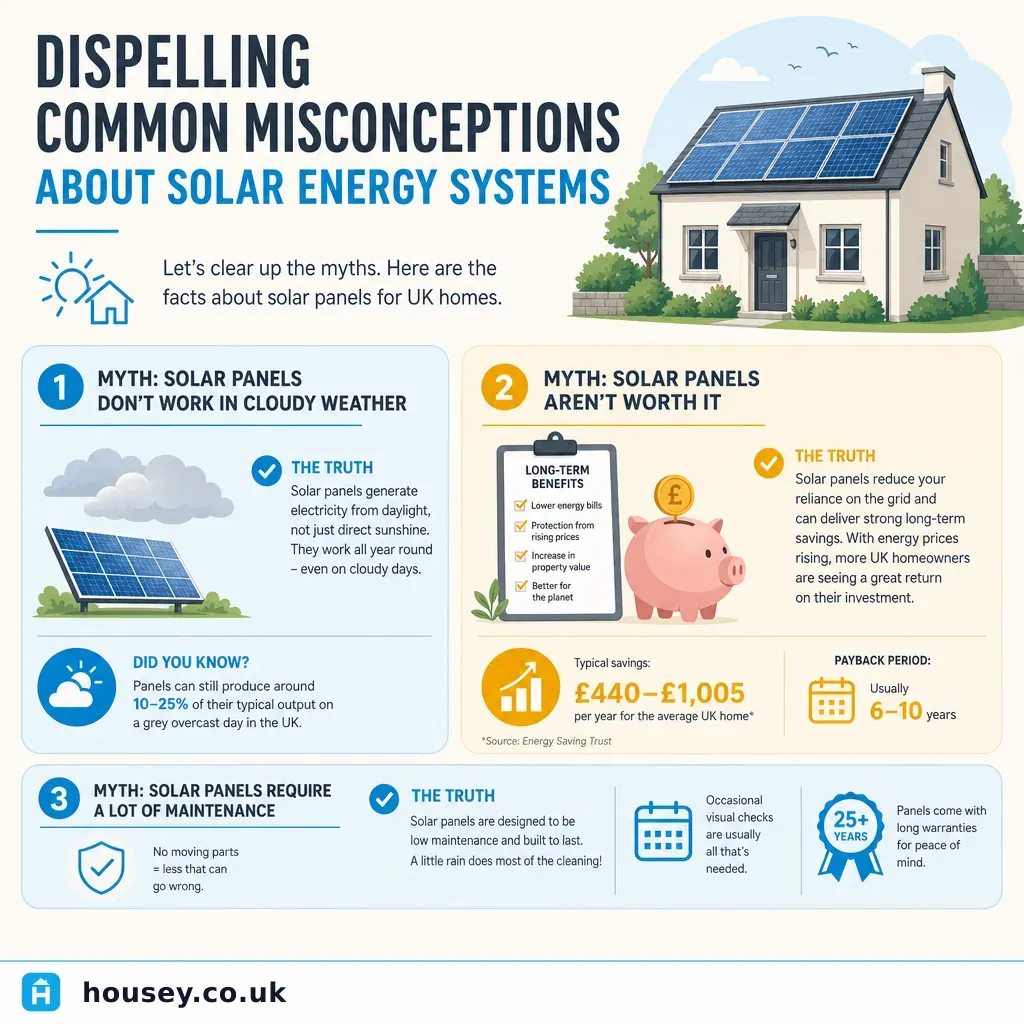
Dispelling Common Misconceptions About Solar Energy Systems
Most common solar panel myths — that panels don't work in cloudy UK weather, take decades to pay back, or cause net environmental harm — are not supported by evidence.
 Energy & Retrofit
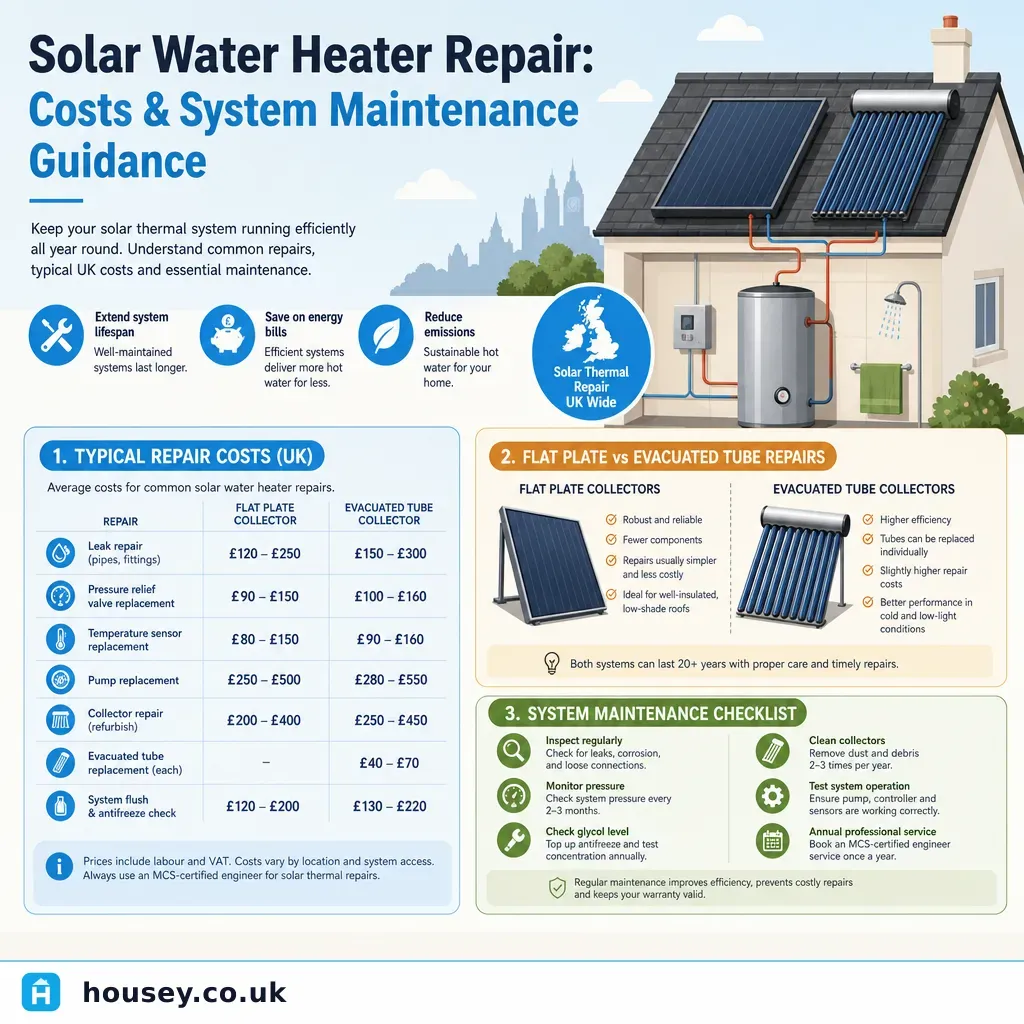
Solar water heater repair: costs and system maintenance guidance
Solar thermal hot water systems need a professional service every 3–5 years, covering glycol fluid condition, system pressure, and pump operation.
 Energy & Retrofit
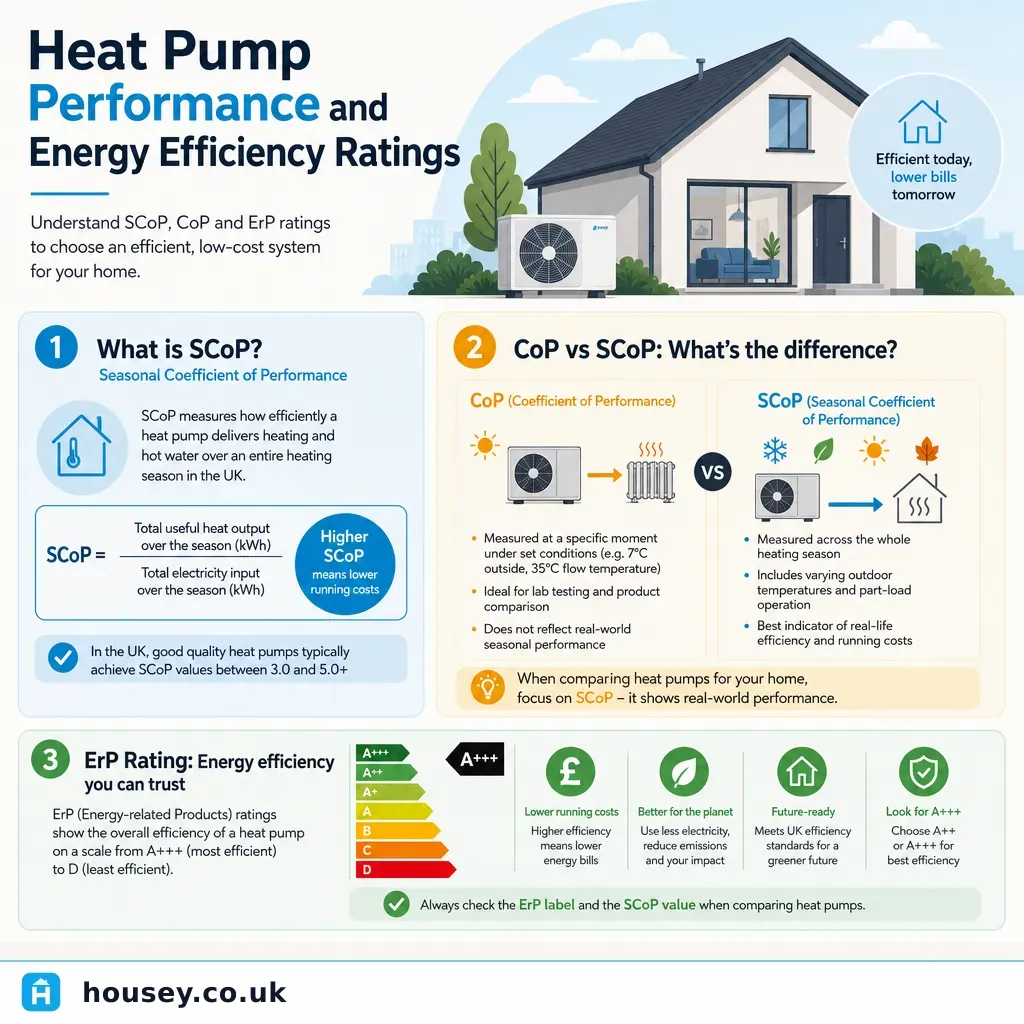
Heat Pump Performance and Energy Efficiency Ratings
Heat pump efficiency is measured by the Seasonal Coefficient of Performance (SCoP) — the annual ratio of heat delivered for every unit of electricity consumed.