Cedar Cladding Installation: Costs, Durability and Maintenance
By Housey · Last reviewed 31st of May 2026
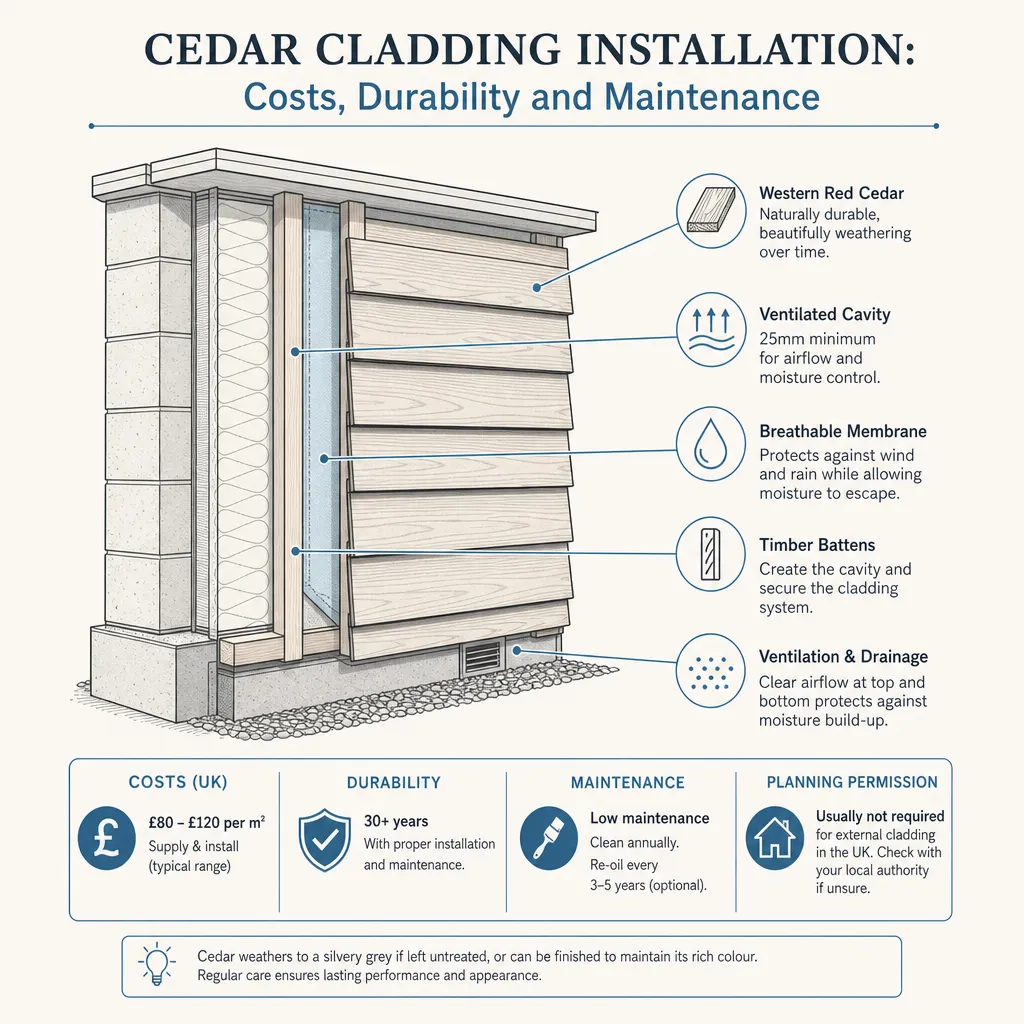
Cedar Cladding Installation: Costs, Durability and Maintenance
Cedar cladding is a popular choice for UK homeowners updating a home's exterior, adding a timber-clad extension, or replacing ageing render. Whether specified for a self-build, wrapping an outbuilding, or matching an architect's brief for a rear extension, the decisions made at the outset — profile, grade, treatment, and fixing method — have a significant bearing on both long-term performance and cost. UK planning rules and building regulations also apply in many situations, particularly in conservation areas or on listed buildings.
Key points
- Cedar cladding costs approximately £80–£180 per m² supplied and installed for typical residential projects, with premium grades and complex profiles at the higher end (Indicative UK costs, last reviewed 2026-05-31).
- Building Regulations Part B (fire spread) and Part L (energy efficiency) apply to cladding on new extensions and new builds — confirm compliance requirements with your local building control body before specifying.
- Conservation areas and listed buildings usually require planning permission or listed building consent for external cladding changes; check with your local planning authority (LPA) before committing to materials.
- Western red cedar (Thuja plicata) is the most commonly specified cedar in the UK, valued for its natural oils, low density, dimensional stability, and TRADA Durability Class 3 rating above ground.
- Untreated cedar weathers to a silver-grey patina over 2–5 years; applying a compatible microporous oil or stain every 1–3 years is usually needed to maintain a warm tone and protect the surface.
Cedar cladding profiles: choosing the right board
Cedar cladding is available in several profiles, each with a distinct visual character and installation method. The right choice depends on your property's architecture, planning context, and budget.
Profile | Appearance | Best for | Installation complexity |
|---|---|---|---|
Featheredge / bevelled | Overlapping, tapering cross-section | Traditional and vernacular styles | Moderate |
Shiplap (rebated) | Flush horizontal boards with interlocking edges | Modern extensions and clean lines | Moderate |
Waney-edge (live-edge) | Rustic, with natural or bark edge retained | Rural, barn-style projects | Higher — requires careful sorting |
Vertical board-on-board | Alternating wide and narrow boards | Contemporary new builds | Moderate |
Tongue and groove | Tight, smooth finish | Sheltered soffits and internal walls | Lower |
Profiles that encourage water to run off and allow air to circulate behind the board perform best over time. A ventilated, drained cavity behind the cladding is standard practice under BS 8000-16 and is widely recommended by TRADA.
How much does cedar cladding cost in the UK?
Costs vary by profile, grade, treatment level, and whether you are purchasing materials separately or as a supply-and-fix contract.
Indicative UK costs, last reviewed 2026-05-31:
Cost component | Typical range |
|---|---|
Untreated Western red cedar boards (materials only) | £25–£55 per m² |
Pre-treated or pre-finished cedar (materials only) | £40–£80 per m² |
Installation labour (straightforward elevations) | £35–£70 per m² |
Supply and install (typical residential) | £80–£180 per m² |
Key cost drivers include board grade (clear or premium grades are significantly more expensive than knotty grades), treatment level (factory-applied microporous oil or stain adds upfront cost but reduces maintenance frequency), scaffolding requirements (typically £800–£2,500 for a standard two-storey house), and junction detailing at windows, doors, eaves, and corners.
What to ask before accepting a quote
- What cedar grade and profile is specified, and where does the timber originate?
- Is the timber FSC or PEFC certified?
- What treatment is included — factory-applied, site-applied, or none?
- What is the fixing method, and are stainless steel fixings included?
- What battening, breather membrane, and cavity specification is provided?
- Is VAT included in the quoted price?
- How are junctions handled at windows, doors, eaves, and soffits?
- What assumptions does the quote make about the condition of the existing substrate?
- What warranty or guarantee is offered on materials and workmanship?
Does cedar cladding need planning permission?
For most houses, re-cladding or adding cedar cladding to an existing elevation is permitted development under the Town and Country Planning (General Permitted Development) (England) Order 2015, and does not require a planning application. However:
- Conservation areas: external alterations that materially affect the appearance of a dwelling usually require householder planning permission.
- Listed buildings: any change to external materials typically requires listed building consent from your LPA.
- Article 4 directions: some LPAs have removed permitted development rights in specific areas; check before starting work.
- High-rise residential buildings: cladding on buildings above 18 m is subject to additional requirements under the Building Safety Act 2022 and related secondary legislation.
Building Regulations apply regardless of permitted development status for extensions. Parts B (fire), C (resistance to moisture), and L (energy efficiency) are typically relevant to the cladding specification.
Cedar cladding maintenance checklist
Carry out this check annually:
When to get professional help
Cedar cladding installation on multi-storey elevations involves scaffolding, moisture management detailing, and potentially building control sign-off — these go beyond domestic DIY for most homeowners. Consult a professional if:
- The project involves a conservation area, listed building, or Article 4 direction
- Building Regulations compliance is required for an extension or new build
- The existing substrate is in poor condition or may contain asbestos — if you suspect asbestos in any cladding or substrate materials, do not disturb them; arrange a survey with a qualified asbestos professional first
- The building is taller than two storeys and cladding must meet Part B fire classification requirements
- You are upgrading insulation at the same time and need to ensure correct vapour control and Part L compliance
How Housey can help
Planning a cedar-clad extension or full exterior re-clad? Housey connects you with vetted extension builders experienced in timber cladding, who can advise on profile selection, building control compliance, and correct installation detailing. Submit a quote request to compare prices from local professionals.
Frequently asked questions
Does cedar cladding need planning permission in the UK?
For most houses, re-cladding with cedar is permitted development and does not require a planning application. Conservation areas, listed buildings, and properties subject to Article 4 directions are the main exceptions. Always check with your local planning authority before proceeding.
How long does cedar cladding last in the UK?
Western red cedar installed with a ventilated cavity and maintained with regular oiling or staining can reasonably be expected to last 25–40 years in the UK. Neglected maintenance, poor base details, or sustained exposure to wind-driven rain from south-westerly elevations can reduce this significantly.
Can I let cedar cladding weather to grey naturally?
Yes — cedar weathers to a silver-grey patina, which many architects specify deliberately. The weathering process can be uneven during the first few years, and some homeowners find the interim appearance inconsistent. Pre-treating boards before installation gives a more uniform result.
Is cedar cladding suitable for a listed building?
Cedar may be acceptable on a listed building where it can be shown to preserve or enhance the character of the building, but you will need listed building consent before proceeding. The decision rests with your local planning authority. Engaging a heritage consultant before specifying materials is advisable.
Sources and further reading
- TRADA Timber Cladding Design Guide — Timber Research and Development Association
- Wood Protection Association: exterior wood treatment guidance — Wood Protection Association
- GOV.UK: Permitted Development Rights for Householders — GOV.UK planning guidance
- Building Regulations Approved Documents — GOV.UK, Parts B, C, and L
Useful next reads
 Improvement & Build
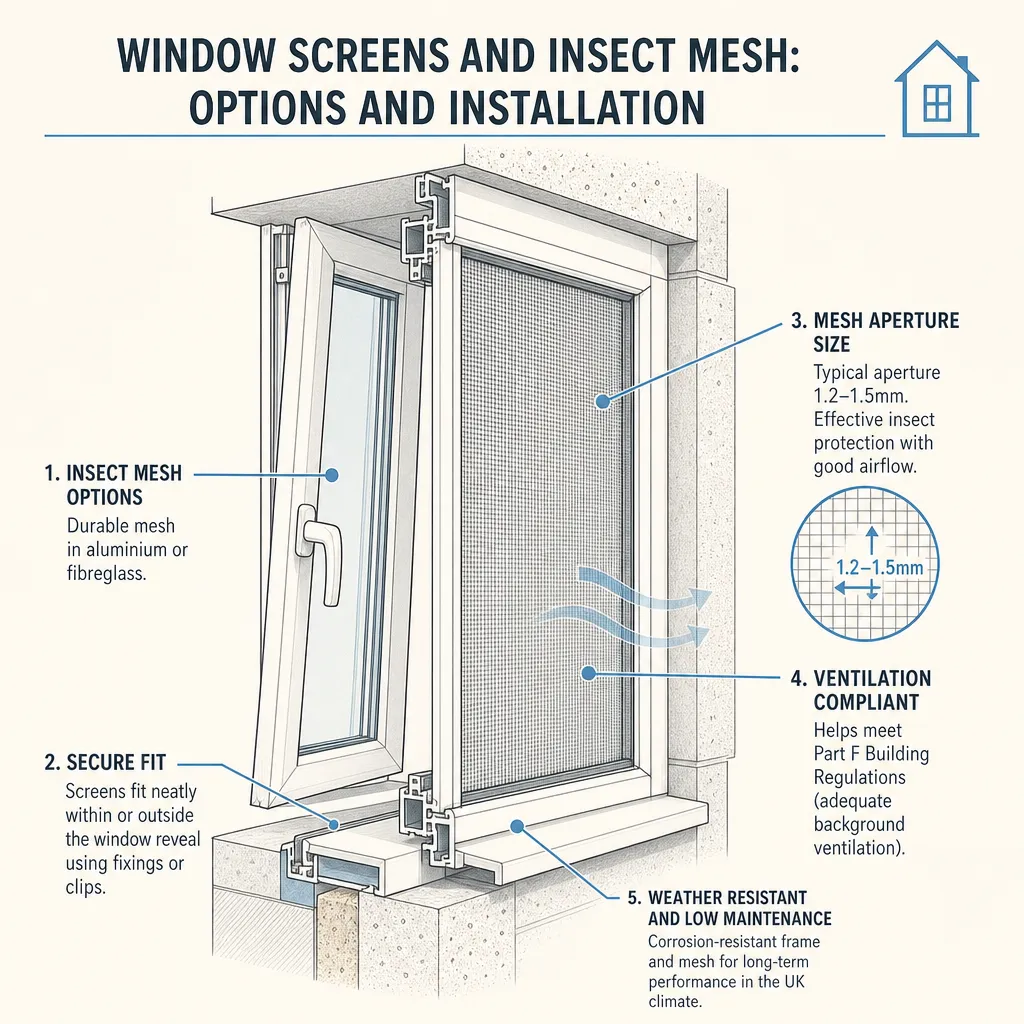
Window Screens and Insect Mesh: Options and Installation
UK window screens fall into four main types: fixed frame, roller retractable, pleated folding, and magnetic snap-fit.
 Improvement & Build
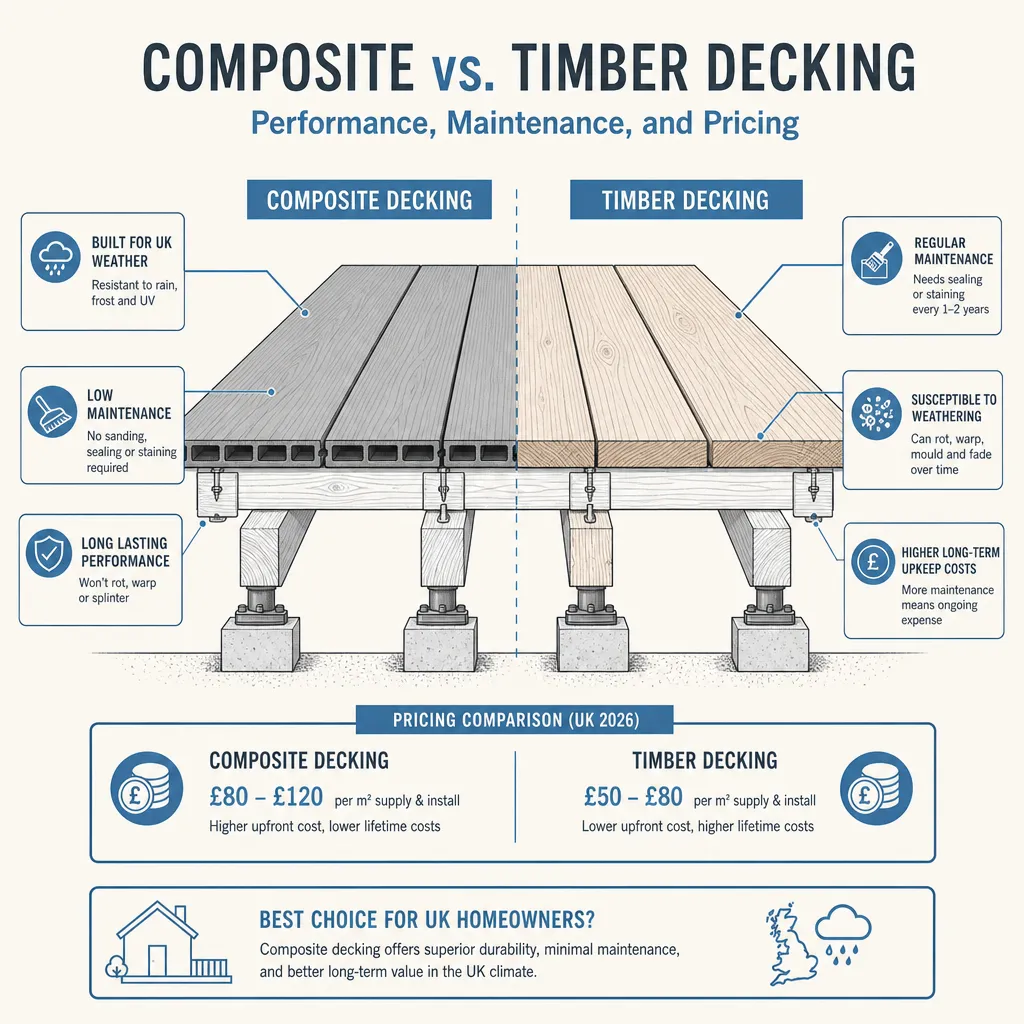
Composite vs. Timber Decking: Performance, Maintenance, and Pricing
Composite decking costs more upfront — typically £120–£220 per m² installed versus £80–£150 for treated softwood — but requires far less maintenance and carries a 25-year warranty.
 Improvement & Build
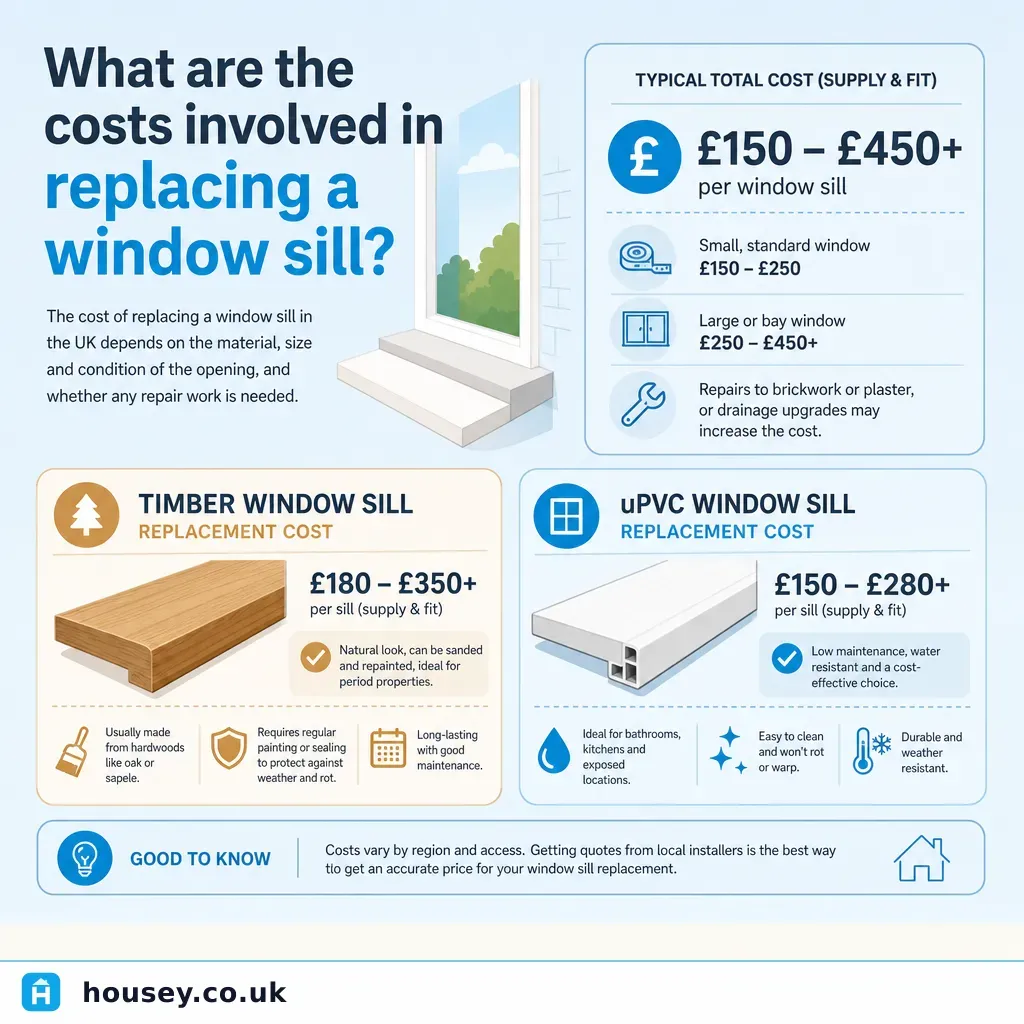
What are the costs involved in replacing a window sill?
Window sill replacement in the UK typically costs £100–£350 per window, depending on material, sill length, and access.
 Improvement & Build
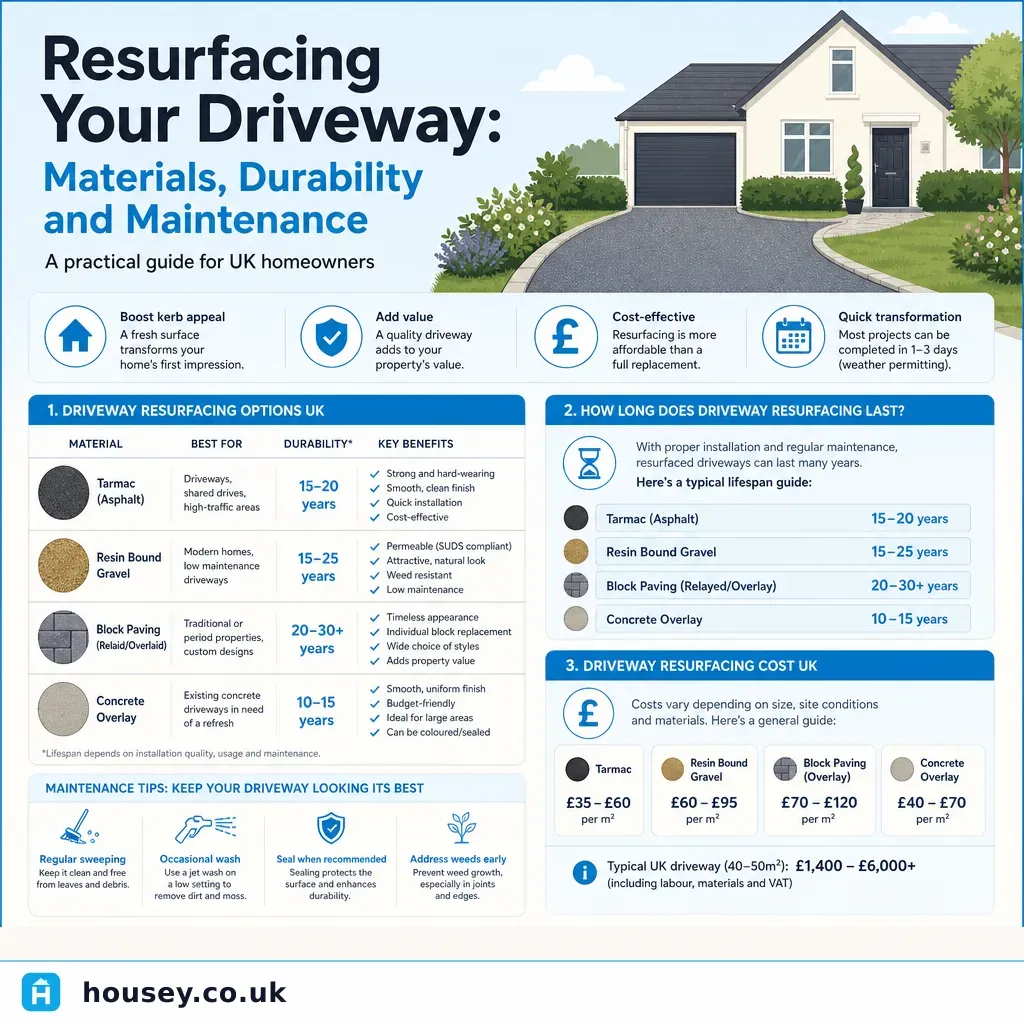
Resurfacing Your Driveway: Materials, Durability and Maintenance
Driveway resurfacing involves overlaying or replacing the existing surface with tarmac, block paving, resin-bound aggregate, gravel, or concrete.
 Improvement & Build
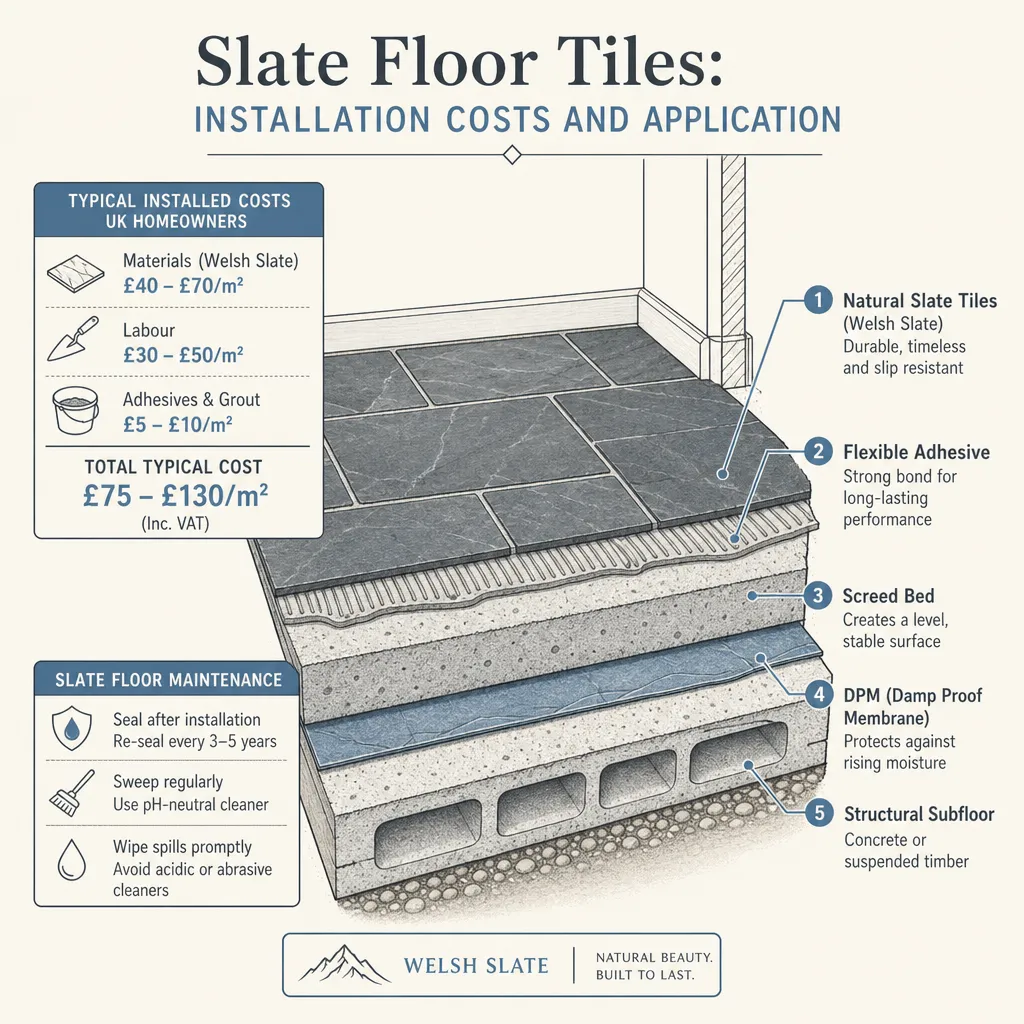
Slate Floor Tiles: Installation Costs and Application
Natural slate floor tiles cost approximately £30–£100 per m² for materials, with installation adding £25–£60 per m², giving a typical supply-and-fit range of £55–£160 per m².