Ceiling Water Damage: Assessment and Repair Costs
By Housey · Last reviewed 5th of May 2026
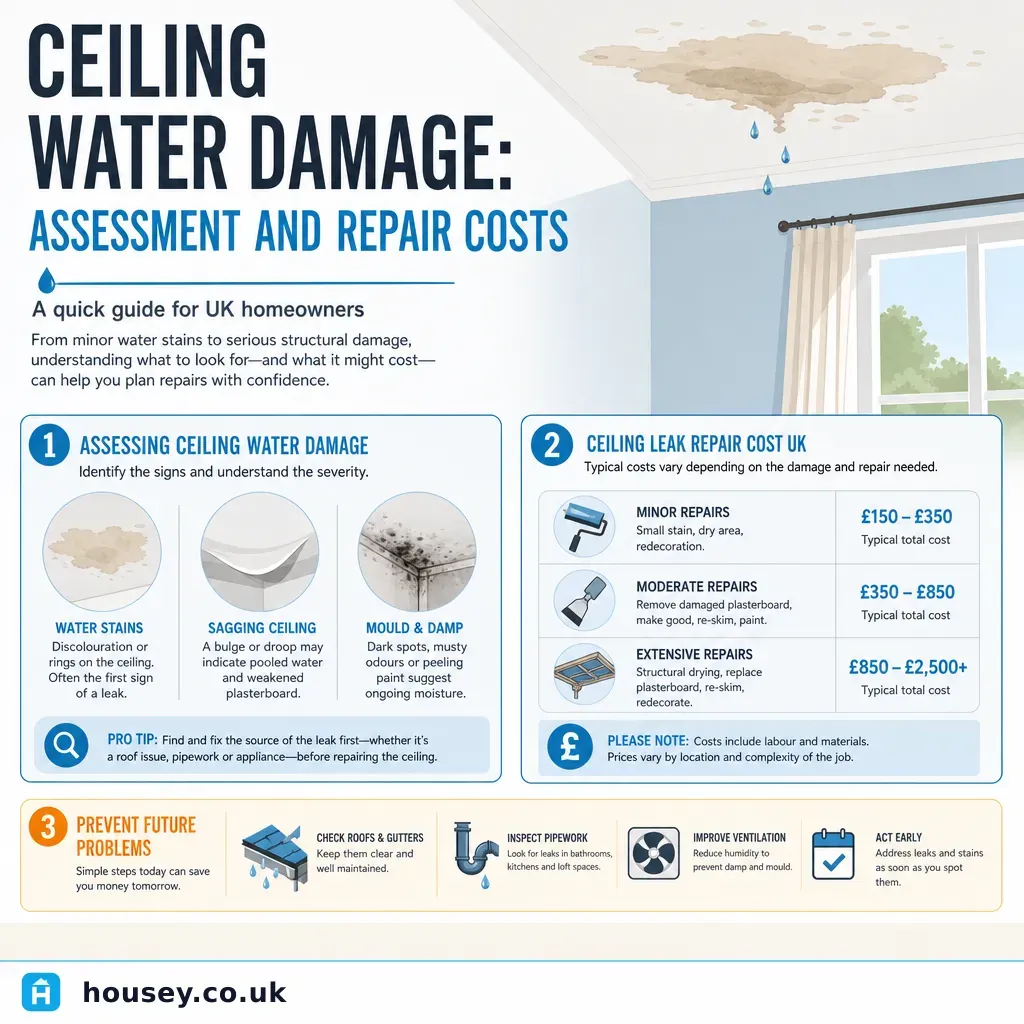
Ceiling Water Damage: Assessment and Repair Costs
Ceiling water damage is one of the more alarming discoveries a homeowner can make — and one of the more misunderstood. Whether a brown stain appears overnight or a section of plasterboard begins to bow, the pattern of damage tells a story about what has happened and what needs to happen next. Getting the assessment right matters: repair costs can escalate significantly if the underlying leak source is not identified before decorating begins.
Key points
- Moisture readings above 20% in timber joists indicate active or recent wetting that should be investigated before any repair begins.
- Sagging or cracked plasterboard is a warning sign that the ceiling may be structurally unsafe — keep the area clear and seek assessment promptly.
- Repairing the ceiling before fixing the leak source is the single most common and costly mistake UK homeowners make.
- A damp and timber survey can detect hidden moisture paths using calibrated meters and thermal imaging, identifying damage not visible from below.
- Most home insurance policies require evidence that the leak source has been resolved before approving a repair claim.
What causes ceiling water damage in UK homes?
The three most common causes of ceiling water damage in UK residential properties are roof leaks, plumbing failures (including burst pipes and faulty waste connections), and bathroom or en-suite overflows. In older properties — particularly Victorian and Edwardian terraces — there is also a higher likelihood of corroded lead or cast-iron pipework, or failed flat-roof sections above bay windows.
The cause matters because it determines who investigates, who repairs, and whether your insurer is involved.
Likely cause | Typical indicator | Who to call first |
|---|---|---|
Roof failure | Staining only after rain; multiple stain points | Roofer, then damp surveyor |
Burst or leaking pipe | Sudden appearance; active dripping | Emergency plumber, then damp surveyor |
Bathroom waste or overflow | Damage directly below bathroom or en-suite | Plumber, then damp surveyor |
Condensation (internal) | Diffuse staining with no clear water trail | Damp and timber surveyor |
Flat roof failure | Damage below flat-roof junction or bay window | Roofer, then damp surveyor |
How is ceiling water damage assessed?
A professional damp and timber survey assesses ceiling water damage in three stages: visual inspection, moisture measurement, and investigation of the suspected source.
Visual inspection looks at stain patterns, plasterboard integrity, paint blistering, mould growth, and any visible structural movement in the ceiling or joists above. A surveyor will also check adjacent walls for moisture tracking.
Moisture measurement uses a calibrated pin or radio-frequency meter to measure moisture content in the ceiling substrate and any accessible timber. Timber with moisture content above approximately 20% is at risk of fungal decay if the condition persists. Readings in this range mean the material has been significantly wetted and should not be covered with new decoration until it returns to safe levels.
Source investigation involves accessing the space above where possible — loft, void, or a lifted floorboard in the room above — to trace the water path back to its entry point. In multi-storey properties this step is critical and is sometimes missed by general tradespeople who focus only on visible damage.
What does ceiling water damage repair cost in the UK?
Indicative UK costs, last reviewed 2026-05-05. Quotes vary significantly by location, access, and extent of damage.
Repair type | Indicative cost range | Notes |
|---|---|---|
Damp and timber survey | £250–£500 | Varies by property size and surveyor |
Small plasterboard patch (up to 0.5m²) | £150–£350 | Includes skim and decoration |
Full ceiling re-board and skim (one room) | £600–£1,500 | Higher in London and South East |
Joist treatment or replacement | £300–£1,200+ | Depends on number of joists and access |
Combined repair (ceiling and redecoration) | £800–£2,500 | Larger rooms or severe damage |
Emergency plumber call-out | £100–£300 | Varies widely by provider and timing |
These figures do not include the cost of resolving the source leak — roof repair, pipe repair, or waterproofing — which should be budgeted separately.
Red flags that indicate more serious damage
Not every stained ceiling is an emergency, but certain signs mean urgent professional assessment is needed:
- Bowing or sagging plasterboard: The board has absorbed significant water and may fall. Keep the area clear and do not stand beneath it.
- Active dripping water: The source is still running. If a pipe is suspected, turn off the water supply and call an emergency plumber.
- Crack lines radiating from a central point: May indicate that plasterboard fixings have failed or that ceiling lath in older properties has softened.
- Mould covering more than 1m²: Indicates sustained moisture exposure. A surveyor should assess whether mould extends into the ceiling void.
- Staining on multiple ceiling areas: Suggests a widespread leak — roof failure, condensation on a cold surface, or a horizontal pipe run with multiple joints.
- Soft or springy feel to the floor above: The subfloor or structural joists may have been affected, warranting a structural survey.
Homeowner checklist: before and after assessment
Use this checklist to prepare for a professional assessment and avoid common mistakes.
Before calling a professional:
After assessment:
When to get professional help
Arrange a professional assessment rather than attempting DIY investigation when:
- The ceiling is sagging, soft to the touch, or visibly bowing
- You cannot identify the leak source from the room above
- The damage covers a large area or has appeared on multiple ceilings
- There are signs of mould, or the property is rented (landlords have legal obligations to address damp and structural issues promptly under the Landlord and Tenant Act 1985)
- You intend to make an insurance claim — most insurers require a professional assessment report
- The property is older than approximately 50 years and may have lath-and-plaster ceilings, which behave differently to modern plasterboard
A damp and timber survey is the appropriate starting point for most ceiling water damage assessments. Where there is concern about joist integrity or structural softening, a structural survey should also be considered.
How Housey can help
Housey connects homeowners with qualified damp and timber surveyors and structural specialists across the UK. If you have ceiling water damage and need a professional assessment, you can request quotes through Housey's damp and timber survey service — or, where structural concern exists, through our structural survey page.
Frequently asked questions
Can I redecorate over a water-stained ceiling once it has dried?
Yes, once the ceiling is fully dry and the leak source has been fixed. Use a stain-blocking primer — ideally shellac-based — before applying emulsion, otherwise the stain will bleed through. If moisture readings are still elevated above approximately 20% in timber substrates, wait until levels return to normal before decorating.
Will home insurance cover ceiling water damage?
Most buildings insurance policies cover sudden and accidental damage from burst pipes or roof leaks, but not gradual deterioration. You will usually need to demonstrate that the source has been repaired and may need to provide a professional assessment report. Check your policy excess, as smaller repairs may not exceed it.
How long does a water-damaged ceiling take to dry out?
This depends on the extent of saturation, room ventilation, and ambient temperature. A minor splash from a brief overflow may dry within a week. A ceiling that has been absorbing water over weeks may take 6–10 weeks to reach acceptable moisture levels. Do not board over or redecorate saturated materials.
Does ceiling water damage always mean I need a structural survey?
Not always. A damp and timber survey is the correct first step for most ceiling water damage. A structural survey becomes relevant if there is evidence that joists have been weakened — such as a bouncy floor above, visible joist decay, widespread damage across a large span, or a sagging ceiling section.
Sources and further reading
- Damp in buildings — GOV.UK
- RICS guidance on damp surveys — RICS
- Repairs in rented housing — Citizens Advice
- BRE guidance on timber decay and moisture — BRE Group
Useful next reads
 Surveys & Inspections
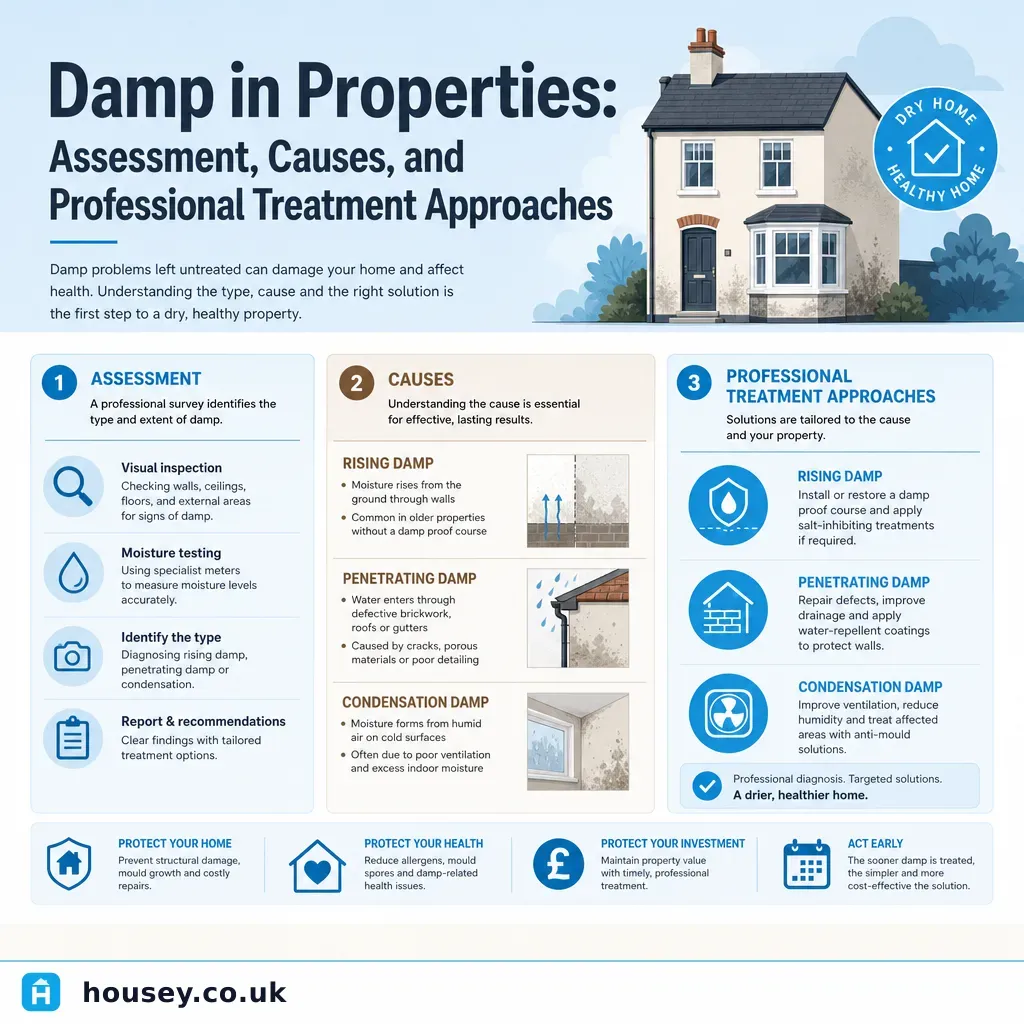
Damp in Properties: Assessment, Causes, and Professional Treatment Approaches
Damp in UK homes falls into three main categories: rising damp, penetrating damp, and condensation.
 Surveys & Inspections
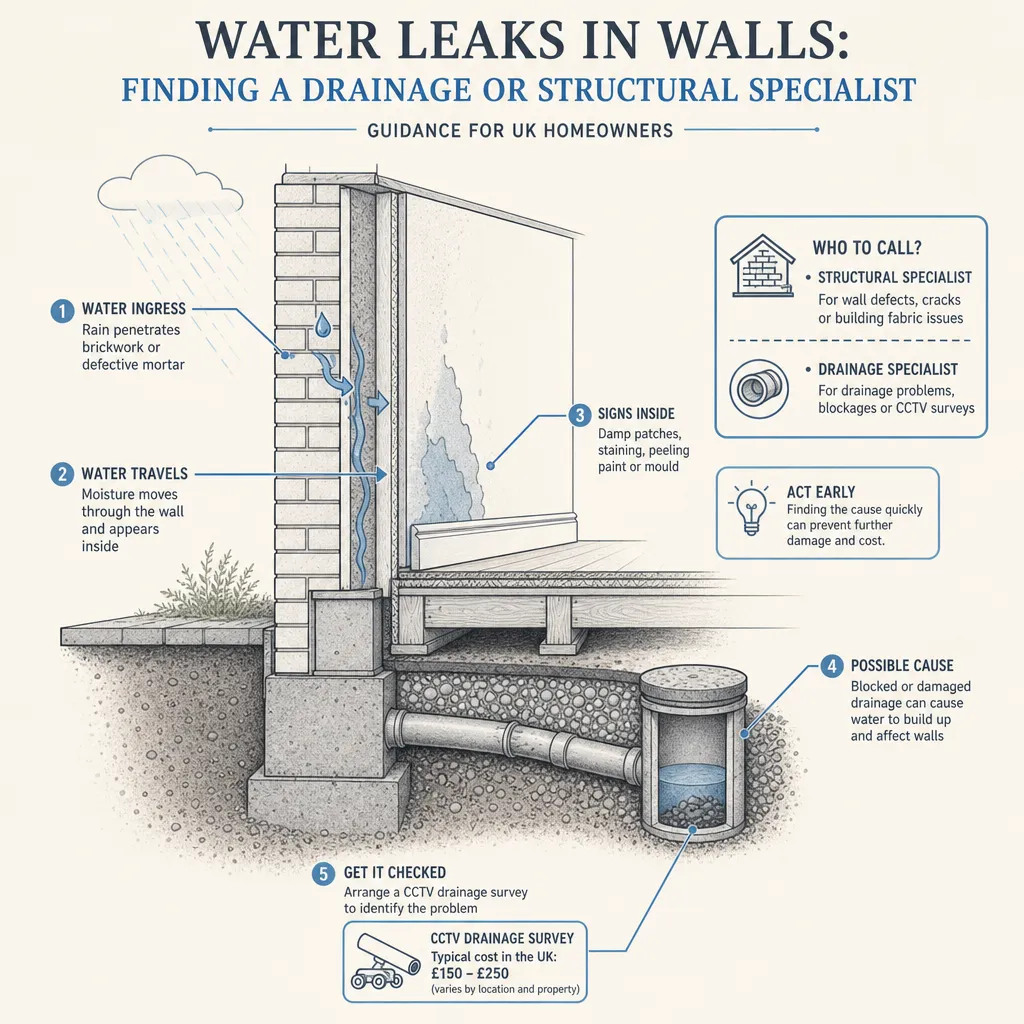
Water Leaks in Walls: Finding a Drainage or Structural Specialist
Water leaking through a wall can originate from a burst or leaking pipe, failed drainage, penetrating damp, a roof defect, or structural cracking.
 Surveys & Inspections
CCTV Drain Survey Pricing and What to Expect
A CCTV drain survey typically costs £150–£400 for a standard residential property in the UK, depending on drain length and property size.
 Surveys & Inspections
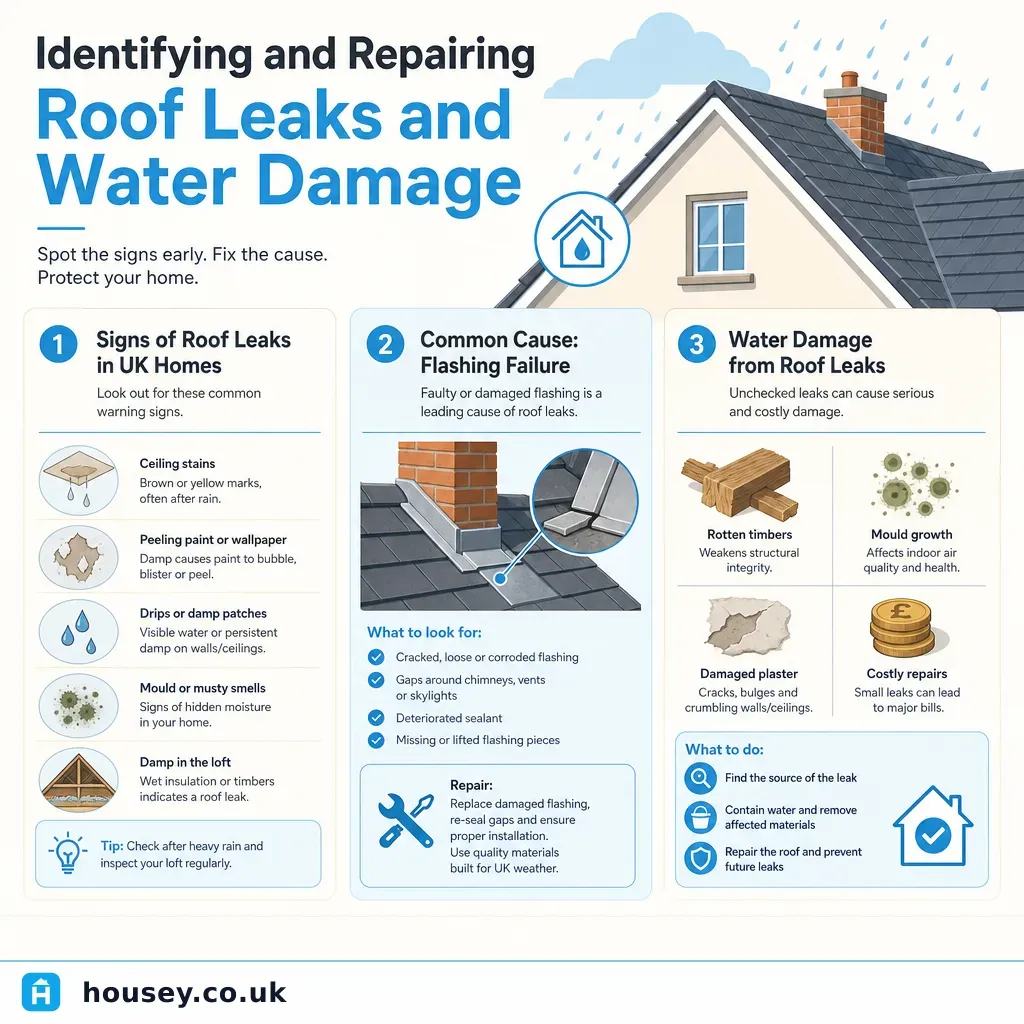
Identifying and Repairing Roof Leaks and Water Damage
Roof leaks in UK homes most often result from flashing failures at chimneys and dormers, cracked or slipped tiles and slates, deteriorated underlay, or blocked gutters causing overflow.
 Surveys & Inspections
Identifying Unpleasant Odours in Your Home
Unpleasant smells in a UK home often point to damp, mould, a drainage fault, or — in the most urgent cases — a gas leak.