Identifying and Repairing Roof Leaks and Water Damage
By Housey · Last reviewed 19th of May 2026
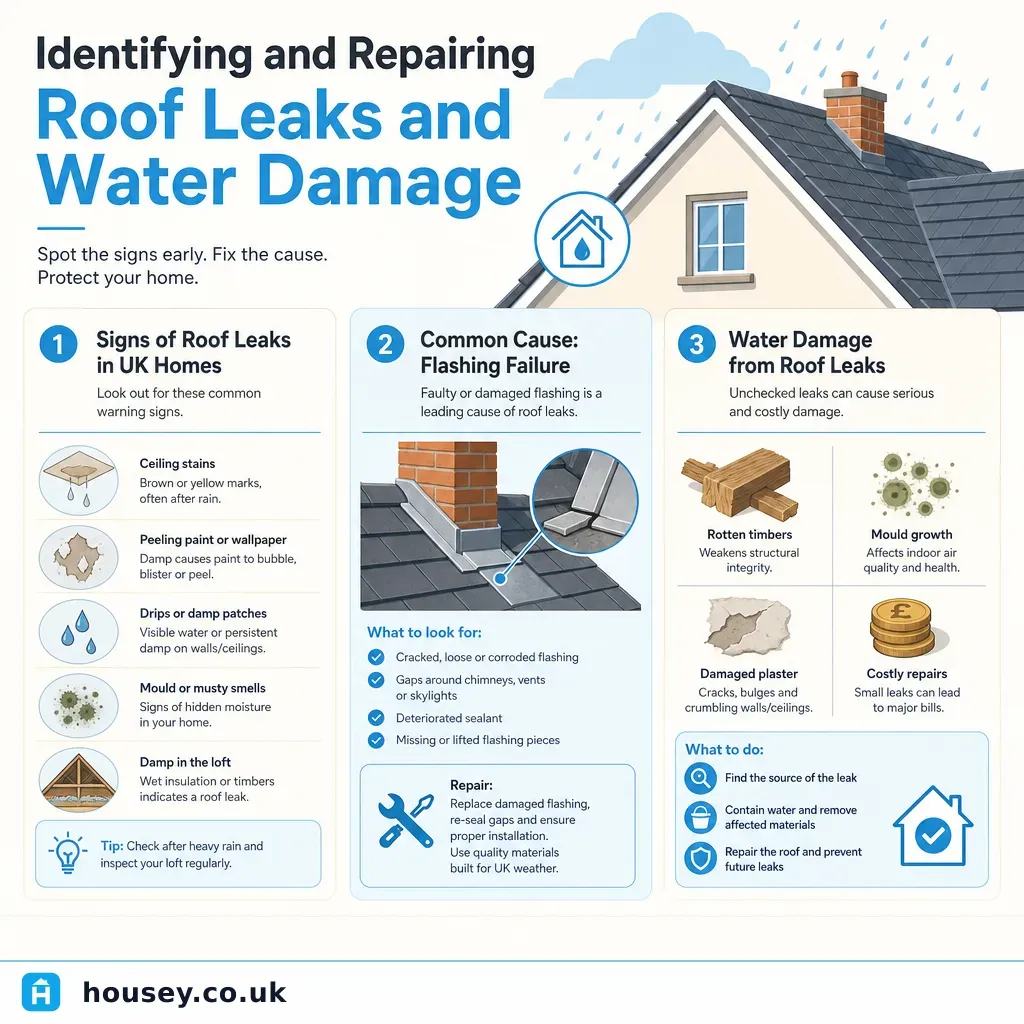
Identifying and Repairing Roof Leaks and Water Damage
Roof water ingress is one of the most damaging problems a UK home can develop, yet it often goes undetected for months or years because water entering the structure at one point can travel considerable distances along rafters, joists, and battens before appearing as a visible stain inside the property. The UK's wet climate, a large proportion of pre-1960s pitched roofing, and the gradual deterioration of lead flashings, mortar bedding, and natural slate nails mean that early identification and professional assessment are among the most consequential maintenance decisions a homeowner can make. Acting early typically limits the scope and cost of repairs; delay can result in damaged roof timbers, failed plasterboard, and water reaching electrical fittings.
Key points
- Water stains on ceilings may appear many metres from the actual entry point, because water follows rafters, joists, and underlay downslope before dripping — tracking the source requires inspection of both the roof covering and the loft void.
- Flashing failures at chimneys, dormer cheeks, parapet walls, and roof-to-wall abutments are among the most common causes of roof leaks in UK properties, particularly those built before 1970 with mortar-pointed rather than clipped lead flashing.
- Missing, cracked, or slipped clay or concrete tiles and natural slate can often be identified from ground level using binoculars, allowing you to brief a roofer or surveyor before any access is arranged.
- Persistent water ingress can cause wet rot in timber rafters, ceiling joists, and wall plates — a structural defect that goes beyond a roofing repair and may require a specialist damp and timber assessment.
- A professional written roof survey provides a documented scope of works and enables like-for-like quotes from contractors; without one, the full extent of damage is frequently underestimated at the point of tender.
Important limitations
This article provides general information about common signs and causes of roof leaks in UK residential properties. It does not constitute a structural survey, a roof condition report, or professional advice on any specific property. Roof construction, tile type, flashing material, underlay condition, insulation, age, and exposure vary significantly across UK housing stock, and all affect both the likely cause and the appropriate repair. A qualified roofing contractor or RICS-accredited surveyor should inspect any suspected roof leak before repair work is commissioned. Do not access the roof yourself — working at height is a leading cause of serious injury, and the Health and Safety Executive publishes specific guidance on this risk.
Common causes of roof leaks in UK homes
Flashing failures
Flashings are the weathering strips — typically lead, but sometimes zinc, aluminium, or mortar — that seal the junctions between the roof covering and adjacent vertical surfaces: chimney stacks, dormer cheeks, parapet walls, and abutments against external walls. In properties built before the 1970s it is common for flashings to have been bedded in mortar rather than secured with lead clips and dressed into a chase, allowing them to loosen and lift over time.
Typical signs include water staining or damp patches directly below a chimney breast or dormer, efflorescence (white salt deposits) on the masonry at chimney level, and visible gaps or lifted edges where flashings meet brickwork.
Tile and slate defects
The UK's most common roof coverings — plain clay tiles, concrete interlocking tiles, and natural slate — have finite service lives. Natural slate typically lasts 80–150 years if nails remain sound; concrete tiles generally 30–50 years. When individual units crack, slip from corroded nibs or nails, or are displaced by wind, rain penetrates directly through the gap.
From ground level with binoculars, look for tiles sitting at an angle or visibly displaced from the course, dark algae staining concentrated in one area (which may indicate prolonged moisture retention beneath), and any obvious voids in the tile pattern.
Underlay and batten deterioration
Older roofs often have a single layer of bituminous felt underlay on timber battens beneath the tiles. Over decades, the felt becomes brittle, cracks, and can no longer shed water to the gutters. If the underlay has failed, rainwater can enter even where the tile covering appears intact from outside. This is a common finding in properties where the roof covering has been patched repeatedly without a full strip and re-felt.
Blocked gutters and overflowing water
Gutters blocked with leaf debris, moss, or tile dust cause water to overflow at the eaves. This can saturate fascia boards, soffits, and wall plate timbers at the roof's edge — an entry route that presents as damp low on an internal wall or in a top-floor corner rather than on the ceiling. Regular gutter clearing is straightforward maintenance at ground-floor level but should be approached cautiously at height.
Roof light and skylight seals
Velux and similar roof lights rely on factory-fitted compression seals and correctly installed flashings. UV degradation or failed seals can allow water ingress around the frame perimeter. Signs include localised condensation or staining around the rooflight frame on the ceiling below.
Decision tree: identifying the likely source
- Stain directly below a chimney or dormer? → Start with a flashing inspection. Arrange a roofer or surveyor to check pointing and lead condition.
- Stain in the middle of the ceiling with no obvious overhead source? → Check the loft void with a torch during or after rain; look for wet underlay or dripping from battens. Underlay failure or a slipped tile mid-slope is likely.
- Damp patches at the base of external walls rather than the ceiling? → Likely gutter overflow or a bridged cavity rather than a true roof leak. Check gutters and downpipes first.
- Loft void timbers appear wet or discoloured but tiles look intact? → Possible underlay failure or condensation. A damp and timber survey can distinguish between condensation and active water ingress.
- Tiles visibly slipped or missing? → Arrange a roof survey before instructing repairs to confirm the full extent of damage.
- Water ingress only during driving rain, not heavy vertical rain? → Suggests a flashing or mortar joint is the entry point rather than an open gap in the tile covering.
Comparison: leak type, likely cause, and typical repair
Sign | Likely source | Typical repair | Who to instruct |
|---|---|---|---|
Stain directly below chimney | Flashing failure or cracked chimney cap | Re-lead flashings; repoint chimney stack | Roofing contractor; specialist lead worker for complex chimney work |
Stain below or around roof light | Seal or flashing failure at frame | Replace compression seal; re-flash around frame | Roofing contractor; roof window specialist |
Wide ceiling stain mid-slope | Underlay failure or multiple slipped tiles | Strip and re-felt section or full re-roof | Roofing contractor; obtain at least three written quotes for significant works |
Damp at eaves level | Blocked gutters or overflowing fascia | Clear gutters; replace rotten fascia and soffit | General builder; specialist gutter contractor |
Wet rot in rafters or joists | Long-standing water ingress, inadequate ventilation | Timber treatment and replacement; address moisture source first | Structural engineer if load-bearing timber affected; damp and timber specialist |
Damp appearing in cold weather without rain correlation | Roof condensation or inadequate ventilation | Improve roof void ventilation; check vapour control layer | Building pathologist; retrofit coordinator |
Red flags: when this becomes urgent
Stop treating a suspected roof leak as a routine maintenance item and seek professional assessment without delay if:
- The ceiling is visibly bowed, sagging, or has changed shape — this may indicate saturated plasterboard or a compromised structural element.
- Loft timbers appear dark, soft, or have a musty smell — signs of wet rot or early dry rot that can spread rapidly if the moisture source continues.
- Water is tracking near an electrical fitting, consumer unit, or lighting circuit — this is a safety hazard. Switch off the relevant circuit at the consumer unit and contact an NICEIC- or NAPIT-registered electrician before arranging any roof inspection.
- A wall shows new cracking alongside fresh damp staining — a RICS-accredited surveyor or structural engineer should assess whether water ingress has affected the structure.
- The property is listed or in a conservation area and the existing covering uses natural materials — consent may be required before any replacement is carried out.
What to ask a qualified professional
Before instructing a roofer or surveyor, ask:
- What qualifications and accreditations do you hold? (NFRC membership for roofers; RICS accreditation for surveyors)
- Will you provide a written report and scope of works? A verbal assessment makes it difficult to compare contractors or verify that work has been completed to specification.
- Does the quote cover assessment of underlying damage to timbers and underlay, or roof covering repair only?
- What is the expected lifespan of the proposed repair and what maintenance will it require going forward?
- Are there any heritage or planning considerations for this roof covering or the property?
- Is VAT included in the quote?
- What will happen if additional damage is found once work begins — how will variations be costed and communicated?
When to get professional help
Any suspected roof leak that has produced visible internal water staining, has been present for more than a few weeks, or appears to be worsening should be assessed by a professional. A roof survey from a qualified contractor or surveyor gives you a written report, a documented scope of works, and a sound basis for obtaining comparable quotes. Where ceiling stains are accompanied by soft or discoloured loft timbers, a damp and timber survey can confirm whether wet rot or fungal decay is present and what remedial work is structurally necessary. Where there is any concern about the integrity of structural roof timbers or supporting walls, a structural survey by a RICS-accredited professional should be arranged before repair work is commissioned.
How Housey can help
Housey connects you with qualified specialists for roof surveys, damp and timber surveys where ongoing moisture has affected building fabric, and structural surveys where significant timber or wall damage is suspected. Request quotes from vetted local professionals through the platform to compare scope, approach, and price.
Frequently asked questions
How can I tell if my roof is leaking or if the moisture is condensation?
Both can produce wet timbers and damp patches, but condensation typically appears as surface moisture on cold surfaces and worsens in cold weather regardless of rainfall. Roof leaks usually correlate with rain events and produce staining that darkens when it rains. A damp and timber specialist can use moisture meters and thermal imaging to distinguish between the two and identify the appropriate remedy.
Can I go on my roof to find the leak myself?
You should not access a roof unless you are properly trained and equipped with appropriate fall-arrest equipment. Working at height is among the leading causes of serious injury in the UK, and the Health and Safety Executive publishes specific guidance for this. A safer first step is to inspect from the loft void with a torch during or after rain to look for wet timbers, light ingress, or staining on the underlay.
How much does a roof repair typically cost?
Indicative UK costs, last reviewed 2026-05-19. Minor repairs — replacing a few slipped slates or re-pointing flashings — typically range from £200 to £700 depending on roof pitch and access difficulty. Partial re-roofing is typically £1,500–£5,000 or more; full re-roofing of a typical semi-detached house ranges from £5,000 to £15,000+ depending on material, size, and scaffold costs. Always obtain at least three written quotes. Source: indicative market data; obtain local quotes for your specific property.
Does buildings insurance cover roof leaks?
Buildings insurance generally covers sudden or unforeseen damage — such as storm damage dislodging tiles — but typically excludes gradual deterioration and maintenance failures. Check your policy wording carefully. Insurers may request a written survey report before agreeing a claim for significant roof damage. If the leak results from neglected maintenance, a claim may be declined.
Sources and further reading
- HSE — Working at height: a brief guide — Health and Safety Executive
- National Federation of Roofing Contractors — Find a member — National Federation of Roofing Contractors
- RICS — Consumer guidance on building surveys — RICS
- Historic England — Roofs: maintenance and repair — Historic England
Useful next reads
 Surveys & Inspections
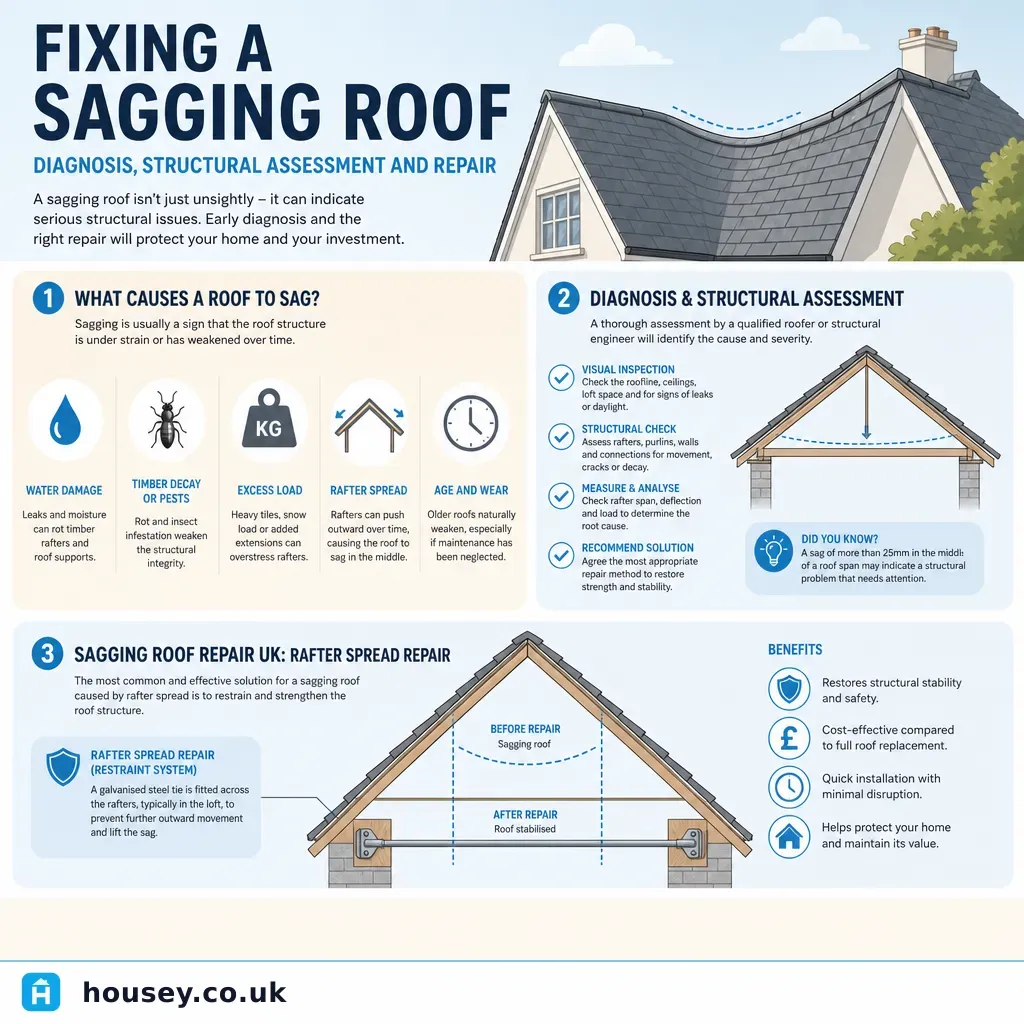
Fixing a Sagging Roof: Diagnosis, Structural Assessment and Repair
A sagging roof usually points to failed or overloaded roof timbers, rafter spread, or a compromised ridge board.
 Surveys & Inspections
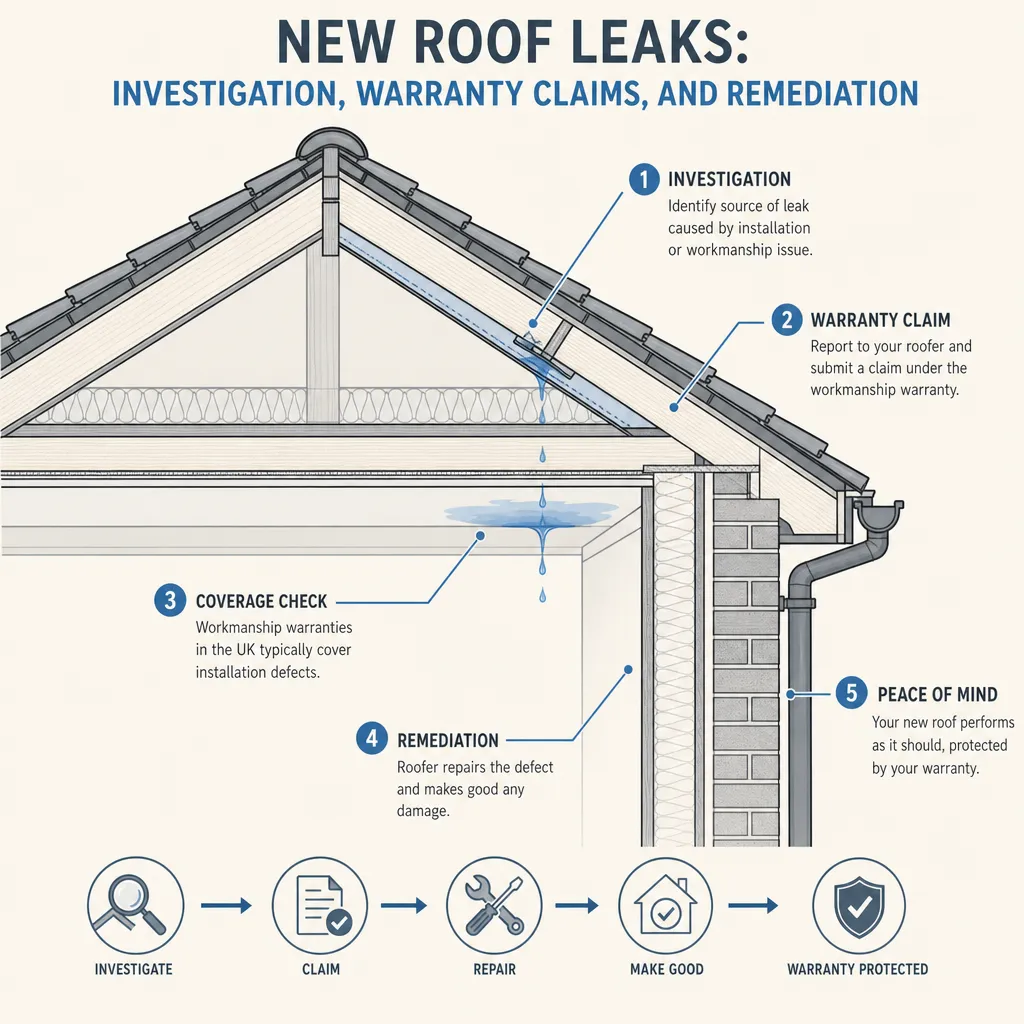
New Roof Leaks: Investigation, Warranty Claims, and Remediation
A leak on a new roof usually indicates a workmanship or materials fault.
 Surveys & Inspections
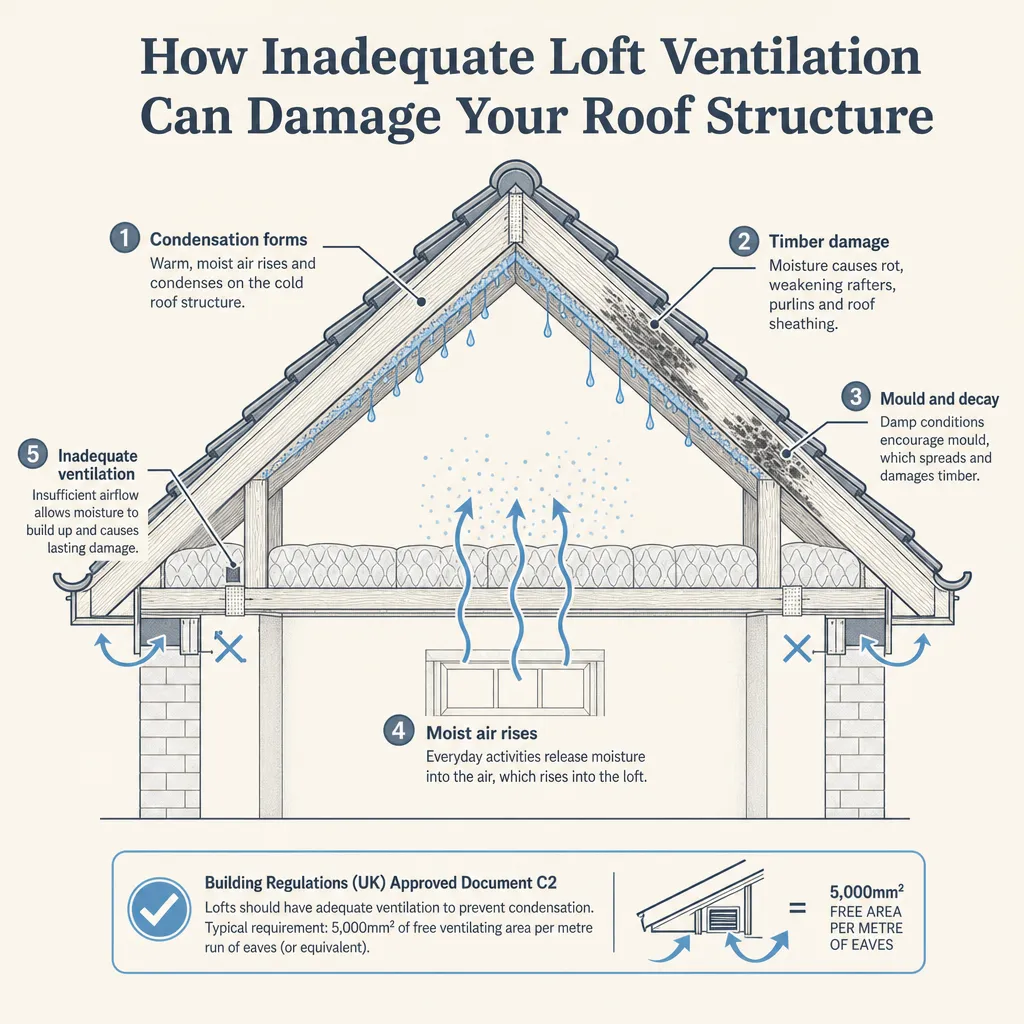
How Inadequate Loft Ventilation Can Damage Your Roof Structure
Inadequate loft ventilation allows warm, moist air to condense on cold roof timbers.
 Surveys & Inspections
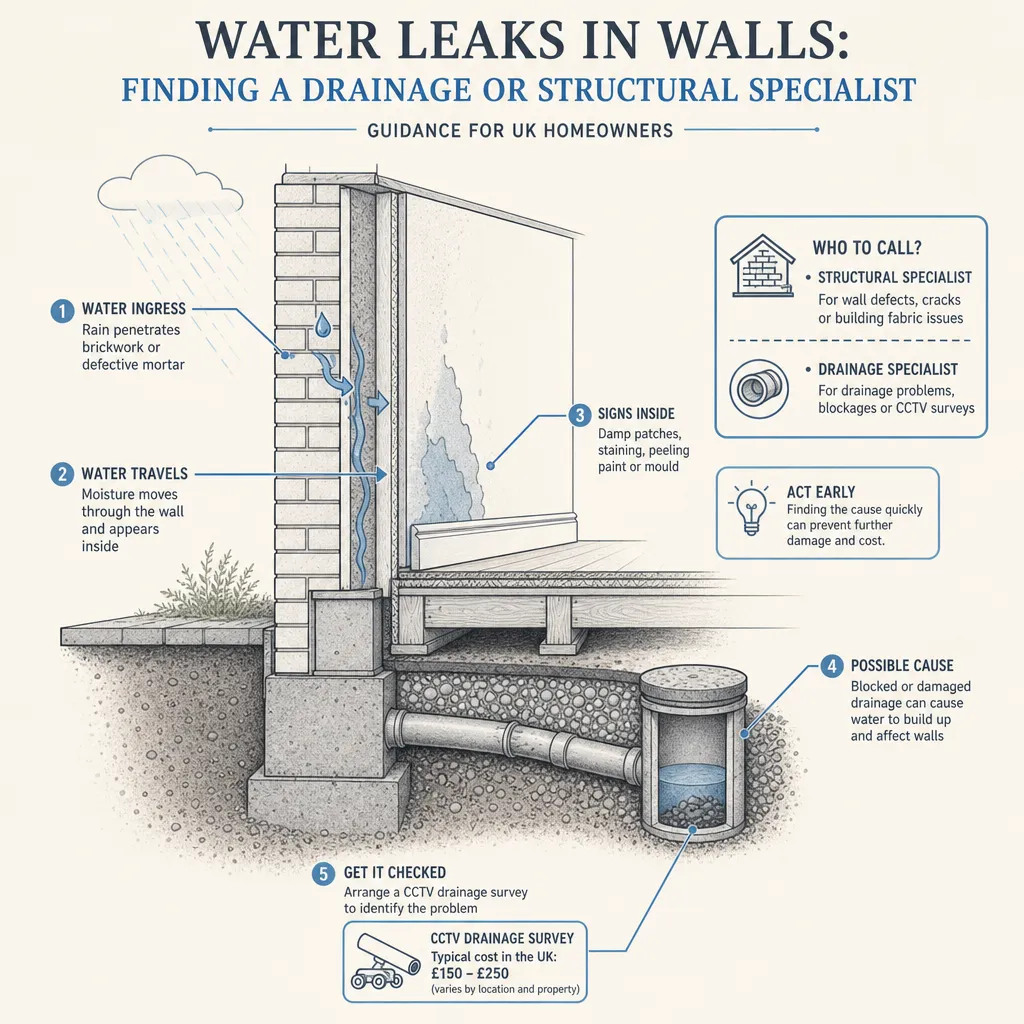
Water Leaks in Walls: Finding a Drainage or Structural Specialist
Water leaking through a wall can originate from a burst or leaking pipe, failed drainage, penetrating damp, a roof defect, or structural cracking.
 Surveys & Inspections
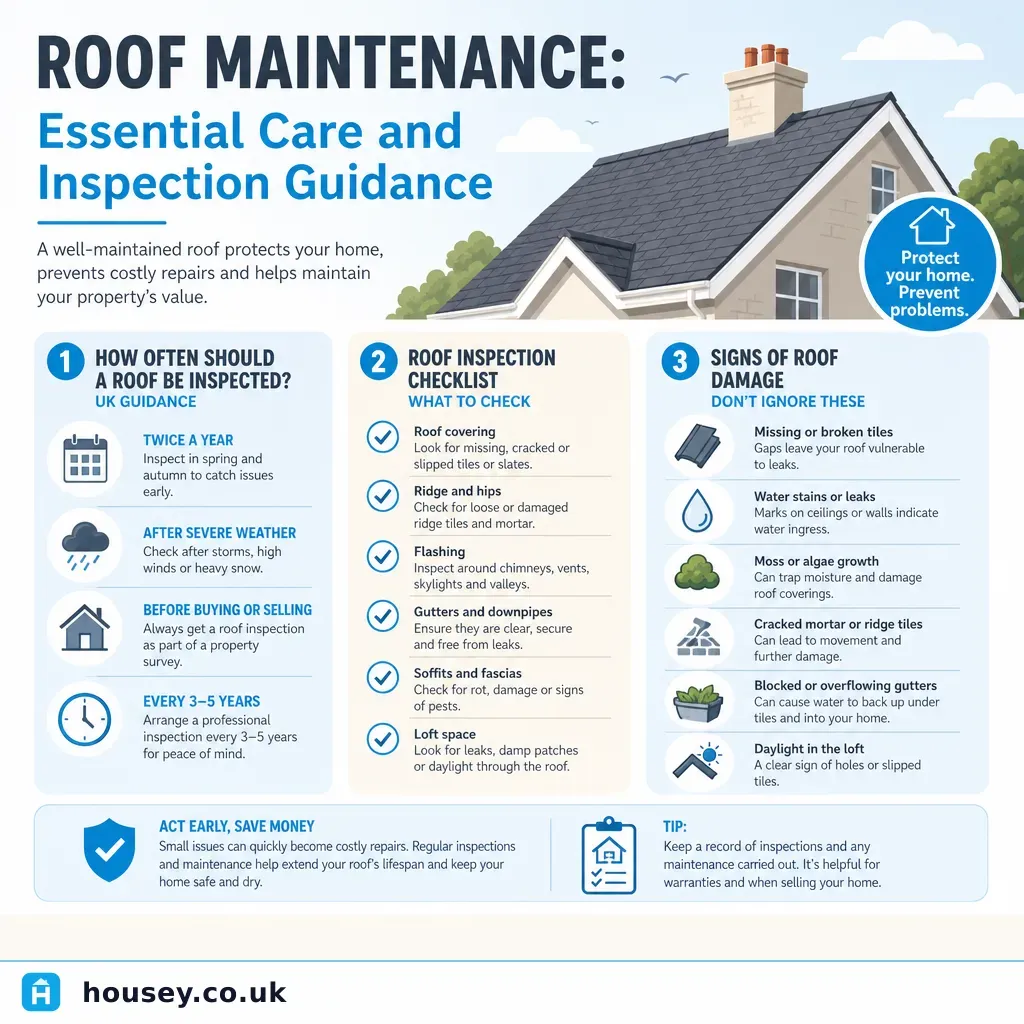
Roof Maintenance: Essential Care and Inspection Guidance
UK roofs should be visually inspected at least once a year — ideally in autumn before winter — and after any significant storm.