Identifying Unpleasant Odours in Your Home
By Housey · Last reviewed 11th of May 2026
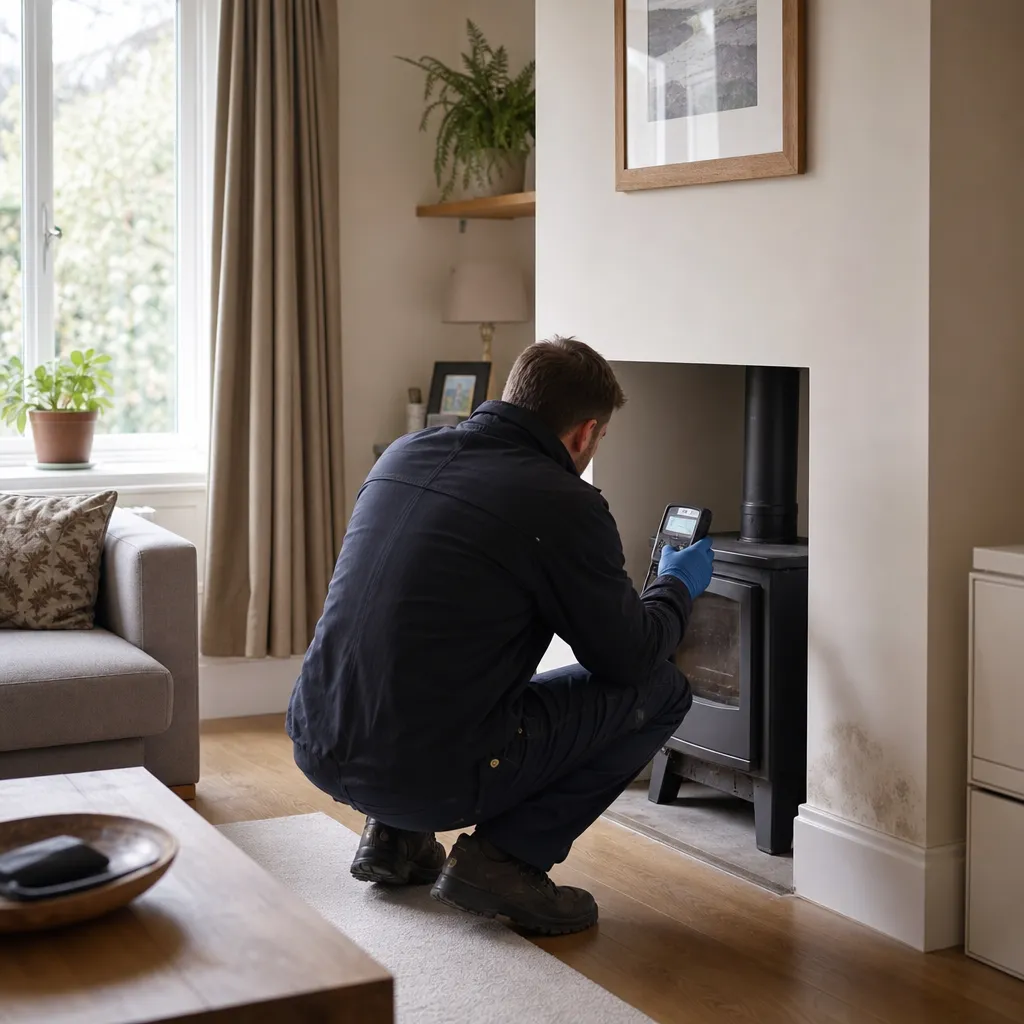
Identifying Unpleasant Odours in Your Home
Persistent or sudden unpleasant smells in a UK property often signal something that needs attention — whether a slow-developing damp problem, a drainage fault, or, in the most urgent cases, a gas or electrical risk. Most homeowners notice an odour before they can identify its source, and the gap between noticing something wrong and knowing what to do next is where costly mistakes are made. Getting the diagnosis right early limits both the health risk and the remediation bill.
Key points
- A musty or earthy smell most commonly indicates elevated moisture, active damp, or hidden mould — a persistent issue in UK housing given the climate and the prevalence of solid-wall construction in pre-1919 stock.
- Mould is classified as a Category 1 hazard under the Housing Health and Safety Rating System (HHSRS) when it poses a serious health risk, giving tenants a legal basis to require landlord action.
- A sulphurous or rotten-egg smell not clearly linked to a drain may indicate a gas leak — leave the building immediately and call the National Gas Emergency Service on 0800 111 999.
- Sewage smells most commonly arise from dried trap seals, cracked drainage pipes, or a blocked soil vent pipe (SVP), all of which are diagnosable by a qualified plumber or drainage specialist.
- A damp and timber survey, carried out by a qualified surveyor, is the most reliable way to identify the source and extent of moisture-related odours in a UK home.
Common odours and their likely causes
Odour type | Likely source | Urgency | Who to contact |
|---|---|---|---|
Musty, earthy, or mouldy | Rising damp, penetrating damp, condensation mould | Moderate — investigate within weeks | Damp surveyor, building surveyor |
Rotten eggs or sulphur | Gas leak (mercaptan additive in natural gas), or SVP vent fault | Gas: immediate; SVP: within days | Gas: 0800 111 999 and evacuate; SVP: plumber |
Sewage or drain | Dried trap seal, cracked drain, blocked SVP | Within days | Plumber, drainage specialist |
Burning plastic or chemical | Electrical fault, overheating appliance | Same day | NICEIC or NAPIT registered electrician |
Damp with biological note (cellar or basement) | Groundwater infiltration, poor ventilation | Moderate | Structural surveyor, damp specialist |
Stale or ammonia-like | Animal infestation, failing ventilation, poorly maintained drains | Within days | Pest controller, ventilation engineer |
Musty or damp smells: what they usually mean
A musty smell is one of the most common odour complaints in UK homes and is almost always linked to excess moisture. The three main causes are:
Rising damp occurs where moisture travels up through a masonry wall from the ground, usually because the damp proof course (DPC) has failed, is absent — common in pre-1920 properties — or has been bridged by raised external ground levels or internal floor finishes. It typically produces a tide-mark stain on lower walls and a musty smell near skirting boards.
Penetrating damp enters through defective roofing, render, window seals, or rainwater goods. It produces localised patches at higher levels on walls or ceilings and may smell worse after heavy rain.
Condensation and mould is the most common cause of musty smells in UK housing, particularly in flats and poorly ventilated terraced houses. Where warm, moist air meets cold surfaces — uninsulated external walls, cold window reveals, or north-facing rooms — moisture condenses and mould can establish within days. Improving ventilation and thermal performance helps prevent recurrence, but existing mould requires proper treatment rather than surface cleaning alone.
A qualified damp surveyor can distinguish between these causes using calibrated moisture meters, thermal imaging, and visual inspection. Self-diagnosis with a consumer damp meter alone is unreliable and may lead to unnecessary and expensive remediation work.
Sewage and drain smells: common causes
A sewage smell in a UK home usually has one of these origins:
- Dried trap seal: If a sink, bath, or basin trap dries out — common in guest bathrooms or properties left unoccupied for several weeks — sewer gases travel back up the drain. Running the tap for 30 seconds often resolves it immediately.
- Cracked or displaced drain pipe: Ground movement, tree root intrusion, or age can crack underground drainage, allowing gases and effluent to permeate the surrounding ground and enter the building.
- Blocked or missing soil vent pipe (SVP) cap: The SVP vents sewer gases from the drainage system through the roof. If blocked or missing, gases can back up into the building.
- Failed toilet pan or pan connector seal: A toilet that rocks slightly may have a failed seal, allowing gases to escape at floor level.
A CCTV drain survey, carried out by a specialist drainage contractor, is the definitive diagnostic tool if a simple trap-seal check does not resolve the problem.
Chemical, burning, or electrical smells
A burning plastic or chemical smell emanating from a wall, ceiling, or electrical fitting should be investigated the same day. Common causes include:
- An overloaded circuit or deteriorating wiring causing localised overheating.
- A failing appliance motor — washing machine, fridge, or extractor fan.
- Dust burning on an electric heater after a period of disuse (usually clears quickly).
- A damaged cable in or near a consumer unit.
If the smell is persistent, comes from inside a wall or ceiling, or is accompanied by flickering lights or a tripping circuit breaker, switch off the relevant circuit and call a qualified electrician registered with NICEIC or NAPIT.
Red flags: odours that need urgent attention
- Sulphur or rotten-egg smell not linked to drains: Leave the building immediately. Do not operate light switches or electrical equipment. Call the National Gas Emergency Service on 0800 111 999 from outside or from a neighbour's phone.
- Burning smell from an electrical fitting or wall: Switch off the relevant circuit at the consumer unit and call an NICEIC or NAPIT registered electrician before using the circuit again.
- Persistent musty smell in a regularly occupied bedroom, especially used by children, elderly occupants, or anyone with a respiratory condition: Investigate promptly — prolonged mould exposure carries recognised health risks.
- Sewage smell that returns within days of flushing traps: Book a CCTV drain survey — a cracked drain can undermine foundations over time if left untreated.
- Sudden ammonia or chemical smell with no identifiable source: Ventilate the space, identify whether any gas appliances are nearby, and seek professional assessment without delay.
Important limitations
This article provides general guidance only. Odour sources vary significantly between properties — a smell suggesting one cause may be masking another, or may have multiple overlapping origins. No guide can substitute for a qualified professional inspecting your specific property. The potential health and safety implications of gas, mould, and electrical faults mean that professional assessment is particularly important and should not be delayed in favour of prolonged self-investigation.
When this becomes urgent
Stop relying on general guidance and seek immediate professional help if:
- You smell gas — call 0800 111 999 and leave the building before doing anything else.
- A burning smell from a fitting or wall is accompanied by discolouration, warmth to the touch, or a tripped circuit breaker.
- A child or vulnerable adult in the household has developed respiratory symptoms and you suspect mould is present.
- A sewage smell is accompanied by slow drainage throughout the property, suggesting a significant blockage or collapsed drain.
What to ask a qualified professional
Before instructing a surveyor or specialist:
- What diagnostic methods will you use — calibrated moisture meter readings, thermal imaging, CCTV drainage survey, or air quality sampling?
- Will you provide a written report identifying the cause and extent of the problem, not just the visible symptoms?
- Are you qualified to distinguish between rising damp, penetrating damp, and condensation? Many general builders are not.
- If mould is present, will your remediation plan address the moisture source as well as the visible growth?
- For drainage issues: will you produce a CCTV recording of the drain run for building control or insurance purposes?
When to get professional help
If an odour does not resolve within a few days of investigating the obvious candidates — trap seals, ventilation, visible leaks — or if it recurs after a simple fix, book a professional inspection. For damp-related smells, a specialist damp and timber survey will give you a clear, evidence-based diagnosis. For concerns about structural water ingress or building fabric deterioration, a structural survey may be warranted alongside or instead.
How Housey can help
Housey can connect you with qualified specialists for a damp and timber survey or a structural survey if you are concerned about persistent odours in your property. Submit a quote request and compare responses from local professionals before instructing anyone.
Frequently asked questions
Can damp cause health problems in UK homes?
Yes. Mould caused by damp produces spores and mycotoxins that can aggravate respiratory conditions and trigger allergic reactions. The NHS and UKHSA recognise damp and mould as health hazards, particularly for children, older people, and those with existing health conditions. Under the HHSRS, severe mould is classified as a Category 1 hazard, giving tenants legal grounds to require landlord action.
How do I know if a smell is gas or just drains?
Natural gas supplied to UK homes contains a mercaptan additive that produces a distinctive sulphurous or rotten-egg smell. Drain odours tend to be strongest near specific plumbing fixtures. A gas smell is often more pervasive and may be stronger near appliances, meter cupboards, or gas pipes. If in any doubt, treat it as gas: leave the building and call 0800 111 999.
Does a musty smell always mean there is mould?
Not always. Elevated moisture in materials — wet plaster, damp timber, or damp insulation — can produce a musty odour before visible mould appears. If the moisture is not addressed, mould growth is likely to follow. A qualified damp surveyor can measure moisture levels in wall materials and advise whether conditions are likely to support mould growth.
Can I use a consumer moisture meter to diagnose damp myself?
Consumer-grade moisture meters can indicate elevated readings but cannot distinguish between rising damp, penetrating damp, condensation, or residual salts in old plasterwork that produce false positives. A qualified damp surveyor uses calibrated instruments alongside thermal imaging and visual assessment. Self-diagnosis with a consumer meter alone is often misleading and may lead to unnecessary treatment.
Sources and further reading
- Housing Health and Safety Rating System (HHSRS) guidance — GOV.UK / MHCLG
- Understanding and addressing the health risks of damp and mould in the home — GOV.UK / UKHSA
- Gas Safe Register: What to do if you smell gas — Gas Safe Register
- NICEIC: Find a registered electrician — NICEIC
- CIBSE guidance on ventilation and moisture — CIBSE
Useful next reads
 Surveys & Inspections
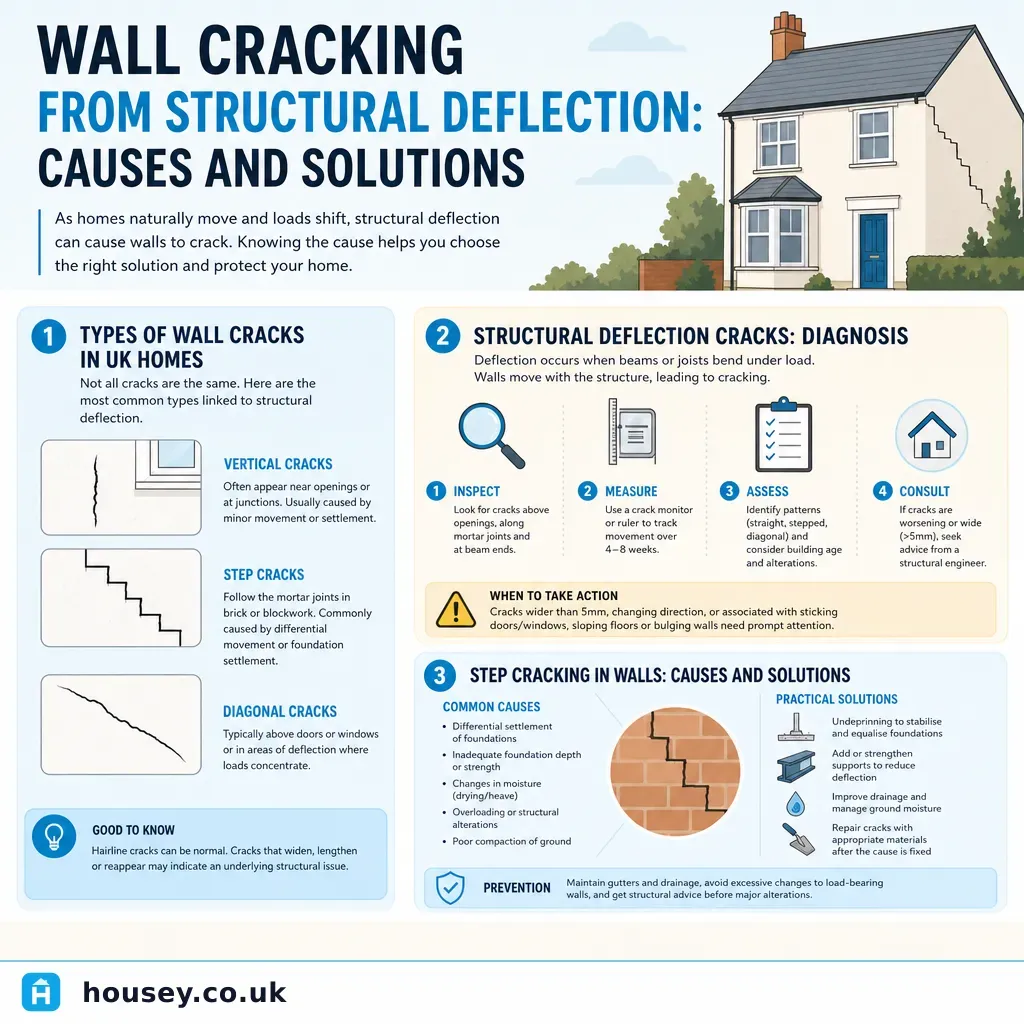
Wall Cracking from Structural Deflection: Causes and Solutions
Structural deflection occurs when a beam, floor, or lintel sags under load, transferring stress into surrounding masonry and causing characteristic cracks.
 Surveys & Inspections
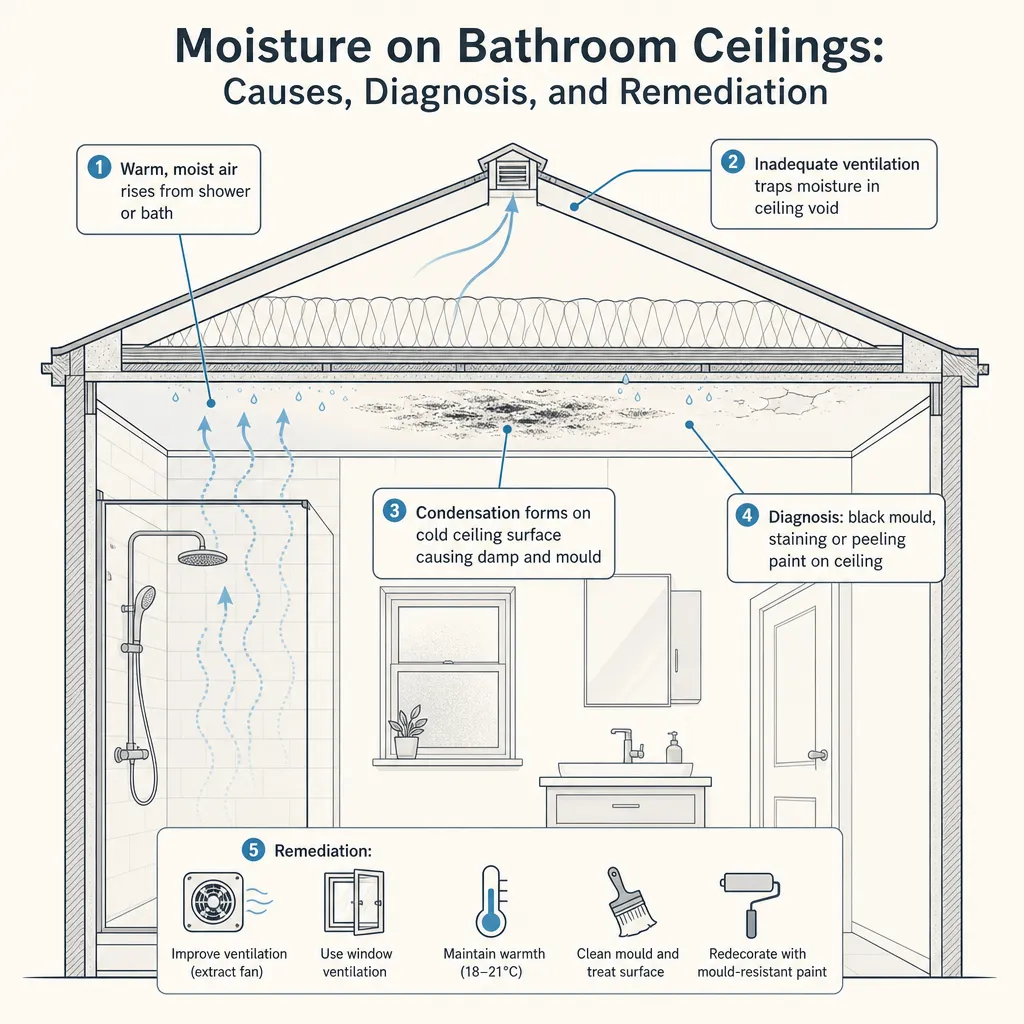
Moisture on Bathroom Ceilings: Causes, Diagnosis, and Remediation
Moisture on a bathroom ceiling is most often caused by condensation from poor ventilation, but can also indicate a leak from above or penetrating damp.
 Surveys & Inspections
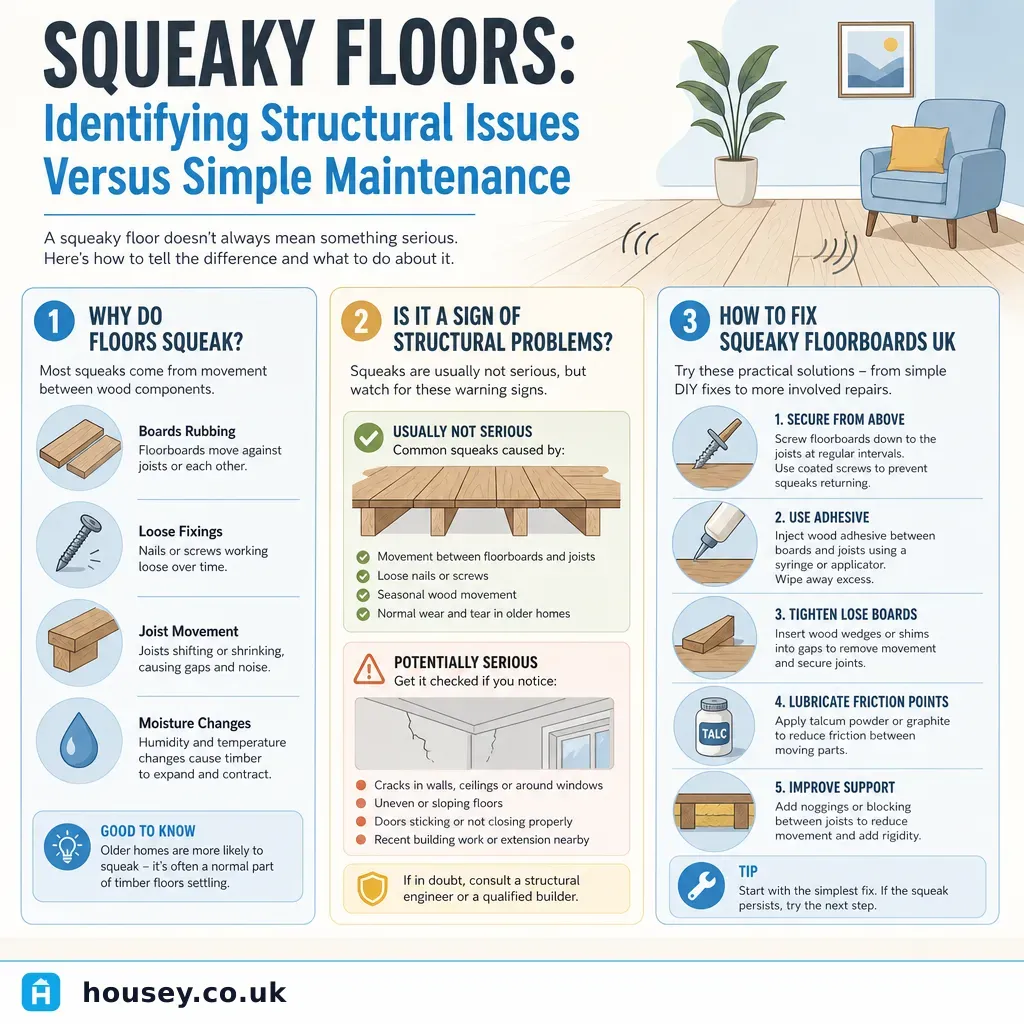
Squeaky Floors: Identifying Structural Issues Versus Simple Maintenance
Most squeaky floors in UK homes are caused by floorboards rubbing against each other or against fixings as they expand and contract — a maintenance issue rather than a structural one.
 Surveys & Inspections
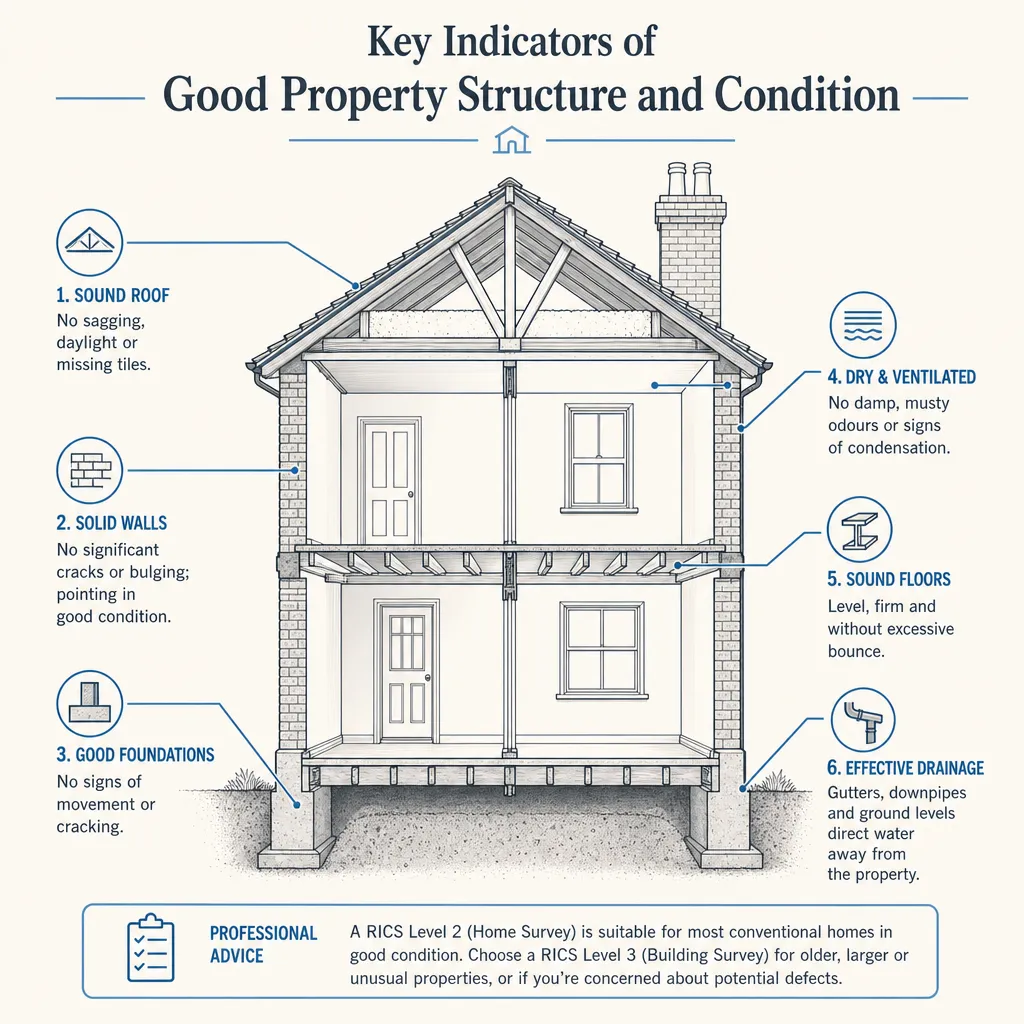
Key Indicators of Good Property Structure and Condition
Good property structure is indicated by plumb walls, level floors, crack-free masonry at corners and above openings, an intact roof covering, and dry internal surfaces.
 Surveys & Inspections
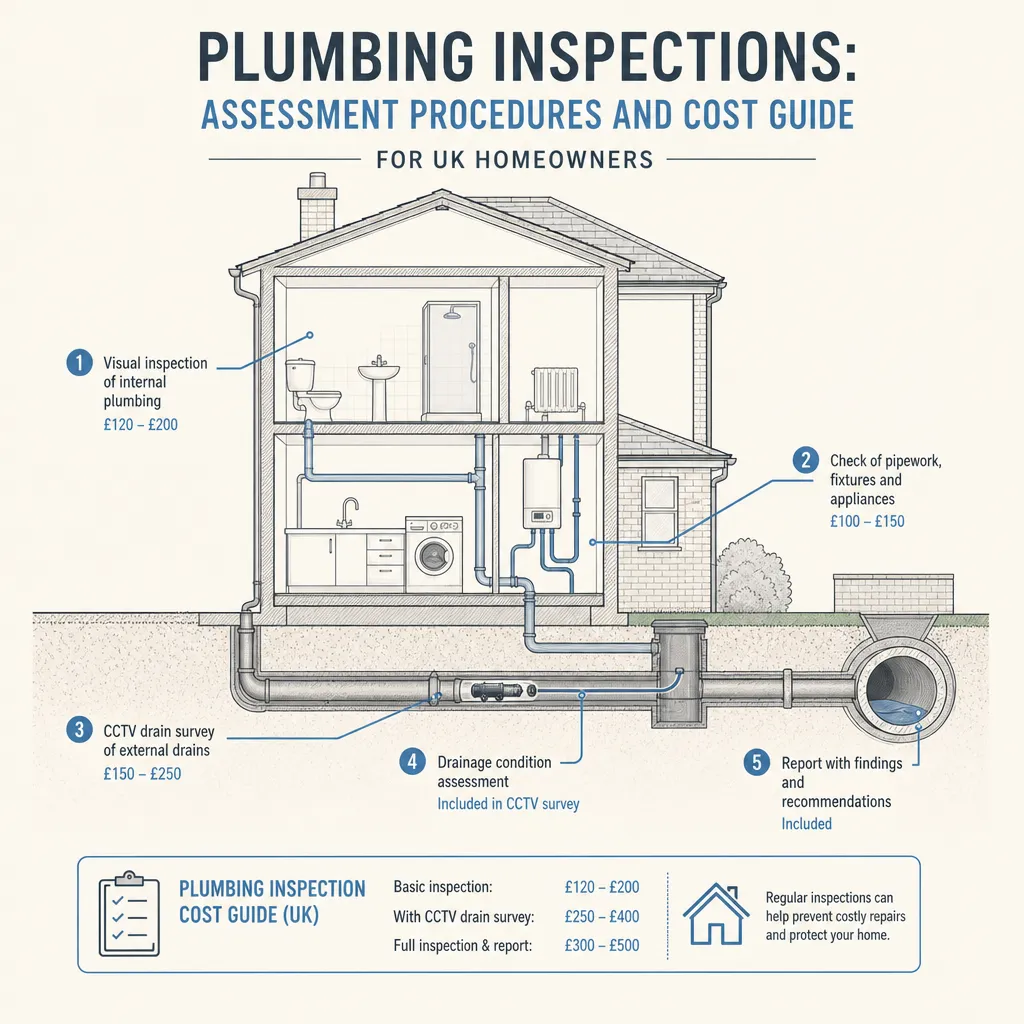
Plumbing Inspections: Assessment Procedures and Cost Guide
A professional plumbing inspection in the UK typically covers water pressure, pipe condition, boiler and hot water systems, and visible drainage.