Cellulose Insulation: Advantages and Disadvantages for Your Home
By Housey · Last reviewed 17th of May 2026
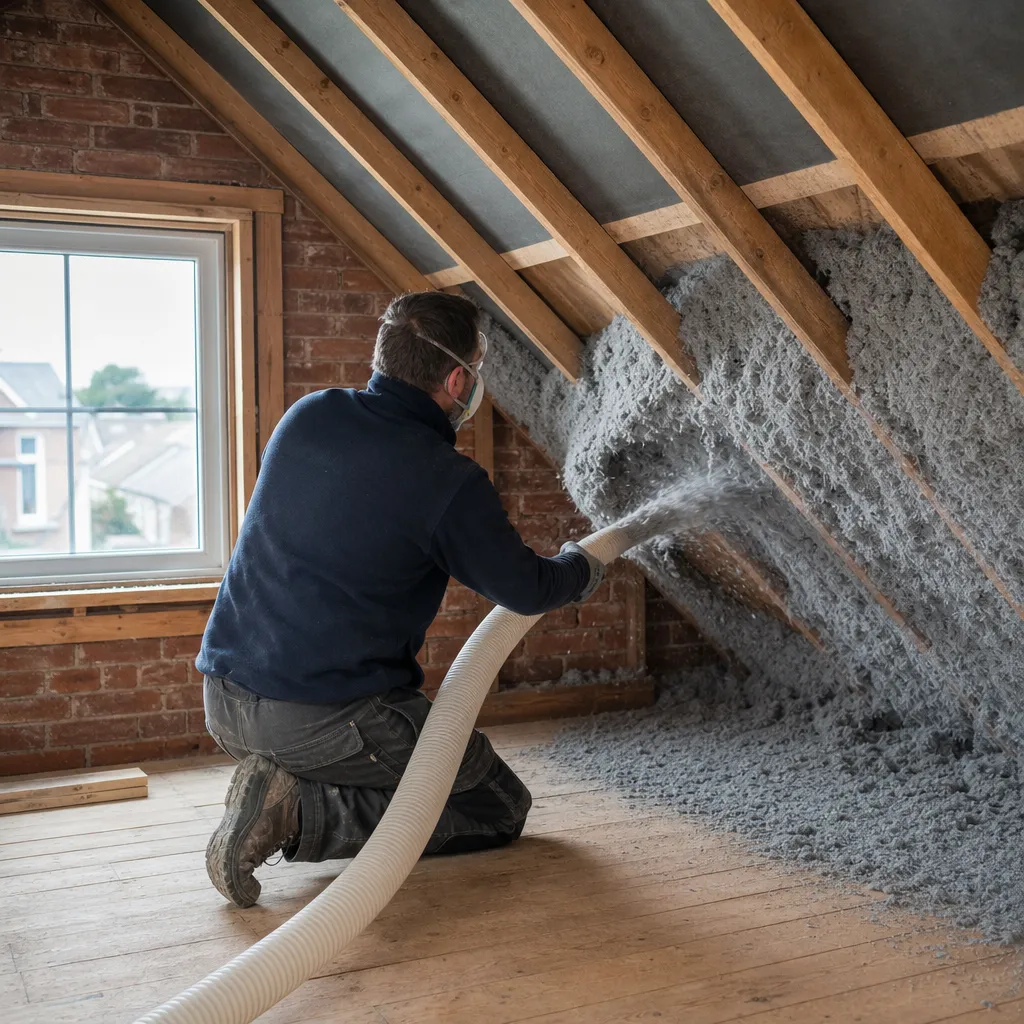
Cellulose Insulation: Advantages and Disadvantages for Your Home
Cellulose insulation is attracting renewed interest in the UK as homeowners and retrofit coordinators look for lower-embodied-carbon alternatives to mineral wool and rigid foam. Made predominantly from recycled paper and treated with fire retardants, it aligns with the push towards natural and recycled insulation materials encouraged under PAS 2035 retrofit principles. Understanding where it performs well — and where it demands careful specification — helps homeowners and their advisors make an informed choice before committing to installation.
Key points
- Cellulose insulation typically achieves a thermal conductivity (lambda value) of 0.035–0.040 W/mK for loose-fill applications, comparable to mineral wool but higher than rigid PIR foam boards (typically 0.022–0.028 W/mK).
- Under ECO4 and the Great British Insulation Scheme (GBIS), insulation installers must hold PAS 2030 accreditation and be TrustMark-registered; verify both credentials on the TrustMark register before instructing anyone for grant-funded work.
- Loose-fill cellulose settles by approximately 15–20% after installation; compliant installers specify a greater initial installed depth so the product reaches its rated settled depth — confirm this methodology in any written quote.
- Cellulose is treated with boron-based compounds or ammonium sulphate to achieve Class 1 fire reaction to BS EN 13501-1; only UKCA-marked or CE-marked products from reputable UK suppliers should be used.
- PAS 2035 requires a whole-house assessment to evaluate moisture and ventilation conditions before specifying any insulation measure; cellulose's moderate moisture absorption makes this particularly important in solid-wall or poorly ventilated properties.
What is cellulose insulation and how is it made?
Cellulose insulation is manufactured from 75–85% recycled paper (typically post-consumer newsprint), shredded and treated with fire and pest retardants. It is produced in two main forms: loose-fill (blown or hand-poured into open loft spaces or partially enclosed cavities) and dense-pack (blown at higher density into fully enclosed wall, roof, or floor cavities to minimise settling and resist sagging). In a UK domestic context, the most common application is blown loose-fill in loft spaces — replacing or topping up existing mineral wool — and dense-pack in timber-framed wall or roof cavities.
Advantages of cellulose insulation
High recycled content and lower embodied carbon: Cellulose typically contains 75–85% recycled material, giving it a notably lower embodied carbon footprint than mineral wool (which requires energy-intensive melting of rock or glass) and substantially lower than PIR or EPS foam boards. For homeowners targeting low-embodied-carbon retrofits, this is a meaningful differentiator.
Competitive thermal and acoustic performance: Lambda values of 0.035–0.040 W/mK are competitive for a natural or recycled material. The fibrous structure of cellulose also provides effective acoustic damping — useful in loft spaces adjacent to party walls or above bedrooms.
Air-sealing in dense-pack applications: When blown at sufficient density into enclosed timber-frame cavities, dense-pack cellulose conforms to irregular framing, filling gaps and reducing air infiltration — a significant heat-loss pathway in older UK homes where timber framing may be imprecise.
Cost-competitive with mineral wool: Cellulose is generally cost-competitive with mineral wool on a volume basis for loft top-up installations. Indicative UK costs, last reviewed 2026-05-17 — obtain quotes from at least two PAS 2030-accredited installers for a like-for-like comparison, as prices vary by region and access conditions.
Disadvantages and limitations of cellulose insulation
Moisture sensitivity: Cellulose absorbs moisture more readily than closed-cell foam. In a damp roof space, a condensation-prone cavity, or a poorly ventilated building envelope, water retention reduces thermal performance and can — over time — create conditions for mould growth in the substrate. A PAS 2035 whole-house retrofit assessment should identify moisture and ventilation risks before specification.
Settling in loose-fill applications: Loose-fill cellulose settles significantly — typically 15–20% — after installation. An installer who does not account for the required installed depth will deliver a product that underperforms against its stated specification. Confirm the installed depth and settling methodology in writing before work begins.
Specialist equipment required for dense-pack: Dense-pack requires dedicated blowing equipment and trained operatives. Poorly installed dense-pack at insufficient density will settle and leave voids over time. PAS 2030 accreditation includes competence requirements that address this directly.
Installer availability varies by region: Specialist cellulose contractors are fewer than mineral wool installers in some UK regions, which can affect lead times and competitive quoting. Allow additional time for procurement if you are in a less densely served area.
Cellulose vs mineral wool vs rigid foam
Insulation type | Lambda value (W/mK) | Embodied carbon | Moisture resistance | Best suited to | Less suitable for |
|---|---|---|---|---|---|
Cellulose loose-fill | 0.035–0.040 | Low | Moderate | Loft top-up, accessible cavities | Damp or wet conditions without vapour management |
Cellulose dense-pack | 0.035–0.038 | Low | Moderate | Enclosed timber-frame cavities | Masonry cavity walls |
Mineral wool (glass or rock) | 0.032–0.044 | Medium | Good (rock wool) | Universal — loft, cavity wall | Tight or irregular cavities |
PIR/PUR rigid foam board | 0.022–0.028 | High | Good | High-performance slim build-ups | Low embodied carbon targets |
EPS board | 0.033–0.038 | Medium-high | Good | Below-slab, cavity fill | High performance per mm |
Lambda values are indicative manufacturer-stated figures; specify products by declared lambda value for compliance calculations.
Homeowner checklist before installing cellulose insulation
Important limitations
This article provides general information about cellulose insulation in a UK residential context. It does not constitute advice for your specific property or situation. Construction type, moisture conditions, existing insulation levels, and ventilation regime all vary between homes, and what is suitable in one property may not be appropriate in another. A qualified professional — such as a PAS 2035 Retrofit Coordinator or an independent insulation assessor — should assess your property before any insulation measure is specified or installed.
When this becomes urgent
Seek professional advice promptly if:
- Your loft, cavity, or roof space already shows signs of condensation, damp staining, or mould growth.
- You have solid walls and are considering cellulose as an internal wall insulation measure — interstitial condensation risk is significantly higher than in accessible loft applications.
- You are planning to combine insulation with draught-proofing or mechanical ventilation — interactions between measures require coordinated assessment under PAS 2035.
- A previous insulation installation has failed, caused damage, or is now wet — remediation must be assessed by a competent professional before any new insulation is installed.
What to ask a qualified professional
- Can you confirm my property type and construction are suitable for cellulose insulation?
- What PAS 2035 assessment has been carried out, and what are its findings on moisture and ventilation?
- What settled depth will you install to, and how does this relate to the manufacturer's stated thermal performance at that depth?
- Is dense-pack or loose-fill the appropriate form for my specific cavity or loft type?
- What PAS 2030 and TrustMark accreditations does your organisation hold?
- What happens if moisture is discovered during or after installation?
- Will this installation qualify for ECO4 or GBIS funding, and what documentation will you provide on completion?
When to get professional help
If you are unsure whether cellulose is appropriate for your property's construction type, ventilation regime, or moisture conditions, commission an independent insulation assessment before instructing an installer. This is especially important in solid-wall homes, properties with a history of damp, or where you plan to combine loft insulation with other retrofit measures.
How Housey can help
Housey connects homeowners with qualified insulation assessors for an independent insulation assessment to evaluate your property's suitability, as well as PAS 2030-accredited insulation installers for cellulose and other materials — so you can get objective advice before committing to a specification.
Frequently asked questions
Is cellulose insulation fire-safe in UK homes?
Yes, when manufactured to UK requirements. Cellulose insulation sold in the UK is treated with boron-based or ammonium sulphate retardants and must achieve Class 1 fire reaction to BS EN 13501-1. Only use CE-marked or UKCA-marked products from reputable UK manufacturers or distributors, and verify the product's certification documentation before installation proceeds.
Can cellulose insulation be used in masonry cavity walls?
Dense-pack cellulose is used in enclosed timber-frame cavities but is not standard for masonry cavity walls, which are typically treated with blown mineral fibre or expanded polystyrene bead. For masonry cavities, check with a CIGA (Cavity Insulation Guarantee Agency) or BBA Certificate-holding installer for appropriate material selection and long-term guarantees.
Does cellulose insulation qualify for ECO4 or GBIS funding?
Eligibility depends on the property's EPC rating, household income, and the specific measure being installed. Cellulose may qualify as a loft or cavity insulation measure if the installer holds PAS 2030 accreditation and TrustMark registration. Check eligibility via the Energy Saving Trust website or your energy supplier before instructing any installer.
Sources and further reading
- ECO4 and Great British Insulation Scheme guidance — GOV.UK
- TrustMark find a tradesperson register — TrustMark (verify PAS 2030-accredited installers)
- PAS 2035:2023 — Retrofitting dwellings for improved energy efficiency — BSI
- Energy Saving Trust: Loft insulation guidance — Energy Saving Trust
- Building Regulations Approved Document C — GOV.UK (ventilation and moisture requirements)
Useful next reads
 Energy & Retrofit
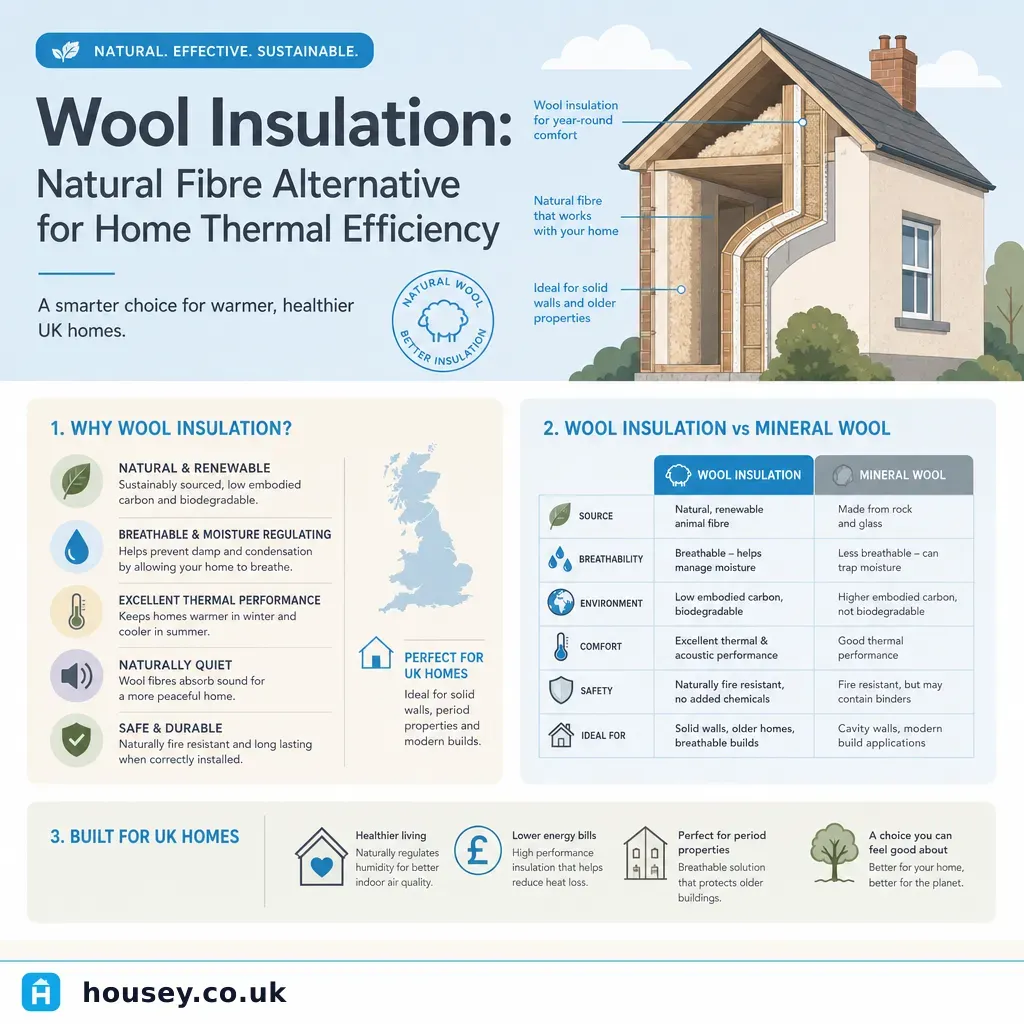
Wool Insulation: Natural Fibre Alternative for Home Thermal Efficiency
Sheep wool insulation achieves a thermal conductivity of 0.
 Energy & Retrofit
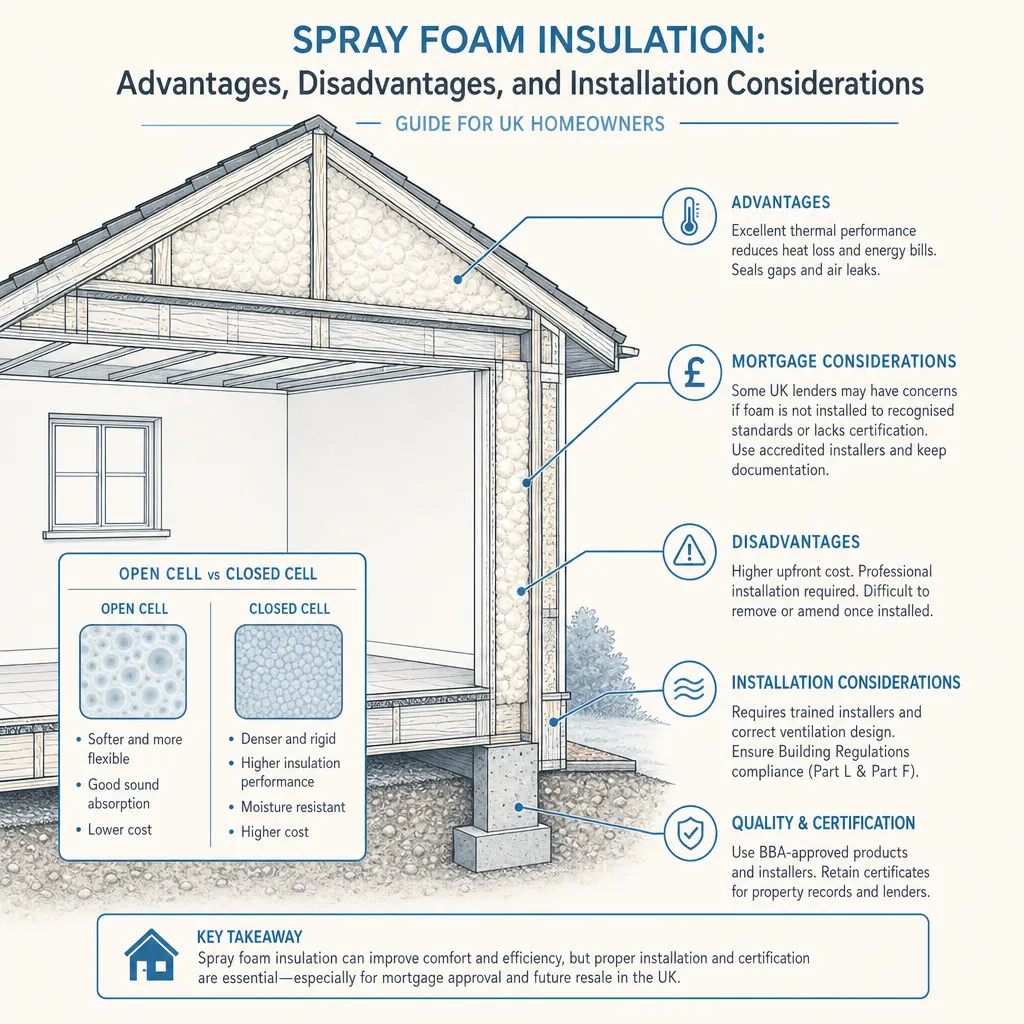
Spray Foam Insulation: Advantages, Disadvantages, and Installation Considerations
Spray foam insulation delivers excellent thermal performance and air sealing but carries significant risks in UK homes, particularly when applied to roof timbers — it can trap moisture, cause structural damage, and make properties harder to mortgage or sell.
 Energy & Retrofit
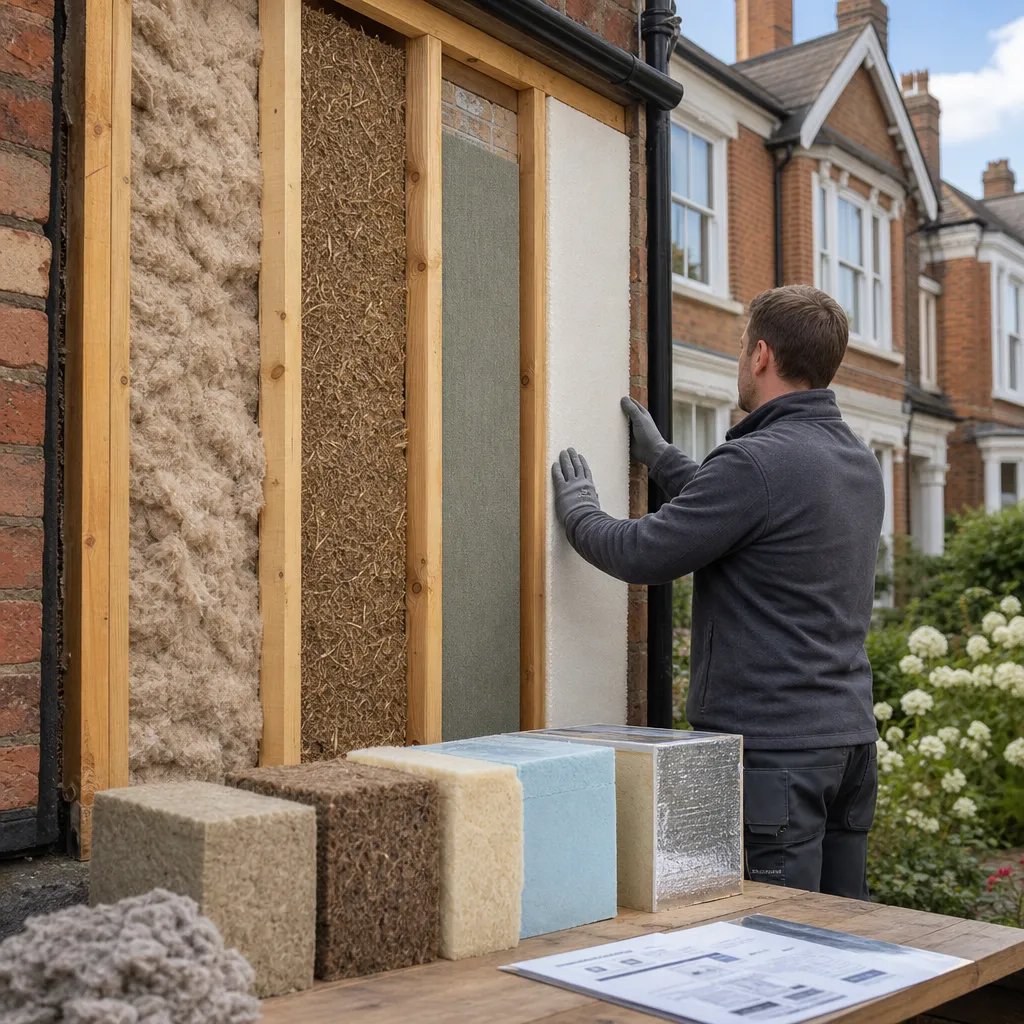
Alternative Insulation Materials: Comparing Natural and Modern Options
The best insulation for a UK home depends on property type, available thickness, and moisture risk.
 Energy & Retrofit
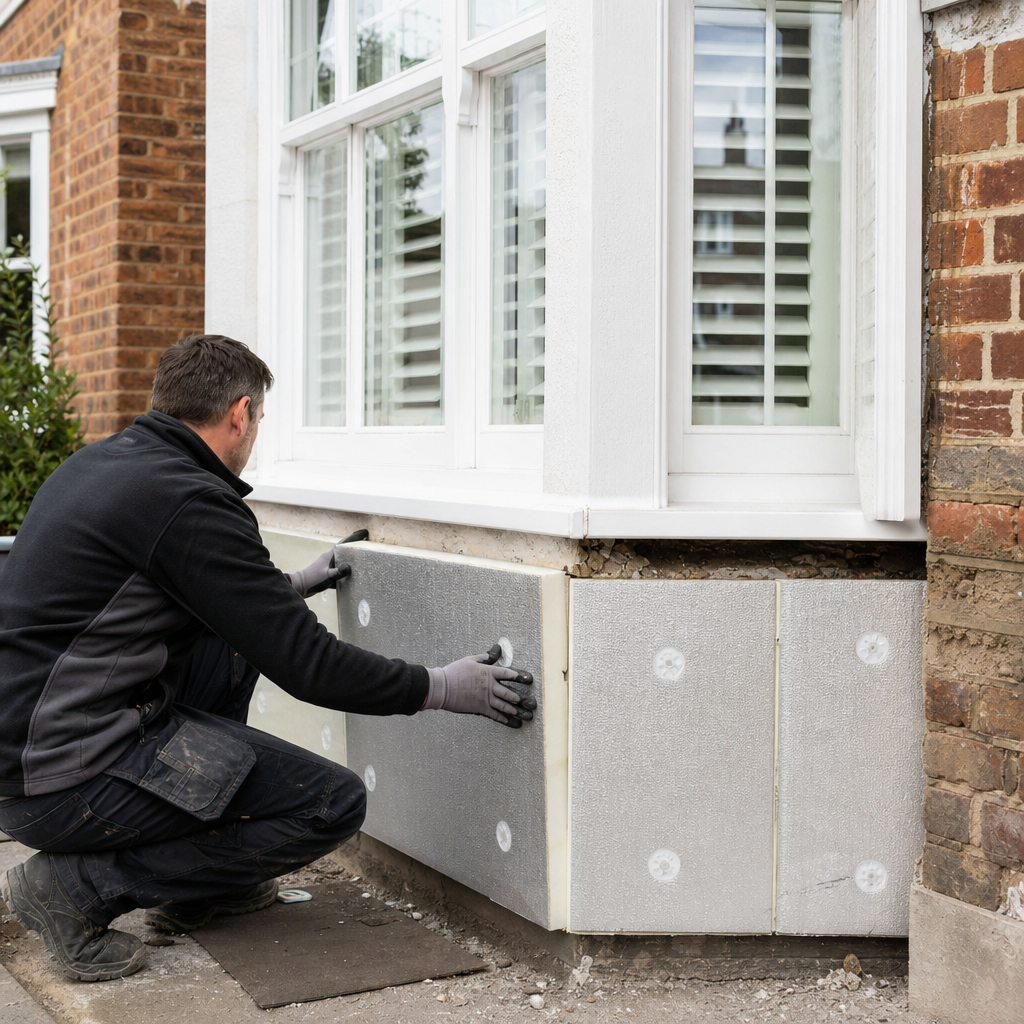
Insulating Solid Masonry Walls Under Bay Windows: Technical Guidance
Insulating solid masonry walls under bay windows requires specialist detailing at angled wall faces, window reveals, and the bay floor and ceiling junctions.
 Energy & Retrofit
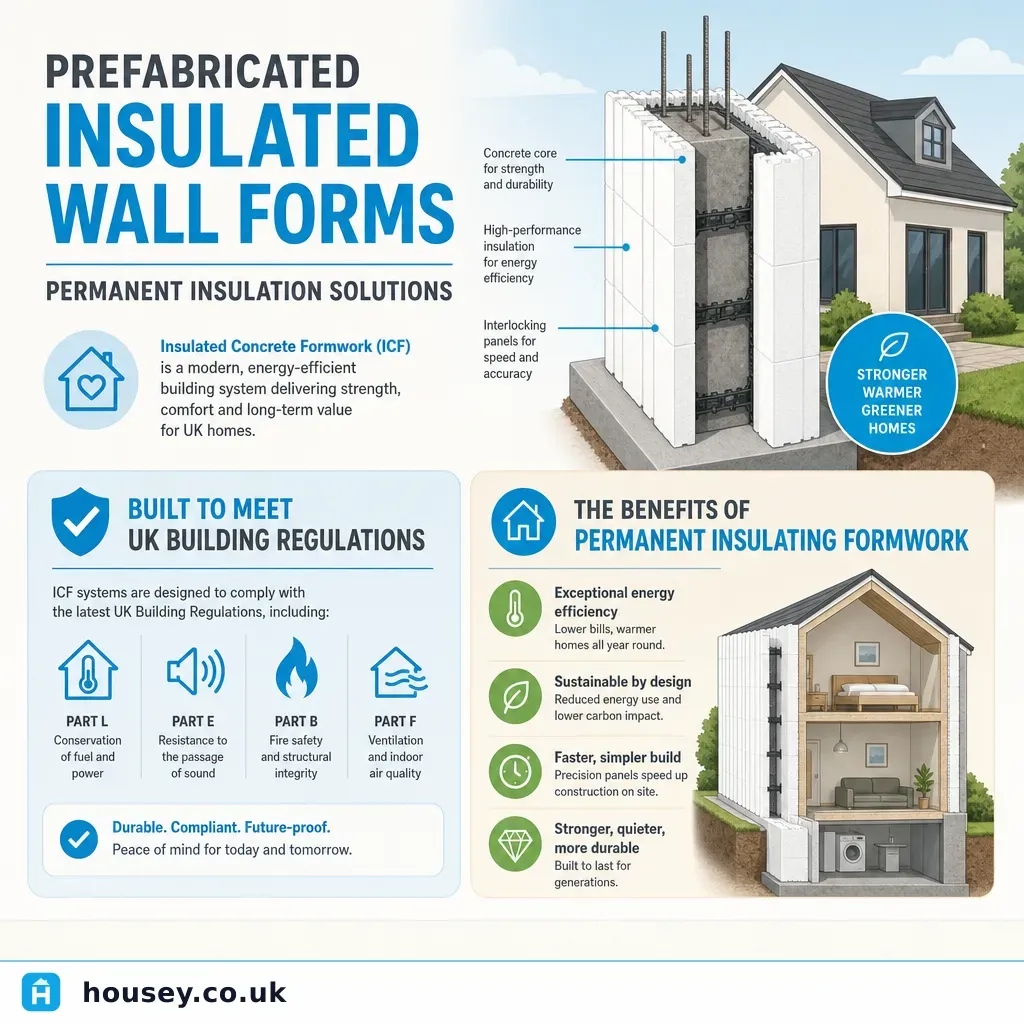
Prefabricated Insulated Wall Forms: Permanent Insulation Solutions
Prefabricated insulated wall forms — including ICF and SIPs systems — deliver high thermal performance by combining permanent insulation with structural concrete or timber in a single wall assembly.