Spray Foam Insulation: Advantages, Disadvantages, and Installation Considerations
By Housey · Last reviewed 7th of May 2026
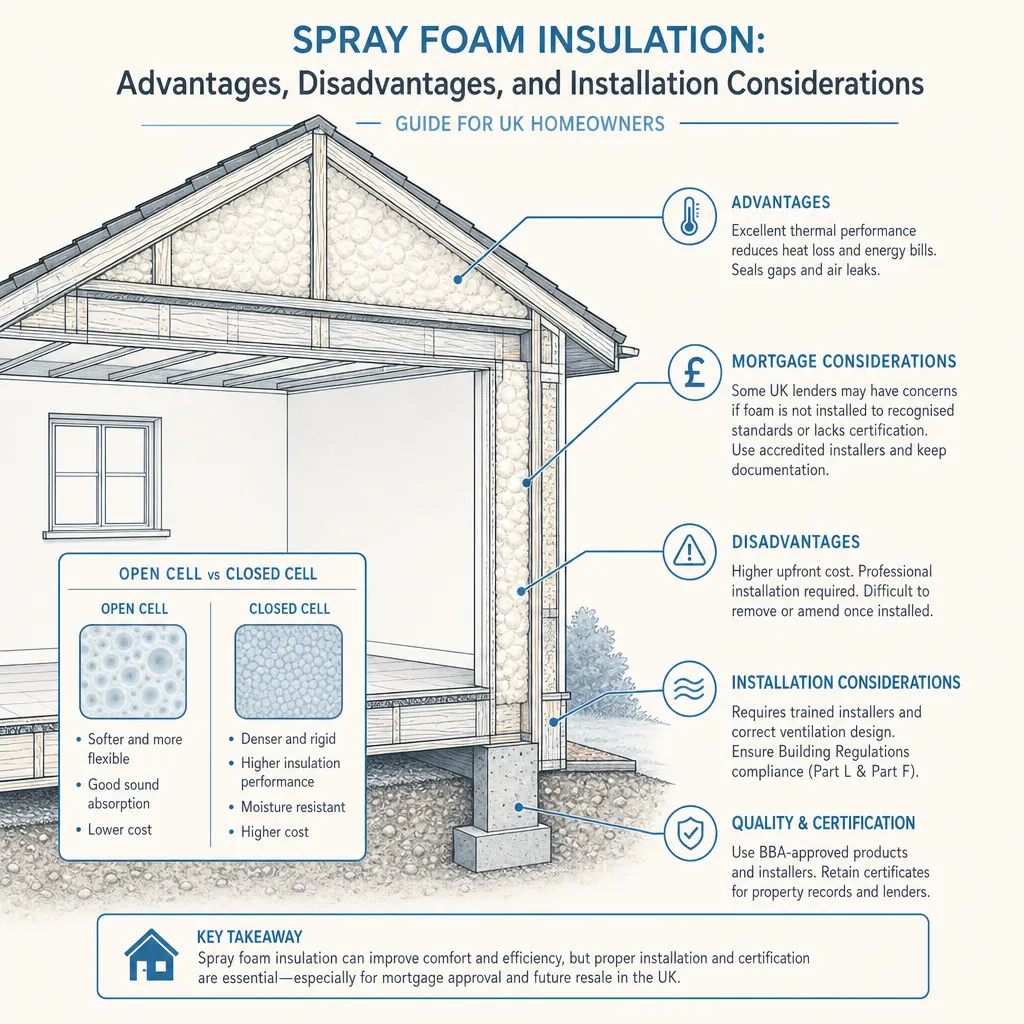
Spray Foam Insulation: Advantages, Disadvantages, and Installation Considerations
Spray foam insulation has been promoted heavily in the UK residential market as a fast, high-performance solution for loft spaces, roof timbers, and hard-to-reach voids. Its use in existing homes has generated serious and well-documented concerns from mortgage lenders, RICS-registered surveyors, and the wider retrofit industry — concerns that can directly affect a property's saleability, mortgageability, and long-term structural condition. If you are considering spray foam, or already have it installed, understanding what the evidence shows is an essential first step.
Key points
- Spray polyurethane foam (SPF) applied to roof timbers has led UK mortgage lenders to decline applications on affected properties, because surveyors cannot fully inspect the structure hidden beneath or within the foam.
- RICS guidance (updated 2023) states that spray foam in loft spaces presents valuation and saleability concerns and may require specialist investigation or removal before a property sale can proceed.
- Two main types exist: open-cell foam (lower density, vapour-permeable) and closed-cell foam (high density, acts as a vapour barrier) — each carries different moisture and structural risk profiles.
- PAS 2035, the UK retrofit standard, requires significant insulation works to be overseen by a Retrofit Coordinator who must assess moisture, ventilation, and structural implications before spray foam is specified.
- Spray foam insulation is not an eligible measure under the ECO4 government grant scheme, meaning no grant funding is currently available for this product type.
What is spray foam insulation?
Spray polyurethane foam (SPF) is a two-component material that, when mixed and applied, expands rapidly on contact with surfaces to create a rigid or semi-rigid insulating layer. It bonds strongly to timber, masonry, concrete, and metal, and because it expands to fill gaps, it provides both thermal insulation and air sealing in a single application.
In UK homes, spray foam has been installed in:
- Loft and roof spaces (between or below rafters)
- Cavity walls (using specialist low-pressure products)
- Underfloor voids
- Garage roofs and outbuildings
- New-build and commercial settings where it is specified as part of a controlled design
The performance characteristics are genuine in the right context. The problems arise when spray foam is installed without adequate assessment of existing moisture levels, ventilation paths, and structural access — particularly in the UK's ageing housing stock, where conditions vary enormously between properties.
Open-cell vs closed-cell spray foam
Feature | Open-cell foam | Closed-cell foam |
|---|---|---|
Density | Low (~10–12 kg/m³) | High (~30–40 kg/m³) |
Thermal conductivity (lambda) | ~0.036–0.040 W/mK | ~0.022–0.028 W/mK |
Vapour permeability | Permeable — moisture can pass through | Vapour barrier — traps moisture if incorrectly applied |
Structural rigidity | Soft and flexible | Rigid, adds some racking strength |
Typical UK applications | Rafter insulation in lofts | Cold roofs, underfloor voids, wall cavities |
UK mortgage risk | Significant | Very significant |
Moisture risk if poorly assessed | Moderate (allows some drying) | High (can trap moisture and cause timber decay) |
Product characteristics vary between manufacturers. Always request independently verified technical data sheets and seek professional advice before specifying any spray foam product.
Why does spray foam cause mortgage problems in the UK?
This is the central practical issue for most UK homeowners, and it is not a minor administrative inconvenience.
When spray foam is applied directly to roof timbers, it:
- Prevents visual inspection — RICS surveyors and lenders' valuers cannot assess the condition of timbers hidden within or beneath the foam
- Makes structural repairs difficult — replacing a damaged rafter or batten requires cutting out cured foam, which is costly and risks damaging adjacent timbers
- May conceal pre-existing defects — rot, insect infestation, or substandard previous repairs may be obscured by the foam layer
- Triggers lender concern at sale and remortgage — many UK high-street lenders have policies that result in declined valuations or requirements for specialist investigation on properties where spray foam is present in the roof space
RICS guidance updated in 2023 states that surveyors should flag spray foam in loft spaces as a significant concern, recommend specialist investigation, and in some cases advise removal as a condition of purchase. Any buyer relying on a mortgage is likely to encounter this issue — meaning spray foam installed today may create a material obstacle to future sales.
Advantages of spray foam insulation (in appropriate applications)
In appropriate applications with correct specification and professional oversight, spray foam offers genuine advantages:
- High thermal performance — closed-cell foam achieves lambda values of 0.022–0.028 W/mK, among the best of any insulation product currently available
- Effective air sealing — reduces uncontrolled infiltration, a meaningful source of heat loss in older UK homes
- Speed of installation — a trained installer can cover large, irregular, or hard-to-reach surfaces more quickly than laying mineral wool batts by hand
- Moisture resistance (closed-cell) — closed-cell foam does not absorb water and performs well where incidental moisture exposure is expected
- Structural contribution — in new-build and commercial settings, closed-cell foam can add racking strength to structural panels where this is designed in from the outset
For the majority of existing UK homes with pitched roofs and accessible roof timbers, the mortgage and structural risk implications outweigh these advantages for most homeowners.
Important limitations
This article provides general information about spray foam insulation and its known implications in the UK residential market. It is not a substitute for professional assessment of your specific property, and it does not constitute financial, legal, or structural advice.
Suitability of spray foam — including which type, where it is applied, and how it interacts with existing ventilation, structure, and moisture conditions — must be evaluated by a qualified professional for each individual property:
- Properties with spray foam in loft spaces may be difficult to mortgage or remortgage — discuss this directly with your mortgage lender and conveyancer
- Removal from roof timbers is a specialist operation; costs and outcomes vary widely and should be assessed independently
- Moisture and condensation risk depends on foam type, application method, ventilation, and climate exposure; only a site-specific assessment can give reliable guidance
When this becomes urgent
Seek professional advice promptly if:
- You are buying a property and a surveyor has flagged spray foam in the roof space
- Your mortgage lender has declined an application or required a specialist report due to spray foam
- You have spray foam in your loft and are considering selling or remortgaging in the near future
- You notice damp, staining, or discolouration in a roof space where spray foam has been installed
- A company is approaching you unsolicited with spray foam as a solution to condensation, draughts, or heat loss in your loft
What to ask a qualified professional
Before instructing any spray foam installer, ask:
- Are you TrustMark-registered? What accreditation or scheme covers this installation?
- Have you assessed the existing ventilation, moisture levels, and structural condition of the roof space before proposing spray foam?
- What type of foam are you proposing — open-cell or closed-cell — and why is that the right choice for this specific property?
- How will installation affect mortgage eligibility for future sales or remortgaging?
- Does the installation come with an insurance-backed guarantee (IBG)? Who underwrites it and for how long?
- Will you provide a written specification and moisture risk assessment before work begins?
- If I need to access or repair roof timbers in future, what does that process involve and what is the typical cost?
If a property you are buying already has spray foam installed, ask a RICS-registered surveyor to inspect the foam and estimate remediation costs, check with your mortgage lender or broker directly whether they will lend on the property, and obtain an independent removal cost estimate from a specialist.
When to get professional help
Do not proceed with spray foam insulation based solely on a quote from an installer with a commercial interest in the sale. Independent professional assessment is strongly recommended before any commitment.
Red flags that indicate you should pause and seek independent advice:
- An installer guarantees significant EPC improvements without an independent energy assessment
- You are told that spray foam will not affect your mortgage — verify this directly with your lender, not the installer
- No pre-installation survey of moisture levels, ventilation, or timber condition is proposed
- The company cannot provide written accreditation, insurance-backed guarantee documentation, or a site-specific technical specification
How Housey can help
Before committing to spray foam or any insulation measure, an independent insulation assessment can provide an impartial view of your options, risks, and the specification most appropriate for your property. If you decide to proceed with insulation works, Housey can connect you with vetted insulation installers who can provide competitive, itemised quotes for your specific situation.
Frequently asked questions
Why does spray foam insulation cause mortgage problems in the UK?
When spray foam is applied to roof timbers, lenders' surveyors cannot fully inspect the condition of the structure underneath or within the foam. Many UK mortgage lenders treat this as a material valuation risk and will decline to lend, or require specialist investigation before proceeding. This is a lending-policy issue that varies by lender — check directly with your lender before installing spray foam in any roof space.
Can spray foam insulation be removed?
Yes, but removal is a specialist and often costly operation. Cured foam is typically cut, ground, or chipped from roof timbers and surfaces, which risks damaging the timber underneath. In some cases, remediation includes replacing damaged structural elements. Costs vary by area covered, foam type, adhesion, and accessibility. Always obtain multiple specialist quotes and an independent assessment before purchasing or selling an affected property.
What is the difference between open-cell and closed-cell spray foam?
Open-cell foam is lower density, softer, and vapour-permeable, which reduces but does not eliminate moisture-trapping risk in roof structures. Closed-cell foam is denser, rigid, and acts as a vapour barrier, offering better thermal performance per millimetre but higher moisture risk if applied without adequate assessment of existing ventilation and timber condition. Both types carry significant UK mortgage implications when installed in roof spaces.
Is spray foam insulation covered by government grants?
No. Spray foam is not an eligible measure under the ECO4 (Energy Company Obligation) government grant scheme. Other insulation types — including cavity wall, solid wall, and loft insulation using mineral wool — may be eligible under ECO4 for qualifying households. Check the GOV.UK ECO4 guidance and contact your energy supplier for current eligibility criteria.
How long does spray foam insulation last?
Manufacturers typically claim 20–25 years or more for correctly installed and cured spray foam. Longevity depends on the product, application conditions, and correct installation. The more significant concern in UK residential properties is not the foam's own lifespan but the ongoing financial implications — particularly for mortgage eligibility — that persist for the duration of ownership and affect future buyers.
Sources and further reading
- RICS guidance on spray foam insulation in residential properties — Royal Institution of Chartered Surveyors
- PAS 2035: Retrofitting dwellings for improved energy efficiency — BSI / BRE Trust
- ECO4 scheme — eligible measures — GOV.UK
- TrustMark — find a registered business — TrustMark
- Energy Saving Trust — Insulation advice — Energy Saving Trust
Useful next reads
 Energy & Retrofit
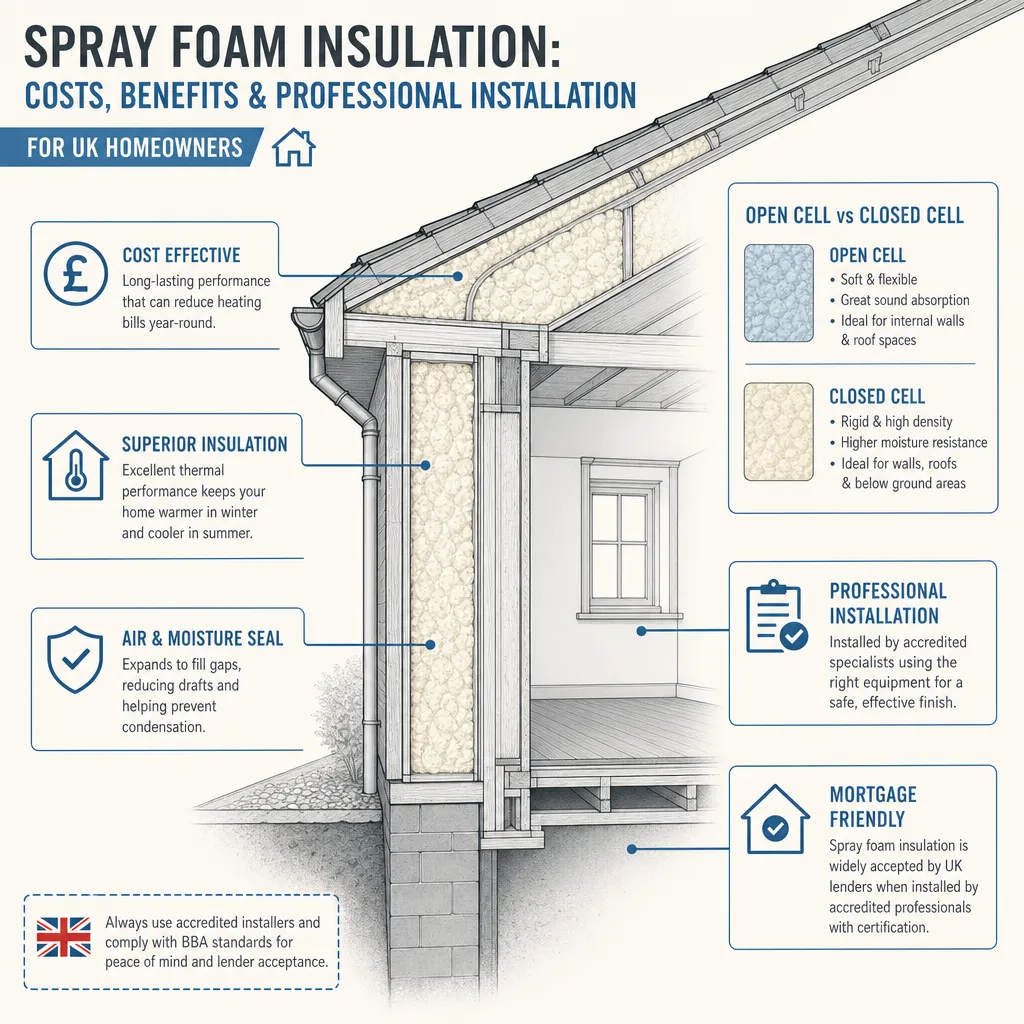
Spray foam insulation: costs, benefits and professional installation
Spray foam insulation costs between £15 and £60 per square metre installed in the UK, depending on whether open-cell or closed-cell foam is used.
 Energy & Retrofit
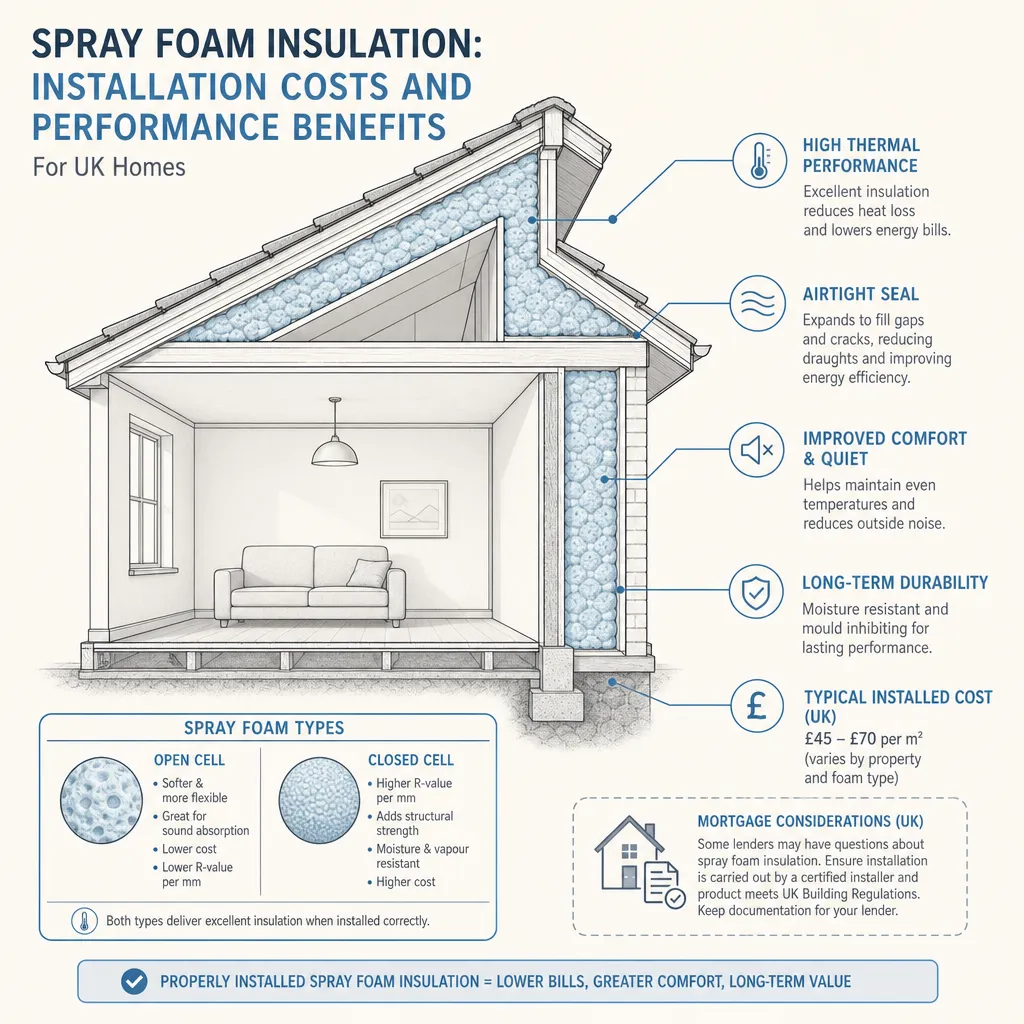
Spray Foam Insulation: Installation Costs and Performance Benefits
Spray foam insulation costs £1,500–£5,000 installed for an average UK home depending on type and area covered.
 Energy & Retrofit
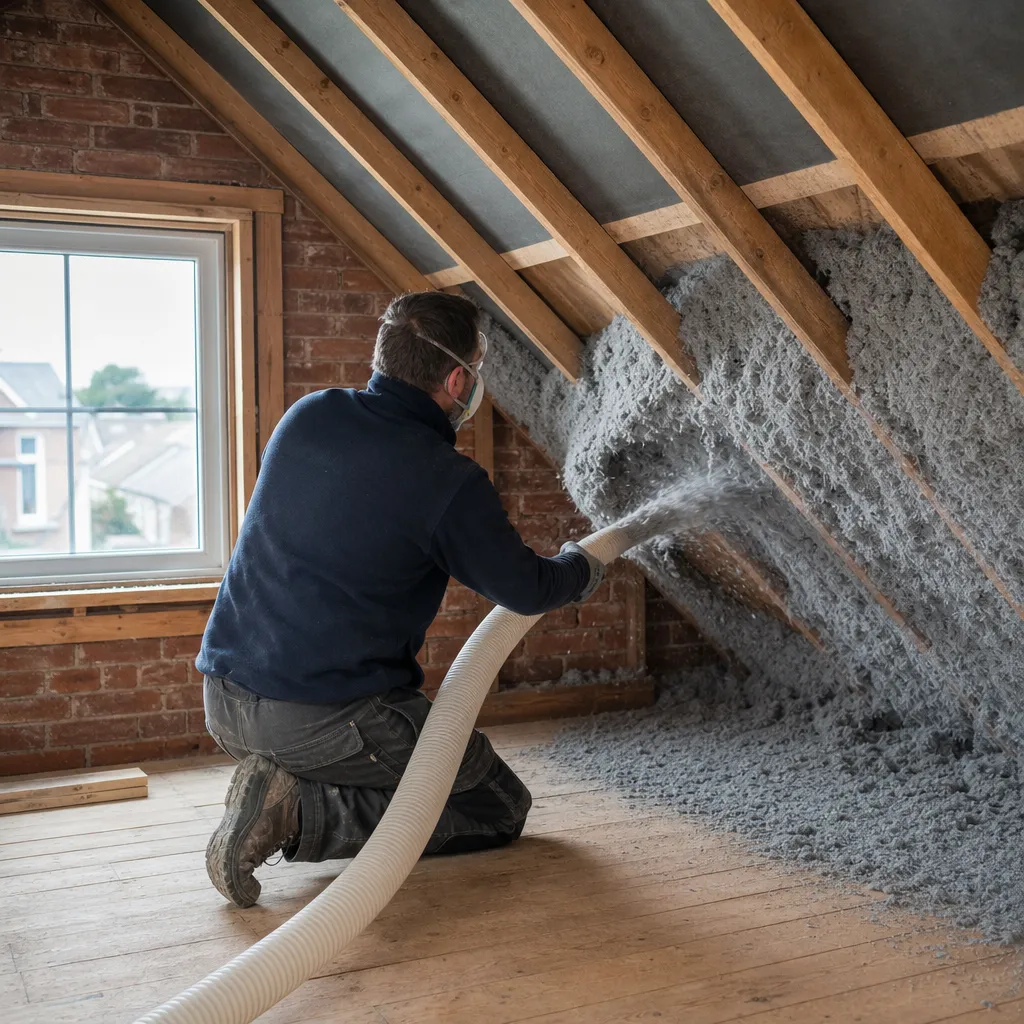
Cellulose Insulation: Advantages and Disadvantages for Your Home
Cellulose insulation is a recycled, low-embodied-carbon option achieving 0.
 Energy & Retrofit
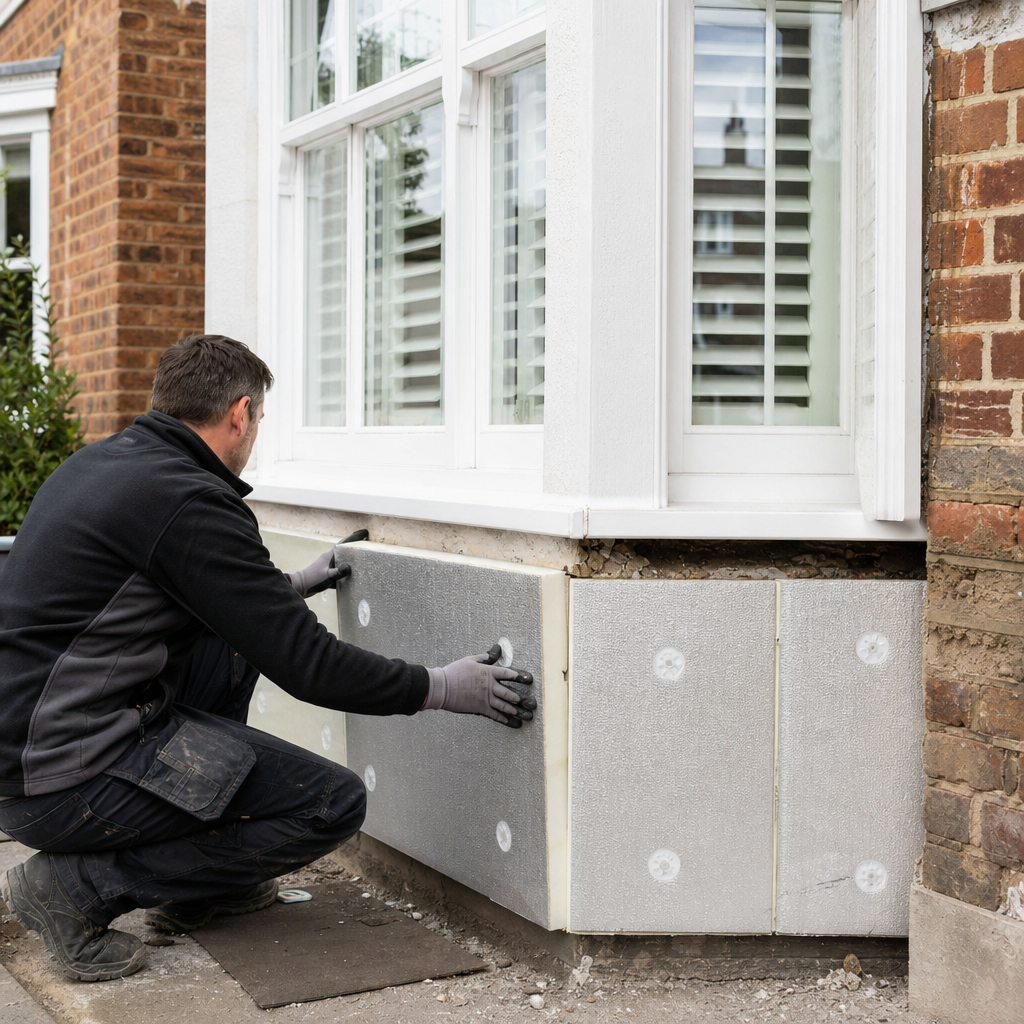
Insulating Solid Masonry Walls Under Bay Windows: Technical Guidance
Insulating solid masonry walls under bay windows requires specialist detailing at angled wall faces, window reveals, and the bay floor and ceiling junctions.
 Energy & Retrofit
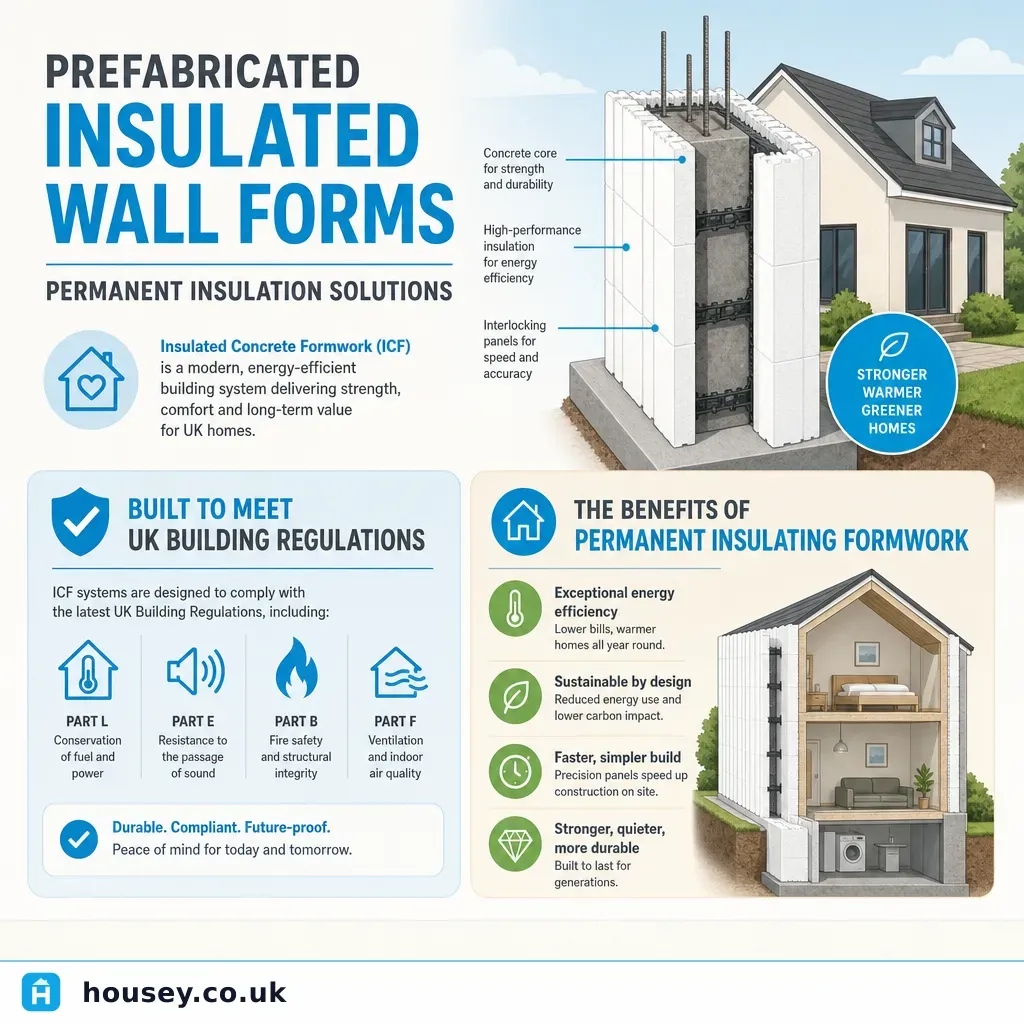
Prefabricated Insulated Wall Forms: Permanent Insulation Solutions
Prefabricated insulated wall forms — including ICF and SIPs systems — deliver high thermal performance by combining permanent insulation with structural concrete or timber in a single wall assembly.