Central Heating Installation Duration and Process
By Housey · Last reviewed 11th of May 2026
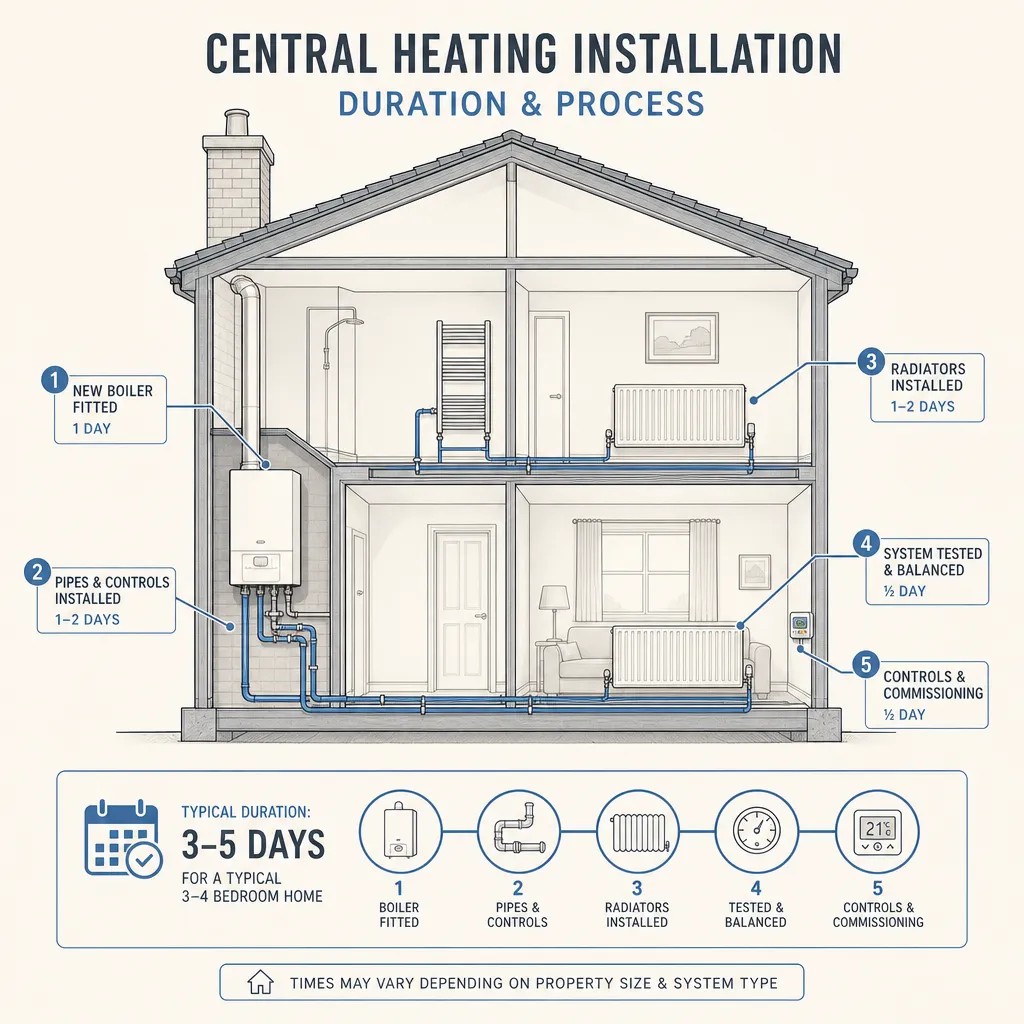
Central Heating Installation Duration and Process
Central heating is one of the most impactful upgrades a UK homeowner can make — and the question of how long it takes typically arises when moving into a property without an existing system, replacing an ageing boiler, or undertaking a major renovation. Whether you are starting from scratch or upgrading existing pipework, understanding the stages involved helps you plan effectively around the disruption, and know what to ask an installer before any work begins.
Key points
- All gas central heating work in the UK must be carried out by a Gas Safe registered engineer — a legal requirement under the Gas Safety (Installation and Use) Regulations 1998.
- A standard installation in a 3–4 bedroom home with 10–12 radiators typically takes 3 to 5 working days when existing infrastructure is largely in place.
- New boiler installations must comply with Building Regulations Approved Document L (conservation of fuel and power); installers must notify building control or self-certify through a government-approved competent person scheme.
- A Benchmark Commissioning Checklist and Gas Safety Certificate must be completed and handed to the homeowner on the day the system is commissioned.
- Adding underfloor heating zones, replacing all pipework in a solid-wall home, or installing a pressurised unvented cylinder can extend the programme to 10–14 working days.
How long does central heating installation take?
Installation duration depends on property size, existing infrastructure, and system complexity. Most engineers can give a realistic programme once they have assessed the property in person. Typical durations for common UK scenarios:
Scenario | Typical duration |
|---|---|
New boiler only — existing radiator circuit reused | 1–2 days |
Full system — new boiler, radiators, and pipework in a 3-bed semi | 3–5 days |
Full system in a 5-bed detached with 15 or more radiators | 5–7 days |
All-new pipework in a solid-wall Victorian terrace | 7–10 days |
Gas system plus underfloor heating zones | 8–14 days |
Indicative UK timescales, last reviewed 2026-05-11. Exact durations vary by property, access, and installer.
These figures assume clear access, on-schedule material deliveries, and no significant unforeseen issues — such as discovering asbestos insulation on old pipework lagging or finding that the existing gas supply pipe is undersized for the new boiler's output rating.
What does the installation process involve?
A central heating installation generally follows these stages:
Days 1–2: Survey confirmation, delivery, and strip-out
The Gas Safe registered engineer confirms the survey findings and begins removing old system components. If an existing boiler is being decommissioned, the gas supply is isolated. Old radiators and pipework are removed where replacement is required.
Days 2–3: Pipework runs and radiator positions
New flow and return pipework is routed through the property — typically under floorboards, through joists, and in wall chases where concealed runs are appropriate. This is usually the most disruptive stage: floor coverings may be lifted and some rooms temporarily become inaccessible.
Days 3–4: Boiler installation, cylinder, and controls
The new boiler is positioned and connected to the gas supply, flue, and heating circuit. A hot water cylinder, if included, is installed in an airing cupboard or plant room. Programmers, thermostats, or smart controls are wired at this stage.
Day 4–5: Commissioning and handover
The system is filled, pressure-tested, and the boiler is fired up. The engineer flushes the circuit using a power flush or chemical treatment, doses the system with inhibitor, and fits a magnetic filter. All radiators are balanced, and the Benchmark Commissioning Checklist is completed. A Gas Safety Certificate is issued, and the boiler warranty is registered with the manufacturer.
What factors can extend the timeline?
Several factors can push a programme beyond the typical range:
- Property age and construction: Pre-1919 solid-wall homes, properties with inaccessible floor voids, or unusual layouts require more time for pipework routes.
- Boiler relocation: Moving the boiler to a different wall or room requires a new flue penetration, typically adding at least a day.
- Number of zones: Each additional heating zone — separate programmable circuits for upper and lower floors — adds time for pipework, controls, and commissioning.
- Supply delays: Specialist cylinders, smart control systems, or less common boiler models may have lead times of several weeks.
- Unforeseen conditions: Poorly maintained gas supply pipes, concealed asbestos on old pipework lagging, or a non-compliant flue route from a previous installation can halt progress while alternatives are assessed.
Central heating and heat pump: a programme comparison
Some homeowners evaluating a new central heating system also consider an air source heat pump as an alternative. Heat pump projects generally take longer: outdoor unit installation alone can take 1–2 days, and the primary circuit, controls, and potentially larger radiators or underfloor heating circuits add further time. Critically, a heat loss calculation must be carried out by a suitably qualified engineer before any heat pump is sized — an assessment not required for a like-for-like boiler replacement. If you are weighing up options, a heat pump survey is the right starting point before committing to either route.
Homeowner checklist: preparing for installation
- Clear access to the loft, airing cupboard, boiler location, and all rooms where radiators will be positioned.
- Move furniture away from radiator positions and likely pipework routes before the start date.
- Confirm whether floor coverings will be lifted, and agree how they will be protected or relaid.
- Arrange for pets and young children to be away from the property on the most disruptive days.
- Confirm when the water supply will be off and for how long, so you can arrange alternative facilities if needed.
- Ensure the gas meter and stopcock are readily accessible.
- Ask the installer to confirm in writing when the Gas Safety Certificate and Benchmark Commissioning Checklist will be provided.
Red flags during installation
- An engineer who cannot produce a Gas Safe Register ID card on request.
- Work carried out without building control notification where required under the Building Regulations.
- No power flush or chemical system flush before the new boiler is commissioned.
- Pressure test not completed or documented before handover.
- Pipework left surface-run in prominent locations without prior discussion.
- Magnetic filter and inhibitor dosing not included in the commissioning as standard.
Important limitations
This article provides general guidance on typical central heating installation programmes. Actual durations, regulatory requirements, and costs vary by property, region, and installer. All gas work must be carried out by a Gas Safe registered engineer — this is a statutory legal requirement, not a recommendation. Nothing in this guide constitutes engineering advice, legal advice, or a substitute for a site-specific assessment by a qualified professional.
When this becomes urgent
- If your existing boiler fails in cold weather, call a Gas Safe registered engineer promptly — do not attempt to repair or bypass a gas appliance yourself.
- If you smell gas, leave the property immediately without operating any switches, and call the National Gas Emergency Service on 0800 111 999.
- If pipework, controls, or the gas supply show signs of corrosion, leaks, or damage during the installation, ask the engineer to assess the full extent before proceeding.
What to ask a qualified professional
Before instructing a Gas Safe registered installer, consider asking:
- What is your Gas Safe Register ID, and does your licence cover the type of installation proposed?
- Will you notify building control, and will a completion certificate be issued?
- What system flushing treatment and inhibitor dosing will be carried out?
- Which boiler model are you specifying, and what is its SEDBUK or ErP efficiency rating?
- What warranty does the boiler carry, and who registers it — and by when?
- Is the existing gas supply pipe adequate for the new boiler's maximum input rating?
- What disruption should I expect on each day of the programme, and which areas of the property will be affected?
How Housey can help
If you are considering a heat pump alongside or instead of a gas system, Housey can connect you with qualified assessors for a heat pump survey — giving you a clear picture of your property's suitability, indicative costs, and eligibility for government grant funding before you commit.
Frequently asked questions
Can I stay at home during central heating installation?
In most cases, yes — though the most disruptive days, when pipework is run under floors, can make parts of the property difficult to use. You will be without heating and hot water for periods, so plan accordingly, especially if installation falls in the colder months.
Do I need planning permission for new central heating?
Planning permission is not usually required for a standard gas boiler replacement or new system installation. However, the installation must comply with Building Regulations Approved Document L, and the installer must notify building control or self-certify as a registered competent person. If the property is listed, additional listed building consent may be needed.
Who registers the boiler warranty?
Most reputable installers complete the Benchmark Commissioning Checklist and register the boiler warranty with the manufacturer on your behalf as part of the commissioning process. Check this is included in your agreement — some manufacturers require registration within 30 days of installation to activate extended warranty terms, and responsibility should be agreed in writing.
Can pipework be hidden without lifting floorboards?
Surface-run pipework in trunking is an option, though less discreet. Some installers can route pipes through joists using minimal floor lifting, depending on the property's construction. Agree on routing preferences before the job begins to avoid surprises once work is underway — changes during installation will add cost and time.
Sources and further reading
- Gas Safe Register — Statutory registration body for gas engineers; use to verify engineer licence status before instructing any installer.
- Approved Document L: Conservation of fuel and power — GOV.UK — Energy efficiency requirements applying to new boiler installations.
- Gas Safety (Installation and Use) Regulations 1998 — legislation.gov.uk — The legal framework governing domestic gas work in the UK.
- Energy Saving Trust — Guidance on heating system efficiency and heat pump grant schemes.
Useful next reads
 Energy & Retrofit
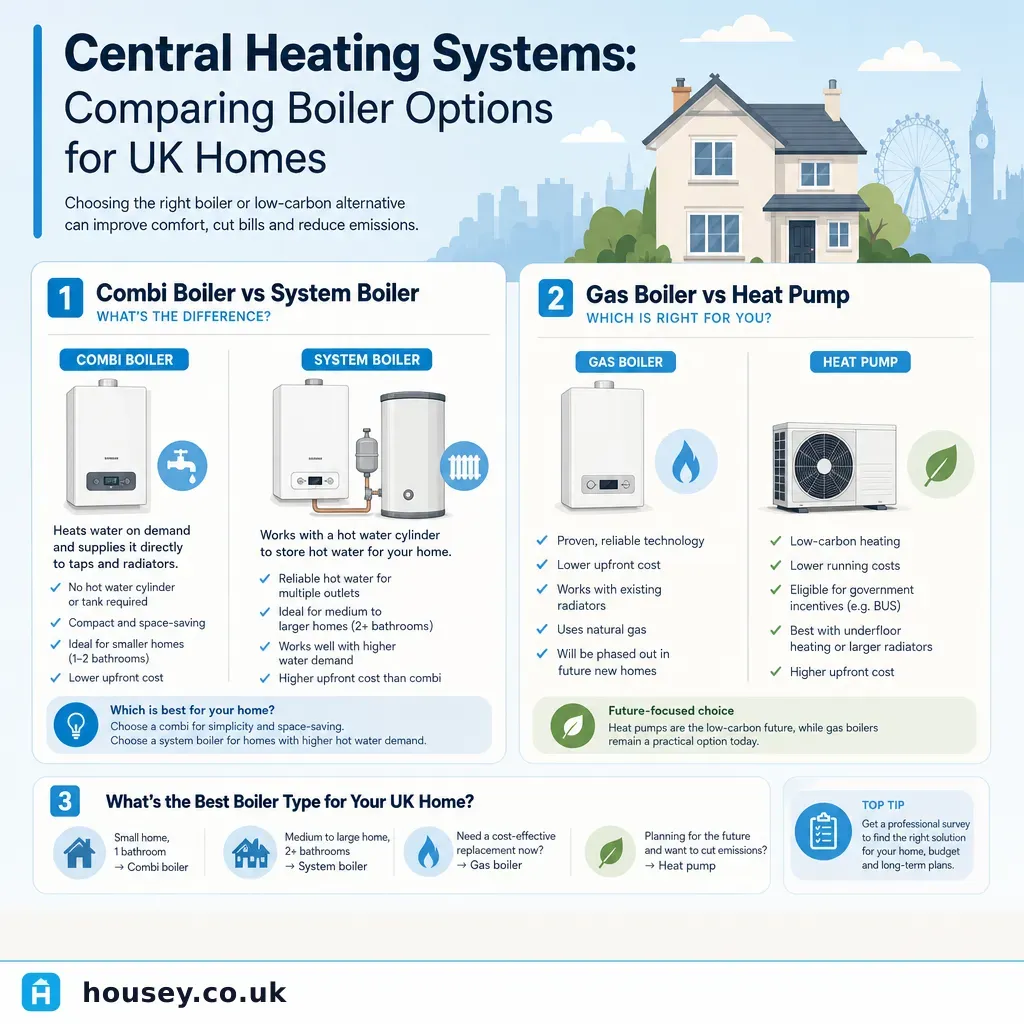
Central Heating Systems: Comparing Boiler Options for UK Homes
UK homes are generally heated by a combi boiler (no cylinder needed), system boiler (needs a hot water cylinder), or regular boiler (needs both a cylinder and cold-water tank).
 Energy & Retrofit
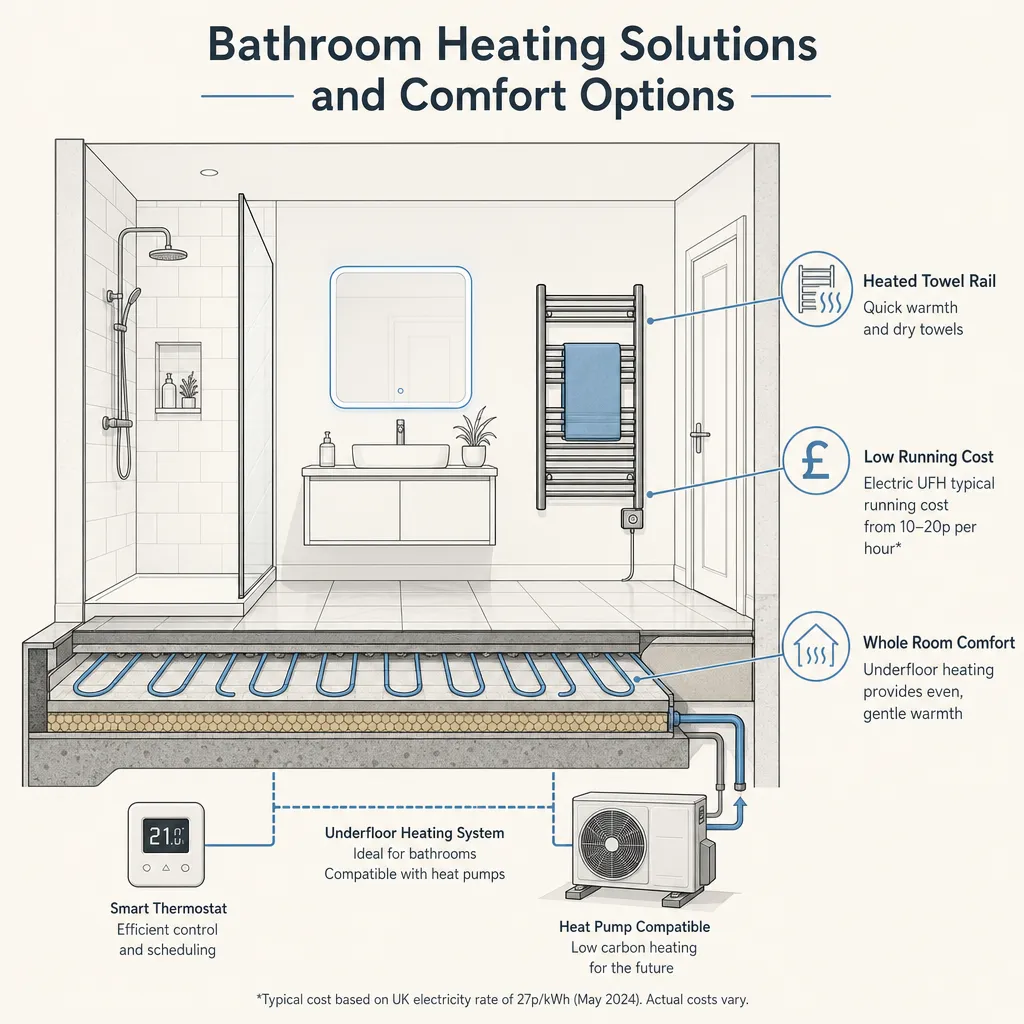
Bathroom Heating Solutions and Comfort Options
UK bathrooms can be heated using electric towel rails, wet radiators on the central heating circuit, electric or wet underfloor heating, or infrared panels.
 Energy & Retrofit
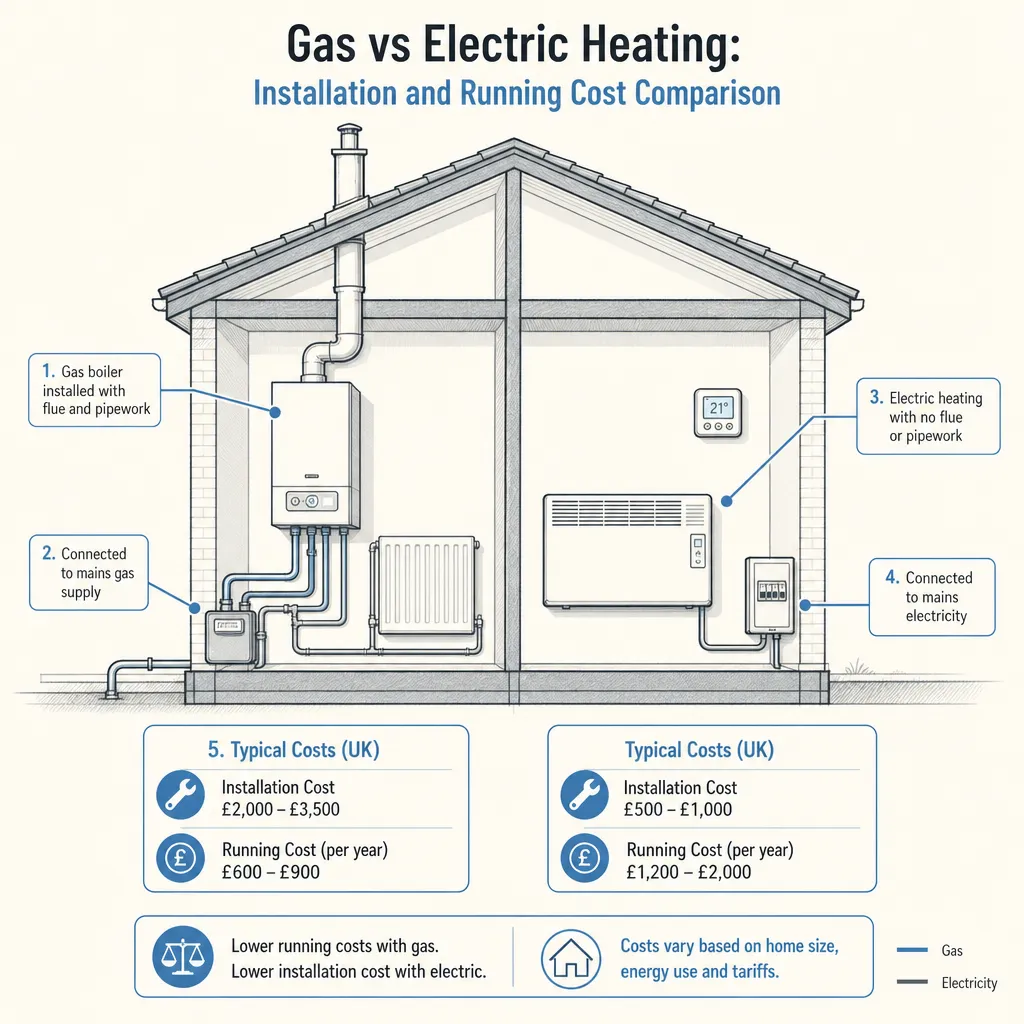
Gas vs Electric Heating: Installation and Running Cost Comparison
Gas central heating usually has lower running costs per kWh than direct electric heating in the UK, though heat pumps can change that equation.
 Energy & Retrofit
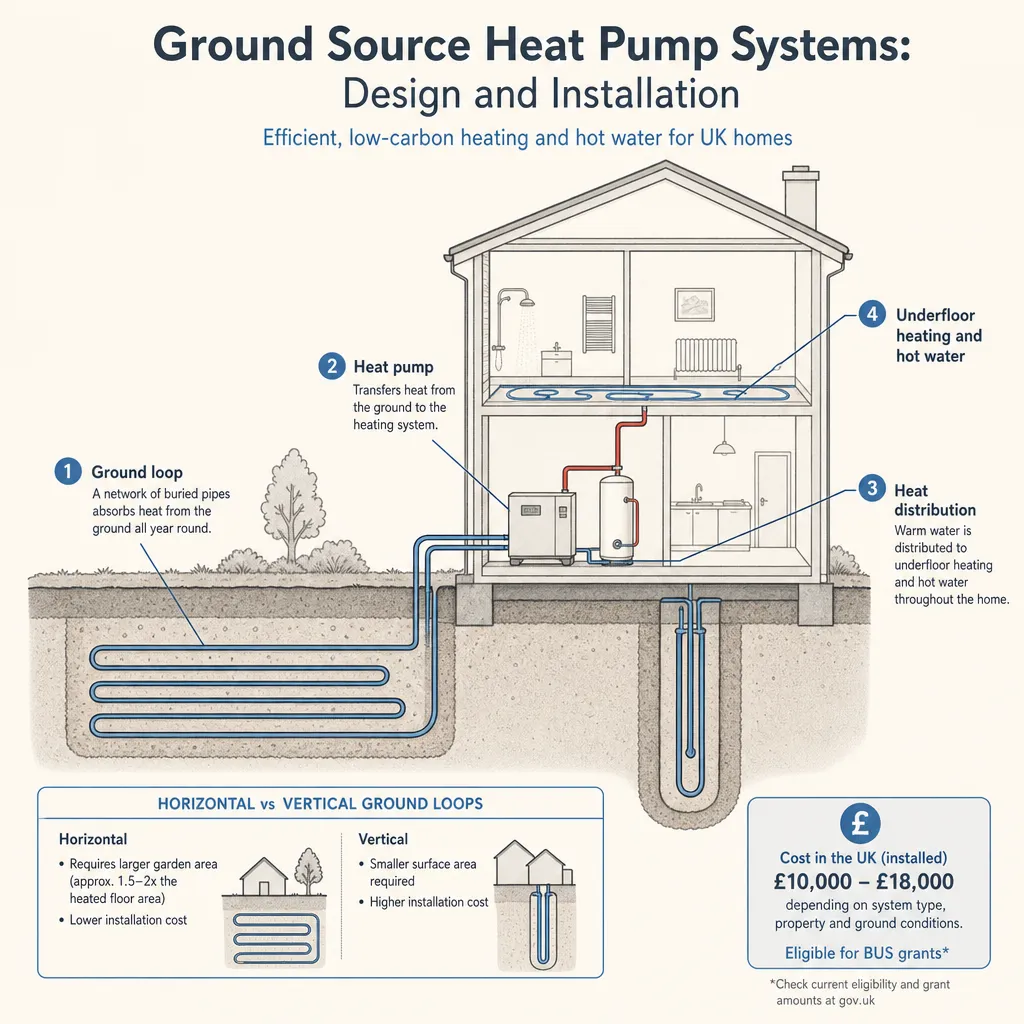
Ground Source Heat Pump Systems: Design and Installation
Ground source heat pumps extract heat from the earth through buried loops or boreholes, then upgrade it for space heating and hot water.
 Energy & Retrofit
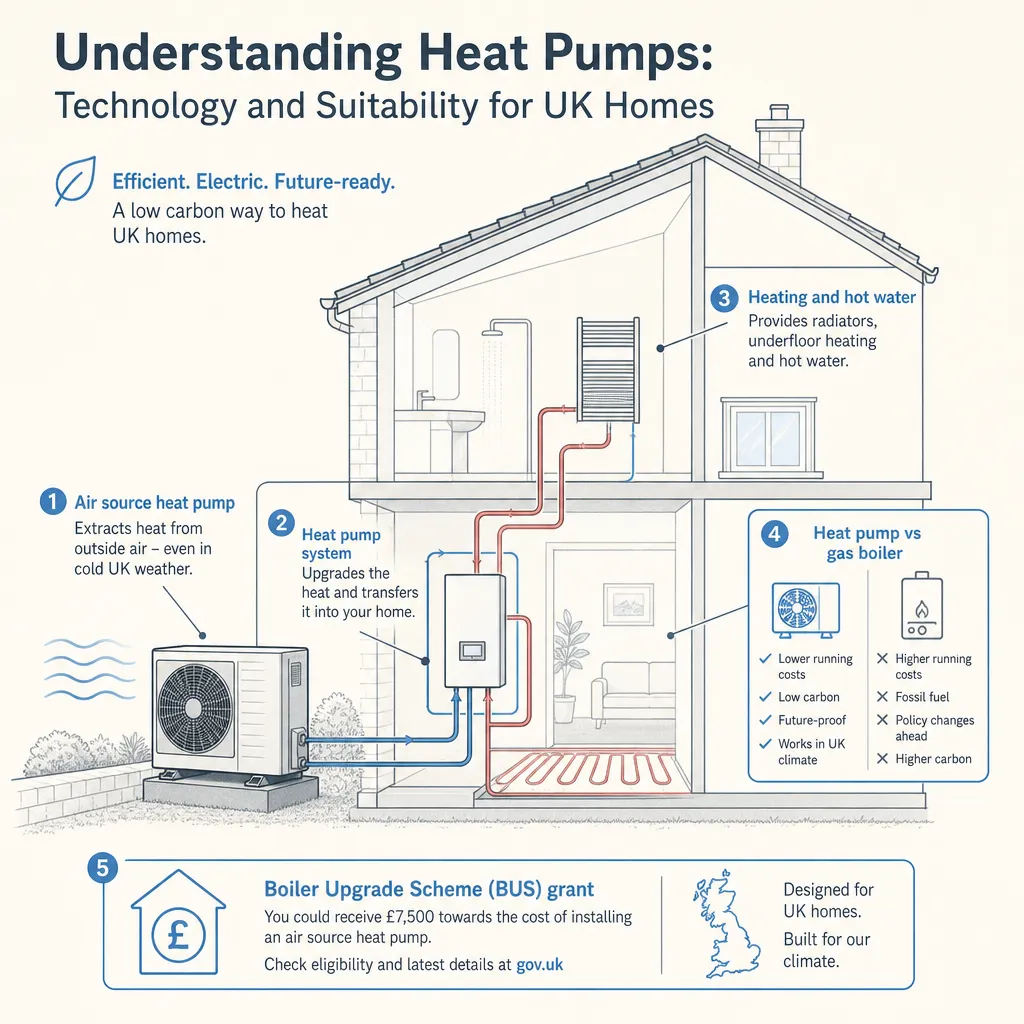
Understanding Heat Pumps: Technology and Suitability for UK Homes
Heat pumps extract heat from the air or ground and transfer it indoors, typically achieving efficiencies of 250–400% compared to a conventional boiler's near 100%.