Chalet-Style Homes: Design and Architectural Features
By Housey · Last reviewed 11th of May 2026
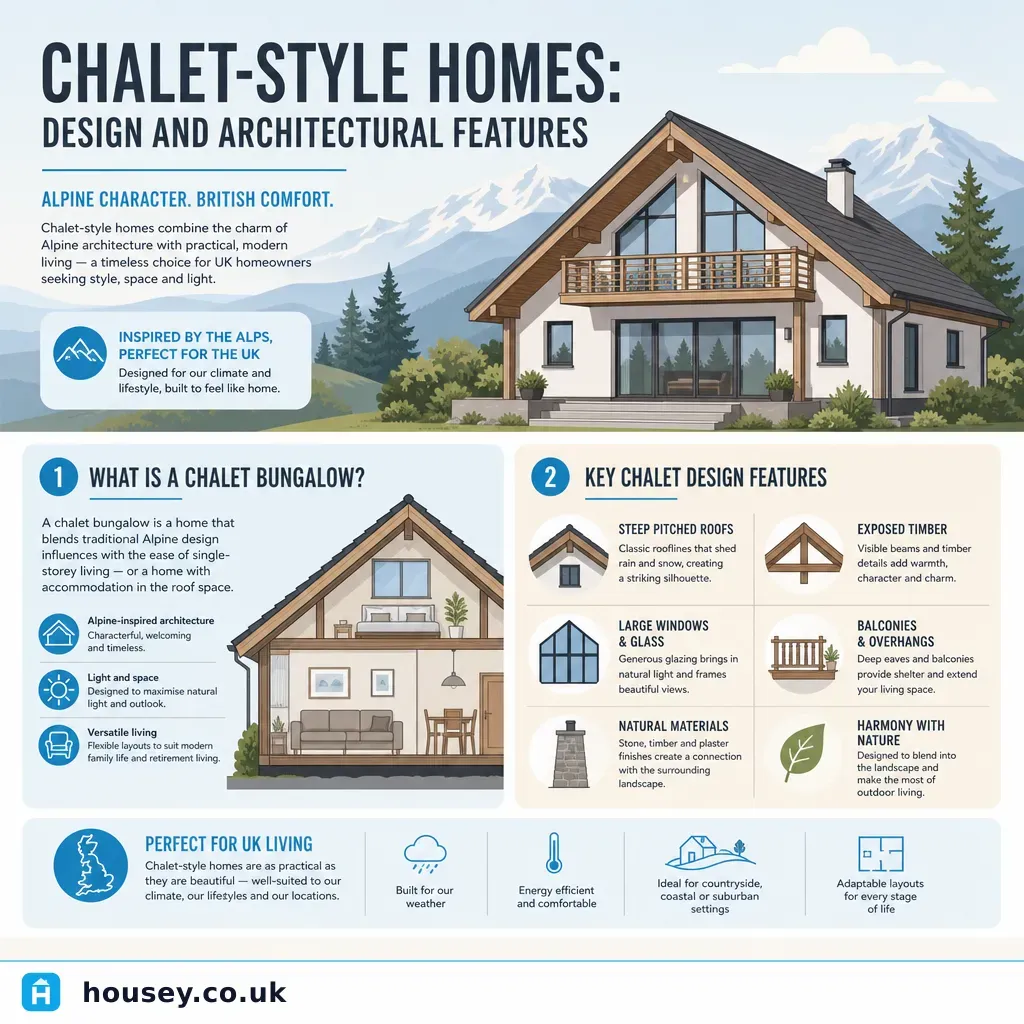
Chalet-Style Homes: Design and Architectural Features
Chalet-style properties occupy a distinctive niche in the UK housing market, blending continental Alpine influences with British building traditions. The word "chalet" is used loosely in UK property listings, estate agent descriptions, and planning documents — covering everything from a modest 1.5-storey suburban bungalow to a bespoke timber-framed residence with wide overhanging eaves. If you are buying a property described as a chalet, commissioning a new design in the Alpine idiom, or planning an extension that draws on this style, understanding what the architectural language actually involves will help you make informed decisions about planning, materials, and structural requirements.
Key points
- In UK estate agent and planning terminology, "chalet bungalow" refers specifically to a 1.5-storey dwelling with habitable rooms in the roof space, typically lit by dormer windows — a form that became common in the UK from the 1930s onwards.
- True Alpine chalet architecture is characterised by steeply pitched gabled roofs (typically 45–60°), wide overhanging eaves, exposed structural timber, and traditionally a masonry base with a timber upper section.
- Dormer additions and roof alterations on chalet bungalows often require planning permission if they face a highway, materially alter the roof profile, or exceed the size thresholds set by permitted development rules.
- Timber cladding used in chalet-style homes requires ongoing maintenance; naturally durable species such as western red cedar and larch perform better in the UK climate than untreated softwood.
- New-build properties in the Alpine chalet style require full Building Regulations approval, including Approved Document A (Structure) for steeply pitched roof loads and Approved Document L (Energy) for large glazed areas.
Chalet bungalow vs Alpine chalet style: understanding the difference
These two property types share a name but differ significantly in origin, form, and UK market context.
Feature | UK chalet bungalow | Alpine chalet style |
|---|---|---|
Storey arrangement | 1.5 storeys: ground floor rooms plus habitable roof space | 2–3 storeys; variable |
Roof form | Pitched with dormer windows; modest eaves overhang | Steeply pitched gable, wide overhanging eaves (often 1 m+) |
Timber use | Often minimal visible external timber | Structural and decorative timber is prominent |
Origin | British suburban tradition, 1930s–1970s | Swiss, Austrian, and French Alpine vernacular |
UK prevalence | Very common in suburban, coastal, and rural areas | Less common; found in bespoke rural or holiday-let new builds |
Planning considerations | Dormers and roof works often need planning permission | New builds need full planning; balconies not covered by PD |
Typical construction | Cavity brick walls, tiled or slated roof | Timber frame or post-and-beam; often timber-clad |
Key architectural features of Alpine chalet design
Roof form and eaves
The most immediately recognisable feature of true Alpine chalet design is the steeply pitched, symmetrical gabled roof with very wide overhanging eaves — often projecting 600 mm to 1 m or more beyond the wall face. In Alpine climates, deep eaves serve practical purposes: shedding snow, protecting walls from driving rain, and shading lower windows from summer sun. Translated to UK settings, these eaves become a defining aesthetic element that distinguishes the chalet style from standard pitched-roof construction.
Roof pitches between 45° and 60° are characteristic. On new-build UK properties, these pitches require structural design to manage wind uplift and snow loading in accordance with BS EN 1991-1-3 (Eurocode 1, Snow Loads) and Building Regulations Approved Document A.
Timber structure and cladding
Exposed structural timber is central to Alpine chalet design. Traditional construction uses heavy post-and-beam or solid log construction; modern UK interpretations more commonly employ engineered timber frame with applied cladding. Western red cedar, larch, and Douglas fir are commonly specified for external cladding, as each offers reasonable durability when correctly detailed with back ventilation, protected end grain, and cover from the eaves.
Decorative timber bargeboards, carved brackets, and timber balustrades reinforce the Alpine character without adding significant structural complexity. In conservation areas or Areas of Outstanding Natural Beauty (AONBs), the choice of materials — including timber species, finish, and colour — may need advance approval from the local planning authority.
Balconies and verandas
Full-width balconies on the principal elevation are a hallmark of Alpine chalet design. In the UK, a new balcony almost always requires planning permission — it is not covered by permitted development rights for dwellinghouses under the Town and Country Planning (General Permitted Development) (England) Order 2015. Structurally, cantilevered balconies require engineer input for compliance with Approved Document A, and balustrade heights must meet the requirements of Approved Document K (Protection from falling, collision, and impact).
Windows and glazing
Large windows facing principal views are characteristic of the style, often combined with shutters and window boxes. On new-build UK properties, the extent of glazing is constrained by Part L (Conservation of Fuel and Power). A Fabric Energy Efficiency Standard (FEES) calculation guides how much glazing is achievable while meeting energy performance targets, which is particularly relevant on exposed rural sites where heat loss can be significant.
What not to assume about chalet-style homes
- Do not assume permitted development covers all roof works on a chalet bungalow. Dormer windows facing a highway, those that project above the existing roof ridge, or those exceeding permitted development size limits require a planning application. Always check with your local planning authority before starting.
- Do not assume timber cladding is maintenance-free. All exposed timber in the UK climate requires periodic cleaning, re-treatment, and replacement of degraded sections. Factor maintenance costs into your whole-life cost assessment from the outset.
- Do not assume Alpine-style new builds fall outside Building Regulations. Steep roof pitches, timber structures, large glazed openings, and balconies all require full Building Regulations compliance and, where appropriate, structural engineer sign-off.
- Do not assume "chalet" in an estate agent listing means Alpine architecture. In most UK listings it means a chalet bungalow with rooms in the roof — not a timber Alpine structure. Inspect the property carefully and check the planning history before drawing conclusions.
- Do not assume planning permission is automatically refused for Alpine-style design in conventional settings. Many local authorities consider contemporary and non-traditional designs on their merits. Pre-application consultation with the planning authority — before committing to full architectural drawings — is the most cost-effective way to test acceptability.
Planning and pre-build considerations
For any new chalet-style property or significant extension drawing on the Alpine idiom, early engagement with the local planning authority is advisable. A pre-application consultation lets you gauge whether the scale, massing, materials, and character of the proposal are likely to be acceptable in that location before significant design fees are committed.
For extensions to existing chalet bungalows, permitted development rights may allow certain works — but the specific exclusions around roof alterations, balconies, and cladding materials in sensitive areas mean professional planning advice is worth obtaining before assuming works are permitted.
Building Regulations approval (a separate process from planning permission) is required for all structural work, including loft conversions, dormer additions, balconies, and structural alterations to the roof.
When to get professional help
Seek architectural or planning advice if:
- You are designing a new chalet-style property or a significant extension.
- You plan to add dormer windows, a balcony, external cladding, or alter the roof profile of an existing property.
- The property is in a conservation area, AONB, National Park, or is listed.
- You are unsure whether proposed works fall within permitted development.
- You are purchasing a chalet bungalow with existing dormers, extensions, or alterations and want to confirm they were properly permitted.
How Housey can help
Whether you are designing a new Alpine-style home or adapting an existing chalet bungalow, an experienced architect can help you navigate planning requirements, develop a scheme that captures the character you are after, and ensure structural and regulatory requirements are met before construction begins.
Frequently asked questions
What is the difference between a chalet and a chalet bungalow?
A chalet bungalow is a specific UK property type: a 1.5-storey house with habitable rooms in the roof space, lit by dormer windows and accessed via an internal stair. An Alpine chalet is a different architectural form — typically a multi-storey timber structure with steeply pitched roofs, wide overhanging eaves, and prominent exposed timber, drawn from Alpine vernacular tradition. Most UK estate agent listings use the word to mean the former.
Do I need planning permission to extend a chalet bungalow?
It depends on the nature and scale of the works. Enlarging or adding dormer windows that face a highway, project above the existing roof ridge, or exceed permitted development size limits requires a planning application. Works in conservation areas, AONBs, and on listed buildings are more tightly controlled. Check your local planning authority's guidance or seek a pre-application consultation before starting any roof works.
Is timber cladding appropriate for the UK climate?
Yes, with the right specification. Western red cedar, larch, and Douglas fir perform well in the UK if detailed with back ventilation, protected end grain, and adequate cover from overhanging eaves. Untreated softwood degrades much faster and is unsuitable for external use without a robust maintenance programme. Specify durability requirements in the design brief and include a maintenance schedule in handover documentation.
Are chalet bungalows good to buy as investments?
Value depends on location, condition, and local demand. Chalet bungalows are popular in coastal and rural areas and can offer flexible accommodation. Rooms in the roof space often have restricted head height, which may affect usability and saleability. Before exchange, commission a RICS Home Survey (Level 2 or Level 3 depending on the property's age and condition) to assess the roof structure, dormer condition, and any damp or thermal performance issues.
Sources and further reading
- Permitted development rights for householders: technical guidance — GOV.UK
- Approved Document A: Structure — GOV.UK Building Regulations
- Approved Document L: Conservation of fuel and power — GOV.UK Building Regulations
- Approved Document K: Protection from falling — GOV.UK Building Regulations
- Historic England: guidance on traditional buildings — Historic England
- RIBA: find an architect — RIBA
Useful next reads
 Planning & Pre-Build
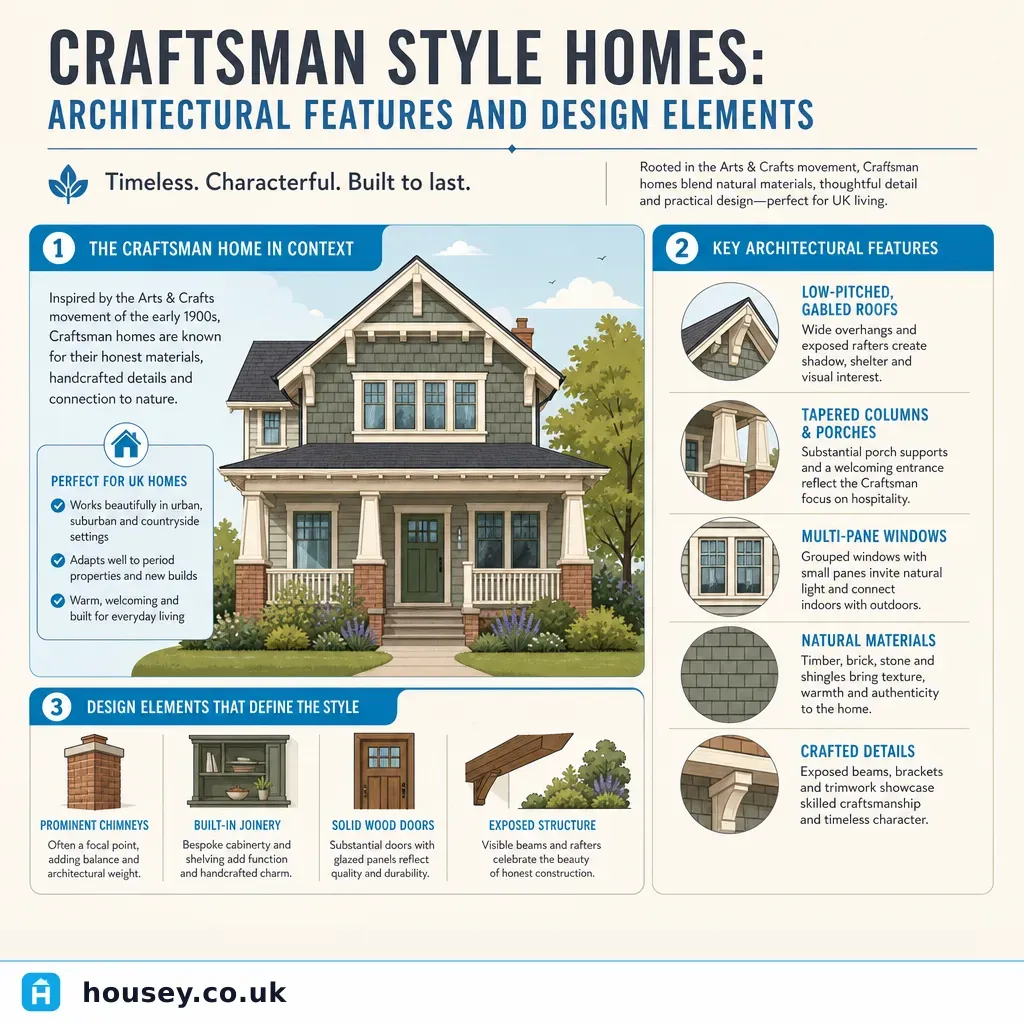
Craftsman Style Homes: Architectural Features and Design Elements
Craftsman style homes are defined by natural materials, low-pitched gabled roofs with wide eaves, covered porches, exposed timber details, and grouped casement windows.
 Planning & Pre-Build
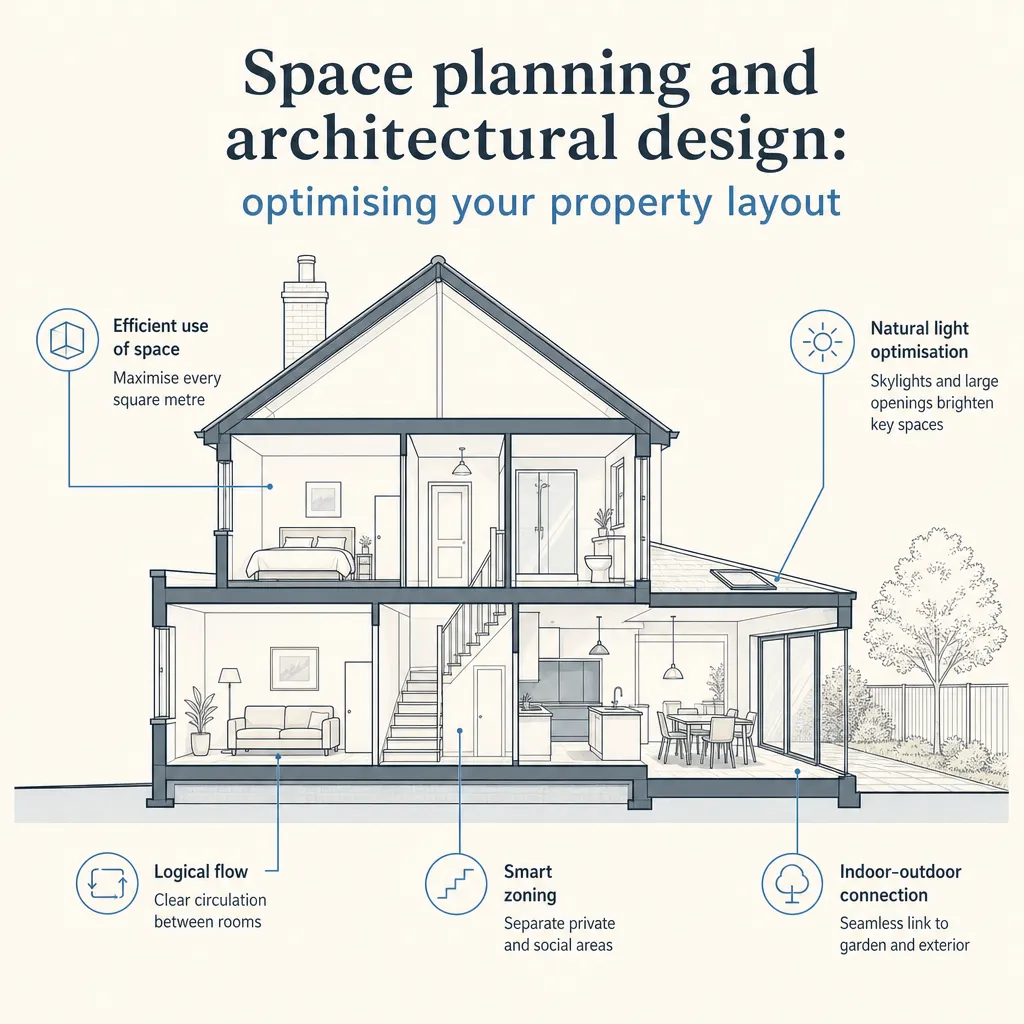
Space planning and architectural design: optimising your property layout
Space planning defines how rooms, circulation routes, and services are arranged within a property to make the best use of available area.
 Planning & Pre-Build
What Is a Patio Home? Understanding This Property Type in the UK
A patio home is a compact, low-maintenance property designed around a private patio or courtyard rather than a traditional lawn garden.
 Planning & Pre-Build
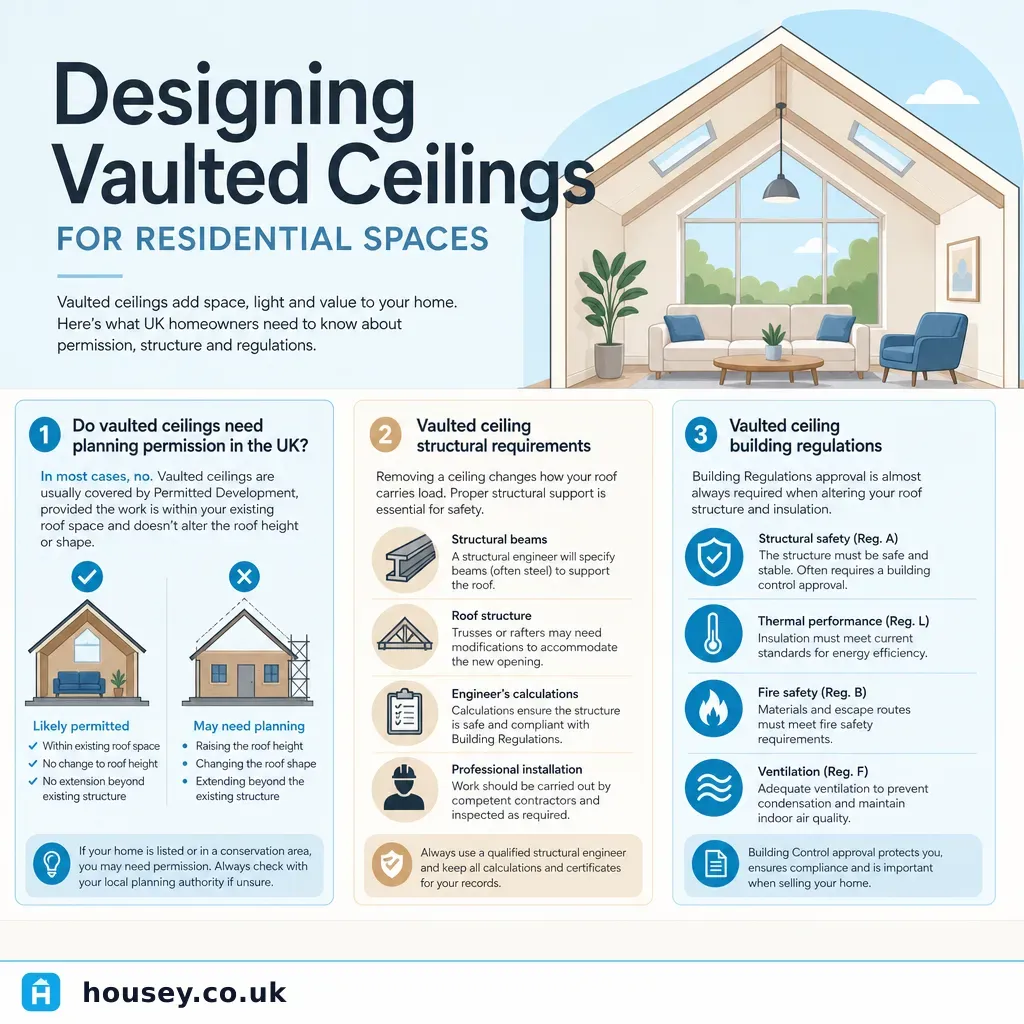
Designing vaulted ceilings for residential spaces
Creating a vaulted ceiling in an existing home involves restructuring the roof timbers that form the structural triangle, which always requires a structural engineer's calculations and Building Regulations approval under Approved Document A.
 Planning & Pre-Build
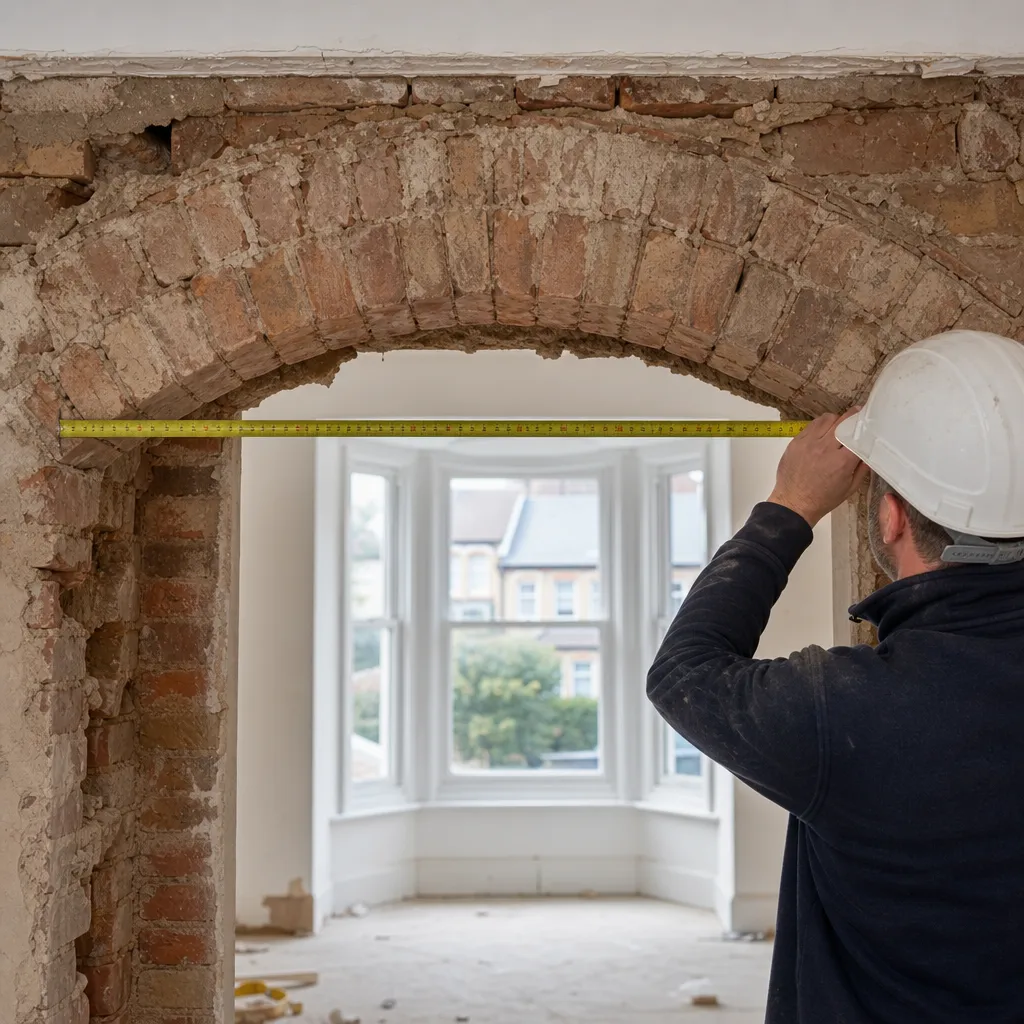
Structural Arching in Walls: Load Distribution and Design
Structural arching occurs when masonry redistributes compressive loads in a triangular or parabolic path around an opening, reducing the load on the lintel below.