Chimney Liner Installation: Cost and Maintenance Considerations
By Housey · Last reviewed 1st of June 2026
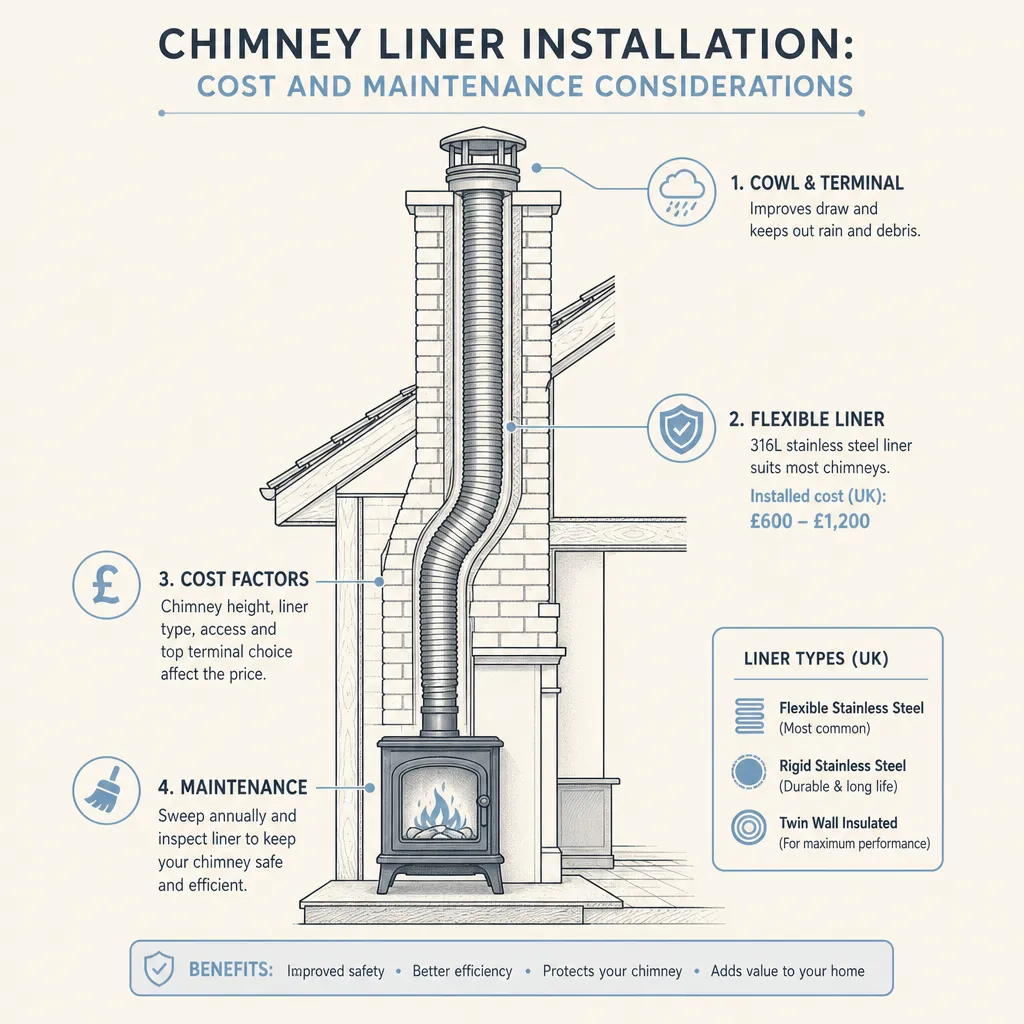
Chimney Liner Installation: Cost and Maintenance Considerations
Chimney relining is one of those home improvement tasks that moves quickly from optional to essential — whether prompted by a HETAS-registered sweep's report, a pre-purchase survey, or a new appliance installation that triggers a Building Regulations requirement. The condition of a flue liner directly affects the safety and efficiency of any heating appliance connected to it, from wood-burning stoves to gas fires and oil boilers. For UK homeowners in Victorian terraces, 1930s semis, or older rural properties, understanding what the work involves, what it costs, and how to maintain it afterwards prevents both safety incidents and avoidable expense.
Key points
- Approved Document J of the Building Regulations requires that chimneys used with new solid-fuel, gas, or oil appliances are lined or re-lined to meet specified performance standards.
- Three main liner types are used in UK homes: flexible stainless steel, pumped insulating fill (such as vermiculite), and cast-in-situ liners — each suited to different chimney conditions and appliance types.
- A typical flexible stainless steel liner for a wood-burning stove costs approximately £800–£1,800 installed (indicative UK costs, last reviewed 2026-06-01; quotes vary by chimney height, access, and flue diameter).
- Carbon monoxide alarms are required by law in any room containing a new solid-fuel burning appliance under the Smoke and Carbon Monoxide Alarm (Amendment) Regulations 2022.
- Chimney liners should be swept annually by a HETAS-registered or NACS-registered sweep; most stainless steel liners carry a 15–25 year manufacturer's warranty.
What is a chimney liner and why does it matter?
A chimney liner (also called a flue liner) is a conduit inside the chimney stack that directs combustion gases — including carbon monoxide — safely out of the building. In older UK properties, the flue is often bare brick or rubble-filled, which can be porous, incorrectly sized for modern appliances, or damaged by decades of use. An inadequately lined chimney can allow toxic gases to seep into living spaces, create a fire risk through overheating of adjacent materials, and reduce appliance efficiency by allowing heat to escape through the stack walls.
Relining is typically required when:
- You are installing a new solid-fuel stove, gas fire, or oil appliance where no liner exists or the existing one is damaged.
- A HETAS sweep or surveyor has identified cracks, partial blockages, or failed mortar joints in an existing liner.
- You are converting from one fuel type to another — for example, from gas to solid fuel.
- A CCTV chimney survey has confirmed the internal condition is not fit for purpose.
Which type of chimney liner do you need?
The right liner depends on your appliance type, the chimney's internal dimensions, its height and number of bends, and whether it is currently in use.
Liner type | Best for | Not ideal for | Typical installation time | Main risk if wrong choice |
|---|---|---|---|---|
Flexible stainless steel | Wood-burning and multifuel stoves, gas fires; chimneys with bends | Very restricted or unusually square flues | Half a day to a full day | Overheating if wrong grade specified |
Pumped insulating fill (vermiculite/perlite) | Straight, well-built chimneys; primarily gas appliances | Stoves producing high flue temperatures; badly cracked flues | Half a day | Thermal performance insufficient for solid fuel |
Cast-in-situ liner | Severely deteriorated chimneys; curved or irregular flues | Properties with very restricted chimney access | 1–3 days | Cost and disruption if a simpler liner would have sufficed |
Twin-wall flue system | New builds or extensions with no existing chimney | Retrofitting inside existing masonry chimneys | Varies | Planning issues if external and visible |
Grade of stainless steel matters. HETAS and the appliance manufacturer will specify whether 316-grade (for gas and oil) or 904-grade (for solid fuel with higher sulphur content) is required. Using the wrong grade voids warranties and creates a fire risk.
How much does chimney liner installation cost in the UK?
Indicative UK costs, last reviewed 2026-06-01. These are guide ranges only — obtain at least three written quotes from HETAS-registered or Gas Safe-registered installers before committing.
Flexible stainless steel liner (most common for stoves):
- Single-storey chimney (approx. 4–5 m): £700–£1,200
- Two-storey chimney (approx. 7–9 m): £1,000–£1,800
- Additional items: register plate, terminal cowl, closure plate (typically £100–£250 combined)
Pumped insulating fill liner:
- Typically £500–£1,000 depending on chimney height and access
Cast-in-situ liner:
- Usually £1,500–£3,500 depending on chimney height and complexity
CCTV chimney survey (recommended before relining):
- Typically £80–£200 — identifies cracks, obstructions, and liner suitability before committing
Key cost drivers:
- Chimney height and number of bends — each additional metre or bend adds time and materials
- Scaffolding, if required on taller or awkward properties (typically an additional £300–£800)
- Flue diameter required by the appliance manufacturer
- Whether a new register plate, closure plate, or terminal cowl is needed
- Whether a dedicated air supply is required under Approved Document J (airtight modern homes may need a purpose-provided vent)
What to ask before accepting a quote
- Is the liner grade (316 or 904 stainless) specified in writing, and is it appropriate for my appliance and fuel type?
- Is the installer HETAS-registered, and will they issue a commissioning certificate on completion?
- Does the price include a CO alarm if one is not already fitted?
- Is scaffolding included or excluded, and what happens if access is more difficult than expected?
- What flue diameter has been specified, and does it match the appliance manufacturer's requirements?
- Is VAT included in the quoted price?
- Will you carry out a smoke draw test and issue a HETAS Building Regulations compliance certificate?
Chimney maintenance: keeping your liner in good condition
A correctly installed liner requires ongoing care to remain safe and effective.
Annual sweep: Have the flue swept at least once a year if burning solid fuel — ideally before the heating season begins. Both HETAS and the National Association of Chimney Sweeps (NACS) maintain online registers of qualified sweeps. Burning unseasoned or wet wood accelerates creosote and tar build-up, which is flammable and degrades liners faster.
Burn the right fuel: Only burn fuel specified by the appliance manufacturer. Burning household waste, treated wood, or inappropriate coal grades voids warranties and damages liners. In smoke control areas designated under Clean Air Act legislation, only approved fuels may be burned — check your postcode on the GOV.UK Smoke Control Areas map.
CO alarm maintenance: Test alarms monthly and replace them per the manufacturer's guidance, usually every 5–7 years. The Smoke and Carbon Monoxide Alarm (Amendment) Regulations 2022 also require landlords to ensure working CO alarms are in place at the start of each tenancy.
Chimney cap and cowl: Check that the terminal or cowl is not blocked by bird nests, leaves, or debris, particularly in spring. A blocked flue is a carbon monoxide risk.
Early warning signs: If you notice a tarry smell, unexpected smoke in the room, or the appliance draws poorly, arrange a CCTV chimney survey. Do not use the appliance until the cause is identified.
Important limitations
This article provides general information about chimney liner types, costs, and maintenance. It is not a substitute for a professional flue assessment or HETAS-registered installation. The correct liner specification depends on the specific appliance, fuel type, chimney dimensions, and the findings of a physical inspection. Building Regulations requirements and approved product specifications may change — always confirm current requirements with a HETAS-registered installer or your local building control body.
When this becomes urgent
Stop using the appliance and seek urgent professional advice if:
- A CO alarm activates in any room served by the appliance or flue.
- Smoke or combustion fumes are entering the living space rather than drawing up the flue.
- A chimney sweep or CCTV survey has identified a cracked, corroded, or failed liner.
- Significant staining appears on a chimney breast wall or ceiling, suggesting a breach.
- The appliance is performing noticeably differently — poor draw, unusual smells, or excessive condensation near the chimney.
What to ask a qualified professional
Before instructing an installer or sweep:
- Are you HETAS-registered (solid fuel) or Gas Safe-registered (gas appliances)?
- Will you carry out a smoke test and issue a HETAS completion certificate or Building Regulations compliance documentation?
- What liner grade and diameter are you specifying, and does it match the appliance manufacturer's requirements?
- Have you carried out — or will you recommend — a CCTV inspection before installation?
- What is the liner warranty, and what does it cover?
- What ongoing maintenance will the liner require to keep the warranty valid?
When to get professional help
Always use a HETAS-registered installer for solid-fuel appliances and a Gas Safe-registered engineer for any gas-connected flue work. Never attempt to inspect, repair, or install a chimney liner without appropriate qualifications — chimney stack work involves working at height, confined spaces, and exposure to carbon residues requiring trained professionals and proper equipment.
Red flags that require immediate professional attention:
- CO alarm activation near any solid-fuel or gas appliance
- Smoke or combustion smells entering the living space
- A surveyor's or sweep's report noting failed mortar joints, liner cracks, or a flue marked as unsuitable for use
- Any appliance installed without the required Building Regulations sign-off or HETAS certificate
How Housey can help
If you need a chimney liner installed, replaced, or inspected, Housey connects you with qualified local installers who can advise on the right specification and carry out the work to Building Regulations standards. For related chimney stack work — flashing repairs, repointing, or access scaffolding — you can also find roofers experienced with chimney stack repairs and access through Housey.
Frequently asked questions
Do I legally need a chimney liner for a wood-burning stove?
If you are installing a new solid-fuel stove, Approved Document J of the Building Regulations requires the flue to meet prescribed performance standards — in practice this almost always means a liner is required in older properties with unlined or bare-brick chimneys. Work must be signed off by a HETAS-registered installer or your local building control body.
How long does a chimney liner last?
Most flexible stainless steel liners carry a manufacturer's warranty of 15–25 years, provided they are correctly installed and the flue is swept annually. Cast-in-situ liners can last considerably longer. Liner lifespan is shortened by burning incorrect fuels, poor maintenance, or using an undersized or wrong-grade liner.
Will I need planning permission for a chimney liner?
In most cases, no — relining an existing chimney is not a structural change and does not require planning permission. However, adding an external twin-wall flue system to the outside of a property may engage permitted development rules or require planning permission, particularly on listed buildings or in conservation areas. Always check with your local planning authority.
How often should a chimney liner be swept?
HETAS recommends solid-fuel flues are swept at least once a year, and twice yearly for those burning wood regularly. Gas flues should be checked annually by a Gas Safe-registered engineer. Regular sweeping is also a condition of most liner manufacturer warranties, so keep records of each sweep.
Can I have a liner installed in an old open fireplace?
Yes — liners can be retrofitted into chimneys serving open fires as well as stoves. The liner diameter will differ from a stove installation, and an open fire generally places less thermal demand on the material. A HETAS-registered sweep or installer should assess suitability and carry out a smoke draw test before and after the work.
Sources and further reading
- Approved Document J: Combustion Appliances and Fuel Storage Systems — GOV.UK
- Smoke and Carbon Monoxide Alarm (Amendment) Regulations 2022 — legislation.gov.uk
- HETAS: register and guidance for solid fuel heating — HETAS
- National Association of Chimney Sweeps — NACS
- HSE: Carbon monoxide — dangers and precautions — Health and Safety Executive
Useful next reads
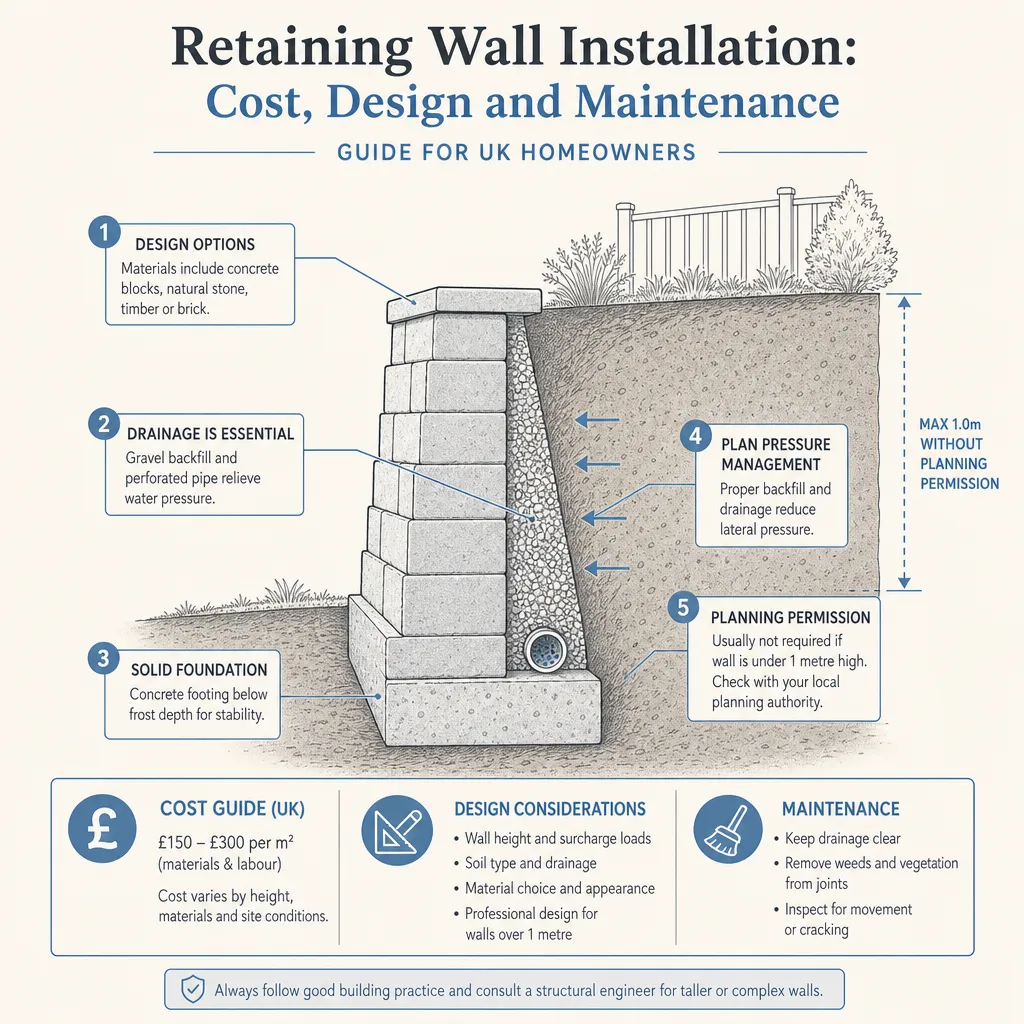 Improvement & Build
Retaining Wall Installation: Cost, Design and Maintenance
A retaining wall holds back soil on a sloped or banked site.
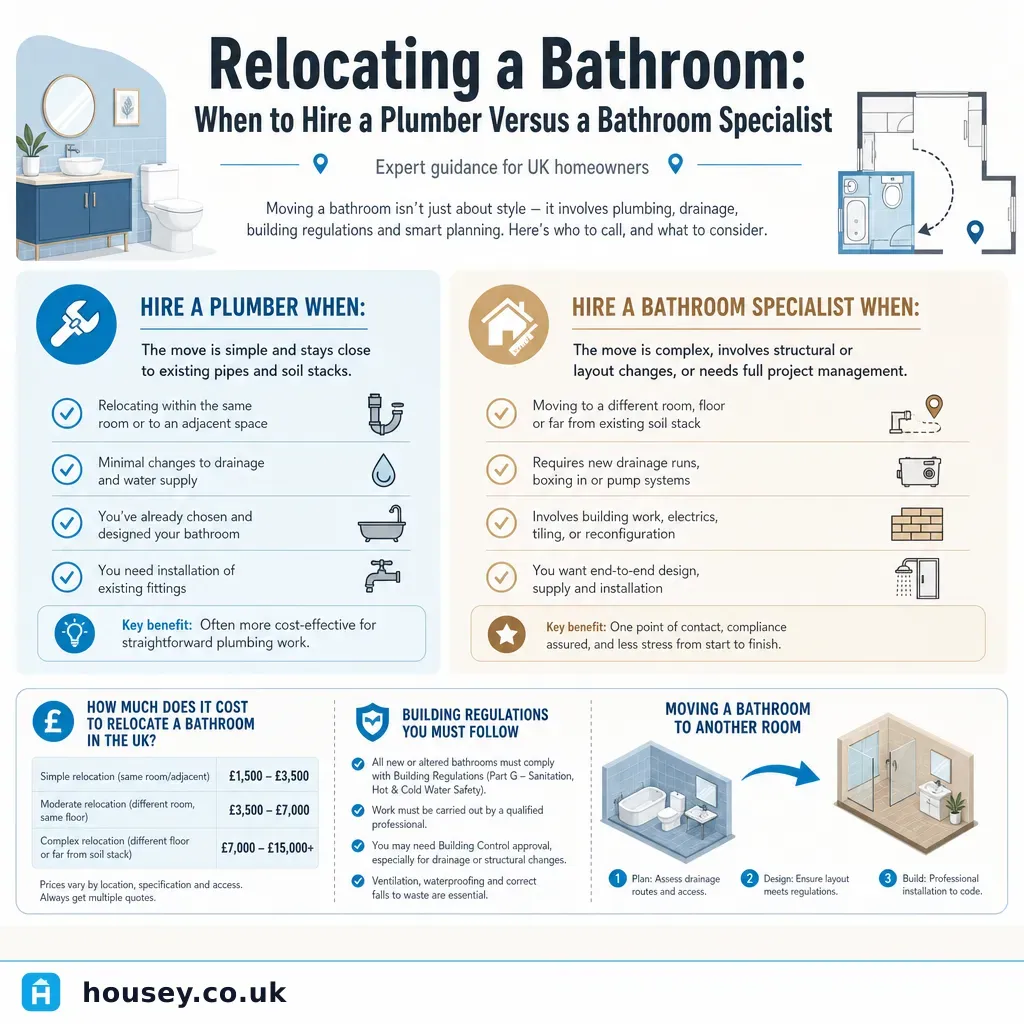 Improvement & Build
Relocating a Bathroom: When to Hire a Plumber Versus a Bathroom Specialist
Relocating a bathroom usually requires both a qualified plumber for pipework and drainage and other specialist trades for electrics, tiling, and finishes.
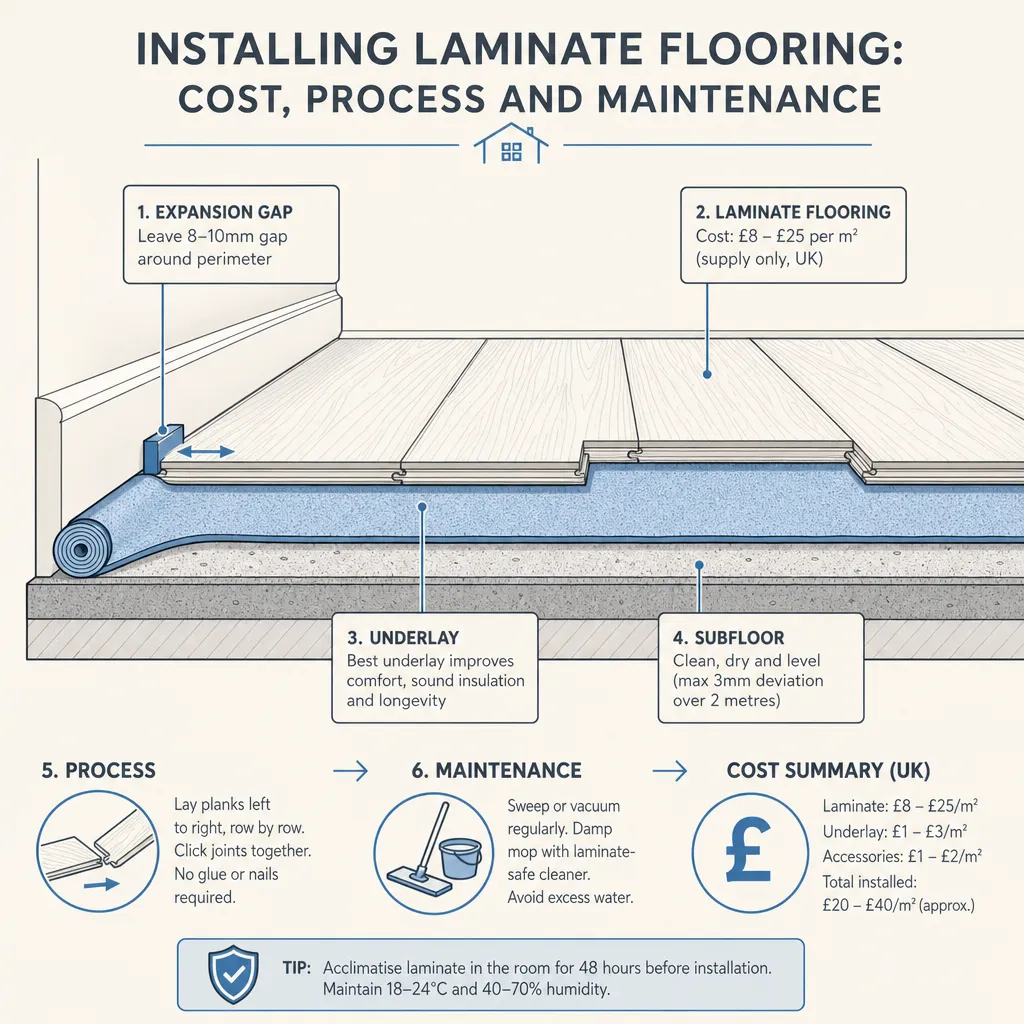 Improvement & Build
Installing Laminate Flooring: Cost, Process and Maintenance
Laminate flooring in the UK typically costs £15–40 per square metre for materials, plus £8–15 per square metre for professional fitting.
 Improvement & Build
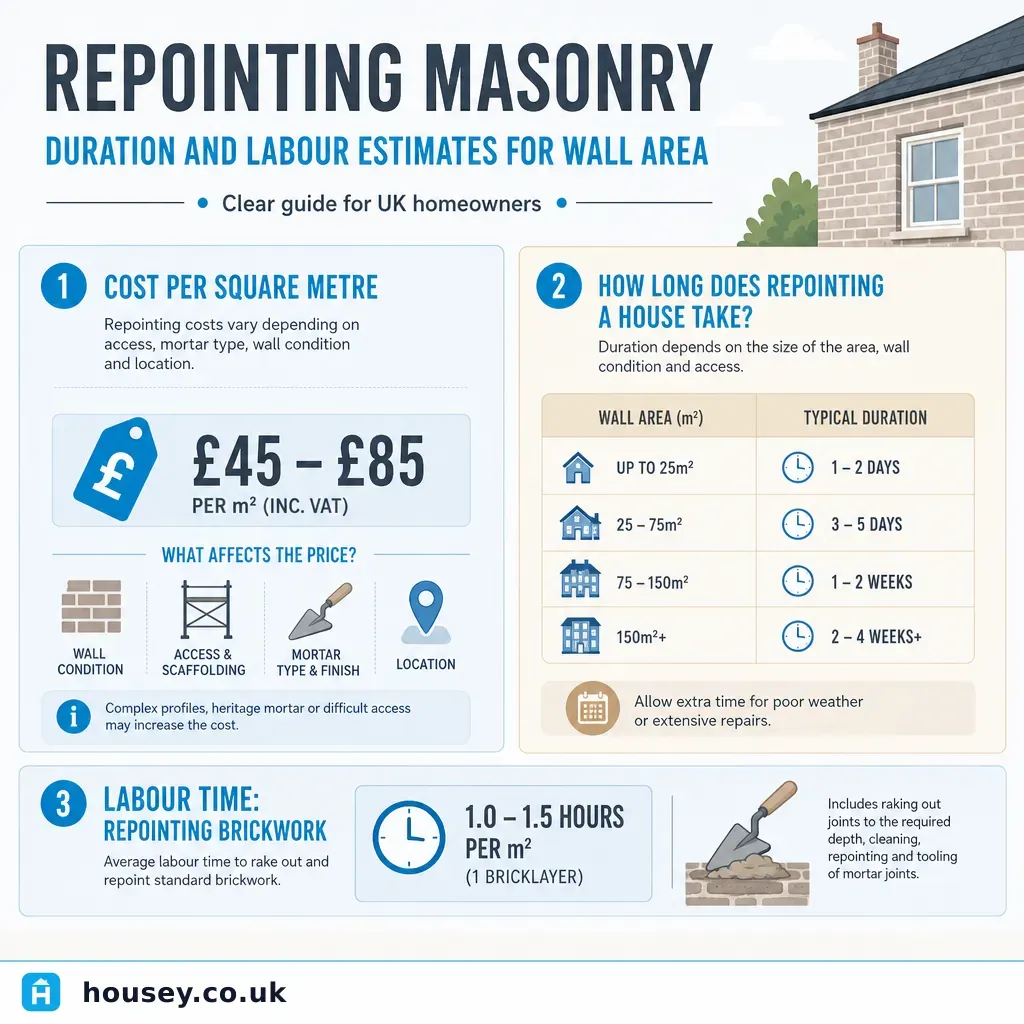
Repointing Masonry: Duration and Labour Estimates for Wall Area
A skilled bricklayer typically repoints 3–5 m² per hour when raking out and refilling joints by hand.
 Improvement & Build
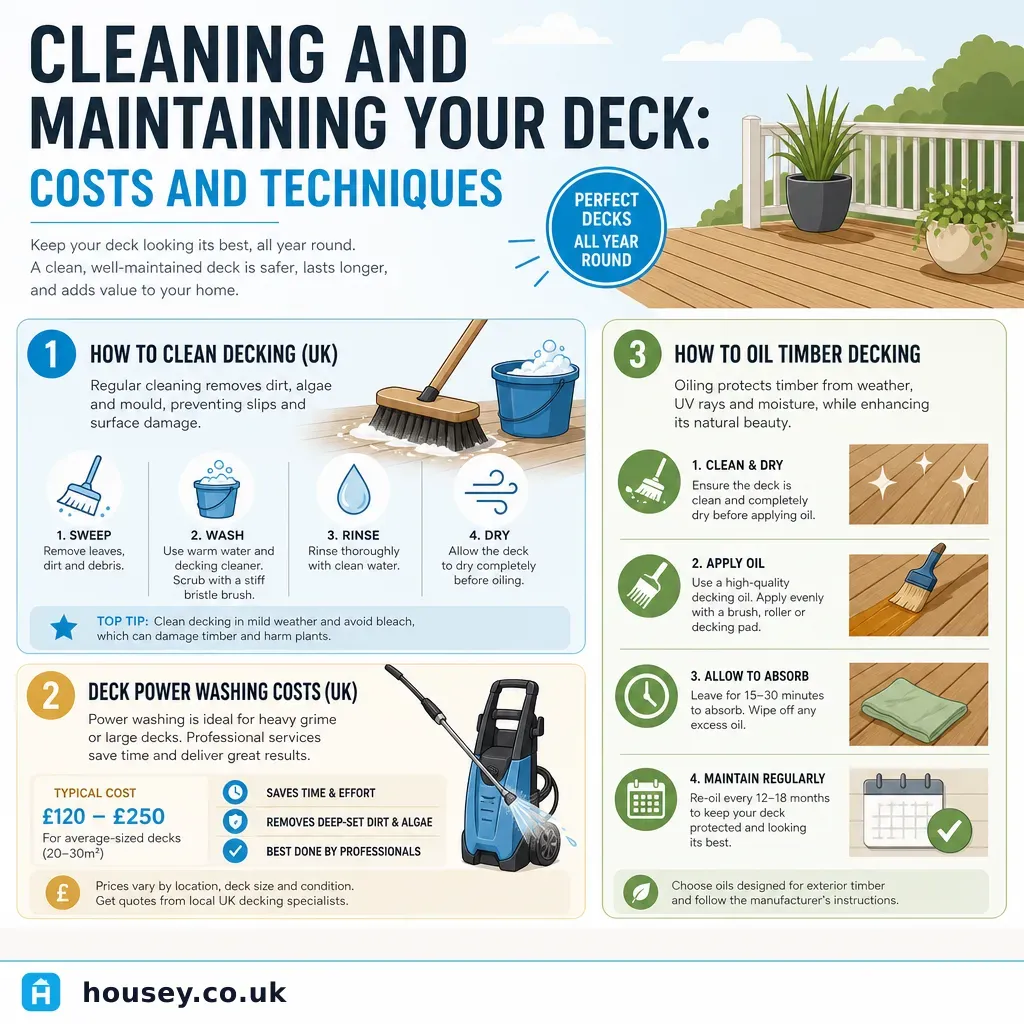
Cleaning and Maintaining Your Deck: Costs and Techniques
Timber decking should be cleaned and re-oiled at least once a year, ideally in spring.