Concrete Driveways: Design, Installation, and Long-Term Maintenance
By Housey · Last reviewed 19th of May 2026
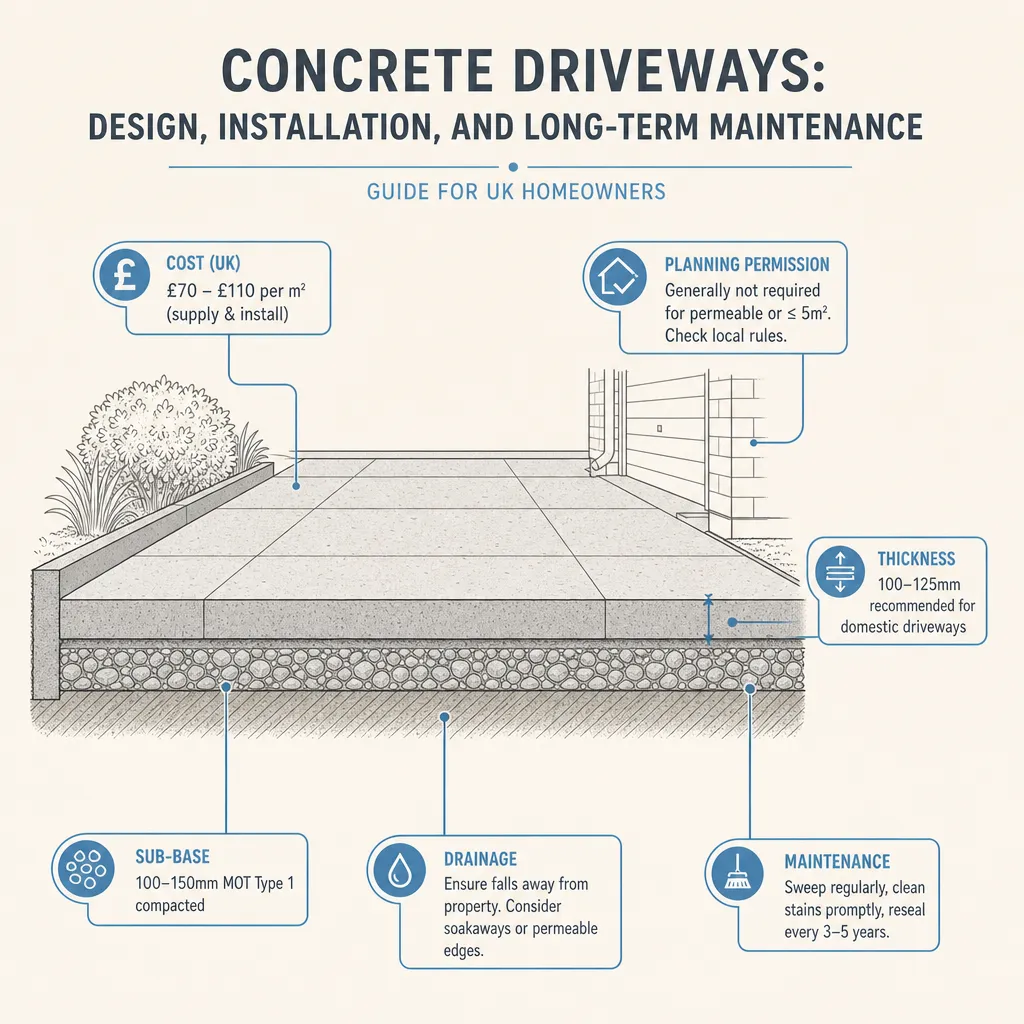
Concrete Driveways: Design, Installation, and Long-Term Maintenance
A concrete driveway is one of the more durable hard landscaping choices available to UK homeowners, but the specification, drainage design, and planning position all need to be resolved before work begins. Most queries arise when replacing a worn tarmac or gravel surface, adding a new off-street parking area, or preparing a property for sale — situations where getting the details wrong can mean enforcement notices, costly drainage works, or a slab that cracks within a few years.
Key points
- Any front-garden driveway surface over 5 square metres that is not permeable and does not drain to a lawn, border, or soakaway requires planning permission under permitted development rules amended by the Town and Country Planning (General Permitted Development) (Amendment) (England) Order 2008.
- A domestic concrete slab should be at least 100mm thick over a sub-base of at least 150mm of well-compacted Type 1 MOT granular fill; increase sub-base depth to 200mm on clay or soft soils.
- Concrete should not carry vehicle loads for at least 7 days after pouring; full 28-day curing is needed to reach design compressive strength.
- A vehicle crossover (dropped kerb) from a public footpath or verge requires separate approval from your local highways authority — this is a different process from planning permission.
- Indicative installed costs range from £50–£120 per square metre depending on specification, finish, and site preparation required. (Indicative UK costs, last reviewed 2026-05-19.)
Does a concrete driveway need planning permission?
The 2008 amendment to permitted development rights for front-garden hardstanding in England means planning permission is required for any new impermeable surface unless:
- The run-off drains to a permeable surface (lawn, border, or soakaway) rather than to the road or a public sewer; or
- The surface itself is permeable — such as permeable concrete, gravel, or jointed block paving with permeable fill.
Standard poured concrete is impermeable, so most concrete driveways will need planning permission or a managed drainage solution to avoid the requirement. Confirm with your local planning authority (LPA) before starting work — rules in Scotland, Wales, and Northern Ireland differ from the England position.
Properties that are listed or in a conservation area may need additional consent regardless of surface type. Check with your LPA's conservation officer if in doubt.
Specification: getting the details right
Sub-base and slab depth
The sub-base is the most critical factor in driveway longevity. Recognised good practice suggests:
- Sub-base: 150mm minimum of well-compacted Type 1 MOT; 200mm on clay or variable-bearing-capacity ground.
- Concrete slab: 100mm minimum for cars; 125mm or more for heavier vehicles such as vans or SUVs.
- Reinforcement: A142 or A193 steel mesh recommended for spans over approximately 3m and on ground with poor bearing capacity.
- Expansion joints: at approximately 3m centres to accommodate thermal movement and reduce uncontrolled cracking.
- Edge restraints: concrete haunching or precast edging to prevent lateral spread of the slab.
Surface finish options
Finish | Best for | Not ideal for | Maintenance level | Relative cost |
|---|---|---|---|---|
Plain brushed | High-grip functional surface; budget-conscious homeowners | Character properties where aesthetics matter | Low | Base cost |
Exposed aggregate | Textured appearance; good surface drainage | High-traffic areas where debris collects in stones | Low–medium | +5–15% |
Pattern imprinted (stamped) | Mimicking stone or block paving appearance | Areas with standing water (grout lines trap grit) | Medium (reseal every 3–5 years) | +20–40% |
Coloured / pigmented | Matching brick or render tones; kerb appeal | Achieving uniform colour in patched repairs | Low–medium | +10–25% |
Permeable concrete | Avoiding planning permission; SuDS compliance | Heavy loads; areas with fine sediment that blocks voids | Medium (jet-wash regularly) | +15–30% |
Comparing concrete with other driveway materials
Material | Typical lifespan | Permeable option available | Planning (England, standard) | Main drawback |
|---|---|---|---|---|
Concrete | 25–40 years | Yes (permeable mix) | Usually needed for standard mix | Cracks difficult to patch invisibly |
Permeable block paving | 20–30 years | Yes (jointed) | Usually not needed | Weeds in joints; higher upfront cost |
Resin-bound gravel | 15–25 years | Yes | Usually not needed | UV fading; professional installation essential |
Tarmac | 15–20 years | No (standard) | Usually needed | Softens in heat; needs periodic sealing |
Loose gravel | Indefinite (top-up) | Yes | Not needed | Migrates onto road; unsuitable for steep drives |
Drainage requirements
Under the Flood and Water Management Act 2010 (Schedule 3, in force in Wales; England provisions vary by local authority), new impermeable surfaces should manage surface water on site. Even outside formal Sustainable Drainage System (SuDS) requirements:
- Identify whether run-off will drain to a soakaway, surface water sewer, or permeable ground before work starts.
- If connecting to a surface water sewer, check whether consent from your water company is required.
- Confirm with your local authority whether SuDS pre-approval is required at your project scale.
Homeowner checklist: before you accept a quote
Red flags when hiring a concrete driveway installer
Watch for these warning signs before agreeing to any work:
- No site visit before quoting — unexpected conditions will be added as cost extras later.
- Quote does not specify concrete grade, reinforcement, or sub-base depth.
- Large cash deposit requested upfront (more than 20–30% is a risk indicator).
- No written contract or specification provided before work starts.
- Unable to provide examples of previous similar work or contactable references.
- Unusually low price with vague scope — gaps will surface once work is underway.
When to get professional help
A reputable contractor can carry out most domestic concrete driveway projects without specialist professional oversight, provided planning and drainage are resolved first. Seek professional advice if:
- Your property is listed or in a conservation area and the consent position is unclear.
- There is significant level change across the driveway area, or retaining structures are involved.
- A build-over or connection agreement is needed with your water company.
- The proposed crossover requires engineered drawings acceptable to your highways authority.
How Housey can help
Housey connects homeowners with vetted driveway installers who can survey your site, advise on planning and drainage requirements, and provide a written specification before any commitment to cost.
Frequently asked questions
How long will a concrete driveway last in the UK climate?
A well-specified and properly installed concrete driveway typically lasts 25–40 years in UK conditions. The most important factors are sub-base quality, concrete grade, correct expansion joint placement, and drainage. Freeze-thaw cycles and the use of de-icing salts — which attack the surface — are the most common causes of premature surface deterioration.
Can I lay a concrete driveway myself?
Concrete driveway installation is physically demanding and time-sensitive — concrete must be placed, levelled, and finished before it begins to set. Errors in sub-base preparation, mix design, or joint placement are difficult and expensive to correct after curing. Most homeowners find that a specialist installer offers better overall value once skip hire, concrete delivery, and potential remediation costs are factored in.
Do I need a dropped kerb for my new driveway?
If your driveway crosses a public footpath or verge to reach the highway, you will need a vehicle crossover (dropped kerb) approved — and in most cases constructed — by your local highways authority. This is a separate process from planning permission and usually carries a council fee. Starting work without approval can result in reinstatement costs charged to you. Contact your local council's highways department before commissioning any work that requires pavement access.
What maintenance does a concrete driveway need?
Concrete driveways need less regular upkeep than tarmac. Recommended annual tasks include jet-washing to remove moss and algae, inspecting expansion joints and resealing with flexible filler if cracked, and treating any surface cracks promptly to prevent water ingress. Pattern-imprinted concrete should have its sealant reapplied every 3–5 years to maintain colour and surface protection.
Sources and further reading
- Planning permission for driveways — GOV.UK — GOV.UK
- Sustainable drainage systems (SuDS) guidance — GOV.UK — GOV.UK
- Flood and Water Management Act 2010 — legislation.gov.uk — legislation.gov.uk
- Concrete in housing: design and construction — The Concrete Society — The Concrete Society
- Find your local council (highways department) — GOV.UK — GOV.UK
Useful next reads
 Improvement & Build
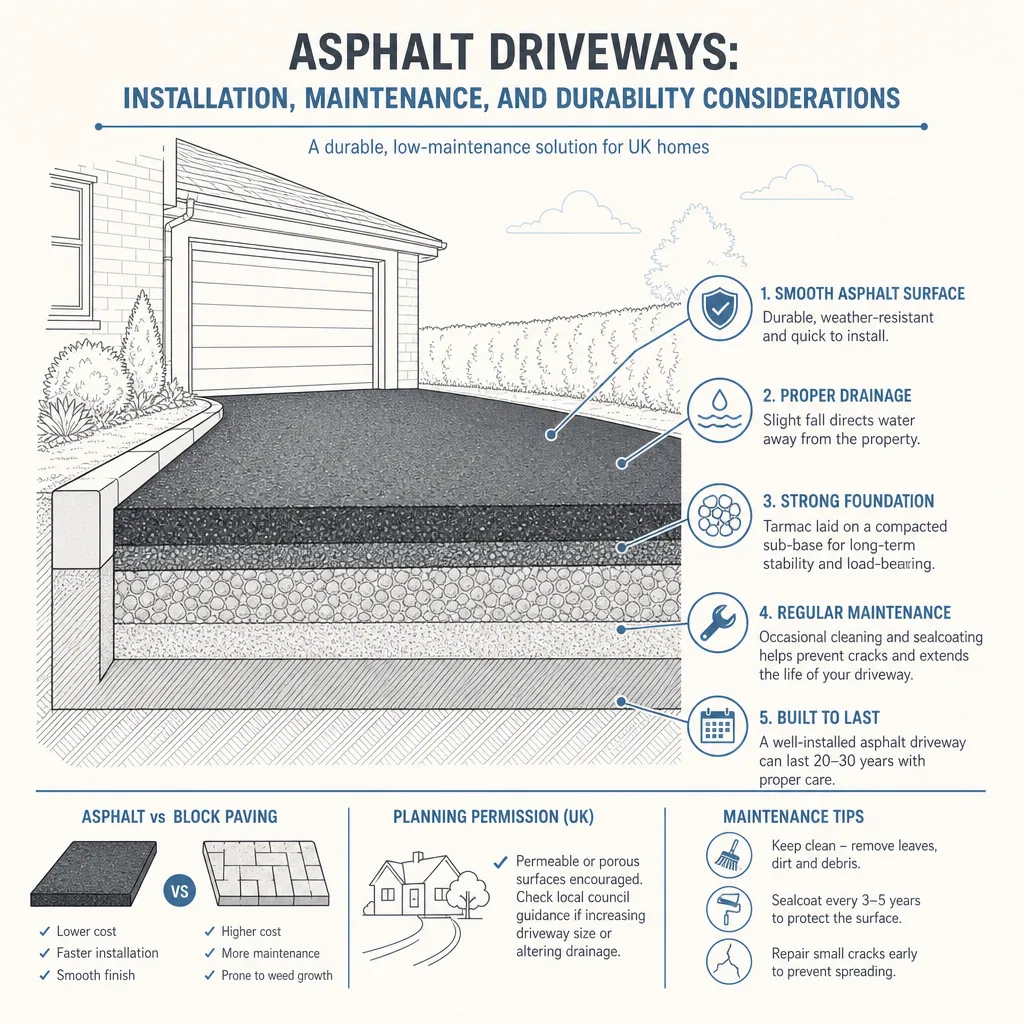
Asphalt Driveways: Installation, Maintenance, and Durability Considerations
An asphalt driveway typically costs £50–£100 per m² in the UK and should last 20–30 years with proper installation and maintenance.
 Improvement & Build
Metal Roofing Systems: Materials, Performance and Installation
Metal roofing systems in the UK include standing seam zinc, coated steel, aluminium, and copper panels, as well as profiled sheets.
 Improvement & Build
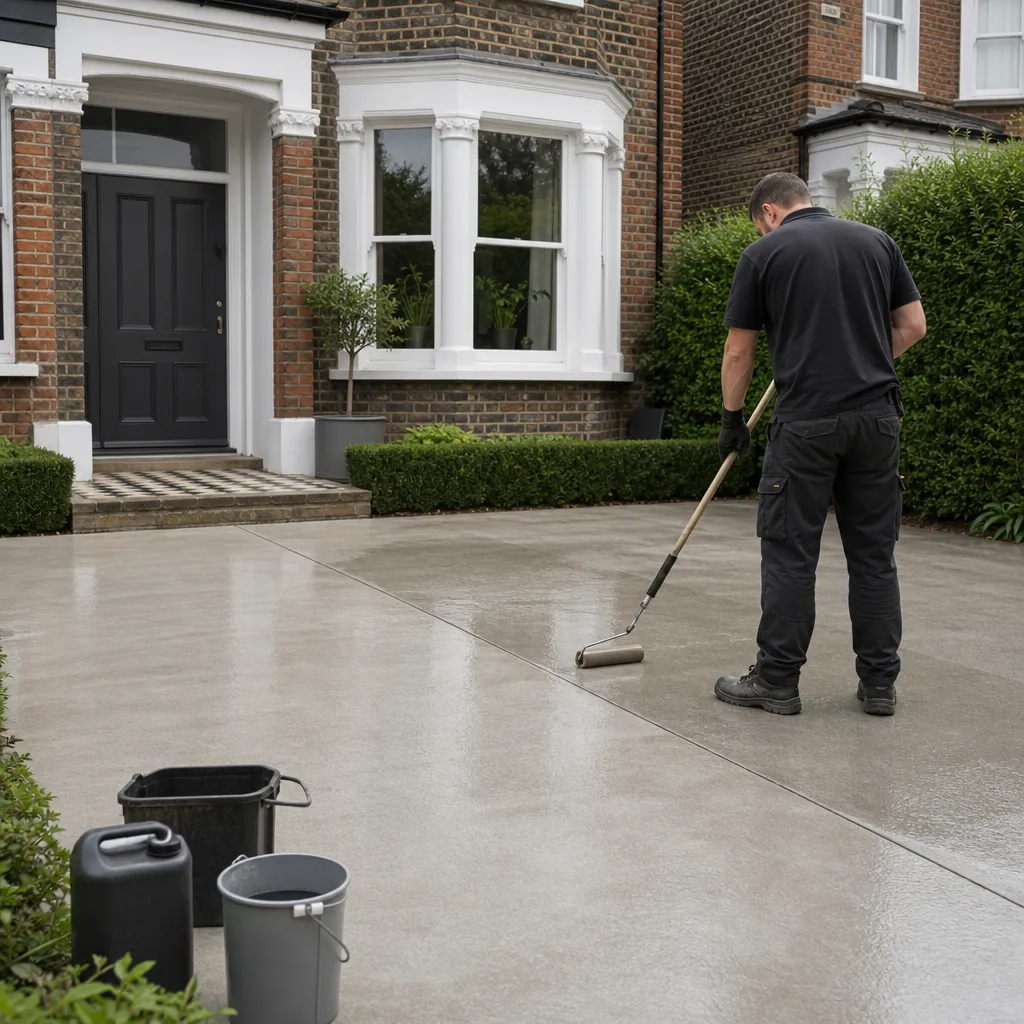
Which products to use for sealing your concrete driveway
Concrete driveway sealers divide into two types: penetrating sealers that absorb into the concrete without changing its look, and film-forming sealers that coat the surface.
 Improvement & Build
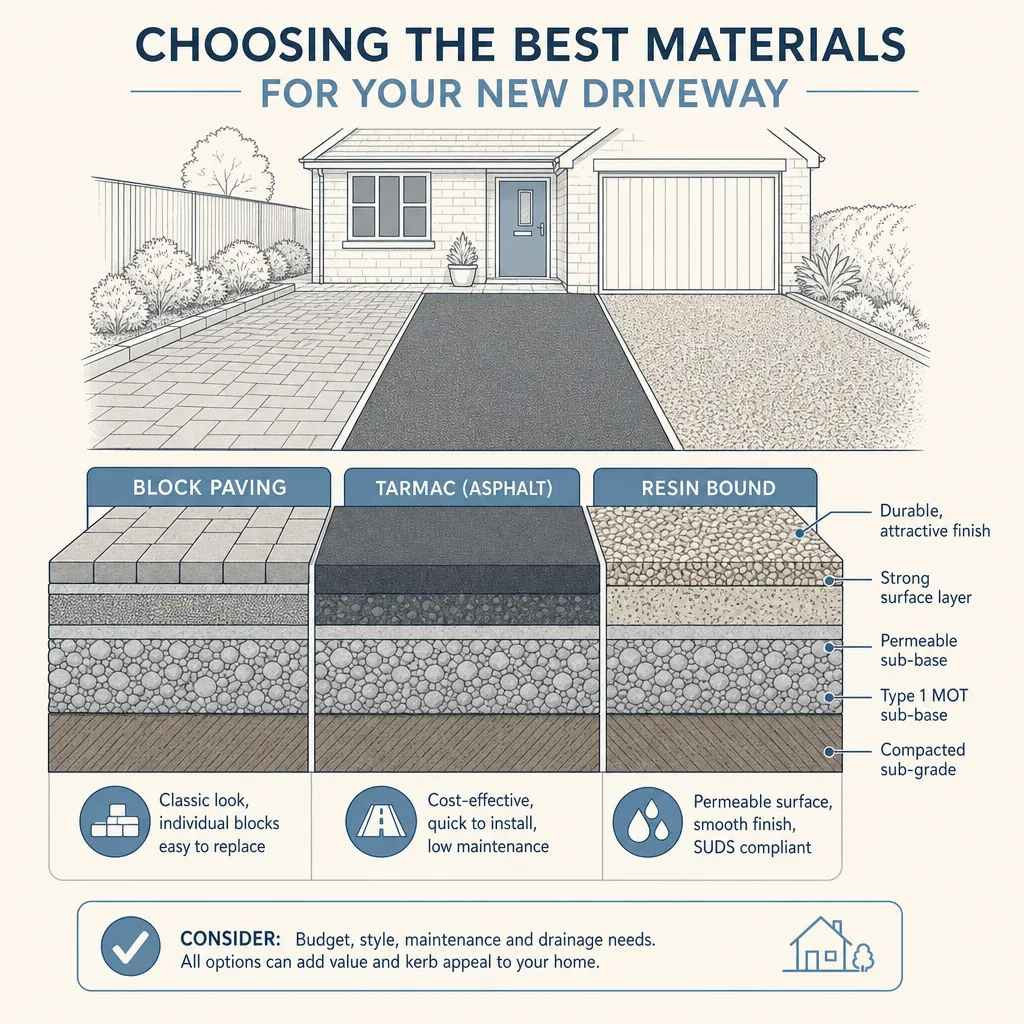
Choosing the best materials for your new driveway
The most common driveway materials in the UK are tarmac, block paving, resin-bound surfacing, concrete, and gravel.
 Improvement & Build
Aluminium Windows: Benefits, Specifications, and Installation Costs
Aluminium windows typically cost £600–£1,800 per window installed in the UK, depending on size and specification.