Choosing Pavers for Your Garden or Driveway: Installation and Design
By Housey · Last reviewed 11th of May 2026
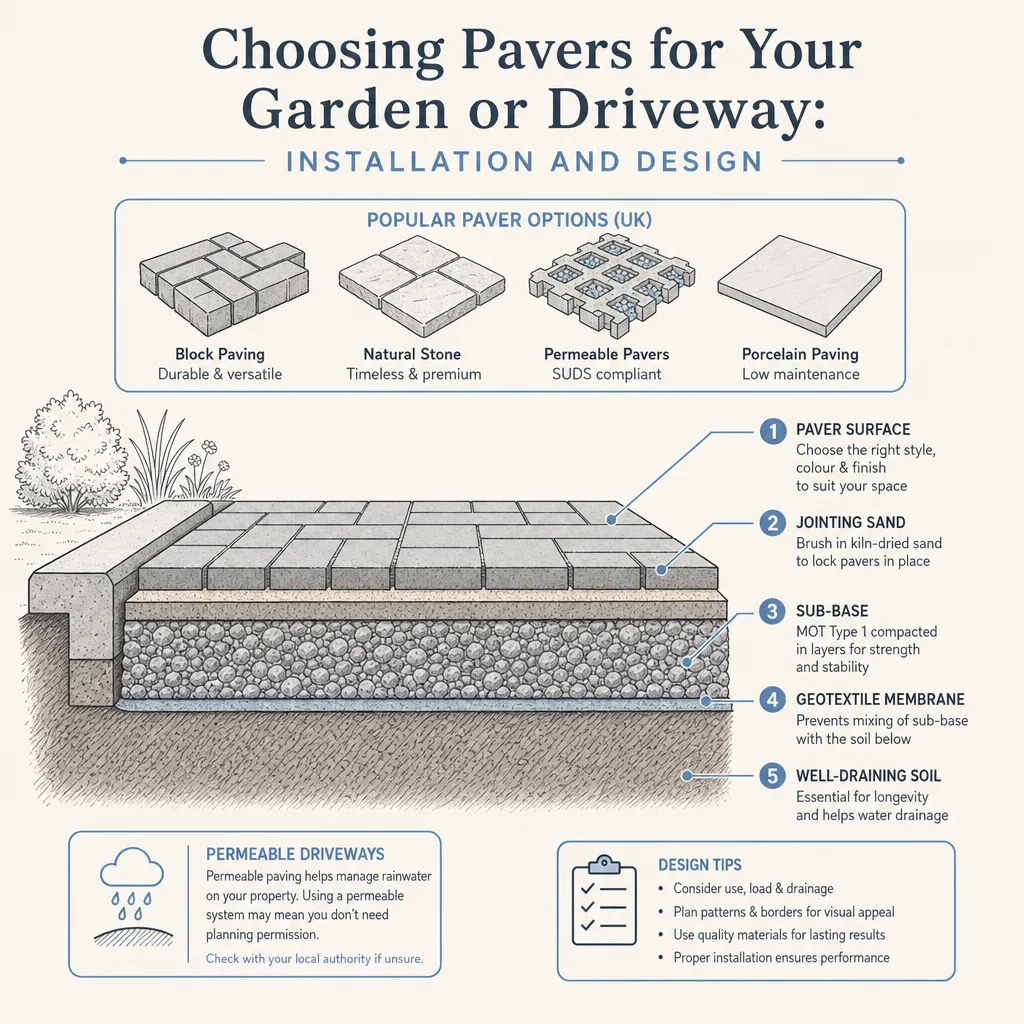
Choosing Pavers for Your Garden or Driveway: Installation and Design
The choice of paving material shapes how an outdoor space looks, how long it lasts, and — for driveways — whether the installation complies with UK planning rules on drainage. Many homeowners focus on price or appearance, only to discover later that sub-base requirements, drainage obligations, or maintenance demands were not fully considered. Getting these details right before work begins saves significant cost and disruption.
Key points
- Driveways over 5m² that use non-permeable materials require planning permission or must drain to a soakaway or lawn under Schedule 2, Part 1, Class F of the Town and Country Planning (General Permitted Development) (England) Order 2015.
- British Standard BS 7533 covers design and construction of pavements using clay, concrete, and natural stone pavers and provides the baseline quality benchmark for professional installation.
- Concrete block pavers should typically be laid on a 50mm compacted sharp sand bed over a minimum 100–150mm Type 1 MOT sub-base for domestic driveways.
- Porcelain pavers require either a full mortar bed or specialist flexible adhesive and cannot be dry-laid on loose sand.
- Herringbone pattern at 45° or 90° is recommended by BS 7533-3 for trafficked areas — it resists lateral spreading under vehicle load more effectively than a stretcher bond.
Comparing paver types
Paver type | Best for | Not ideal for | Indicative supply cost | Maintenance |
|---|---|---|---|---|
Concrete block pavers | Driveways, high traffic, permeable options available | Contemporary aesthetics | £15–35/m² | Low; individual blocks replaceable |
Clay/brick pavers | Traditional or heritage style, colour stability | Budget projects; very heavy vehicles | £25–60/m² | Low; fade-resistant |
Natural stone (sandstone, limestone) | Garden patios, paths, period homes | Shaded areas prone to algae; tight budgets | £30–80/m² | Medium; annual sealing often recommended |
Porcelain pavers | Modern gardens, stain resistance, low maintenance | DIY installation; soft or uneven sub-base | £35–90/m² | Very low; does not fade or absorb stains |
Resin-bound gravel | Permeable driveways, smooth contemporary finish | Heavy commercial vehicle access | £40–80/m² | Low; reseal every 10–15 years |
Exposed aggregate concrete | Budget driveways, utilitarian appearance | Period or heritage properties | £30–60/m² | Low; periodic sealing advised |
Indicative UK supply costs only, last reviewed 2026-05-11. Installation labour adds significantly; obtain written quotes from local contractors.
Planning permission and drainage rules
For front gardens and driveways in England, permitted development rights under the GPDO 2015 allow hard-standing installation without planning permission only if:
- The surface area is 5m² or less; OR
- The material is permeable (such as permeable block paving, resin-bound aggregate, or loose gravel); OR
- Rainwater runs off to a lawn, border, or soakaway — not directly into the highway or a surface drain.
If none of these conditions is met, a householder planning application is required. Rules differ in Wales, Scotland, and Northern Ireland — always check with your local planning authority. Conservation area designation or listed building status may impose additional controls regardless of driveway size or material.
Larger projects may also need to consider sustainable drainage (SuDS) requirements under Schedule 3 of the Flood and Water Management Act 2010, which now applies across England and Wales for new developments above certain thresholds.
Sub-base and installation: what really matters
The long-term performance of any paved surface depends primarily on the quality of the sub-base and bedding, not the paving unit itself. A well-laid concrete block on a properly constructed sub-base will outperform expensive porcelain on an inadequate foundation.
Typical installation layers for a driveway:
- Excavation: Remove existing surface and topsoil to the required depth — typically 250–300mm for driveways, depending on sub-base depth and bedding layer thickness.
- Sub-base: Compact Type 1 MOT limestone aggregate to at least 100mm for lightly trafficked areas; 150mm for regular domestic car use; more for heavier vehicles or soft ground.
- Bedding layer: 50mm sharp (not soft building) sand for concrete block pavers and some natural stone; semi-dry or wet mortar bed for natural stone flags, porcelain, or any unit requiring a rigid base.
- Paving units: Laid to pattern, cut to fit, with joints filled (kiln-dried sand for block paving; pointing mortar for stone; grout for porcelain).
- Edge restraints: Essential for block paving — concrete haunching or proprietary plastic edging prevents lateral spread over time.
For garden patios (foot traffic only): Sub-base depth can often be reduced to 50–75mm compacted MOT in stable ground. Consult your landscaper if ground is soft, made-up, or previously disturbed.
Homeowner checklist: before you commission paving
Design considerations: patterns, colours, and borders
Layout and pattern influence both aesthetics and structural performance:
- Herringbone at 45° or 90° is the most stable pattern for block-paved driveways — the interlocking angle resists lateral spreading under vehicle load. BS 7533-3 recommends herringbone for trafficked surfaces.
- Stretcher bond (simple running bond) is lower cost but less structurally stable for driveways; it is better suited to garden paths and lightly used patios.
- Contrasting borders create visual definition and help conceal cut units at the edges; plan the layout to minimise cuts, as cut units are inherently weaker.
- Colour longevity: clay pavers are fired and highly fade-resistant; concrete pavers can lighten over time; porcelain does not fade; natural stone weathers and develops character, which many homeowners value.
When to get professional help
Most paving projects benefit from a qualified installer, but some situations specifically require professional assessment:
- Driveways on sloping ground, where poor drainage design can direct water towards the house or onto the highway.
- Any excavation near foundations, structural walls, or protected trees — disturbance can cause settlement or tree damage.
- Connecting to or re-routing drainage — building regulations may apply.
- Historic or listed properties where planning consent may be needed for any external alteration.
- Large areas (over 200m²) or commercial properties, where SuDS regulations and highway approval may be required.
How Housey can help
Housey can connect you with experienced driveway installers and landscapers local to your area, as well as garden designers who can help plan patterns, drainage routes, and planting to complement your new paving. Submit a brief and receive quotes from vetted local professionals.
Frequently asked questions
Do I need planning permission for a new driveway in England?
Not always. Driveways under 5m², or those using permeable materials, or those draining to a lawn or border, are generally permitted development in England under the Town and Country Planning (General Permitted Development) (England) Order 2015. If your driveway uses solid, non-permeable material and exceeds 5m², a householder planning application is usually required. Rules differ in Scotland, Wales, and Northern Ireland.
What is the best sub-base depth for a block-paved driveway?
For a standard domestic driveway used by cars, a minimum of 100–150mm of compacted Type 1 MOT limestone aggregate is typically specified, overlaid with a 50mm sharp sand bed. Soft ground, clay soil, or heavy vehicle use may require a deeper sub-base. A specialist installer should assess ground conditions before quoting to avoid future settlement or drainage problems.
Can I install porcelain pavers myself?
Porcelain pavers are heavy, brittle, and require a full mortar bed or specialist flexible adhesive to perform correctly — they cannot be dry-laid on sand. DIY installation often results in cracked slabs, hollow spots, or moisture ingress beneath joints. Professional installation by an experienced landscaper or hard-landscaping contractor is strongly recommended for any porcelain surface.
How do I stop weeds growing between pavers?
Polymeric jointing sand for block paving sets harder than standard kiln-dried sand and resists weed ingress more effectively. For mortar-jointed stone, a proprietary weed inhibitor or regular maintenance is needed. Laying a geotextile membrane beneath the sub-base does not prevent weeds from establishing in the bedding layer or joints from above — the surface joint treatment matters most.
Sources and further reading
- GOV.UK — when is planning permission required — GOV.UK
- Planning Portal — driveways and hardstandings — Planning Portal
- Flood and Water Management Act 2010 (Schedule 3) — legislation.gov.uk
- CIRIA SuDS Manual C753 — CIRIA
Useful next reads
 Improvement & Build
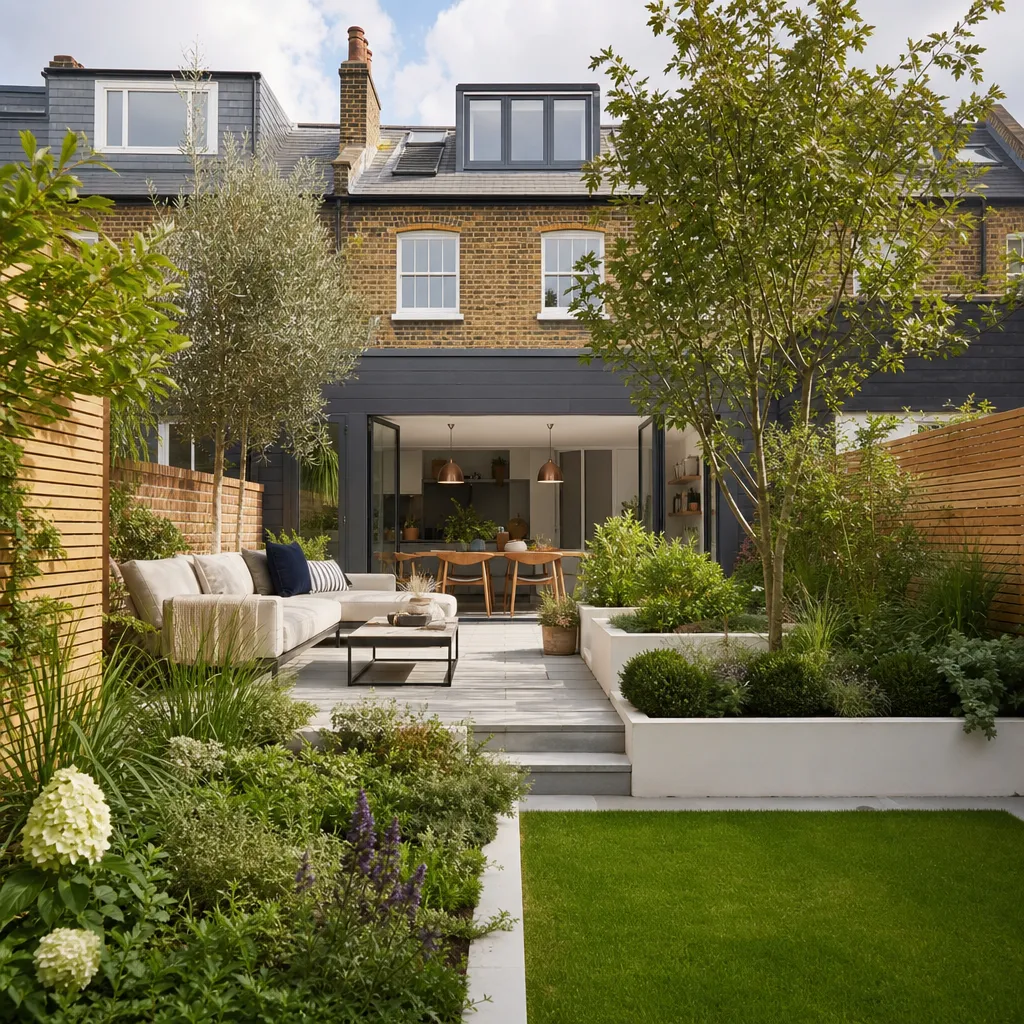
Seasonal Garden Transformations and Outdoor Design Ideas
A successful garden transformation in the UK works with the seasons rather than against them — establishing structure and hard landscaping in autumn or winter, planting in spring, and enjoying the results through summer.
 Improvement & Build
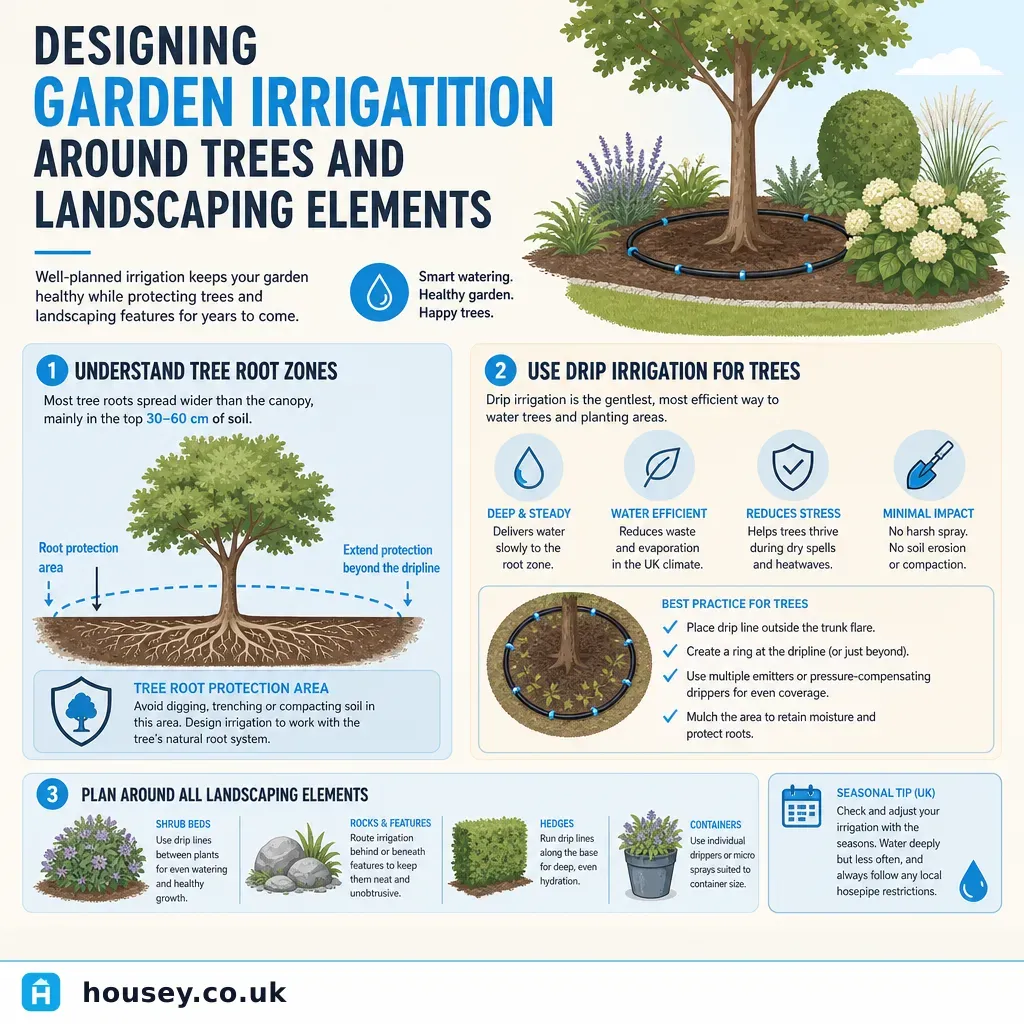
Designing Garden Irrigation Around Trees and Landscaping Elements
Design irrigation around trees by respecting the root protection area defined under BS 5837:2012, using drip or leaky pipe delivery rather than spray heads, and putting the tree zone on its own circuit.
 Improvement & Build
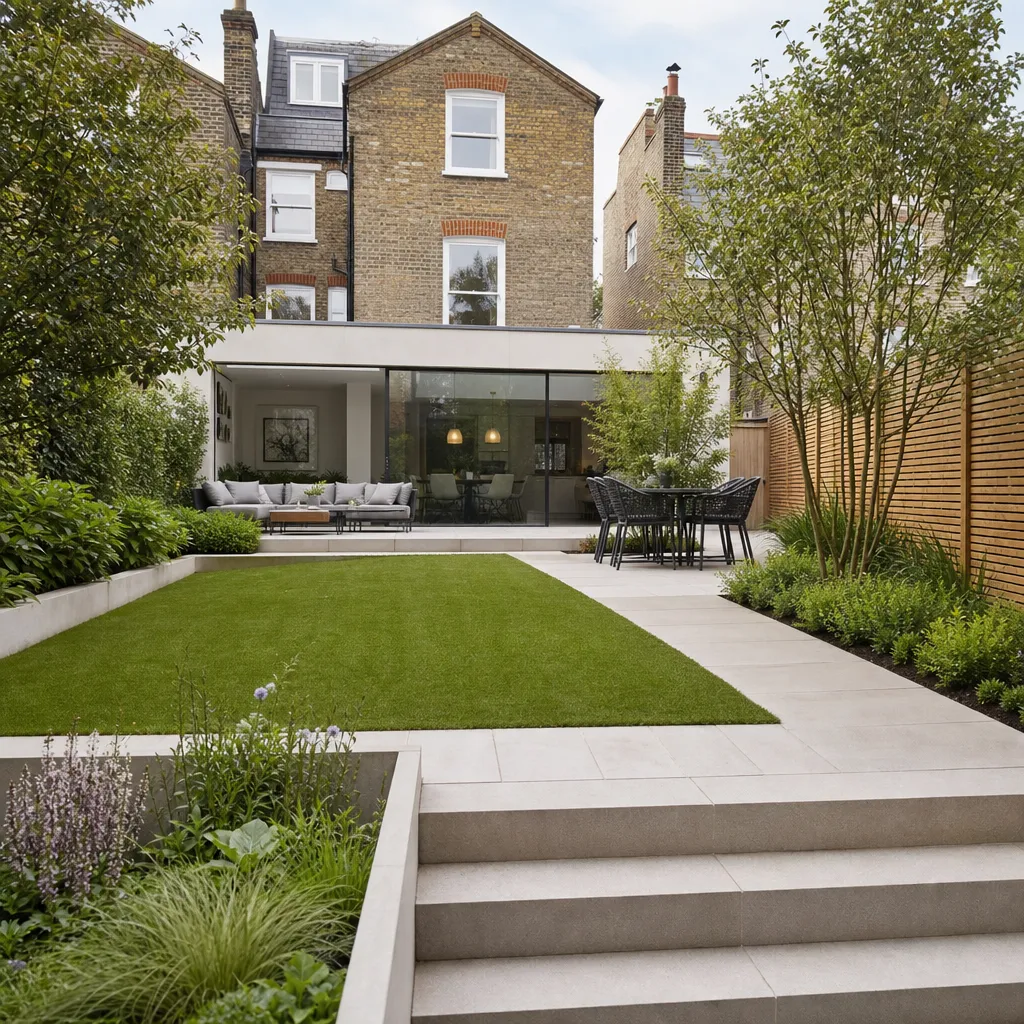
Garden Design Trends and Contemporary Landscaping Ideas
Contemporary UK garden design centres on low-maintenance naturalistic planting, multi-functional outdoor spaces, sustainable hard landscaping materials, and wildlife-friendly rewilded areas.
 Improvement & Build
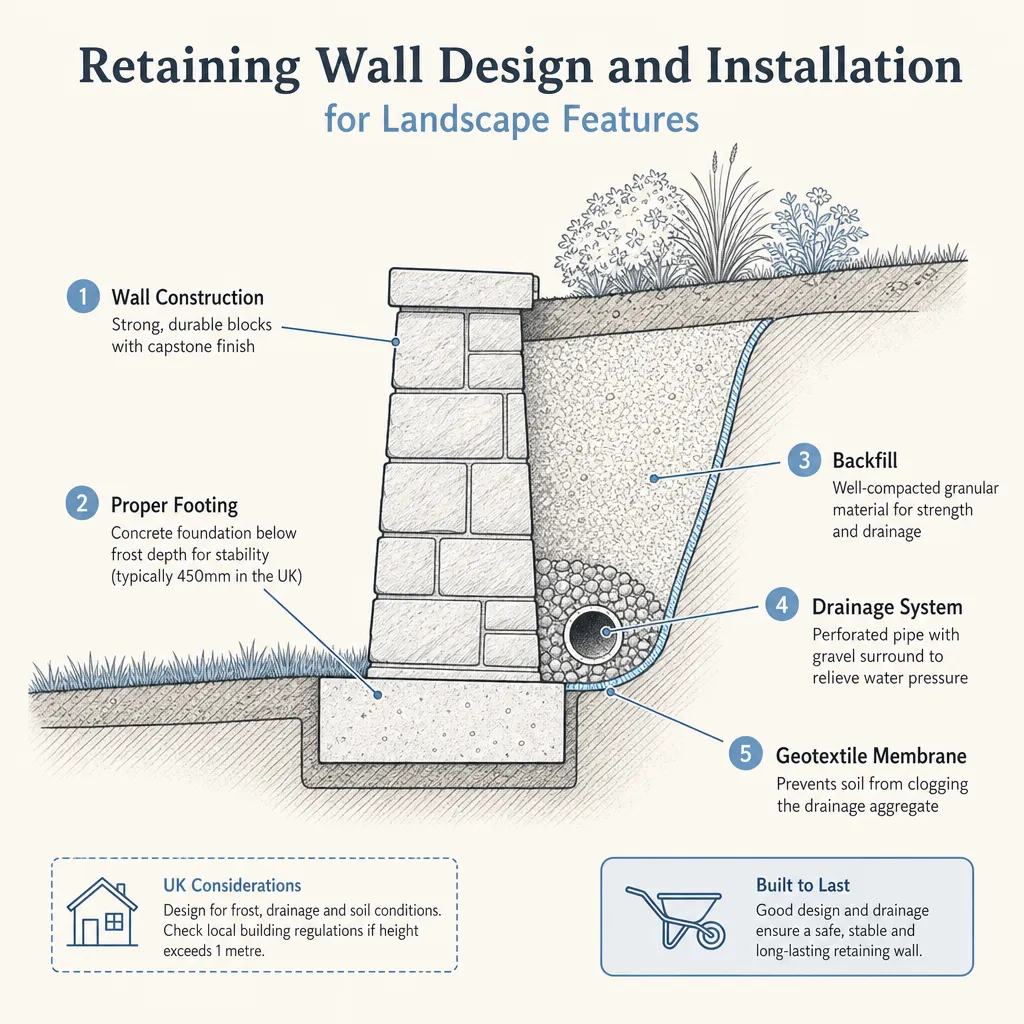
Retaining Wall Design and Installation for Landscape Features
A garden retaining wall holds back soil on a sloped plot using concrete blocks, stone, or timber.
 Improvement & Build
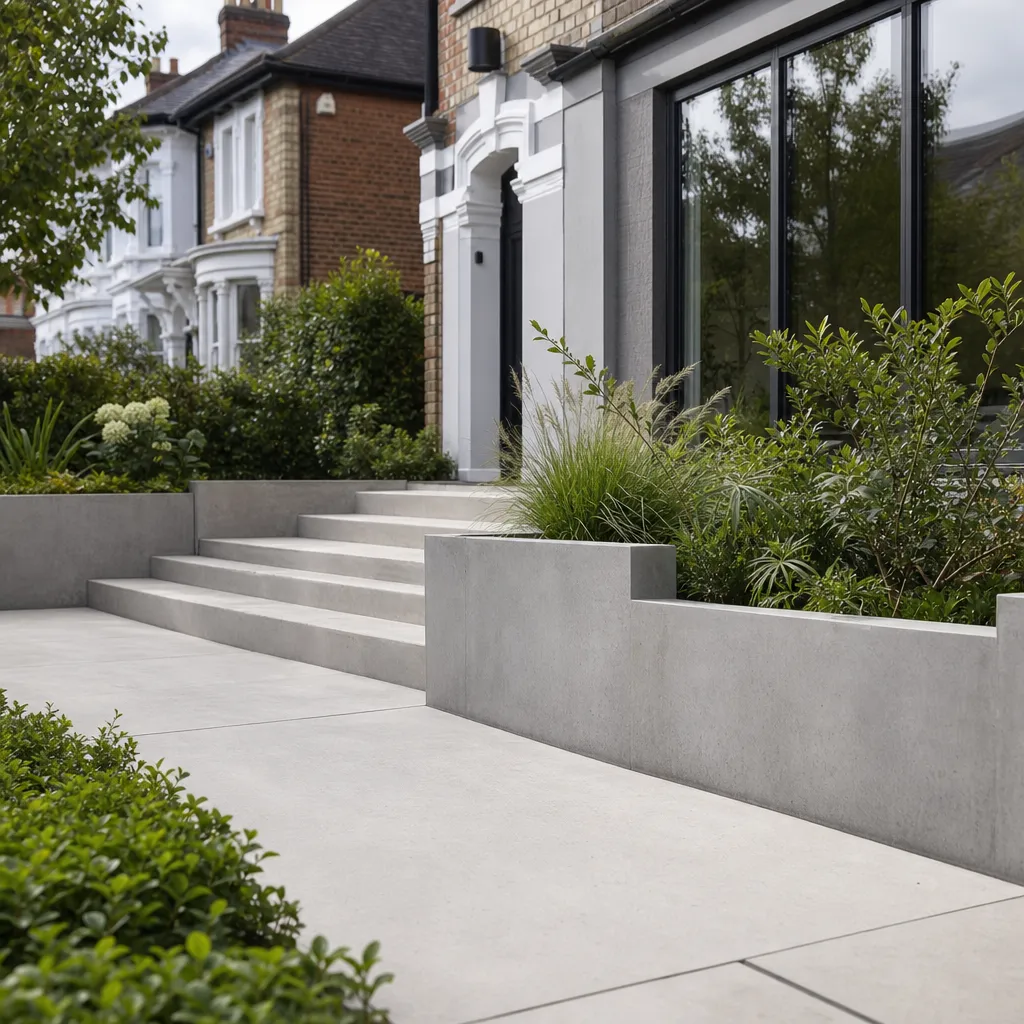
Concrete Landscaping for Homeowners: Durability and Design Benefits
Concrete is one of the most durable hard landscaping materials available to UK homeowners, with a typical design life of 25–40 years and low ongoing maintenance.