Garden Design Trends and Contemporary Landscaping Ideas
By Housey · Last reviewed 11th of May 2026
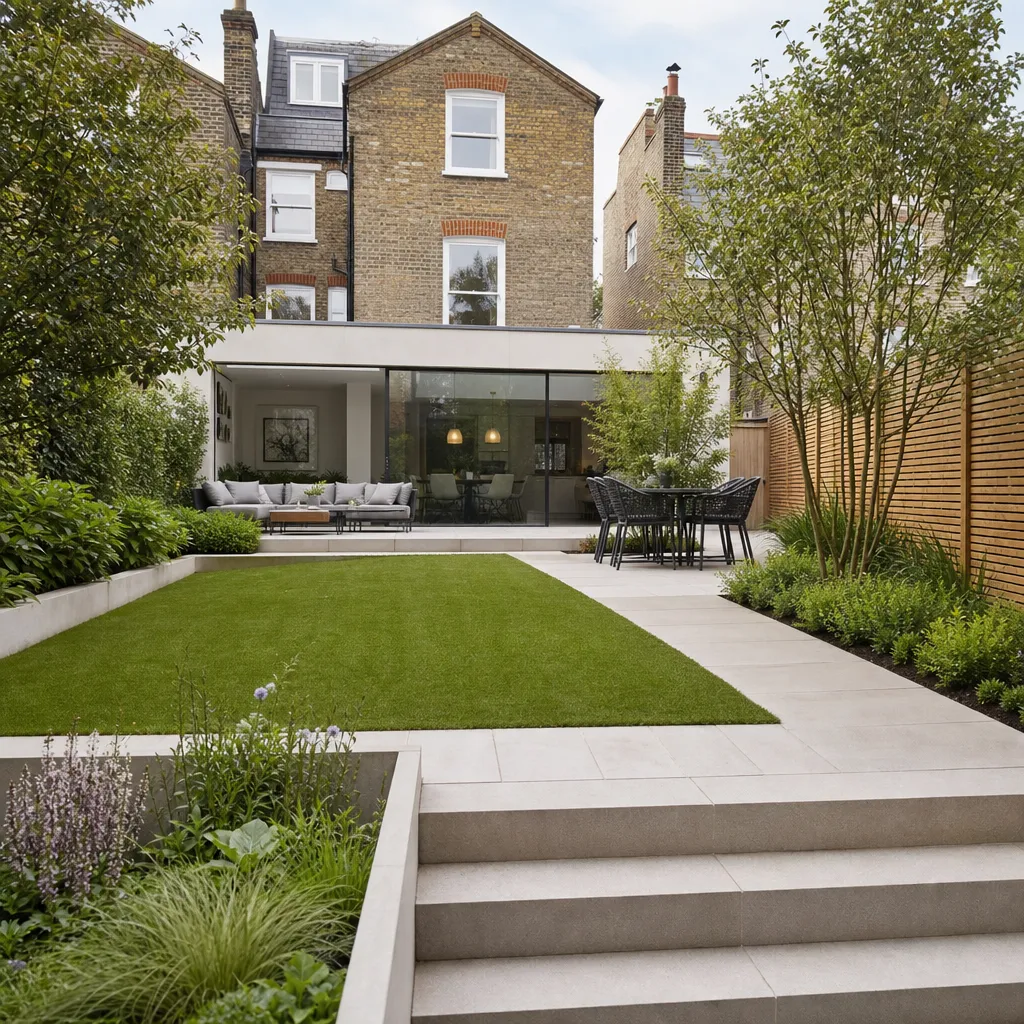
Garden Design Trends and Contemporary Landscaping Ideas
The garden has shifted from an afterthought to a core part of UK home life — accelerated by remote working and sustained by a growing expectation that outdoor space should be as considered as any interior room. Whether you are starting from scratch, refreshing a tired 1990s layout, or improving a Victorian terrace rear yard, understanding where contemporary UK landscape design is heading helps you invest in what will last and avoid choices you will regret.
Key points
- The RHS has consistently identified wildlife-friendly and low-maintenance gardens as the dominant consumer priority in UK residential landscaping, reflected across RHS Chelsea, Hampton Court, and Tatton Park show gardens since 2022.
- Paving more than 5 m² of front garden with non-permeable material requires planning permission under GOV.UK guidance on permeable surfacing — a rule many homeowners are unaware of.
- Trees with a trunk diameter of 75 mm or more at 1.5 m height may be subject to a Tree Preservation Order (TPO); work on protected trees requires a TPO application to the local planning authority before pruning or felling.
- RHS Plants for Pollinators guidance is increasingly cited by UK local authorities as best practice in new development landscaping conditions, influencing what specifiers recommend for residential schemes.
- Artificial grass is banned or restricted in some UK housing developments under planning conditions and is actively discouraged by the RSPB and Wildlife Trusts on ecological grounds.
What are the dominant garden design trends in the UK right now?
Several themes have become prominent across UK residential garden design from 2023 to 2026, visible in show gardens as well as in suburban and urban residential projects.
Naturalistic and rewilded planting
Borrowing from the Dutch Wave movement, naturalistic planting uses dense, species-rich perennial combinations — grasses, sedums, echinacea, alliums, and native wildflowers — to create borders that look good in winter as well as summer. These schemes are designed to support pollinators and birds, suppress weeds without heavy intervention, and reduce the need for annual replanting.
Multi-functional outdoor rooms
Garden zones — dining terrace, lawn, kitchen garden, studio pod, play area — are now planned as a sequence rather than a single open space. Hedging, low timber screens, trellised planting, and level changes divide the garden into areas with distinct characters and uses, extending the season during which each zone is actively occupied.
Sustainable hard landscaping
Natural stone (especially reclaimed yorkshire stone, sandstone, and granite setts), self-binding gravel, and permeable block paving have overtaken impermeable concrete and sealed surfaces. Sustainable drainage systems (SuDS) are a planning requirement for new hard landscaping above certain areas in many local authority areas, making permeability a functional as well as aesthetic consideration.
Edibles integrated into ornamental borders
Growing food at home — raised vegetable beds, fruit espaliers on walls, herbs in terrace planters — has moved from niche to mainstream. Designers increasingly integrate productive planting into ornamental borders rather than separating it into a dedicated vegetable patch, reducing the visual impact and making small gardens more multifunctional.
Biophilic lighting
Low-level path lighting, uplighting through structural trees, and warm-temperature LED festoon lighting create usable evening spaces. Lighting designers specify colour temperatures of 2700 K–3000 K (warm white) to minimise disruption to wildlife and suit the character of period properties.
Comparing garden design approaches
Approach | Best for | Maintenance level | Upfront cost | Ecological value |
|---|---|---|---|---|
Formal / geometric | Period townhouses, large country gardens | Medium–high (clipping, edging) | High (stonework, topiary) | Low–medium |
Naturalistic / prairie | Any size garden, especially difficult sites | Low once established | Medium | High |
Cottage garden | Rural and semi-rural properties | Medium (deadheading, staking) | Low–medium | Medium–high |
Contemporary minimalist | Modern new-builds, urban courtyards | Low (simple palette) | High (quality materials) | Low–medium |
Kitchen garden | Families, food-growers | High (seasonal management) | Low–medium | Medium |
Wildlife / rewilded | Any size, especially rear gardens | Very low once established | Low | Very high |
Practical decisions to get right at the design stage
These choices have long-term cost and maintenance implications and are much harder to retrofit.
Drainage and permeable surfaces. If you are paving more than 5 m² of front garden with a non-permeable material, planning permission is required under GOV.UK guidance. Rear gardens have more flexibility, but SuDS planning conditions increasingly apply to major works. Permeable gravel, block paving with permeable jointing, and natural stone on a free-draining base all satisfy most drainage requirements.
Boundary treatments. Walls over 1 metre adjacent to a highway, and walls, fences, or gates over 2 metres elsewhere, require planning permission. Hedges are not subject to the same height limits but may be subject to high hedge legislation if they cause significant loss of light or amenity to a neighbour's property.
Tree works. Trees with a trunk diameter of 75 mm or more at 1.5 m from the ground may be subject to a Tree Preservation Order. Work on protected trees — including pruning — requires a TPO application. Trees in Conservation Areas are subject to a six-week notification period before any work begins.
Soil analysis. A basic soil test (pH, drainage, organic matter) typically costs £30–£80 from a specialist laboratory and helps avoid expensive replanting caused by mismatched species selection.
Homeowner checklist — before commissioning landscaping work
What not to assume
Don't assume artificial grass is maintenance-free
Artificial turf accumulates organic debris, requires regular brushing, and typically needs replacing after 10–15 years. It also contributes to urban heat island effect, is ecologically inert, and is banned or restricted by planning conditions on some UK housing developments. The RSPB and Wildlife Trusts actively advise against it.
Don't assume a garden designer and a landscaper are interchangeable
Garden designers typically provide concept drawings, planting plans, and specifications. Landscapers carry out groundworks, hard landscaping, and installation. These are separate disciplines requiring different skills. High-quality projects often require both — confirm who is responsible for which scope, and who manages the build, before signing any contract.
Don't assume your soil suits your chosen planting
Clay-heavy soils, free-draining sandy soils, and alkaline chalk soils all support very different plant communities. A soil analysis before finalising a planting plan saves the cost of replacing plants that fail in the first season.
When to get professional help
Engage a garden designer or landscaper if:
- The garden is on a slope requiring terracing, retaining walls, or engineered drainage.
- You want a cohesive scheme across the whole plot rather than individual improvements over time.
- The garden contains mature trees, TPO-protected species, or shares a boundary with a protected tree.
- You are investing significantly in hard landscaping — terraces, garden buildings, water features — and need a drainage strategy.
- The property is in a Conservation Area where planning conditions may affect surface materials or boundary works.
How Housey can help
Housey connects you with experienced garden designers for consultations, concept plans, and detailed planting specifications, as well as vetted local landscapers for groundworks, hard landscaping, and planting installation across the UK.
Frequently asked questions
How much does garden design cost in the UK?
Garden design costs vary by scope and designer. Indicative UK costs (last reviewed 2026-05-11): an initial consultation typically costs £150–£500; a full design with detailed drawings ranges from around £1,500 for a small urban plot to £10,000 or more for larger or complex gardens. Landscaping installation costs are additional and depend heavily on materials chosen and site conditions. Always request an itemised quote.
Do I need planning permission for landscaping?
Most routine garden landscaping does not require planning permission. Key exceptions include paving more than 5 m² of front garden with non-permeable material, removing or pruning trees subject to Tree Preservation Orders, significant changes to ground levels, and certain works in Conservation Areas or on listed properties. Check with your local planning authority if uncertain.
What is naturalistic or rewilded garden design?
Naturalistic design uses dense perennial and grass combinations — inspired by wild plant communities — to create low-maintenance borders with year-round ecological value. Unlike traditional cottage gardening, it emphasises structural planting, reduced intervention after establishment, and habitat creation for pollinators, birds, and invertebrates.
When is the best time to commission a garden designer?
Ideally 3–6 months before you want work to start on site. Major construction and drainage works are typically best tackled in spring or autumn. Planting establishes best in autumn for most shrubs and perennials, or early spring. A designer will advise on the most practical build sequence for your specific site and soil.
Sources and further reading
- Permeable Surfacing of Front Gardens — GOV.UK
- Tree Preservation Orders and Trees in Conservation Areas — GOV.UK
- Plants for Pollinators — Royal Horticultural Society
- Gardening for wildlife — The Wildlife Trusts
Useful next reads
 Improvement & Build
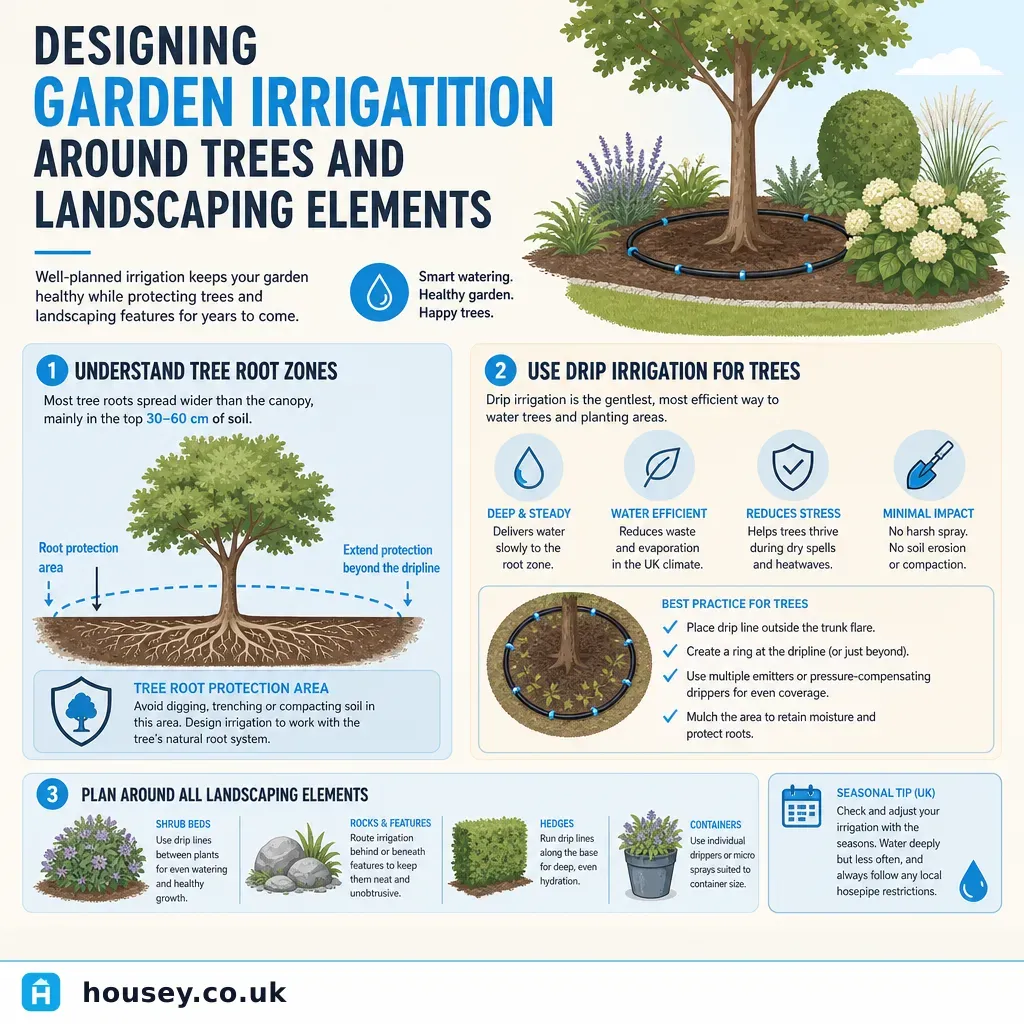
Designing Garden Irrigation Around Trees and Landscaping Elements
Design irrigation around trees by respecting the root protection area defined under BS 5837:2012, using drip or leaky pipe delivery rather than spray heads, and putting the tree zone on its own circuit.
 Improvement & Build
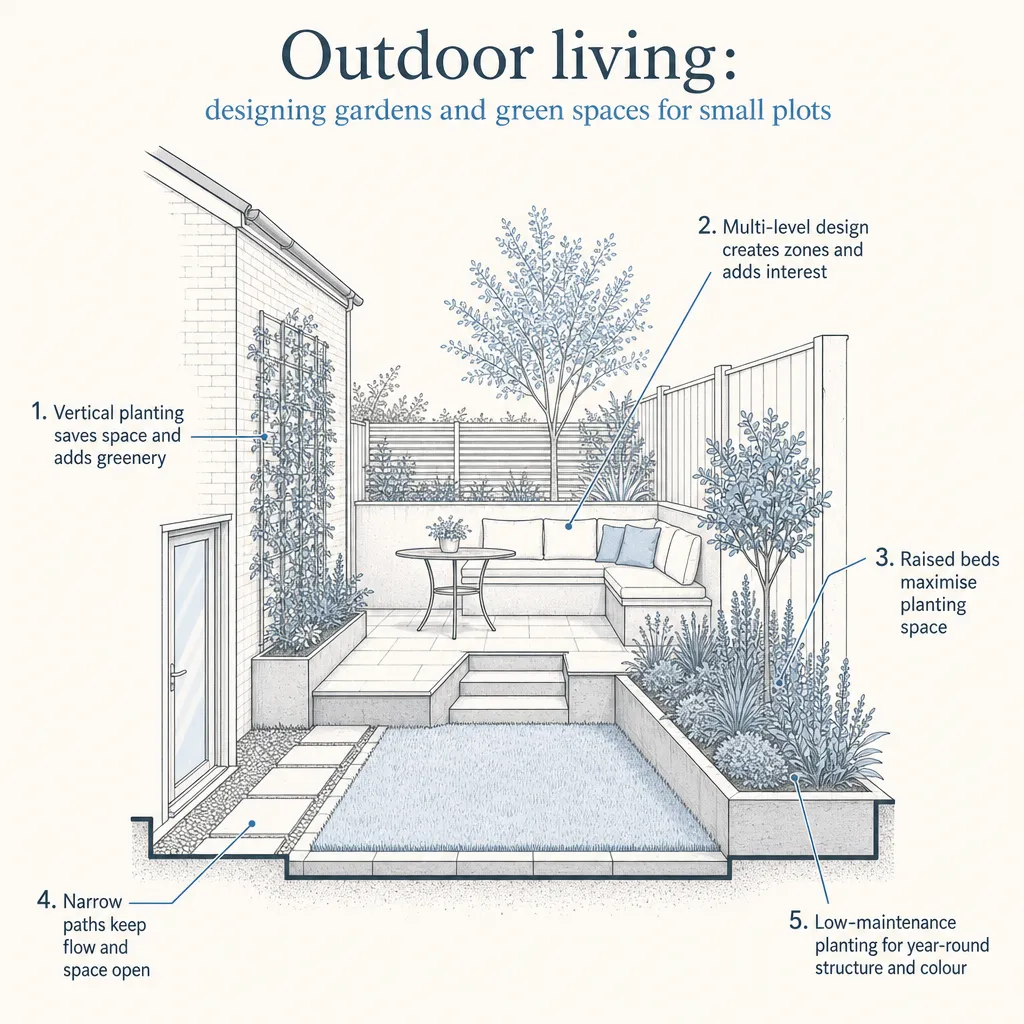
Outdoor living: designing gardens and green spaces for small plots
Small plots work best when divided into defined zones — seating, planting, and utility — before materials are chosen.
 Improvement & Build
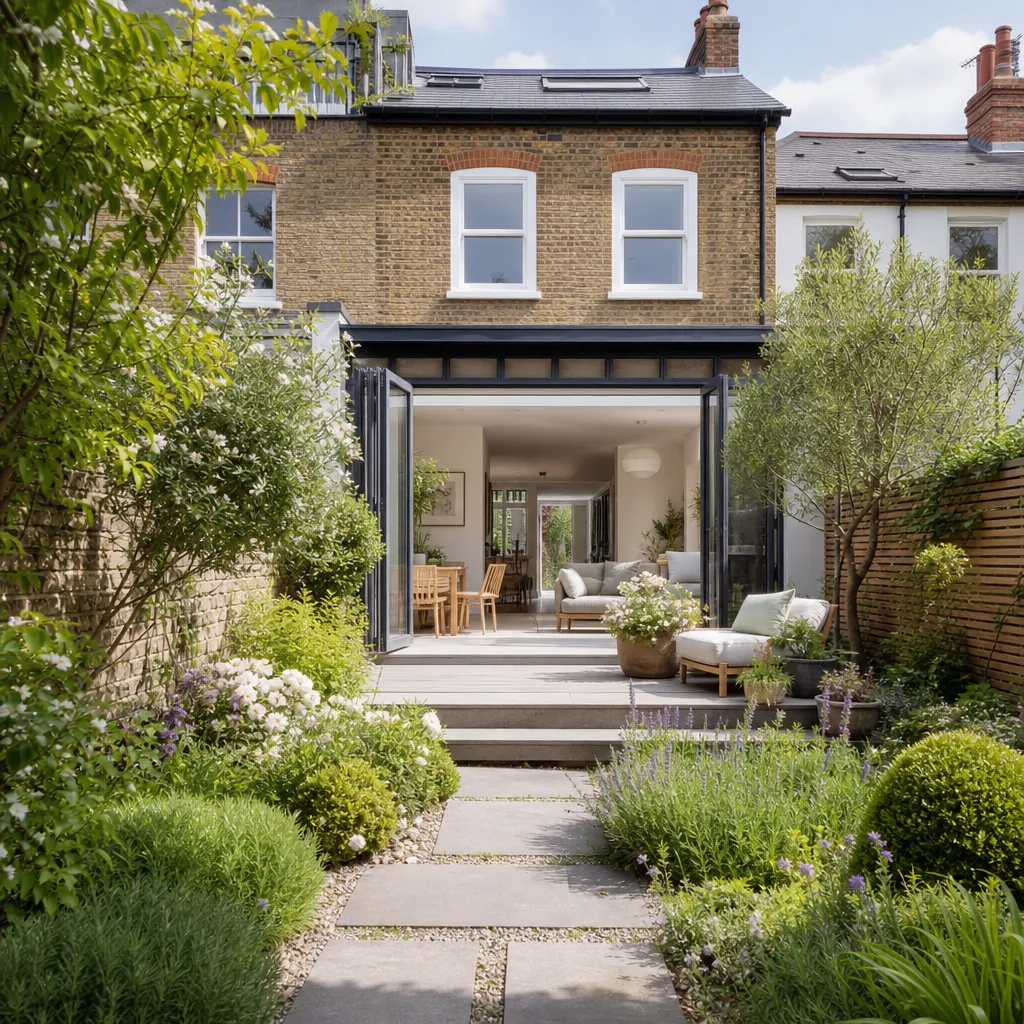
Spring Garden Transformations: Design Ideas to Enhance Your UK Property
Spring is the best time to transform a UK garden, with mild temperatures and longer days ideal for planting and landscaping.
 Improvement & Build
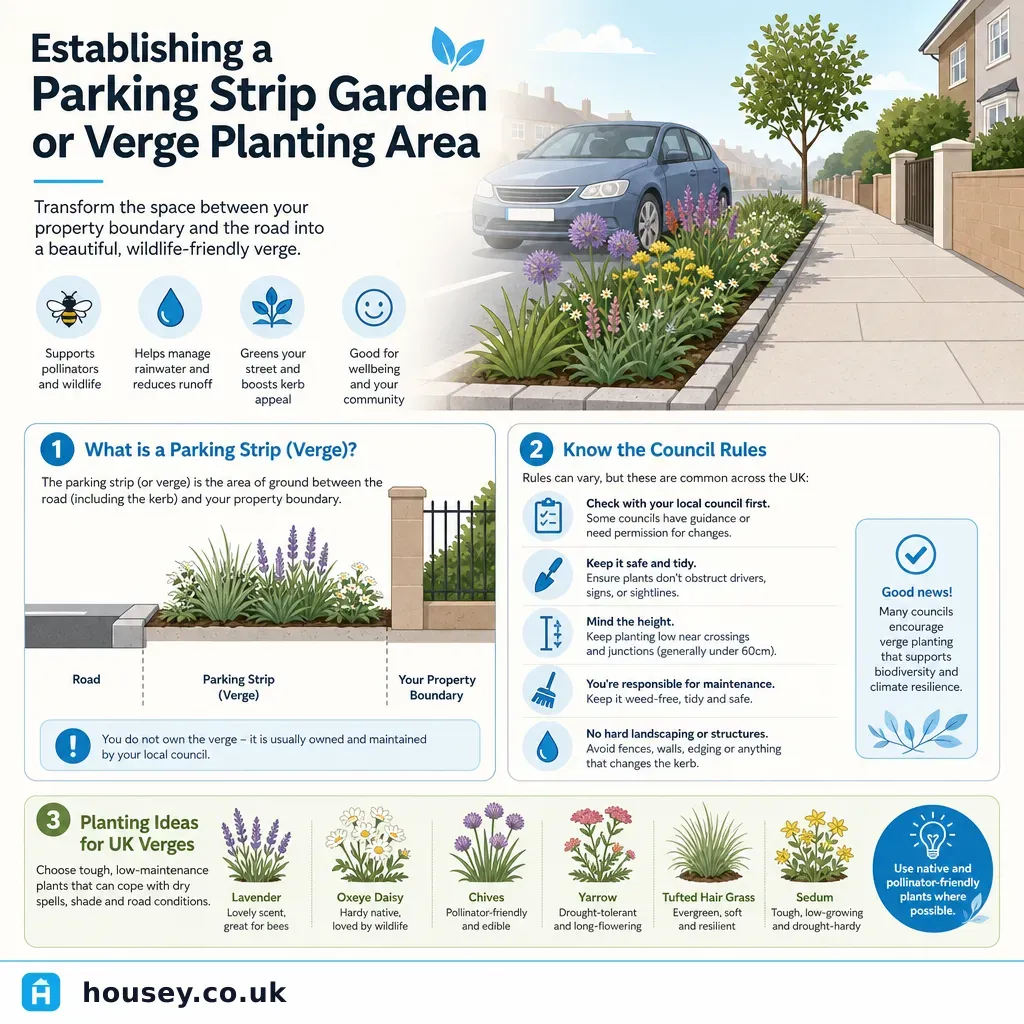
Establishing a Parking Strip Garden or Verge Planting Area
A parking strip or verge sits between your garden boundary and the road.
 Improvement & Build
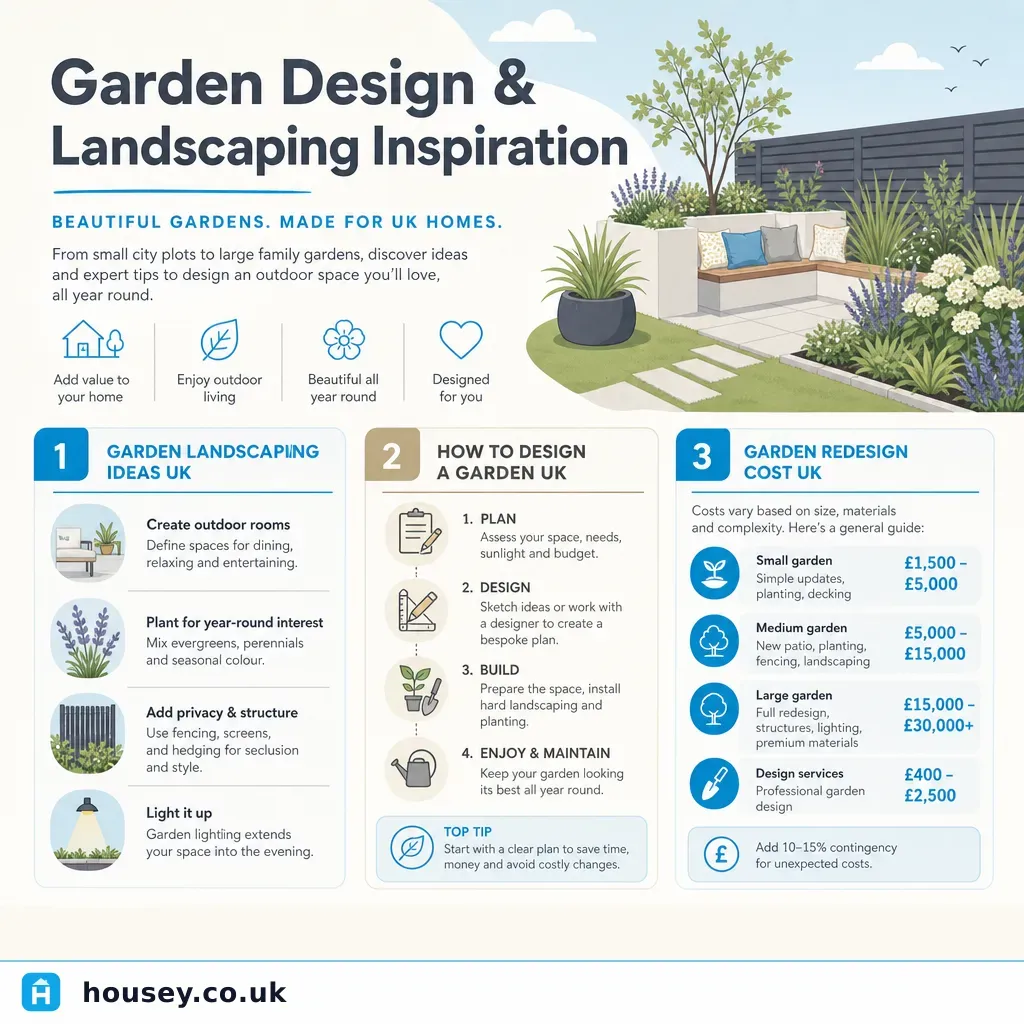
Garden Design and Landscaping Inspiration
Effective garden design starts with assessing your aspect, soil type, and existing features before commissioning any planting or hard landscaping.