Concrete Landscaping for Homeowners: Durability and Design Benefits
By Housey · Last reviewed 11th of May 2026
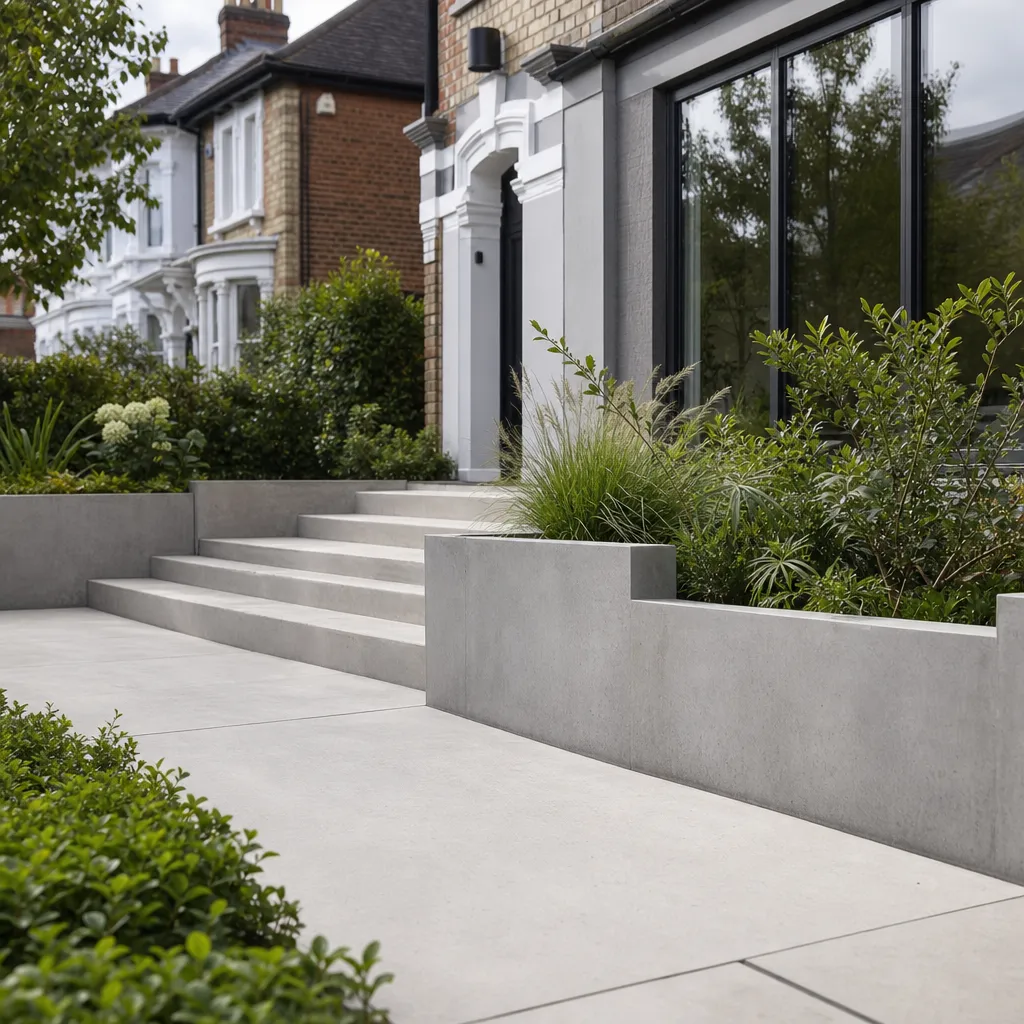
Concrete Landscaping for Homeowners: Durability and Design Benefits
Hard landscaping choices made at the start of a garden project tend to outlast the planting by decades — which makes material choice one of the most consequential decisions a homeowner will take outdoors. Concrete has evolved well beyond the plain grey slab: today's options include exposed aggregate, brushed, stamped, polished, and coloured finishes that combine long design lives with low ongoing maintenance. Understanding what concrete can and cannot do — and how UK planning and drainage rules affect your options — helps you brief a contractor and avoid costly mistakes.
Key points
- Impermeable driveways over 5m² in England require planning permission unless SuDS-compliant drainage is incorporated, following amendments made by the Town and Country Planning (General Permitted Development) (Amendment) (England) Order 2008.
- Permeable concrete — using a gap-graded aggregate mix on a granular sub-base — can satisfy SuDS requirements without a planning application for most front-of-house driveway works.
- Residential concrete slabs and trafficked areas typically specify a C25/30 mix to BS 8500-1; C20 may be used for lightly loaded garden paths but is generally not adequate for vehicle loading.
- External concrete surfaces should achieve a slip resistance value (SRV) above 45 (pendulum test, BS 7976-2) for pedestrian safety in wet conditions — exposed aggregate and brushed finishes naturally exceed this threshold.
- Supply-and-fit concrete landscaping work costing over £2,500 for a domestic homeowner is subject to standard-rated VAT at 20%; there is no reduced rate for domestic landscaping, unlike some new-build construction.
Concrete vs other hard landscaping materials: which suits your project?
Material | Typical design life | Maintenance | Drainage options | Relative installed cost | Best for |
|---|---|---|---|---|---|
Plain or decorative concrete | 25–40 years | Low (reseal every 5–10 years) | Impermeable or permeable | Mid–High | Driveways, patios, paths, retaining features |
Concrete or clay block paving | 20–30 years | Moderate (weeding, re-sanding) | Permeable with correct sub-base | Mid | Driveways, paths; easy to re-level |
Natural stone (sandstone, granite setts) | 30–50+ years | Moderate–High | Usually impermeable | High | Feature patios, steps, formal gardens |
Resin-bound gravel | 15–25 years | Low–Moderate | Permeable | Mid | Paths, driveways, pool surrounds |
Tarmac / asphalt | 20–30 years | Low | Usually impermeable | Low–Mid | Driveways; limited decorative options |
Indicative UK costs and design lives, last reviewed 2026-05-11. Actual costs vary significantly by region, ground conditions, access, and finish specification. Obtain at least three written quotes before proceeding.
Decorative concrete finishes: what are the options?
Modern decorative concrete techniques give homeowners considerable design flexibility without sacrificing the material's core durability.
Exposed aggregate: the surface is washed or brushed while wet to reveal the aggregate beneath — pea shingle, crushed granite, recycled glass, or a mix. Provides a naturally high slip resistance and a textured appearance well suited to UK weather. Popular for driveways and external paths.
Brushed or broom finish: the surface is drawn with a stiff brush while setting to create a ribbed, directional texture. Standard for most domestic work — functional, cost-effective, and low maintenance.
Stamped or imprinted concrete: patterns pressed into wet concrete using rubber mats can mimic stone, brick, timber, or slate. The surface must be resealed regularly — typically every 2–5 years — to protect colour and prevent joint cracking. More vulnerable to surface cracking in UK freeze-thaw conditions than exposed aggregate.
Polished concrete: requires specialist grinding and sealing equipment; used primarily for internal floors but increasingly for external terraces in sheltered settings. Requires careful surface drainage design to avoid ponding.
Coloured concrete: pigments added at batching or applied as a surface hardener. UV fading occurs over time and is most pronounced in exposed, south-facing locations. Resealing helps retain colour; most effective in shaded or north-facing positions.
SuDS, drainage, and planning: what you need to know before work starts
This is the area most likely to catch homeowners out. Since 2008, any new or replacement hardstanding to the front of a property in England must either:
- Use a permeable surface — permeable concrete, resin-bound aggregate, gravel, or block paving on a granular sub-base — so water drains through naturally; or
- Direct surface water to a lawn or planted border where it can be absorbed; or
- Obtain full planning permission from the local planning authority.
Rear patios and side-access paths are generally not subject to the same requirement, but if a rear patio drains directly to a combined sewer, your local water company may have separate connection requirements.
Permeable concrete systems designed to BS EN 16637-1 and laid in accordance with BS 7533 can meet SuDS requirements, provided the sub-base design achieves adequate water storage and permeability for the underlying ground conditions. Your installer should confirm this in writing before works commence.
For listed buildings and properties within conservation areas, contact your local planning authority for pre-application advice before altering any hard landscaping — permitted development rights may be restricted or withdrawn.
Decision tree: which concrete option suits your project?
- Driveway (front of house, England) → choose permeable concrete or ensure run-off drains to a planted border; no planning permission required. Impermeable concrete to a road gully or combined sewer requires a planning application.
- Rear patio or terrace → plain or decorative concrete with any finish; ensure surface falls away from the house at a minimum gradient of 1:80.
- Garden path or steps → brushed or exposed-aggregate finish for slip resistance; C25/30 mix; reinforcement required for steps and changes of level.
- Retaining wall or raised feature → structural concrete or blockwork required; seek structural engineering advice if retaining height exceeds 600mm, or if the wall is adjacent to a neighbour's boundary or existing structure.
- Drainage channels required → specify resin channel or ACO linear drains to be cast into the slab at design stage; retrofitting drainage channels is significantly more costly.
- Listed building or conservation area → obtain written pre-application advice from your local planning authority before any work begins, regardless of size.
Homeowner checklist: before you commission concrete landscaping
When to get professional help
Most concrete landscaping is straightforward for an experienced hard landscaping contractor, but professional input adds genuine value in specific situations. Retaining structures above 600mm in height — particularly where they retain a neighbour's land or an existing slope — should be designed by a structural engineer. If you are proposing hard landscaping within 3m of the house foundations, consult a structural engineer or drainage specialist to ensure surface water management does not affect the sub-structure. Properties in conservation areas or listed building curtilages require pre-application planning advice before any external works. Where trial holes reveal made ground, filled land, or soft spots, a ground investigation may be needed before confirming sub-base depth and specification.
How Housey can help
Housey can connect you with experienced driveway installers and landscapers who understand UK SuDS requirements and concrete mix specification. If you want a design-led approach to your outdoor space — integrating concrete paving alongside planting, lighting, water features, and garden structures — garden designers can prepare a scheme that makes the most of the material across your entire plot.
Frequently asked questions
Does a new concrete driveway need planning permission in England?
Not if it uses a permeable surface or drains to a lawn or border — these are covered by permitted development rights amended in 2008. Impermeable concrete draining to a road gully or combined sewer does require planning permission. In Wales, Scotland, and Northern Ireland, separate rules apply; always check with your local planning authority before starting work.
How long does concrete landscaping last?
A well-specified concrete driveway or patio typically has a design life of 25–40 years. This assumes C25/30 mix per BS 8500, correct sub-base depth, expansion joints at appropriate spacings, and periodic resealing where a decorative finish is applied. Exposed aggregate and brushed finishes generally need less maintenance than stamped or coloured concrete.
Can concrete crack in cold UK weather?
Concrete can crack in freeze-thaw conditions if not specified correctly. Air-entrained concrete per BS 8500 with designated air entrainment is more resistant to freeze-thaw damage and is recommended for external horizontal surfaces in the UK. Correctly spaced expansion joints — typically every 3–4m for domestic slabs — also reduce thermally induced surface cracking.
What is the difference between permeable and standard concrete?
Standard concrete is effectively impermeable to surface water. Permeable (or pervious) concrete uses a gap-graded aggregate mix creating a network of voids that allows water to drain into the sub-base and ground below. It is designed to BS EN 16637-1 and must be combined with an appropriate granular sub-base and adequate ground permeability to function correctly.
Sources and further reading
- When is permission required? (Householder permitted development) — GOV.UK
- Town and Country Planning (GPDO) (Amendment) (England) Order 2008 — legislation.gov.uk
- BS 8500-1:2023 – Concrete: Complementary British Standard to BS EN 206 — BSI Group
- CIRIA SuDS Manual C753 — CIRIA
- BS 7976-2:2002 – Measurement of slip resistance of pedestrian surfaces — BSI Group
Useful next reads
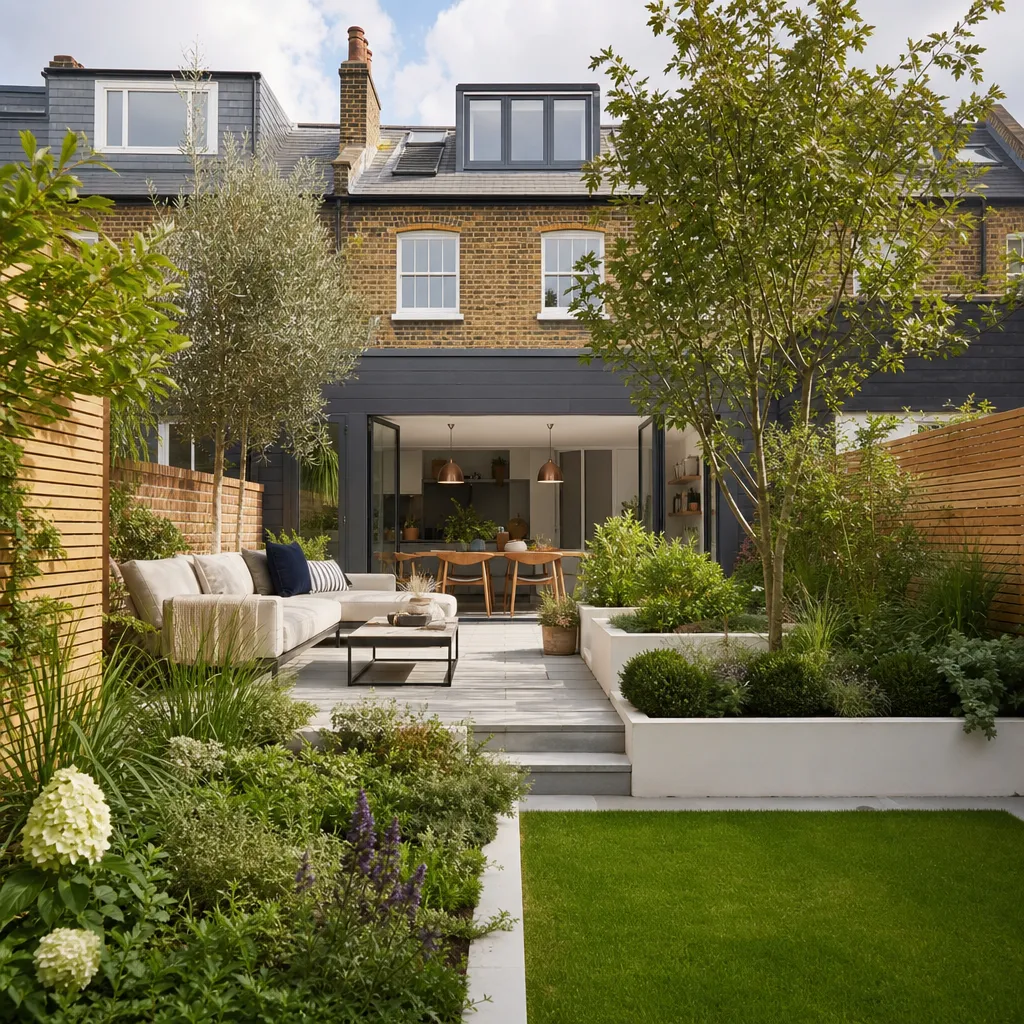 Improvement & Build
Seasonal Garden Transformations and Outdoor Design Ideas
A successful garden transformation in the UK works with the seasons rather than against them — establishing structure and hard landscaping in autumn or winter, planting in spring, and enjoying the results through summer.
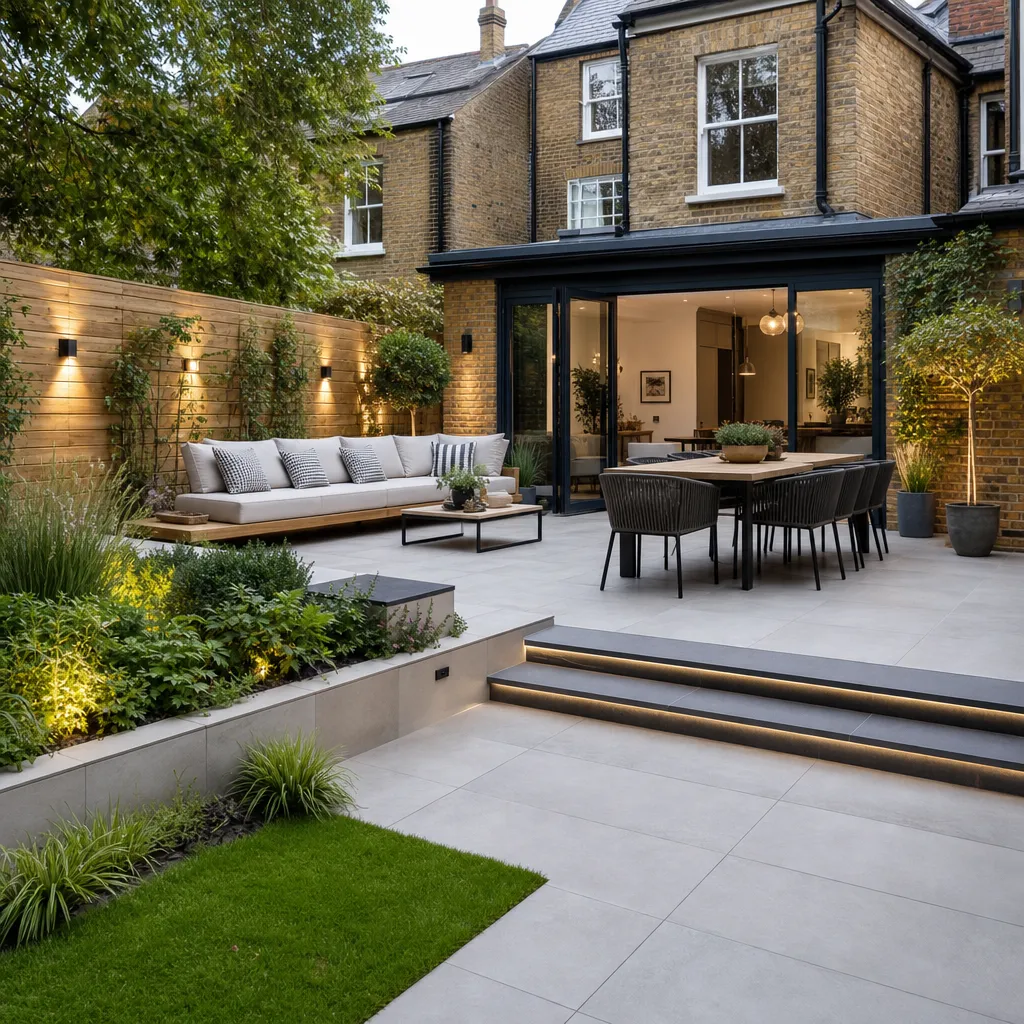 Improvement & Build
Creating Functional and Attractive Outdoor Entertainment Areas
A well-planned outdoor entertainment area combines a level surface — patio, decking, or gravel — shelter or shade, appropriate lighting, and power access if needed.
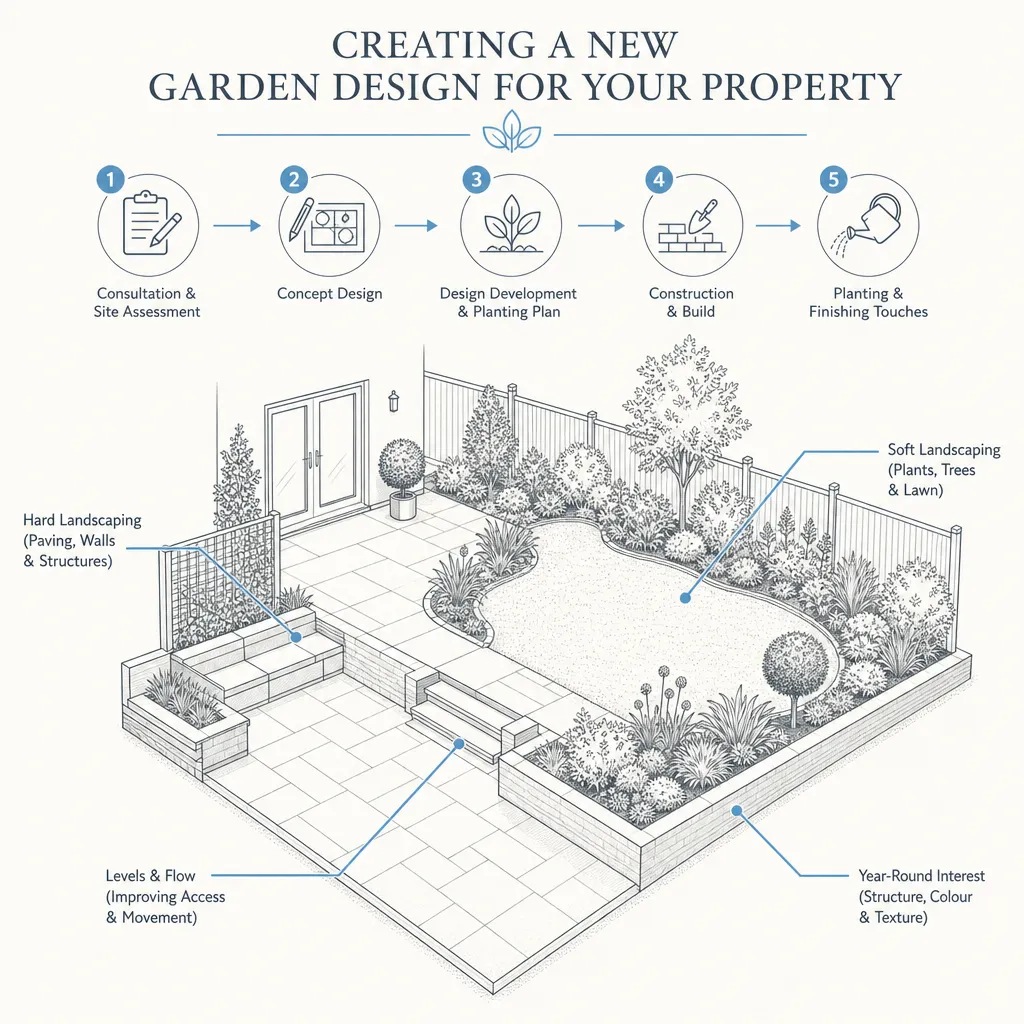 Improvement & Build
Creating a New Garden Design for Your Property
Creating a new garden design involves assessing your space, setting a realistic budget, deciding on hard and soft landscaping, and choosing a planting scheme suited to your soil and aspect.
 Improvement & Build
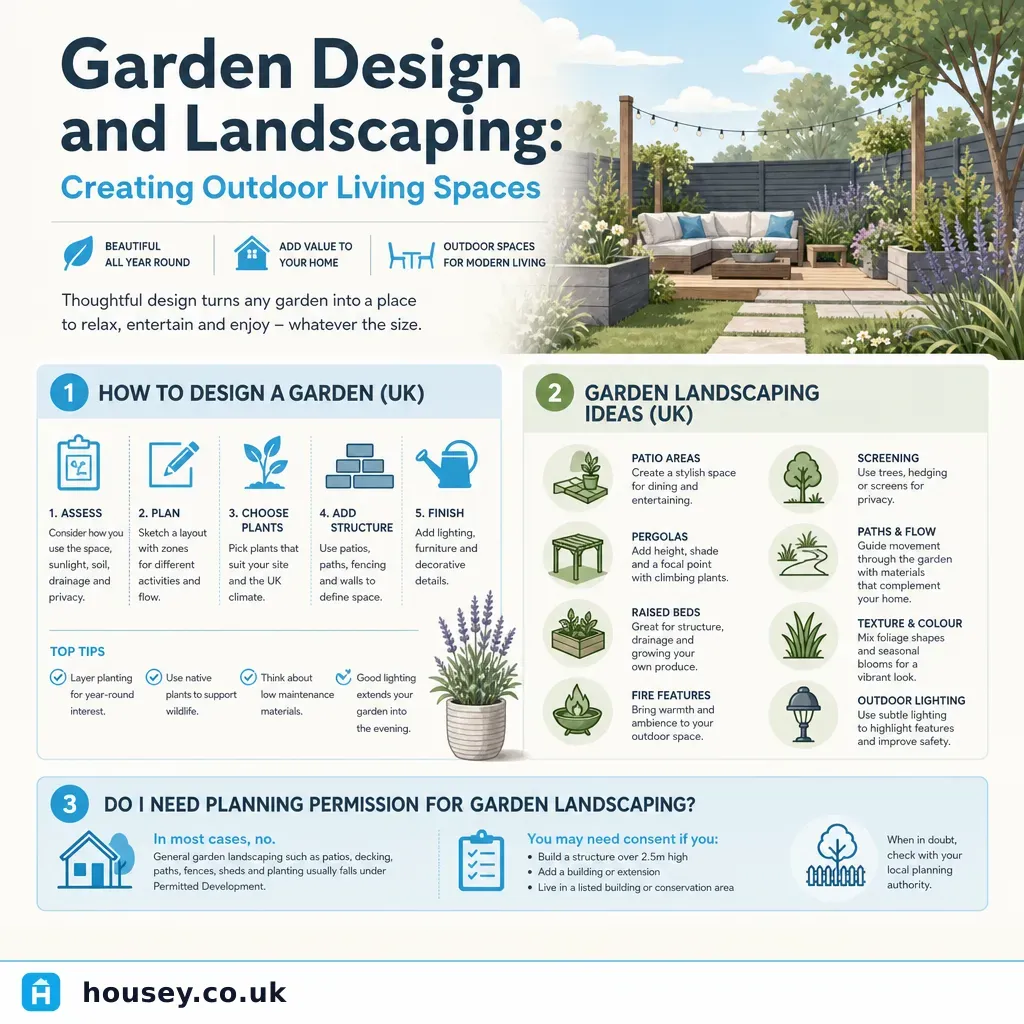
Garden Design and Landscaping: Creating Outdoor Living Spaces
Garden design creates functional outdoor living spaces through a combination of hard landscaping such as paving and decking, soft landscaping including planting and lawns, and structures such as pergolas or raised beds.
 Improvement & Build
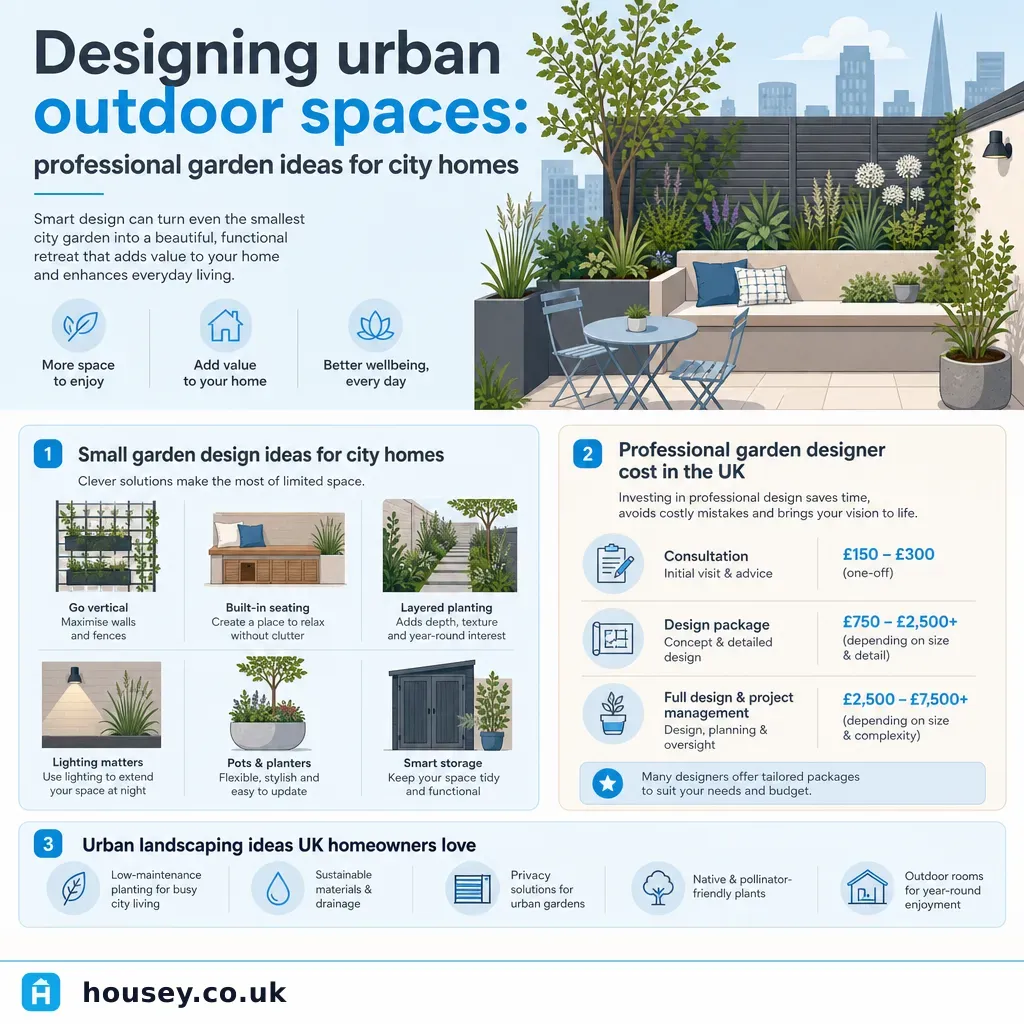
Designing urban outdoor spaces: professional garden ideas for city homes
Most urban garden redesigns don't need planning permission, but paving a front garden with impermeable materials over 5m² does.