Choosing the Right Windows for Kitchen Spaces: Materials and Styles
By Housey · Last reviewed 26th of May 2026
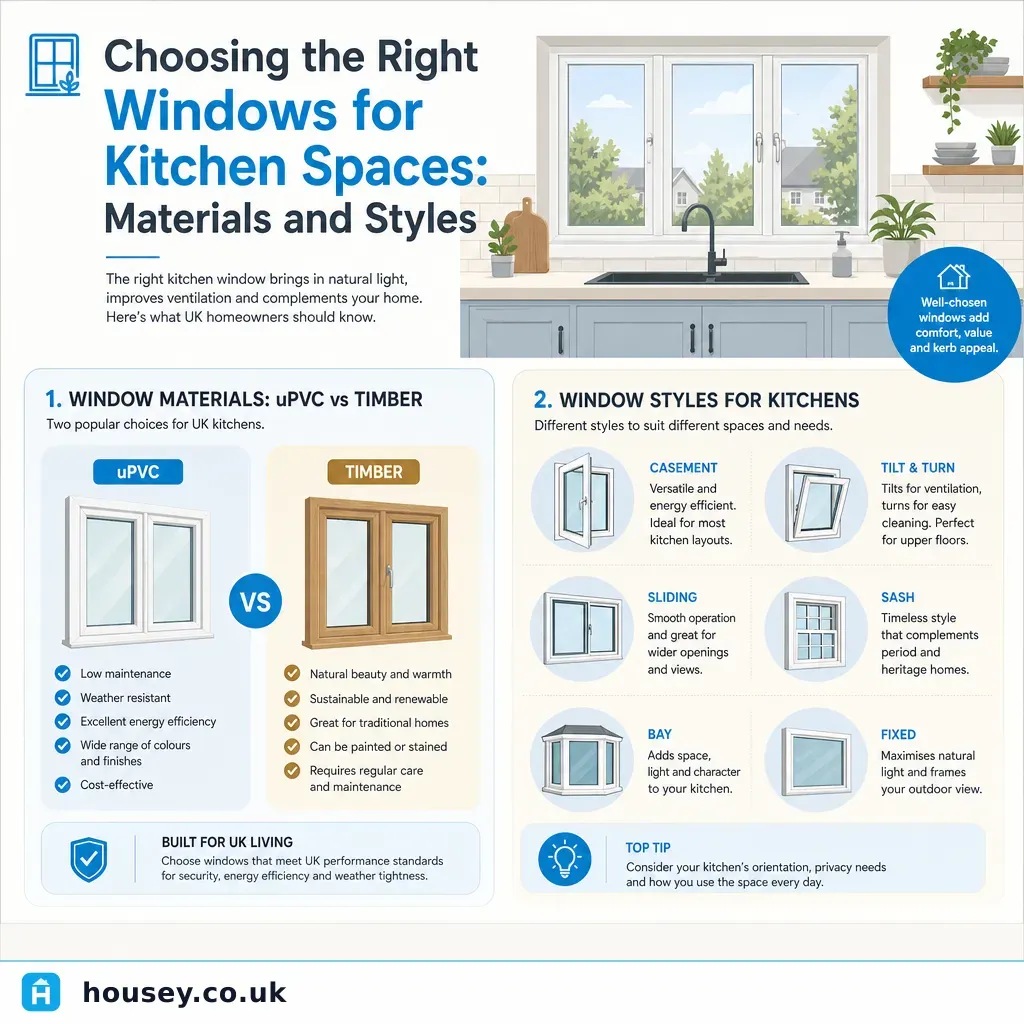
Choosing the Right Windows for Kitchen Spaces: Materials and Styles
Kitchen windows take more punishment than almost any other glazing in a home: steam from cooking, grease from hobs, condensation from sinks, and sustained temperature cycles between cold and hot several times daily. Choosing the wrong frame material or glazing specification leads to premature deterioration, persistent condensation, and high maintenance costs. The decision typically arises during a kitchen refit, a rear extension, or a planned renovation — and the regulatory requirements are more specific for cooking spaces than many homeowners expect.
Key points
- All replacement windows must comply with Building Regulations Part L; in England, replacement units must achieve a minimum Window Energy Rating (WER) of Band C or a centre-pane U-value of ≤1.2 W/m²K.
- Installations by a FENSA-registered or CERTASS-registered installer can self-certify compliance with Building Regulations; without registration, a separate building control application to the local authority is required.
- Part F (ventilation) requires background ventilation in rooms with cooking facilities — trickle ventilators are the standard solution when replacing windows in kitchens.
- Safety glazing (BS EN 12600 Class 2 or better) is required under Part K where a window pane has its lowest point within 800mm of the finished floor level.
- In listed buildings or conservation areas, replacement windows may require listed building consent or planning permission; uPVC frames are often refused in favour of timber, heritage steel, or slimline aluminium.
Why kitchen windows need specific consideration
A bedroom or living-room window faces largely consistent ambient conditions. A kitchen window does not. Key factors that distinguish kitchen glazing from other rooms:
- Condensation — cooking generates significant moisture vapour. Without adequate background ventilation, even well-sealed double-glazed units can suffer condensation at frame junctions, glazing bar intersections, and cill upstands.
- Grease and cleaning frequency — frame materials vary significantly in their resistance to degreasers, steam cleaners, and bleach-based products used around sinks and hobs.
- Aspect and available light — kitchen positions often favour rear, north, or east aspects where natural light is limited; minimising frame sightline width maximises glass area and daylight.
- Sill usability — kitchen sills frequently support plants, appliances, or utensil storage; frame depth and sill projection affect how the space is used day to day.
Frame material comparison
Material | Best for | Not ideal for | Maintenance requirement | Indicative lifespan | Cost guide |
|---|---|---|---|---|---|
uPVC | Modern and post-war kitchens; high-moisture rooms; budget retrofits | Listed buildings; conservation areas | Very low — wipe clean | 20–30 years | £ |
Softwood timber | Period properties; conservation areas; traditional aesthetics | High-moisture rooms unless well specified | Higher — annual painting or staining | 30–60 years if maintained | ££ |
Hardwood or engineered timber | Premium period or contemporary kitchens | Budget projects | Moderate — periodic oiling or painting | 40–80+ years | £££ |
Aluminium | Contemporary and industrial kitchens; slim sightlines | Budget projects; some conservation areas | Low — cleaning and periodic seal check | 30–40 years | ££–£££ |
Composite (aluminium-timber) | Period-appropriate exterior with low external maintenance | Budget projects | Low externally, moderate internally | 30–50 years | £££ |
Indicative supply costs only; installation typically adds £150–£400 or more per window depending on access and size. Costs last reviewed 2026-05-26.
Window styles for kitchens
Casement windows
The most common choice for UK kitchens. Side-hung or top-hung (awning) casements open outward and provide good ventilation control. Top-hung casements are practical above a splashback or hob — they allow airflow while deflecting rain. Check that opening sashes clear guttering or external wall projections before ordering.
Tilt-and-turn windows
Popular in newer builds and contemporary kitchen designs. Tilt-and-turn allows secure background ventilation in tilt mode and full inward opening for cleaning or maximum airflow. The inward-opening turn mode eliminates the need to lean out for external glass cleaning on upper floors. Frame depth is slightly greater than an equivalent casement.
Fixed lights
Where a window is positioned purely for daylight — above a work surface or in a high position to a north or east wall — a fixed light maximises glass area and reduces frame cost. Pair with a separate trickle ventilator or mechanical extractor fan to meet Part F requirements independently.
Roof windows and roof lanterns
For single-storey rear extensions or open-plan kitchen-diners, roof glazing can transform natural light levels. Velux-type roof windows require adequate structural support and building control sign-off. Roof lanterns over flat-roofed extensions are subject to Building Regulations Part L thermal performance requirements and need building control approval.
Glazing specification for kitchens
At minimum, kitchen replacement glazing should include:
- Low-emissivity (low-E) coating on the inner pane — reduces heat loss without significantly affecting light transmission
- Argon or krypton fill between panes — improves U-value compared to standard air-filled units
- Warm-edge spacer bars — reduces cold-bridging at the glazing edge, where condensation most commonly forms in kitchens
- Thermally broken frames for aluminium profiles — prevents cold-bridging through the frame itself
Triple glazing improves thermal performance further but adds weight and cost. It is most relevant in well-insulated kitchen extensions or Passivhaus-standard retrofits. For most UK kitchens, optimised double glazing with low-E coating, argon fill, and warm-edge spacers is sufficient to meet and exceed Part L requirements.
Which window should you choose?
- Choose uPVC casement if the kitchen is in a post-1945 property, maintenance simplicity is a priority, and no conservation restrictions apply.
- Choose timber casement or sash if the property is pre-1919, listed, or in a conservation area — and budget for maintenance or specify factory-applied microporous paint finishes to extend repainting intervals.
- Choose aluminium tilt-and-turn if the kitchen is in a contemporary extension and slim sightlines matter to the design scheme.
- Choose composite aluminium-timber if you want a period-appropriate exterior appearance with low external maintenance and the budget allows.
- Ask a FENSA-registered installer if you are unsure about Building Regulations compliance for your specific property type.
- Check with your local planning authority if conservation area restrictions, listed building status, or an Article 4 Direction may limit material or style choices.
Homeowner checklist before ordering kitchen windows
When to get professional help
Consult a professional installer, architect, or structural engineer if:
- The kitchen is in a listed building or conservation area
- The window opening is being enlarged — a new or upsized lintel may be required
- Roof glazing is being added to an extension, requiring loading calculations and building control sign-off
- Existing reveals are damaged, damp, or include materials of unknown age (older cement renders may contain asbestos — do not disturb; arrange an asbestos survey before proceeding)
- The glazing will be within 800mm of the floor level, triggering safety glazing requirements under Part K
How Housey can help
Finding a reliable glazing installer with experience in kitchen environments and heritage properties takes time. Housey connects homeowners with vetted window and door installers who can advise on frame materials, glazing specifications, and Building Regulations compliance — and provide comparable quotes so you can make a confident, well-informed decision.
Frequently asked questions
Do I need planning permission to replace kitchen windows?
Usually not — replacing windows with units of the same or similar appearance is generally permitted development. If the property is listed you need listed building consent; in a conservation area an alteration that changes the building's character may need prior approval or planning permission. Always check with your local planning authority before ordering.
What is FENSA and why does it matter?
FENSA (Fenestration Self-Assessment Scheme) is a government-authorised competent person scheme. FENSA-registered installers can certify that replacement windows comply with Building Regulations without a separate building control application. On completion you receive a FENSA certificate, which is important for home sales and mortgage lender requirements.
Is double glazing sufficient for a kitchen, or do I need triple glazing?
For most UK kitchens, double glazing with low-E coating, argon fill, and warm-edge spacers meets Building Regulations requirements and performs well. Triple glazing is worth considering if the kitchen faces north, is part of a highly insulated extension, or if reducing external noise from a nearby road is also a priority.
How do I prevent condensation on new kitchen windows?
Warm-edge spacers and thermally broken frames reduce the cold surfaces on which condensation forms. Adequate background ventilation — trickle vents or an intermittent mechanical extractor fan rated to at least 30 litres per second — is equally important and required under Part F of the Building Regulations for rooms containing cooking facilities.
Sources and further reading
- Building Regulations Approved Document L — Conservation of fuel and power — GOV.UK / MHCLG
- Building Regulations Approved Document F — Ventilation — GOV.UK / MHCLG
- FENSA scheme information — FENSA
- Window energy ratings — British Fenestration Rating Council
- Windows and doors energy advice — Energy Saving Trust
- Windows in historic buildings — Historic England
Useful next reads
 Improvement & Build
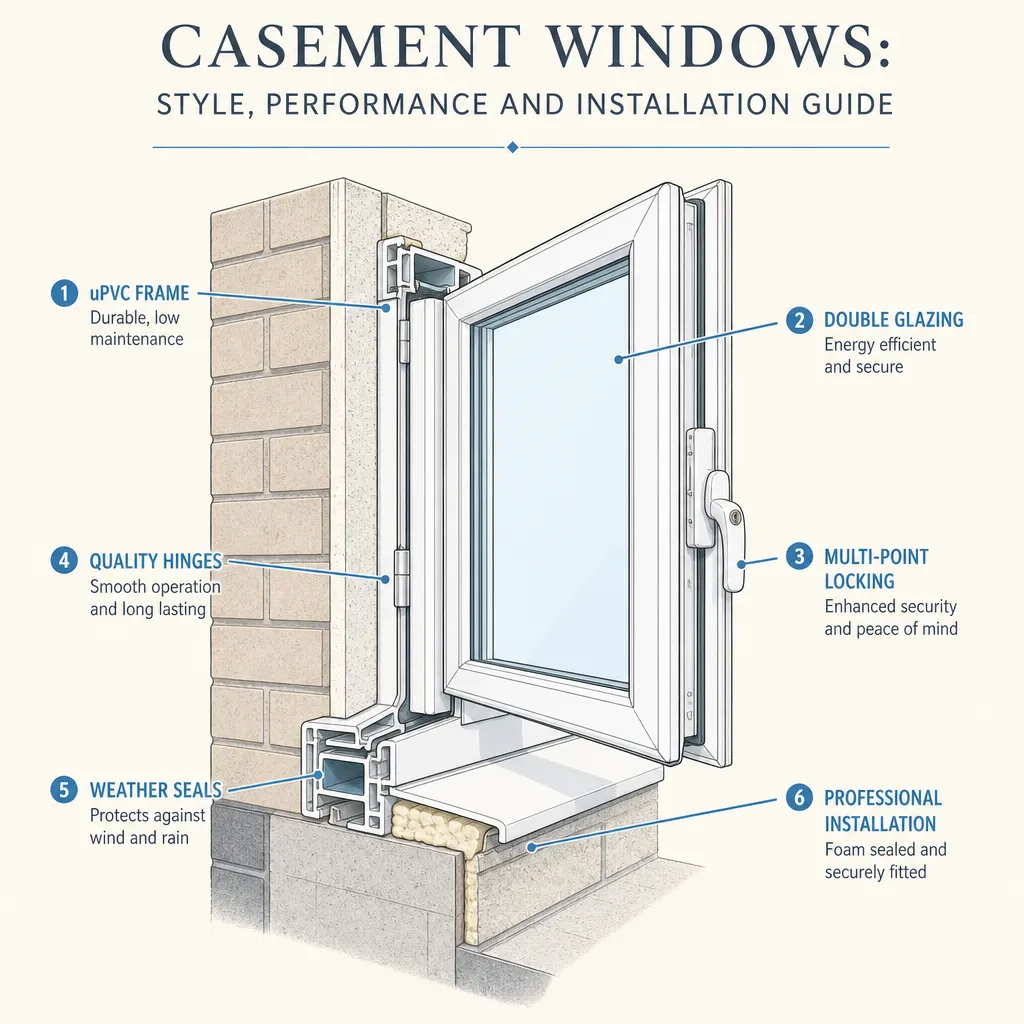
Casement Windows: Style, Performance and Installation Guide
Casement windows are hinged on one side and open outward, making them the most widely fitted window type in UK homes.
 Improvement & Build
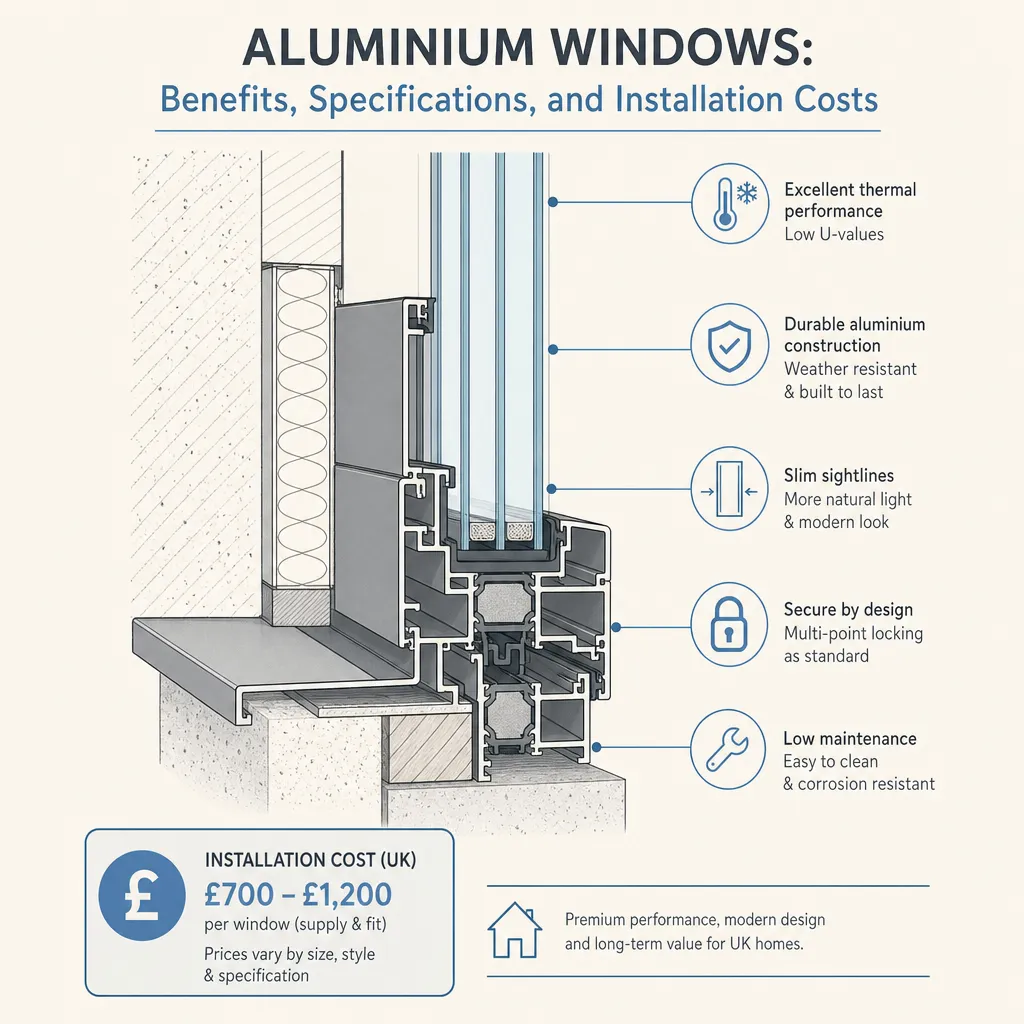
Aluminium Windows: Benefits, Specifications, and Installation Costs
Aluminium windows typically cost £600–£1,800 per window installed in the UK, depending on size and specification.
 Improvement & Build
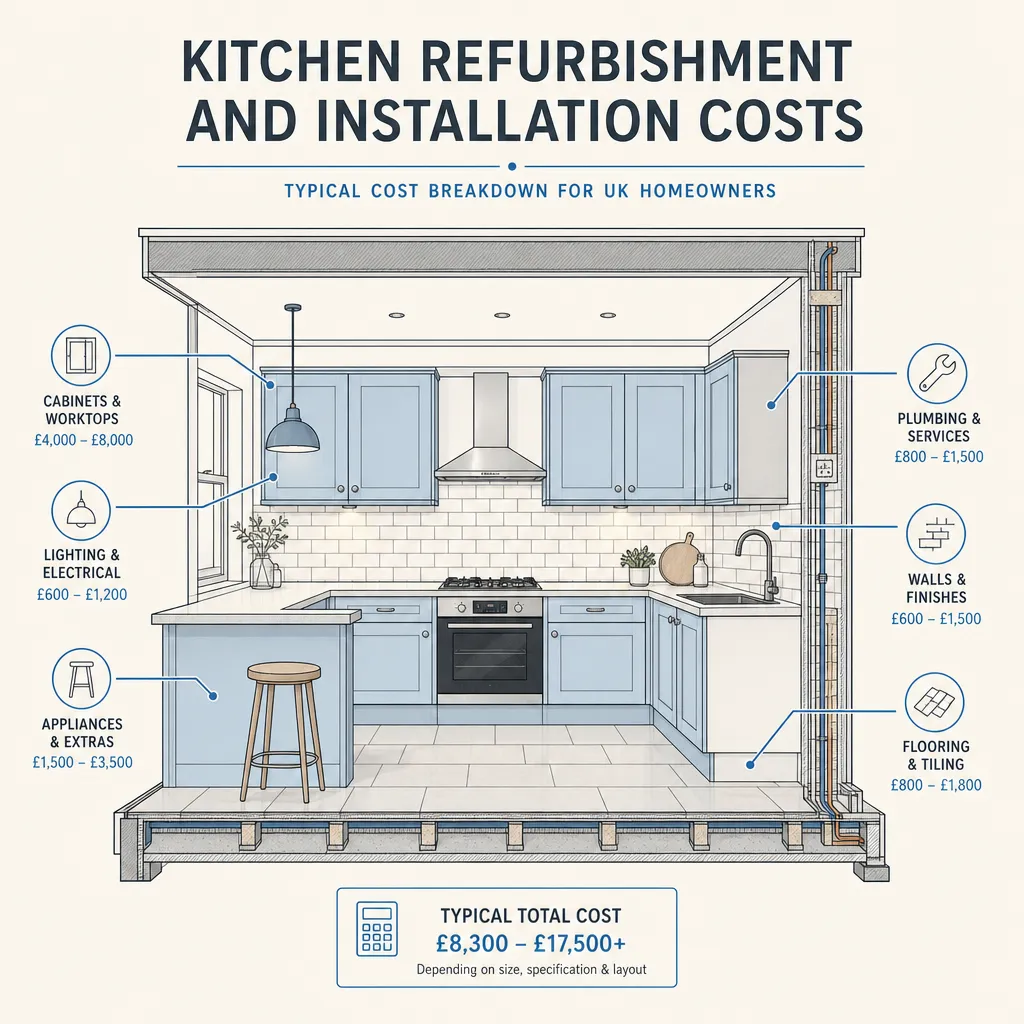
Kitchen Refurbishment and Installation Costs
A kitchen refurbishment in the UK typically costs between £3,000 and £40,000 or more, depending on whether you are replacing units only or carrying out a full design-and-build project.
 Improvement & Build
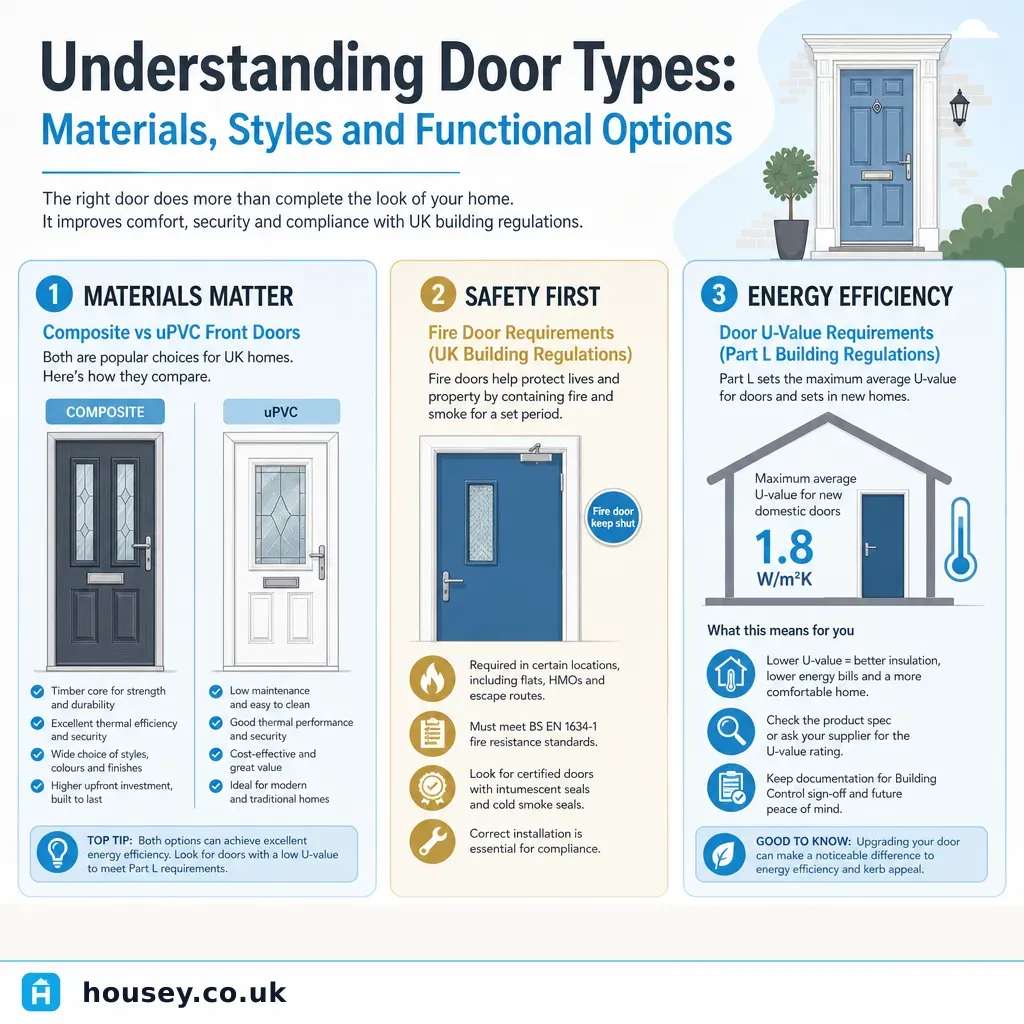
Understanding Door Types: Materials, Styles and Functional Options
Doors are available in timber, uPVC, aluminium, steel, and composite materials, each suited to different budgets, locations, and performance requirements.
 Improvement & Build
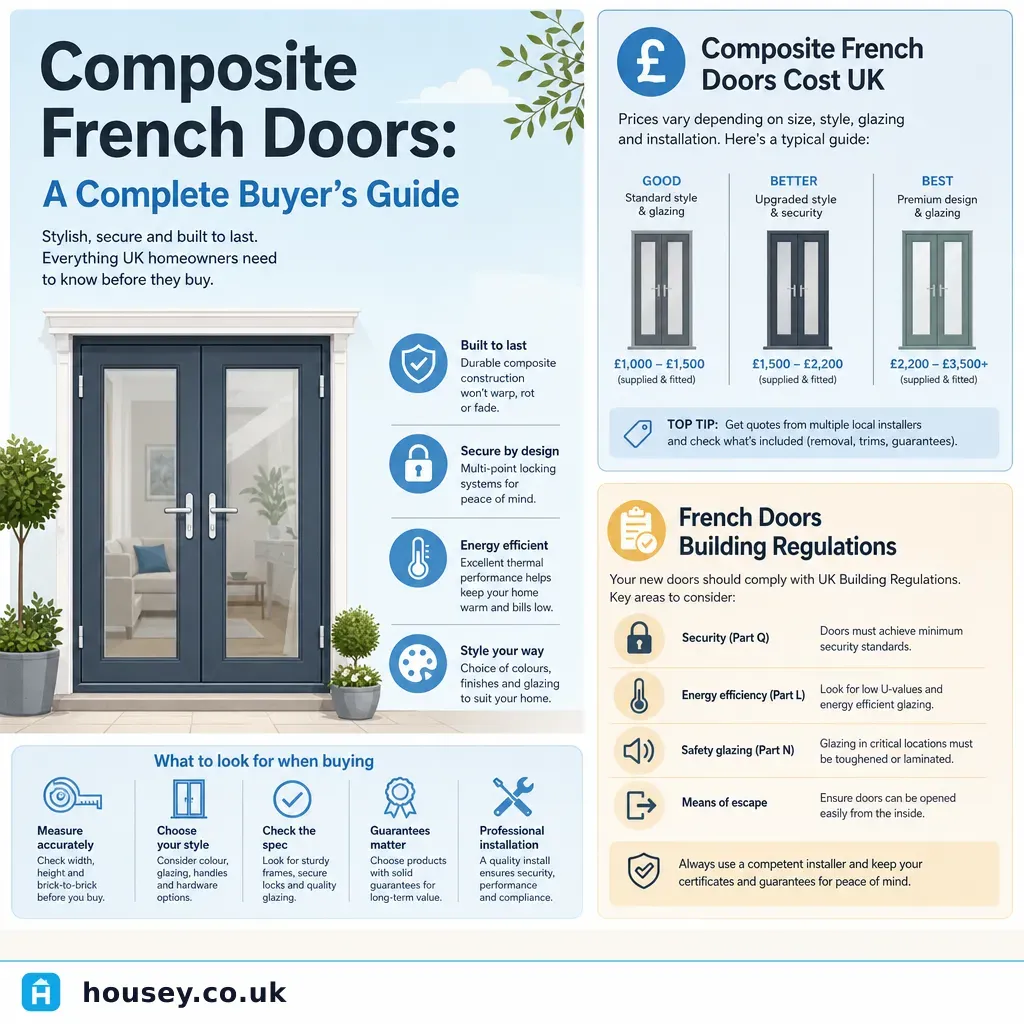
Composite French Doors: A Complete Buyer's Guide
Composite French doors combine a GRP or timber-effect outer skin with a solid insulated core, offering durability and low maintenance suited to UK weather.