Choosing the Right Driveway Gravel for Your Property
By Housey · Last reviewed 1st of June 2026
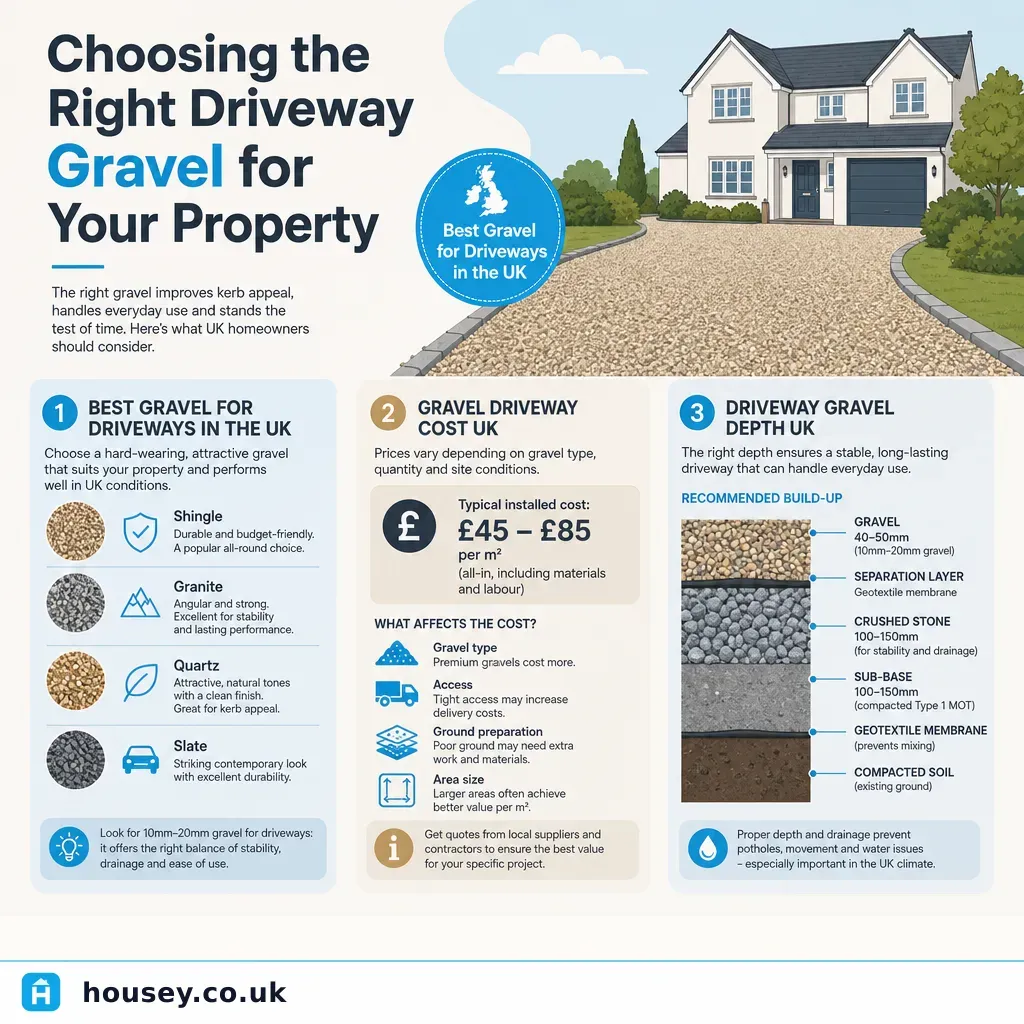
Choosing the Right Driveway Gravel for Your Property
Selecting the wrong gravel can mean a driveway that scatters onto the pavement, sinks under vehicle load, or holds surface water — all problems that become expensive to fix after installation. Whether you are laying a new driveway from scratch or resurfacing an existing one, the choice of aggregate type, depth, and sub-base preparation makes a significant difference to long-term performance and maintenance burden.
Key points
- Driveways surfacing over 5 m² in front of a house require permeable surfacing or drainage directed to a soakaway to qualify as permitted development under Schedule 2, Part 1 of the Town and Country Planning (General Permitted Development) Order 2015; loose gravel is naturally permeable and therefore usually qualifies.
- A gravel driveway typically requires 100–150 mm of compacted MOT Type 1 crushed stone sub-base before the wearing course is laid.
- The recommended depth for the gravel wearing course is 40–50 mm; too shallow causes rapid thinning, too deep makes the surface uncomfortable to walk or drive on.
- Self-binding gravel — a mix of fine aggregate, clay, and dust — compacts to a firm surface suitable for pushchairs, wheelchairs, and cyclists, unlike loose pea gravel.
- Gravel driveways generally cost £30–£60 per m² for supply and laying, though this varies significantly by region and site conditions. (Indicative UK costs, last reviewed 2026-06-01; obtain at least three quotes.)
What gravel types are available for UK driveways?
Pea gravel (pea shingle)
Pea gravel is rounded, smooth aggregate typically 10–14 mm in diameter, quarried or dredged from river and coastal deposits. It is the most widely available driveway aggregate in the UK and among the cheapest. The rounded shape means it does not interlock, so it can scatter under foot and tyre traffic and tends to migrate onto paths or lawns without adequate edging restraints.
Crushed angular gravel
Angular crushed stone — including crushed granite, limestone, and basalt — interlocks better than pea gravel because irregular edges grip each other under load. This makes it more stable underfoot and less prone to displacement. It is harder on bare feet, so it is less popular for areas used heavily by children or pets.
Self-binding gravel
A blend of small angular aggregate (usually 6–10 mm) with fine dust and clay fines. When compacted and wetted, the fines bind the surface into a semi-firm layer. Self-binding gravel is popular for heritage settings and period properties — Victorian terraces, country houses, 1930s semis — and is acceptable to many local planning authorities as a permeable, traditional-looking surface. It requires periodic re-rolling and top-dressing to maintain its bound finish.
Slate chippings
Welsh and Cumbrian slate chippings are popular for decorative driveways, characteristically blue-grey or purple-green. They are angular and do not compact tightly, making them more suitable for lower-traffic or shared pedestrian–vehicle surfaces. They can be prone to surface weathering and lichening over time.
Hoggin
Hoggin is a naturally occurring mix of clay, gravel, and sand excavated directly from gravel pits. It compacts well and was traditionally used for rural drives and farm tracks. It is harder to source in urban areas and its appearance is utilitarian, but it is economical for long, low-use rural driveways where a formal finish is not required.
Comparing driveway gravel types
Type | Best for | Not ideal for | Typical cost (supply only) | Maintenance level |
|---|---|---|---|---|
Pea gravel (10–14 mm) | Budget driveways; garden paths; low-traffic areas | High-traffic drives; steep slopes; households with young children | £50–£90 per tonne | High — needs regular raking and top-up |
Crushed angular gravel | Vehicle driveways; footpaths requiring stability | Barefoot areas; formal heritage settings | £60–£100 per tonne | Medium — more stable, less scatter |
Self-binding gravel | Heritage properties; pushchair or wheelchair access | Heavy daily vehicle traffic; waterlogged sites | £80–£130 per tonne | Medium — re-roll and top-dress annually |
Slate chippings | Decorative drives; modern or period properties | Steep slopes; high-volume vehicle areas | £90–£150 per tonne | Medium — raking, weed control |
Hoggin | Rural driveways; farm tracks; long drives on a budget | Urban or formal settings | £30–£60 per tonne | Low once compacted — resurface as needed |
(Indicative supply-only UK costs, last reviewed 2026-06-01. Delivery and laying costs are additional and vary significantly by region and access. Obtain at least three quotes before committing.)
Planning permission and permitted development
Laying a new front garden driveway or altering an existing hard surface is subject to permitted development rules. Under the TCPA 1990 as amended, a front garden driveway exceeding 5 m² is permitted development only if the surface is permeable — such as loose gravel, permeable block paving, or resin-bound aggregate — or if drainage is directed to a planted area rather than the public highway.
Loose gravel is naturally permeable, so in most cases a standard gravel driveway qualifies as permitted development without a planning application. However:
- If the property is listed or sits in a conservation area, permitted development rights may be restricted; check with your local planning authority before work begins.
- If the driveway slopes towards the public highway and rainwater run-off could cause flooding or deposit mud on the road, the LPA may require additional drainage measures.
- Article 4 Direction areas may remove standard permitted development rights; your LPA can confirm whether this applies to your address.
Sub-base and installation: what to expect
A poorly prepared sub-base is the most common cause of premature driveway failure. A competent contractor should:
- Excavate to a depth of 150–200 mm depending on soil type and expected vehicle load.
- Lay geotextile membrane to suppress weeds and prevent sub-base and gravel mixing over time.
- Compact 100–150 mm MOT Type 1 sub-base with a vibrating plate compactor.
- Install edging restraints — treated timber, concrete kerb, or steel — to prevent lateral migration of gravel.
- Spread and level gravel wearing course to 40–50 mm depth.
For self-binding gravel, the contractor should also wet and compact-roll the surface to activate the binding fines before the driveway is used.
Homeowner checklist before instructing a contractor
What to ask before accepting a quote
- What aggregate type and size is being quoted, and from which supplier?
- What sub-base depth and specification is included?
- Is a geotextile membrane included in the price?
- Are edging restraints included, and if so, what type?
- How is excavated material being removed, and is skip hire included?
- Is VAT included in the quoted figure?
- What is the expected driveway life under normal vehicle use?
- Are any workmanship guarantees offered, and for how long?
When to get professional help
Most gravel driveway installations are lower-risk projects, but seek professional input when:
- The ground is waterlogged, on heavy clay, or shows signs of movement — a groundworker can assess whether additional drainage or geotextile reinforcement is needed.
- The driveway slopes steeply towards the public highway, where water run-off management is important.
- Underground services cross the proposed driveway area and need locating before excavation begins.
- The property is listed or in a conservation area and you need to confirm planning status before ordering materials.
- You are incorporating a soakaway or French drain as part of the drainage strategy.
How Housey can help
Housey connects you with vetted driveway installers who can assess your site, recommend the right aggregate specification, and manage sub-base preparation and drainage. For sites with complex ground conditions or drainage requirements, our network of groundworkers can carry out excavation and sub-base work to the correct specification before the finishing surface is laid.
Frequently asked questions
Does a gravel driveway need planning permission?
In most cases, no. Loose gravel is naturally permeable, so a gravel driveway in front of a house usually qualifies as permitted development without a planning application. However, if your property is listed, in a conservation area, or in an Article 4 Direction area, standard permitted development rights may not apply. Always check with your local planning authority before starting work.
How deep should the gravel be on a driveway?
The wearing course should be 40–50 mm deep for a vehicle driveway. Below this, the sub-base becomes exposed quickly under traffic; deeper than 50 mm and the loose surface becomes difficult to walk and drive on comfortably. A properly compacted MOT Type 1 sub-base of 100–150 mm should sit beneath the gravel layer.
How long does a gravel driveway last?
With a well-prepared sub-base and adequate edging restraints, the gravel wearing course can last 10–20 years before significant regrading or replacement is needed. Annual maintenance — raking, weed treatment, and occasional top-dressing — extends the life considerably. Self-binding gravel surfaces may need re-rolling every two to three years to maintain their bound finish.
What size gravel is best for a driveway?
10–14 mm aggregate is the most common choice for vehicle driveways in the UK. Larger aggregates (20 mm and above) are harder to walk on and less stable under tyres; smaller aggregates (under 6 mm) tend to compact into a near-solid layer and can wash away more readily. For self-binding gravel, 6–10 mm fine-grained material is typically used.
Sources and further reading
- Permeable surfacing of front gardens: guidance for homeowners — GOV.UK (MHCLG)
- Town and Country Planning (General Permitted Development) Order 2015 — legislation.gov.uk
- Sustainable drainage for driveways and hardstandings — SusDrain (CIRIA)
- Driveways: planning guidance for homeowners — Planning Portal
Useful next reads
 Improvement & Build
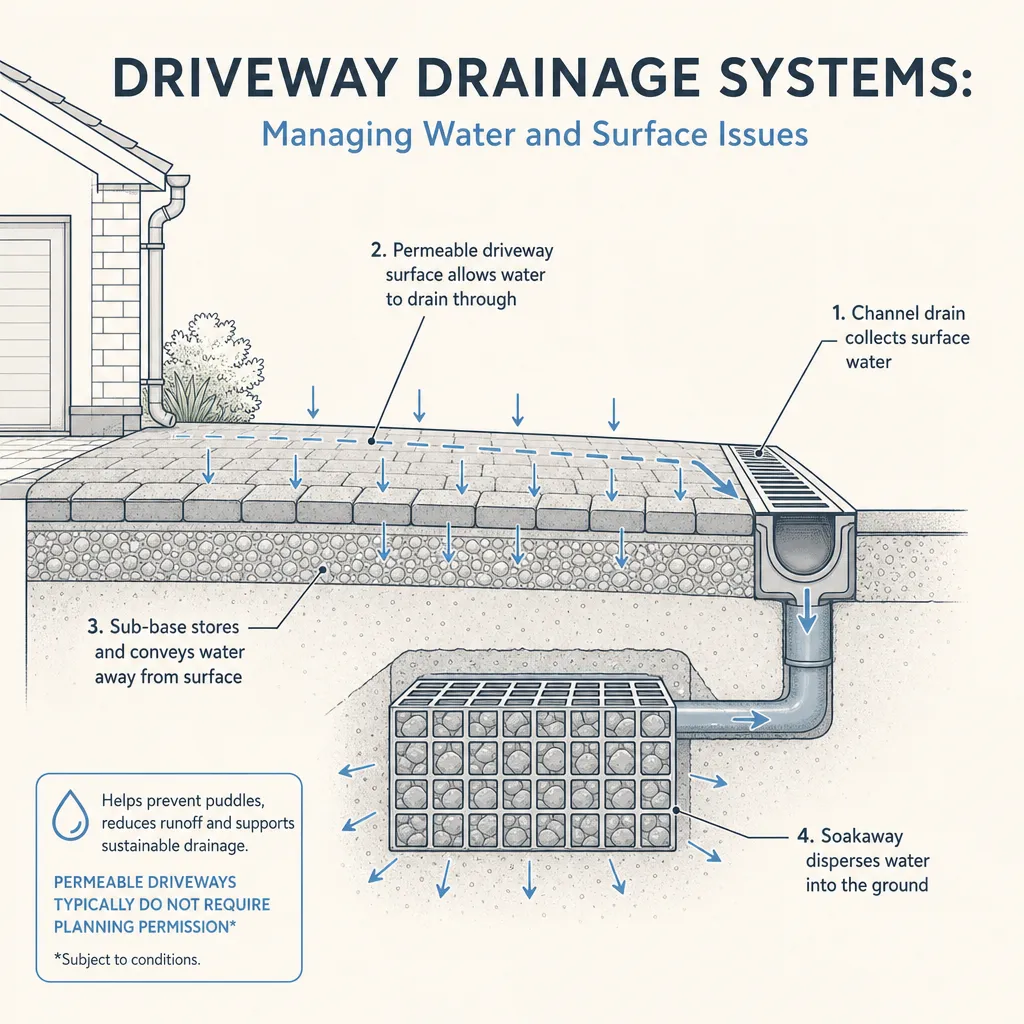
Driveway Drainage Systems: Managing Water and Surface Issues
The right driveway drainage system depends on your surface type, soil permeability, and local flood risk.
 Improvement & Build
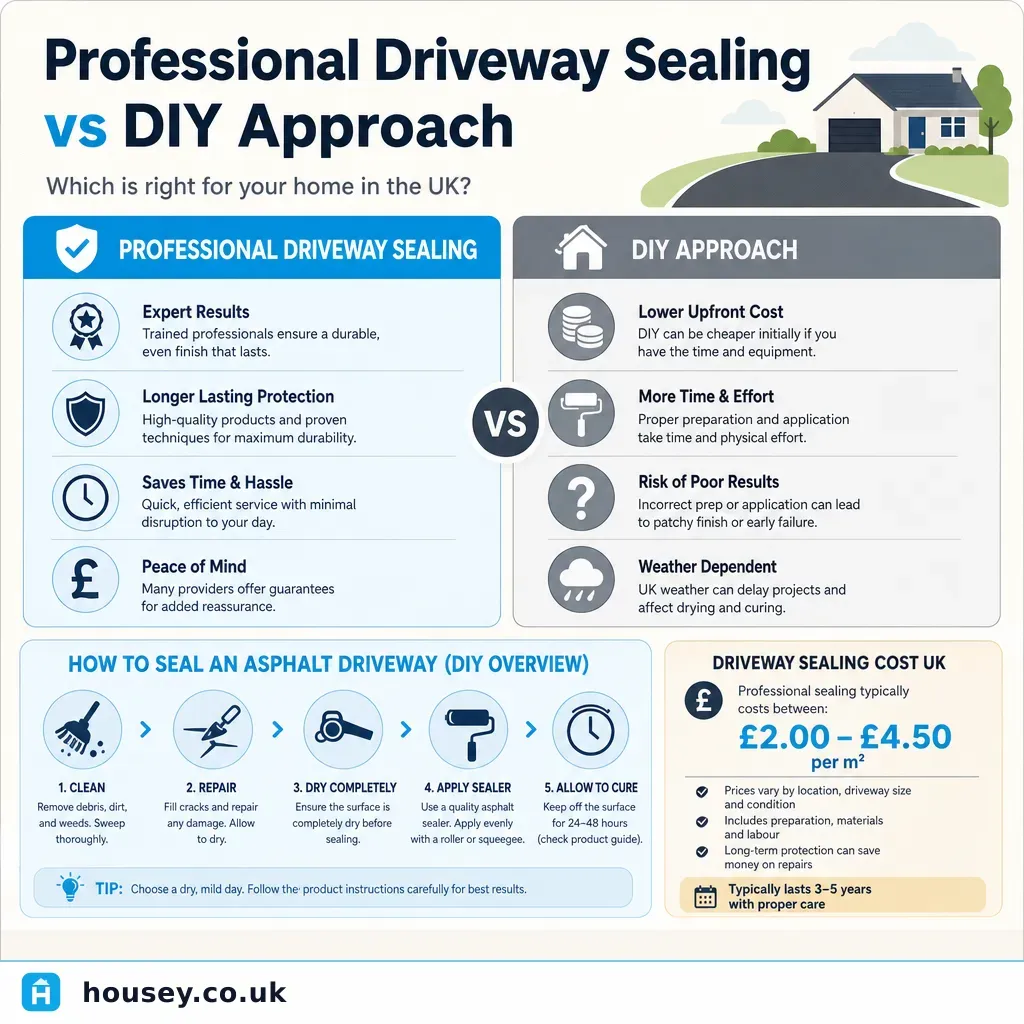
Professional Driveway Sealing vs DIY Approach
Professional driveway sealing offers a more durable, even finish using commercial-grade sealants and specialist equipment, typically costing £150 to £400 for an average drive.
 Improvement & Build
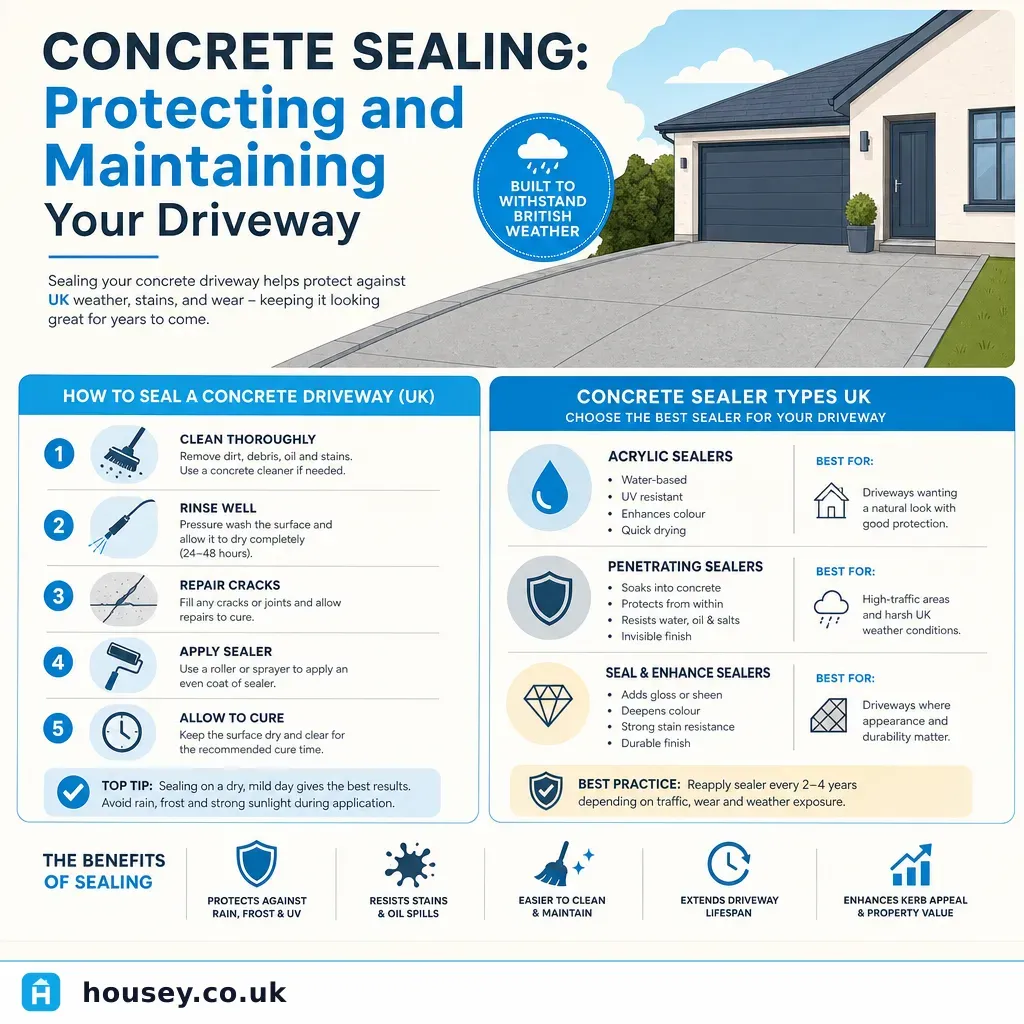
Concrete Sealing: Protecting and Maintaining Your Driveway
Sealing a concrete driveway protects against water ingress, freeze-thaw damage, oil stains, and surface wear.
 Improvement & Build
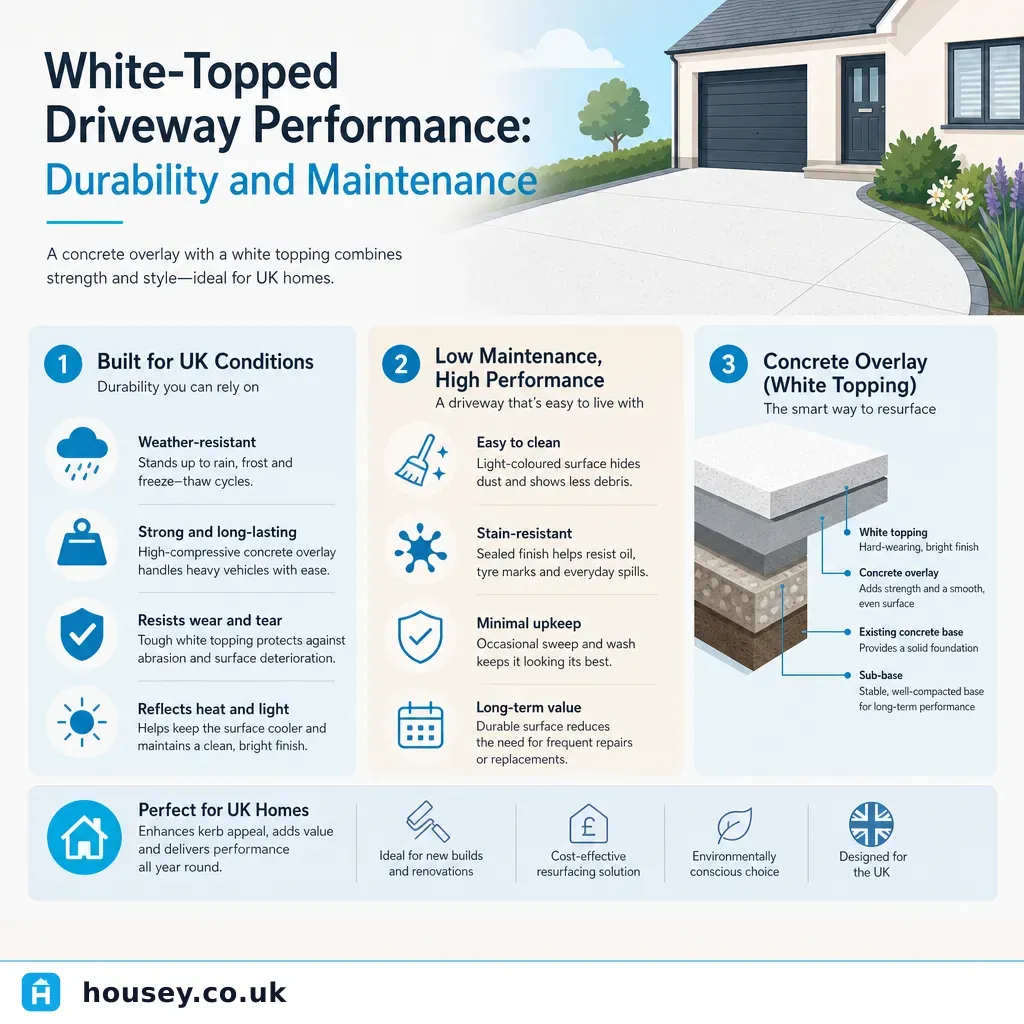
White-Topped Driveway Performance: Durability and Maintenance
A white-topped driveway uses a concrete layer placed over an existing asphalt sub-base, combining the load-spreading of asphalt with the durability of concrete.
 Improvement & Build
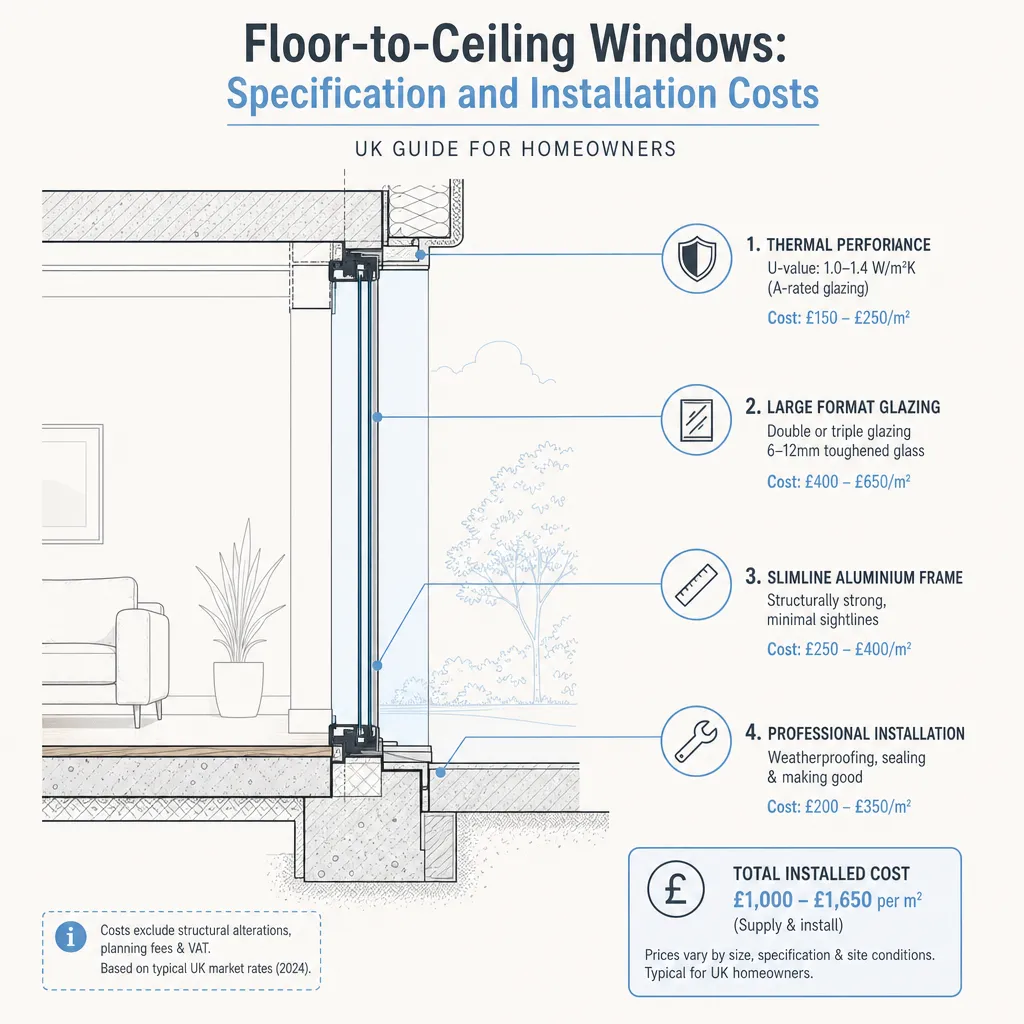
Floor-to-Ceiling Windows: Specification and Installation Costs
Floor-to-ceiling windows in the UK typically cost £1,800–£6,500 per unit installed, depending on glazing type, frame material, and whether structural alterations are needed.