Driveway Drainage Systems: Managing Water and Surface Issues
By Housey · Last reviewed 30th of May 2026
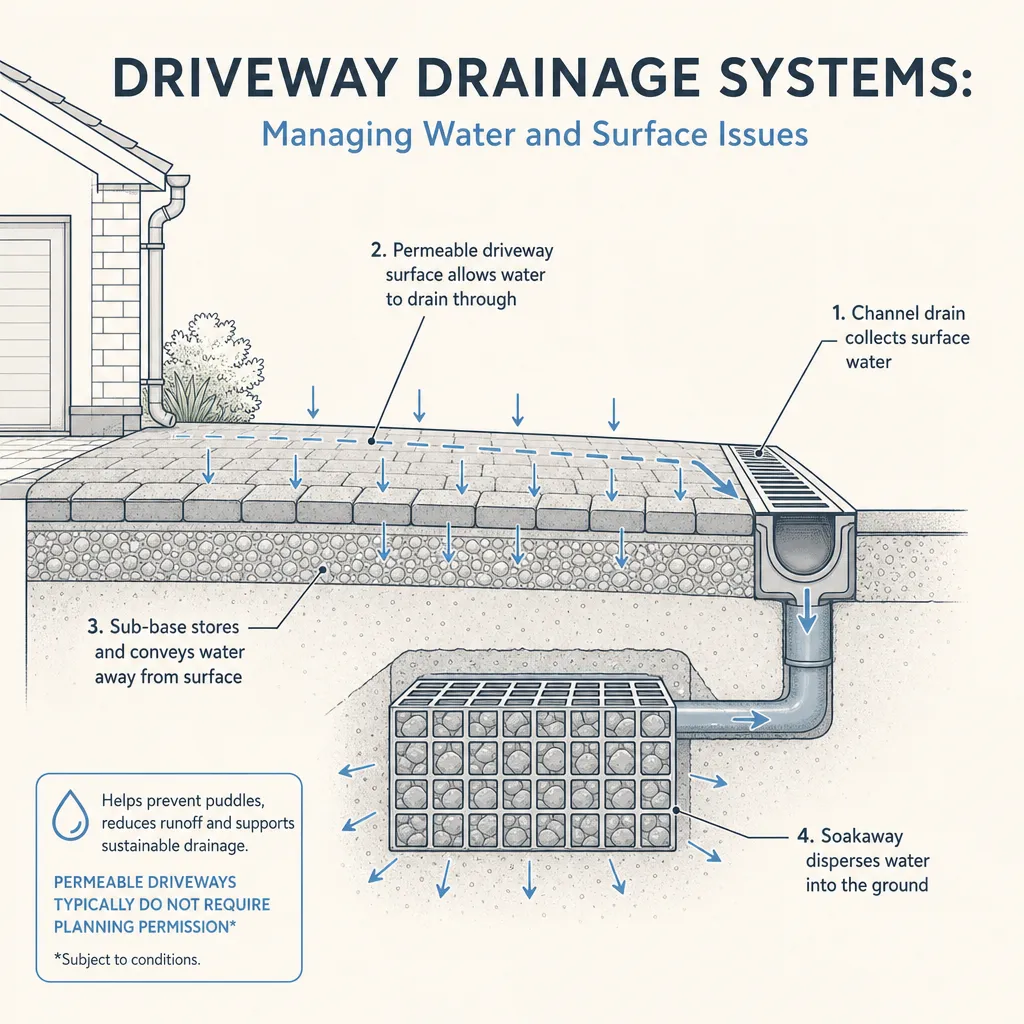
Driveway Drainage Systems: Managing Water and Surface Issues
Poorly managed surface water on a driveway is one of the most common causes of waterlogged gardens, damp garages, and — in some cases — flooded properties. Whether you are replacing an old concrete drive, extending parking for a second car, or dealing with pooling water after heavy rain, the drainage solution you choose affects not only your own property but also neighbouring land and the public highway. Since planning rules around hard standings changed in 2008, getting the drainage right is also a matter of legal compliance, not just convenience.
Key points
- In England, laying more than 5m² of impermeable surface to the front of a house requires planning permission unless surface water drains to a lawn, border, permeable area, or soakaway — this requirement comes from the Town and Country Planning (General Permitted Development) (Amendment) (No. 2) (England) Order 2008.
- Permeable surfaces such as resin-bound gravel, permeable block paving, and loose gravel are classified as Permitted Development for front driveways regardless of size, provided other PD conditions are met.
- Soakaways must be sited at least 5 metres from any building or road and are unsuitable in areas with a high water table or within Flood Zones 2 or 3 — check the Environment Agency's Flood Map for Planning before specifying one.
- Building Regulations Approved Document H governs surface water drainage design, including soakaway sizing (calculated using BRE Digest 365) and connections to public sewers.
- Connecting a new driveway drain directly to the public sewer without consent from your sewerage undertaker is an offence under the Water Industry Act 1991; always obtain written agreement from the relevant company first.
Types of driveway drainage system
The right drainage system depends on your driveway's size, gradient, soil type, and proximity to buildings and boundaries.
Channel and linear drains
Channel drains (also called slot drains or trench drains) are recessed into the driveway surface, usually at the base of a slope or across the entrance apron. Surface water runs into the channel and is piped away. They are effective on steeply sloped driveways and in front of garage thresholds where water would otherwise pond against the door.
Channel drain installations typically connect to one of the following: a soakaway — a rubble-filled or geocellular chamber that disperses water into the surrounding ground; a surface water sewer, but only with prior written consent from the sewerage undertaker; or an existing drainage system, subject to a capacity assessment.
Soakaways
A soakaway is an underground structure — traditionally a rubble-filled pit, now more commonly a geocellular plastic crate system — that allows water to infiltrate the surrounding soil over time. They are cost-effective and avoid the need for a sewer connection, but they are unsuitable in:
- Clay-heavy soils with poor permeability
- Areas with a seasonal high water table
- Flood Zone 2 or 3 locations
- Within 5 metres of any building, road, or boundary
BRE Digest 365 sets out the method for sizing a soakaway based on site percolation tests. Your contractor should carry these tests out before specifying soakaway volume — guessing the size is a common cause of system failure.
Permeable surfaces
Using a permeable surface — loose gravel, resin-bound aggregate, or permeable block paving laid on an open-graded sub-base — allows water to pass through the surface itself and disperse into the sub-base, reducing or eliminating the need for a separate drainage run. In England, this is the most planning-straightforward option for front driveways because permeable surfaces qualify as Permitted Development regardless of area size.
Surface type | Permeability | Planning position (front of house, England) | Typical maintenance |
|---|---|---|---|
Loose gravel | High | Permitted Development | Raking; top-up every 3–5 years |
Resin-bound aggregate | High (porous binder) | Permitted Development | Occasional jet wash |
Permeable block paving | High (open joints) | Permitted Development | Annual joint top-up |
Solid block paving | Impermeable | PD only if ≤5m² or drainage to lawn/soakaway | Low if draining correctly |
Tarmac or concrete | Impermeable | PD only if ≤5m² or drainage to lawn/soakaway | Sealing every 5–7 years |
French drains
A French drain is a perforated pipe laid in a gravel-filled trench alongside or beneath the driveway to intercept and redirect groundwater or surface runoff. They are particularly useful on sloped sites where water migrates across from neighbouring ground, or to protect garage foundations from lateral groundwater ingress. They are often used in combination with a soakaway rather than as a standalone solution.
Which drainage system should you choose?
- Choose permeable surfacing if you want the simplest planning position, your soil has reasonable permeability, and you are comfortable with the available finish options.
- Choose a channel drain to soakaway if your driveway surface is impermeable, sloped, and your soil can support infiltration — confirm drainage capacity with a percolation test before specifying.
- Choose a channel drain to sewer if your soil is clay-heavy or the water table is high — obtain written consent from your sewerage undertaker before any connection work begins.
- Choose a French drain if your primary problem is lateral groundwater ingress rather than surface ponding.
- Ask a drainage contractor or groundworker if your property is in a flood zone, if a neighbour's surface water is crossing your land, or if existing drains are blocked or of unknown condition.
- Check with your local planning authority if your property is in a conservation area or is listed — additional restrictions may apply beyond the standard PD rules.
Planning permission and Building Regulations
In England, the 2008 amendment to the General Permitted Development Order means that impermeable hard standings over 5m² to the front of a dwelling require planning permission unless surface water is managed sustainably. Wales and Scotland have separate planning frameworks — check with your local planning authority before starting any work.
Building Regulations (Approved Document H) apply to new drainage connections regardless of whether planning permission is needed. If your drainage discharges to a public sewer, your sewerage undertaker may also need to inspect and formally approve the connection point before you proceed.
Driveway drainage costs
Indicative UK costs, last reviewed 2026-05-30. Actual costs vary by region, site access, ground conditions, and specification — obtain at least three quotes.
System | Indicative installed cost range |
|---|---|
Single channel drain (3m run) to soakaway | £600–£1,500 |
Soakaway (geocellular, average residential) | £800–£2,000 |
French drain (10m run) | £1,000–£2,500 |
Full permeable resin-bound driveway (50m²) | £3,500–£7,000 |
Permeable block paving (50m²) | £4,000–£8,000 |
These figures cover materials and labour but exclude planning application fees, sewer connection charges, or CCTV surveys of existing drains.
What to check before getting quotes
- Percolation test results — has the ground actually been tested for drainage capacity, or is the contractor guessing?
- Flood zone — check the Environment Agency's Flood Map for Planning to confirm your property is not in Flood Zone 2 or 3.
- Existing drains — are any existing drains on the plot functional, or do they need a CCTV survey before the new system is designed?
- Sewerage undertaker consent — if a sewer connection is proposed, has consent been formally applied for?
- Planning position — has the contractor confirmed in writing whether planning permission is required for your specific site and surface type?
- Building Regulations — will the contractor notify building control, or must you arrange this separately?
- Workmanship guarantee — what guarantee does the contractor offer, and is it backed by insurance?
When to get professional help
Most driveway drainage work should be carried out by an experienced drainage contractor or groundworker. Surface water management involves calculations, Building Regulations compliance, and potentially sewer connection agreements that go well beyond straightforward DIY. Seek professional help if:
- Water is pooling against your house wall, garage, or a neighbour's boundary
- Your property is in or near Flood Zone 2 or 3
- Existing drains are blocked, collapsed, or of unknown origin
- Your neighbour's surface water appears to be flowing across your land
- You are planning an impermeable surface over 5m² to the front of your property
How Housey can help
Housey connects you with vetted drainage contractors, driveway installers, and groundworkers who can survey your site, confirm the right system for your drainage conditions, and manage Building Regulations compliance from start to finish. Describe your project and compare quotes from local specialists.
Frequently asked questions
Do I need planning permission to add drainage to my driveway?
Not always. If you are laying a permeable surface, no planning permission is needed in England regardless of size, subject to other Permitted Development conditions. If the surface is impermeable and covers more than 5m² at the front of your home, you will generally need planning permission unless surface water is managed sustainably — for example, directed to a lawn or soakaway.
Can I connect a driveway drain to the public sewer?
Only with written consent from your sewerage undertaker. Connecting to a public sewer without consent is an offence under the Water Industry Act 1991. Your contractor should apply to the relevant water company on your behalf before any connection is made. Some undertakers charge a connection fee; ask for this to be itemised in any quote.
How deep does a soakaway need to be?
Depth depends on percolation test results and the volume of water to be handled, calculated using BRE Digest 365. As a general guide, the base of the soakaway should sit at least 1 metre above the seasonal high water table. Your drainage contractor should carry out percolation tests before specifying soakaway dimensions.
What is the difference between a soakaway and a French drain?
A soakaway is a pit or chamber that holds water and allows it to gradually infiltrate the soil below. A French drain is a perforated pipe in a gravel-filled trench that intercepts and redirects water laterally to a discharge point. The two are often used together — the French drain collects groundwater migrating across a site and directs it to the soakaway for dispersal.
Sources and further reading
- Paving your front garden — GOV.UK
- Approved Document H: Drainage and waste disposal — Ministry of Housing, Communities & Local Government
- Flood Map for Planning — Environment Agency
- Planning Portal: Driveways and dropped kerbs — Planning Portal
- BRE Digest 365: Soakaway design — BRE Group
Useful next reads
 Improvement & Build
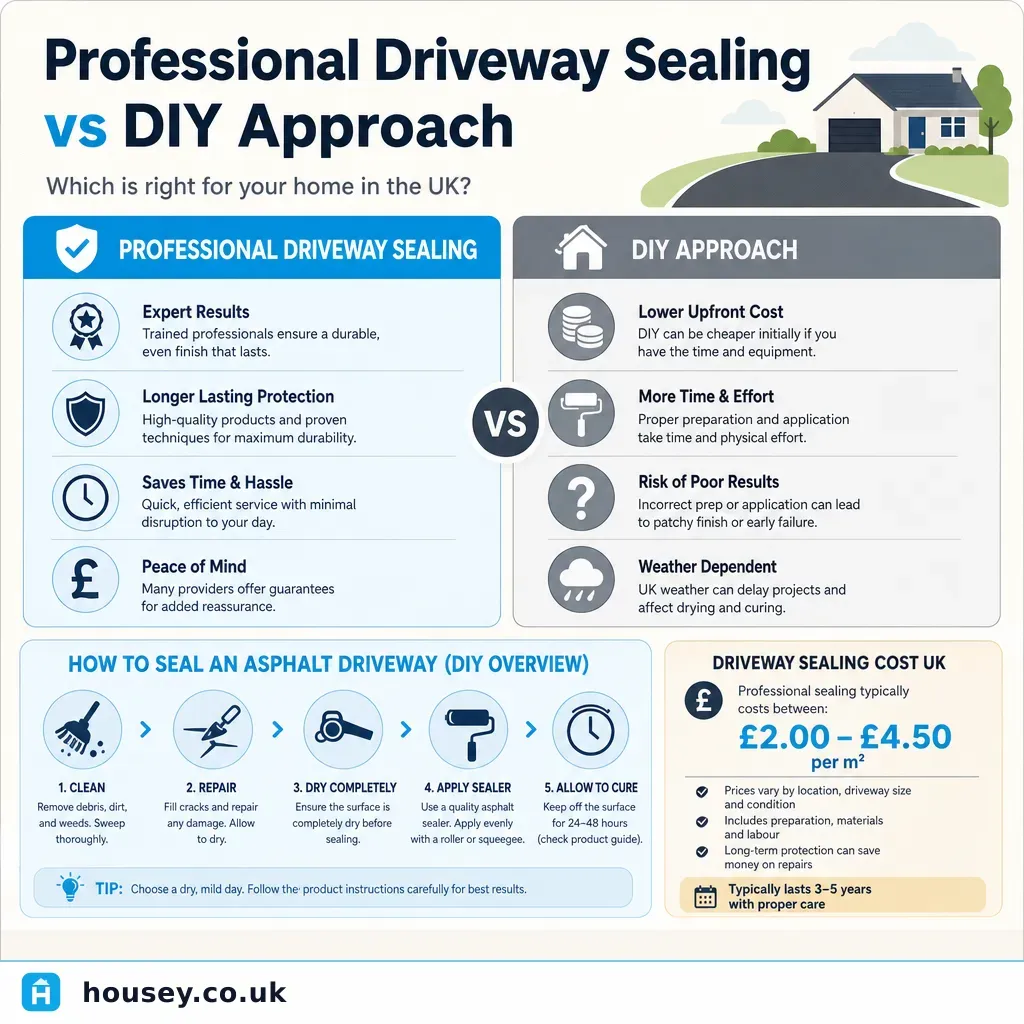
Professional Driveway Sealing vs DIY Approach
Professional driveway sealing offers a more durable, even finish using commercial-grade sealants and specialist equipment, typically costing £150 to £400 for an average drive.
 Improvement & Build
Concrete Sealing: Protecting and Maintaining Your Driveway
Sealing a concrete driveway protects against water ingress, freeze-thaw damage, oil stains, and surface wear.
 Improvement & Build
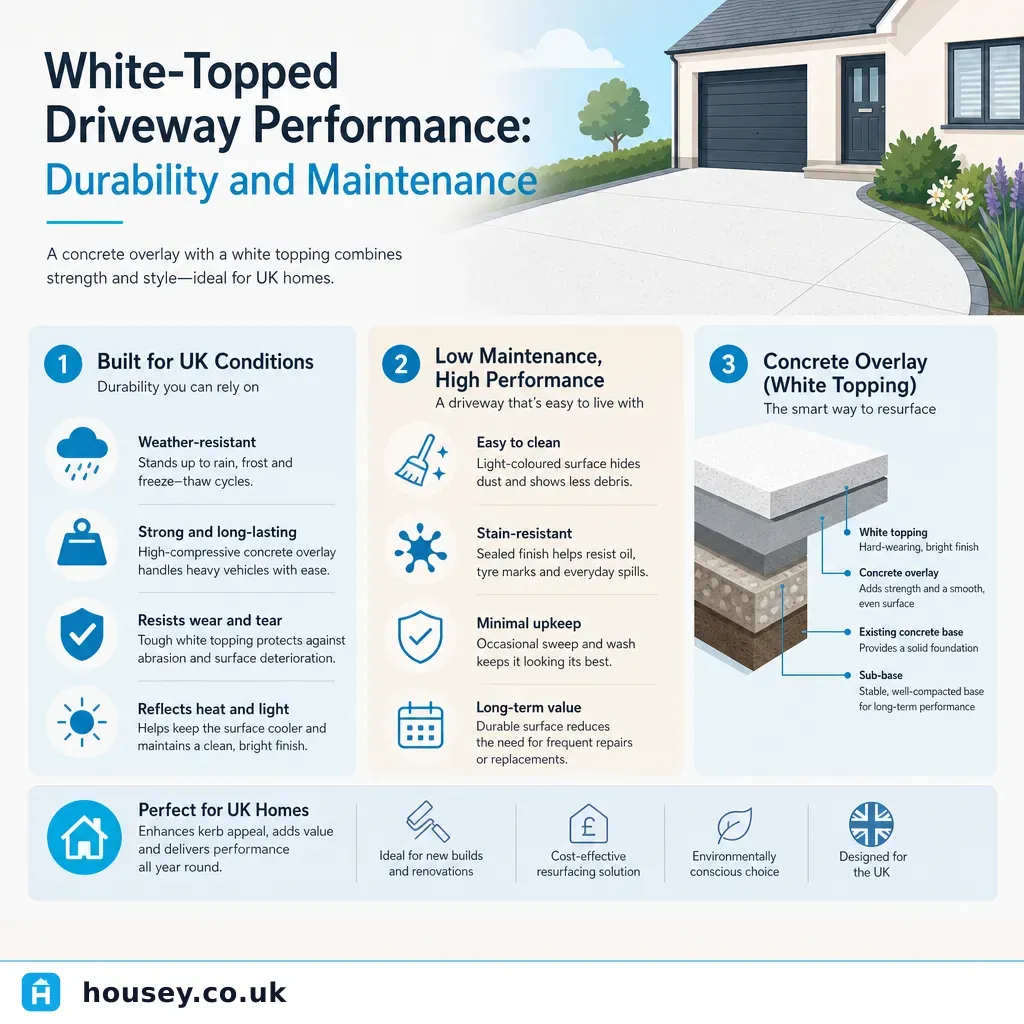
White-Topped Driveway Performance: Durability and Maintenance
A white-topped driveway uses a concrete layer placed over an existing asphalt sub-base, combining the load-spreading of asphalt with the durability of concrete.
 Improvement & Build
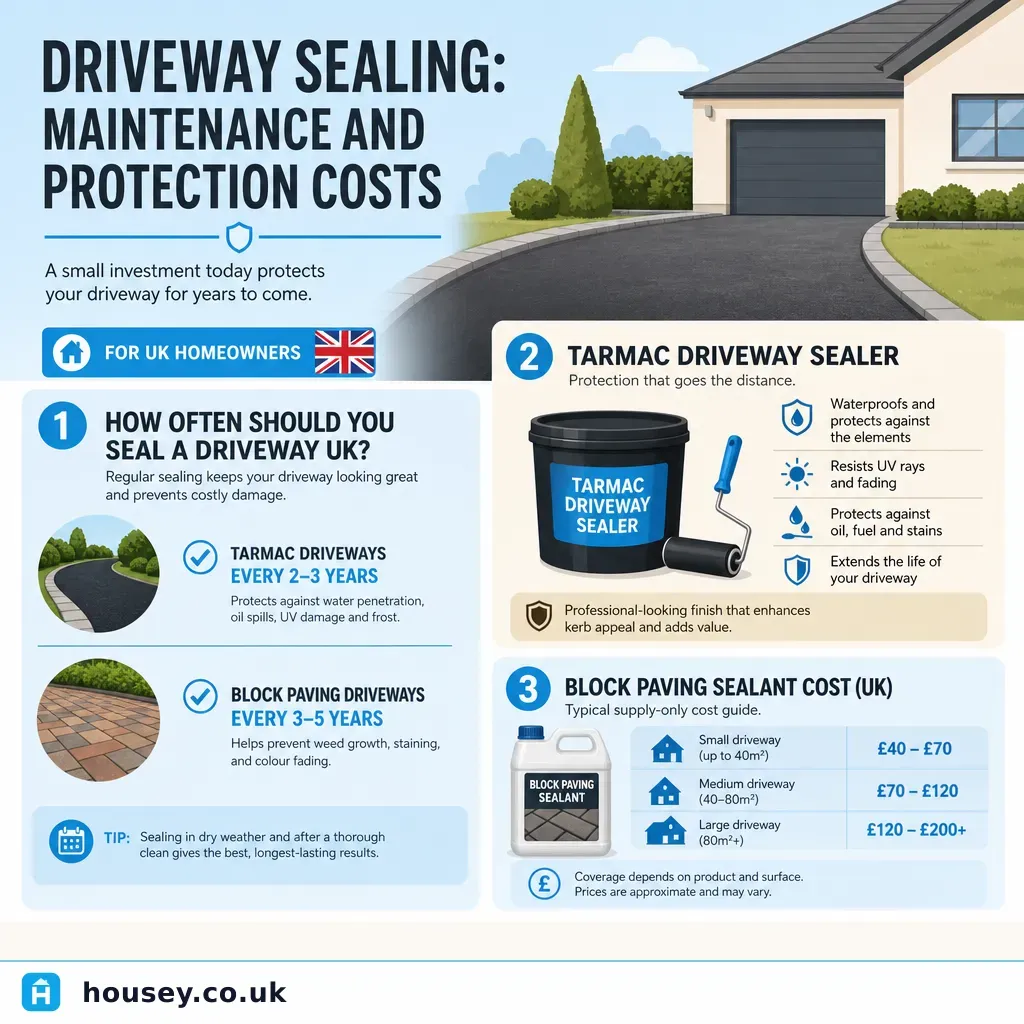
Driveway Sealing: Maintenance and Protection Costs
Sealing a driveway typically costs £3–£8 per m² in the UK, depending on the surface material, area size, and condition.
 Improvement & Build
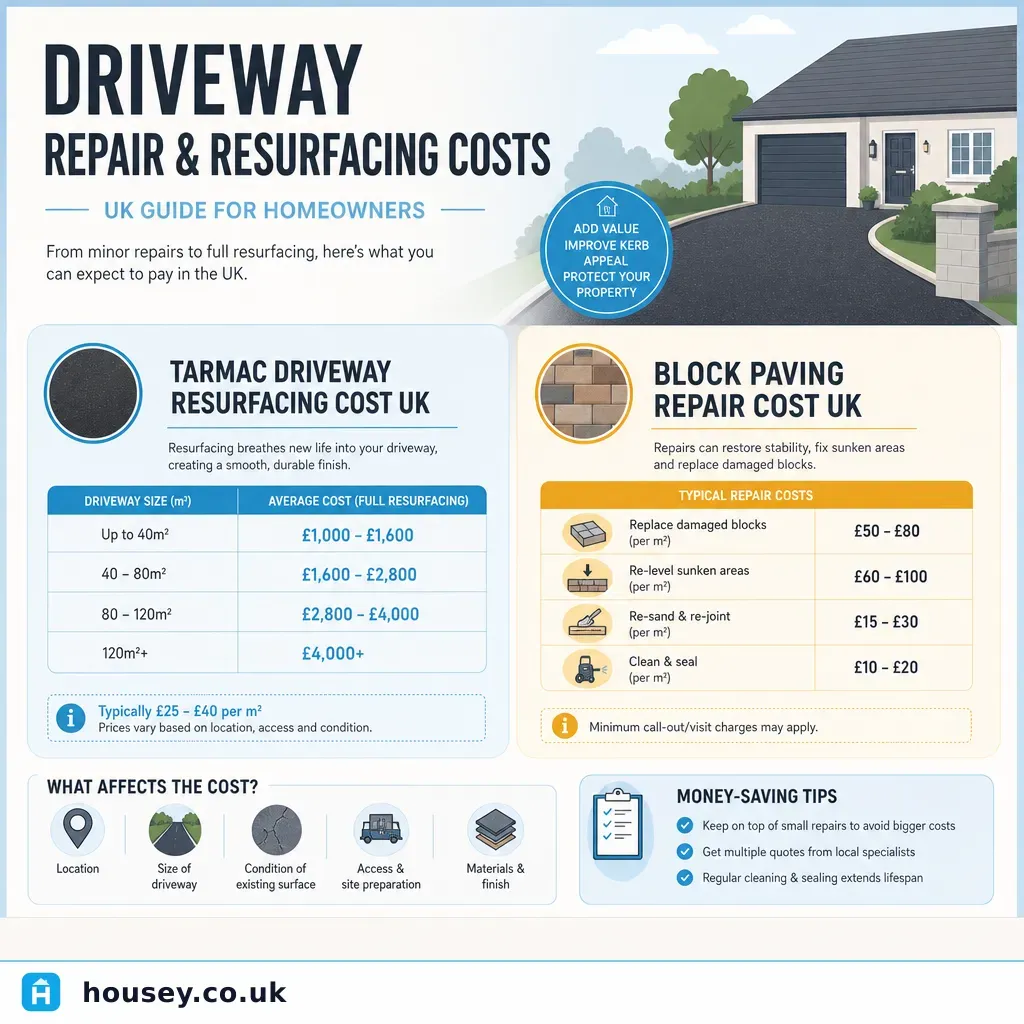
Driveway Repair and Resurfacing Costs
Driveway repair costs in the UK range from around £150 for a single pothole patch to £5,000–£12,000 or more for a full dig-out and replacement on a double driveway.