Professional Driveway Sealing vs DIY Approach
By Housey · Last reviewed 11th of May 2026
Professional Driveway Sealing vs DIY Approach
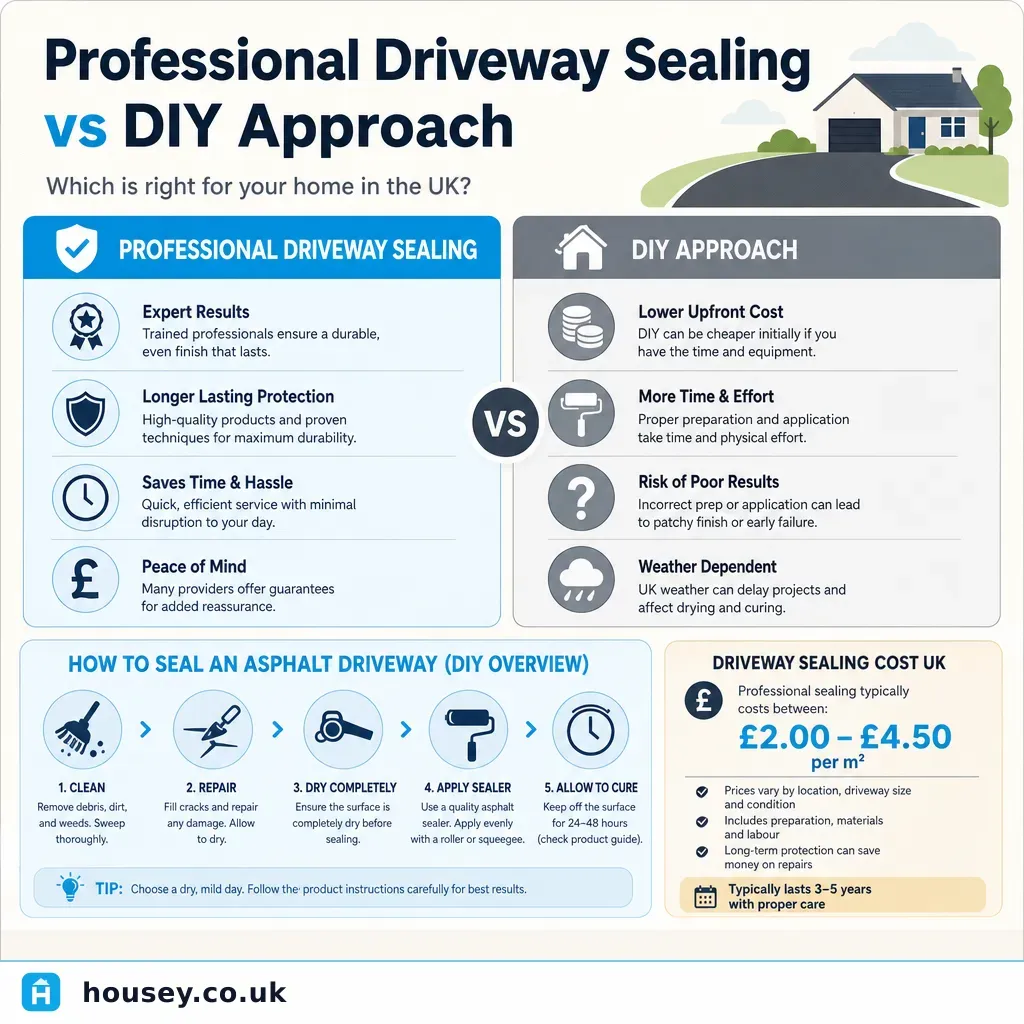
Driveway sealing is a maintenance task most UK homeowners consider at some point — usually when an asphalt (tarmac) surface begins to fade, crack, or become porous, or when block paving loses its jointing compound and weeds start appearing in the gaps. The choice between hiring a professional and tackling it yourself is not simply a cost calculation: the surface material, its current condition, and the thoroughness of preparation all determine whether the result will last two years or seven.
Key points
- Sealant products for asphalt (tarmac) and block paving are different — applying the wrong product, or sealing an inadequately prepared surface, can cause premature failure or create a dangerously slippery finish.
- Surface preparation — cleaning, crack filling, and re-jointing block paving where needed — has a greater impact on a sealant's durability than the product itself; most DIY failures begin with insufficient preparation.
- Professional-grade sealants are typically solvent-based or modified-bitumen compounds not available in consumer retail quantities; most DIY products are water-based acrylic emulsions.
- A new asphalt driveway should generally be left for 6–12 months to cure before any sealant is applied, to allow volatile compounds in the binder to dissipate.
- Indicative UK costs for professional sealing on a 40–60 m² drive: £150–£400; DIY product costs for the same area: £30–£80, with additional spend if equipment hire is needed. (Indicative UK costs, last reviewed 2026-05-11; quotes vary by region and contractor.)
Professional vs DIY: a comparison
Factor | Professional sealing | DIY sealing |
|---|---|---|
Sealant type | Commercial-grade, often solvent-based or bitumen-modified | Retail water-based acrylic emulsion |
Surface preparation | Specialist cleaning equipment; crack repair typically included | Manual cleaning; preparation quality varies |
Application finish | Even coat from trained operatives | Variable — streaking and thin spots possible |
Curing time before vehicle use | 24–48 hours (typical) | 24–72 hours depending on product |
Expected durability | 5–7 years (quality application) | 2–4 years |
Typical cost (40–60 m²) | £150–£400 | £30–£80 for products |
Workmanship guarantee | Many contractors offer 1–3 years | None |
Best for | All drive sizes; surfaces with existing damage | Small, structurally sound drives in good condition |
Indicative UK costs, last reviewed 2026-05-11.
When does professional sealing make sense?
Consider hiring a professional when:
- The driveway is larger than 30–40 m² — product costs and the effort of even application begin to approach the price of professional quotes, and consistent coverage becomes harder to achieve.
- There are visible cracks, spalling, or minor potholes — professionals can carry out cold or hot-patch asphalt repair as part of the same visit.
- Oil staining covers a significant area — professional hot-water or chemical degreasing equipment removes contamination that consumer-grade pressure washers often cannot.
- You want a written workmanship guarantee.
- The surface is block paving that needs re-jointing with polymeric compound or kiln-dried sand before sealing — best done as a combined operation.
- The driveway is resin-bound, exposed aggregate, or pattern-imprinted concrete — these surfaces require specialist products and application techniques that are not suited to DIY.
When might DIY sealing be appropriate?
DIY sealing can produce acceptable results when:
- The driveway is small (under 20–25 m²) and structurally sound with no significant cracking or subsidence.
- The surface is in good condition — moss and algae treated, clean, and fully dry.
- You are prepared to do thorough preparation: power washing, allowing the surface to dry for at least 24–48 hours, filling hairline cracks with an appropriate filler, and applying in suitable conditions (above 10°C, dry weather forecast for 24–48 hours).
- You accept a shorter re-application interval — typically every 2–4 years rather than the 5–7 years a quality professional application can achieve.
Decision tree: which approach suits your driveway?
- Choose professional sealing if the drive is over 30 m², has visible damage, oil staining, or has never been sealed before.
- Choose professional sealing if the surface is resin-bound, exposed aggregate, or pattern-imprinted concrete — specialist products apply.
- Consider DIY if the drive is small, recently installed or recently sealed, structurally sound, and you are confident in carrying out thorough surface preparation.
- Always get a contractor to assess first if the driveway shows signs of subsidence, significant cracking, or drainage problems — sealing over a failing base will not resolve underlying issues and will fail quickly.
- Ask a block paving specialist if your drive needs re-jointing — combining re-jointing and sealing in a single professional visit is more cost-effective than doing them separately.
What to ask before accepting a professional quote
- What sealant product will you use, and is it solvent-based or water-based?
- Is surface cleaning and crack repair included in the price, or costed separately?
- How long will the driveway need to be off limits after application?
- Do you provide a workmanship guarantee, and what does it cover?
- Is VAT included in the quoted price?
- Can you provide evidence of public liability insurance?
- Will block paving re-jointing be carried out before sealing, and is that included in the quote?
Red flags when hiring a driveway sealing contractor
- Cold-call or doorstep selling with pressure to accept on the spot — this is a well-documented pattern in driveway trade scams. Walk away and source a contractor independently.
- A quote based on leftover material from a nearby job rather than a specified product purchased for your driveway.
- No written quote detailing the product name, coverage area, and method of application.
- Requests for full payment upfront before any work is completed.
- No evidence of public liability insurance when asked.
When to get professional help
Consult a professional driveway contractor or surfacing specialist if:
- The surface has significant cracking, potholes, or areas of subsidence — sealant alone will not remedy structural failure and may conceal problems that worsen over time.
- Water pools on the driveway surface after rain — this may indicate incorrect drainage falls, which is a construction issue that sealing will not address.
- You are unsure whether your existing surface is suitable for sealing or whether it has reached the point of needing partial or full resurfacing.
How Housey can help
Housey can connect you with local driveway installers and maintenance contractors who can assess your surface condition, recommend the right product for your driveway type, and provide a written quote for professional sealing, re-jointing, or repair.
Frequently asked questions
How often should a driveway be sealed?
For asphalt driveways, a quality professional application typically lasts 5 to 7 years; DIY applications may need repeating every 2 to 4 years. Condition-based assessment is more reliable than a fixed interval — inspect annually and reseal when the surface shows porosity or fading. Block paving jointing compound may need refreshing every 3 to 5 years regardless of sealing.
Does sealing a driveway affect planning permission?
Sealing an existing driveway does not normally require planning permission. However, if you are replacing or significantly extending hard-standing over 5 m² with an impermeable surface in England, planning permission may be required unless the surface drains to a lawned area or adequate soakaway. Check with your local planning authority if changes could affect surface drainage.
Can I seal a driveway in cold weather?
Most sealant products require a minimum ambient and surface temperature of 10°C to cure correctly, and should not be applied if rain is forecast within 24 hours. Applying in cold or damp conditions is the most common cause of premature DIY sealant failure — the product cannot cure properly and may peel, blister, or discolour within months.
Is sealing the same for block paving as for asphalt?
No — the products and processes differ. Block paving sealants are typically impregnating sealers that lock in jointing sand and protect individual blocks. Asphalt sealants are bitumen-based surface coatings. Applying an asphalt sealant to block paving — or vice versa — can cause damage to the surface and will not perform as intended.
Sources and further reading
- Planning Portal: Hard Standings — When planning permission applies to driveways and hard-standing areas in England.
- GOV.UK: When is permission required? — Overview of when hard-standing changes require planning permission.
- British Association of Landscape Industries (BALI) — UK trade body for landscape and driveway contractors; member search available online.
- Citizens Advice: Your rights when buying services — Rights when hiring contractors and dealing with poor workmanship.
Useful next reads
 Improvement & Build
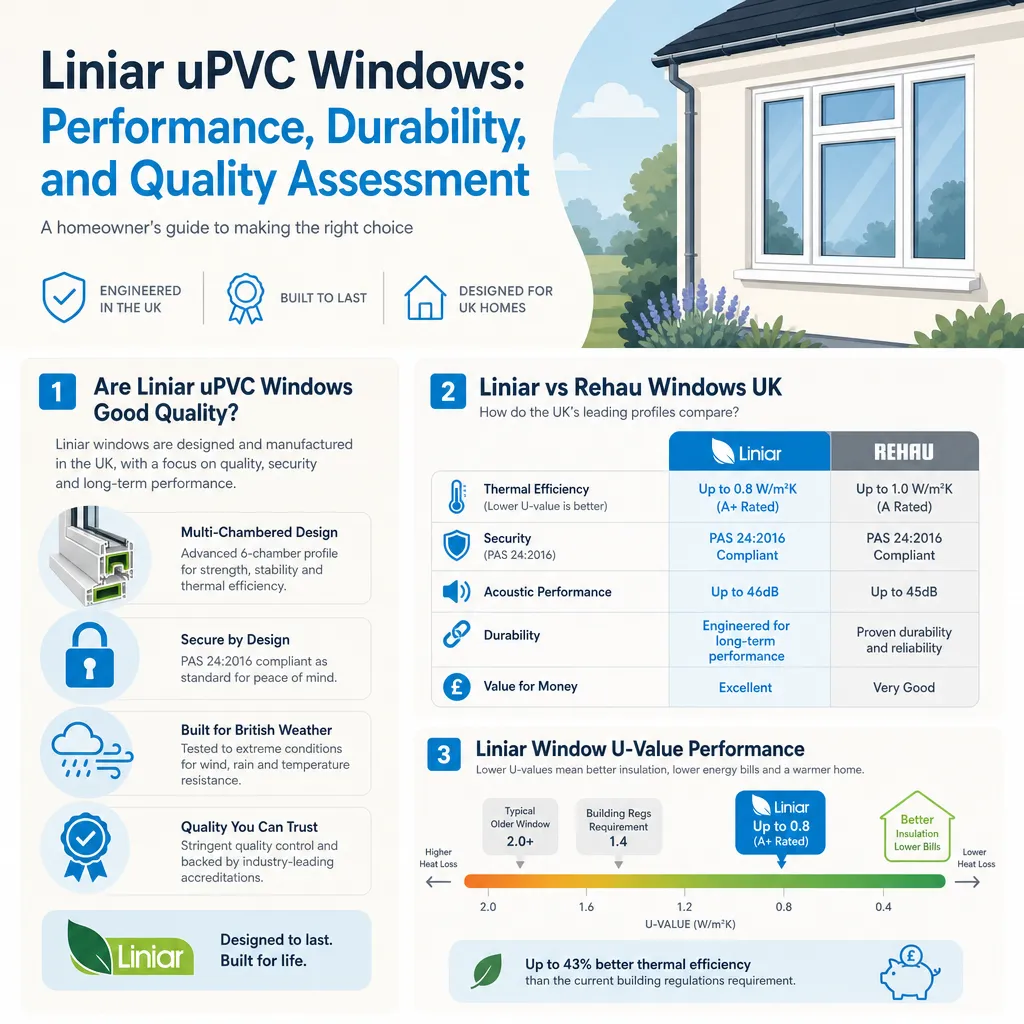
Liniar uPVC Windows: Performance, Durability, and Quality Assessment
Liniar uPVC window profiles are manufactured in the UK using multi-chambered, foamed frames.
 Improvement & Build
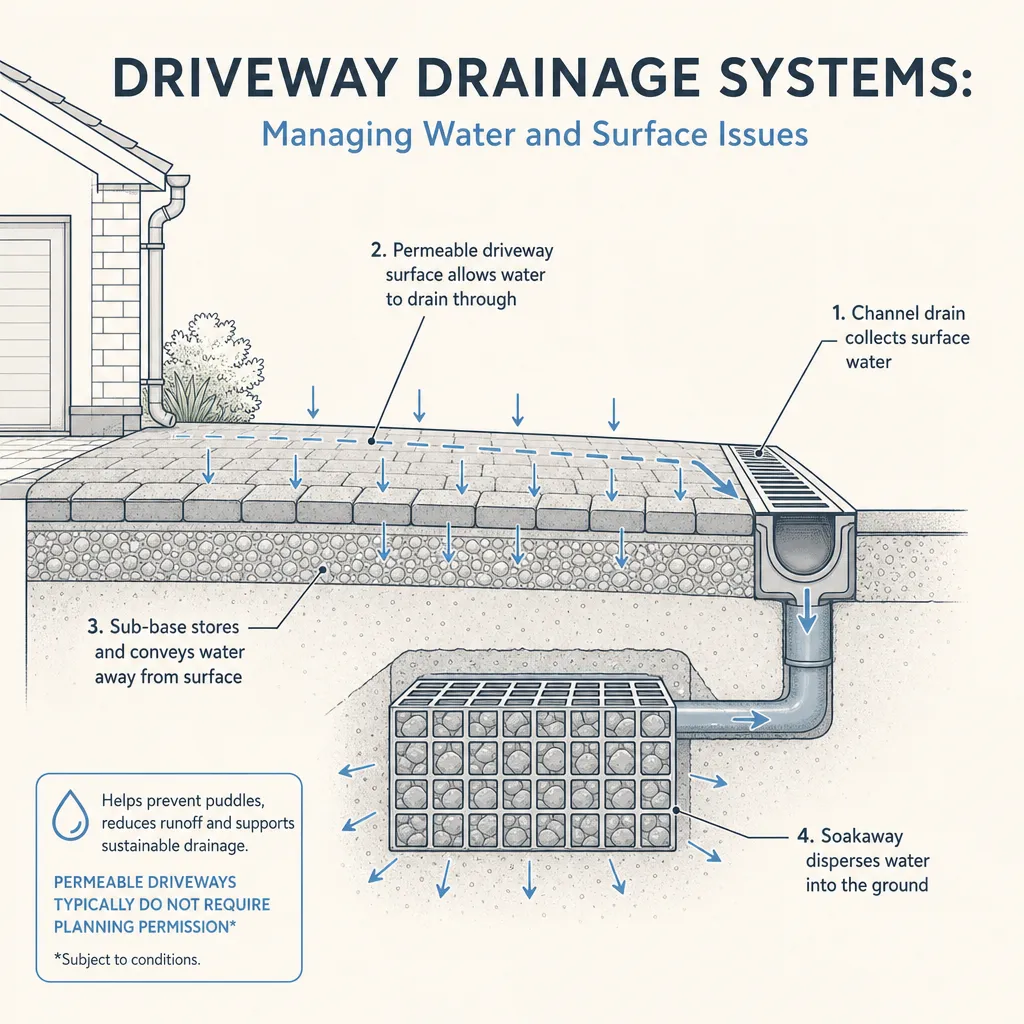
Driveway Drainage Systems: Managing Water and Surface Issues
The right driveway drainage system depends on your surface type, soil permeability, and local flood risk.
 Improvement & Build
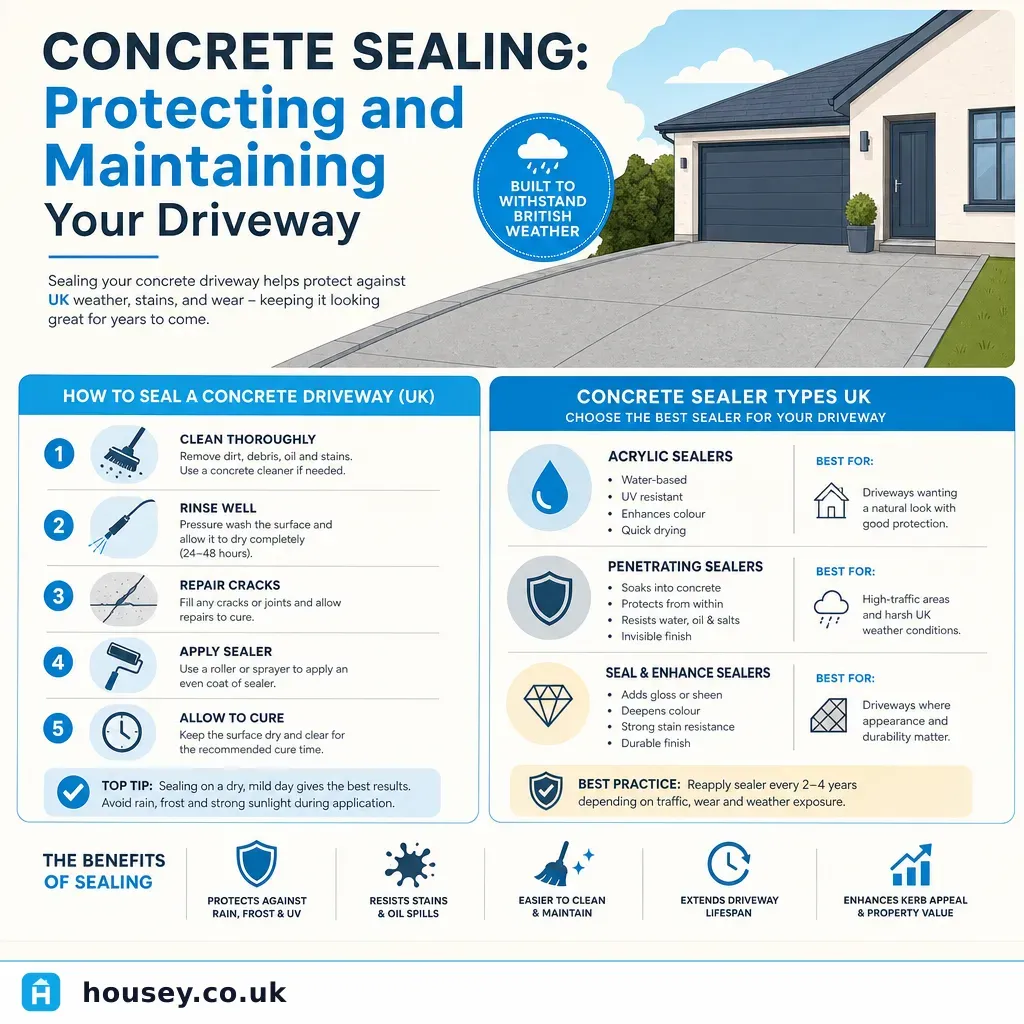
Concrete Sealing: Protecting and Maintaining Your Driveway
Sealing a concrete driveway protects against water ingress, freeze-thaw damage, oil stains, and surface wear.
 Improvement & Build
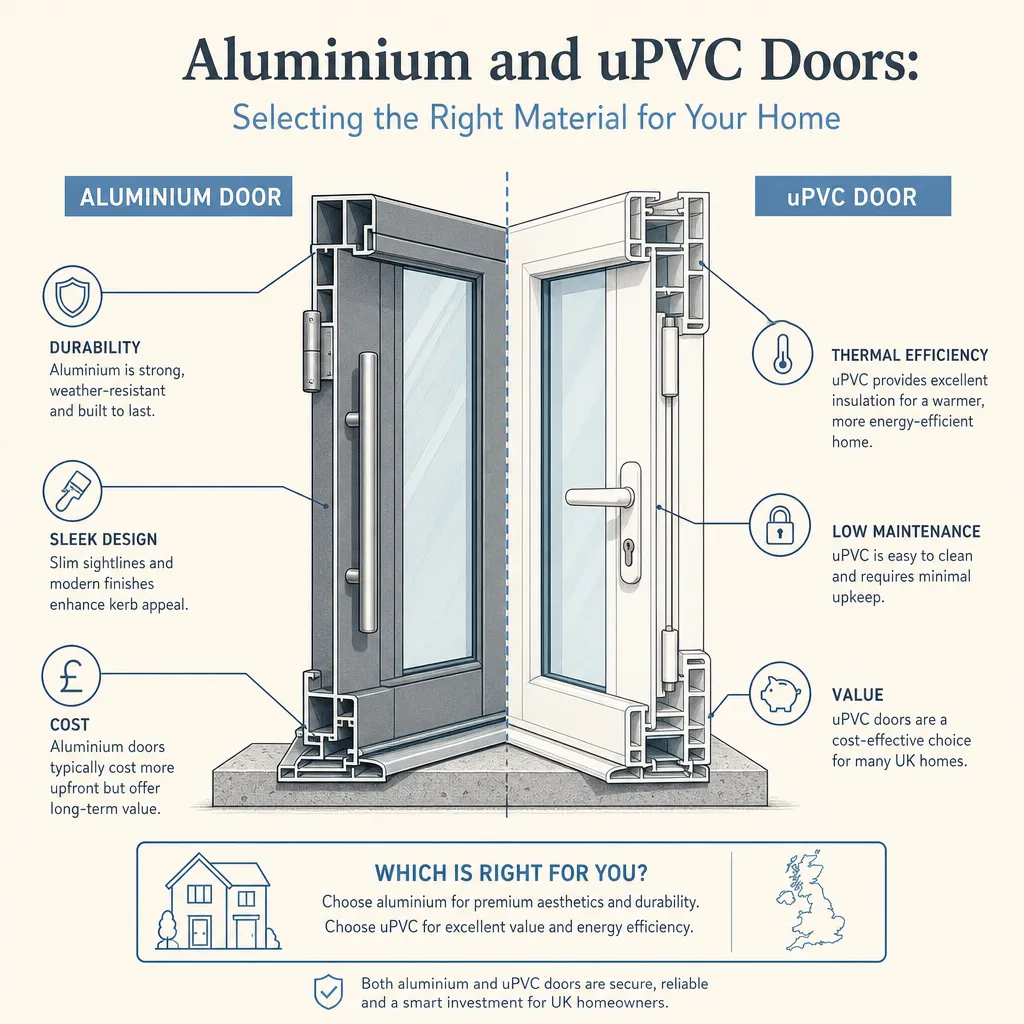
Aluminium and uPVC Doors: Selecting the Right Material for Your Home
uPVC doors are lower-cost and low-maintenance, making them a practical choice for most UK homes.
 Improvement & Build
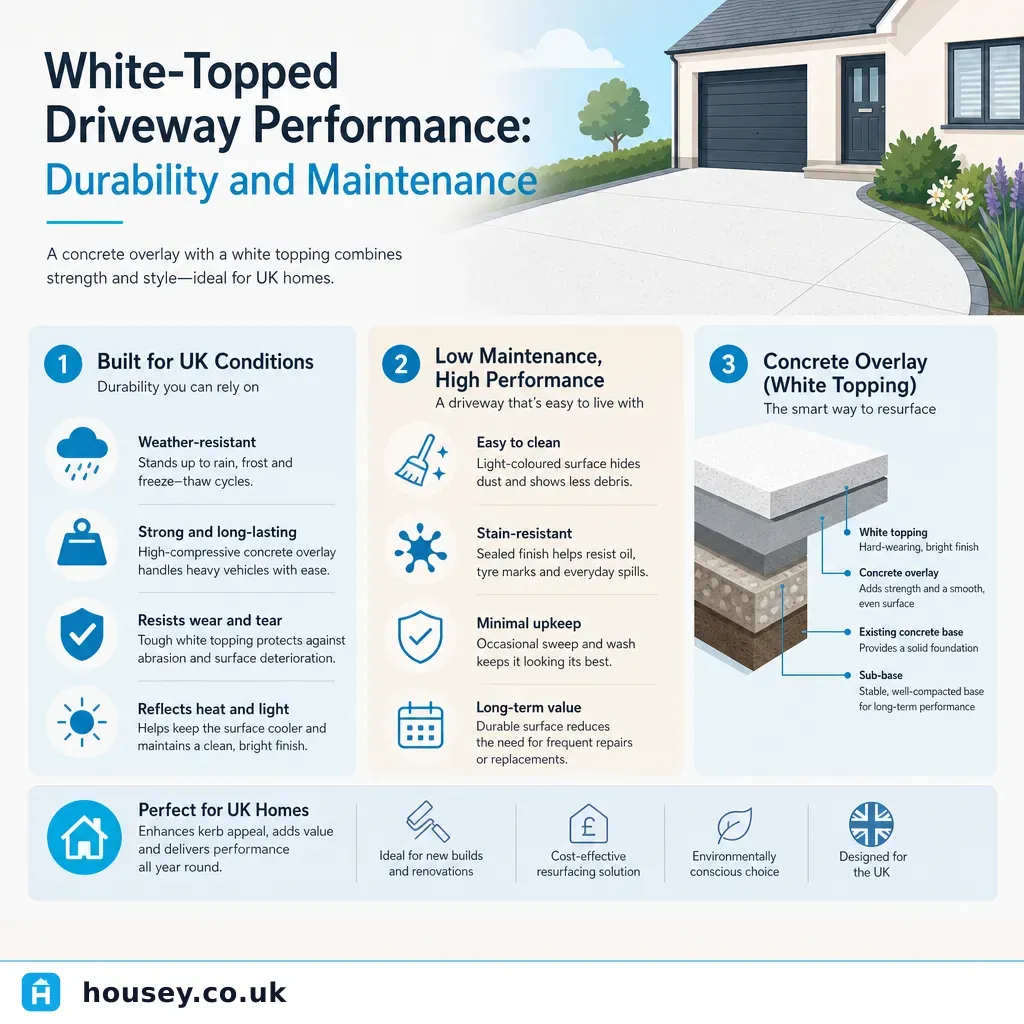
White-Topped Driveway Performance: Durability and Maintenance
A white-topped driveway uses a concrete layer placed over an existing asphalt sub-base, combining the load-spreading of asphalt with the durability of concrete.