Concrete Sealing: Protecting and Maintaining Your Driveway
By Housey · Last reviewed 30th of May 2026
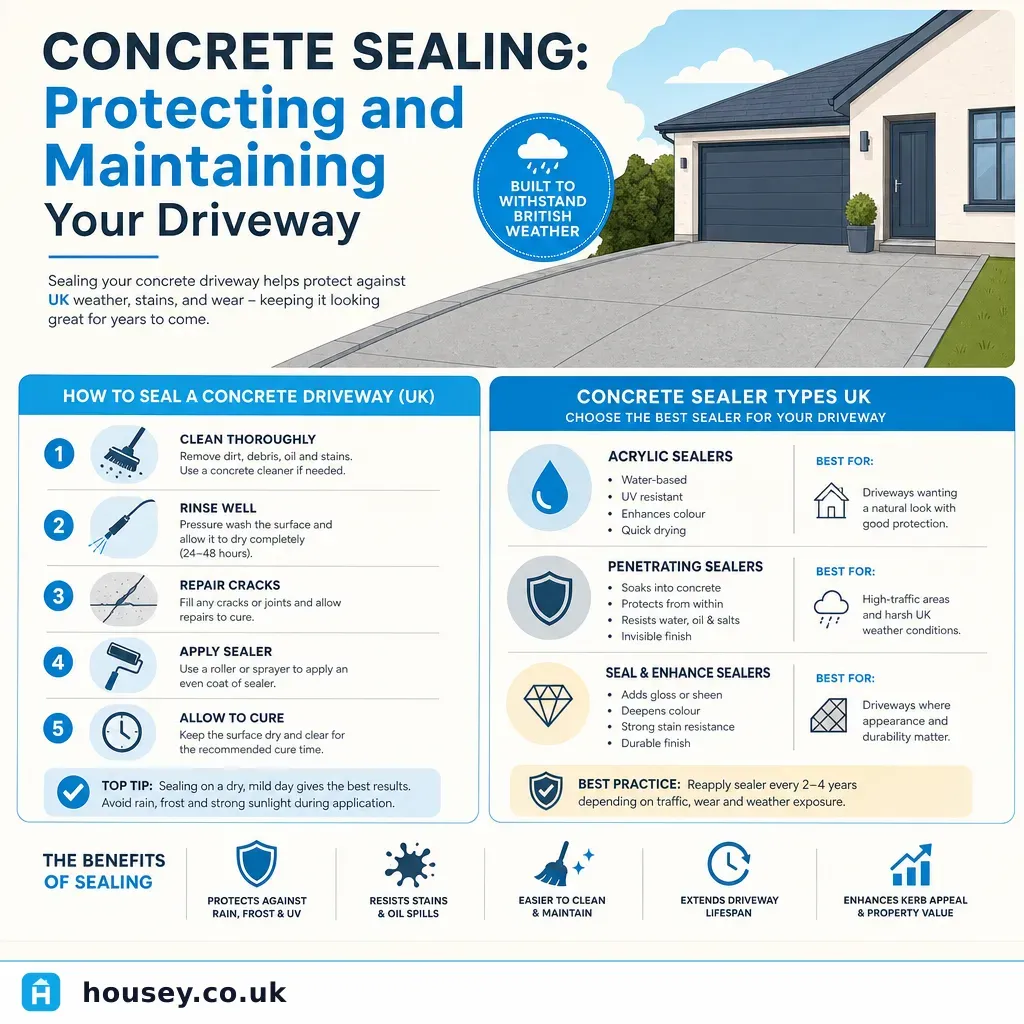
Concrete Sealing: Protecting and Maintaining Your Driveway
Concrete driveways are among the most durable surfacing options available to UK homeowners, but without periodic protection they become susceptible to surface erosion, freeze-thaw cracking, oil staining, and moss growth. The question of whether and how to seal a concrete driveway typically arises either after a new drive is laid or when visible deterioration prompts an investigation into maintenance options. Getting the choice of product, preparation, and timing right makes a meaningful difference to how long the surface lasts.
Key points
- Penetrating sealers (silane, siloxane, or silane-siloxane blend) protect against water ingress without changing the surface appearance, and are generally the most appropriate choice for UK driveways exposed to freeze-thaw cycles.
- Concrete must be fully cured before sealing — new concrete should be left for at least 28 days, and some manufacturers recommend 60–90 days for denser mixes.
- Film-forming sealers (acrylic, polyurethane) add a visible sheen but can become slippery when wet — a non-slip additive or a textured finish should be specified for driveways and pedestrian surfaces.
- Driveways laid after 1 October 2008 in England and Wales covering more than 5m² must manage surface water run-off; applying a film-forming sealer to a permeable surface could compromise this drainage requirement — check with your local planning authority if in doubt.
- Most UK concrete driveways benefit from resealing every 3–5 years for penetrating products, and every 1–3 years for acrylic or film-forming systems, depending on traffic level and weathering.
Types of concrete sealer compared
Choosing the right sealer depends on the concrete finish, your desired appearance, and the level of maintenance you can commit to.
Sealer type | How it works | Surface finish | Best for | Typical reapplication |
|---|---|---|---|---|
Silane-siloxane penetrating | Absorbed into the concrete matrix; repels water from within | Natural — no visible change | UK driveways; freeze-thaw exposure; aged or porous concrete | Every 3–5 years |
Acrylic film-forming | Forms a protective layer on the surface | Wet-look gloss or matt sheen | Decorative, coloured, or imprinted concrete; value-for-money maintenance | Every 1–3 years |
Polyurethane film-forming | Thicker, more durable surface film | Semi-gloss to gloss | High-traffic driveways; longer intervals between recoats preferred | Every 2–4 years |
Epoxy | Very hard chemical-resistant film | High gloss | Garage floors and workshop slabs — not recommended for exterior UK driveways | Not suitable outdoors |
Epoxy sealers degrade under UV exposure and are generally not appropriate for outdoor driveways in the UK climate.
When should you seal a concrete driveway?
Sealing is most effective when the concrete is in the right condition and the weather cooperates:
- New concrete: Wait at least 28 days after laying for full curing. Many manufacturers recommend 60–90 days for optimal penetration. Sealing too early can impair adhesion due to residual alkalinity.
- After cleaning: Seal only after the surface is free from oil, moss, algae, and existing sealant residue. Sealer locks in contamination rather than removing it.
- When dry: The surface must be completely dry. In UK conditions, this typically means choosing a settled dry period in late spring (April–May) or early autumn (September–October).
- Above 5°C: Most sealers should not be applied below 5°C or if frost is forecast within 24 hours. Avoid applying acrylic sealers on very hot surfaces in mid-summer, as they can bubble.
- After repairs: Fill any cracks wider than 1mm with a concrete repair filler or mortar; allow to cure fully before applying sealer.
Preparing your driveway before sealing
Preparation is the most important factor in sealer performance. A properly prepared surface holds sealer far longer than one cleaned hastily and coated immediately.
Pre-sealing checklist:
What not to assume about concrete sealing
Several common misconceptions lead to premature sealer failure or wasted expenditure:
- Sealing will not repair existing damage. Sealers protect against future deterioration but cannot reverse spalling, deep cracking, or surface delamination. Structural defects should be assessed before any sealing takes place.
- One coat is not always sufficient. Many penetrating sealers and film-forming systems specify two coats for adequate protection. Check the manufacturer's application guide.
- Not all sealers are compatible with all concrete finishes. Patterned, imprinted, or coloured concrete driveways may have a release agent applied during installation. Check compatibility with your installer or the sealer manufacturer before selecting a product.
- Sealed concrete still requires maintenance. Moss and algae can still grow on sealed surfaces in shaded or damp conditions. Annual brushing and occasional cleaning remain necessary regardless of sealer type.
- Old film-forming sealer should be removed before recoating. Applying new acrylic or polyurethane sealer over a worn existing coat can cause delamination. Strip or abrade the old layer before reapplication.
How often should you reseal?
A simple water-bead test indicates when resealing is due: sprinkle water on the surface. If it soaks in rather than beading, the sealer has worn and reapplication is needed.
Typical resealing intervals:
- Silane-siloxane penetrating sealers: every 3–5 years
- Acrylic film-forming sealers: every 1–3 years
- Polyurethane sealers: every 2–4 years
Driveways in shaded, damp, or heavily trafficked locations will need more frequent resealing than those in sheltered or light-use situations.
Planning and drainage obligations
In England and Wales, hard surfacing in front gardens laid after 1 October 2008 covering more than 5m² requires planning permission unless the surface is permeable, or drainage is directed to a lawn or border rather than the public highway. Applying a film-forming sealer to a permeable concrete block or exposed-aggregate surface may affect this drainage characteristic. If you are uncertain whether your surface will remain compliant after sealing, speak to a groundworker or your local planning authority before proceeding.
When to get professional help
Sealing is often manageable as a DIY task for a careful homeowner, but consider instructing a professional if:
- The driveway is large (over 80m²), as achieving even coverage without lap marks requires experience
- The surface has significant cracking, spalling, or defects that may need professional assessment before sealing is worthwhile
- The driveway is decorative, imprinted, or coloured concrete where an incorrect product choice could cause clouding or delamination
- You require a workmanship guarantee, particularly for new-build driveways within a defects liability period
How Housey can help
Housey connects you with experienced driveway installers and groundworkers who offer professional concrete sealing as part of ongoing driveway maintenance services. Getting a specialist quote is particularly worthwhile for larger driveways or where the surface condition is uncertain.
Frequently asked questions
How much does professional concrete driveway sealing cost in the UK?
Indicative UK costs for professional sealing typically range from £3–£8 per m², depending on the product used, surface condition, and whether preparation works such as pressure-washing and degreasing are included. A standard double driveway of around 30–40m² might cost £150–£350 professionally sealed. Indicative UK costs, last reviewed 2026-05-30. Obtain several quotes as prices vary by region.
Can I seal a concrete driveway myself?
Yes, for most standard concrete driveways. Penetrating sealers are straightforward to apply with a roller or low-pressure sprayer, provided the surface is correctly prepared. Follow the manufacturer's data sheet carefully, work in manageable sections, and maintain a wet edge to avoid lap marks. Film-forming sealers on larger areas are more forgiving when applied with professional equipment.
Will sealing stop cracks from appearing in my driveway?
Sealing reduces water ingress and therefore reduces freeze-thaw cracking, but it does not prevent movement cracking caused by ground settlement, clay shrinkage, or tree root pressure. Existing cracks should be filled before sealing; suspected ground movement should be assessed by a groundworks professional before further investment in the surface.
Does concrete sealing affect the appearance of my driveway?
Penetrating silane-siloxane sealers have little to no visible effect on the surface. Acrylic and polyurethane film-forming sealers add a sheen ranging from matt to high gloss, which can darken the surface colour slightly. Always check the manufacturer's description or request a sample before applying, particularly on decorative or imprinted concrete.
Sources and further reading
- Approved Document C – Site preparation and resistance to contaminants and moisture — GOV.UK
- Guidance on paving front gardens — GOV.UK
- Technical guidance on concrete surface treatments — The Concrete Society
- British Board of Agrément – product certification for building materials — British Board of Agrément
Useful next reads
 Improvement & Build
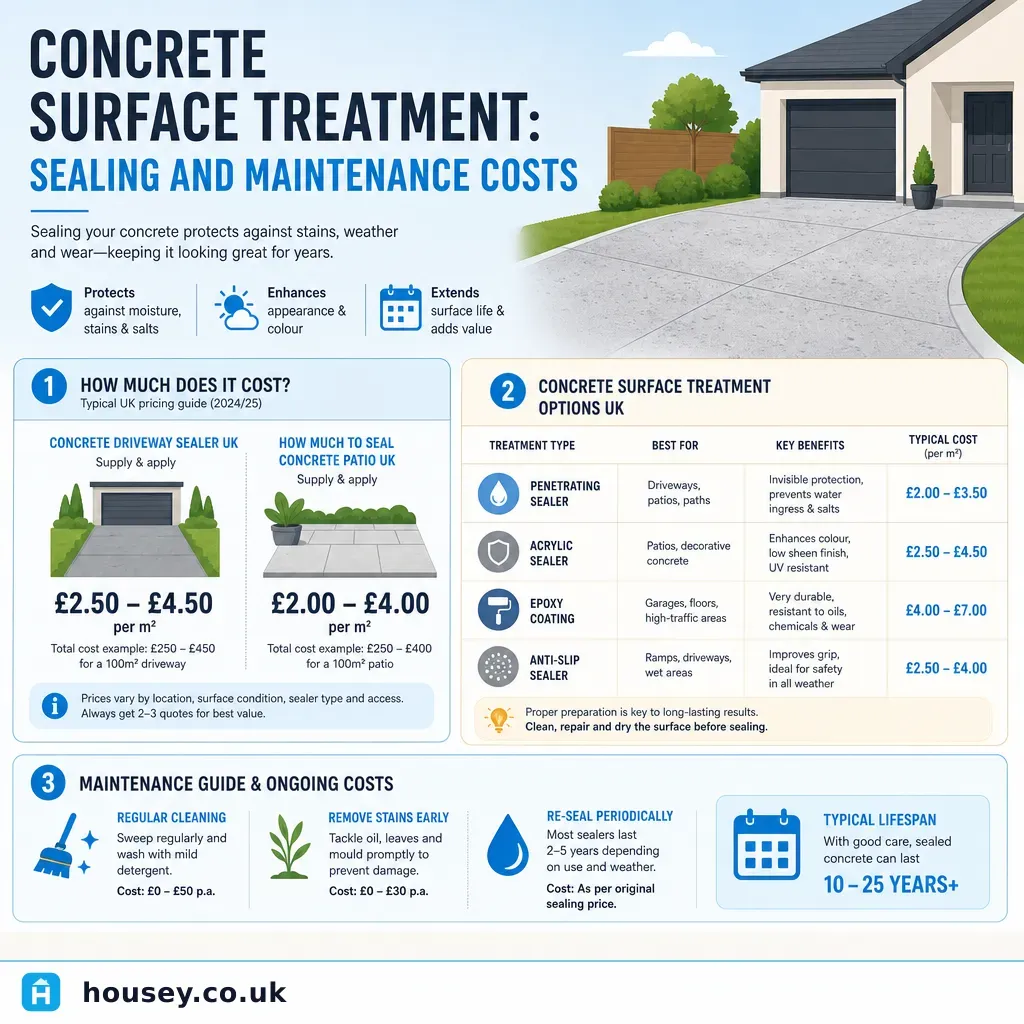
Concrete Surface Treatment: Sealing and Maintenance Costs
Sealing concrete in the UK typically costs £300–£1,200 for a standard driveway or patio, depending on area size and sealer type.
 Improvement & Build
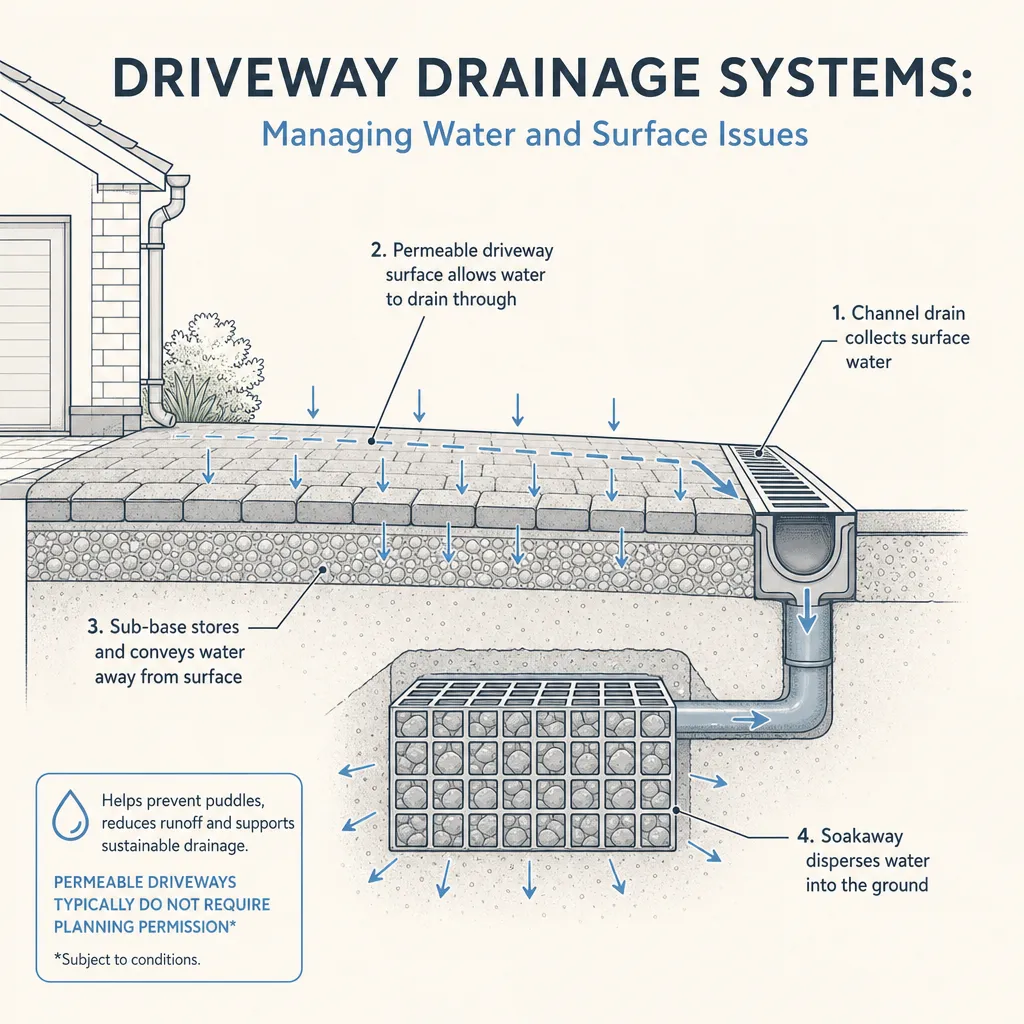
Driveway Drainage Systems: Managing Water and Surface Issues
The right driveway drainage system depends on your surface type, soil permeability, and local flood risk.
 Improvement & Build
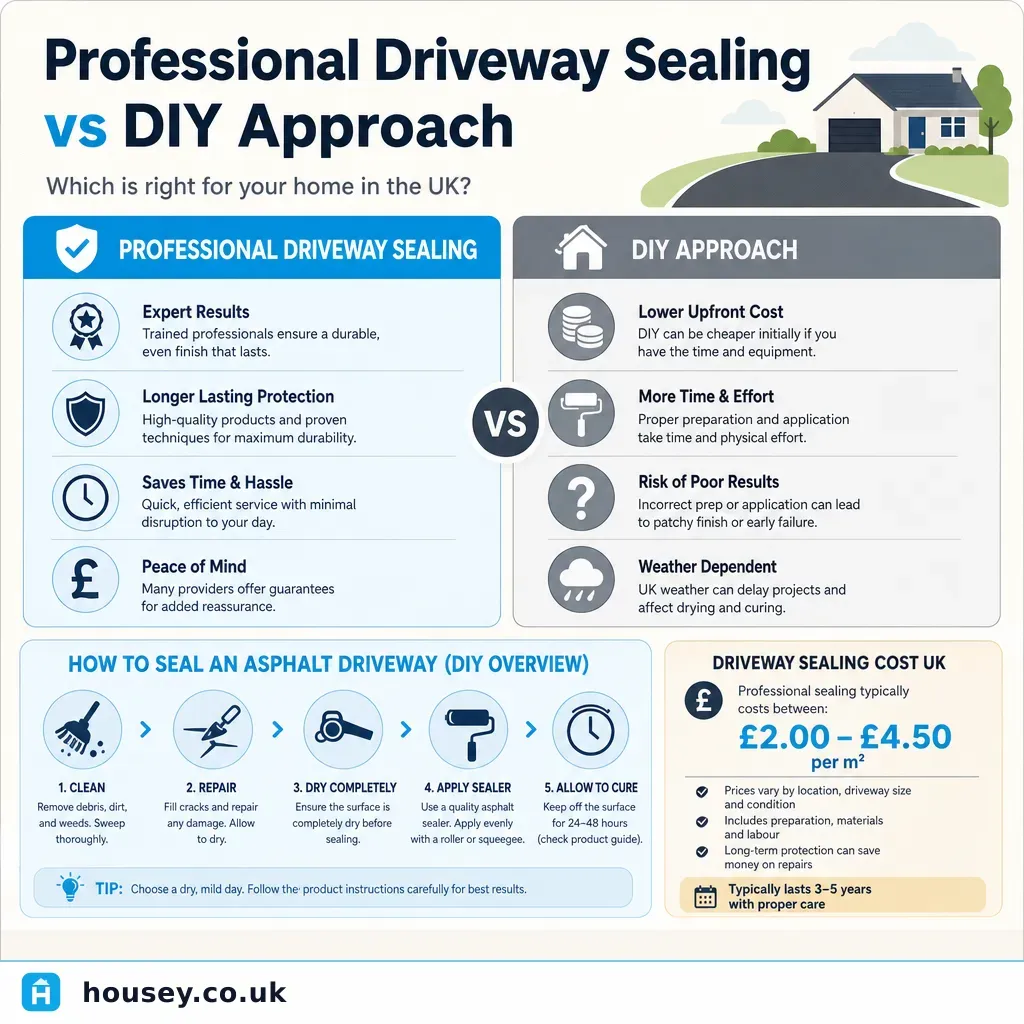
Professional Driveway Sealing vs DIY Approach
Professional driveway sealing offers a more durable, even finish using commercial-grade sealants and specialist equipment, typically costing £150 to £400 for an average drive.
 Improvement & Build
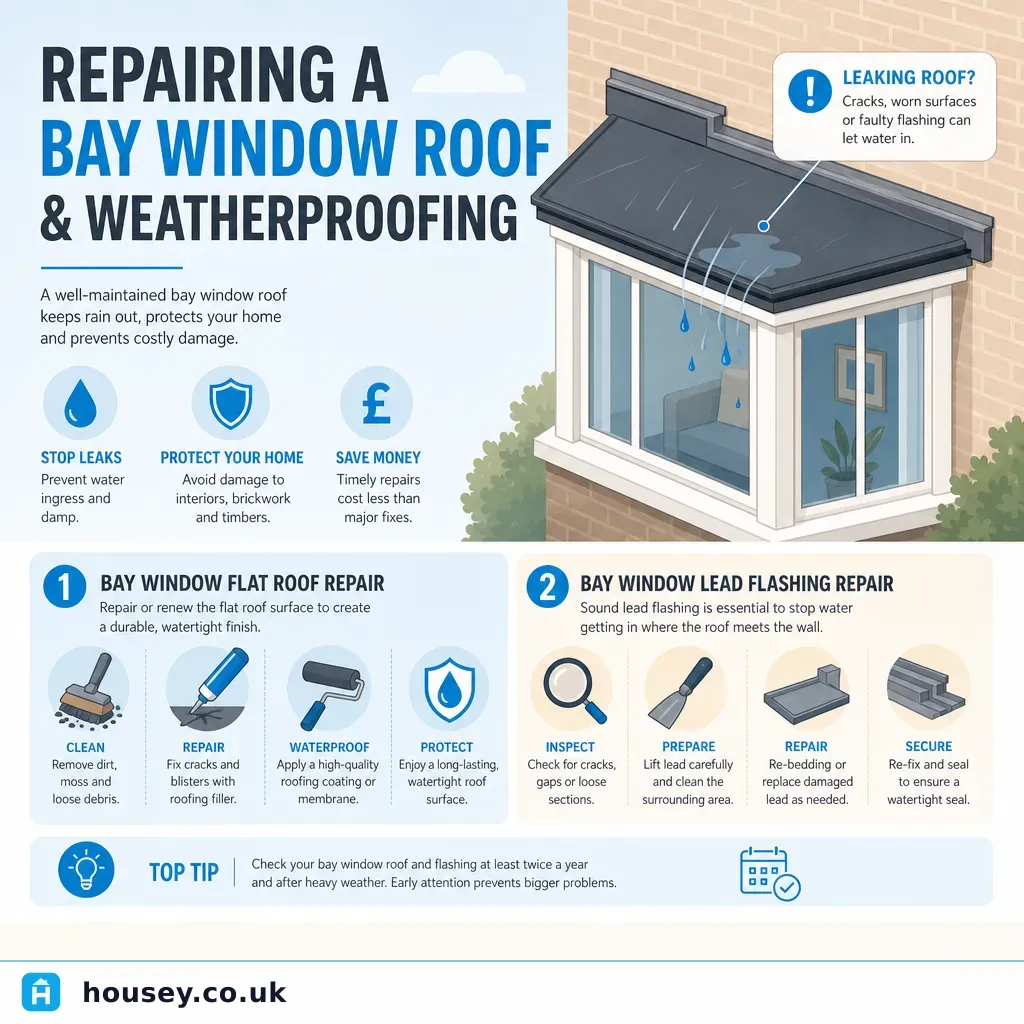
Repairing a Bay Window Roof and Weatherproofing
A bay window roof typically uses felt, lead, or EPDM rubber as its waterproof covering.
 Improvement & Build
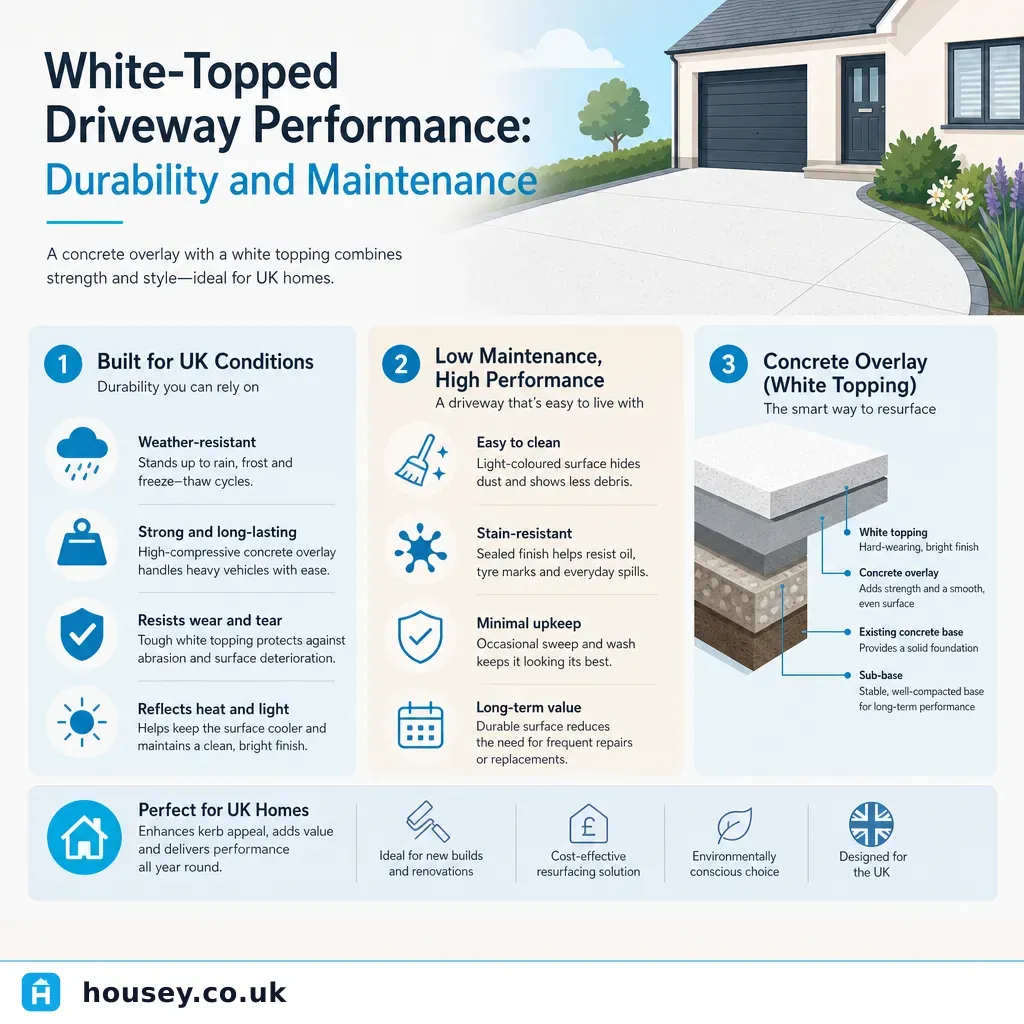
White-Topped Driveway Performance: Durability and Maintenance
A white-topped driveway uses a concrete layer placed over an existing asphalt sub-base, combining the load-spreading of asphalt with the durability of concrete.