Choosing the right kitchen wall paint: a practical guide
By Housey · Last reviewed 11th of May 2026

Choosing the right kitchen wall paint: a practical guide
Kitchen decorating throws up decisions that don't arise in other rooms. Steam from cooking, grease splashes, and condensation from a busy hob all demand more from paint than a living-room emulsion can reliably deliver. Whether you're refreshing a rental property or redecorating after a full kitchen refit, the finish you choose will determine how long your walls look good and how easy they are to keep clean.
Key points
- Kitchens need washable paint with a sheen level of at least eggshell (10–20% sheen) to resist moisture and allow wiping without marking.
- Flat or dead matt emulsion should be avoided on kitchen walls: it absorbs grease and moisture, making it near impossible to clean without removing the paint film.
- Low-VOC or zero-VOC paint is worth specifying in a food-preparation area, particularly if the kitchen has limited ventilation.
- Dark or heavily saturated colours may show steam marks and water trails more readily than lighter shades; mid-tone neutrals often perform better over time.
- New plaster must cure for at least 4–6 weeks before painting and should be sealed with a mist coat (diluted emulsion) before any topcoat is applied.
Why kitchen walls need a different approach
A standard vinyl matt emulsion is designed to provide a breathable, flat surface in low-traffic rooms. Kitchens generate steam (from dishwashers, kettles, and boiling pans), airborne cooking grease, and condensation on cold walls — particularly on external walls or those adjacent to the sink window. These conditions cause standard emulsion to stain, peel, or harbour mould more quickly than it would elsewhere in the house.
The British Coatings Federation recommends kitchen and bathroom paints that include biocides to suppress mould growth and are formulated to be scrubbed without breaking down. Purpose-formulated kitchen paints are available at most DIY retailers and specialist decorating suppliers, and typically carry clear labelling about washability and mould resistance.
Understanding paint finishes: which sheen level suits kitchens?
The sheen level — how reflective a paint surface is — has a direct relationship with durability and cleanability.
Finish | Approximate sheen | Suitable for kitchens? | Notes |
|---|---|---|---|
Flat / dead matt | < 5% | No | Very hard to clean; marks easily |
Vinyl matt | 5–10% | Rarely | Suitable for kitchen ceilings or very dry kitchens only |
Eggshell | 10–20% | Yes | Washable, low sheen, practical and widely used |
Satin | 20–40% | Yes | Slightly more durable; good for busy or humid kitchens |
Silk | 30–40% | Sometimes | Very washable but shows surface imperfections clearly |
Semi-gloss / gloss | 50–90% | Woodwork and tiles only | Too reflective for walls; highlights uneven plaster |
For most UK kitchen walls, eggshell or satin gives the best balance of durability, cleanability, and appearance. Purpose-formulated kitchen paints are typically satin in finish and include mould inhibitors as standard.
Choosing colour: practical and aesthetic considerations
Light versus dark
Lighter colours — off-whites, pale greys, and warm neutrals — reflect more natural light, making smaller kitchens feel larger. They do show grease splashes more readily, which often motivates more frequent wiping. Darker colours (deep blues, greens, charcoals) conceal splashes better but can show steam marks and water trails from the kettle or dishwasher vent, especially in a glossier finish.
Matching kitchen units
If your kitchen units are a fixed colour, work back from them. Cool-toned units (bright white, light grey) tend to sit well with cool-undertone walls (blue-grey, true green). Warm-toned units (cream, wood, sage) work better with warm-undertone walls (warm white, terracotta, olive). Always test a sample on the actual wall and check it under the room's artificial lighting before committing — kitchen lighting can shift how a colour reads significantly.
British Standard and RAL references
If you need to match joinery, tiles, or an adjacent room precisely, both British Standard (BS 4800) and RAL Classic colour references can be matched by most trade paint suppliers. Colour-matching across different brands and finishes is approximate, not exact — always compare a dry sample on your wall before ordering multiple tins.
Preparation: the step that determines the result
Poor preparation — particularly skipping degreasing — is the single most common reason kitchen paint peels within the first year. No amount of premium paint compensates for a greasy or unstable surface.
Homeowner prep checklist
Before painting kitchen walls:
What not to assume
- "Any emulsion works if I apply a sealer over it." Sealers add cost and complexity. A purpose-formulated kitchen paint is a more reliable and simpler solution for the same result.
- "Matt finish is fine if I clean it carefully." Even gentle cleaning of matt emulsion in a kitchen will gradually dull and mark the surface over time. The paint film is simply not designed for repeated wet wiping.
- "I can paint straight over old gloss without sanding." Gloss must be abraded with fine sandpaper and primed before applying a water-based topcoat — without this step, the new paint will not bond and will peel, often within weeks.
- "Kitchen-specific paint is always white or neutral." Kitchen-formulated paint is available across the full colour range offered by most brands. The 'kitchen paint' label refers to the formulation, not the colour palette.
When to get professional help
For most homeowners, kitchen repainting is a manageable DIY task if walls are in reasonable condition. Consider hiring a professional decorator when:
- Walls show signs of active damp or mould behind the paint — the underlying cause must be diagnosed and treated before repainting
- You want a spray-applied finish for maximum smoothness with no roller marks or brush lines
- There is extensive patching, skim repair work, or large areas of new plaster that require careful preparation
- You are repainting a large open-plan kitchen-dining space and want a consistent, seamless result across a big area
How Housey can help
Housey connects homeowners across the UK with local decorating and property improvement professionals. Whether you need a quote for a full kitchen repaint or advice on surface preparation before you start, Housey makes it straightforward to compare proposals from vetted local tradespeople in your area.
Frequently asked questions
Can I use standard emulsion paint in a kitchen?
Standard vinyl matt emulsion is not recommended for kitchen walls. It is not designed to withstand steam, grease, or regular wiping, and is likely to stain, peel, or develop mould more quickly than a purpose-formulated kitchen paint. At minimum, use an eggshell or satin finish; ideally choose a paint labelled for kitchens and bathrooms that includes a mould inhibitor.
What is the difference between eggshell and satin paint?
Eggshell has a low, soft sheen of around 10–20% and a smooth, subtle finish. Satin is slightly more reflective at around 20–40% and tends to be more durable and easier to wipe clean. Both are suitable for kitchen walls. Satin is often the better choice for a busy or poorly ventilated kitchen where moisture and grease are a regular concern.
How do I prepare greasy kitchen walls before painting?
Wash walls thoroughly with a sugar soap solution, which cuts through cooking grease. Rinse with clean water and allow to dry completely — at least 24 hours, longer if walls feel cold or damp. Do not skip this step; grease prevents paint from bonding correctly and will cause the new coat to peel within months, regardless of paint quality.
Should I use primer before painting kitchen walls?
A primer is recommended on bare plaster, new plasterboard, after stripping wallpaper, or when painting a light colour over a dark existing one. On sound, previously painted walls of a similar colour, a quality kitchen paint applied in two coats is usually sufficient. New plaster specifically requires a mist coat — diluted emulsion — before any topcoat is applied.
Sources and further reading
- British Coatings Federation — about paint and coatings — British Coatings Federation
- Approved Document F: Ventilation — GOV.UK
- Paint reviews and buyer's guide — Which?
Useful next reads
 Improvement & Build
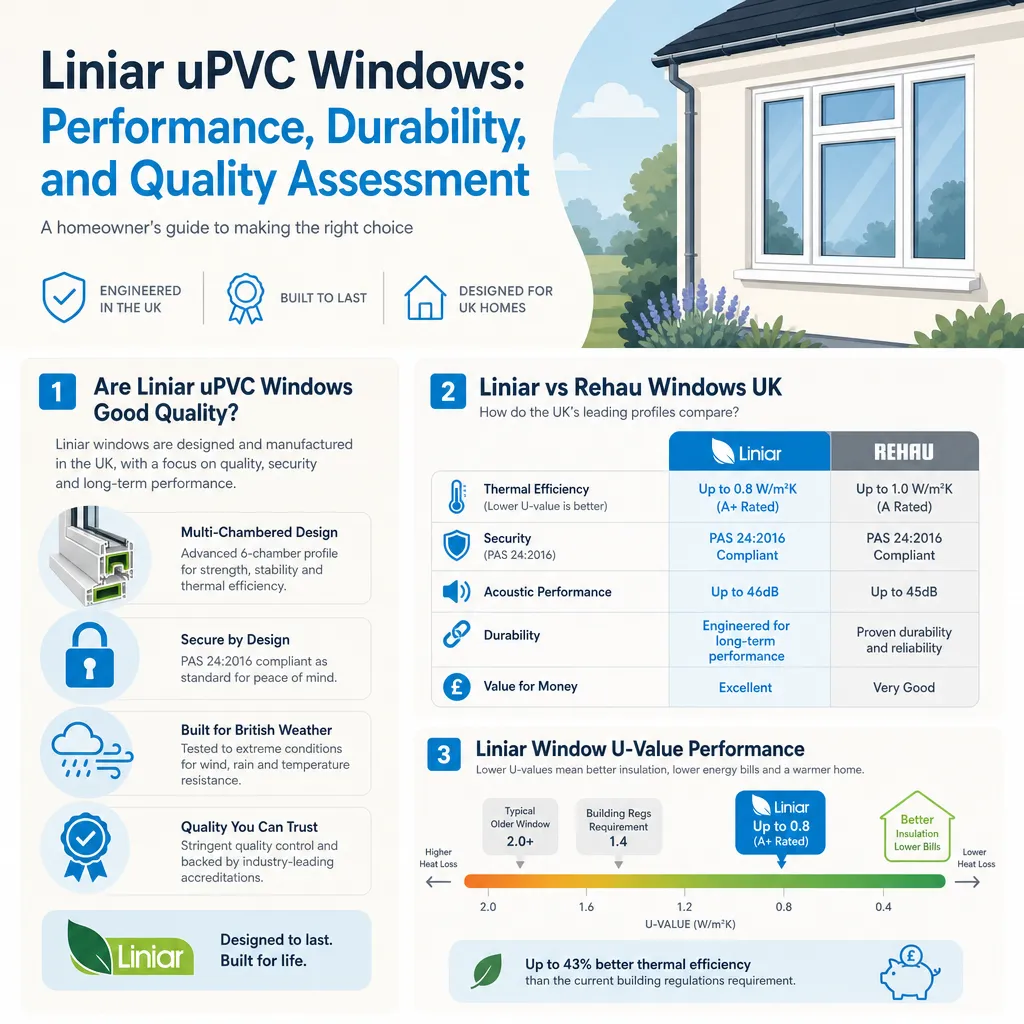
Liniar uPVC Windows: Performance, Durability, and Quality Assessment
Liniar uPVC window profiles are manufactured in the UK using multi-chambered, foamed frames.
 Improvement & Build
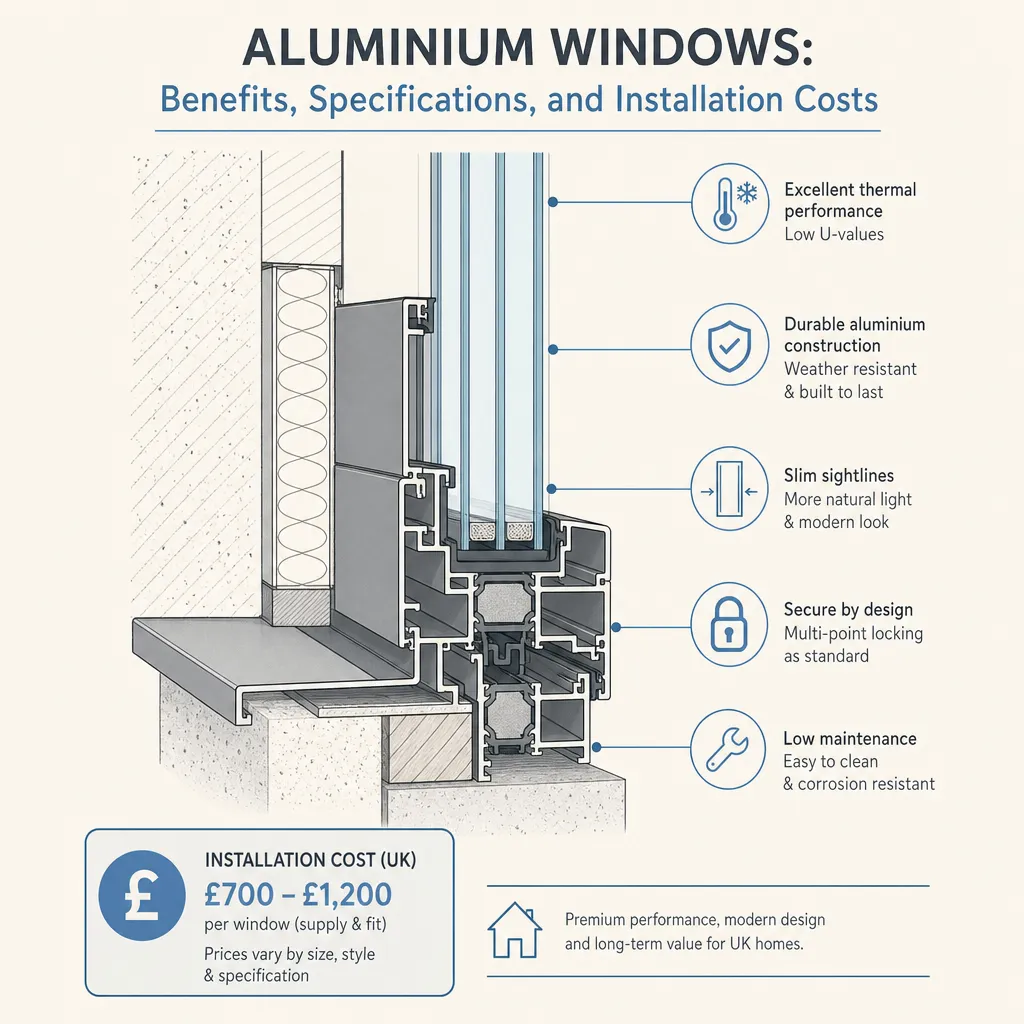
Aluminium Windows: Benefits, Specifications, and Installation Costs
Aluminium windows typically cost £600–£1,800 per window installed in the UK, depending on size and specification.
 Improvement & Build
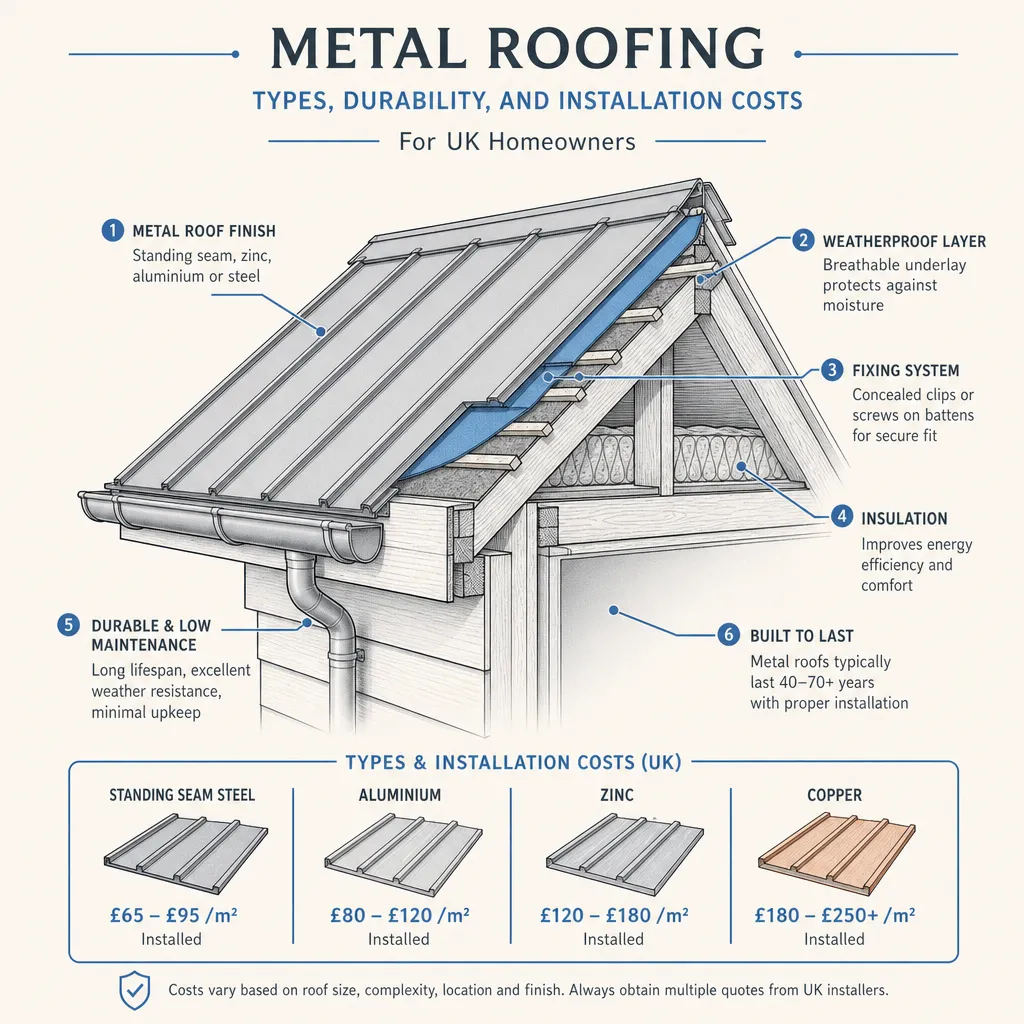
Metal Roofing: Types, Durability, and Installation Costs
Metal roofing in the UK includes standing seam, corrugated sheet, and metal tile systems in steel, aluminium, zinc, or copper.
 Improvement & Build
Standing Seam versus Screw-Fixed Metal Roofing: Comparison and Durability
Standing seam uses concealed clips to hold panels, keeping all fasteners out of the weatherline and giving a design life of 40–60 years or more.
 Improvement & Build
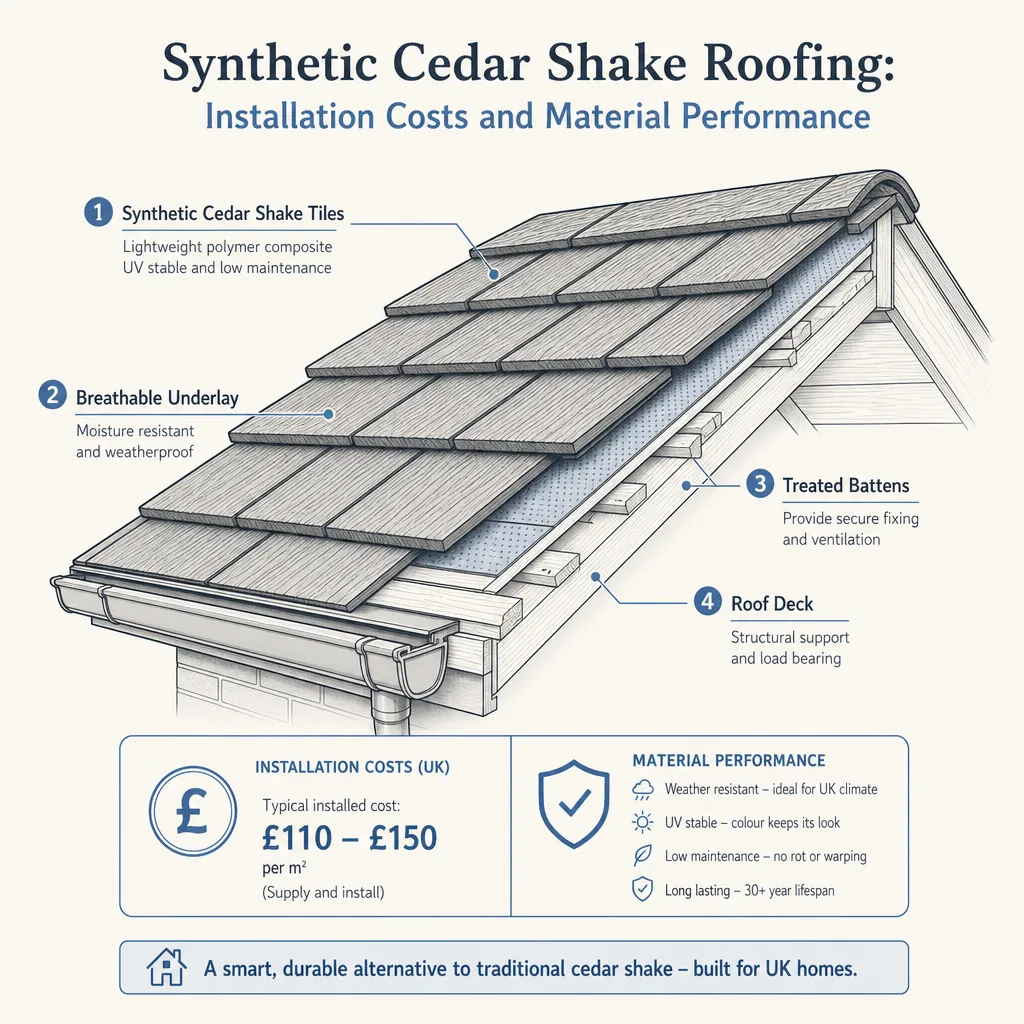
Synthetic Cedar Shake Roofing: Installation Costs and Material Performance
Synthetic cedar shake roofing uses polymer composite, rubber, or fibre-cement tiles to replicate the look of natural cedar wood shingles.