Standing Seam versus Screw-Fixed Metal Roofing: Comparison and Durability
By Housey · Last reviewed 1st of June 2026
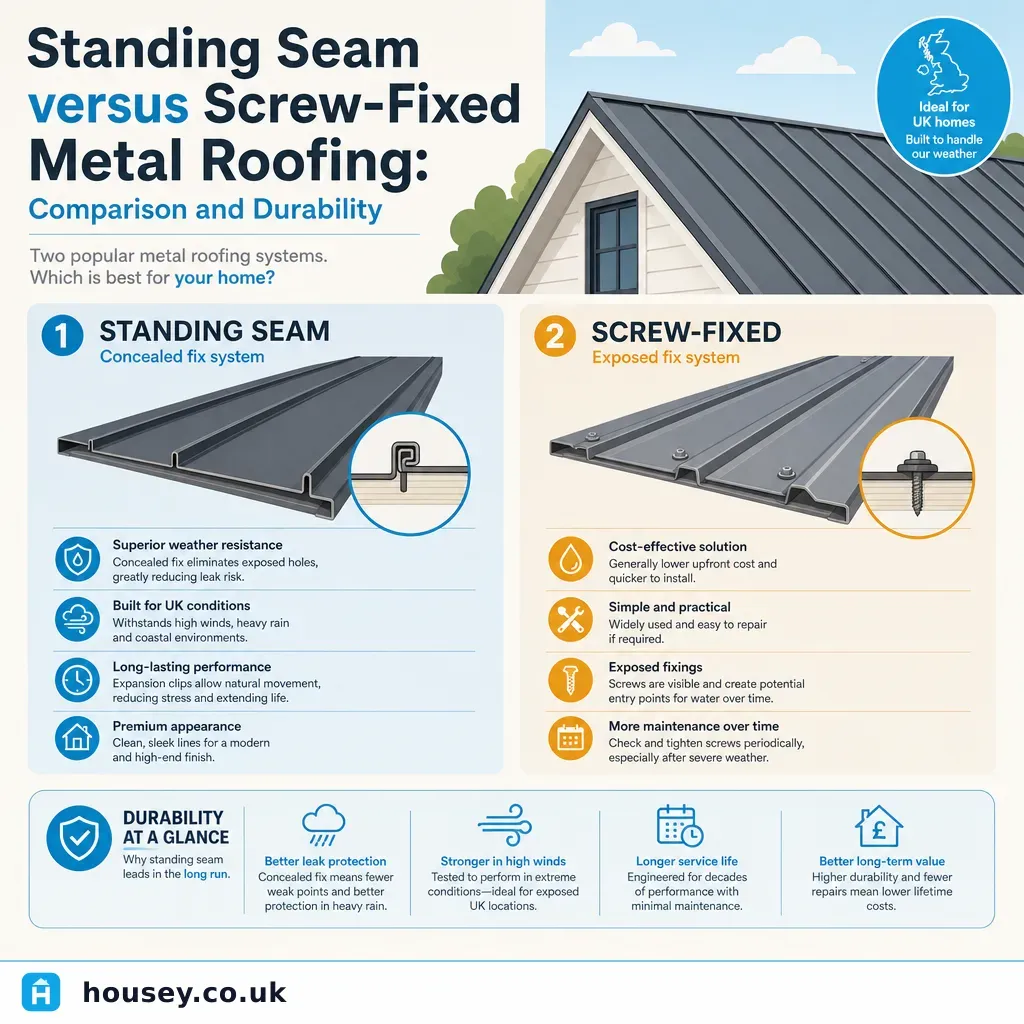
Standing Seam versus Screw-Fixed Metal Roofing: Comparison and Durability
Metal roofing projects — whether a new extension, a complete re-roof, or a garden room — often come down to a fundamental choice between two fixing philosophies: concealed (standing seam) and exposed (screw-fixed). The decision affects weather performance, maintenance burden, aesthetic, and whole-life cost, so understanding the distinction before commissioning a roofer or approving a specification saves both time and money.
Key points
- Standing seam uses concealed clips that grip an upstanding seam, keeping all fasteners out of the weatherline; screw-fixed (through-fixed) systems drive fasteners directly through the sheet face, relying on neoprene or EPDM gaskets to seal each penetration.
- Most metal roof system manufacturers rate standing seam systems at 40–60 years or more, depending on material (zinc, aluminium, steel, copper); screw-fixed systems are typically rated 20–35 years, contingent on gasket condition throughout that period.
- Standing seam panels move freely along floating clips, accommodating thermal expansion without stress; screw-fixed panels are held rigidly, which can loosen fixings over time in climates with wide temperature swings.
- Approved Document L (2021, England) requires a roof U-value of ≤0.25 W/m²K for new builds and extensions; both system types can achieve this, but the insulation detailing differs significantly between warm-roof and cold-roof configurations.
- Standing seam systems can be installed at pitches as low as 1.5° with some proprietary systems; most screw-fixed profiled sheets require a minimum 5°–8° pitch per manufacturer specification.
How each fixing system works
A standing seam roof consists of long metal panels — usually zinc, pre-painted steel, aluminium, or copper — whose edges fold upwards and are mechanically seamed or snap-locked together on site. The clips that hold each panel to the substructure are fully concealed once the seam is formed. The result is a roof with no exposed fasteners, no gaskets to degrade, and no points where rainwater can track down a screw shank.
A screw-fixed (also called through-fixed or exposed-fix) system fixes profiled or flat sheet directly to the supporting structure using self-drilling screws fitted with neoprene or EPDM washers. The washer compresses against the sheet to create a watertight seal — in the short term. Over time, UV exposure, freeze-thaw cycling, and vibration gradually degrade the gasket material, increasing leak risk at every fixing point across the roof area.
Durability and maintenance comparison
Factor | Standing seam | Screw-fixed |
|---|---|---|
Typical design life | 40–60+ years (zinc/copper can exceed 100 years) | 20–35 years (steel with coating) |
Exposed fasteners | None | Yes — one per fixing point |
Primary leak risk pathway | Seam integrity and end-lap detail | Gasket degradation at every screw |
Maintenance interval | Inspect seams and flashings every 10–15 years | Inspect and retighten or replace gaskets every 5–10 years |
Thermal movement management | Floating clips allow free panel movement | Slotted holes manage movement; fixings can loosen over time |
Noise (rain and hail) | Low with correct decking and insulation layer | Moderate — profiled air gap below sheet amplifies sound |
Panel replacement | Individual panels can be replaced without disturbing adjacent panels | Individual sheet replacement is straightforward |
Cost comparison
Metal roofing costs vary significantly by material, roof complexity, access, and region.
Indicative UK installed costs, last reviewed 2026-06-01 (materials and labour combined; VAT excluded):
- Pre-painted steel standing seam: £80–£130/m²
- Zinc standing seam: £110–£180/m²
- Aluminium standing seam: £90–£150/m²
- Copper standing seam: £150–£250/m²
- Pre-painted steel screw-fixed profiled: £35–£70/m²
- Aluminium screw-fixed profiled: £45–£80/m²
Quotes vary widely — always obtain at least three tenders from contractors with a named system approval or National Federation of Roofing Contractors (NFRC) membership.
The lower upfront cost of screw-fixed systems may be offset by more frequent maintenance and earlier replacement. A whole-life cost calculation over 40–50 years often narrows or reverses the gap in favour of standing seam.
Which system is right for your project?
Use this decision framework:
- Choose standing seam if the roof pitch is below 5°, if the building is residential or high-visibility, if a 40+ year design life is required, or if low maintenance is the priority.
- Choose screw-fixed if the roof is agricultural, industrial, or a low-specification outbuilding; if budget is tightly constrained; if the pitch is above 7° and a shorter replacement cycle is acceptable.
- Ask a structural engineer if the substructure or purlin spacing is not confirmed — different system weights and fixing patterns impose different structural loads on rafters and purlins.
- Check with your local planning authority before specifying any metal roof material if the property is listed or in a conservation area, as material choice and finish may be controlled.
Red flags when reviewing a specification or quote
- A contractor proposing screw-fixed on a pitch below 5° — most manufacturers' warranties stipulate a minimum pitch, and a system installed below it will likely void the warranty.
- No mention of movement joints or expansion detail on panel runs longer than 10 m.
- Standing seam quoted without a named proprietary system — generic site seaming without manufacturer approval can void warranties and is difficult to quality-assure.
- No allowance for valley, ridge, or abutment flashings in the quoted price — these are critical weathering details.
- No ventilation or condensation-control layer specified — particularly important for distinguishing warm-roof and cold-roof details under Approved Document C.
What to ask before accepting a quote
- Which specific system and manufacturer is being specified, and what is the warranty period and basis?
- Is the installer approved or factory-trained by the system manufacturer?
- What is the minimum pitch for this system, and does my roof comply?
- How will thermal expansion be managed across the full panel length?
- What maintenance will the roof require, and at what intervals?
- What flashings and edge details are included in the quoted price?
- Is VAT included, and what is the payment schedule tied to?
When to get professional help
Metal roofing is specialist work. Most systems require trained or manufacturer-approved installers to validate the product warranty. Seek professional advice if:
- Your project involves a low-pitch or flat roof where drainage design is critical.
- The building is listed or in a conservation area.
- The existing structure's loadbearing capacity is unconfirmed.
- You are dealing with an insurance claim for storm damage or water ingress.
- A contractor cannot provide a manufacturer-backed system warranty in writing.
How Housey can help
Housey connects you with vetted roofers experienced in metal roofing systems who can assess your project, specify the right system for your pitch and budget, and provide manufacturer-backed warranties. Submit your project details to compare quotes from qualified contractors in your area.
Frequently asked questions
How long does a standing seam metal roof last in the UK?
Most steel standing seam systems carry manufacturer warranties of 30–40 years, while zinc and copper can last 60–100 years or more with correct detailing. Actual longevity depends on the substrate material, coating specification, installation quality, and exposure to salt air or industrial pollutants. A correctly installed and detailed system should need minimal intervention beyond periodic flashing inspections.
Can screw-fixed metal roofing be upgraded to standing seam?
In most cases, yes. The existing substructure — rafters, purlins, or deck — is usually retained, and new standing seam panels are fitted using a new clip system. A structural check is advisable to confirm loading capacity. The opportunity is also a good time to upgrade insulation to meet current Part L requirements.
Does metal roofing need planning permission in the UK?
For most residential re-roofs, planning permission is not required under Permitted Development rights, provided the roof pitch and ridge height are not materially altered. Listed buildings and properties in conservation areas always require Listed Building Consent or planning consent for roofing changes. Check with your local planning authority before proceeding.
Is metal roofing noisy in rain?
A standing seam roof installed on a solid deck with adequate insulation is no noisier than a tile roof. Screw-fixed profiled metal on purlins — with an air gap beneath — can amplify rain noise noticeably. This is usually resolved by adding an acoustic quilt or rigid insulation board below the sheet.
Sources and further reading
- Building Regulations Approved Document L (2021) — GOV.UK — thermal performance requirements for roofs
- Building Regulations Approved Document C (2004, amended 2010) — GOV.UK — condensation and moisture control in buildings
- National Federation of Roofing Contractors — NFRC — trade body for roofing contractors in the UK
- Re-roofing: Do I need planning permission? — Planning Portal — when re-roofing requires consent
- Technical Advice — Building Materials — Historic England — guidance for listed and historic buildings
Useful next reads
 Improvement & Build
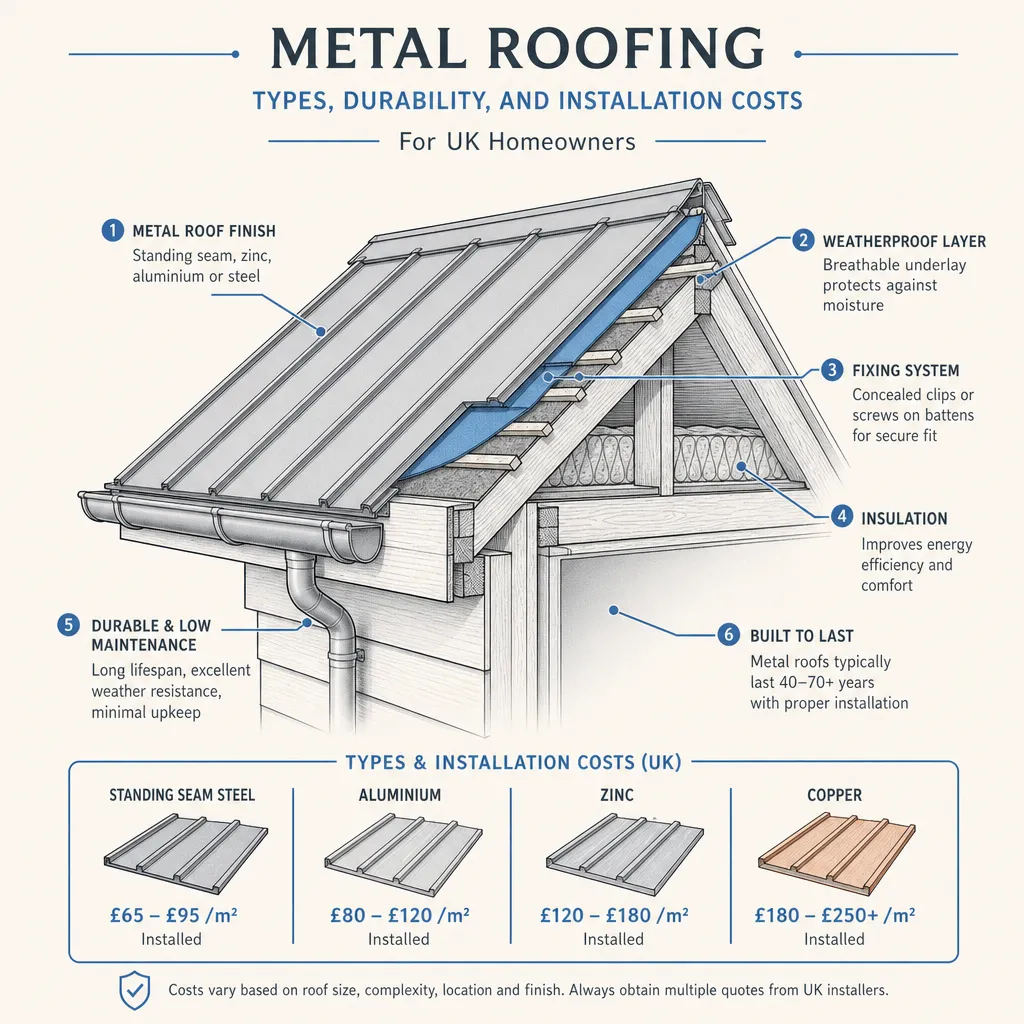
Metal Roofing: Types, Durability, and Installation Costs
Metal roofing in the UK includes standing seam, corrugated sheet, and metal tile systems in steel, aluminium, zinc, or copper.
 Improvement & Build
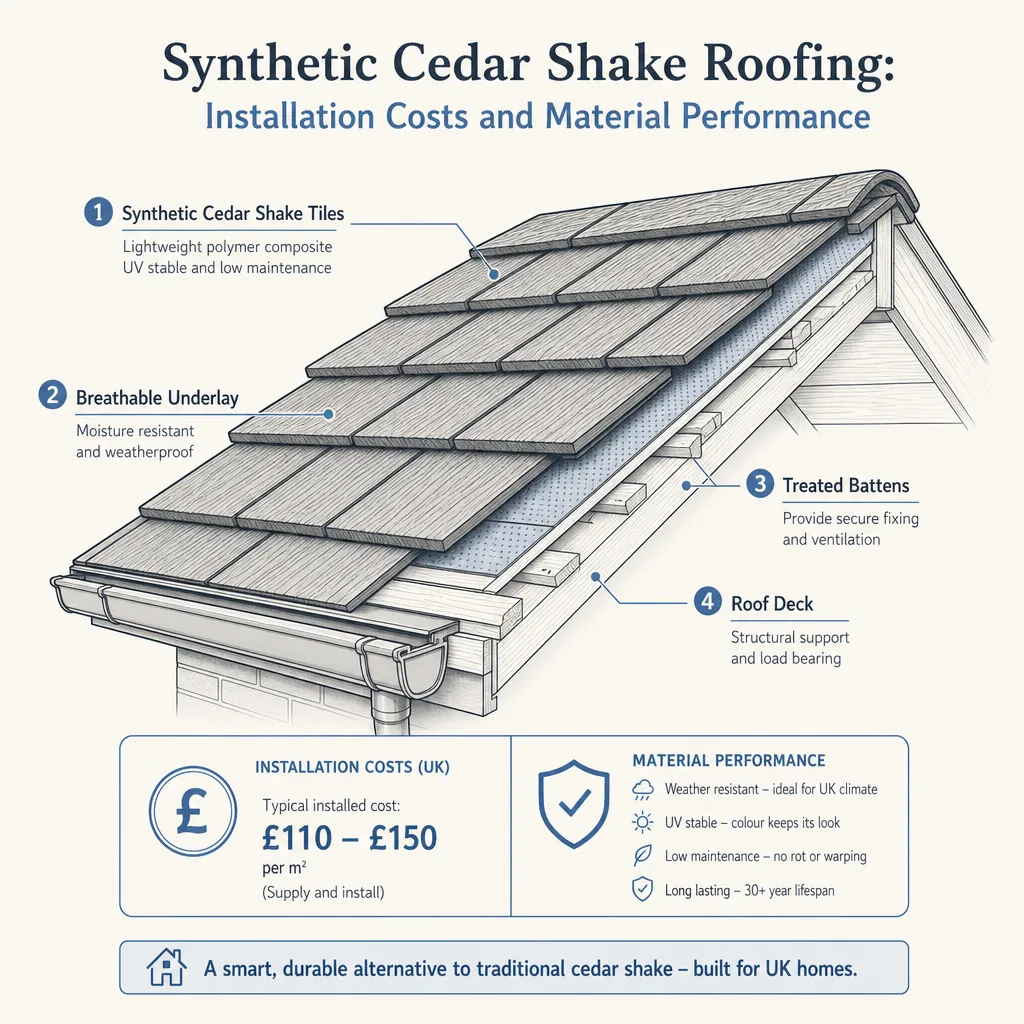
Synthetic Cedar Shake Roofing: Installation Costs and Material Performance
Synthetic cedar shake roofing uses polymer composite, rubber, or fibre-cement tiles to replicate the look of natural cedar wood shingles.
 Improvement & Build
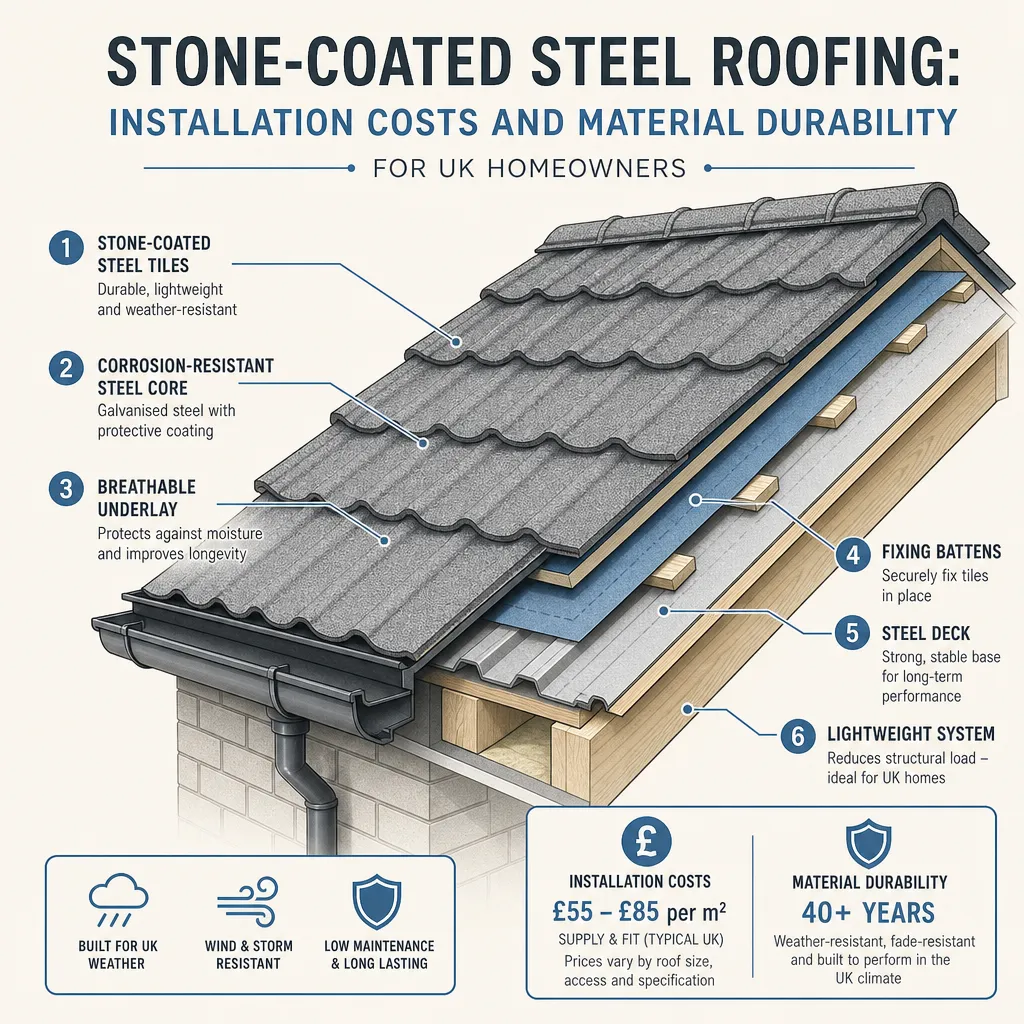
Stone-Coated Steel Roofing: Installation Costs and Material Durability
Stone-coated steel roofing uses a galvanised steel core embedded with acrylic resin and stone granules, creating a durable, lightweight alternative to traditional tiles.
 Improvement & Build
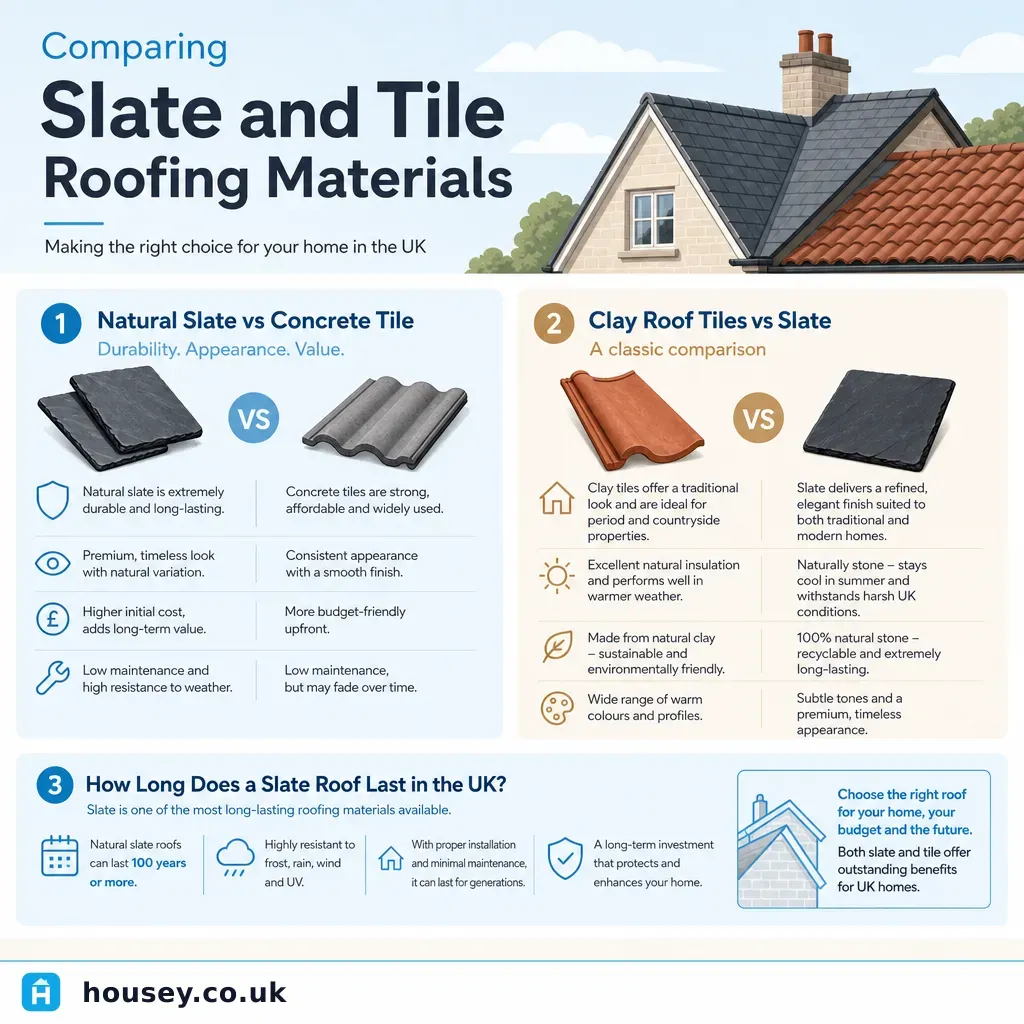
Comparing Slate and Tile Roofing Materials
Natural slate typically lasts 80–150 years and suits period and listed UK properties, while clay tiles offer 60–100 years and remain historically appropriate for Victorian and Edwardian stock.
 Improvement & Build
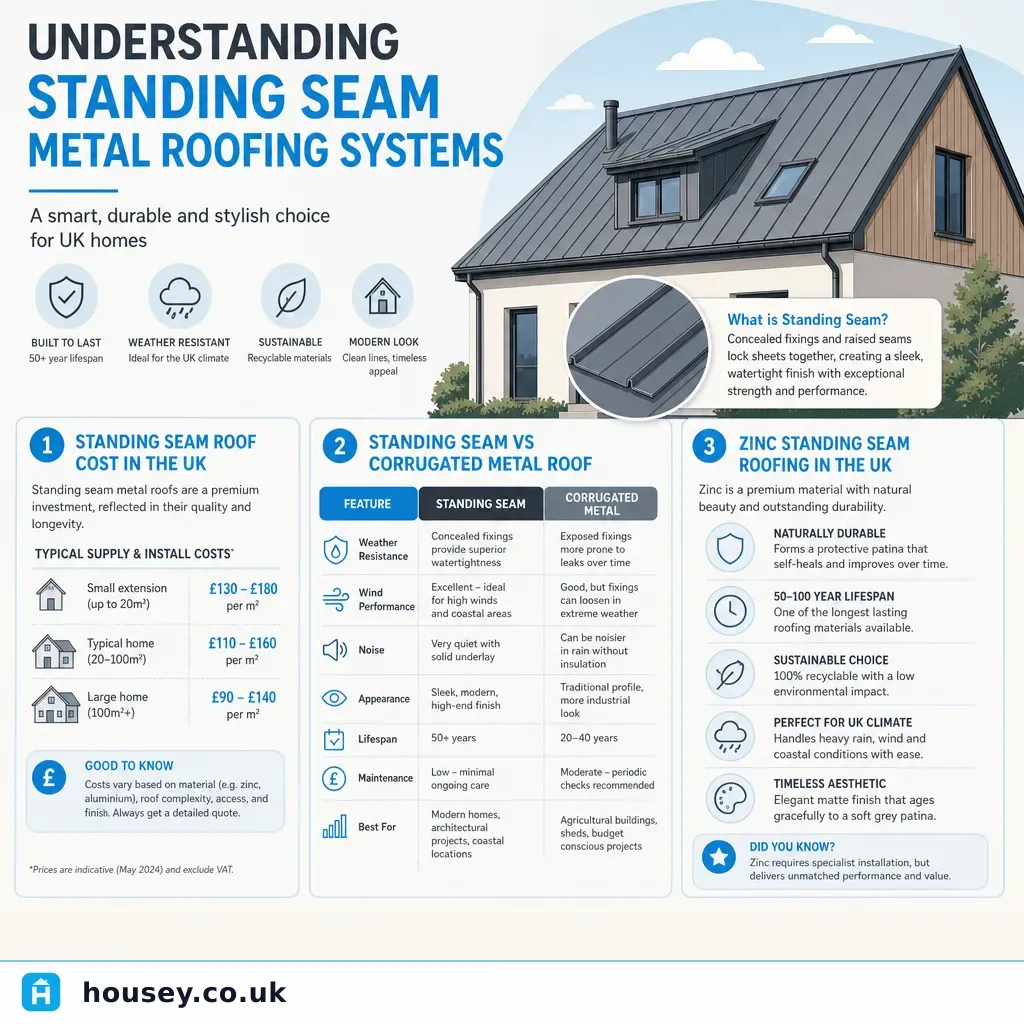
Understanding Standing Seam Metal Roofing Systems
A standing seam metal roof is built from long metal panels with raised, interlocked edges and all fixings concealed within the seams.