Choosing the Right Loft Hatch and Ladder for Your Property
By Housey · Last reviewed 11th of May 2026
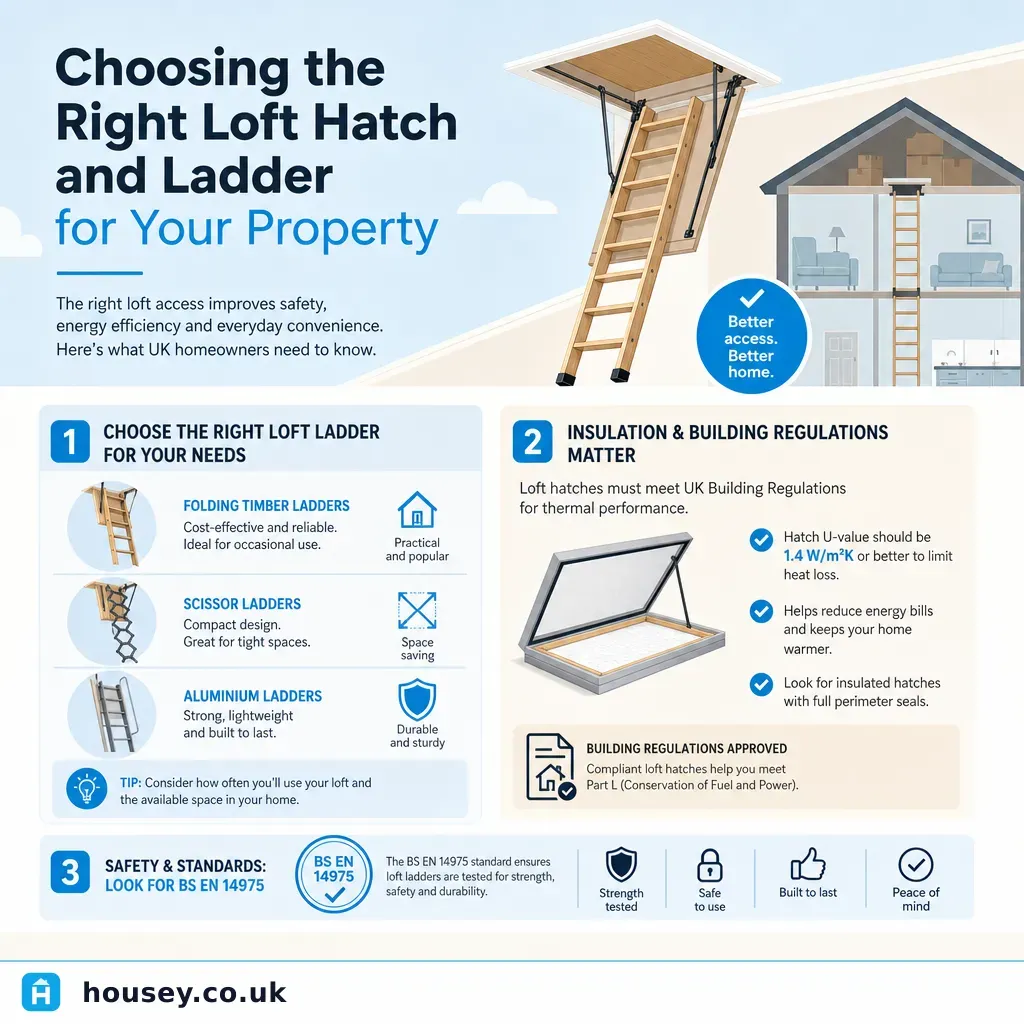
Choosing the Right Loft Hatch and Ladder for Your Property
Whether you are creating new loft storage, preparing for a full loft conversion, or simply replacing a draughty and poorly insulated hatch, the choice of loft access system matters more than many homeowners expect. The decision touches Building Regulations, energy performance, fire safety, and day-to-day practicality — and getting it wrong can be costly to put right once the work is complete.
Key points
- BS EN 14975:2006 specifies the safety requirements for loft ladders sold in the UK; any ladder described as compliant should meet minimum load capacity, step depth, and pitch angle requirements.
- Building Regulations Approved Document K (protection from falling, collision, and impact) sets requirements for loft ladders where the loft is used as a habitable room, including minimum tread dimensions and a handrail obligation.
- Building Regulations Approved Document L (conservation of fuel and power) requires loft hatch covers to be insulated; an uninsulated hatch can be a significant source of heat loss and may reduce your property's EPC rating.
- If the loft is converted to habitable use, the access hatch may need to be upgraded to an FD30 fire door (30-minute fire resistance) under Building Regulations Part B, depending on property layout and the number of storeys.
- The most common standard loft hatch opening is 562 mm x 762 mm, but a 600 mm x 1,200 mm opening is significantly more practical for carrying storage items — confirm whether ceiling joists allow the larger size before ordering.
What types of loft ladder are available?
Choosing the right ladder type depends on your ceiling height, how often you need loft access, the size of the hatch opening, and how the loft space will be used.
Ladder type | Best for | Not ideal for | Typical ceiling height | Typical supply cost |
|---|---|---|---|---|
Folding (two-section) | Low to standard ceilings, occasional storage access, compact hatch openings | Frequent use, carrying heavy or bulky items | 2.2 m–2.6 m | £80–£250 |
Telescoping (sliding) | Higher ceilings, space-saving folded profile for narrow landings | Restricted hatch openings; very heavy items | 2.5 m–3.2 m | £150–£500 |
Folding concertina (scissor) | High ceilings, frequent or heavier use, more durable construction | Low ceilings, tighter budgets | 2.8 m–4.5 m | £300–£800 |
Fixed attic stair | Habitable loft conversions with regular daily access | Storage-only lofts; low headroom | Variable | £500–£1,500+ |
Indicative UK costs, last reviewed 2026-05-11. Installed costs vary by property, ceiling height, and finish. Always obtain multiple quotes.
Hatch size and insulation: what the regulations say
The hatch opening size directly affects both comfort and energy performance.
Minimum practical size: A 562 mm x 762 mm opening is the most common standard, but many homeowners find this limiting for storage use. A 600 mm x 1,200 mm hatch makes carrying boxes far safer and more comfortable, and is widely available from builders' merchants if the ceiling joist spacing allows the larger opening.
Insulation: Under Approved Document L, loft hatch covers should be insulated to limit heat loss through the ceiling plane. An uninsulated timber hatch can have a U-value of around 2.0 W/m²K or worse; a well-specified insulated hatch cover can achieve 0.4 W/m²K or better. Many ready-made loft hatch kits include an insulated cover; if yours does not, a retrofit insulated cover and draught-strip frame are widely available from builders' merchants.
Air sealing: Draughts around the hatch frame can be as significant a source of heat loss as the cover itself. Always ensure the frame is draught-stripped on installation to achieve meaningful energy savings.
Fire safety: when does a hatch need to be a fire door?
For storage-only lofts, a standard hatch with no fire rating is generally acceptable. However, if the loft is converted to habitable use — a bedroom, office, or living space — Building Regulations Part B may require:
- The hatch and its surround to achieve FD30 fire door standards (30-minute fire resistance), particularly where the conversion creates a third storey in a two-storey property.
- Self-closing mechanisms to be fitted to the hatch.
- Mains-wired interlinked smoke alarms on all floors, which may also influence hatch positioning and access route design.
Local building control judgement applies here — always confirm specific requirements with your local authority building control (LABC) or an approved inspector before specifying the hatch.
Which hatch and ladder should you choose?
- Choose a standard folding ladder with an insulated hatch cover if you need occasional storage access and your ceiling height is below 2.6 m.
- Choose a telescoping sliding ladder if your ceiling height is above 2.6 m, or if a compact folded profile matters on a tight landing or in a narrow hallway.
- Choose a concertina scissor ladder if your ceiling is above 2.8 m, you plan to use the loft regularly, or you need to carry heavier loads up and down.
- Choose a fixed attic stair if the loft is or will become a habitable room — it provides the safest and most practical access for everyday use and is likely to be required by building control for a habitable conversion.
- Ask a building control officer or loft conversion specialist if you are converting to habitable use — fire door requirements, handrail dimensions, and ladder pitch must all be confirmed before ordering materials.
- Check Approved Document L requirements if you are in a new-build or targeting a higher EPC rating — an insulated hatch is part of the overall building fabric performance calculation.
Document preparation list
Before specifying or ordering a loft hatch and ladder, gather the following:
When to get professional help
Swapping a like-for-like hatch cover or replacing an existing ladder unit on an existing opening is manageable for a confident DIYer. Professional help is advisable when:
- You are cutting a new opening through a ceiling joist — this has structural implications and building control notification may be required.
- The loft is being converted to habitable use — fire door compliance, handrail angles, and stair rise and going all require professional specification.
- The ceiling height means the ladder will extend above 3 m — working safely at this height requires appropriate equipment and experience.
- The property is listed or in a conservation area and structural or external alterations are involved.
How Housey can help
If you are planning a full loft conversion rather than a simple hatch upgrade, a specialist loft conversion company can advise on access requirements, Building Regulations compliance, and the most practical stair or ladder configuration for your property layout. Use Housey to find qualified loft conversion specialists in your area.
Frequently asked questions
Do I need building regulations approval to install a loft ladder?
If you are replacing an existing hatch and ladder in a storage-only loft, building regulations approval is generally not required. However, if you are cutting a new opening through ceiling joists, converting the loft to habitable use, or installing a fixed stair, approval is likely to be required. Confirm requirements with your local authority building control before starting work.
What is the standard loft hatch size in the UK?
The most common standard loft hatch opening in the UK is 562 mm x 762 mm. Many homeowners find this limiting for storage use, and 600 mm x 900 mm or 600 mm x 1,200 mm hatches are widely available and significantly more practical, provided the ceiling joist spacing permits the larger opening without structural intervention.
How much does loft hatch and ladder installation cost?
A supply-and-fit loft hatch with a folding ladder typically costs £300–£700 for a standard installation, depending on ceiling height and ladder specification. Larger openings, concertina ladders, and fire-rated hatches will cost more. Always obtain at least three quotes. Indicative UK costs, last reviewed 2026-05-11.
Can I insulate my loft hatch myself?
Yes. Many existing hatch covers can be insulated by fixing rigid insulation board — PIR or EPS — to the back of the cover, with draught-strip applied around the frame. The improvement to thermal comfort and energy performance can be considerable, and materials costs are modest. Pre-insulated hatch kits are available from most builders' merchants.
Sources and further reading
- Building Regulations Approved Document K — protection from falling — GOV.UK
- Building Regulations Approved Document L — conservation of fuel and power — GOV.UK
- Building Regulations Approved Document B — fire safety — GOV.UK
- BSI — BS EN 14975 loft ladders — BSI Group
- Planning Portal — loft conversions — Planning Portal
Useful next reads
 Improvement & Build
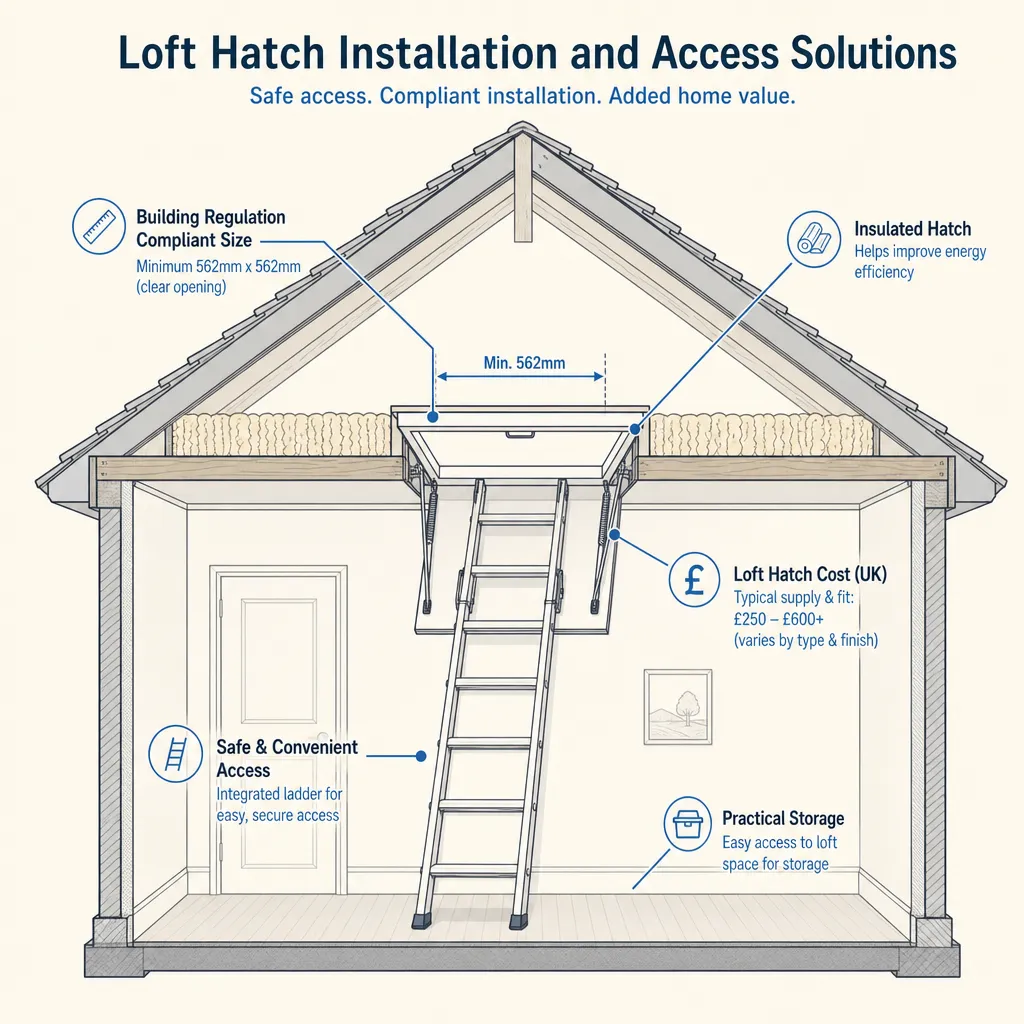
Loft Hatch Installation and Access Solutions
A basic loft hatch costs around £150–£350 fitted; a hatch with a folding ladder runs £350–£900.
 Improvement & Build
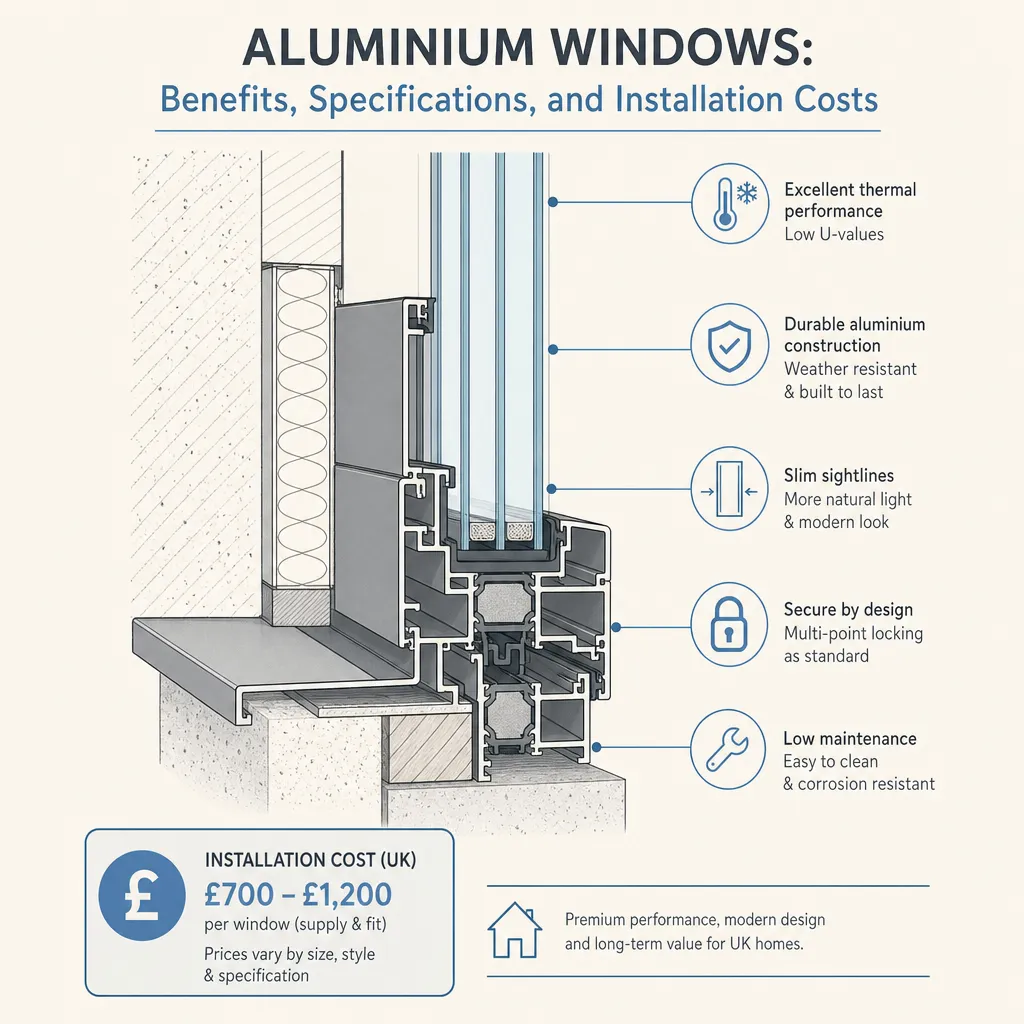
Aluminium Windows: Benefits, Specifications, and Installation Costs
Aluminium windows typically cost £600–£1,800 per window installed in the UK, depending on size and specification.
 Improvement & Build
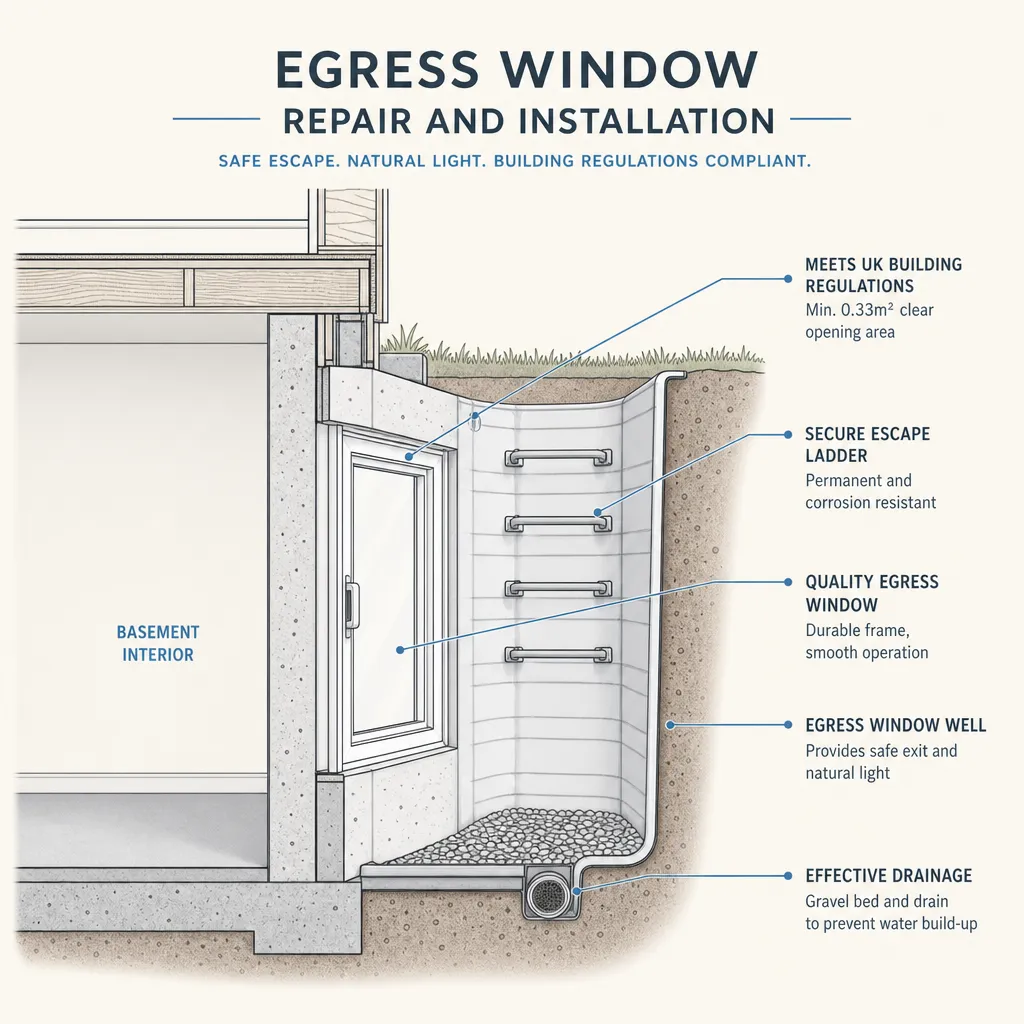
Egress Window Repair and Installation
An egress window is a window large enough to serve as an emergency escape route from a habitable room.
 Improvement & Build
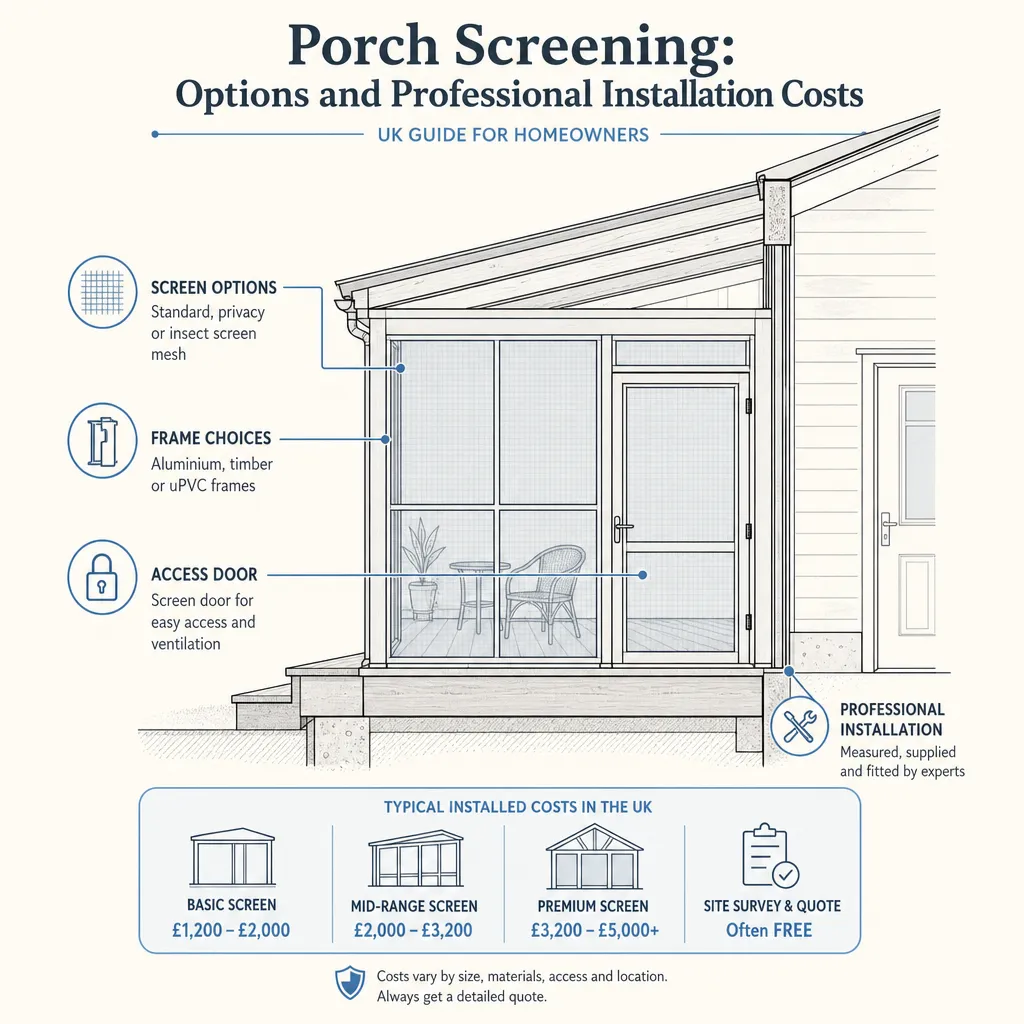
Porch Screening: Options and Professional Installation Costs
Porch screening ranges from simple insect mesh on a timber frame to bespoke aluminium-framed glazed enclosures.
 Improvement & Build
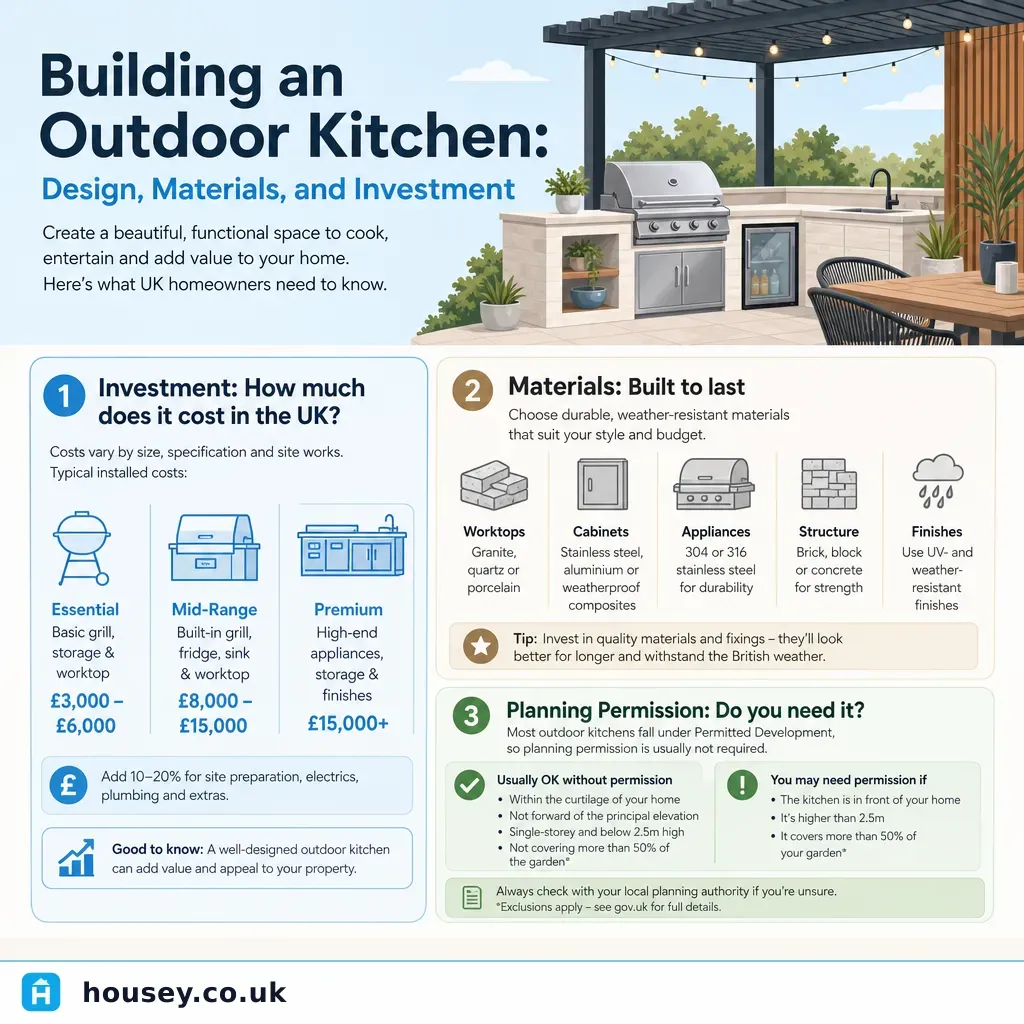
Building an Outdoor Kitchen: Design, Materials, and Investment
Building an outdoor kitchen in the UK costs roughly £3,000–£25,000 depending on size and materials.